I work across all of Greater Sudbury — Hanmer, Val Caron, Chelmsford, Lively, Azilda, Capreol, Garson, and the city proper. And after five years of doing assessments on residential properties across this whole region, I can tell you with confidence: the lawns in the communities outside the city centre behave differently from the ones inside it, often in ways that change what kind of care they actually need.
This isn’t a subtle difference. On some properties in Hanmer and Val Caron, the clay content and compaction severity I find is genuinely more challenging than what I encounter on the average city-proper property. In Chelmsford, drainage patterns created by the specific topography of that area produce persistent moisture issues that are less common in flatter city lots. The soil conditions across these communities reflect real geological and development differences that affect everything from how fast a lawn compacts to how it handles summer heat to what a restoration job actually requires.
If you live in one of these communities and have wondered why your lawn seems to struggle more than it should despite reasonable care, or why advice that worked for someone in a different part of Sudbury hasn’t produced the same results for you — this is the article worth reading.
I’m Ryan Lingenfelter, owner of Cutting Edge Lawn & Landscaping in Garson, Ontario.
The Soil Story — Why the Communities Outside the City Are Different
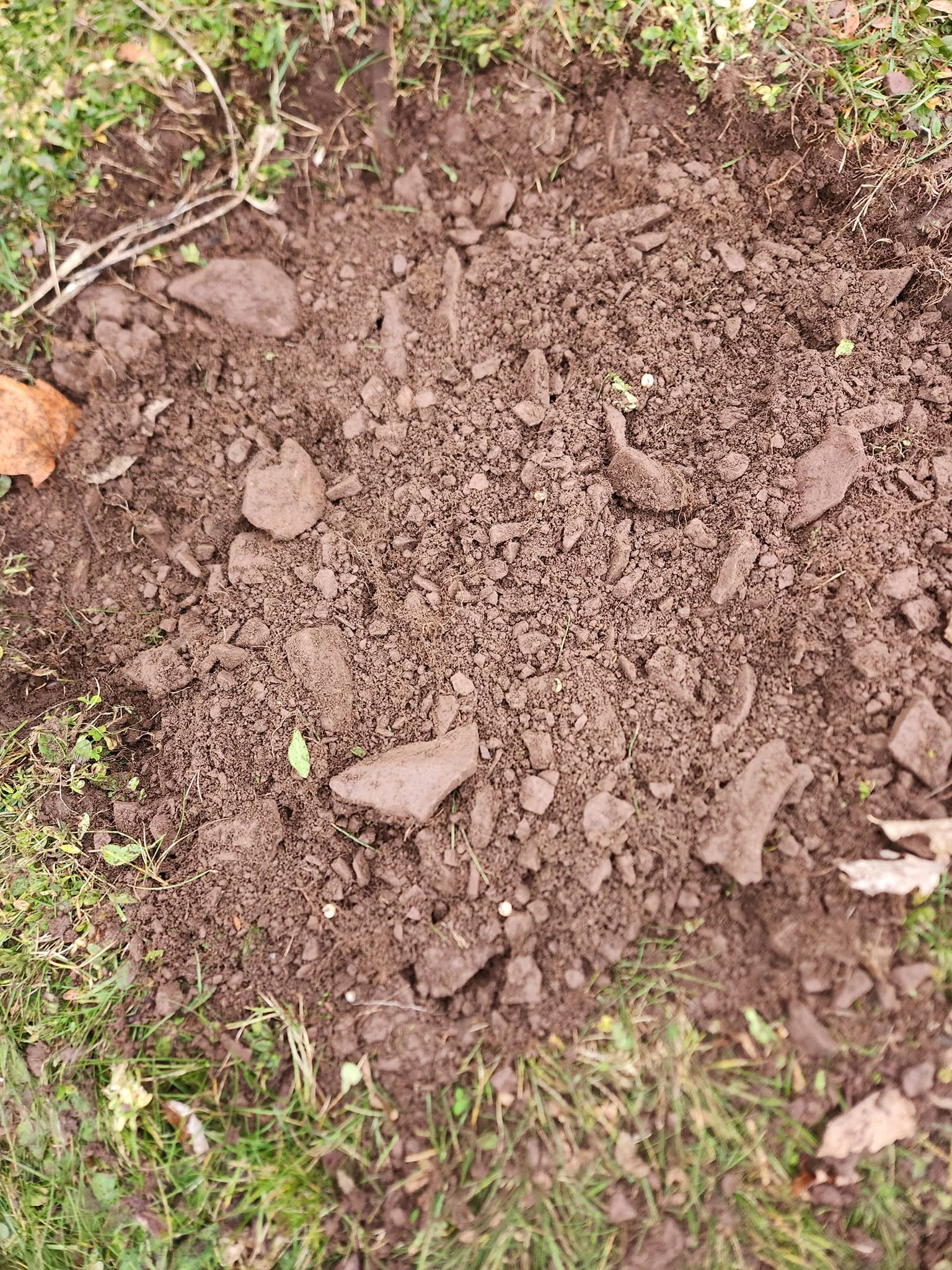
Greater Sudbury sits on some of the oldest exposed rock in the world — the Canadian Shield — and the communities across the region were built on different expressions of what sits above that bedrock. The differences in soil character across Greater Sudbury’s communities aren’t random. They reflect genuine variation in the glacial deposits, the organic material that accumulated on top of them over millennia, and the fill and grading work that happened when each community was developed.
The general pattern I’ve observed across hundreds of properties is this: the residential areas in the communities north and northwest of the city centre — Hanmer, Val Caron, Chelmsford, and parts of Azilda and Capreol — tend to have heavier, more clay-dominant soil profiles than many city-proper properties. The clay sits closer to the surface, is denser in character, and compacts more severely under normal residential use.
This isn’t universal — there’s real variation even within a single neighbourhood, as I described in the story of two neighbours in Lively who did identical lawn routines with completely different results. But as a general pattern across hundreds of assessment points, the outer community properties consistently show me heavier soil conditions than I find on average across the city proper.
Why does this matter? Because everything about how a lawn behaves and what it needs flows from the soil character underneath it. A heavy clay lawn compacts faster, drains worse, recovers more slowly from stress, and needs more aggressive maintenance to stay healthy than a lawn on loamier soil. The care approach that works on a lighter-soil city property may genuinely underperform on a heavy-clay Hanmer or Val Caron property, not because anything is being done wrong, but because the starting conditions are more demanding.
Hanmer and Val Caron — What I See Most Often
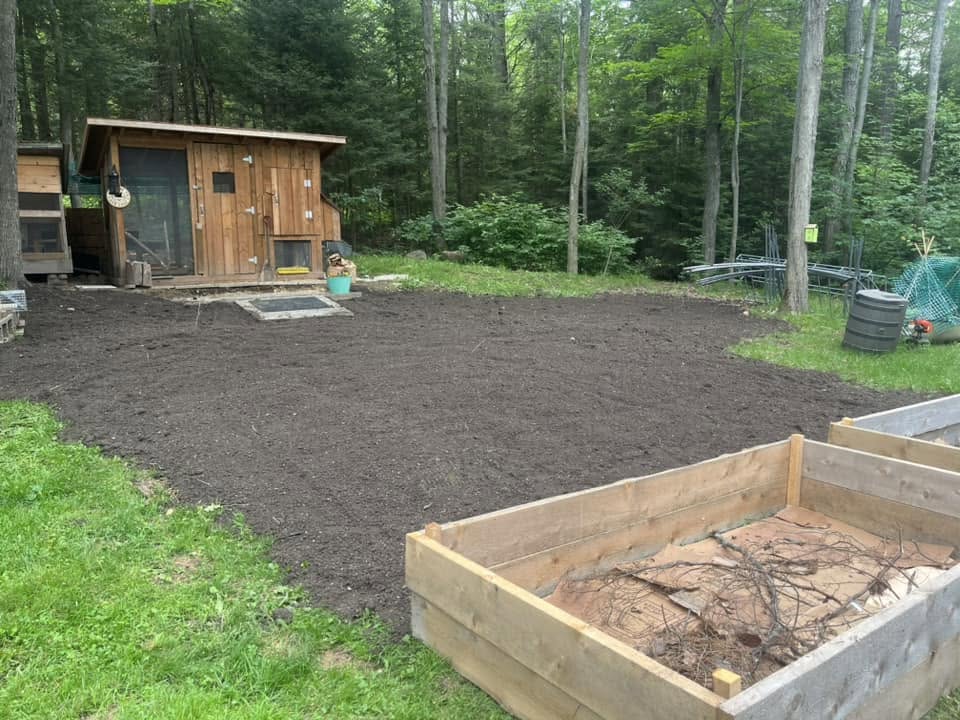
Of all the communities I work across in Greater Sudbury, Hanmer and Val Caron properties consistently show me the most severe compaction readings on assessment. The screwdriver test on an average Hanmer or Val Caron property that hasn’t been recently aerated stops somewhere between an inch and an inch and a half in most spots — sometimes shallower. On properties that have had no aeration in three or more years, I occasionally see readings where I can barely push the tip in at all.
This is the extreme end of what I’ve described as the most common thing under dead Sudbury lawns in the article specifically about compaction. The same problem I find everywhere in Greater Sudbury exists in Hanmer and Val Caron in a more pronounced form, partly because of the soil character and partly because these communities have a lot of residential properties that were built during an era when topsoil quality and depth on residential lots was inconsistent.
What This Means Practically for Hanmer and Val Caron Homeowners
If you live in Hanmer or Val Caron, annual aeration isn’t a suggestion — it’s genuinely the baseline maintenance requirement to prevent progressive compaction from slowly killing your lawn. On some properties with particularly heavy soil, twice-yearly aeration (spring and fall) produces meaningfully better results than once yearly, because the clay is compacting back faster than a single annual aeration can keep up with.
Overseeding on these properties also requires more attention to soil contact than it does on lighter soils. On heavy Hanmer clay, seed broadcast on the surface without aeration holes to fall into has a very low germination rate — the thatch and dense surface don’t allow seed-to-soil contact the way loamy soil does. Every overseeding I do in these communities is done immediately after aeration, specifically to take advantage of the holes as seed channels.
Watering, too, needs to be done with clay behaviour in mind. Heavy clay doesn’t absorb water the same way lighter soil does — it can become temporarily water-repellent when very dry, causing water to run off the surface rather than penetrate. The cycle-and-soak approach I described in the watering technique article matters more on Hanmer and Val Caron properties specifically than it does on properties with more forgiving soil.
The stories I’ve told about specific Val Caron properties — including the Val Caron homeowner I turned down three times and the homeowner who showed me a competitor’s quote — both involve properties where the underlying soil conditions were more challenging than they appeared from the street, and where the temptation to skip proper soil prep in favour of a faster, cheaper solution was exactly what had caused previous failures.
Chelmsford — The Drainage Factor
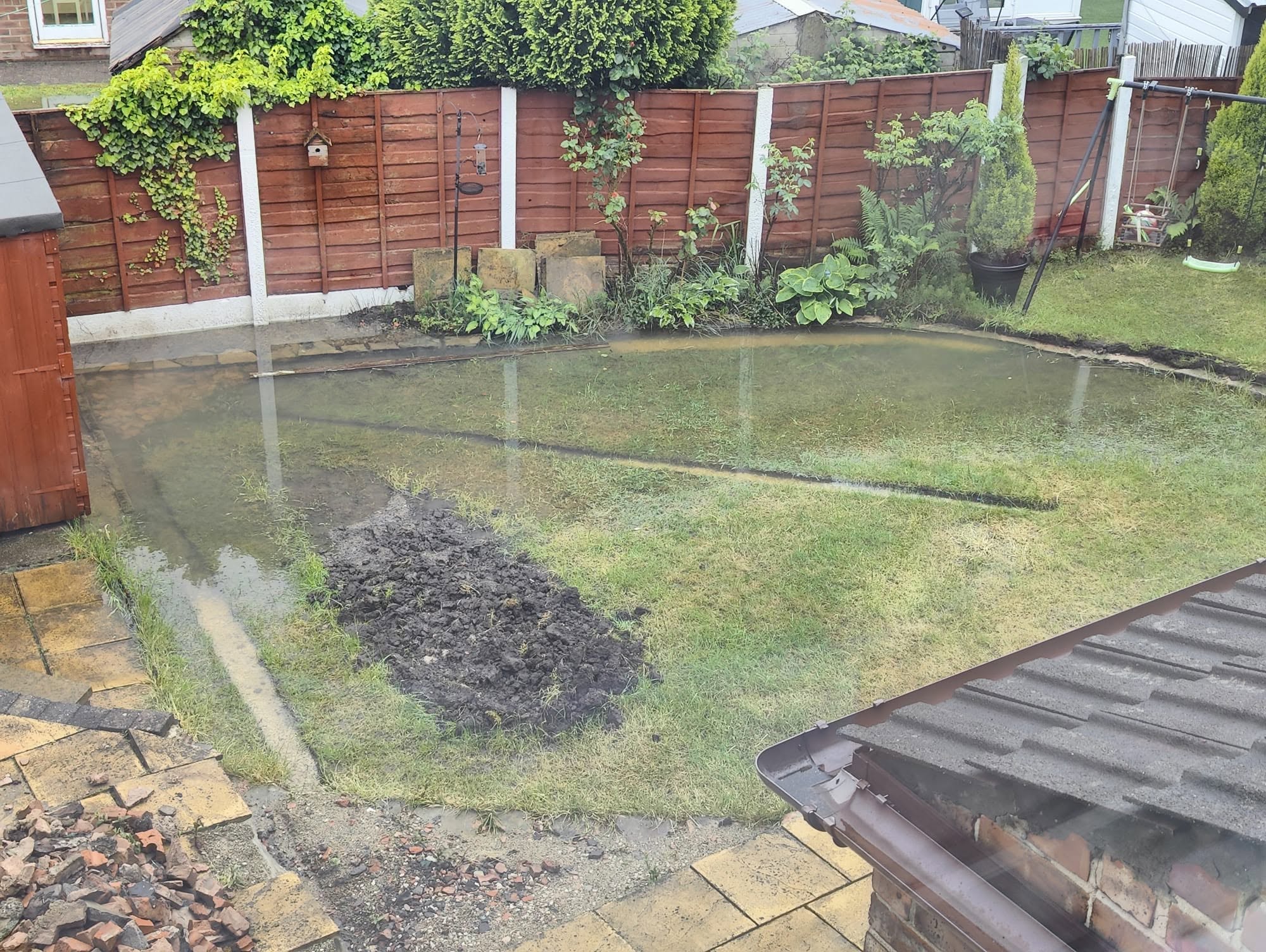
Chelmsford has its own distinct character. The compaction situation is similar to what I see in Hanmer and Val Caron — heavy clay, severe compaction on properties without regular aeration — but Chelmsford properties have an additional challenge that I see with notable frequency: drainage problems tied to the specific topography of the area.
The terrain in much of residential Chelmsford involves gentle but consistent slopes that direct water in ways that aren’t always obvious until you look closely. Properties that sit in the lower positions relative to their neighbours, or that have grades directing runoff from adjacent lots onto their lawn, deal with persistent wet-then-dry cycles in the affected areas that are more severe than the natural clay drainage challenge alone would produce.
I’ve described this dynamic in detail across several Chelmsford-specific articles. The buried concrete story I wrote about in the Chelmsford grass that never grew — the homeowner in who called me back after two years — both involve Chelmsford properties where something specific to that property’s situation was amplifying the baseline clay-soil challenge.
What This Means Practically for Chelmsford Homeowners
On Chelmsford properties, the drainage check is the most important part of any assessment before I recommend a restoration approach. I’ve turned down or delayed sod work on Chelmsford properties where the drainage problem hadn’t been addressed first — laying sod on top of an active drainage issue produces a predictable failure in the problem area regardless of how well everything else was done.
If you have areas in your Chelmsford lawn that fail repeatedly in the same spots — year after year, regardless of what you seed or sod there — the almost certain explanation is a drainage issue specific to those spots. It’s not the seed. It’s not bad luck. It’s water behaviour that’s been happening in that location for years and will keep happening until the grade or runoff path is corrected.
The checklist for addressing this properly before any restoration work is the same regardless of which Chelmsford property I’m on: assess where water actually moves during and after significant rain, identify the source (neighbouring runoff, downspout, natural low point), correct the grade or redirect the source, confirm the correction through at least one rain event, then proceed with sod or seed. Skipping any step in that sequence guarantees the problem returns.
City Proper, Garson, Lively — What Changes
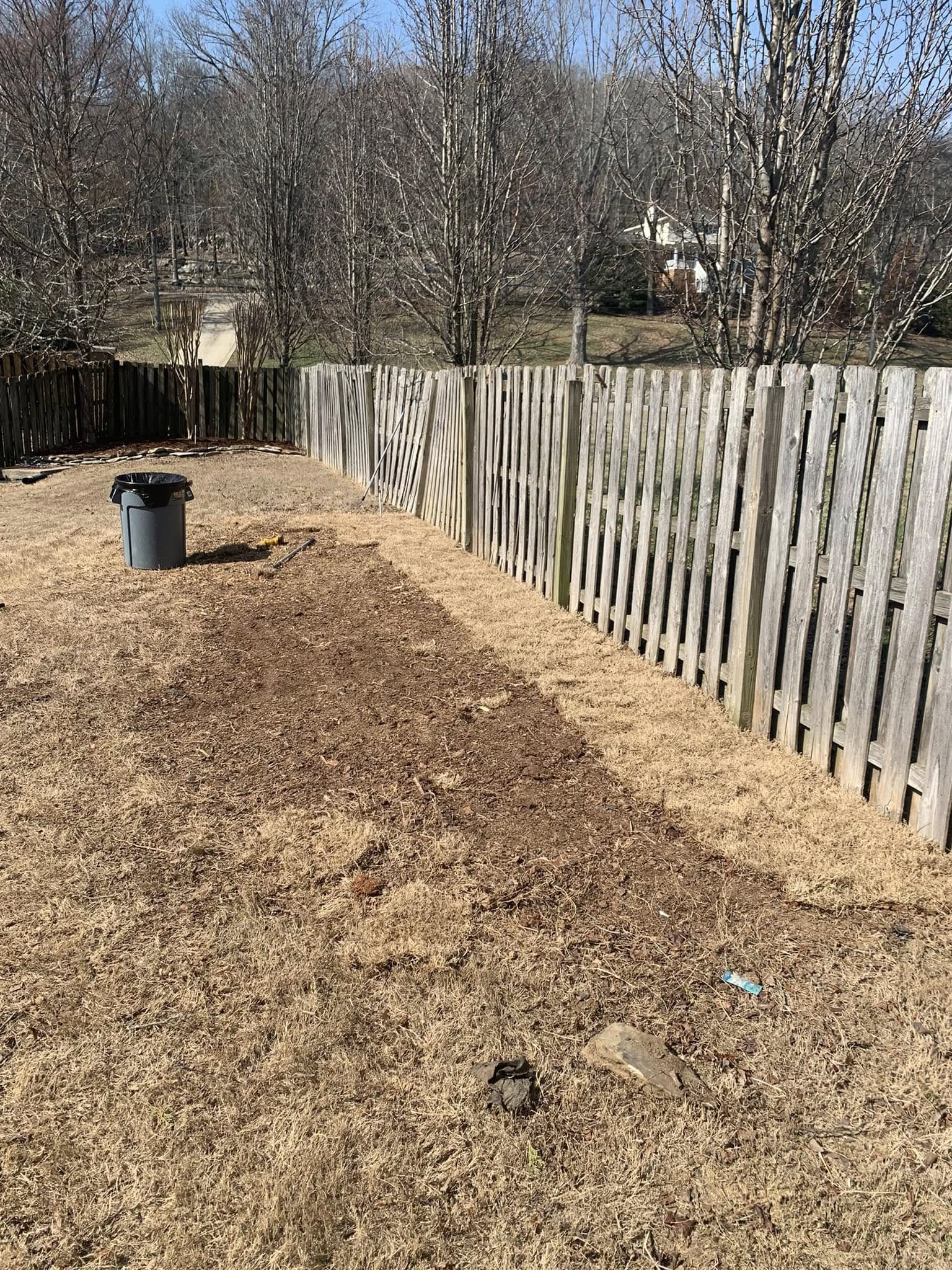
Garson, Lively, and many city-proper neighbourhoods don’t have uniformly different soil — the variation within these areas is real, and some city-proper properties have heavy clay that rivals anything I see in Hanmer. But the average picture across these areas shows me somewhat more varied soil profiles, including some properties with reasonable loam content in the topsoil layer that makes the baseline compaction situation less immediately severe.
The challenge that tends to be more prominent in city-proper properties, particularly in older established neighbourhoods, is a different one: years of accumulated development — tree root competition, decades of fill and grade changes from various homeowners, proximity to older infrastructure — can create soil conditions that are complex in different ways than the pure clay-compaction challenge of the outer communities.
Garson specifically — where I’m based — has its own local geological character that I’ve documented in direct experience. The calcium carbonate deposit situation I described in the property that made me call my supplier and ask questions I’d never asked before is something I now watch for specifically on Garson and parts of Chelmsford, and it represents a soil chemistry variable that the outer communities don’t see in the same way.
What This Means Practically
For city-proper, Garson, and Lively homeowners: the same foundational approach applies — soil assessment first, treatment second — but the specific things to check for are somewhat different. Compaction is still important to test, but on a city-proper property, I’m also paying attention to whether there are legacy soil issues from the property’s development history that aren’t visible from the surface and that require more investigation to understand than a standard clay-compaction situation does.
The Common Thread Across All of Greater Sudbury
Regardless of which community you’re in, the underlying principle is the same: generic advice calibrated for average conditions will produce average results at best, and underperform when your specific property’s conditions are more demanding than average. The outer communities — Hanmer, Val Caron, Chelmsford — tend to have conditions that are more demanding than average in specific, consistent ways. Knowing which specific challenges apply to your property and addressing them directly is what separates a lawn that keeps improving from one that stays stuck despite reasonable effort.
If you’re not sure which of these community-specific challenges applies to your property, or if you’ve been getting average results from a generic approach and want to understand why, an actual site assessment is the right starting point.
📞 Call or text me: 705-507-6787
Or fill out the free quote form here — I get back to everyone same day.
— Ryan Lingenfelter
Owner, Cutting Edge Lawn & Landscaping
Garson, Ontario
Related Articles
- Two Sudbury Neighbours Did the Exact Same Lawn Routine — Only One Lawn Thrived
- The One Thing I Always Find Under a Dead Sudbury Lawn
- The Sudbury Property That Made Me Call My Supplier and Ask Questions I’d Never Asked Before
- A Chelmsford Homeowner Called Me Back After 2 Years — The Lawn Told the Whole Story
- A Sudbury Homeowner Asked Me to Watch Her Water the Lawn