
A homeowner in Val Caron called me last fall, frustrated about something that wasn’t really her fault at all.
Her neighbour had a new addition built over the summer — a fairly standard project, contractor truck in and out for about ten weeks, some excavation, the usual. By the time the project wrapped up, her own lawn — not the construction site, her property next door — had a hard-packed strip along the shared property line, a section that wouldn’t drain properly anymore, and a corner that had gone completely thin and patchy where it had been healthy all spring.
Nobody had done anything to her lawn directly. Nobody had walked across it on purpose. But ten weeks of activity twenty feet away had still done real, specific damage, and she had no idea why until I walked the property and explained what had actually happened.
I’m Ryan Lingenfelter, owner of Cutting Edge Lawn & Landscaping in Garson, Ontario. Since 2020, I’ve worked on properties across Greater Sudbury — Garson, Val Caron, Hanmer, Lively, Chelmsford, Azilda, Capreol — including a fair number that sat next to active construction or major renovation projects. Here’s exactly what that proximity does to a lawn, and what to actually do about it.
Vehicle and Equipment Compaction — Even From the Other Side of the Fence
This is the most common cause I see, and it’s the one that surprises homeowners most, because the equipment in question was technically never on their property.
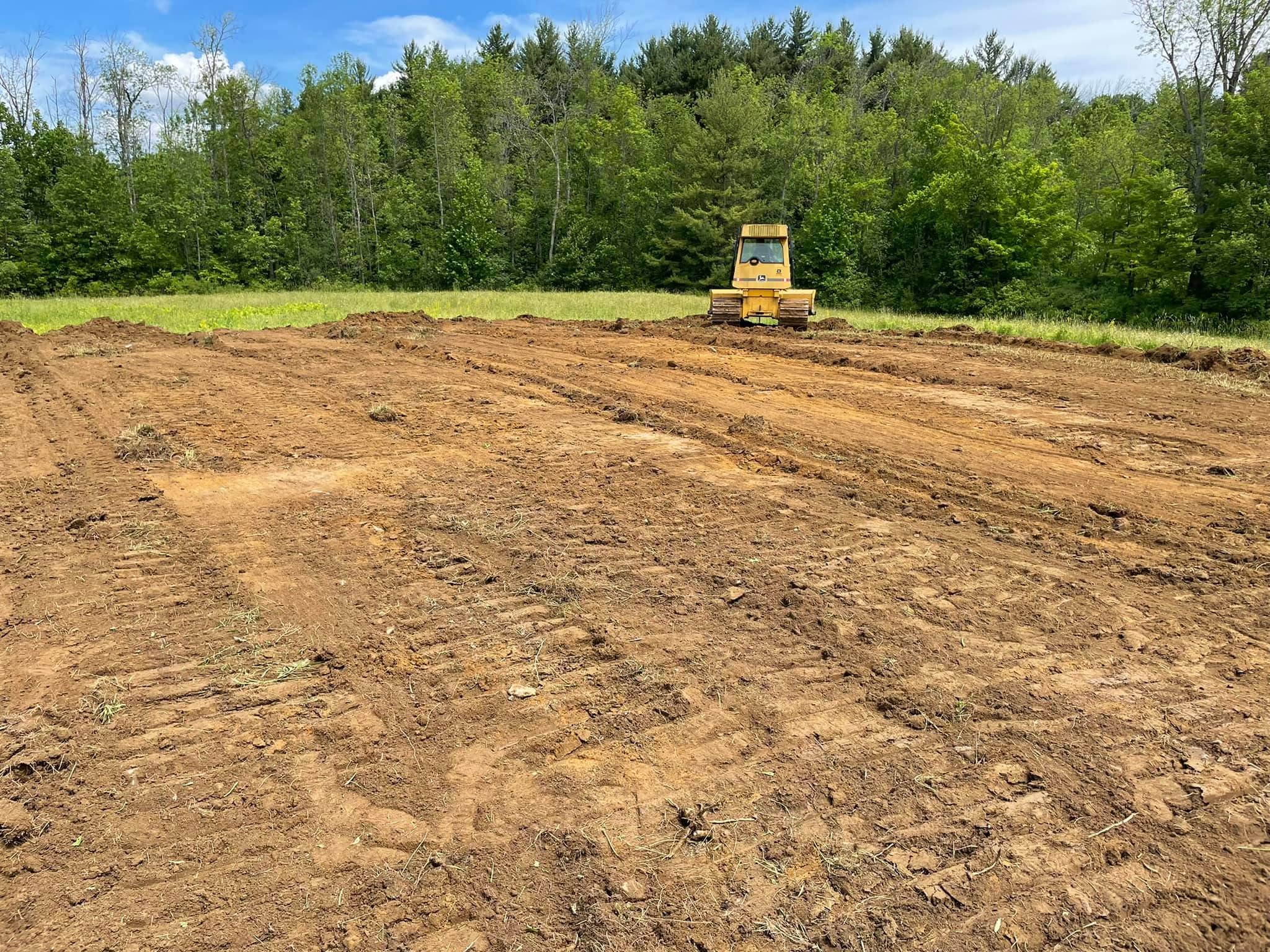
Construction sites generate a lot of repeated heavy vehicle traffic — delivery trucks, excavators, concrete trucks, contractor vehicles parking and manoeuvring. Even when all of that activity stays on the neighbouring property, the vibration and weight from heavy equipment transmits through the ground for several feet beyond where the tires or tracks actually sit. On Sudbury’s already clay-heavy soil, this transmitted compaction can measurably affect the soil structure on the adjacent property, particularly within the first 10 to 15 feet of a shared property line.
The other common scenario is more direct — contractors and delivery drivers using the shoulder of a neighbouring lawn as a turning radius or temporary parking spot when the worksite itself is tight, even briefly and without asking. I’ve walked plenty of Sudbury properties where a strip of lawn along the property line shows exactly this pattern: compacted, often with visible tire impressions that have grown over but left the soil structure underneath permanently changed.
The screwdriver test tells this story clearly. Push a standard flathead screwdriver into the affected strip versus the rest of the lawn — on a property that’s seen this kind of compaction, you’ll often find the difference is dramatic, sometimes stopping at half an inch in the compacted strip versus 4 to 6 inches everywhere else. I covered why this matters so much on Sudbury’s clay soil specifically in the clay soil guide here — the same compaction mechanics apply whether the cause is foot traffic, a pool, or a construction vehicle parked on the shoulder for an afternoon.
Drainage and Grading Changes From the Construction Site Itself
This one takes longer to show up, which is exactly why it’s so often missed until well after the project is finished and the connection isn’t obvious anymore.
Major construction or renovation work frequently changes the grading on the site where the work is happening — excavation for a foundation, new fill brought in and shaped, a driveway extension, a new addition that changes how water moves off a roofline. Any of these can redirect water flow toward a neighbouring property in a way that didn’t exist before the project started.
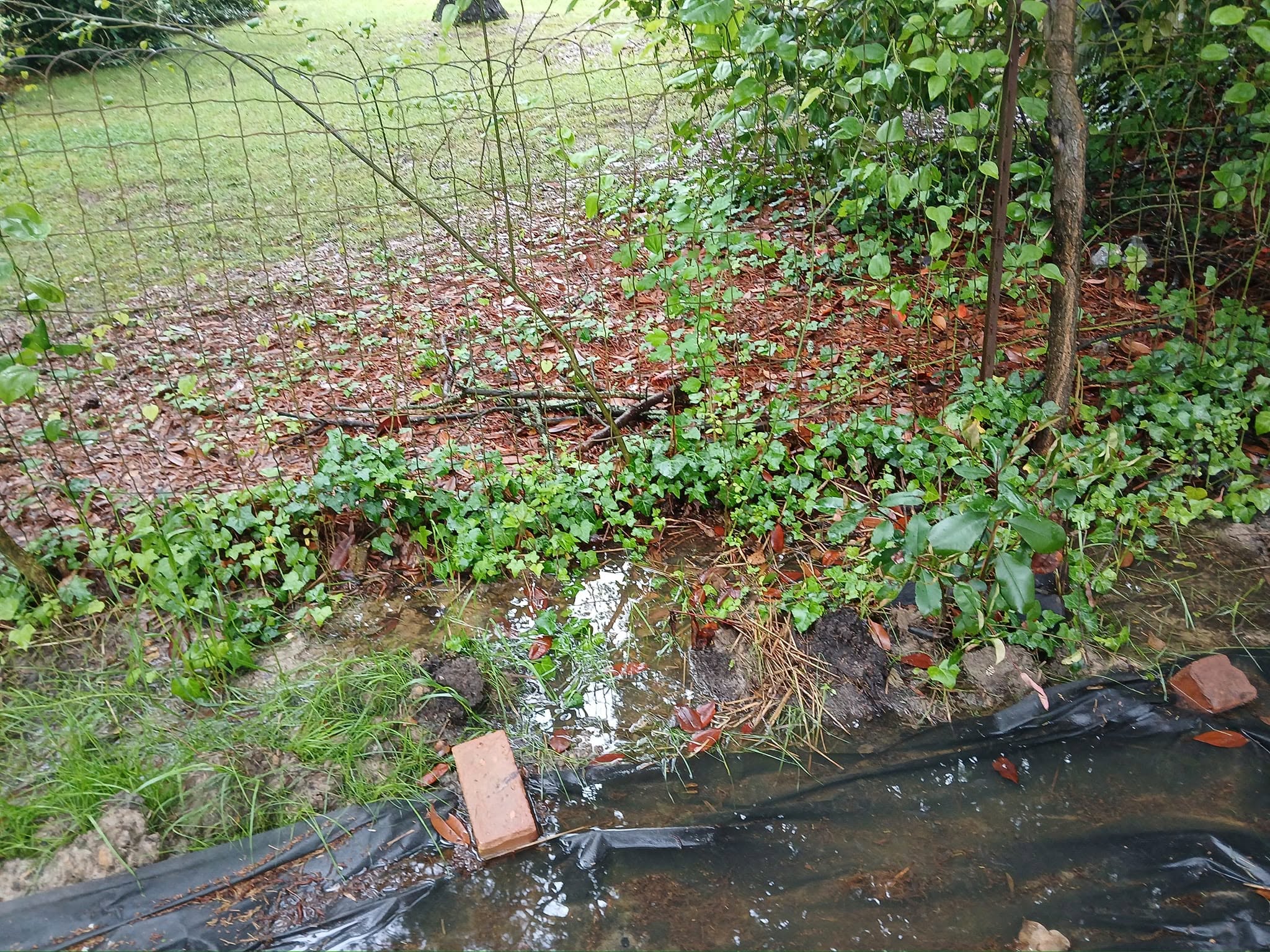
The Val Caron property I mentioned earlier had exactly this pattern. The new addition next door had changed the slope of the ground close to the shared property line, and a section of her lawn that had drained normally for years started holding water after a typical Sudbury rain. Standing water on clay soil drowns roots quickly, and that section went from healthy to thin within about six weeks of the regrading happening — well after the construction crew had moved past that part of the site, which is exactly why she hadn’t connected the two events at first.
If you notice a section of your lawn that’s suddenly holding water differently than it used to, and there’s been recent excavation or grading work on an adjacent property, that connection is worth investigating before you spend money on reseeding a spot that’s going to keep failing for a structural reason that has nothing to do with the grass itself. The fix in these cases is almost always regrading the affected section on your own property to correct the new drainage path, since you generally can’t require a neighbour to undo grading that was done within code on their own land.
Debris, Dust, and Material Runoff
This cause is more visible day to day, but the actual damage mechanism is often misunderstood. It’s not usually that debris physically smothers the grass — it’s the chemistry of what’s landing on it.
Concrete dust and overspray are the biggest concern here. Fresh concrete and the dust from cutting or mixing it is highly alkaline. When it settles on a lawn — from wind during pouring, from a concrete truck rinsing out nearby, or from cutting work like a driveway saw — it raises the soil pH in that specific area significantly. Most lawn grass prefers a slightly acidic to neutral soil pH, and a sudden alkaline shift from concrete contact can stress or kill grass in the affected zone even without any heat or physical damage involved.
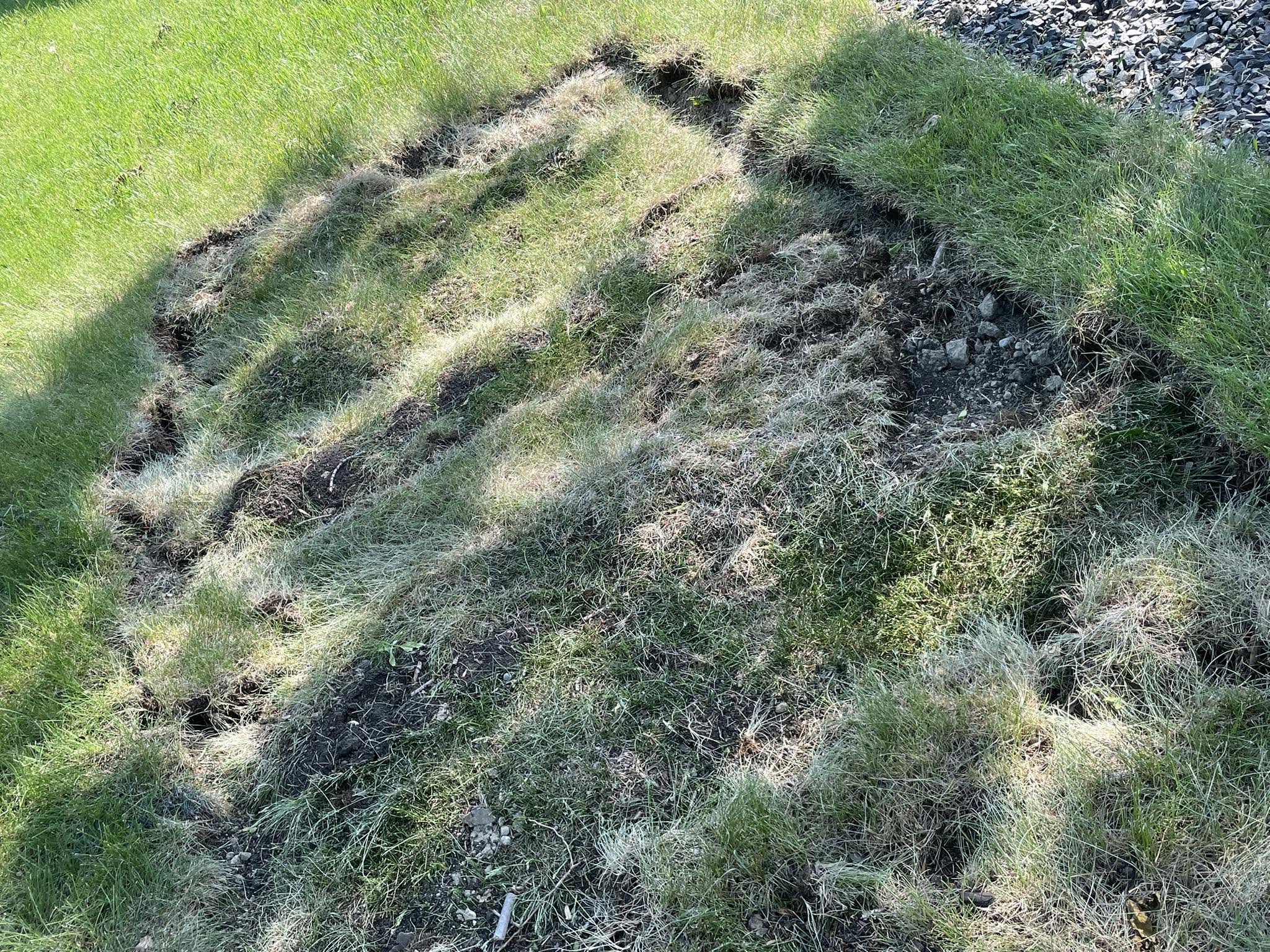
Sawdust and wood debris from framing work, drywall dust, and general construction debris that drifts or gets tracked onto a neighbouring lawn add up over a multi-week project even if no single incident seems significant. None of it is usually deposited maliciously — it’s just the reality of construction generating a lot of fine material that travels further than people expect, especially on a windy Sudbury day.
If you suspect this is affecting your lawn, a soil pH test in the affected area compared to an unaffected section of the same lawn will usually confirm it. If the pH has shifted noticeably alkaline, a soil sulfur amendment can help bring it back into range before you reseed — reseeding into soil that’s still chemically off from concrete contact often produces the same poor germination you’d get from any other untreated soil problem.
What to Actually Do If This Is Happening to You Right Now
If there’s active construction or renovation happening next door and you want to minimize the damage before it accumulates, here’s what’s actually worth doing.
Have a brief, friendly conversation with the homeowner or the contractor early in the project, specifically about where vehicles will park and stage materials. Most contractors are reasonable about this when asked directly and early — the issue is usually that nobody thought about it, not that anyone’s being careless on purpose. A clear understanding that the shoulder of your lawn isn’t part of the work area prevents a lot of the compaction and debris issues before they start.
Watch your property’s drainage through the project, particularly after the excavation or grading phases. If you notice water behaving differently than it used to in a specific section, address it sooner rather than later — a temporary diversion or a quick regrade is much cheaper than letting a section sit waterlogged for a full season and dealing with a dead zone afterward.
Once the project is finished, walk your property and do an honest assessment rather than assuming everything’s fine just because the construction crew is gone. Check the screwdriver test along any property line that saw vehicle activity. Check drainage patterns after the next decent rain. Look closely at any section that’s been exposed to dust or debris for an unusual colour or texture compared to the rest of the lawn.
For the actual repair once you’ve identified the affected zones — a compacted strip along a property line generally needs core aeration specifically targeted to that area, sometimes more aggressively than a standard pass, before any seed has a real chance of establishing. A section that’s dead from drainage changes or chemical contact from debris is usually a sod situation rather than overseeding — the sod vs seed guide here walks through exactly how to make that call once you know the cause.
If you’re dealing with lawn damage from a neighbouring project and you’re not sure whether it’s worth repairing now or waiting until everything’s fully finished next door, give me a call. I’ll walk the property, tell you honestly what’s actually going on, and give you a straight plan for fixing it.
📞 705-507-6787
🔗 Get a Free Quote
📍 Serving Greater Sudbury — Garson, Val Caron, Hanmer, Lively, Chelmsford, Azilda, Capreol
— Ryan
Frequently Asked Questions
Can construction next door actually damage my lawn in Sudbury even if equipment never touches my property?
Yes. Heavy equipment vibration and weight transmit through soil for several feet beyond where vehicles actually sit, which can compact adjacent clay-heavy Sudbury soil even without any direct contact. Grading and excavation changes on a neighbouring property can also redirect water flow onto your lawn weeks after the work is done. Concrete dust and construction debris can drift onto nearby grass and affect soil chemistry. All three causes are common and don’t require equipment or material to physically cross the property line.
Why is a section of my Sudbury lawn suddenly holding water after the neighbour’s renovation?
Excavation, fill, and grading changes during construction can alter how water drains across an adjacent property, often without becoming obvious until after a rain event some weeks later. A section that always drained normally before the project may start pooling water if the grading on the neighbouring lot now directs runoff toward it. The fix is usually regrading the affected section of your own property to correct the new drainage path, since you typically can’t require a neighbour to undo grading that was done within code on their land.
Does concrete dust from a construction project kill grass in Sudbury?
It can. Fresh concrete and concrete-cutting dust is highly alkaline, and contact with a lawn raises soil pH in the affected area. Most grass prefers a slightly acidic to neutral pH, and a significant alkaline shift can stress or kill grass even without physical smothering. A soil pH test comparing the affected zone to an unaffected section of the same lawn will confirm this. A soil sulfur amendment can help correct the pH before reseeding or sodding the area.
How do I fix a compacted strip of lawn after construction activity in Sudbury?
Targeted core aeration on the affected strip, often more aggressively than a standard whole-lawn pass, is the first step. Push a screwdriver into the compacted area versus the rest of the lawn to confirm the severity before treating it. Once the soil is opened up, overseed if there’s still some live grass present, or consider small-area sod if the strip is more than 50 percent dead. Treating the compaction before reseeding is essential — seed spread on still-compacted soil will fail the same way it did before treatment.
Should I talk to my neighbour or their contractor before construction starts to protect my lawn?
Yes, it’s worth a brief conversation early in the project, specifically about where vehicles will park and where materials will be staged. Most contractors are reasonable about keeping equipment off an adjacent lawn when it’s raised directly and early, since it’s usually an oversight rather than a deliberate choice. Establishing this expectation before the project gets underway prevents a meaningful amount of the compaction and debris damage that otherwise accumulates over a multi-week build.
Ryan Lingenfelter is the owner of Cutting Edge Lawn & Landscaping in Garson, Ontario. Since 2020, his crew has provided full lawn care services across Greater Sudbury — Garson, Val Caron, Hanmer, Lively, Chelmsford, Azilda, and Capreol. Cutting Edge is licensed, insured, BBB A+ rated, and ThreeBest Rated for lawn care services in Sudbury.
📞 Phone: 705-507-6787
📍 Service Area: Greater Sudbury, Ontario
🔗 Free Quote: cuttingedgelawn.ca/quote
Helpful Lawn Care Services in Sudbury
- Core Aeration for Healthy Lawns
- Sod Installation in Sudbury
- Grass Cutting Services
- Property Cleanup Services
- Mulch & Decorative Stone
- Hedge Trimming Services
Continue Reading
- How to Fix Clay Soil in Your Sudbury Lawn (Without Replacing It)
- Sod vs Seed in Sudbury — Which One Is Right for Your Lawn?
- The Sudbury Backyard Drainage Problem Nobody Talks About
