
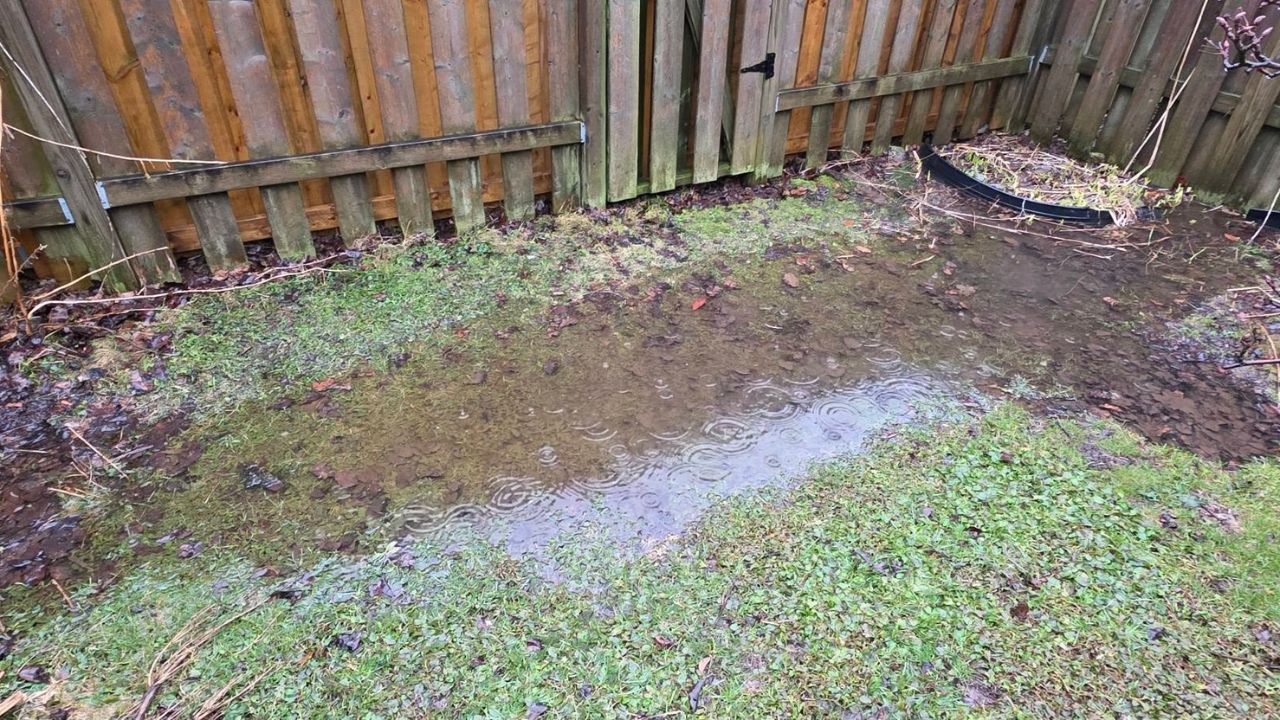
Homeowners call me about dead grass. They call me about weeds, about bare patches, about a lawn that just won’t thicken up no matter what they try. What a lot of them don’t call me about — because they don’t know to — is drainage. And yet drainage is sitting underneath a huge number of the lawn problems I get called out for across Greater Sudbury.
Nobody talks about it because it’s not obvious. You don’t see “drainage problem” the way you see a brown patch or a weed. You see the symptoms — wet spots, slow-draining areas, grass that struggles in specific parts of the yard year after year — and you treat the symptoms without ever addressing what’s actually causing them.
I want to walk you through what’s actually happening, why it’s so common in Sudbury specifically, and what the real fix looks like. Because patching the surface of a drainage problem gets you exactly nowhere. You have to fix the water.
Why Sudbury Backyards Are Especially Prone to This
There are a few things stacking up against drainage in this part of Ontario specifically, and most homeowners have no idea they’re dealing with all of them at once.
The first is soil. A lot of Greater Sudbury sits on clay-heavy ground, and clay is notoriously slow to drain. Water that would soak through sandy or loamy soil in an hour can sit on top of clay for a full day or longer. Combine that with the rocky, thin-topsoil conditions you get on a lot of properties here — especially anywhere near the Canadian Shield bedrock that defines this region — and you’ve got soil that’s either too dense to let water through or too shallow to hold and filter it properly.
The second is grading. A huge number of residential lots in Sudbury, particularly older ones, were graded decades ago and have shifted since. Frost heave, settling foundations, old landscaping projects that changed the slope without anyone checking where the water would actually go — all of it adds up over the years. A yard that drained fine when the house was built in 1975 might be pooling water against the foundation by 2026, and nobody made an active decision for that to happen. It just crept in slowly.
The third is the freeze-thaw cycle. I’ve written before about what Sudbury’s spring weather pattern does to lawns, and drainage is a huge part of that story. Ground that doesn’t drain well holds water right up until it freezes, and that frozen water expands and shifts the soil structure even further. Each winter can make an existing drainage problem slightly worse than it was the year before.
Put those three things together — clay soil, shifted grading, and repeated freeze-thaw stress — and you get a huge number of Sudbury properties with some degree of drainage problem that nobody has ever properly diagnosed.
The Signs You’re Looking at a Drainage Problem (Not Just a Lawn Problem)
Here’s what I tell homeowners to look for, because a lot of these signs get misread as something else entirely.
The same section of lawn struggles every single year, regardless of what you do to it. If you’ve fertilized, overseeded, watered carefully, and that one section of lawn still looks worse than the rest no matter the season, that’s not a fertility problem. That’s almost always a drainage problem. The grass isn’t lacking nutrients — it’s sitting in soil that’s either too wet or too dry because water isn’t moving through it correctly.
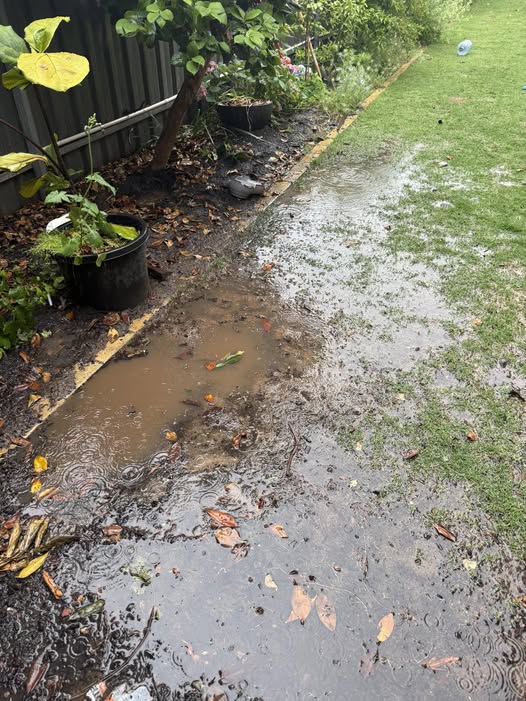
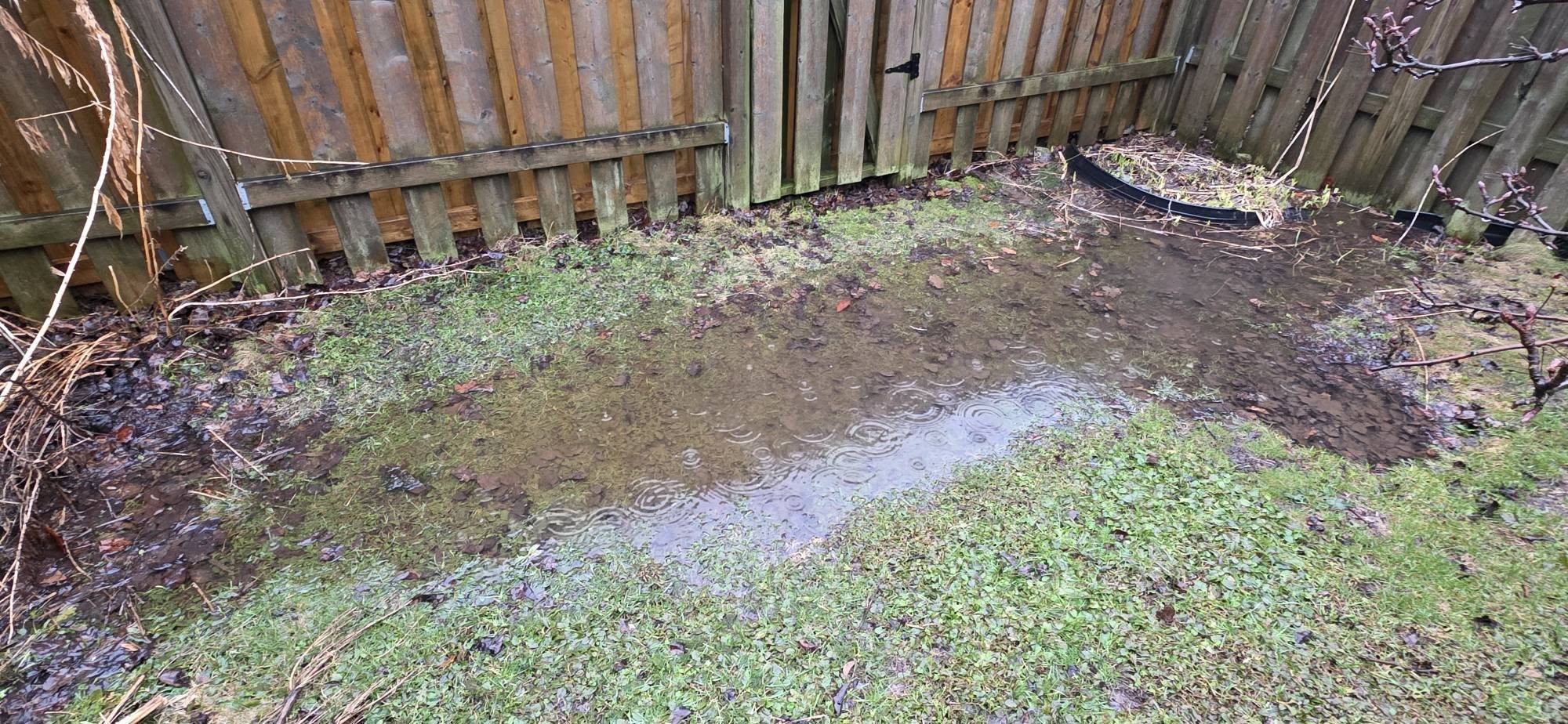
Water visibly sits on the surface more than 24 hours after rain. A healthy lawn on well-drained soil absorbs rainfall within a few hours, maybe overnight for a heavy storm. If you’re still seeing standing water a full day later, especially in the same spot every time, the ground underneath isn’t doing its job.
There’s a low spot you can see or feel when you walk the yard. Walk your property after a rain, or even on a dry day, and pay attention to where the ground dips. Low spots collect water by definition, and over time the grass in those areas thins, develops moss, or dies outright depending on how severe the pooling is.
You notice moisture or efflorescence near the foundation. This is the one that should genuinely concern you, not just for the lawn but for the house. If the grading slopes toward the foundation instead of away from it, water is being directed exactly where you don’t want it. Basement dampness, musty smells, or visible white mineral deposits on basement walls can trace back to a yard drainage issue that started as nothing more than a slightly wrong slope.
Moss is taking over an area that used to grow grass. Moss loves consistently moist, poorly draining soil. If an area of your lawn has slowly converted from grass to moss over a few seasons, drainage and compaction are usually both involved.
The Band-Aid Fixes That Don’t Actually Work — And Why
I see homeowners try the same handful of quick fixes, and I understand why — they’re cheaper and easier than the real solution. But they almost never solve the actual problem.
Adding a thin layer of topsoil over the low spot. This raises the surface temporarily, but if you haven’t changed the underlying grade or addressed why water collects there, that topsoil settles, compacts, and the low spot reappears within a season or two. You’ve spent money to delay the problem, not fix it.
Just reseeding or resodding the wet area repeatedly. If the drainage hasn’t changed, new grass planted in a poorly drained spot faces the same conditions that killed the old grass. I’ve seen properties where homeowners have reseeded the same patch three or four years running, never connecting the dots that it’s the water, not the seed.
Aerating the wet spot specifically. Aeration genuinely helps with general compaction, and I recommend it broadly across Sudbury lawns — but it’s not a fix for a true grading or drainage problem. If water is pooling because the land slopes the wrong way or because there’s no path for excess water to escape the property, aeration holes will just fill with water faster. It treats compaction, not flow.
Ignoring it and hoping a dry summer fixes it. Some years are drier than others and a drainage problem can seem to disappear during an especially dry stretch. But the underlying grade or soil issue hasn’t gone anywhere. The next wet spring or rainy summer, it’s right back.
All of these approaches treat the symptom sitting on top of the soil. None of them address what’s actually moving — or not moving — the water underneath.
The Real Fix: Regrading, French Drains, and Proper Soil Prep
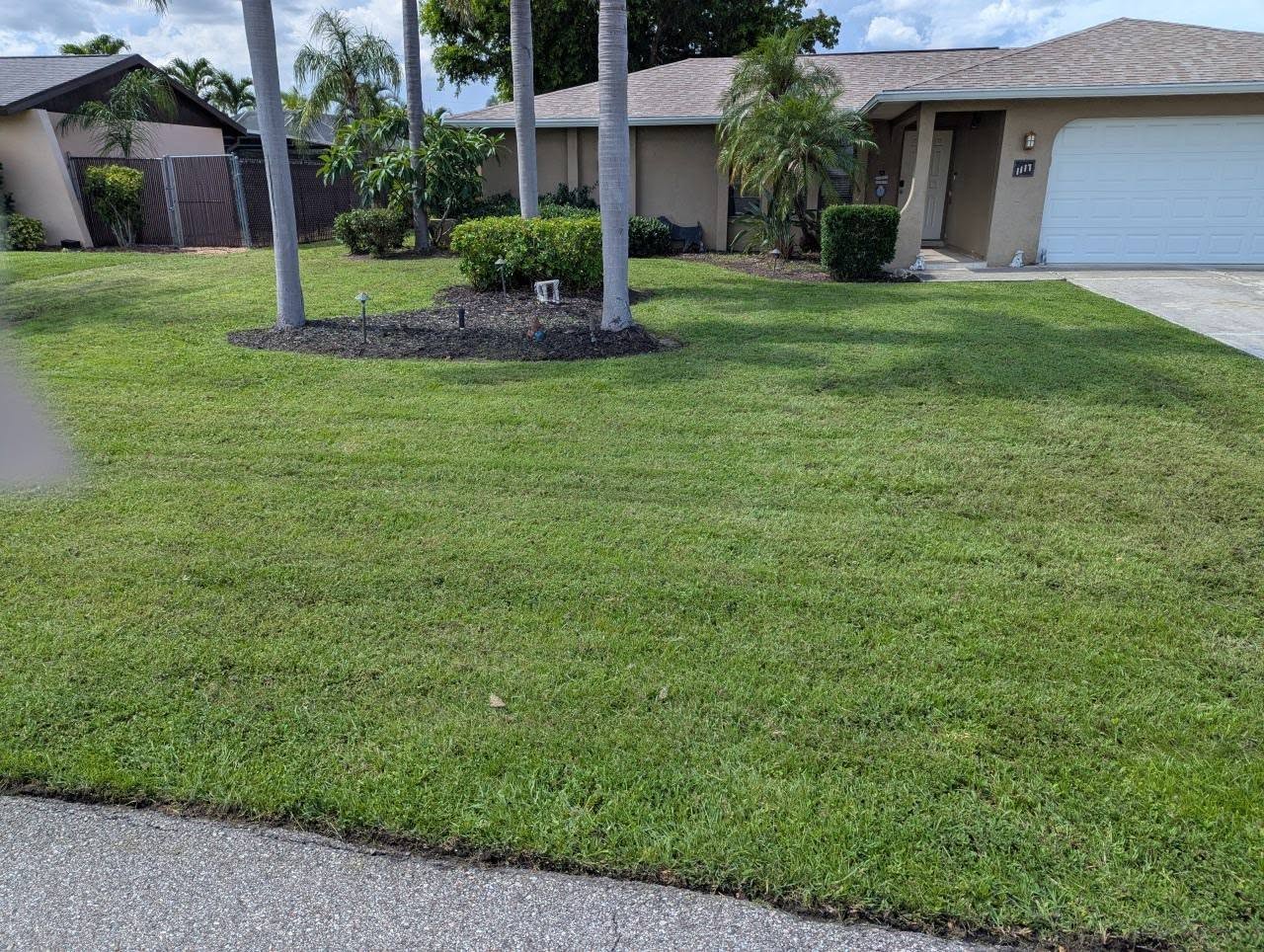
Here’s what actually solves a drainage problem, depending on what’s causing it.
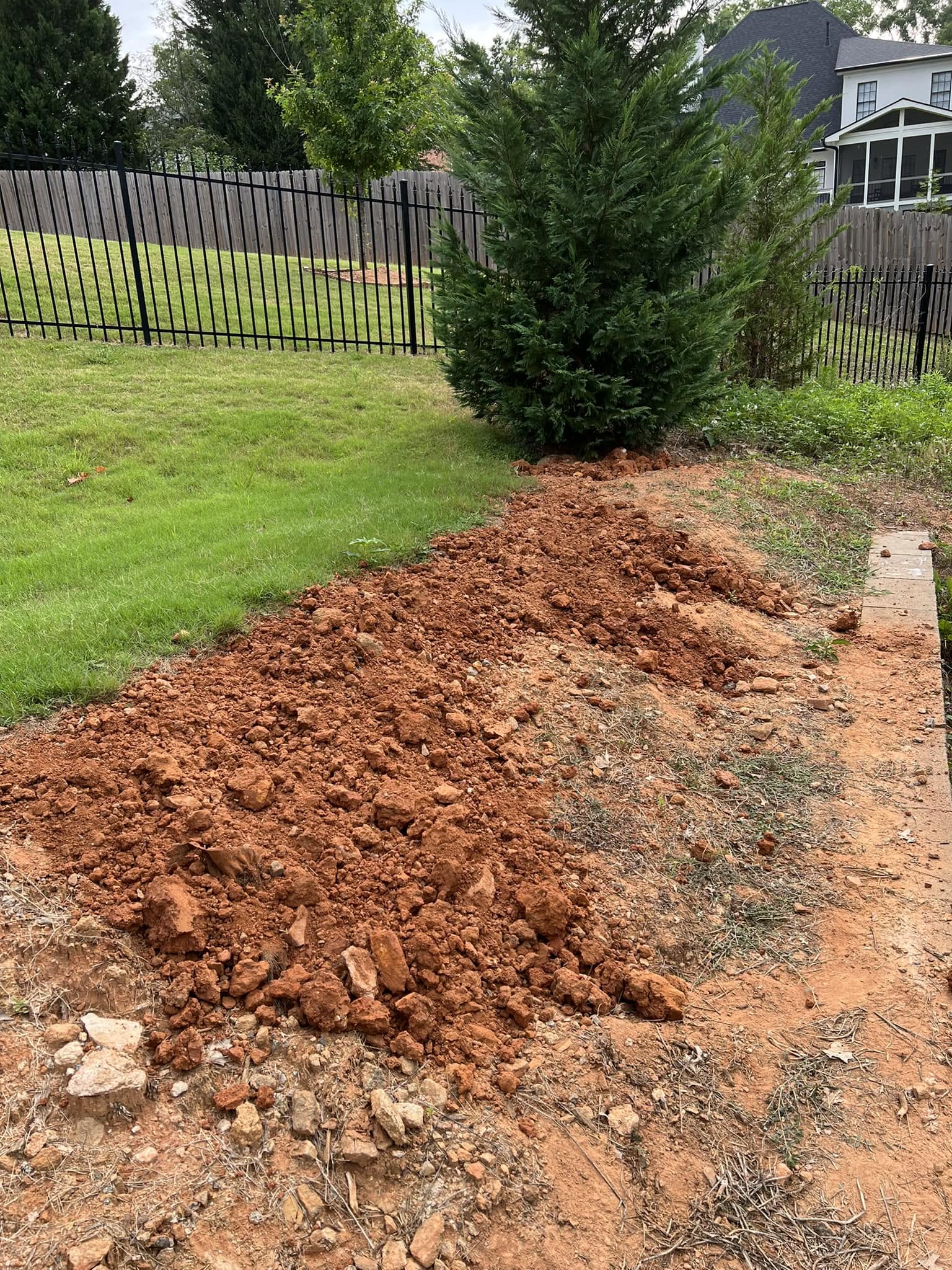
Regrading. If the issue is that the land slopes the wrong way — toward the house, toward a low spot with nowhere for water to go — the fix is correcting the grade. This means excavating the affected area, adjusting the slope so water moves away from structures and toward an appropriate drainage point, and rebuilding the soil profile properly from there. It’s more involved than a quick topsoil dump, but it actually changes where water goes instead of hoping it disappears.
French drains. For low spots that can’t be fully regraded, or for properties where water needs to be actively redirected, a French drain — a buried perforated pipe surrounded by gravel that channels water to a more appropriate exit point — is often the right tool. It intercepts water before it pools and moves it somewhere it won’t cause damage. This is more common on properties with persistent low spots that regrading alone can’t fully resolve.
Proper soil structure from the ground up. Whether we’re regrading or installing drainage, the soil profile matters. Compacted clay right at the surface won’t let water through no matter how well the slope is corrected. Bringing in proper fill, building the right soil layers, and finishing with quality topsoil gives water somewhere to go once the grade is right.
Sod on top of properly prepped, properly graded soil. Once drainage is actually fixed, putting fresh turf down is what completes the job and makes the area usable and good-looking again. I’ve talked before about how sod installation only works as well as the base it’s laid on — and this is the clearest example of that. Sod laid on a properly graded, well-drained base roots fast and stays healthy. Sod laid over an unresolved drainage problem just becomes the next layer of grass that struggles in the same wet spot.
This is also connected to something I’ve written about regarding older Sudbury properties — sometimes what’s causing a drainage and growth problem isn’t just the grade, it’s old buried material disrupting how water moves through the soil. If you’ve corrected the visible grade and you’re still seeing pooling or dead patches, it’s worth digging a bit to rule that out too.
I’ll be straight with you: a real drainage fix is not the cheapest line item in lawn care. But compared to repeatedly reseeding or resodding the same wet, dying patch every couple of years, it’s the option that actually stops costing you money over time.
Not Sure If Your Backyard Has a Drainage Problem?
If you’ve got a section of lawn that’s never quite worked, that stays wet longer than the rest of the yard, or that’s developed moss or persistent dead patches — it’s worth having someone actually look at the grading and soil rather than continuing to treat the surface.
I’ll come out, walk your property, check the grade, and tell you honestly whether you’re dealing with a true drainage issue or something else. If it is drainage, I’ll lay out what fixing it properly would actually involve and what it would cost — no guessing, no upsell on something you don’t need.
📞 Call or text me directly: 705-507-6787
Or fill out the free assessment request here.
— Ryan Lingenfelter
Owner, Cutting Edge Lawn & Landscaping
Garson, Ontario
