
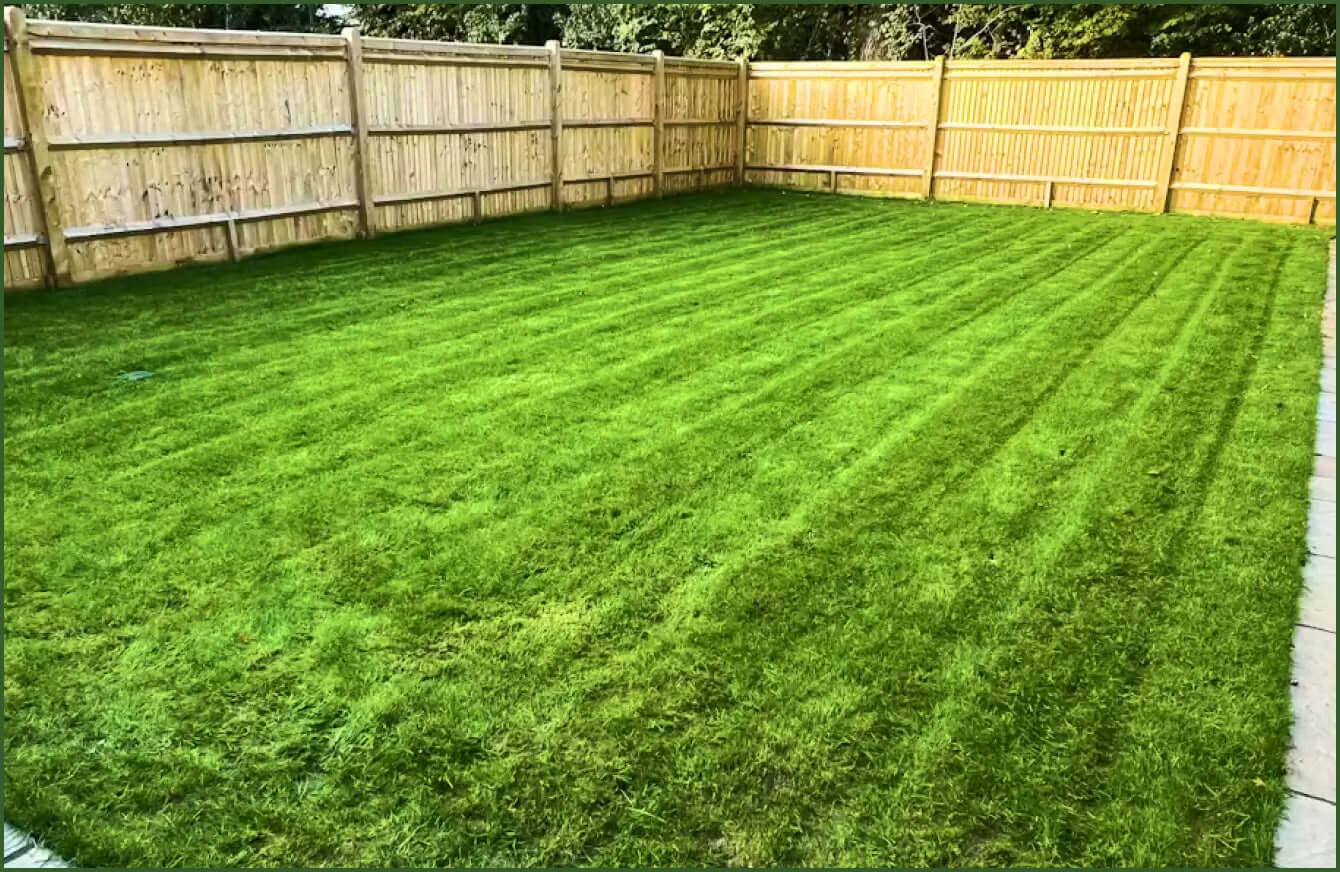
July is the month that tells the truth about a lawn.
Anybody’s grass can look decent in May. The snow just melted, everything’s coming back to life, and a lawn that’s been completely neglected for years can still look passable for a few weeks. July is different. By the time we’re a few weeks into summer heat, the lawns that are actually healthy and the lawns that have been getting by on luck become very easy to tell apart.
I’m Ryan Lingenfelter, owner of Cutting Edge Lawn & Landscaping in Garson, Ontario. Since 2020, I’ve walked properties across Greater Sudbury every single July — Garson, Val Caron, Hanmer, Lively, Chelmsford, Azilda, Capreol. I’ve seen the lawns that stay deep green through the hottest stretch of the year, and I’ve seen the ones that go brown the first week it doesn’t rain.
After hundreds of these July walkthroughs, the pattern is clear. The good lawns aren’t lucky and they’re not genetically different grass. They consistently share the same five things. Here’s what they are.
1. They’re Cut at 3 Inches — And Have Been All Season
This is the single biggest predictor I’ve found. Every lawn I’ve walked in July that’s holding deep green has been mowed at 3 inches consistently since the first cut in May. Every lawn that’s struggling has, at some point, been cut shorter — usually because someone wanted it to “look neat” or didn’t think about it carefully when setting the mower deck.
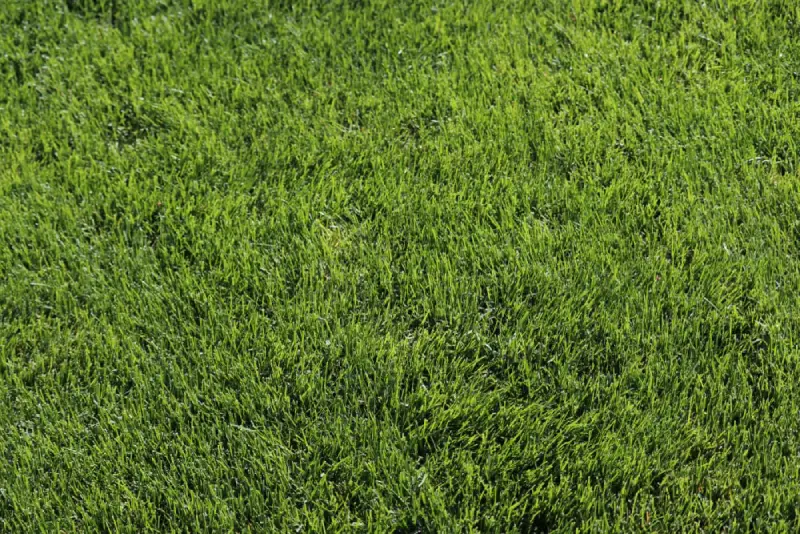
The reason this matters so much in Sudbury specifically comes down to root depth. Grass blades and grass roots grow proportionally — a longer blade supports a deeper root system. A lawn that’s been cut at 3 inches all season has roots reaching 4 to 6 inches into the soil by July. That root system can pull moisture from below the surface layer that’s already baked dry by mid-July heat.
A lawn cut at 2 inches or shorter has roots that rarely get past 2 to 3 inches deep. When the top layer of soil dries out — which happens fast on Sudbury’s clay during a dry stretch — those shallow roots have nowhere else to go. The grass goes from green to stressed to brown within days.
I walked a property in Lively last July where the front yard, cut by the homeowner at what looked like 2 inches, was completely brown. The backyard, which we maintain at 3 inches on our schedule, was holding solid green through the same dry stretch, same soil, same sun exposure. Same lawn, different mowing height, completely different July result. I’ve written about this specific mistake in detail in the May mowing mistake article here — it’s the most consequential decision most homeowners make about their lawn each season, usually without realizing it.
2. The Soil Underneath Isn’t Compacted
Every consistently good Sudbury lawn I’ve walked has soil that lets a screwdriver go in 4 to 6 inches without much resistance. Every struggling lawn stops that same screwdriver at an inch or two.
This isn’t a coincidence. Sudbury’s clay-heavy soil compacts hard every winter through our freeze-thaw cycles, regardless of what the lawn looked like the previous fall. The lawns that hold up well in July are, almost without exception, the ones that get aerated annually. The compaction gets reversed every spring before it has a chance to compound year over year.
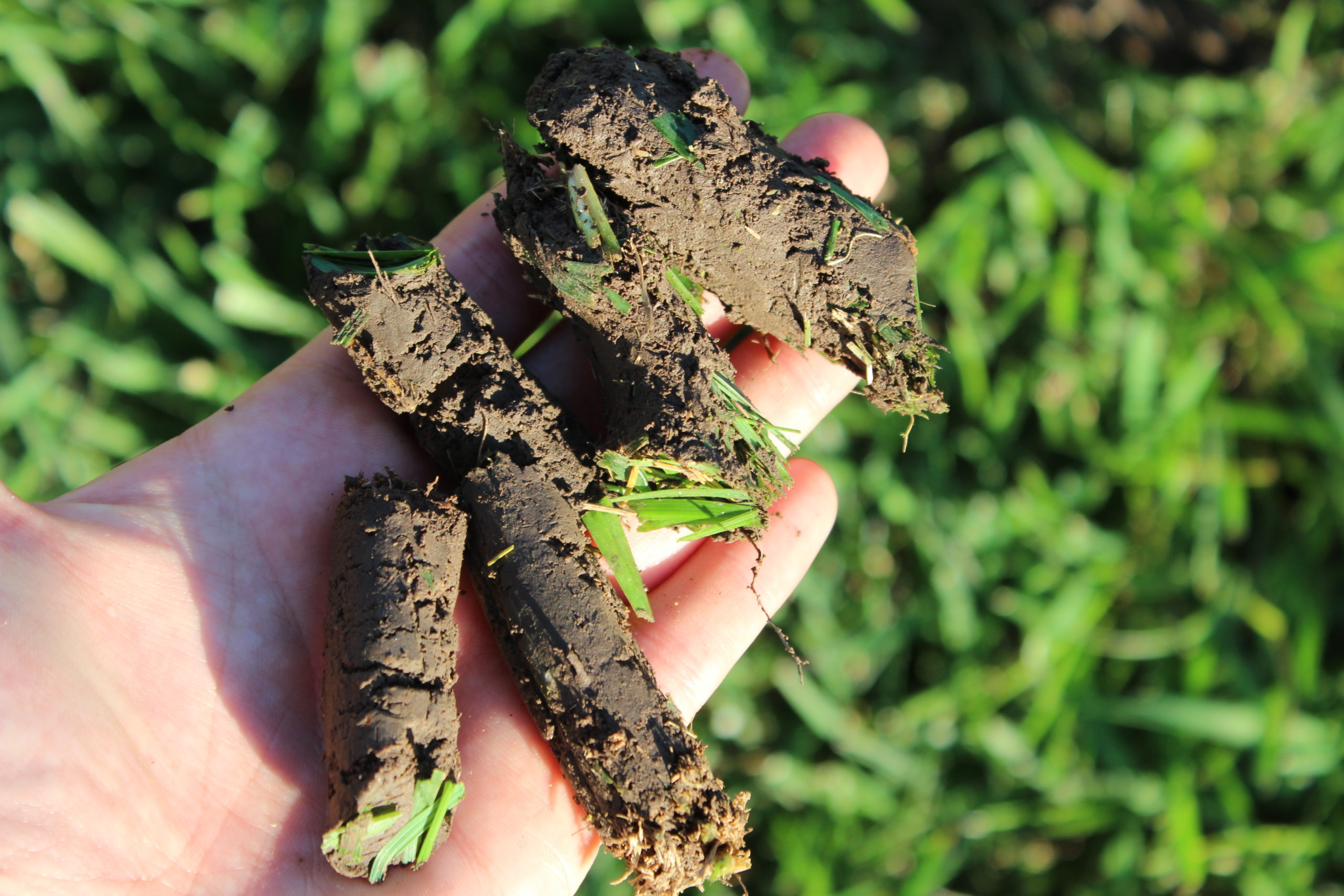
Compacted soil affects a lawn in July in two specific ways. First, water can’t penetrate properly — it either pools on the surface and evaporates or runs off entirely, so even a homeowner who’s watering diligently isn’t actually getting moisture to the root zone. Second, roots simply can’t grow through packed clay, so even with perfect watering, the plant can’t access what’s there.
I’ve seen homeowners frustrated that they’re watering correctly and the lawn still browns out. Nine times out of ten when I walk that property, the screwdriver test reveals severe compaction. The water isn’t the problem. The soil structure underneath is. Annual core aeration in late May is the difference-maker on almost every good Sudbury lawn I’ve walked.
3. They’re Watered Deep, Not Often
The watering pattern on every July-resilient Sudbury lawn I’ve seen is the same: long, infrequent sessions rather than short daily ones. Two deep waterings a week, applying enough water that it actually penetrates several inches down, rather than a quick ten-minute sprinkle every evening.
The lawns that struggle are almost always on the opposite pattern — daily light watering that wets the top half-inch of soil and evaporates by mid-morning. It feels productive because you’re out there with the hose or running sprinklers regularly, but it trains the roots to stay shallow because that’s where the available moisture is. Combined with compacted clay that doesn’t let water through easily, daily shallow watering on a Sudbury lawn produces almost no benefit by late July.
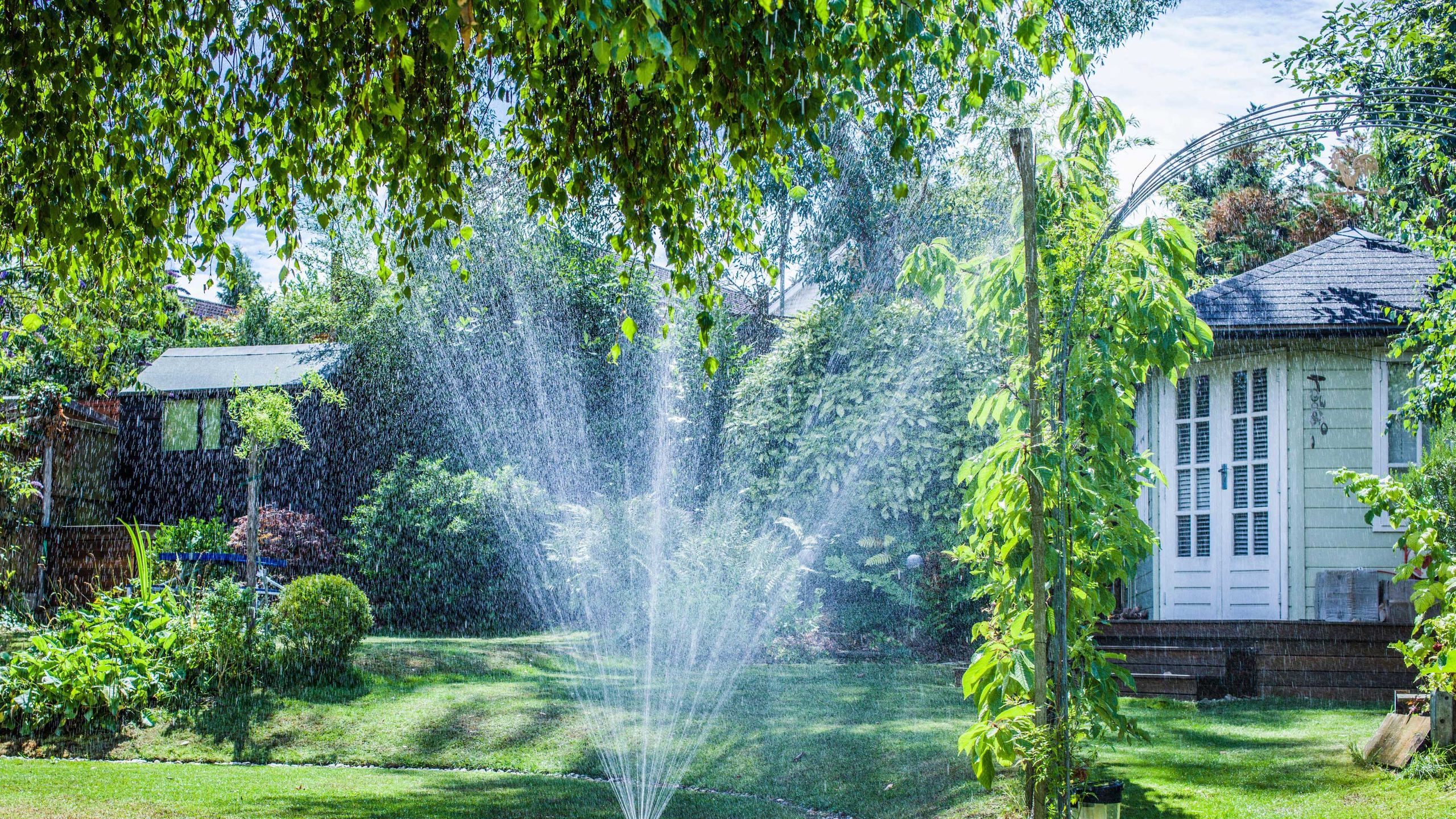
I worked with a homeowner in Hanmer who was watering every single evening — genuinely committed to it, never missed a day — and was confused why the lawn still looked stressed by mid-July. We switched her to two deep sessions a week using a cycle-and-soak approach to deal with the clay’s slow absorption, and by the following month the difference was visible. Same total water volume over the week, dramatically different result, because the water was actually reaching the roots instead of sitting on the surface.
4. Something Was Done About the Weeds Before They Took Over
This one surprised me when I first started noticing the pattern, but it’s consistent. The good July lawns don’t necessarily have zero weeds — but they have grass that’s thick enough that weeds never got the chance to dominate.
Weeds and grass are competing for the same light, water, and nutrients. A thin, stressed lawn — usually from compaction or short mowing — gives weeds an opening. Dandelions, crabgrass, and creeping Charlie all establish fastest in thin or bare patches. Once they’re established, they out-compete grass even further because most common Sudbury weeds tolerate compacted soil and heat better than turf grass does.
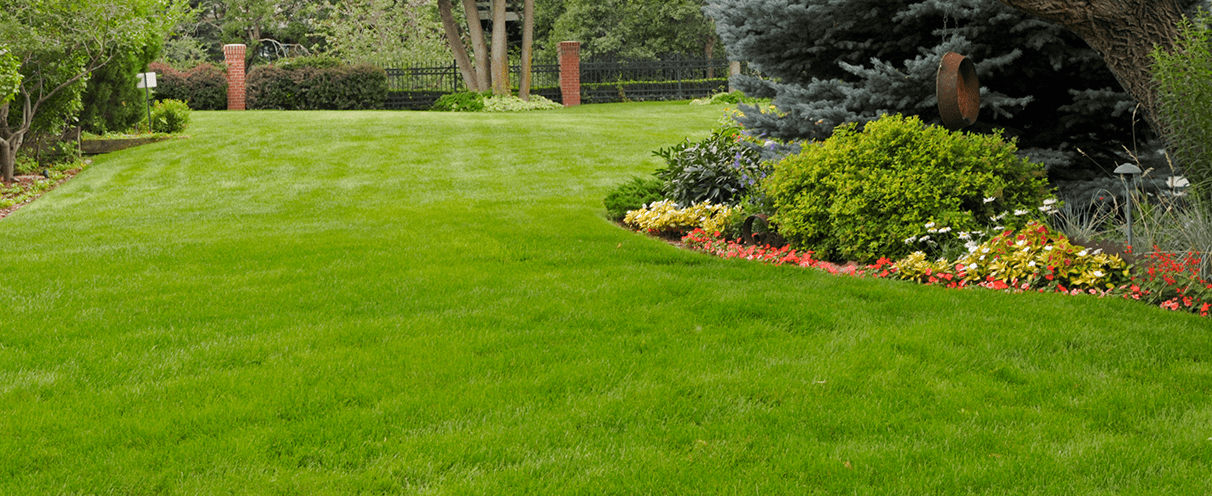
The good lawns I’ve walked broke that cycle early — usually through the combination of aeration and overseeding that thickens the turf enough that weed seeds simply don’t have bare soil to germinate in. By July, the difference between a property that addressed this in spring and one that didn’t is stark. One has a uniform green lawn. The other has a patchwork of grass and dandelions competing for the same ground, with the dandelions usually winning by midsummer.
5. The Person Maintaining It Actually Looks at It Regularly
This is the least technical item on this list and possibly the most important. Every consistently good Sudbury lawn I’ve worked on belongs to someone — homeowner or professional — who actually walks the property regularly and notices things early.
A small brown patch that gets noticed in June and investigated gets fixed in June. The same patch ignored until late July, when it’s spread to cover a third of the lawn, is a much bigger and more expensive problem. Grub damage caught early is a quick treatment. Grub damage discovered in August after it’s spread through an unwatched section is a reseeding or sodding project.
The homeowners with the best July lawns are the ones who notice a problem at the size of a dinner plate, not after it’s the size of a kiddie pool. They call early. They ask questions when something looks off rather than waiting to see if it resolves itself. None of this requires expertise — it requires attention.
What This Means If Your Lawn Isn’t One of the Good Ones Right Now
If you’re reading this in the middle of a rough July and your lawn doesn’t check these five boxes — that’s fixable, but the timeline matters. Mowing height you can correct today. Just raise the deck to 3 inches on your next cut and leave it there.
Watering pattern you can correct today too. Switch to two deep sessions a week instead of daily light watering.
Compaction and weed pressure take longer to address properly — core aeration is most effective in late May, though a midsummer aeration on a severely struggling lawn can still help. If your lawn is significantly compacted and weed-covered right now, the realistic plan is damage control through the rest of this summer and a proper restoration starting with aeration next spring. I covered the full month-by-month picture of what happens when a lawn doesn’t get this attention in the skipped season article here.
If you want someone to walk your property and tell you honestly which of these five things your lawn is missing — that’s exactly what a quote call is for. I’ll point out specifically what’s working and what isn’t, no matter what time of year it is.
📞 705-507-6787
🔗 Get a Free Quote
📍 Serving Greater Sudbury — Garson, Val Caron, Hanmer, Lively, Chelmsford, Azilda, Capreol
— Ryan
Frequently Asked Questions
What do the healthiest lawns in Sudbury have in common in July?
Five things consistently: they’re cut at 3 inches all season rather than shorter, the soil underneath isn’t compacted because they’re aerated annually, they’re watered with deep infrequent sessions rather than daily light watering, the grass is thick enough that weeds never got a foothold, and the homeowner or maintenance crew notices small problems early before they spread. Almost every struggling Sudbury lawn is missing at least two of these five.
Why does my Sudbury lawn go brown in July even though I water it regularly?
The most common cause is watering pattern combined with soil compaction. Daily light watering keeps moisture near the surface and trains roots to stay shallow, while Sudbury’s compacted clay soil prevents water from penetrating deeply even when you apply enough volume. The fix is switching to two deep watering sessions per week and addressing compaction through annual core aeration — both together solve what watering alone can’t.
What mowing height keeps a Sudbury lawn green through summer?
3 inches, maintained consistently from the first cut in May through the last cut in October. This height supports root systems that reach 4 to 6 inches into the soil, which gives the grass access to moisture below the surface layer that dries out first during a hot stretch. Lawns cut at 2 inches or shorter develop shallow root systems that can’t access deeper soil moisture and brown out quickly during dry periods.
How do I know if my Sudbury lawn has compacted soil?
Push a standard flathead screwdriver straight down into the lawn. On healthy, uncompacted soil, it should go in 4 to 6 inches without much resistance. If it stops at 1 to 2 inches, the soil is significantly compacted — common on Sudbury’s clay-heavy properties, especially those that haven’t been aerated in several years. Compacted soil is the underlying cause behind most chronic July browning, thin grass, and weed pressure on Sudbury lawns.
Is it too late to fix my Sudbury lawn if it’s already July?
No, but the available fixes depend on timing. Mowing height and watering pattern can be corrected immediately with results visible within a few weeks. Core aeration is most effective in late May but can still help if done in midsummer on a severely struggling lawn — just avoid aerating during extreme heat stress. Major restoration work involving significant overseeding is better planned for late August through mid-September, Sudbury’s ideal seeding window, rather than attempted in peak summer heat.
Ryan Lingenfelter is the owner of Cutting Edge Lawn & Landscaping in Garson, Ontario. Since 2020, his crew has provided full lawn care services across Greater Sudbury — Garson, Val Caron, Hanmer, Lively, Chelmsford, Azilda, and Capreol. Cutting Edge is licensed, insured, BBB A+ rated, and ThreeBest Rated for lawn care services in Sudbury.
📞 Phone: 705-507-6787
📍 Service Area: Greater Sudbury, Ontario
🔗 Free Quote: cuttingedgelawn.ca/quote
Helpful Lawn Care Services in Sudbury
- Grass Cutting Services
- Core Aeration for Healthy Lawns
- Property Cleanup Services
- Sod Installation in Sudbury
- Mulch & Decorative Stone
- Hedge Trimming Services
Continue Reading
- The May Mistake That’s Killing Sudbury Lawns by July
- Spring or Fall — When Should You Actually Aerate Your Sudbury Lawn?
- 3 Things Lawn Experts Get Wrong About Sudbury Soil
