
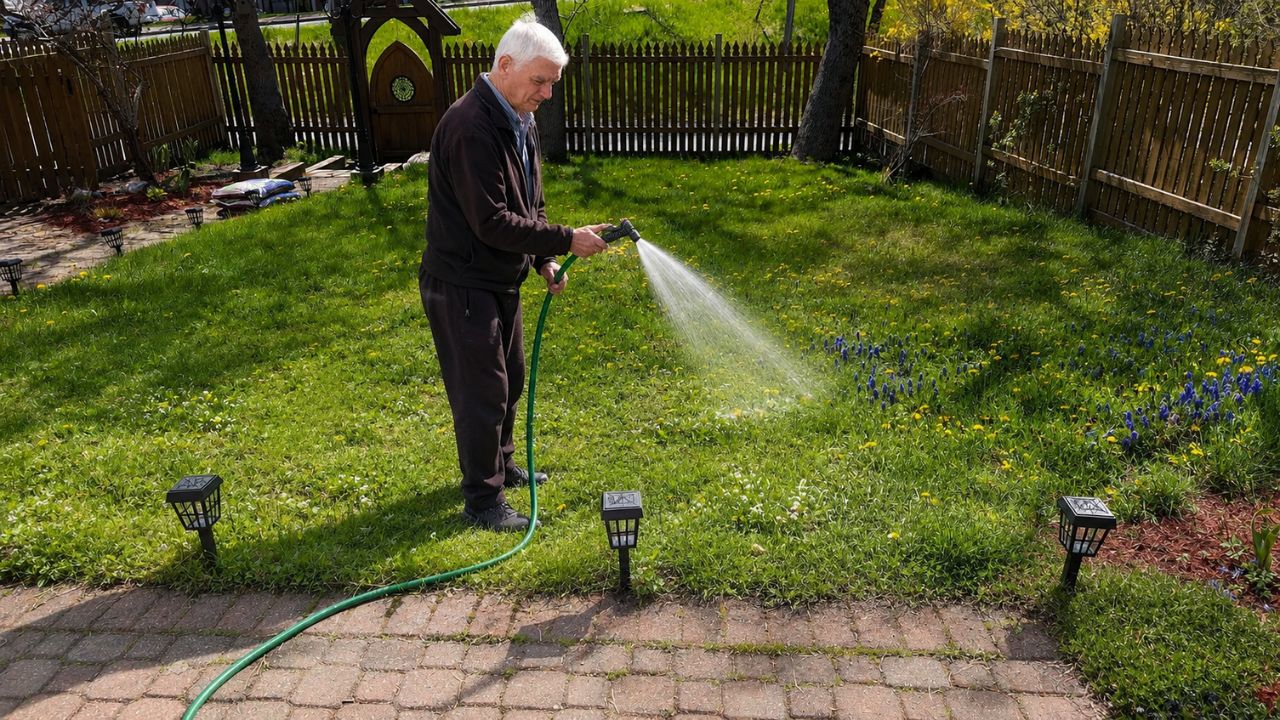
I want to tell you about a conversation I have at least a few times every season.
A homeowner calls me, frustrated. They’ve been following advice from a YouTube channel, a lawn care app, or a bag of fertilizer with detailed instructions on the back. They’ve done everything they were told. The lawn still looks rough. It browns out every July. The bare patches keep coming back. The weeds haven’t gone anywhere.
“Ryan, I’m doing everything right. Why isn’t it working?”
Almost every time, the answer is the same. The advice they followed was written for somewhere else. Not for Greater Sudbury. Not for Canadian Shield properties. Not for soil that’s spent six months under a metre of snow and has been freeze-thaw cycled into something closer to concrete than dirt.
I’m Ryan Lingenfelter, owner of Cutting Edge Lawn & Landscaping in Garson, Ontario. Since 2020, I’ve maintained properties across Greater Sudbury — Garson, Val Caron, Hanmer, Lively, Chelmsford, Azilda, Capreol. I’ve walked hundreds of properties on this soil. And I want to tell you the three things I see people get wrong most consistently — things that work everywhere else but fail here — and what actually works on Sudbury lawns.
First — What Makes Sudbury Soil Different
Before I get into the mistakes, you need to understand why Sudbury soil behaves differently from what most general lawn care advice assumes.
Greater Sudbury sits on the Canadian Shield — some of the oldest exposed bedrock on the planet. The soil here is thin, clay-heavy, and in many areas, sits directly over granite or basalt with very little depth. In newer subdivisions — most of Garson’s east end, parts of Hanmer, large sections of Val Caron — the topsoil was scraped down to near-bedrock during construction and what’s there now is a thin layer over dense clay subsoil.
That clay does three things that fundamentally change how lawns behave here:
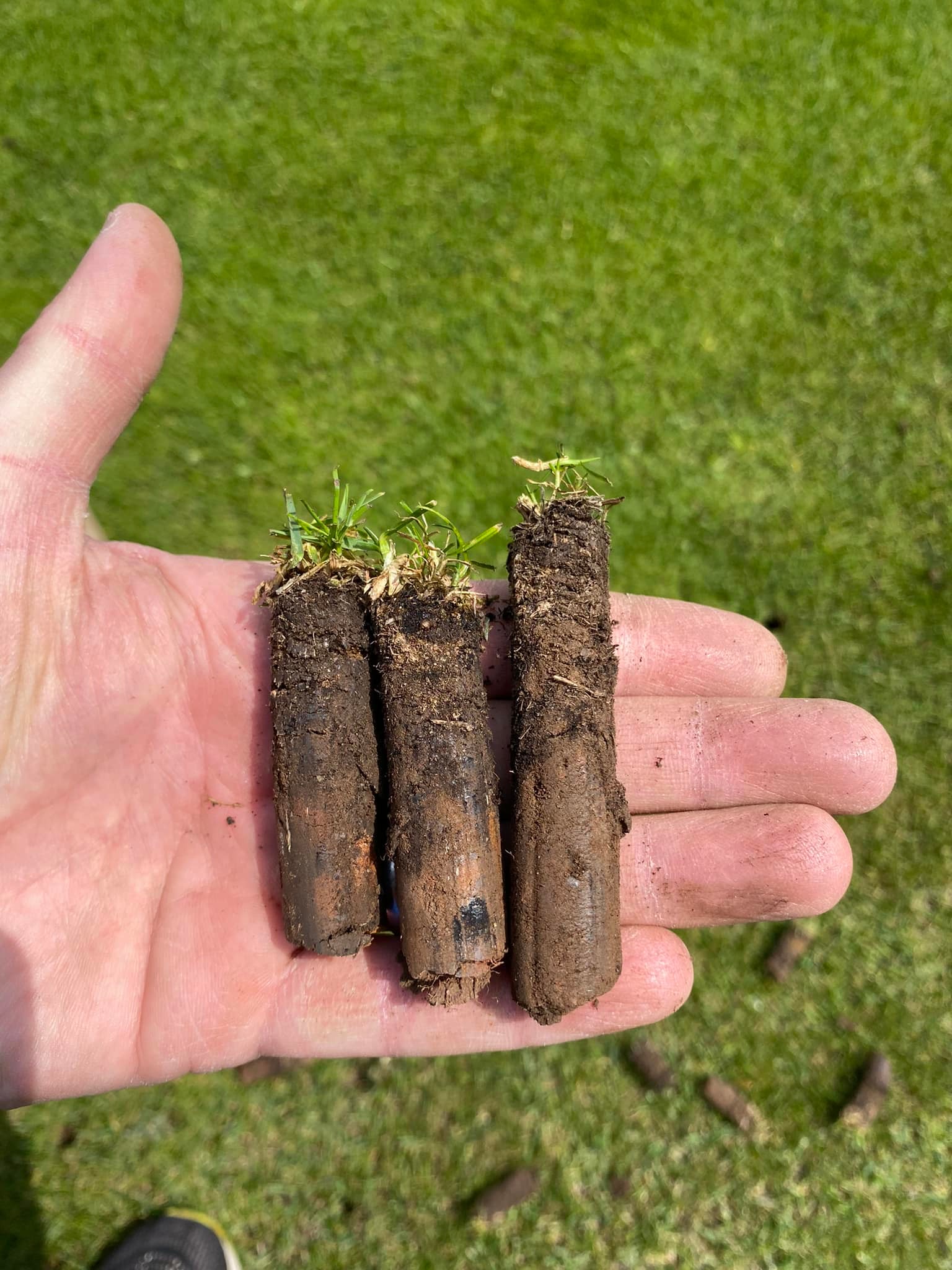
It compacts hard and stays compacted. Sudbury’s freeze-thaw cycles — we can go from -30 to +5 and back multiple times in a single winter — press the clay down season after season. By May, most Sudbury lawns are sitting on soil that’s packed tighter than a gravel driveway six inches down. Grass roots simply can’t go anywhere.
It holds water when wet and cracks when dry. Clay soil doesn’t drain the way loam does. In spring it’s waterlogged. In a dry July stretch it bakes hard and pulls away from itself. Neither condition is good for grass roots, and the transition between them is faster and more extreme on clay than on any other soil type.
It has low organic matter in most Sudbury properties. Thin topsoil over clay means less organic matter, fewer soil microbes, and lower natural fertility than you’d find in deeper-soil regions. The soil biology that makes lawn care easy in southern Ontario is largely absent here. You’re working with a less forgiving base from the start.
Once you understand this, the three mistakes I’m about to describe make complete sense. They all come from treating Sudbury soil like it’s something it’s not.
Mistake #1 — Following a Fertilizer Schedule Written for Southern Ontario
Walk into any hardware store in Sudbury in May and you’ll find bags of lawn fertilizer with application schedules printed right on them. Apply in early spring, apply again in early summer, apply in fall. Simple enough.
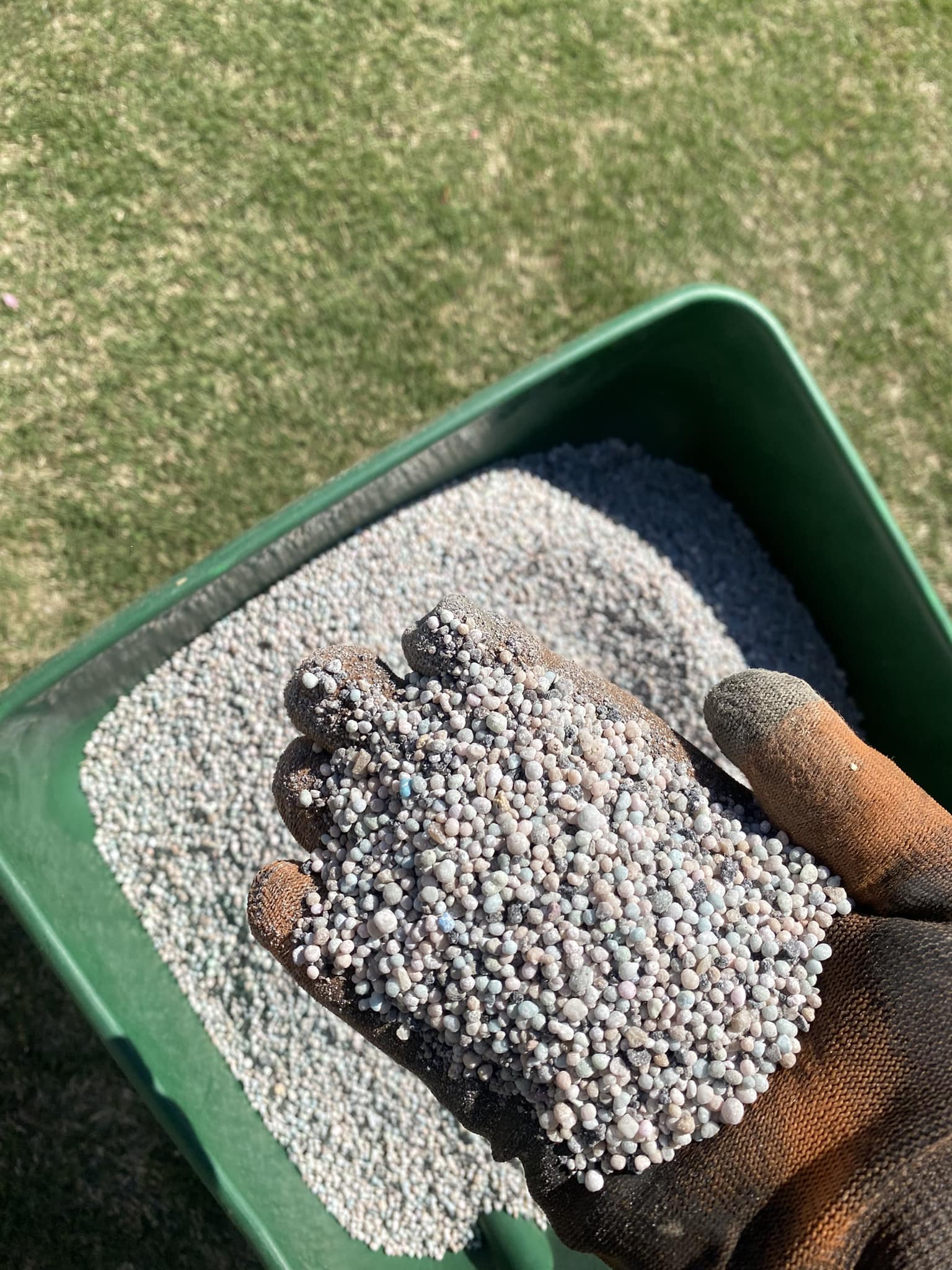
The problem is that those schedules were written for lawns in Guelph or Mississauga or Ottawa — lawns with deeper topsoil, more organic matter, and soil biology that can actually process and deliver the nutrients you’re putting down. On Sudbury’s clay-heavy, low-organic-matter soil, that standard schedule doesn’t work the same way.
Here’s what happens specifically.
Early spring fertilizer on compacted Sudbury clay does almost nothing. The standard advice is to fertilize as soon as the lawn greens up in spring. On a loamy, well-drained soil with good biology, that makes sense. On Sudbury clay that hasn’t been aerated — where the soil is still compacted from winter and the root system is shallow — the fertilizer sits on the surface, gets washed away with the first rain, or gets taken up by the shallow roots that are already there and produces a temporary green-up that fades within weeks. Nothing changes underneath. The structural problem — compacted soil, shallow roots, no depth — remains.
The fertilizer isn’t the missing piece. On most Sudbury lawns I walk, the lawn isn’t thin and yellow because it’s not getting fed. It’s thin and yellow because the roots can’t grow deep enough to sustain the plant through summer stress. No amount of nitrogen fixes that. You’re feeding a patient who needs surgery, not nutrition.
What actually works: Aerate first, then fertilize. Core aeration in late May opens the compacted clay, creates channels for roots to grow deeper, and — critically — creates direct pathways for fertilizer to reach the root zone instead of sitting on the surface. Fertilizer applied after aeration on a Sudbury property produces dramatically better results than fertilizer applied to an un-aerated lawn. The sequence matters.
If you’ve been fertilizing on the bag’s schedule for years and the lawn still looks the same — it’s not the fertilizer brand. It’s the soil underneath.
Mistake #2 — Watering on a “Standard” Schedule
The most common watering advice you’ll find online is some version of “water deeply once or twice a week.” That’s good advice — for most soils.
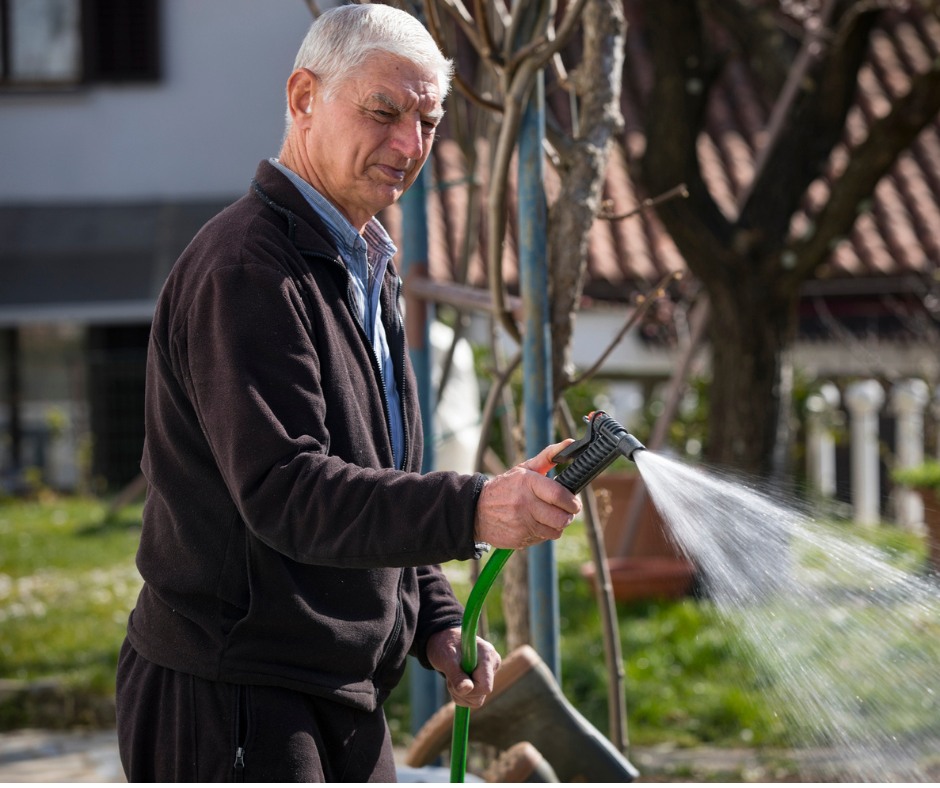
On Sudbury clay, it requires a significant adjustment that almost nobody mentions.
Clay soil absorbs water slowly. On a loamy soil, a deep watering session soaks down through the profile relatively quickly. On clay, water moves slowly — the soil doesn’t absorb it at the same rate. What happens when you apply standard watering advice to clay soil is that the water runs off or pools on the surface before it has a chance to soak in. You’re watering the driveway more than you’re watering the roots.
I see this constantly in July on Sudbury properties. Homeowner is watering religiously — twice a week, long sessions. The lawn is still going brown. They can’t understand why. When I push a screwdriver into the soil in the brown area, it stops at an inch and a half. The water isn’t getting down.
What actually works on Sudbury clay: Cycle and soak. Instead of one long watering session, break it into two shorter sessions with an hour between them. Run the sprinkler for 15 minutes, let it soak in, run it again for 15 minutes. The first cycle softens the clay surface enough that the second cycle can actually penetrate. You end up with the same total water volume but dramatically better penetration.
The other piece is timing. Water before 9am so the grass blades dry out during the day. Evening watering on Sudbury clay creates persistent surface moisture — the clay doesn’t drain it away as fast as a lighter soil would — and that overnight wet surface is exactly what fungal diseases need to establish. I covered this in more detail in the Sudbury lawn watering guide here.
And again — none of this fully solves the problem if the soil is still severely compacted. Aeration is what makes watering on Sudbury clay actually effective. The plug holes from aeration are essentially drainage channels that let water reach the root zone directly. On a freshly aerated Sudbury lawn, the same watering session produces noticeably better results than on an un-aerated one.
Mistake #3 — Treating Weed Problems as a Weed Problem
This is the one that costs people the most money and produces the least results.
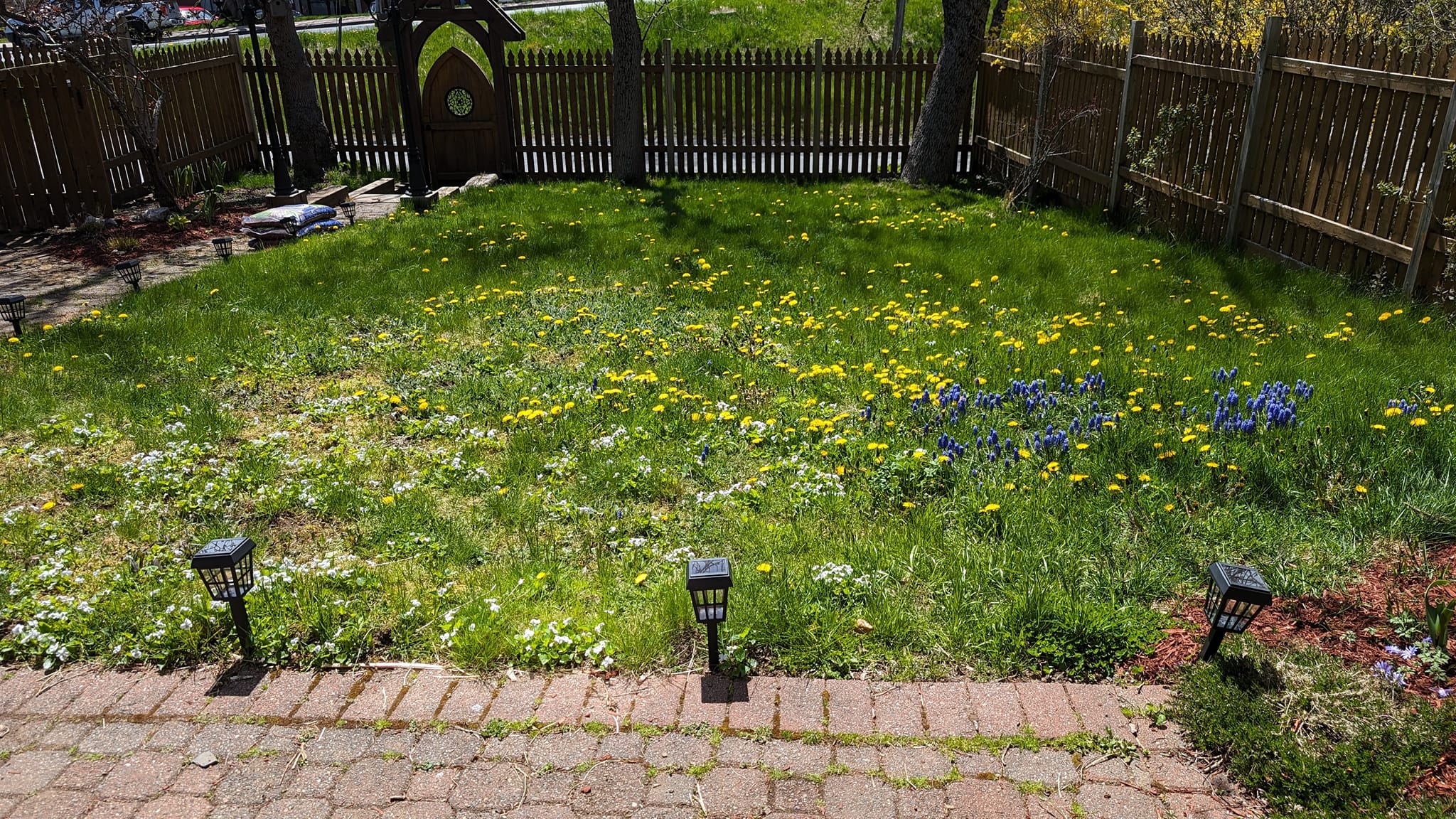
A Sudbury homeowner sees dandelions taking over the front yard. They go to the garden centre, buy a broadleaf herbicide or a weed-and-feed product, apply it, and the dandelions die. Six weeks later, there are more dandelions. They apply again. More come back. This cycle repeats every season.
The reason it doesn’t work isn’t the product. It’s the diagnosis.
Weeds on a Sudbury lawn aren’t a weed problem. They’re a soil problem.
Dandelions, plantain, and creeping Charlie — the three most common lawn weeds across Greater Sudbury — all have one thing in common: they thrive in compacted clay soil. They have deep taproots that can penetrate compacted ground that grass roots can’t get through. They don’t need the kind of healthy soil biology that turf grass needs. In a competition between dandelions and grass on packed Sudbury clay, dandelions win every time.
When you kill the dandelions with herbicide, you’re removing the symptom. The compacted soil that made them thrive is still there. New dandelion seeds — blowing in from every direction, every day — find exactly the same conditions waiting for them. They germinate, establish quickly in the compacted soil, and you’re back where you started within a few weeks.
What actually works: Fix the soil, then address the weeds.
Core aeration breaks the compaction. Overseeding after aeration fills the bare and thin areas with grass that, once established, outcompetes new weed germination — thick turf doesn’t give weed seeds the exposed soil they need to germinate successfully. Then treat the remaining weeds. In that order.
When I do a full restoration on a weed-heavy Sudbury property — aerate, overseed, then treat weeds — the weed coverage drops dramatically within one season and continues dropping into the second year as the grass fills in. When I apply weed treatment to an un-aerated lawn, the dandelions come back faster than the treatment bill clears the bank.
The sequence is: fix the soil, fill the grass, then handle the weeds. Not the other way around. I walked through this in detail in the worst lawn restoration article here — the same principle applied on one of the most weed-covered properties I’ve worked on in Greater Sudbury.
The Common Thread — What All Three Mistakes Have in Common
You’ve probably noticed the pattern.
All three mistakes — applying fertilizer without aerating first, watering without accounting for clay absorption, treating weeds without fixing the compaction — are versions of the same error. They treat the symptom rather than the cause. And the cause, on almost every struggling Sudbury lawn I’ve walked, is the same: clay-heavy, compacted soil that the grass can’t grow through properly.
Fix that, and everything else works better. Fertilizer reaches the root zone. Water penetrates instead of running off. Grass grows thick enough to crowd out weeds. The lawn stops struggling every July. The bare patches fill in and stay filled in.
Don’t fix it, and you can follow every piece of advice on the internet perfectly and still have a lawn that looks the same year after year.
Sudbury soil isn’t impossible to work with. It just requires understanding what it is and what it needs — which is different from what most generic lawn care content assumes.
What to Do With This If Your Lawn Is Struggling Right Now
If your lawn looks rough and you’ve been following standard advice without results, here’s what I’d do.
First, do the screwdriver test. Push a standard screwdriver into the soil in your problem area. If it stops before 4 inches, the soil is compacted. That’s your diagnosis. Everything else follows from that.
Second, book core aeration for late May or early June if you haven’t done it this season. On Sudbury clay, this is maintenance, not a luxury. Every year without it, the compaction gets worse.
Third, overseed after the aeration while the plug holes are open. Quality seed, direct soil contact, consistent moisture for 14 to 21 days. The aeration holes do more for germination rates than anything else you can do.
Fourth, adjust your watering to cycle-and-soak rather than one long session. Give the clay time to absorb between passes.
Fifth, fertilize after aeration — not before. Let the nutrients reach the root zone through the aeration channels instead of sitting on the compacted surface.
Do those five things in that order, and you’ll see a different lawn by September. Not because I have a secret. Because you’ll finally be working with Sudbury’s soil instead of against it.
If you want someone to walk your property and tell you specifically what it needs — that’s exactly what a quote call is. I come out, assess the property, tell you what I see, and give you a straight number before anything is scheduled.
Call me at 705-507-6787 or fill out the free quote form here. We cover all of Greater Sudbury — Garson, Val Caron, Hanmer, Lively, Chelmsford, Azilda, Capreol, and Sudbury proper.
— Ryan
📞 705-507-6787
🔗 Get a Free Quote
📍 Serving Greater Sudbury, Ontario
Frequently Asked Questions
Why is lawn care different in Sudbury compared to other parts of Ontario?
Greater Sudbury sits on the Canadian Shield with clay-heavy, thin topsoil that behaves differently from the deeper loam soils found in southern Ontario. Sudbury’s freeze-thaw cycles compact this clay severely every winter, creating soil conditions where standard lawn care advice — fertilizer schedules, watering routines, weed control timing — produces worse results than it would elsewhere. Lawn care in Sudbury requires accounting for compaction as the primary underlying problem before any other treatment will work properly.
Why do dandelions keep coming back on my Sudbury lawn even after I treat them?
Because the compacted clay soil that makes dandelions thrive is still there after treatment. Dandelions have deep taproots that penetrate compacted ground that grass roots can’t reach — in a competition on packed Sudbury clay, dandelions win. Herbicide removes the existing plants but doesn’t change the conditions that favor them. The fix is core aeration to break the compaction, overseeding to establish thick grass that outcompetes new weed germination, and then weed treatment on what remains. That sequence produces lasting results. Weed treatment alone on un-aerated soil does not.
Why isn’t my fertilizer working on my Sudbury lawn?
On compacted Sudbury clay, fertilizer applied to the surface can’t reach the root zone effectively — it washes off or gets taken up by the shallow root system that’s already there without building any new depth. Fertilizing before aerating on Sudbury soil is significantly less effective than fertilizing after aeration, when the plug holes create direct pathways for nutrients to reach the root zone. If you’ve been fertilizing on a standard schedule without aerating and the lawn still looks the same, the soil structure is the issue — not the fertilizer product.
How should I water my lawn on Sudbury clay soil?
Use a cycle-and-soak approach rather than one long watering session. Run the sprinkler for 15 minutes, let the water soak into the clay for 45 to 60 minutes, then run it again for 15 minutes. The first pass softens the clay surface enough for the second pass to penetrate. This produces significantly better root-zone moisture than one continuous session on clay soil. Water before 9am so grass blades dry during the day — overnight surface moisture on clay encourages fungal disease.
How often should I aerate my Sudbury lawn?
Once a year, in late May to early June, is the standard recommendation for most Greater Sudbury properties. Sudbury’s freeze-thaw cycles compact clay soil every winter regardless of what you did the previous season — annual aeration isn’t overdoing it, it’s maintenance. Properties with heavy foot traffic may benefit from twice-yearly aeration. Properties with good established soil and low traffic can sometimes go every other year, but for most Sudbury clay-soil lawns, annual aeration is what keeps everything else working.
Is there anything I can do about thin topsoil over rock on my Sudbury property?
On Canadian Shield properties where rock is close to the surface, grass will always struggle more in heat and drought than it would in deeper soil — the roots simply can’t go as deep and there’s less water retention. The practical approaches are: topdressing with compost annually to build organic matter over time, overseeding with drought-tolerant grass varieties suited to shallow-soil conditions, and accepting that certain spots may be better managed as mulched beds than as lawn. Core aeration still helps in shallow-soil areas — even a few extra inches of loosened soil above the rock makes a real difference in how the grass performs through summer.
Ryan Lingenfelter is the owner of Cutting Edge Lawn & Landscaping in Garson, Ontario. Since 2020, his crew has provided full lawn care services across Greater Sudbury — Garson, Val Caron, Hanmer, Lively, Chelmsford, Azilda, and Capreol. Cutting Edge is licensed, insured, BBB A+ rated, and ThreeBest Rated for lawn care services in Sudbury.
📞 Phone: 705-507-6787
📍 Service Area: Greater Sudbury, Ontario
🔗 Free Quote: cuttingedgelawn.ca/quote
Helpful Lawn Care Services in Sudbury
- Core Aeration for Healthy Lawns
- Grass Cutting Services
- Property Cleanup Services
- Sod Installation in Sudbury
- Mulch & Decorative Stone
- Hedge Trimming Services
Continue Reading
- The Worst Sudbury Lawn I’ve Seen — Restored in One Season
- I Tried to Fix My Own Lawn for 3 Years — Here’s What Finally Worked
- Spring or Fall — When Should You Actually Aerate Your Sudbury Lawn?
