

Every spring I get a call that goes roughly like this.
“Ryan, we had a crazy year. Nobody cut the lawn. Nobody did anything. It’s… bad. I don’t even know where to start.”
Life happens. A health issue, a work stretch that took over everything, a summer where the family was somewhere else and the lawn just didn’t get done. I don’t judge it. But I do get to walk the property in May and tell the homeowner exactly what one skipped season in Sudbury actually produced — and what it’s going to take to fix it.
I’m Ryan Lingenfelter, owner of Cutting Edge Lawn & Landscaping in Garson, Ontario. Since 2020, I’ve maintained properties across Greater Sudbury — Garson, Val Caron, Hanmer, Lively, Chelmsford, Azilda, Capreol. I’ve seen what one good season does to a lawn. And I’ve seen what one skipped season does.
Here’s the honest picture, month by month, of what happens to a Sudbury lawn when nobody touches it for a full season. And what it costs to undo.
May — It Doesn’t Look That Bad Yet
This is the part that tricks people. In May, a lawn that got no maintenance the previous season usually doesn’t look catastrophic. The grass is coming back. There’s some green. There are some weeds, but there are always some weeds in May. The homeowner looks at it and thinks: not great, but maybe we just need to cut it and it’ll be fine.
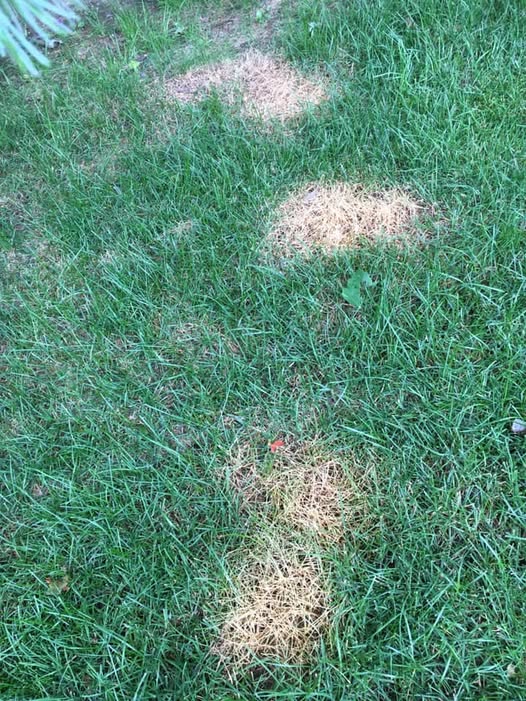
What they’re not seeing is what’s happening underneath and what’s coming.
The soil going into the season is more compacted than it was the year before. Sudbury winters compact clay soil hard regardless of what you did the previous fall — but a lawn that went into winter at whatever height it was when the mowing stopped, with leaves and debris sitting on it, came out of winter with a thatch layer that’s thicker than it should be and snow mould damage that a maintained lawn wouldn’t have had.
The weed seed bank in the soil is significantly larger. Every week of unmowed lawn in the previous season meant weeds going to seed. Dandelions alone produce hundreds of seeds per plant. A full summer of uncontrolled weeds means millions of seeds sitting in your soil waiting for spring. May doesn’t look that bad yet because they haven’t germinated yet.
If you aerate and clean up properly in May and get a regular mowing schedule going immediately, you can still salvage a reasonable season. The window is narrow but it’s there. Most homeowners in this situation don’t move fast enough in May and lose it.
June — The Grass Grows Fast and So Does Everything Else
June in Sudbury is the fastest growth month of the year. A maintained lawn on a proper schedule gets cut every seven to ten days and stays manageable. A lawn that’s already behind from May, with no schedule in place, starts to get away from you quickly.
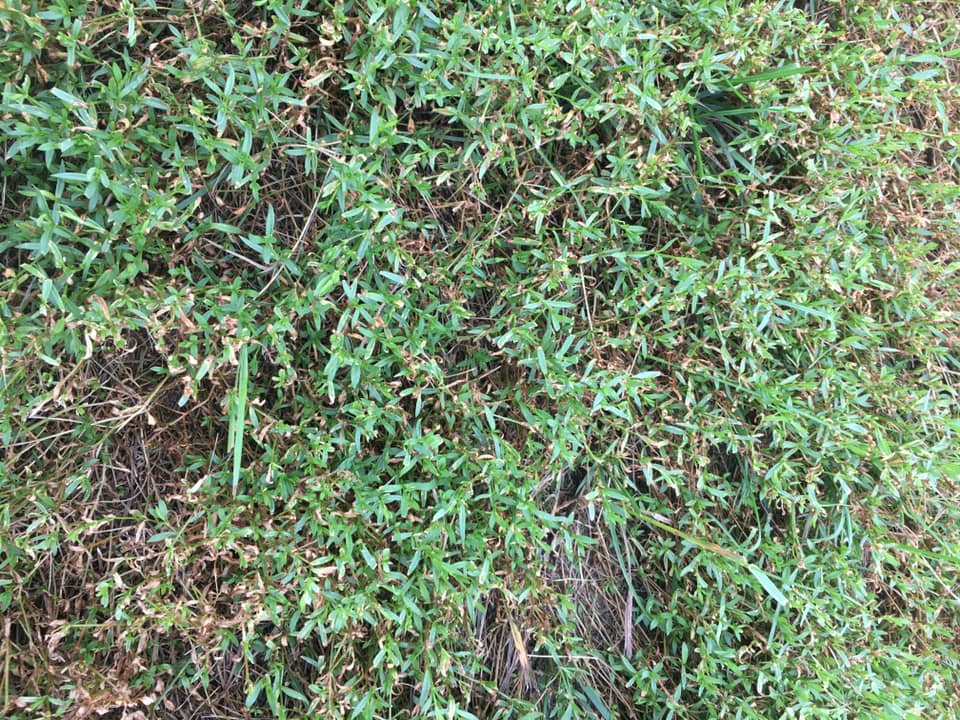
The weeds that were germinating quietly in May are now visible and growing fast. Dandelions are flowering and going to seed again — adding more seeds to the bank while you’re watching. Creeping Charlie is spreading laterally through any thin or bare area it can find. Crabgrass is germinating in the warm, exposed soil in the thinnest sections of the lawn.
The grass itself is getting long. A lawn that went from zero maintenance in the previous year and no May cut is now approaching heights where a standard residential mower struggles. The one-third rule — never cut more than a third of the blade in a single pass — means you can’t just drop the deck to the lowest setting and run over it once. Getting it back to a manageable height requires two passes at different heights, ideally a few days apart, to avoid scalping a lawn that’s already stressed.
The thatch layer is actively getting worse. Last season’s undecomposed clippings plus this season’s rapid growth in a lawn that isn’t being cut regularly adds up. Thatch over an inch starts blocking water and nutrient penetration and makes everything harder.
By the end of June, a lawn that skipped last season and hasn’t been touched this May is visibly in trouble. The neighbours can see it. The homeowner can see it. And the problem is compounding faster than it would take to fix it.
July — The Heat Exposes Everything
July is where a neglected Sudbury lawn fully reveals the damage that’s been building since the previous season.
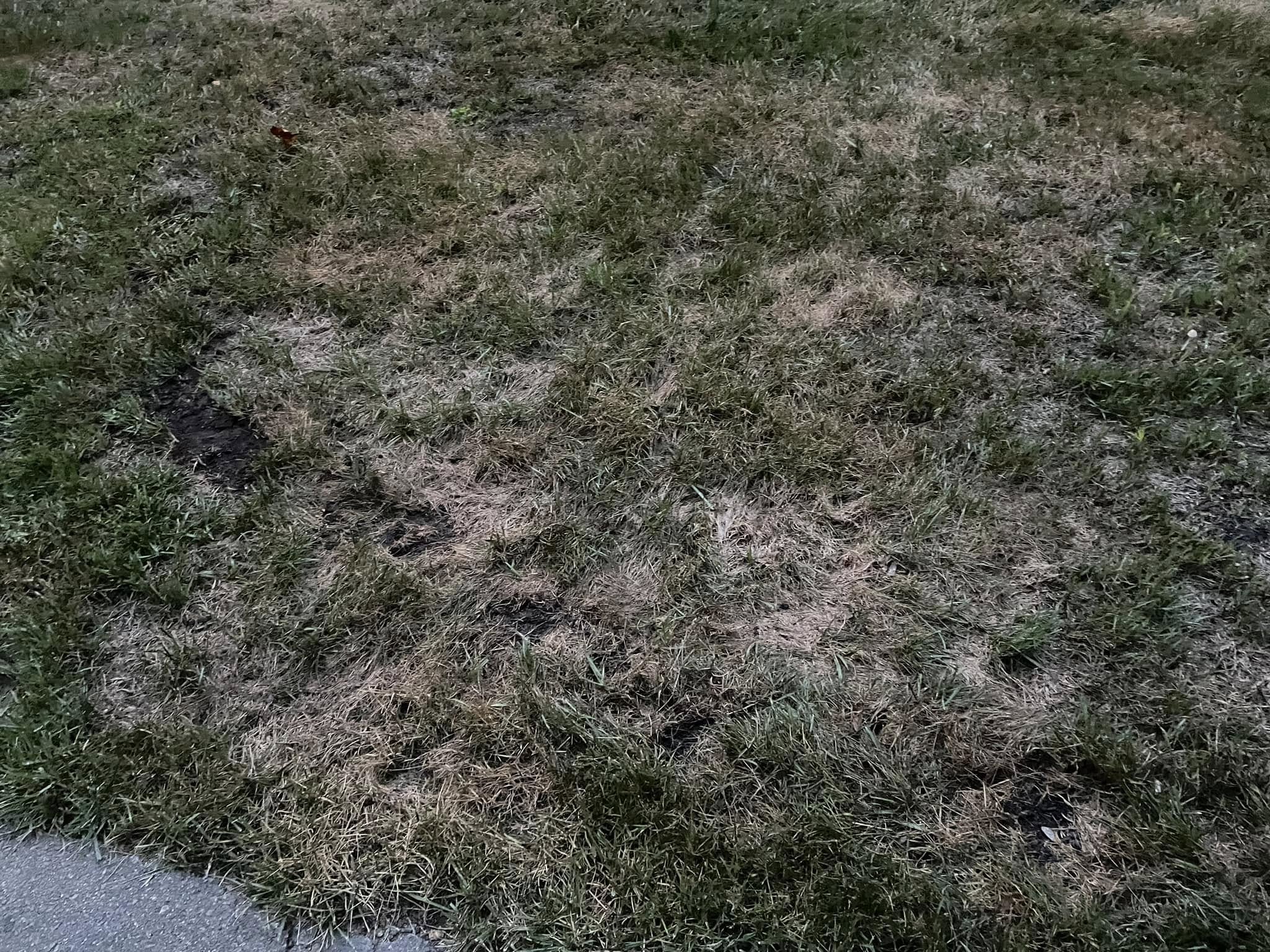
Sudbury’s July can be dry and hot. On a well-maintained lawn with deep roots, a dry stretch in July is manageable — the grass slows down, maybe fades slightly, but holds. On a lawn that’s been neglected, the roots are shallow and the soil is compacted. The first week of dry weather in July hits a neglected lawn like a wall.
The browning starts fast. Not the normal slow fade that a maintained lawn shows in heat — a rapid decline that spreads through the lawn in days. The areas that were already thin from compaction and weed competition go first. Then the rest follows.
By mid-July on a lawn that’s had a full season of no maintenance plus an unaddressed spring, you’re looking at a property where the distinction between lawn and weed patch has essentially disappeared. The grass that remains is thin, stressed, and interspersed with weeds that are handling the heat far better than the turf is — because weeds evolved specifically to thrive in the conditions where grass struggles.
The grub population, if there is one, is doing maximum damage right now. The beetle larvae that hatched in June are feeding on grass roots through July. On a maintained lawn with healthy deep roots, grub damage shows up in patches. On a neglected lawn where the root system is already shallow and compromised — grub damage can spread through large sections with almost no resistance.
This is also the month where homeowners who skipped last season and haven’t addressed it this year start making the call I mentioned at the beginning of this article. The lawn is visibly bad. Something has to be done.
August — Setting Up a Worse Winter
A lawn that’s in rough shape in July goes into August already behind. And August on a neglected Sudbury property is where the second-season damage locks in.
The weeds that flowered and went to seed in June and July are now depositing their seeds for a second or third time through August. Each new seed generation makes the weed problem in the following spring exponentially worse. You’re not just dealing with last year’s neglect anymore — you’re dealing with this year’s weed seed production on top of it.
The bare patches that developed through July heat and grub damage are now exposed soil. Exposed soil in August is warm and receptive — perfect germination conditions for every weed seed that lands on it. By September, those bare patches won’t be bare anymore. They’ll be covered in whatever germinated fastest from the seed bank, and it won’t be grass.
The lawn that skipped one full season is now carrying the compounding damage of two seasons. The original neglect, plus the weed seed bank that grew during the skipped season, plus the damage that occurred this season because the lawn was already weakened going in. One skipped season creates a two-to-three season recovery project.
Fall — Going Into Winter Wrong
A properly maintained Sudbury lawn goes into winter at 2 to 2.5 inches, with leaves cleared, soil aerated, and a root system that’s had a full season to develop. It comes out of winter in April looking dormant but intact.
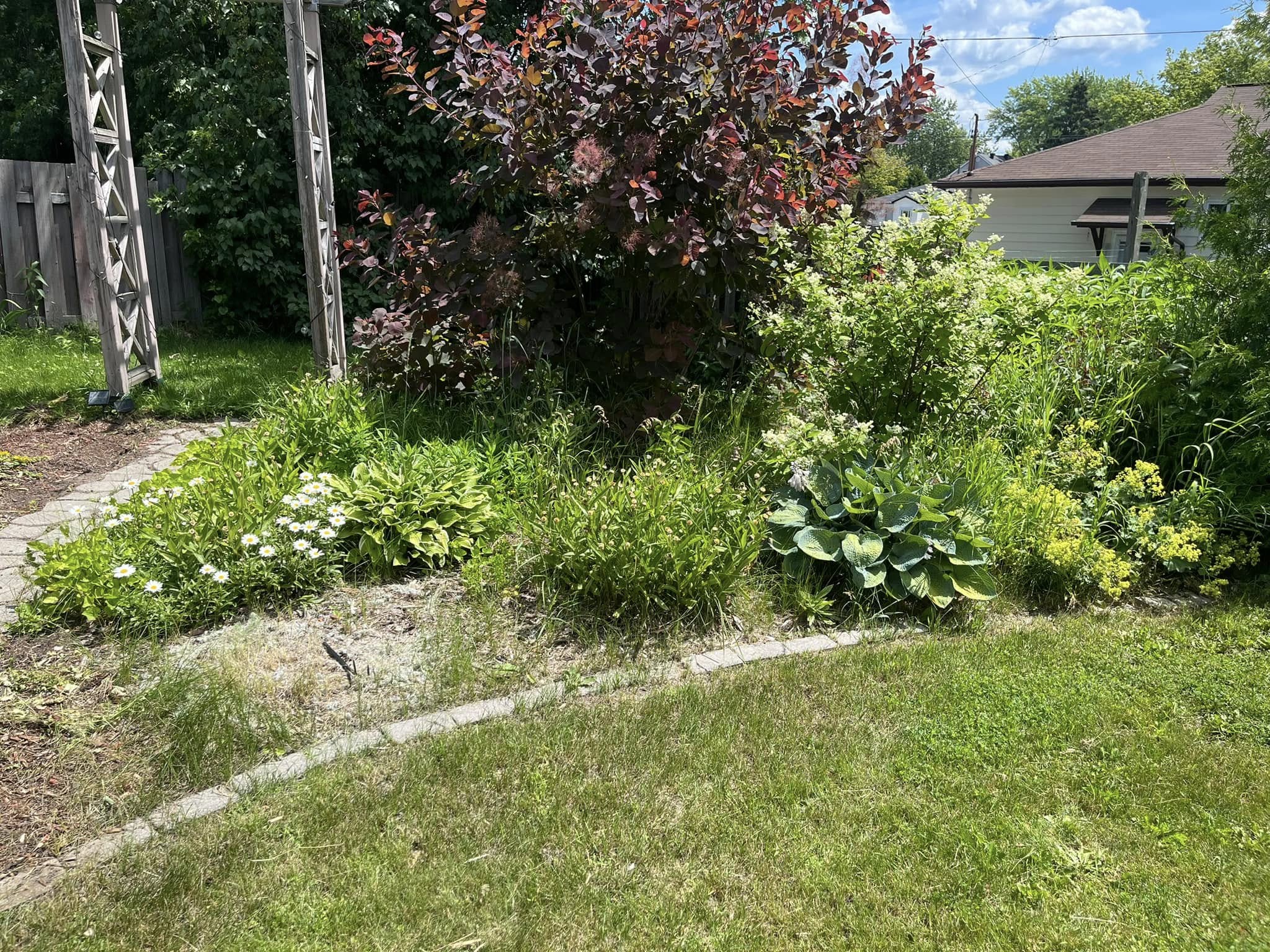
A neglected lawn goes into winter at whatever height the weeds and remaining grass left it at — often 6, 8, 10 inches or more in sections. The leaves that fell through October are sitting on the lawn because nobody raked them. The matted combination of long grass, leaves, and thatch is exactly the environment that snow mould needs to spread through the winter.
Come April, when the snow pulls back, a lawn that had one skipped season going into the previous winter and a full year of neglect will have significant snow mould — grey and pink fungal patches spreading through the matted grass. Vole tunnels running in lines through the sections they used as cover all winter. Dead zones where the combination of matting, snow mould, and vole activity killed the grass completely.
The lawn that started as “we just didn’t get to it this year” is now a restoration project.
What It Actually Costs to Fix One Skipped Season
This is the part most people want to know, and I want to give you honest numbers rather than a vague “it depends.”
On a standard Greater Sudbury residential lot — average size, clay-heavy soil — a lawn that’s had one full season of neglect typically needs the following to get back to reasonable condition:
Spring cleanup: A proper property cleanup to remove debris, clear thatch, and get the surface ready to work with. On a neglected property this is more involved than a standard spring cleanup — more thatch, more debris, more matted material. Expect $300 to $500 depending on the condition and lot size.
Core aeration: Non-negotiable on a lawn that’s been compacting for an additional season without intervention. Core aeration to open the soil before any overseeding. $80 to $180 depending on lot size.
Weed treatment: Two applications of iron-based herbicide on the broadleaf weeds, spaced three weeks apart. Plus manual removal of heavily established dandelions. Weed treatment on a neglected lawn takes more product and more time than spot treatment on a maintained one. $150 to $300 depending on coverage.
Overseeding: Quality seed applied after aeration, with watering maintenance for 14 to 21 days. For a standard lot with significant bare and thin areas, seed plus application runs $150 to $300.
Ongoing mowing through recovery: The lawn needs to be cut at 3 inches consistently through the recovery season. If you’re putting it back on a professional grass cutting schedule, a full season of biweekly service runs $600 to $900.
Total restoration cost on a standard neglected Sudbury lot: $1,200 to $2,200 over the recovery season.
Compare that to the cost of maintaining it through the season that was skipped: $600 to $900 for a full season of professional mowing, plus $80 to $180 for annual aeration. Call it $700 to $1,000 total.
One skipped season costs you $500 to $1,200 more than if you’d maintained it. That’s before accounting for any additional restoration work like drainage correction, sod in badly damaged areas, or second-season follow-up. And that’s on a standard lot — on a larger property or one with significant tree coverage, the numbers are higher on both sides.
What to Do If You’re Already in This Situation
If you’re reading this because you skipped last season and you’re looking at a lawn that’s in rough shape right now — the most important thing is to start immediately, not wait until it’s more convenient.
Every week you wait in May and June is a week of additional weed seed production, additional compaction, and additional difficulty getting the grass competitive again. The window where intervention is cost-effective is open right now. By August, the options narrow and the costs go up.
Here’s what I’d do, in order:
Book a spring cleanup this week if it hasn’t happened. Get the debris and thatch off the surface so everything else can work. Schedule core aeration for the same visit or immediately after — the two services are more effective done together and there’s usually a combined cost saving. Get the lawn on a proper mowing schedule at 3 inches starting with the first cut. Treat the weeds after aeration, not before. Overseed after aeration while the soil is open.
That sequence, started in May or early June, gives a neglected Sudbury lawn a real chance to recover within one season. Not perfect — two seasons of compounding neglect takes more than one season to fully reverse. But genuinely better by September, and significantly better the following spring.
If you want me to walk the property and tell you what it actually needs — call me. That’s exactly what a quote call is for. I’ll come out, assess the specific situation, and give you a straight number before anything is scheduled.
📞 705-507-6787
🔗 Get a Free Quote
📍 Serving Greater Sudbury, Ontario
— Ryan
Frequently Asked Questions
What happens to a Sudbury lawn if you don’t cut it all summer?
An unmowed Sudbury lawn through a full season goes through a predictable decline: weeds establish and go to seed in May and June, the grass becomes unmanageably long and thatch builds up, the roots stay shallow because the mowing height was never corrected, the lawn browns severely in July heat, and bare patches develop from the combined stress of compaction, weed competition, and heat. The lawn goes into winter at the wrong height with leaves sitting on it, setting up snow mould and vole damage. What comes out in April is a restoration project, not a maintenance issue.
How long does it take to fix a lawn that’s been neglected for one season in Sudbury?
One skipped season in Sudbury typically creates a two-to-three season recovery project. With proper intervention starting in May — cleanup, core aeration, weed treatment, overseeding, and consistent mowing — significant improvement is visible by September of the recovery year. Full recovery to a healthy, thick lawn with a proper root system usually takes the full recovery season plus the following year. The earlier in May the restoration work starts, the better the first-year result.
Is it cheaper to maintain a lawn or fix it after neglect in Sudbury?
Maintaining it is significantly cheaper. A full season of professional lawn maintenance on a standard Greater Sudbury residential lot — regular mowing plus annual aeration — runs $700 to $1,100. Restoring a lawn after one skipped season — cleanup, aeration, weed treatment, overseeding, and a full recovery mowing season — typically runs $1,200 to $2,200. One skipped season costs $500 to $1,200 more than maintaining it would have, and that’s before any additional work for drainage issues, sod replacement in badly damaged areas, or second-year follow-up.
Can a badly neglected Sudbury lawn come back on its own without treatment?
In most cases, no — not to a condition most homeowners would find acceptable. Sudbury’s clay-heavy soil compounds neglect faster than lighter soils would. The compaction gets worse each season without aeration. The weed seed bank grows larger every year weeds are allowed to go to seed. The grass root system gets progressively shallower without proper mowing height. Without active intervention — aeration, overseeding, weed treatment, correct mowing — a neglected Sudbury lawn typically continues declining rather than self-recovering.
What’s the most important thing to do first when fixing a neglected Sudbury lawn?
A proper spring cleanup to remove debris and thatch, followed immediately by core aeration. These two services, done together in May, address the compaction that’s the root cause of most neglect-related lawn problems on Sudbury’s clay soil. Overseeding directly after aeration while the plug holes are open gives the best germination results. Weed treatment should come after aeration, not before — aerating a lawn that’s been treated stirs up new weed seeds. Get those three steps in the right order and everything else improves faster.
Does Cutting Edge Lawn handle lawn restoration on neglected Sudbury properties?
Yes — restoration work on neglected properties is something we handle regularly across Greater Sudbury. The quote call is a property walk where I assess exactly what the lawn needs and give a straight number before any work is scheduled. Call 705-507-6787 or fill out the free quote form. The earlier in the season the assessment happens, the more options there are for recovery that year.
Ryan Lingenfelter is the owner of Cutting Edge Lawn & Landscaping in Garson, Ontario. Since 2020, his crew has provided full lawn care services across Greater Sudbury — Garson, Val Caron, Hanmer, Lively, Chelmsford, Azilda, and Capreol. Cutting Edge is licensed, insured, BBB A+ rated, and ThreeBest Rated for lawn care services in Sudbury.
📞 Phone: 705-507-6787
📍 Service Area: Greater Sudbury, Ontario
🔗 Free Quote: cuttingedgelawn.ca/quote
Helpful Lawn Care Services in Sudbury
- Property Cleanup Services
- Core Aeration for Healthy Lawns
- Grass Cutting Services
- Sod Installation in Sudbury
- Mulch & Decorative Stone
- Hedge Trimming Services
Continue Reading
- The Worst Sudbury Lawn I’ve Ever Seen — And How We Brought It Back in One Season
- My Sudbury Lawn Looked Dead After Winter — Here’s the Exact Order I Fixed It In
- How Much Does a Spring Property Cleanup Cost in Sudbury?
