
I want to tell you about a property I pulled up to in late May a couple of years ago.
The call came in from a homeowner who’d just bought the house the previous fall. He hadn’t seen the lawn in summer — bought it in October when everything looked dormant and okay. By the time May came around and the snow pulled back, he was standing in his backyard looking at something that barely qualified as a lawn.
I’m Ryan Lingenfelter, owner of Cutting Edge Lawn & Landscaping in Garson, Ontario. Since 2020, I’ve walked properties across Greater Sudbury — Garson, Val Caron, Hanmer, Lively, Chelmsford, Azilda, Capreol. I’ve seen a lot of lawns in bad shape. This one was different.
I’m going to walk you through exactly what I found, what we did about it, and what the lawn looked like by September. Not because it’s a feel-good story — but because the process we followed on this property is the same process that works on any Sudbury lawn that’s been neglected, damaged, or let go. If your lawn is in rough shape right now, this is worth reading.
What I Found When I Got There
I pulled up, walked the front, and immediately knew this wasn’t going to be a quick quote call.
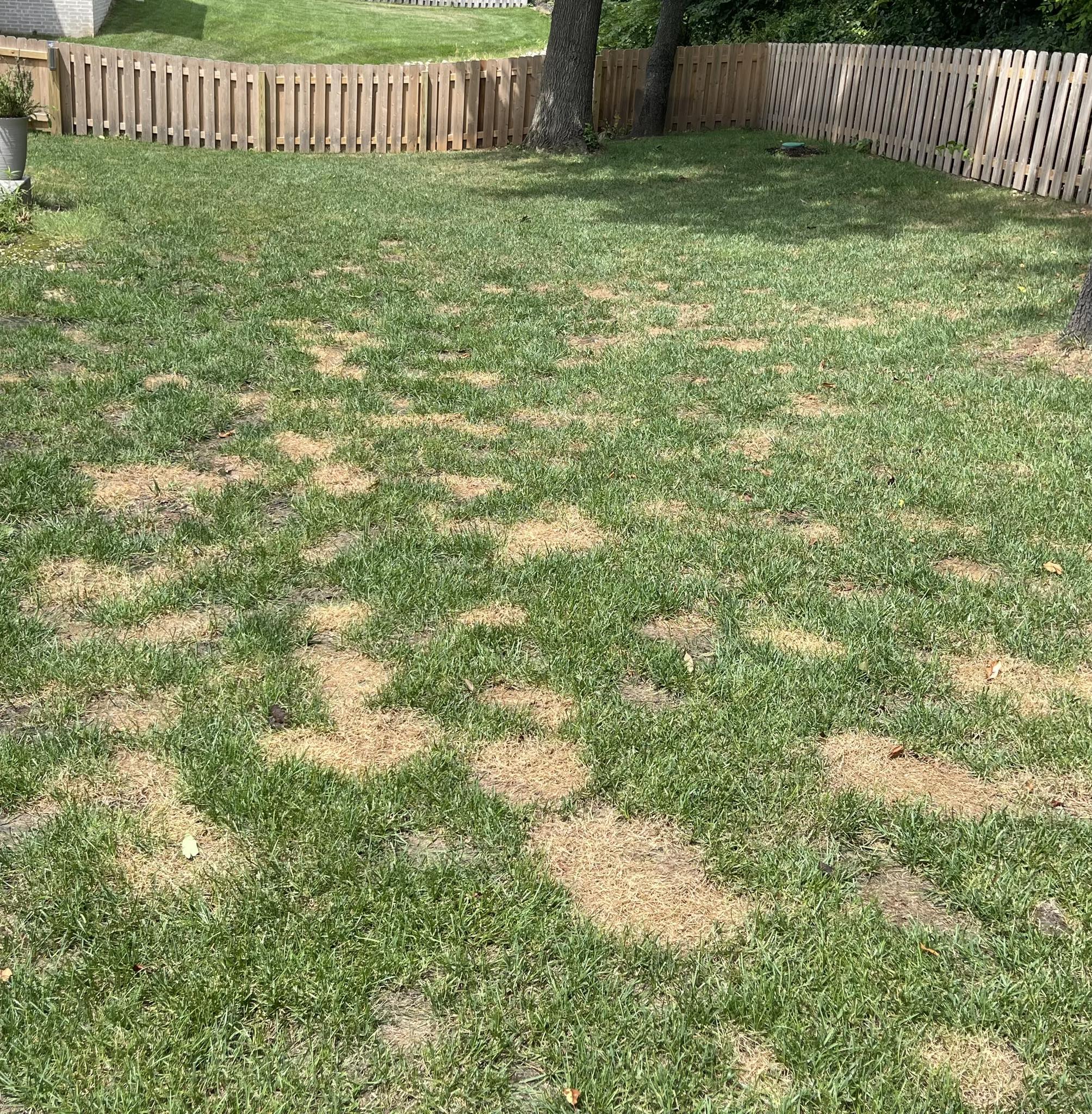
The front yard was about 60 percent weeds — dandelions, creeping Charlie, plantain, patches of crabgrass from the previous season that had gone to seed. The grass that was still there was thin and pale, growing in uneven clumps between the weed coverage. Along the driveway edge, the grass had completely given up and it was just compacted soil with a crust on it.
The backyard was worse. There was a low area near the back fence that held water — you could see where it had pooled all spring because the grass was dead in a rough oval about eight feet across. The rest of the back was a mix of thin turf and bare patches, with vole tunnels from the winter still visible running in lines across the surface. Someone had clearly mowed this lawn on the lowest setting for years — the grass that remained was the shallow-rooted, stressed kind that browns out by late June every year.
I pushed a screwdriver into the soil in three spots. In all three, it stopped at about an inch and a half. The compaction was severe — years of Sudbury winters and no aeration had packed the clay down hard.
I told the homeowner: this isn’t a one-service fix. If you want a lawn that actually holds up through summer, we’re looking at a full restoration plan and it’s going to take the whole season. He asked me what that meant and what it would cost. I walked him through it on the spot.
The Diagnosis — Why the Lawn Was This Bad
Before we touch anything on a property like this, I want to understand what caused the damage. Treating symptoms without understanding the cause is why lawns end up in the same place year after year.
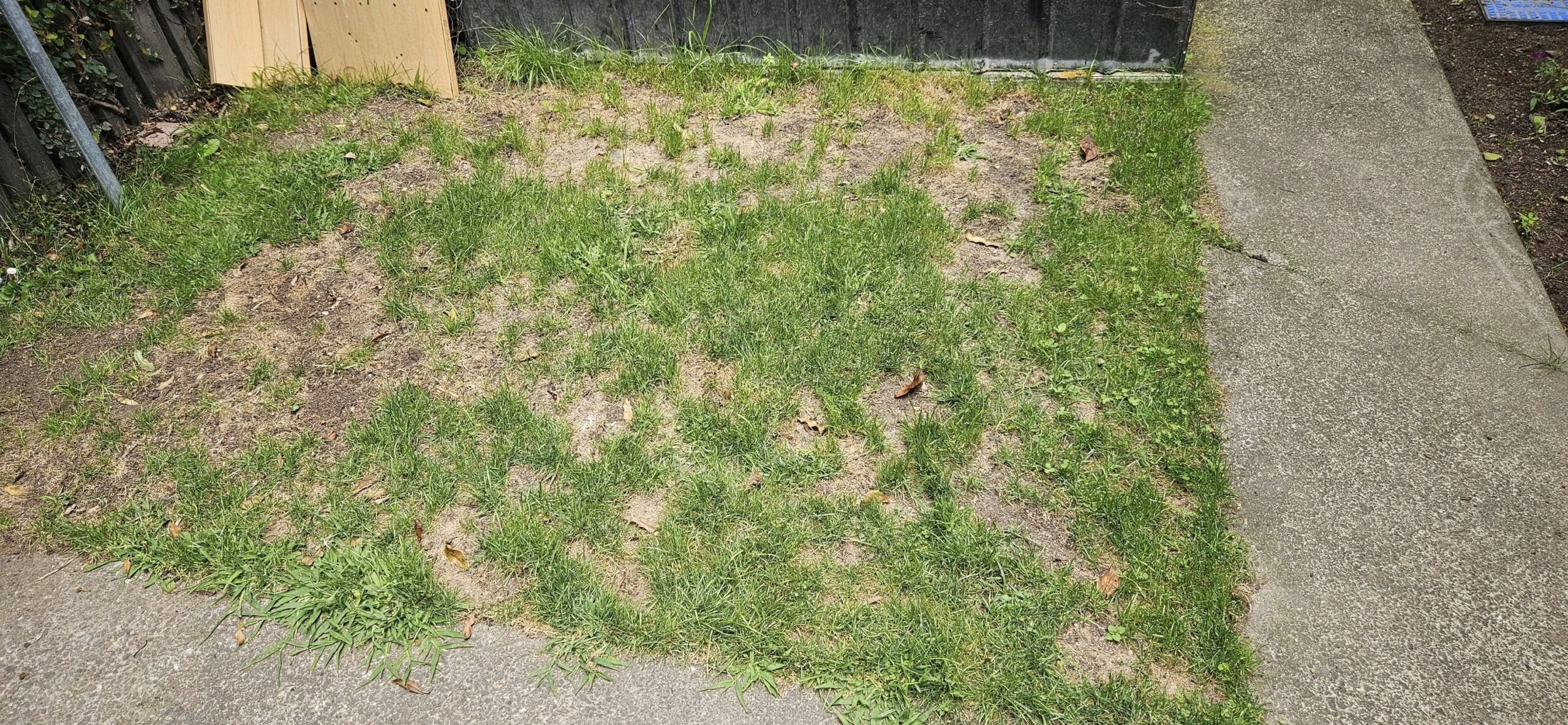
On this property, the picture was clear once I knew what to look for.
Years of cutting too short. The previous owner had clearly run the mower on the lowest setting. The grass was cut so short for so long that the root system had essentially collapsed. Short grass means shallow roots — and shallow roots mean the lawn can’t handle heat, drought, or any stress at all. By July every year, this lawn would have been brown. The homeowner confirmed it: previous owner told him the lawn “always went brown in summer.” That’s not a watering problem. That’s a mowing problem that went on for years.
Severe compaction with no aeration history. The previous owners hadn’t aerated this lawn in at least several years — possibly ever. Sudbury’s clay soil compacts hard under our freeze-thaw cycles. Without annual aeration to open it up, the soil becomes almost impenetrable for grass roots. The grass thins. Weeds, which handle compacted soil far better than turf, move in and fill the space.
Drainage problem in the back. The low area near the back fence was a grading issue — water was running toward that corner and pooling. Grass can’t survive in standing water. That patch wasn’t coming back with seed or sod until the drainage was addressed.
No weed management, ever. The weed coverage told me there had been no meaningful weed control in years. Wall-to-wall dandelions mean the soil has been compacted and the grass has been losing ground to weeds for a long time — not something that happens in one season.
Once I had the diagnosis, the plan was straightforward. Fix the cause, not the symptom. Address each problem in the right order, at the right time of season.
What We Did — The Restoration Plan
Here’s exactly what we did, in order, and why each step happened when it did.
Step 1 — Property Cleanup and First Cut (Late May)
Before anything else, the property needed a proper cleanup. Dead material, leaf debris that had been sitting since fall, the matted thatch layer from years of neglect — all of it needed to come off before we could see what we were actually working with underneath.
We did a full property cleanup — raked out the thatch, cleared the debris, cleaned up the edges. Then the first cut at 3.5 inches — slightly higher than our normal 3-inch maintenance height because the lawn was stressed and we didn’t want to shock it further. I follow the one-third rule on every property, including restoration work: never take more than one-third of the blade in a single cut.
The lawn looked rough after that first cut. That’s normal. You’re revealing the damage, not hiding it. The homeowner called me after to say it looked worse than before we started. I told him to give it two weeks.
Step 2 — Core Aeration (Early June)
This was the most important single service on this property. The compaction was so severe that nothing else would work until we opened the soil up.
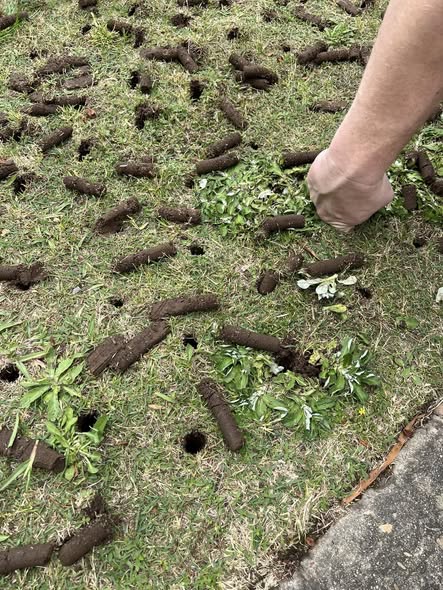
Core aeration pulls small plugs out of the soil — typically 3 to 4 inches deep — opening channels for roots to grow, water to penetrate, and oxygen to reach the root zone. On a property with Sudbury’s clay soil that hasn’t been aerated in years, the difference is dramatic. You’re essentially giving the grass room to breathe for the first time in a long time.
We left the plugs on the surface. Some homeowners want them cleaned up but I always advise leaving them — they break down within two to three weeks and return organic matter to the soil. On a depleted lawn like this one, that organic matter matters.
Step 3 — Weed Treatment (June, After Aeration)
We waited until after aeration to address the weeds — not before. Aeration on a weed-covered lawn brings weed seeds closer to the surface and can temporarily increase germination. By treating after aeration, we were hitting the existing weeds plus the newly germinated ones at the same time.
Under Ontario’s cosmetic pesticide regulations, we used iron-based herbicide — Fiesta — on the broadleaf weeds. Two applications, three weeks apart, targeting the dandelions, plantain, and creeping Charlie. Manual removal on the worst dandelion concentrations with a taproot tool — pulling them by hand is more effective per plant than spray, especially on ones that have been established for years.
I want to be honest about what weed treatment does and doesn’t do at this stage. It removes the weeds that are there. It does not prevent new ones. New weed prevention comes from getting the grass thick enough that weed seeds can’t germinate. That’s the overseeding step.
Step 4 — Grading the Drainage Issue (June)
The low area in the back needed soil brought in and graded away from the fence line before anything would grow there. We brought in topsoil, built up the low area, and graded it so water would drain toward the side of the property rather than pooling in the corner.
This is the kind of thing that’s easy to skip because it adds cost and it’s not glamorous. But putting sod or seed over a drainage problem is a waste of money — the grass will die in the same spot the following spring when the water comes back. Fix the drainage first, then put the grass in.
Step 5 — Overseeding (Late June)
With the soil aerated, the weeds knocked back, and the drainage fixed — late June was the right time to overseed. The aeration holes gave the seed perfect germination conditions: direct contact with soil, moisture retention, protection from birds. On a heavily thinned lawn like this one, overseeding the entire surface — not just the bare patches — was the right call.
We used a quality cool-season grass mix suited to Sudbury’s climate — a blend with good drought tolerance for our July heat and winter hardiness for our falls. Cheap seed is a false economy on a restoration job. You’re rebuilding the lawn from the ground up and the seed quality shows up every year after.
New seed needs consistent moisture for 14 to 21 days to establish. We set the homeowner up with a watering schedule — twice daily, short sessions, just enough to keep the top inch of soil moist without washing the seed. After germination, we transitioned to deep infrequent watering to train the new roots downward.
Step 6 — Consistent Mowing at 3 Inches All Season
This sounds simple and it is — but it’s the step that does more work than anything else over the course of a season. Every cut at 3 inches. Every time. No exceptions.
The homeowner had a neighbour who kept telling him to cut it shorter to “make it look neat.” I told him: your neighbour’s lawn will be brown in July. Yours won’t be. Stay at 3 inches.
Consistent height builds root depth. Root depth builds drought resistance. Drought resistance is what keeps a Sudbury lawn green when everyone else’s is going brown in August. You can read more about why this matters in the mowing height article here.
What the Lawn Looked Like by September
I want to give you an honest picture here, not a before-and-after that makes it look like a miracle.
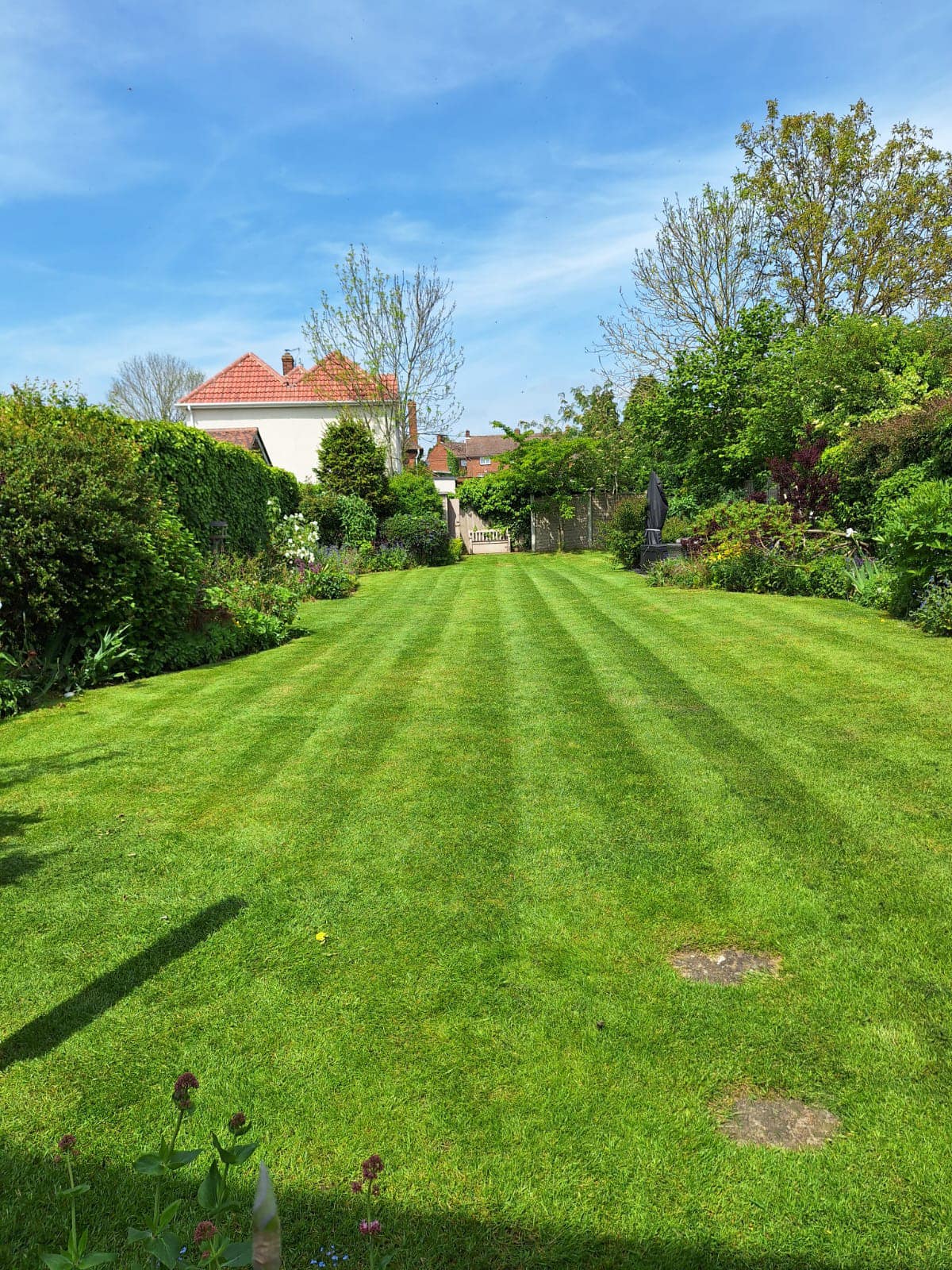
By late July — about 8 weeks after we started — the lawn was noticeably different. The weed coverage was down to maybe 10 percent of what it had been. The bare patches had filled in with new grass, thin but present. The low area in the back was growing. The overall colour was greener and more consistent than it had been at any point in years, according to the homeowner.
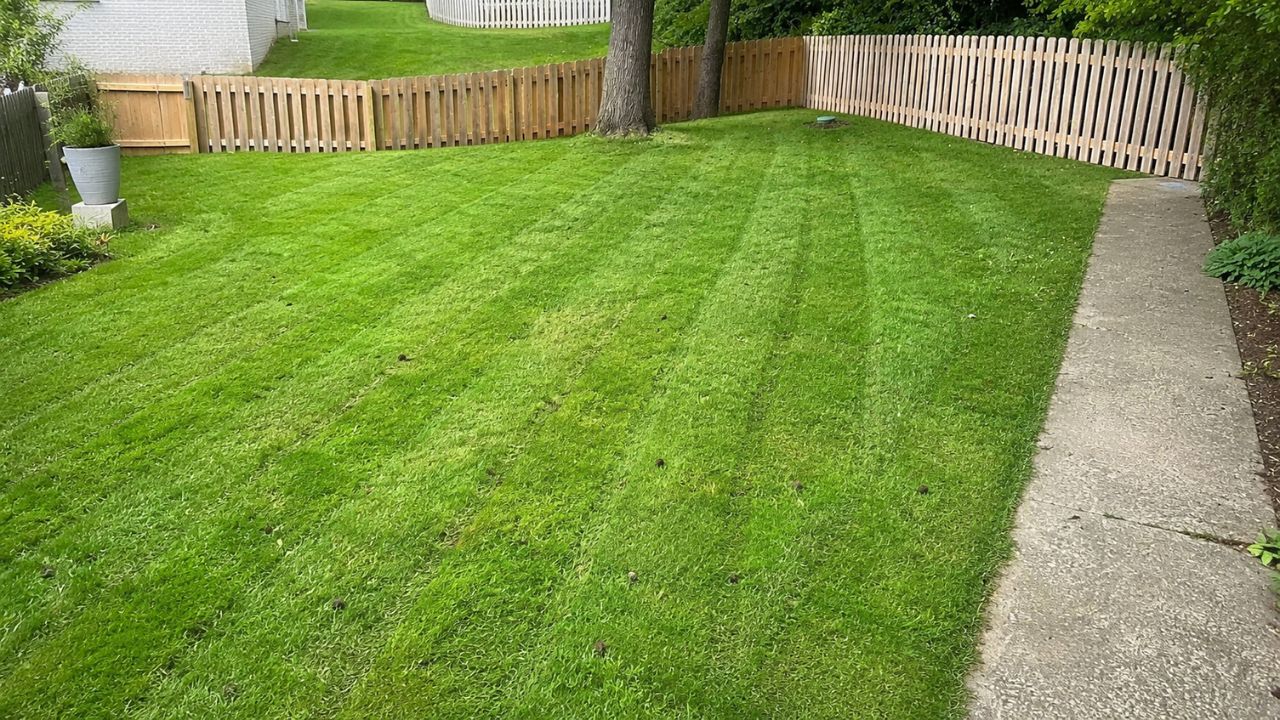
By September, the lawn was genuinely good. Not showroom perfect — one season doesn’t fully reverse years of compaction and neglect — but thick, green, and even. The weeds that remained were scattered and manageable. The new grass from the June overseeding had filled in the bare patches completely. The drainage area in the back looked like part of the lawn, not like a repair.
The homeowner sent me a photo in mid-September. It looked like a completely different property. His exact words: “I didn’t think this was possible in one summer.”
It is possible. It just requires doing the right things in the right order, at the right time — and not cutting corners on any of the steps.
What This Means for Your Lawn
If your lawn is in rough shape right now — weeds taking over, bare patches not filling in, brown stretches every July — I want you to take something specific from this.
The lawn I just described was in worse shape than most of what I see across Greater Sudbury. And it came back in one season. Not because we did anything exotic or expensive. Because we diagnosed what was actually wrong, fixed the causes in the right order, and maintained it properly after.
The steps that worked on that property work on any Sudbury lawn with similar problems:
- Proper cleanup to see what you’re working with
- Core aeration to break the compaction
- Weed treatment after aeration, not before
- Fix drainage problems before seeding or sodding over them
- Overseed after aeration while the soil is open
- Mow at 3 inches every cut, all season
- Water deeply and infrequently once the seed is established
None of this requires expensive products. It requires doing the basics correctly and in the right sequence.
If you’re standing in your backyard right now wondering if your lawn can come back — it probably can. The question is whether you want to tackle it yourself or have someone walk the property with you and tell you exactly what it needs.
If You Want Someone to Walk Your Property
That’s exactly what I do on a quote call. I come out, walk the property, tell you what I see, and give you a straight number before anything gets scheduled. No pressure. If you want to handle it yourself after that conversation, you’ll have a clear plan. If you want us to handle it, we’ll get it done.
📞 705-507-6787
🔗 Get a Free Quote
📍 Serving Greater Sudbury — Garson, Val Caron, Hanmer, Lively, Chelmsford, Azilda, Capreol
Summer books up fast. If the lawn needs work before July, now is the right time to call.
— Ryan
Frequently Asked Questions
Can a severely neglected lawn be restored in one season in Sudbury?
Yes — in most cases. A lawn that’s been neglected for years, with heavy weed coverage, compaction, and bare patches, can be brought back to a genuinely healthy state within a single growing season if the right steps are done in the right order. Core aeration, weed treatment, overseeding, proper mowing height, and correct watering — all done starting in late May or early June — produce visible results by late July and a significantly recovered lawn by September. One season doesn’t undo everything, but the improvement is real and it compounds into the second year.
What is the first thing to do when restoring a neglected lawn in Sudbury?
The first step is a proper diagnosis — understanding why the lawn is in bad shape before touching anything. The most common causes on Sudbury properties are years of cutting too short, severe soil compaction from never aerating, drainage problems in low areas, and weed coverage that has spread into bare patches. Once you know the cause, you fix it in order: cleanup, aeration, weed treatment, drainage correction if needed, overseeding, then consistent maintenance. Skipping the diagnosis and going straight to product application is why most lawn restoration attempts fail.
How much does a full lawn restoration cost in Sudbury?
It depends on the size of the property and what the lawn needs. A full restoration plan — cleanup, core aeration, weed treatment, overseeding, and ongoing maintenance — on a standard Greater Sudbury residential lot typically runs several hundred to a few thousand dollars over a season, depending on the scope. The honest answer is that every property is different and a quote requires walking the property. Call 705-507-6787 or fill out the free quote form for a straight number before anything gets scheduled.
Is core aeration really necessary on a badly damaged Sudbury lawn?
On most neglected Sudbury lawns — yes, it’s the most important single service. Sudbury’s clay-heavy soil compacts hard over winter and without aeration it becomes almost impenetrable for grass roots. Compacted soil is the reason grass stays thin and weeds keep winning — they handle compaction better than turf grass. Aerating opens the soil, lets roots grow deeper, lets water penetrate instead of running off, and gives overseeded grass direct soil contact for germination. Almost every badly damaged Sudbury lawn I’ve worked on had severe compaction as the underlying cause.
Should I overseed or install sod on a damaged Sudbury lawn?
It depends on how much live grass is still present. If the lawn is more than 50 percent live grass — even thin and stressed — overseeding after aeration is usually the right call. It’s less expensive than sod, works well when done properly, and produces a natural-looking result within one season. If large areas are completely bare with no live grass at all, partial sod installation makes more sense for those sections — sod establishes faster and more reliably in bare areas than seed does. On most restoration projects I work on, it’s a combination: overseed the thin areas, sod the completely bare ones.
How long does it take to see results after lawn restoration in Sudbury?
The honest timeline: visible improvement within 6 to 8 weeks of starting, significant recovery by September of the same year, and the full benefit showing in the second spring when the restored lawn comes out of winter with a proper root system. New grass seed germinates in 14 to 21 days under the right conditions. Weed coverage starts dropping within weeks of treatment. The lawn won’t look perfect in year one — but it will look genuinely better, and the second year is when most homeowners say it finally looks the way they wanted it to.
Ryan Lingenfelter is the owner of Cutting Edge Lawn & Landscaping in Garson, Ontario. Since 2020, his crew has provided full lawn care services across Greater Sudbury — Garson, Val Caron, Hanmer, Lively, Chelmsford, Azilda, and Capreol. Cutting Edge is licensed, insured, BBB A+ rated, and ThreeBest Rated for lawn care services in Sudbury.
📞 Phone: 705-507-6787
📍 Service Area: Greater Sudbury, Ontario
🔗 Free Quote: cuttingedgelawn.ca/quote
Helpful Lawn Care Services in Sudbury
- Core Aeration for Healthy Lawns
- Property Cleanup Services
- Sod Installation in Sudbury
- Grass Cutting Services in Sudbury
- Mulch & Decorative Stone
- Hedge Trimming Services
Continue Reading
- My Sudbury Lawn Has Weeds Everywhere — Here’s What I Actually Do About It
- The May Mistake That’s Killing Sudbury Lawns by July
- What Your Sudbury Lawn Actually Needs in June
