
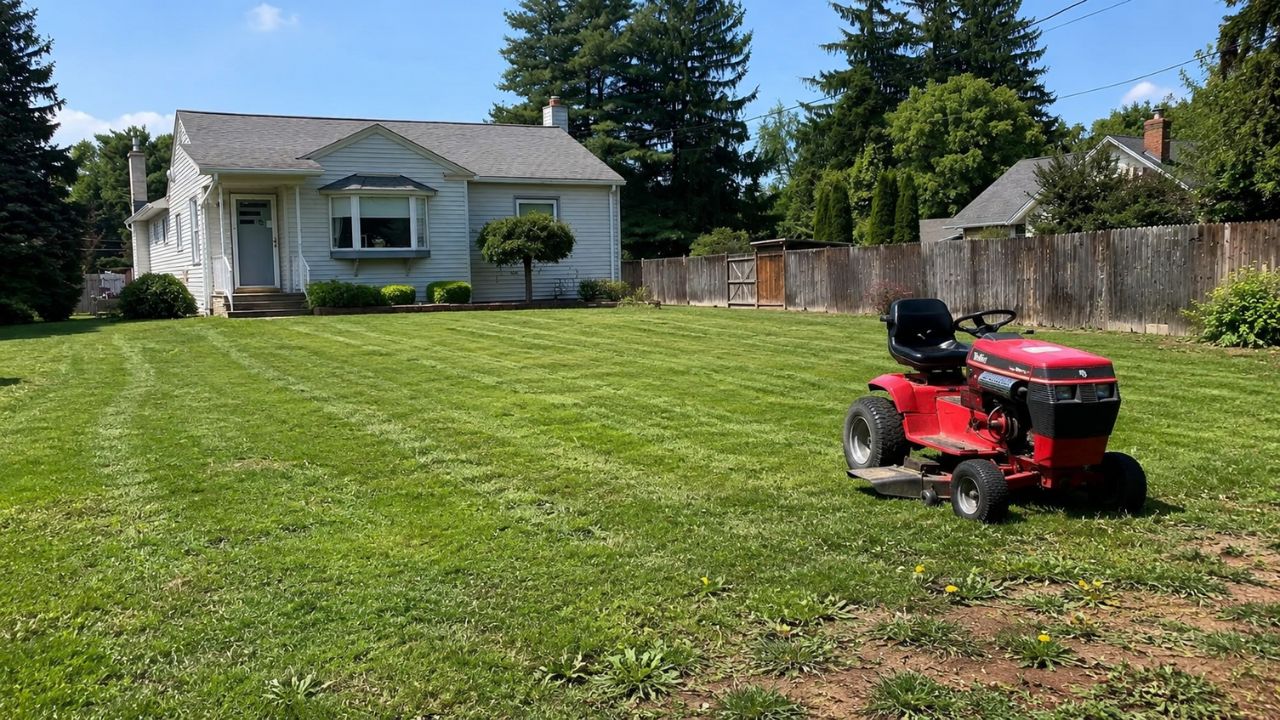
I get this one on quote calls at least a few times a week through May and June.
Homeowner walks me to the backyard, waves their hand at the lawn, and says something like: “I don’t even know what happened. Last year it was fine. This year it looks like a field.”
I’m Ryan Lingenfelter, owner of Cutting Edge Lawn & Landscaping in Garson, Ontario. Since 2020, I’ve been working on properties across Greater Sudbury — Garson, Val Caron, Hanmer, Lively, Chelmsford, Azilda, Capreol. And weeds are one of the most consistent problems I see on Sudbury lawns every single spring.
Not because homeowners aren’t trying. Most of them are. They’re mowing, they’re watering, some of them are putting down weed killer. But they’re usually attacking the symptom instead of the cause — and that’s why the weeds keep coming back year after year.
Here’s what I actually do when I walk onto a Sudbury property covered in weeds. The honest version, not the product-label version.
First — Why Your Lawn Has Weeds in the First Place
This is the part most people skip, and it’s the reason they end up back in the same place the following May.
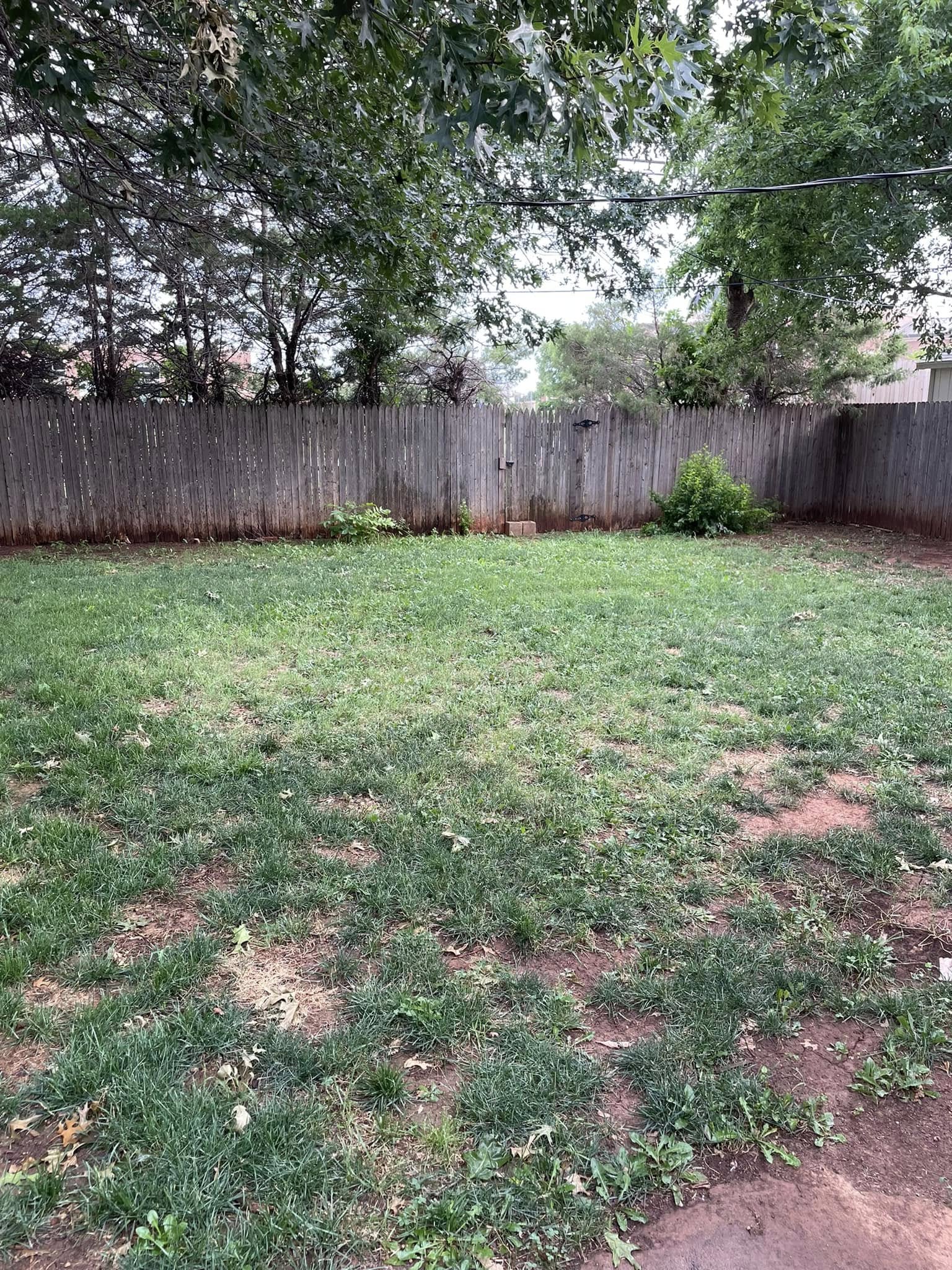
Weeds don’t take over a healthy, dense lawn. They can’t. There’s no room. When grass is thick, the blades shade the soil surface, and weed seeds sitting on that soil can’t get the light they need to germinate. A truly healthy lawn is its own best weed defence — not because of anything you spray, but because of how it’s maintained.
Weeds take over when there are gaps. Thin spots where the grass isn’t dense. Bare patches where soil is exposed. Areas where the grass has been stressed or scalped and can’t compete. Those gaps are open invitations for whatever weed seeds are floating around — and there are always weed seeds floating around.
So the first question I ask on any weedy Sudbury property isn’t “what spray do you want to use?” It’s: “Why does the lawn have gaps?” Fix the gaps and you fix the weed problem at the root. Leave the gaps and spray all you want — the weeds will be back next spring without fail.
Here are the most common reasons I see gaps on Sudbury lawns:
- Cutting too short. Scalped grass is stressed grass. Stressed grass thins out, browns in July, and leaves bare soil exposed. Bare soil grows weeds. I’ve written about this in more detail in the May mowing mistake article here.
- Compacted soil. Sudbury’s clay-heavy soil compacts hard over winter. Compacted soil suffocates grass roots. The grass thins out and weeds — which handle compacted soil better than turf grass — fill the space.
- Shade and drainage issues. Spots under trees or in low areas that hold water are naturally hard on grass. Weeds handle those conditions better than turf.
- Winter damage. Some years Sudbury winters are brutal. Snowmould, ice coverage, salt splash from the driveway — all of these can kill off patches of grass that then sit bare through spring and fill with weeds.
Once you know why the gaps are there, you can fix them properly. Spray without fixing the gaps and you’re just doing maintenance on a weed farm.
The Weeds I See Most Often on Sudbury Lawns
Not all weeds are the same and knowing what you’re dealing with matters for how you handle it.
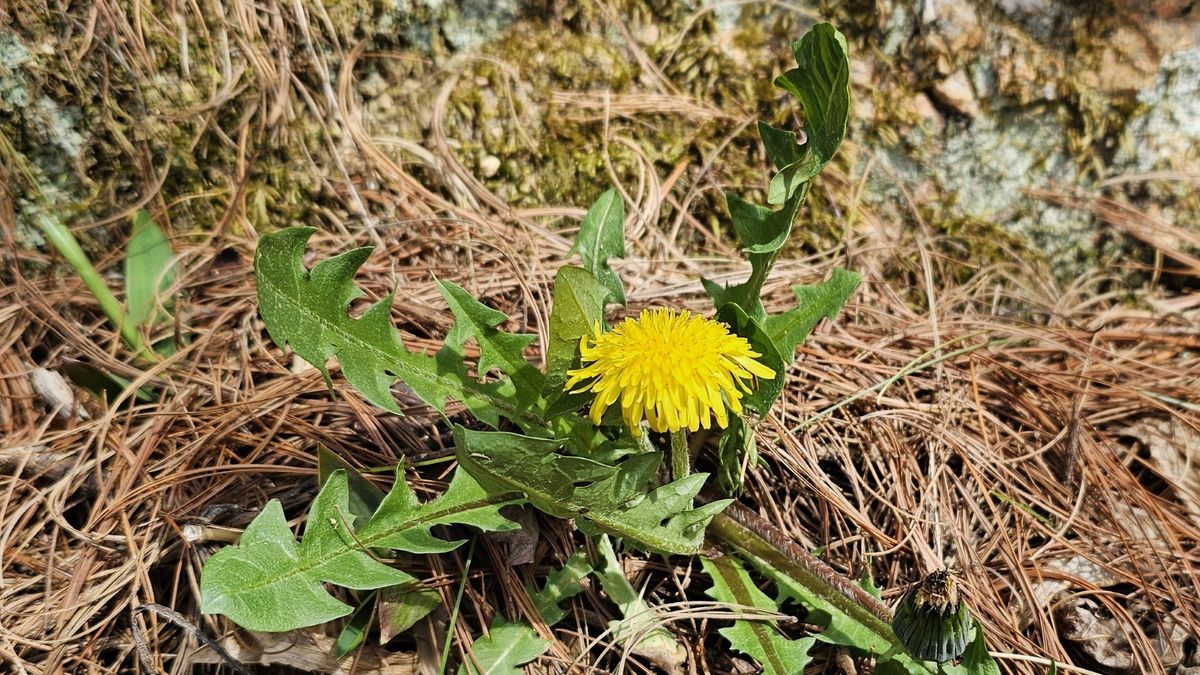
Dandelions. The most common one by far on Greater Sudbury properties. Deep taproot, spreads fast by seed, shows up in any thin or compacted area. Dandelions in a lawn are almost always a sign of compacted soil — they actually thrive in it. If you’ve got dandelions wall to wall, compaction is your real problem.
Creeping Charlie (ground ivy). Low-growing, spreads by runners, shows up in shaded or damp areas. Harder to control than dandelions because it spreads horizontally and the runners root as they go. Common in Sudbury yards with mature trees or areas that stay moist.
Crabgrass. Annual grass weed that germinates in late spring and spreads fast through summer. Looks completely different from your turf grass — coarser, wider blade, lighter colour. Common in areas where the lawn is thin and soil is warm and exposed. Dies off in fall but drops thousands of seeds for next year.
Plantain (broadleaf plantain). That wide flat leaf rosette you see sitting low in the lawn. Shows up in compacted, high-traffic areas. Hard to pull by hand because the base stays. Very common in Sudbury lawns along paths, near driveways, in areas that get walked on regularly.
Clover. White clover in a lawn used to be considered desirable — it fixes nitrogen from the air. Now most homeowners don’t want it. Clover shows up when soil nitrogen is low, which often means the grass isn’t being maintained on a proper schedule.
The mix of weeds you have tells you something about what’s wrong with the lawn. Mostly dandelions and plantain? Compaction. Mostly crabgrass? Thin, bare spots with warm exposed soil. Mostly clover? Nutrient deficiency. Read the weeds and they’ll point you toward the real fix.
What I Actually Do First — And It’s Not Spraying
When I walk onto a Sudbury property with a serious weed problem in May or June, the first thing I do is look at how the lawn has been maintained. Not at the weeds themselves.
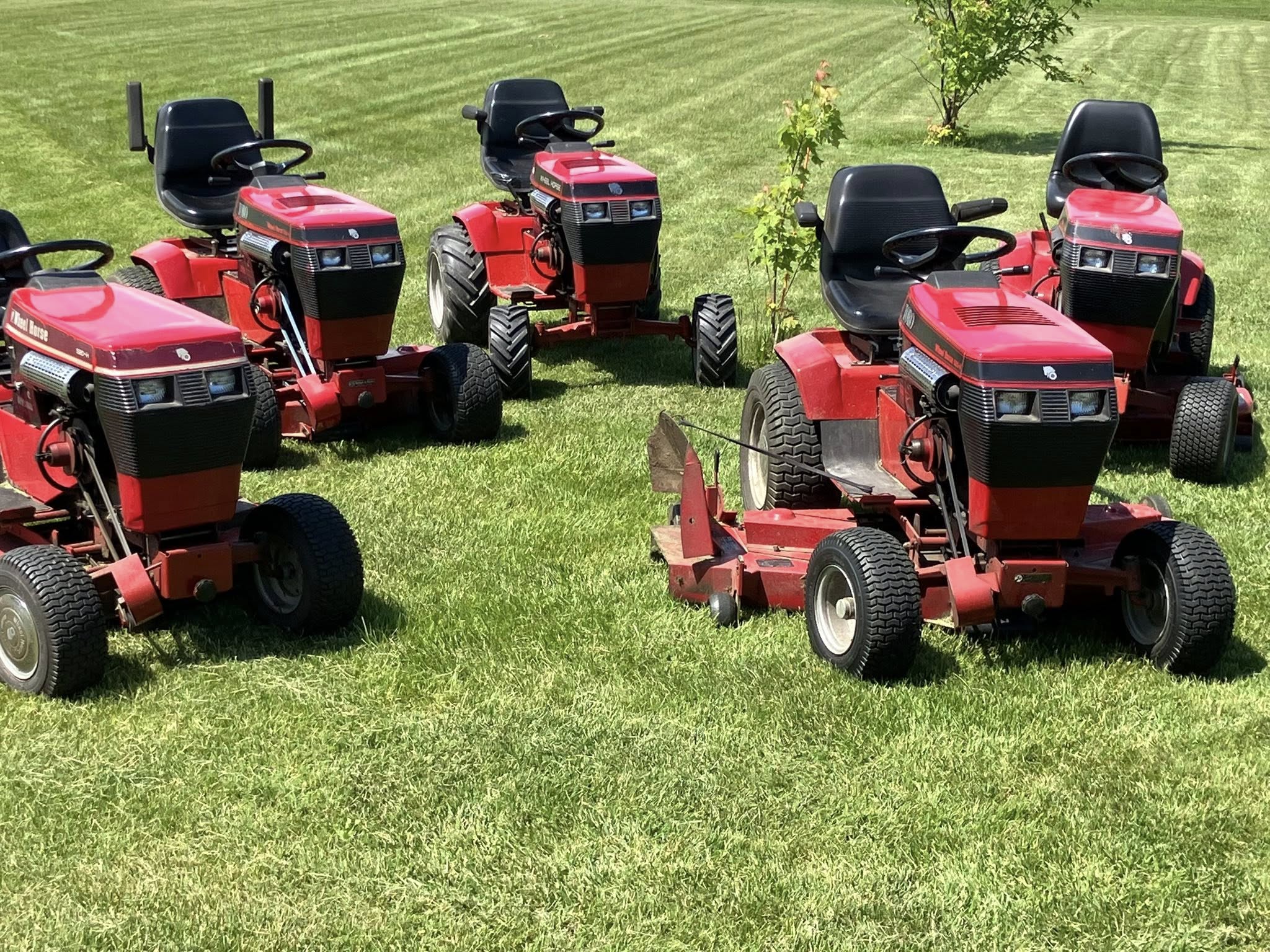
Mowing height is the first check. If the lawn has been getting cut at 1.5 or 2 inches, that’s the starting point for everything else. Short cuts mean shallow roots, thin grass, bare soil — perfect weed conditions. Raise the mower to 3 inches and leave it there. Every cut, all season. A properly maintained 3-inch lawn starts crowding out weeds on its own within one season. It’s not instant, but it’s real.
Second check is soil compaction. On most Sudbury properties I walk, especially ones with clay soil that’s been there for years, the ground is hard. Push a screwdriver into the soil — if it won’t go in more than 2 inches without real force, you’ve got compaction. Compacted soil needs core aeration before anything else will work properly. You can spray every weed on the property, but if the soil stays compacted, the grass stays thin and the weeds keep coming back.
I schedule core aeration in late May or early June on properties with serious weed problems. Aeration opens the soil, lets roots grow deeper, helps the grass thicken up — and a thicker lawn is a lawn that’s actively fighting weeds on your behalf.
Third check is bare patches. Any spot where soil is exposed is a weed seed landing pad. Bare patches need to be overseeded — scratch the surface lightly, put down quality grass seed that matches the existing turf, keep it moist for two weeks. New grass in that spot means one less gap for weeds to claim.
When to Actually Use Weed Control — And What Works in Ontario
Here’s where I have to be straight with you about something that trips up a lot of Sudbury homeowners.
Ontario’s cosmetic pesticide ban, which has been in effect since 2009, restricts the use of most synthetic herbicides on residential lawns for cosmetic purposes. The broad-spectrum weed killers you might remember from twenty years ago — products that would knock out every broadleaf weed in one application — are not available for residential lawn use in Ontario anymore.
What is available and does work on Ontario residential lawns:
Iron-based herbicides (Fiesta). This is the main product licensed for residential use in Ontario. It works on broadleaf weeds — dandelions, clover, plantain, creeping Charlie — and won’t harm grass. It’s not as fast or as comprehensive as synthetic herbicides, but it does work with repeated applications. You’ll typically see results in 3 to 5 days and may need a second application two to three weeks later on stubborn weeds.
Manual removal. For dandelions specifically, a proper dandelion puller — the long narrow tool that gets the taproot — is more effective per weed than any iron-based spray. If you pull it and leave the taproot, it grows back. Get the whole root and it’s gone. Labour intensive on a lawn covered in them, but effective.
Corn gluten meal. Applied in early spring before weed seeds germinate, it acts as a pre-emergent — inhibits seed germination. Works best for crabgrass prevention. Needs to be applied at the right time (before soil temperatures hit 10°C consistently) and watered in. Timing in Sudbury is typically early to mid-May depending on the year.
What doesn’t work: those consumer “weed and feed” products that claim to kill weeds and fertilize at the same time. Most of them either aren’t compliant with Ontario regulations for residential use or they’re so diluted that neither function works well. I’ve seen homeowners put these down three years in a row with no meaningful change to the weed situation.
The Honest Timeline — How Long Does It Actually Take
This is the conversation I have with almost every homeowner who calls me about weeds. They want to know: if we do everything right starting now, when will the lawn look good?
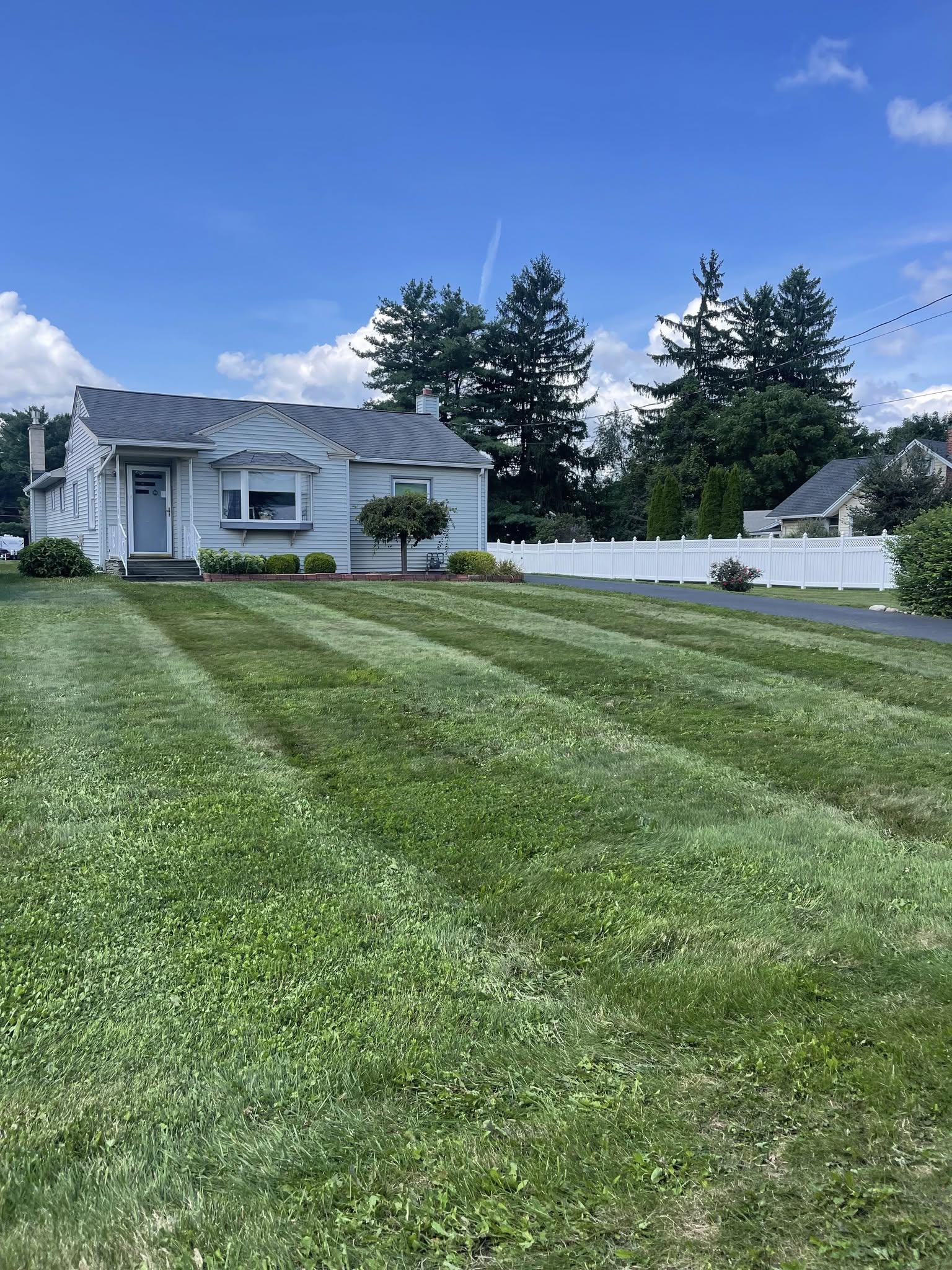
Here’s the honest answer.
By end of June this year: If you aerate now, raise the mowing height to 3 inches, overseed the bare patches, and apply iron-based weed control on the worst areas — you’ll see meaningful improvement. The most aggressive weeds will be gone or dying back. The bare patches will be filling in. The grass will be thicker and greener.
By end of summer this year: A lawn that was weed-covered in May, treated properly starting in late May or early June, can look significantly better by August. Not perfect — one season doesn’t undo years of problems — but genuinely better. Most homeowners I work with can see the difference clearly by August.
By next spring: This is when the real change shows. A lawn that’s been aerated, properly mowed all season, overseeded in bare spots, and watered correctly through summer comes out of winter with a fundamentally better base. Thicker grass, deeper roots, less bare soil. Weed pressure in the second spring is noticeably lower than the first.
One season of doing it right won’t undo five years of compaction and short mowing overnight. But it absolutely starts showing results this year, and the improvement compounds.
The Mistake That Keeps Weeds Coming Back Every Year
I want to end on this because it’s the most important thing I can tell you about weeds.
The reason most Sudbury homeowners fight the same weed battle every spring is that they treat weeds as the problem instead of the symptom. They spray, they pull, they put down product — and the following May, the weeds are back. Because nothing changed about the conditions that allowed weeds to establish in the first place.
Weeds are information. They’re telling you the grass is thin, the soil is compacted, there are bare spots that aren’t being addressed. Fix those things and weeds become a minor, manageable issue instead of a lawn-wide takeover.
The properties I maintain across Greater Sudbury that have the fewest weeds aren’t the ones that get the most herbicide. They’re the ones that get consistent mowing at the right height, annual aeration, and proper watering. The grass does the weed control. That’s how it’s supposed to work.
When to Call Someone
If your lawn is more weeds than grass right now and you want a professional set of eyes on it — give me a call. I’ll walk the property, tell you what I’m seeing, and give you an honest assessment of what it needs and what it’ll cost.
Sometimes the answer is a proper aeration and a season of good maintenance. Sometimes a heavily weed-damaged lawn needs overseeding or partial sod installation to recover properly. I’ll tell you which situation you’re in before anything gets scheduled.
📞 705-507-6787
🔗 Get a Free Quote
📍 Serving Greater Sudbury — Garson, Val Caron, Hanmer, Lively, Chelmsford, Azilda, Capreol
Summer is our busiest season. If you’re thinking about getting the lawn sorted before July, sooner is better than later.
— Ryan
Frequently Asked Questions
Why does my Sudbury lawn have so many weeds?
Weeds take over when lawn grass is thin, weak, or patchy — leaving bare soil exposed where weed seeds can germinate. The most common causes on Sudbury properties are compacted clay soil (which weakens grass roots), cutting the lawn too short (which stresses the grass and thins it out), and bare patches from winter damage that haven’t been overseeded. Fix the conditions that allow weeds to establish and the weed problem shrinks significantly — with or without herbicide.
What is the best weed killer for lawns in Ontario?
Under Ontario’s cosmetic pesticide ban, the main option for residential lawns is iron-based herbicide (sold under the brand name Fiesta). It works on broadleaf weeds like dandelions, clover, plantain, and creeping Charlie. It requires one to two applications and works best when combined with proper lawn maintenance — mowing at 3 inches, aerating compacted soil, and overseeding bare patches. Synthetic weed killers are not permitted for residential cosmetic use in Ontario.
How do I get rid of dandelions in my Sudbury lawn for good?
Dandelions in a Sudbury lawn are almost always a sign of compacted soil — they thrive in conditions where grass struggles. Long-term dandelion control requires aerating the soil so grass can compete, mowing at 3 inches so the lawn thickens and shades out germinating seeds, and either manually removing dandelions with a proper taproot tool or applying iron-based herbicide. Pulling dandelions without fixing the soil is a temporary fix — they’ll be back next spring in the same spots.
Can I fix a weedy Sudbury lawn myself?
Yes, for most cases. Raise your mower deck to 3 inches and leave it there all season. Book core aeration if the soil is compacted — you can rent a machine or hire someone. Overseed bare patches with quality grass seed. Apply iron-based herbicide on the worst broadleaf weeds. Water deeply once or twice a week rather than lightly every day. Done consistently, these steps will produce visible improvement in one season and significant improvement by the second spring.
Why do my weeds keep coming back every year even after I spray?
Because spraying removes weeds without fixing the conditions that allow them to grow. If the soil is compacted, the grass is cut too short, or there are bare patches — those problems will produce new weeds every season regardless of how much you spray. Weed control products manage the symptom. Proper mowing height, soil aeration, and dense healthy grass address the cause. The lawns with the fewest weeds are the ones maintained properly — not the ones that get the most herbicide.
When should I aerate my Sudbury lawn to help with weeds?
Late May to mid-June is the best window for core aeration in Greater Sudbury if weeds are your main concern — it gives the lawn the rest of the growing season to fill in and thicken up before winter. Fall aeration (late August to September) is also effective and is often better for overseeding at the same time. Annual aeration on Sudbury’s clay-heavy soil makes a significant difference to how dense and healthy the grass stays year over year.
Ryan Lingenfelter is the owner of Cutting Edge Lawn & Landscaping in Garson, Ontario. Since 2020, his crew has provided full lawn care services across Greater Sudbury — Garson, Val Caron, Hanmer, Lively, Chelmsford, Azilda, and Capreol. Cutting Edge is licensed, insured, BBB A+ rated, and ThreeBest Rated for lawn care services in Sudbury.
📞 Phone: 705-507-6787
📍 Service Area: Greater Sudbury, Ontario
🔗 Free Quote: cuttingedgelawn.ca/quote
Helpful Lawn Care Services in Sudbury
- Grass Cutting Services in Sudbury
- Core Aeration for Healthy Lawns
- Sod Installation in Sudbury
- Property Cleanup Services
- Mulch & Decorative Stone
- Hedge Trimming Services
Continue Reading
- The May Mistake That’s Killing Sudbury Lawns by July
- How to Water Your Lawn in Sudbury Without Wasting Water or Killing the Grass
- What Your Sudbury Lawn Actually Needs in June
