
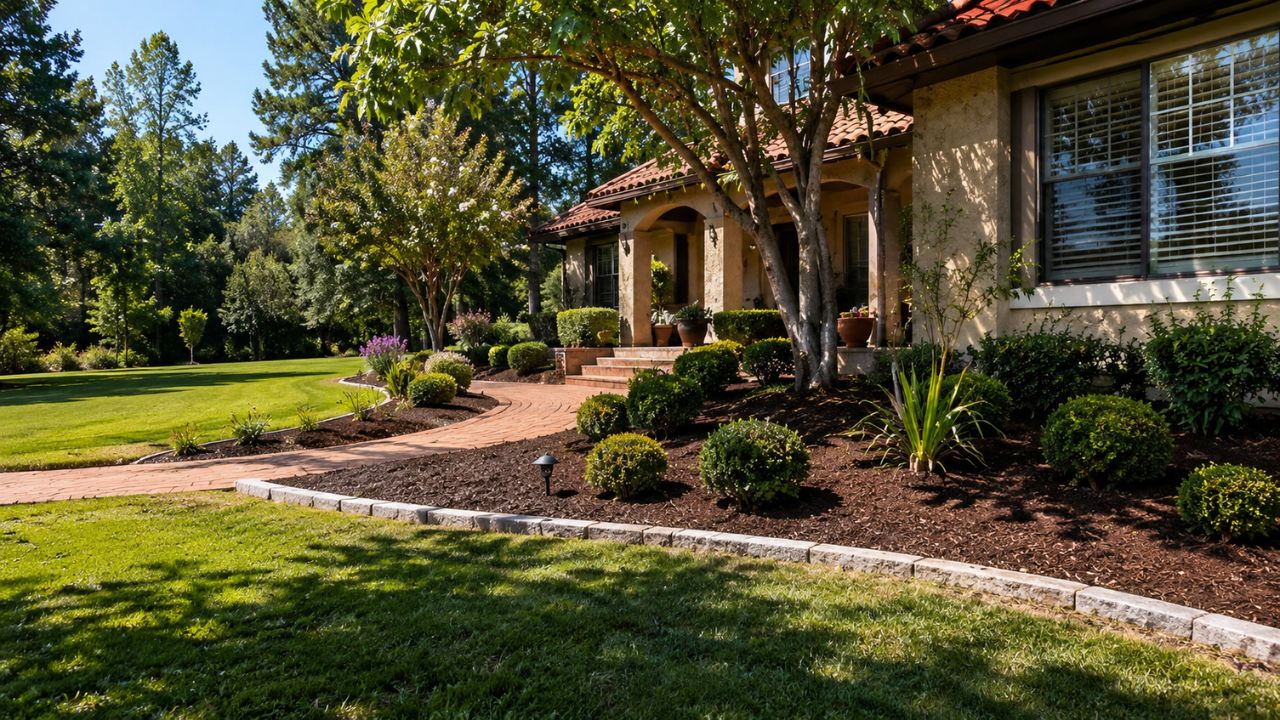
Hey, I’m Ryan Lingenfelter — owner of Cutting Edge Lawn & Landscaping in Garson, Ontario. Since 2020, I’ve been cutting lawns all across Greater Sudbury — Garson, Val Caron, Hanmer, Lively, Chelmsford, Azilda, Capreol. Hundreds of properties over five springs.
And every July, I get the same phone call.
“Ryan, my lawn was looking great in May. Now it’s all yellow and crispy. What happened?”
I already know what happened before I even drive over. Nine times out of ten, it comes down to one thing the homeowner did back in May that they didn’t think was a big deal.
They cut their grass too short.
That’s it. That’s the mistake. And I know it sounds too simple to be the answer — but after five years of watching this play out on Sudbury lawns, I can tell you this is the single biggest reason I see healthy May lawns turn into patchy July disasters.
Let me explain why this happens and what you should actually be doing instead.
Why Cutting Short in May Wrecks Your Lawn by July
I get why people do it. The thinking goes like this — if I cut it short now, I won’t have to mow as often. Makes sense on paper. Doesn’t work in real life. Here’s why.
Your grass blade and your grass roots are connected. Not in some vague way — directly. The shorter you cut the blade above the ground, the shorter the root system grows below it. They mirror each other. So when you scalp your lawn down to 1.5 or 2 inches in May, you’re not just making the lawn look “neat.” You’re forcing the roots to shrink too.
Now here’s the problem. In May, that doesn’t show. Soil’s cool, rain’s coming pretty regular, the grass is growing fast — everything looks fine. The damage is hiding underground.
Then July hits in Sudbury. The temperatures climb, we get a dry stretch, the soil dries out at the surface. A lawn with deep roots can reach moisture six, seven, eight inches down and survive that heat no problem. A lawn with shallow roots — because the blade was cut too short two months earlier — has nothing to pull from. The grass turns yellow. Then brown. Then crispy.
And that’s when I get the call.
The really frustrating part is that by July it’s too late to fix it that season. You can’t make roots grow deeper in the middle of a heat wave. You’re stuck watering twice a day just to keep the lawn alive, and even then a lot of it dies off and has to be reseeded in September.
All because of how it got cut back in May.
What’s Actually Happening Underground
I’ll keep this simple because the science part isn’t complicated — it just isn’t taught.
Grass uses its blade to do photosynthesis. That’s where it makes the sugars it needs to grow roots, store energy, and survive stress. When you remove most of the blade by cutting too short, you’ve cut off the lawn’s food production. The plant goes into emergency mode.
It does two things to survive. First, it dumps energy into growing the blade back fast — which is why your lawn shoots back up within a few days after a scalping. That growth isn’t healthy growth. It’s panic growth. Second, because all its energy is going into regrowing the blade, the roots stop growing. Sometimes they even die back.
Now repeat that every weekend through May. Each scalping resets the roots. By the end of May, your lawn looks “maintained” — it’s short, it’s green, it’s even. Underneath, the root system has basically frozen at maybe 2 inches deep. That’s a lawn with no drought defence.
Then comes July.
The 3-Inch Rule I Live By on Every Sudbury Property
Here’s what I do on every property I maintain in Greater Sudbury — and what I tell every customer who wants to do their own mowing.
Never cut below 3 inches. Ever. In May, June, July, August, September — same rule applies. The mower deck stays at 3 inches minimum on cool-season grasses, which is what 95% of Sudbury lawns are made of (Kentucky bluegrass and fescue blends mostly).
That’s the rule. It’s not complicated. The hard part is getting people to trust it.
I’ll be honest — when I tell new customers this, a lot of them push back. “But it’ll look shaggy.” “I like the golf course look.” “My neighbour cuts his short and his lawn looks fine.” I get it. Here’s what I tell them.
A lawn cut at 3 inches doesn’t look shaggy. It looks lush. There’s a difference. Short lawns look “neat” the day they’re cut and worn-out by Wednesday. A 3-inch lawn looks consistent all week long, holds its colour better, and crowds out weeds because the taller blades shade the soil and stop weed seeds from germinating.
Your neighbour with the short lawn? Check his lawn in late July. I guarantee you it has more brown spots than yours will.
The Other Mowing Rule That Goes With It — The One-Third Rule
This one matters just as much. Never remove more than one-third of the grass blade in a single cut.
So if your lawn is sitting at 4.5 inches, you can bring it down to 3 inches in one mow (that’s removing 1.5 inches, which is one-third). If it’s grown out to 6 inches because you missed a weekend, you can’t just slam it down to 3 inches — that’s removing half the blade. You’d cut it to 4 inches first, wait three or four days, then cut to 3 inches.
This matters because that one-third rule is what protects the roots from the same shock I described above. Take off more than a third and you trigger the panic-growth, root-loss response. Even at the right final height.
So in practice, here’s what proper mowing looks like in Sudbury through May:
- Let the grass grow to 4 to 4.5 inches
- Cut it down to 3 inches
- Wait until it hits 4 to 4.5 inches again
- Repeat
For most Sudbury properties in May, that ends up being every 5 to 7 days depending on rainfall and temperature. By June it might stretch to 7 to 10 days. By August in a dry year, sometimes 10 to 14 days. The lawn tells you when to cut it — not the calendar.
What a Properly Cut Sudbury Lawn Looks Like in July
I’ll tell you what surprises my customers the most when they switch to proper mowing height. The change in their lawn between Year 1 and Year 2.
The first summer they do it right, the lawn looks pretty good. Better than the year before for sure, but the roots are still rebuilding from years of being cut short. The real change comes in the second year, after the lawn has had a full season to grow deep roots without being reset every week.
Year 2 with proper mowing in Sudbury looks like this — green through July even in a dry stretch, way fewer weeds because the taller grass is shading them out, less watering needed (some of my customers stop watering entirely after switching), and that thick lush look that everybody actually wants from a lawn but most people are accidentally preventing by mowing too short.
It’s not magic. It’s just letting the grass do what it’s supposed to do.
If Your Lawn Already Got Cut Too Short This May — What to Do Now
If you’re reading this and realizing you’ve already scalped your lawn once or twice this spring, don’t panic. You can still save the season. Here’s what I’d do.
Stop scalping immediately. Raise your mower deck to 3 inches and leave it there for the rest of the year. Don’t bring it down “just one more time.” That’s how the damage compounds.
Let the lawn grow out to 4.5 inches before the next cut, then take it down to 3 inches. Follow the one-third rule from here on out.
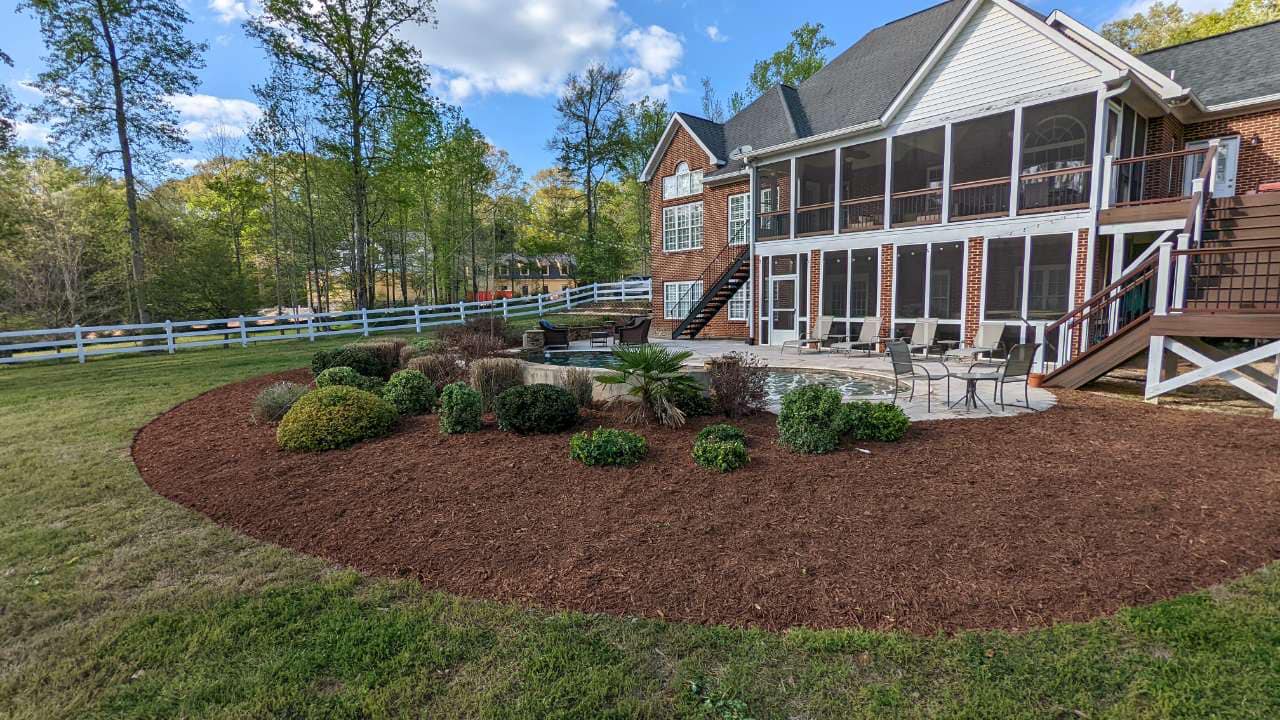
If you can swing it, consider core aeration in late May or early June. Aeration opens up the soil, lets oxygen and water reach the roots, and gives the lawn a chance to push roots deeper before summer hits. This is the single best thing you can do to recover a lawn that’s been cut too short.
Water deeply but not often. A long deep watering once or twice a week trains the roots to grow down looking for moisture. Light daily watering does the opposite — keeps the roots shallow because they don’t need to reach for anything.
Done together, those four things can save a lawn that would otherwise be a write-off by July.
The Bottom Line
I’m not exaggerating when I say cutting too short in May is the single most common mistake I see across Greater Sudbury. More than overwatering. More than missing fertilizer. More than anything else.
The fix costs nothing. You don’t need new equipment, new products, or any professional help. Just raise your mower deck to 3 inches and leave it there.
If you’re already past that point this season and you want a hand turning things around, give me a call. We handle full lawn maintenance across Greater Sudbury — Garson, Val Caron, Hanmer, Lively, Chelmsford, Azilda, Capreol — and we run every mower at the right height for the season and the grass type.
Call 705-507-6787 for a free quote, or send your details through the Get A Free Quote page. I’d rather help you fix this in May than rebuild your lawn in September.
Hope this helped. If you’ve got a question I didn’t answer here, just call. Happy to talk it through.
Frequently Asked Questions
What is the ideal mowing height for a Sudbury lawn?
3 inches minimum. Sudbury lawns are predominantly cool-season grasses (Kentucky bluegrass and fescue blends), which thrive when mowed at 3 inches or slightly higher year-round. Cutting below 3 inches forces shallow roots and leads to drought damage by July.
Why does my Sudbury lawn turn yellow in July every year?
The most common cause is being cut too short earlier in the season. Short cuts force shallow roots, which can’t reach moisture deeper in the soil during July dry spells. The lawn then turns yellow and brown when surface moisture runs out.
How often should I mow my lawn in Sudbury in May?
Every 5 to 7 days in May, depending on rainfall and temperature. Let the grass grow to 4 to 4.5 inches between cuts, then bring it back to 3 inches. Never remove more than one-third of the blade in a single mow.
Can I fix a Sudbury lawn that’s already been cut too short this year?
Yes, if you act before July. Raise your mower to 3 inches immediately, let the grass grow back to 4.5 inches before the next cut, schedule core aeration in late May or early June, and switch to deep but infrequent watering. These four steps can save a scalped lawn before summer heat sets in.
Does cutting grass shorter mean I can mow less often?
No. It’s the opposite. Short-cut grass is stressed and grows back faster as the plant panics to rebuild its food supply. Lawns cut at proper height (3 inches) grow more steadily and often need less frequent mowing — not more.
Ryan Lingenfelter is the owner of Cutting Edge Lawn & Landscaping in Garson, Ontario. Since 2020, his crew has provided full lawn care services across Greater Sudbury — Garson, Val Caron, Hanmer, Lively, Chelmsford, Azilda, and Capreol. Cutting Edge is licensed, insured, BBB A+ rated, and ThreeBest Rated for lawn care services in Sudbury.
📞 Phone: 705-507-6787
📍 Service Area: Greater Sudbury, Ontario
🔗 Free Quote: cuttingedgelawn.ca/quote
