
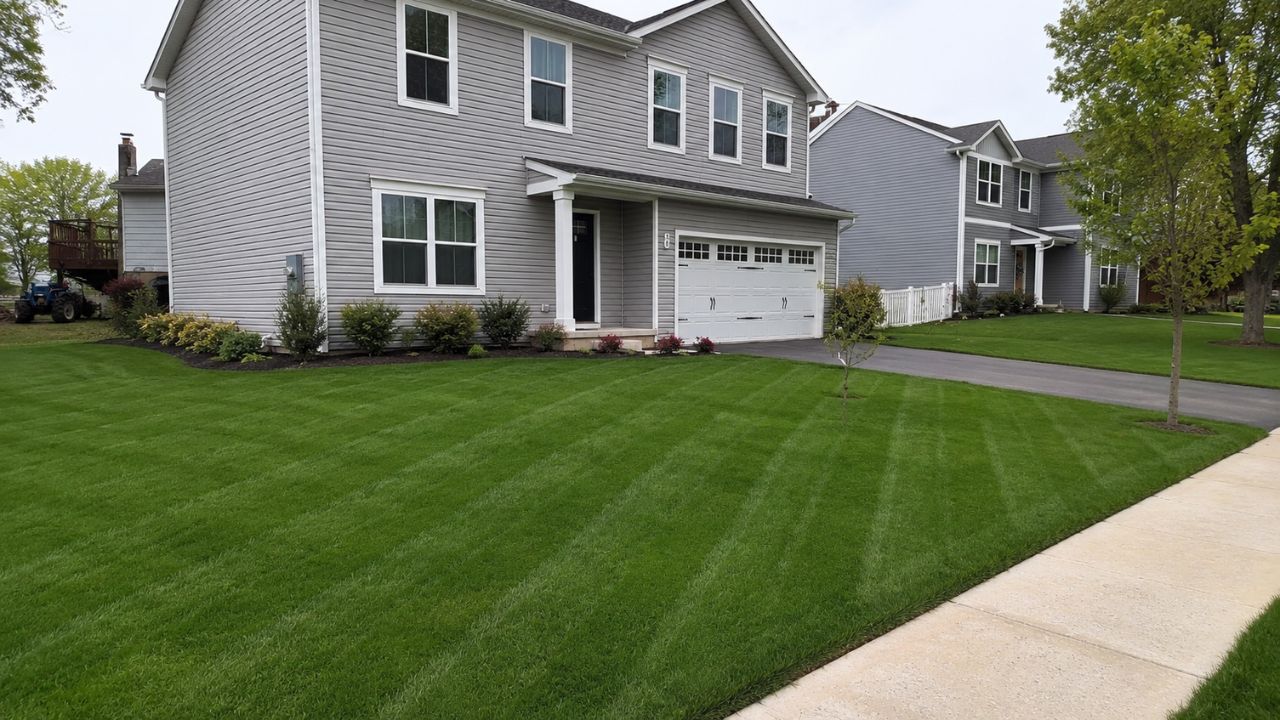
This is one of the harder conversations I have with homeowners every spring.
Someone calls me, I walk their property, and I can see pretty quickly that what they’ve got isn’t a lawn that needs more attention — it’s a lawn that needs to go. And nobody wants to hear that. They’ve been watering it, fertilizing it, hoping it comes back. But sometimes it doesn’t come back. Sometimes the right answer is starting over.
I’m Ryan Lingenfelter, owner of Cutting Edge Lawn & Landscaping in Garson, Ontario. Since 2020, I’ve assessed hundreds of residential and commercial properties across Greater Sudbury — Garson, Val Caron, Hanmer, Lively, Chelmsford, Azilda, Capreol. I’ve seen lawns that looked terrible but recovered completely with the right care. And I’ve seen lawns that looked okay on the surface but were beyond saving without a full replacement.
Here’s how to tell the difference — honestly, so you don’t spend money on the wrong solution.
The Question You Need to Answer First
Before we talk about replacement vs. repair, there’s one question that cuts through most of the confusion.
What percentage of your lawn is actually grass?
Not green — grass. There’s a difference. Weeds are green. Moss is green. Dead thatch that hasn’t browned yet looks green from a distance. But none of that is grass.
Here’s the rule I use when I walk a property. If less than 50 percent of what’s on the ground is actual desirable grass — the rest being weeds, bare soil, moss, or dead material — repair is usually a losing battle. You can overseed, aerate, fertilize, and treat weeds, but you’re fighting against a lawn that fundamentally doesn’t have enough good grass left to fill back in properly.
If more than 50 percent is still viable grass — even if it’s thin, patchy, or stressed — you’ve got something to work with. The right treatment plan can bring that lawn back without replacement.
Walk your lawn slowly and look at what’s actually there. Be honest with yourself. That percentage is the starting point for everything else.
Signs Your Sudbury Lawn Can Be Saved
Good news first. Most lawns I look at in Greater Sudbury can be saved — they just need the right intervention at the right time.
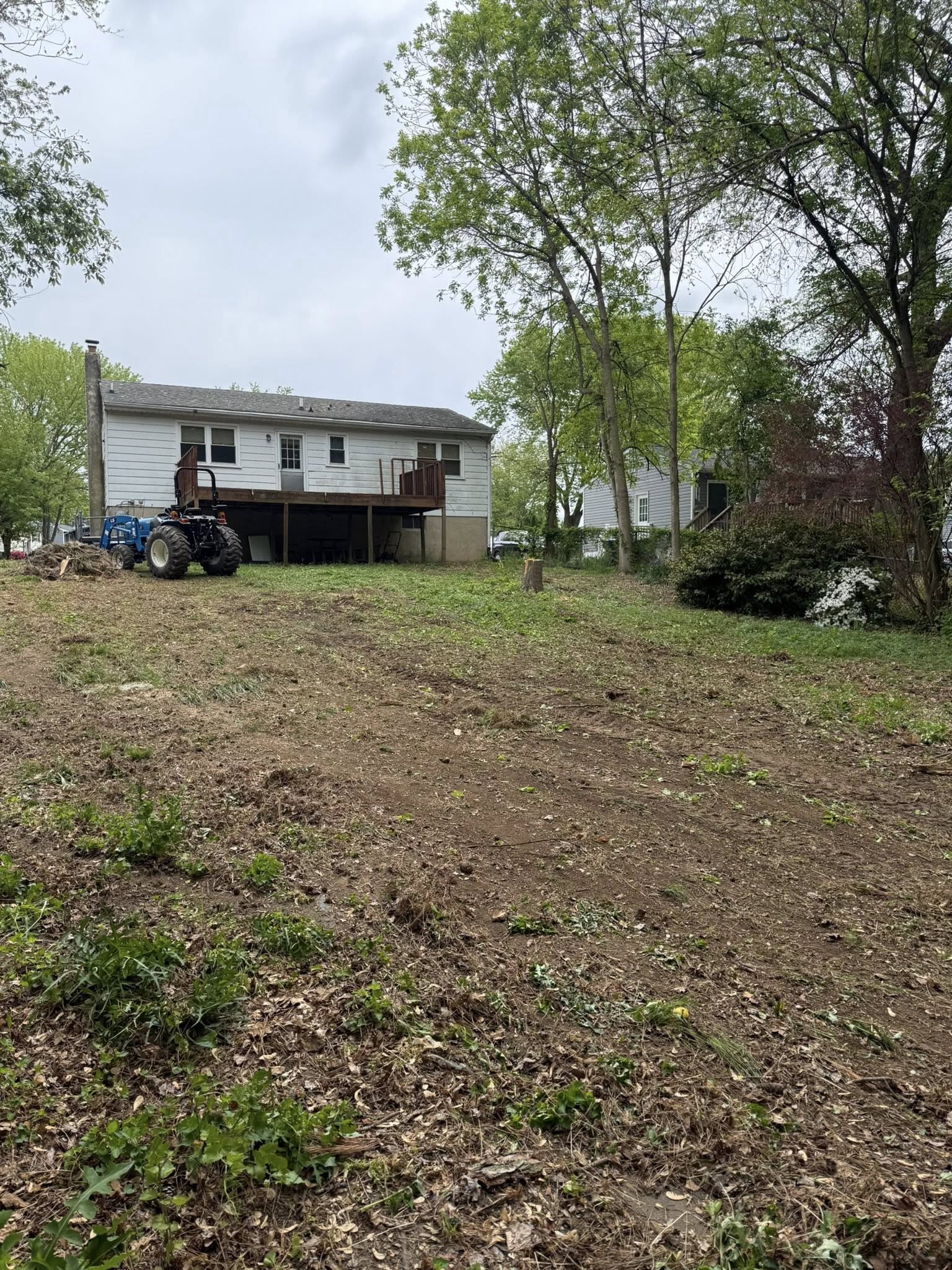
Thin but present grass coverage
If your lawn is thin and patchy but you can still see grass plants actively growing across most of the area, you’ve got a foundation to work with. Thinning lawns respond well to core aeration, overseeding in late August, and correcting the underlying cause — usually mowing too short, compaction, or inconsistent watering.
Specific problem areas rather than overall failure
If most of your lawn looks reasonable but you’ve got defined problem spots — a shaded area under a tree, a section near the road that dries out fast, a patch where water pools — those are solvable problems. Targeted repair is almost always the right call when the damage is localized rather than widespread.
Damage from a known, fixable cause
If the lawn declined because of something specific that you can now address — a grub infestation that’s been treated, a drainage issue that’s been fixed, a neighbour’s dog that no longer has access to your yard — the lawn has a real chance of recovering once the cause is gone. Repair makes sense when the underlying problem is solved.
Less than two years of serious neglect
A lawn that’s been neglected for a season or two can usually come back with proper care. Aeration, overseeding, correct mowing height, and consistent watering through a full season will restore most lawns that haven’t been completely taken over by weeds or allowed to die out entirely.
Signs Your Sudbury Lawn Needs to Be Replaced
Now the harder list. These are the things I look for when I’m assessing whether repair is realistic or whether we’re wasting time and money trying to save something that’s past saving.
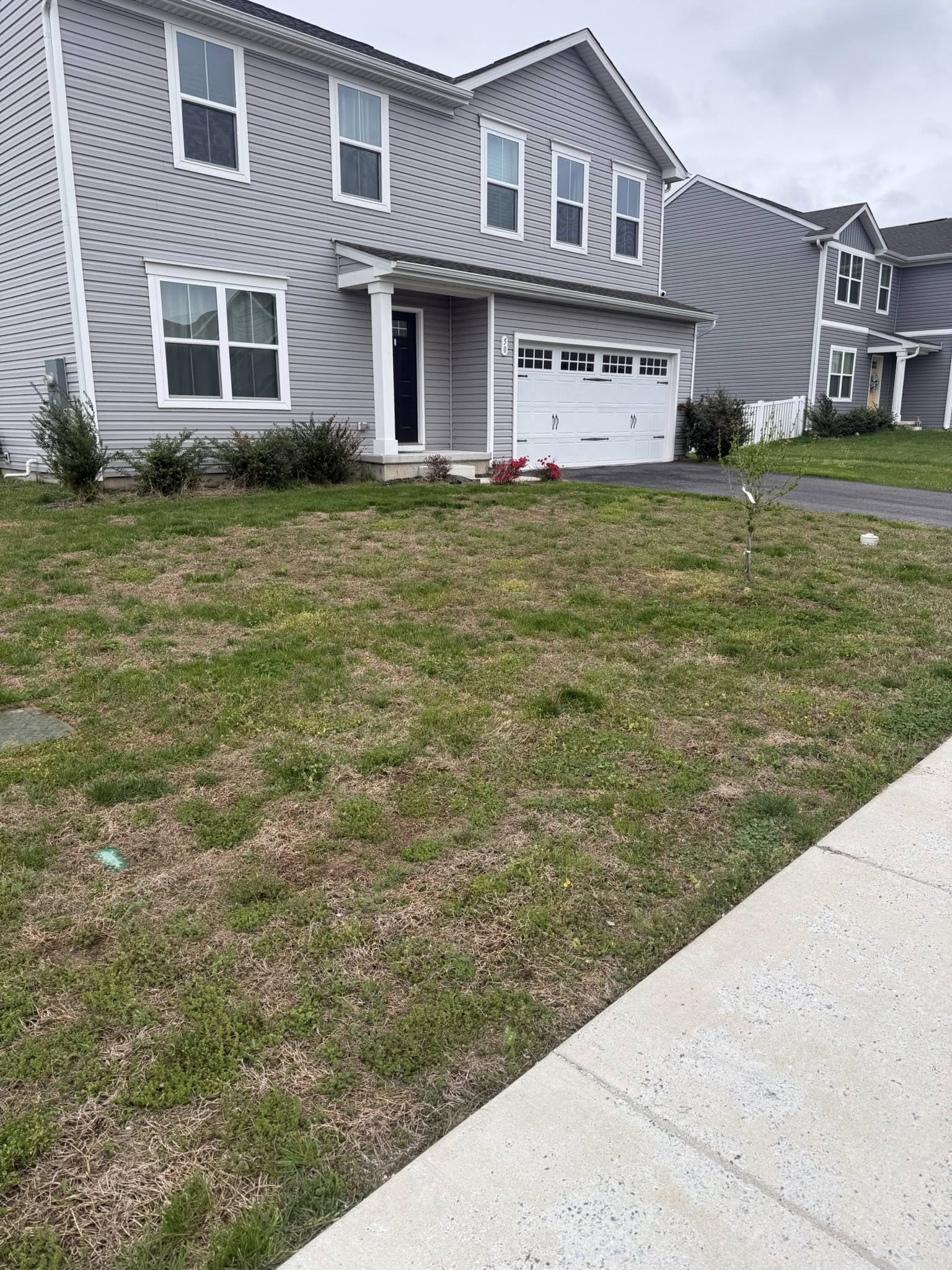
Less than 50 percent desirable grass remaining
As I mentioned above — this is the threshold. When weeds, moss, bare soil, and dead material make up more than half of what’s on the ground, overseeding into that mess rarely works. The weed seeds in the soil outnumber the grass seeds you’re trying to establish. Replacement gives you a clean start.
Severe and widespread compaction with no viable root system
Some Sudbury properties — especially older ones, or ones that have had heavy equipment or vehicle traffic on them — have soil that’s compacted so severely that grass roots simply can’t penetrate it anymore. You can aerate once, twice, three times, and the soil structure still isn’t suitable for healthy turf. At that point, a full restoration — removing the existing material, amending the soil, and laying new sod — is the only thing that actually fixes the underlying problem.
Persistent drainage problems that haven’t been addressed
If your lawn has areas that stay waterlogged for days after rain, the soil conditions aren’t suitable for healthy grass regardless of what you plant. Water sitting on the surface drowns roots and creates the exact conditions that moss and certain weeds thrive in. Before any replacement makes sense in these areas, the drainage issue needs to be addressed — otherwise you’re replacing sod into the same conditions that killed the last lawn.
Complete takeover by perennial weeds
Annual weeds — crabgrass, for example — can be managed with herbicide and overseeding over a season or two. Perennial weeds with deep root systems — creeping Charlie, quackgrass, thistle — are a different problem. Once they’ve taken over a lawn, trying to overseed around them is fighting a losing battle. A full replacement with proper soil preparation and pre-emergent weed control gives you a realistic chance at a clean lawn.
The lawn has never been right
Sometimes I walk a property and the homeowner tells me it’s always been bad — never really established properly, always thin, always weedy, never looked the way they wanted. In these cases, there’s usually a soil problem underneath. Poor topsoil, improper grading, wrong seed type for the conditions. Repairing on top of a bad foundation produces more of the same. Starting over properly — with soil preparation done right — is the only way to get a lawn that actually works on that property.
The Middle Ground — Partial Replacement
I want to talk about this because it’s actually the most common recommendation I make, and a lot of homeowners don’t realize it’s an option.
Most properties I assess aren’t all-or-nothing situations. They’ve got sections that are saveable and sections that aren’t. A full front lawn that’s mostly viable but has a dead strip along the driveway. A backyard that’s two-thirds reasonable grass and one-third weeds and bare soil near the fence.
In these cases, partial sod installation makes more sense than either full replacement or trying to repair sections that won’t respond. We remove and replace the problem areas, integrate the new sod properly with the existing lawn, and treat the rest with aeration and overseeding.
It costs less than a full replacement, produces a better result than trying to repair dead areas, and gets done faster. If you’ve got a lawn with some good sections and some sections that clearly aren’t coming back, partial replacement is usually the right answer.
What Lawn Replacement Actually Involves in Sudbury
If you’ve assessed your lawn and concluded that replacement is the right call, here’s what the process looks like — so you know what you’re getting into before you commit.
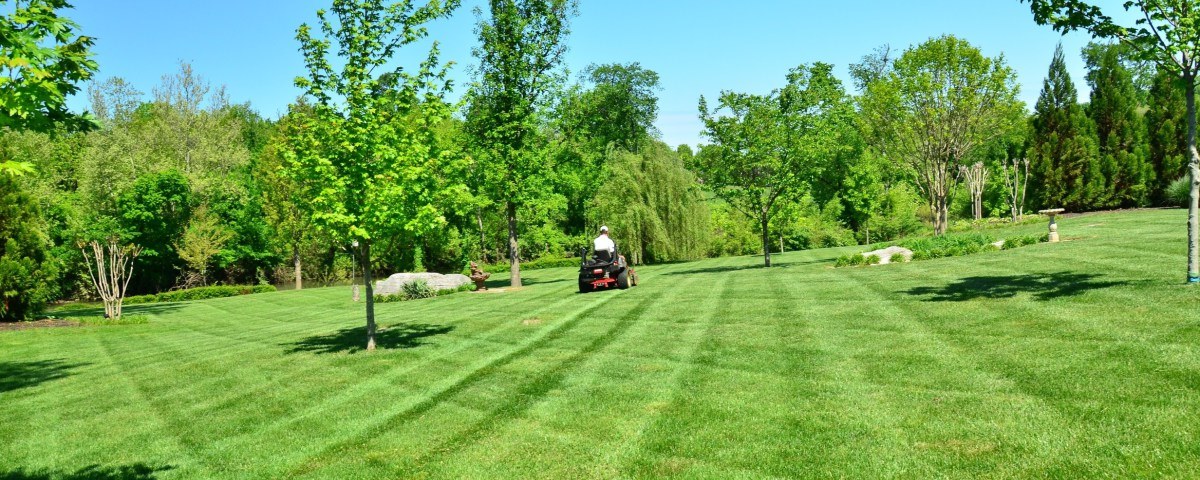
Step 1 — Remove the existing lawn
The existing grass, weeds, and thatch layer need to come out. This is usually done with a sod cutter — a machine that slices the top layer of vegetation away from the soil. The removed material gets hauled off the property. This step matters more than most people realize — laying new sod on top of old dead material causes it to fail.
Step 2 — Assess and prepare the soil
Once the existing material is removed, I look at what we’re working with underneath. If the soil is compacted, we loosen it. If the topsoil layer is too thin, we add topsoil. If there are grading issues — low spots that pool water, areas that slope toward the house — those get addressed now, not after the sod is down. Soil preparation is the step that determines whether the new lawn succeeds long-term.
Step 3 — Install new sod
Fresh sod goes down on the prepared soil, fitted tightly with staggered seams, and rolled to ensure good contact with the soil surface. Air pockets between the sod and soil cause it to dry out and die before the roots establish.
Step 4 — Establishment care
New sod needs consistent moisture for the first two to three weeks while the roots knit into the soil. In Sudbury’s summer conditions, that usually means daily watering for the first week, tapering to every other day in week two, and then transitioning to a normal deep-watering schedule once the sod is established. Stay off it as much as possible during this period — foot traffic on new sod before the roots are set pulls it away from the soil surface.
Repair vs. Replace — The Honest Cost Comparison
I want to give you the real numbers here because this is usually what the decision comes down to.
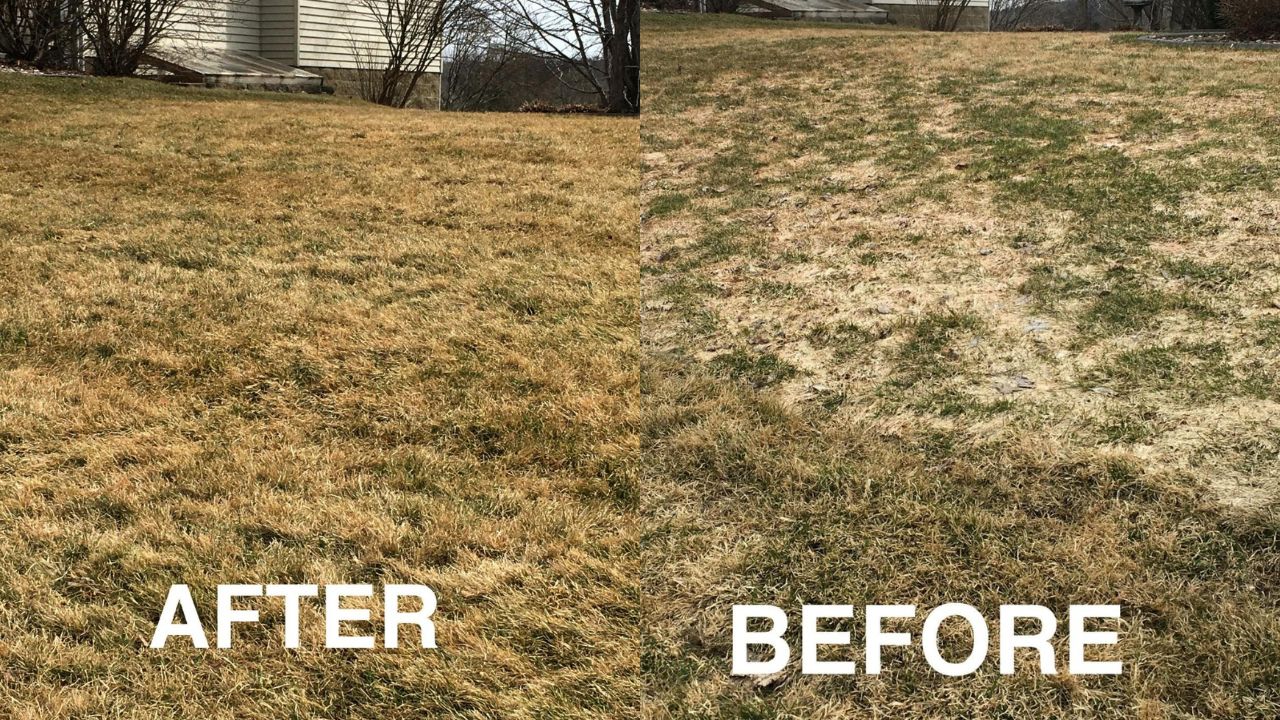
A proper lawn repair program — aeration, overseeding, weed treatment, adjusted maintenance — costs less upfront than replacement. But it takes a full season to see results, sometimes two. And if the underlying conditions aren’t right, you may invest a full season of care and still end up with a lawn that needs replacement anyway.
New sod installation in Sudbury typically runs between $8 and $14 per square foot installed, depending on site conditions, prep requirements, and access. A full average residential lawn — around 3,000 to 4,000 square feet of turf — is a real investment. But it produces an immediate result, and when it’s done properly on prepared soil, it lasts.
My honest advice: if the lawn is saveable, save it. Repair is the right call when there’s something to work with. But if you’ve been fighting the same lawn for two or three years and it’s still not right, the money you’ve spent on treatments has already exceeded what a replacement would have cost — and you still don’t have the lawn you want.
For a full breakdown of lawn care costs in Greater Sudbury, I’ve put together a detailed pricing guide here.
When to Have This Conversation — Timing in Sudbury
If you’re thinking about lawn replacement, here’s when it makes the most sense to act in Greater Sudbury.
Late May to mid-June is good timing for sod installation — the soil is warm, the conditions support fast establishment, and you get a full summer for the roots to knit in before winter. This is the window we’re in right now.
Late August to early September is the other ideal window. Cooler temperatures mean less stress on new sod during establishment, and you avoid the risk of summer heat drying it out before the roots are set. Fall installation also gives the lawn a full season of cool-weather root growth before its first winter.
Mid-July through August is the window I’d generally avoid for new sod — the heat and dry conditions make establishment harder and the watering requirement during that period is significant.
How to Get an Honest Assessment for Your Sudbury Lawn
If you’re not sure whether your lawn is saveable or needs to be replaced, the straightforward answer is to have someone walk it with you and give you an honest opinion before you spend money on either option.
That’s something I do at no charge for properties across Greater Sudbury. I’ll walk the property, tell you what I see, give you my recommendation — repair, partial replacement, or full replacement — and a quote if you want to proceed. No pressure, no upselling. Just a straight assessment.
Call me at 705-507-6787 or fill out the free quote form here. We cover all of Greater Sudbury — Garson, Val Caron, Hanmer, Lively, Chelmsford, Azilda, Capreol — and if replacement is the right call, now is a good time to get it on the schedule before summer is fully underway.
Hope this helped you figure out which side of the line your lawn is on. If you’ve still got questions, just call. Happy to talk it through.
Frequently Asked Questions
How do I know if my lawn needs to be replaced in Sudbury?
The clearest sign is when less than 50 percent of what’s on the ground is actual desirable grass — the rest being weeds, bare soil, or dead material. Other indicators include severe compaction that hasn’t responded to aeration, persistent drainage problems, complete takeover by perennial weeds, or a lawn that has never established properly despite multiple repair attempts.
Is it better to repair or replace a lawn in Sudbury?
If more than 50 percent of the lawn is still viable grass and the underlying cause of the decline is fixable, repair is usually the right call. If the lawn is mostly weeds and bare soil, or if you’ve been repairing for multiple seasons without lasting improvement, replacement produces a better long-term result and often costs less over time than continued failed repair attempts.
When is the best time to replace a lawn in Sudbury Ontario?
Late May to mid-June and late August to early September are the two ideal windows for sod installation in Greater Sudbury. Both periods offer soil temperatures and weather conditions that support fast root establishment. Mid-July through August is the window I’d generally avoid due to heat and drought stress on new sod.
How much does lawn replacement cost in Sudbury?
New sod installation in Greater Sudbury typically runs between $8 and $14 per square foot installed, depending on site conditions, soil preparation requirements, and property access. Most residential lawns run between 2,000 and 5,000 square feet of turf area. I provide free on-site quotes for all properties across Greater Sudbury.
Can I replace just part of my lawn instead of the whole thing?
Yes — and this is often the most practical and cost-effective approach. Partial sod installation addresses the areas that aren’t saveable while preserving the sections that still have viable grass. The new sod is integrated with the existing lawn and the remaining areas are treated with aeration and overseeding. For most properties with mixed conditions, partial replacement produces a better result than trying to repair everything or replacing more than necessary.
Ryan Lingenfelter is the owner of Cutting Edge Lawn & Landscaping in Garson, Ontario. Since 2020, his crew has provided full lawn care services across Greater Sudbury — Garson, Val Caron, Hanmer, Lively, Chelmsford, Azilda, and Capreol. Cutting Edge is licensed, insured, BBB A+ rated, and ThreeBest Rated for lawn care services in Sudbury.
📞 Phone: 705-507-6787
📍 Service Area: Greater Sudbury, Ontario
🔗 Free Quote: cuttingedgelawn.ca/quote
