
There’s a particular kind of call that I find the most interesting to receive. Not the emergency calls — those are their own thing. And not the new clients who’ve never worked with us before.
The most interesting calls are from past clients who’ve been quiet for a while. Because when someone who had their lawn restored professionally goes quiet for a year, then two years, then calls again — the lawn has been telling a story the whole time. And when I get out there and walk the property, I can read almost the entire story just from what I see.
The call I want to tell you about came from a homeowner in Chelmsford. Her name is Diane. We’d done a full lawn restoration on her property in the summer of 2022 — sod, soil prep, the full treatment. The lawn had looked great going into that first fall. Then two years passed without a word.
She called me in the spring of 2024.
I want to tell you this story because what the lawn showed me when I got there is one of the clearest illustrations I’ve seen of how quickly things can go sideways — and what it actually takes to get them back.
The First Time — What We Did in 2022
When Diane first called me in May of 2022, her backyard was in rough shape. It had the typical Chelmsford situation — clay-heavy soil that had been compacting for years without aeration, a thatch layer thick enough to act as a physical barrier between seed and soil, and two persistent bare patches that she’d been trying to fix with overseeding for three consecutive springs without success.
The diagnosis was straightforward: the soil was too compacted and the thatch too thick for any surface treatment to work. We needed to start over properly.
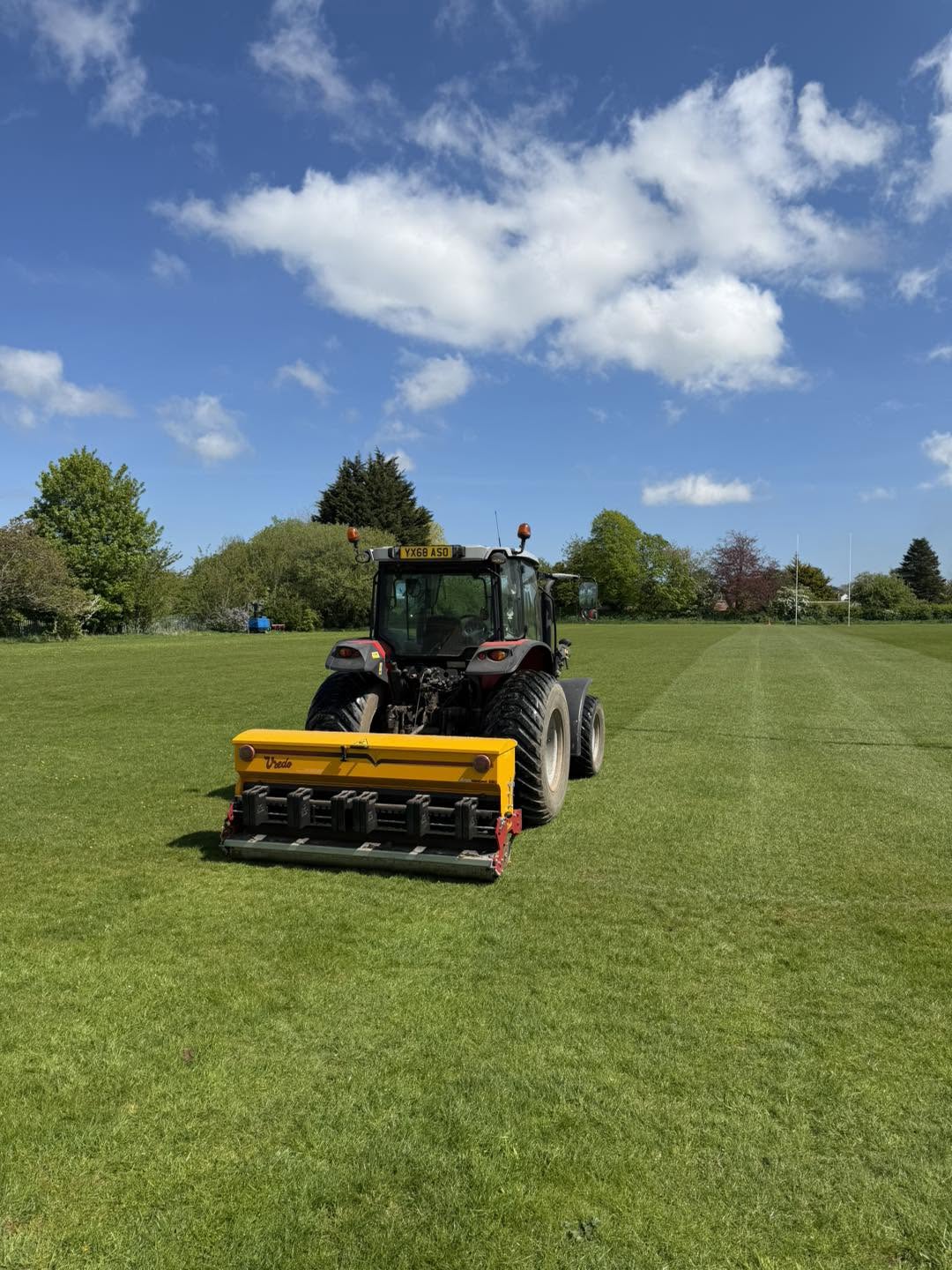
We stripped the dead lawn, tilled the soil four to six inches deep, incorporated quality topsoil throughout, corrected a minor drainage slope near the back fence, and laid fresh sod across the entire backyard. Then I walked Diane through the watering schedule and what to watch for in the first three weeks.
By August of 2022, the lawn looked excellent. Even coverage, established root system, the bare patches that had plagued her for years were green and growing like the rest of the lawn. She texted me a photo in September saying she was thrilled with how it had come through the summer.
I told her what I tell every client after a restoration: the hard part is keeping it this way. Annual aeration. Correct mowing height. Consistent watering in dry periods. Those three things are what separate a lawn that stays healthy from one that slowly goes back to where it was.
She said she’d keep all of that in mind.
Then I didn’t hear from her for two years.
The Call — Two Years Later
When Diane’s number came up on my phone in April of 2024, I recognized it immediately. She started the conversation the same way that particular kind of call always starts.
“I think I’ve let the lawn go a bit.”
I’ve heard that phrase enough times to know it covers a wide range of situations. Sometimes “let it go a bit” means a few missed aeration cycles and some overdue edging. Sometimes it means something closer to what I’d seen on the worst restoration jobs I’ve done in Greater Sudbury.
I asked her to describe what she was looking at.
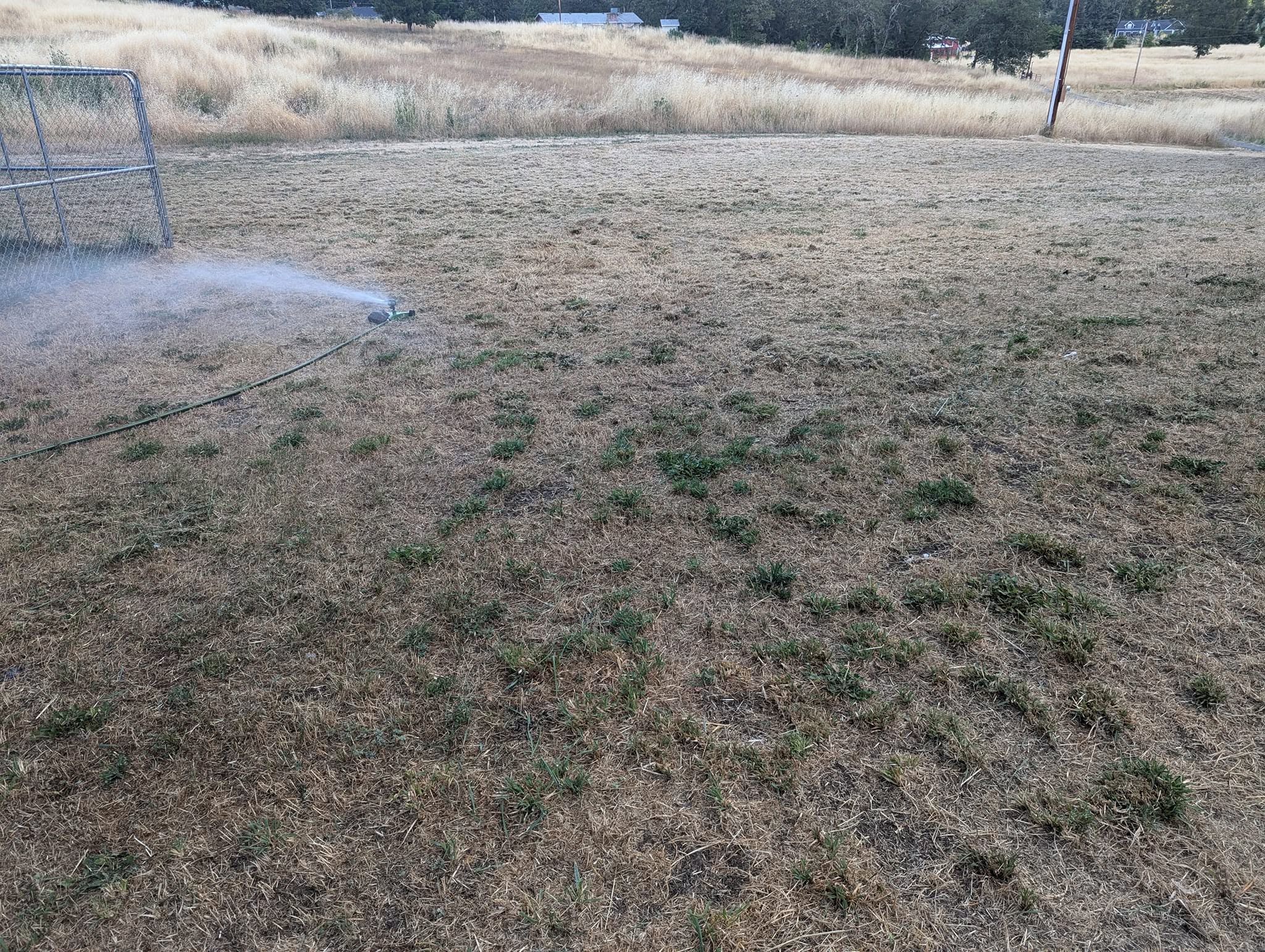
She said the lawn was patchy. Some bare areas had come back, not as bad as before but visible. The grass seemed thinner than it had been. There were a couple of spots near the fence that were struggling. She’d had it mowed regularly by someone — she named a local operator — but hadn’t done any aeration or overseeding since we finished in 2022.
Two years. No aeration. On Chelmsford clay.
I told her I’d come out and take a look the following morning.
What the Lawn Showed Me When I Got There
I want to be specific about what I found because it illustrates something important about how lawn decline actually works — it’s not dramatic or sudden. It’s a slow accumulation of small deficits that compounds over time until the lawn is meaningfully worse than it was.
The Compaction Had Returned
First thing I did was the screwdriver test in multiple spots across the backyard. Two years of Chelmsford winters — with the freeze-thaw cycles and clay soil compression that comes with them — had rebuilt compaction significantly. The screwdriver was stopping at about two inches in most spots. Not as severe as 2022, but well past where it should be on a lawn that had been properly tilled and sodded.
Without annual aeration to break the cycle, clay soil in Greater Sudbury will compact back toward its natural dense state within one to two growing seasons. I’ve documented this pattern in detail in the most common thing I find under dead Sudbury lawns — compaction is the central villain in almost every lawn decline story in this region.
The Thatch Was Building Back Up
The tilling and sod work in 2022 had reset the thatch layer to zero. Two years of growth without aeration to help break it down had rebuilt a thatch layer of about half an inch throughout. Not the inch-plus that had been there before we started — but enough to be slowing water penetration and starting to create the same surface barrier conditions that had prevented overseeding from working before.
The Mowing Height Was Wrong
This one I could see immediately from the street. The lawn had been mowed short — I estimated about two inches or less — throughout the two years since restoration. The operator she’d hired was using the standard low-deck setting that a lot of budget operators default to across Sudbury.
Two years of short cutting on clay soil is a significant problem. Short cutting suppresses root depth — the plant puts energy into regrowing leaf surface rather than pushing roots deeper. Shallow roots on Chelmsford clay means a lawn with no buffer against summer heat or drought. It explains exactly why the thin patches and bare spots had started returning — the grass had been cut short enough, long enough, that it had lost the root depth to handle stress.
I’ve covered the full mechanics of why cutting height matters so much in Sudbury’s climate in the most common lawn mowing mistake I see every week in Sudbury and in the week most Sudbury lawns start struggling and how to get ahead of it. Short cutting is the single most consistent factor I see in lawns that were once healthy and have since declined.
The Bare Patches Were Back — But Not as Bad
The two persistent bare areas from before the 2022 restoration — the ones that had refused to respond to overseeding for three years — had partially returned. Not as severe as they’d been originally, but visibly thinner than the surrounding lawn and heading in the wrong direction.
The drainage correction we’d done in 2022 near the back fence had held — that area was still draining properly and the sod there was the healthiest section of the lawn. Good drainage work, done once and done right, stays done. That was reassuring.
But the areas that had been bare before had started thinning again, which told me the root causes — compaction and short cutting — had been gradually recreating the conditions for failure even in areas where the soil prep had been done properly.
I walked back to Diane, who was watching from the patio.
I told her what I’d found and what I thought had happened. I wasn’t saying it to make her feel bad — she’d been getting the lawn cut, she’d been doing the obvious thing. She just hadn’t had the information to know that aeration and cutting height were the two things that would determine whether the restoration held.
She said: “I should have called you sooner.”
I told her she had now, and that was what mattered. The lawn was meaningfully worse than it had been in fall 2022, but it wasn’t back to square one. We weren’t looking at a full replacement. We were looking at a recovery job — which is a different and less intensive thing.
What We Did — and What Was Different This Time
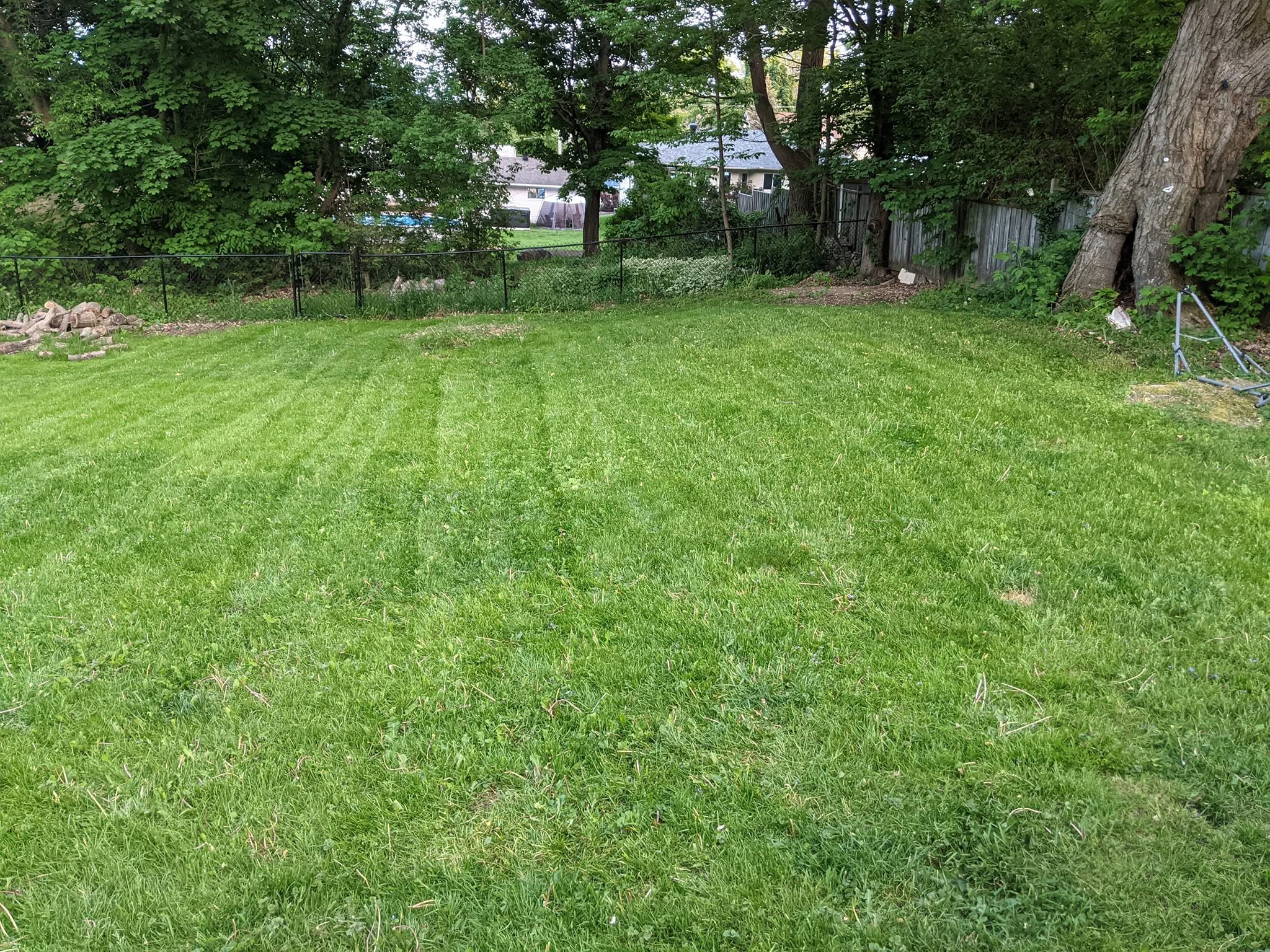
Because the drainage was still working and the sod from 2022 was still present and viable — just stressed and thinned — we didn’t need a full replacement. This is the difference between a recovery job and a restoration job, and it’s a meaningful difference in cost and scope.
Core Aeration — The Priority
First and most important: core aeration across the entire backyard. Two passes in different directions to properly address the compaction that had rebuilt over two winters. I can’t overstate how much difference proper aeration makes on Chelmsford’s clay soil. The soil literally changes texture within a few weeks of aeration — opens up, starts draining better, allows roots to go deeper.
The full case for why aeration is so critical in Greater Sudbury is in what to expect from lawn aeration in Sudbury and in the 2-week spring window that makes or breaks Sudbury lawns. On a clay-heavy Chelmsford property that hasn’t been aerated in two years — this was the single most important thing we could do.
Overseeding Into the Thin Areas
Immediately after aeration, we overseeded the thin and bare sections. The aeration holes provide exactly the soil contact that seed needs to germinate — seed going into holes on a freshly aerated lawn germinates at a fraction of the rate needed on an unbroken surface. Quality cool-season blend, spread at full overseeding rate in the affected areas, raked lightly to work it into the holes.
Starter Fertilizer
Applied right after overseeding. The aeration holes carry nutrients directly to the root zone — this is the most efficient fertilizer delivery timing available. In spring, with the lawn coming out of dormancy and new seed going down, a quality starter fertilizer accelerates both recovery and establishment.
The Conversation About Mowing Height
This was as important as any of the physical work. I told Diane directly: whoever is mowing your lawn needs to raise the deck height to 3 inches. I showed her what 3 inches looks like versus what it had been cut at. I explained why this single change would make more difference to the long-term health of the lawn than almost anything else.
She said she’d switch companies if her current operator wouldn’t accommodate it. I told her that was exactly the right call. A lawn care company that won’t mow at the height the lawn actually needs is not serving the lawn — they’re serving their own convenience.
I’ve written about how to evaluate lawn care companies in what professional lawn care actually means in Sudbury and in what you’re really paying for across the $30 to $80 price range. Cutting height adherence is one of the clearest markers of whether a company is doing the job properly or just doing the job quickly.
Annual Aeration — Booked for Fall
Before I left, I booked Diane for fall aeration. Not as a sales pitch — as a genuine recommendation. On Chelmsford clay, annual aeration is what keeps the compaction from rebuilding. One spring aeration and one fall aeration per year is the maintenance rhythm that keeps this type of soil from working against the lawn.
The full fall preparation sequence is in how to prepare your Sudbury lawn for winter — the October checklist. Aeration is step two in that sequence for a reason.
What the Lawn Looks Like Now
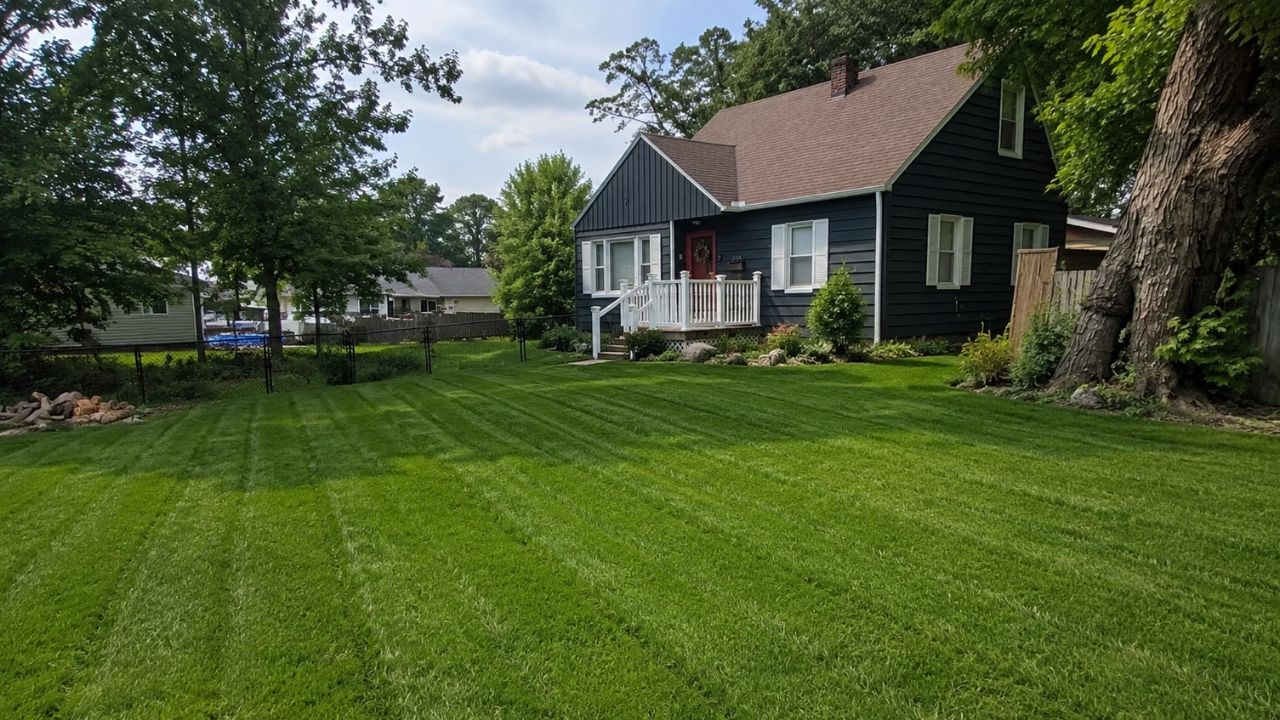
Diane sent me a photo in late June — about eight weeks after the spring work. The thin sections had filled in significantly. The bare areas were showing strong new growth from the overseeding. The lawn was a consistent, even green across the full backyard.
Not quite what it had looked like in September 2022 at peak condition after the restoration. But noticeably better than it had been in April when she called, and heading in the right direction rather than the wrong one.
The fall aeration went ahead as planned. She also switched to a lawn company that mows at 3 inches — she texted me after the first cut to say she could already see the difference in how it looked.
The lawn that came out of winter in 2025 looked better than it had in two years. She’s on a maintenance rhythm now that will keep it that way.
The Thing This Story Illustrates
I tell this story not to make a point about what Diane should have done differently — she was doing what she thought was adequate, and without the right information, it looked like it was. The lawn was green, it was getting cut. The problems were building slowly underneath in ways that aren’t visible until they’ve accumulated enough to show on the surface.
The point is this: a lawn restoration is not a one-time fix. It resets the conditions — it gives the lawn the soil structure and coverage it needs to grow properly. But the things that caused the decline in the first place — compaction from Sudbury winters, short cutting that suppresses roots, lack of overseeding on thin areas — those forces don’t stop. They continue. And annual maintenance is what keeps them from winning.
If you’ve had lawn work done in the past and you’re noticing things starting to slip — reach out before two more years pass. Recovery from early decline is significantly less expensive and less disruptive than restoration from full decline. The earlier the call, the better the options.
📞 Call or text me: 705-507-6787
Or fill out the free quote form here — I get back to everyone same day.
— Ryan Lingenfelter
Owner, Cutting Edge Lawn & Landscaping
Garson, Ontario
Related Articles
- A Chelmsford Homeowner Asked Me Why His Grass Never Grows in That One Spot
- The One Thing I Always Find Under a Dead Sudbury Lawn
- The One Lawn Mowing Mistake I See Every Week in Sudbury
- The 2-Week Window in Sudbury That Makes or Breaks Your Lawn All Summer
- How to Prepare Your Sudbury Lawn for Winter — October Checklist
- Lawn Aeration Near Me in Sudbury — Cost, What to Expect, and What to Ask
- What Professional Lawn Care Actually Means in Sudbury
- Core Aeration Services in Greater Sudbury
