In five years of working on lawns across Greater Sudbury, I’ve walked hundreds of properties. Different sizes, different ages, different neighbourhoods — Hanmer, Val Caron, Chelmsford, Lively, Capreol, Garson, the city proper.
And in that time, I’ve noticed something that I want to share with you directly because I think it’s the single most useful piece of information I can give any Sudbury homeowner who’s been struggling with their lawn.
Almost every dead or dying lawn I’ve assessed in this area has the same thing hiding underneath it. Not sometimes. Not often. Almost every single time.
Most homeowners have never heard of it. The ones who have usually don’t realize how bad it’s gotten on their specific property. And because it’s invisible from the surface, they spend years — and real money — trying to fix the wrong problem while the actual cause sits untouched an inch below their feet.
I’m Ryan Lingenfelter, owner of Cutting Edge Lawn & Landscaping in Garson. Here’s what it is, why it’s so common in Sudbury specifically, and what you can actually do about it.
What I Find Every Single Time
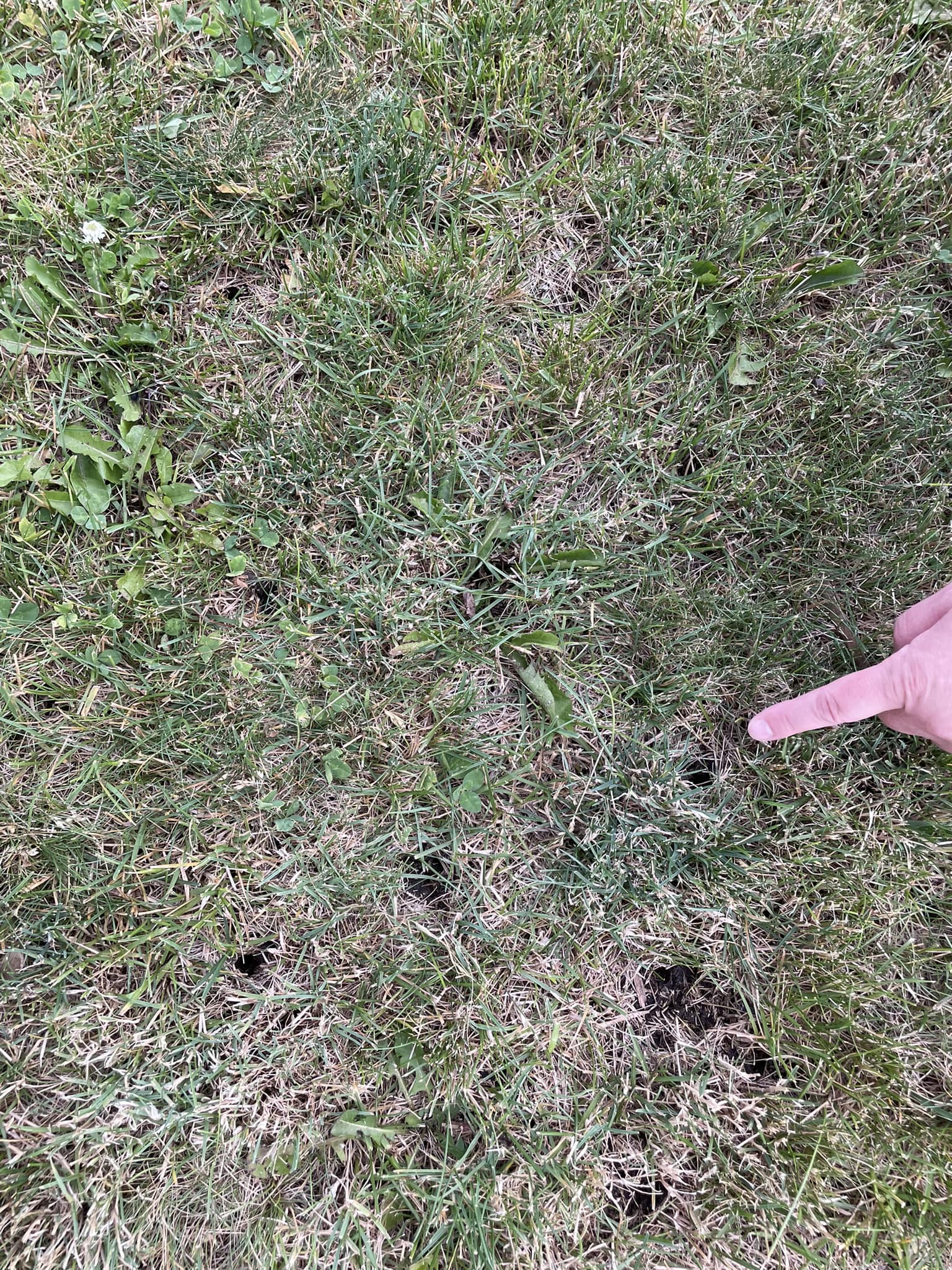
The first thing I do on every single lawn assessment — before I look at the grass, before I check the thatch, before I ask any questions — is the screwdriver test.
I take a standard flathead screwdriver and push it into the soil in several spots across the lawn. It takes about thirty seconds. And what I find tells me more about why that lawn is struggling than anything else I could do.
On a healthy lawn with good soil, a screwdriver pushes in with moderate resistance. Not effortless, but smooth. You can get it four to five inches deep without forcing it.
On a struggling Sudbury lawn — almost every struggling Sudbury lawn — it stops. Hard. Sometimes at two inches. Sometimes at one. Sometimes I can barely get the tip in at all in the worst spots.
That hard stop is compacted soil. And on Greater Sudbury residential properties, it is by far the most common underlying cause of lawn failure I encounter. Not disease. Not the wrong seed. Not poor watering habits. Compacted clay soil that has been packed so tight it has essentially sealed itself against water, air, nutrients, and roots.
When I show homeowners the screwdriver test on their own lawn — when they try to push it in themselves and feel that hard stop — I watch the penny drop. They’ve been trying to grow grass on what is effectively a sealed surface. Nothing was going to work until that surface was opened up again.
Why Compaction Is So Bad in Sudbury Specifically
Soil compaction is a problem everywhere. But in Greater Sudbury, it’s worse than most places — and for a specific reason that has nothing to do with what homeowners are doing wrong.
The soil across most of Greater Sudbury is clay-heavy. Not everywhere, but on a large majority of residential properties in Hanmer, Val Caron, Chelmsford, Garson, and the surrounding areas, the base soil has significant clay content. You can see it when you dig — that dense, reddish-grey material that sticks together when wet and cracks when dry.
Clay soil compacts more easily and more severely than sandy or loamy soil. Here’s why: clay particles are flat and plate-like. Under pressure — foot traffic, mowing equipment, the weight of snow, freeze-thaw cycles — those flat particles stack against each other and lock together. Air gaps disappear. The structure that allows water and roots to move through the soil collapses.
And Sudbury’s climate makes this worse in a very specific way. Every freeze-thaw cycle — and we get many of them, both through winter and in the unpredictable shoulder seasons — physically compresses the soil. Water expands when it freezes, pushing soil particles together. When it thaws, those particles don’t fully return to where they were. Over years and decades of Sudbury winters, clay soil on a residential lot can become genuinely rock-hard in the top few inches where grass roots need to live.
A lawn that was installed on properly prepared soil in 1995 and has never been aerated since has been through thirty Sudbury winters. The compaction that’s built up in that time is significant — often severe. And it’s been building invisibly the entire time while the homeowner wonders why their lawn keeps getting thinner every year.
How Compaction Kills a Lawn Slowly — Without You Knowing
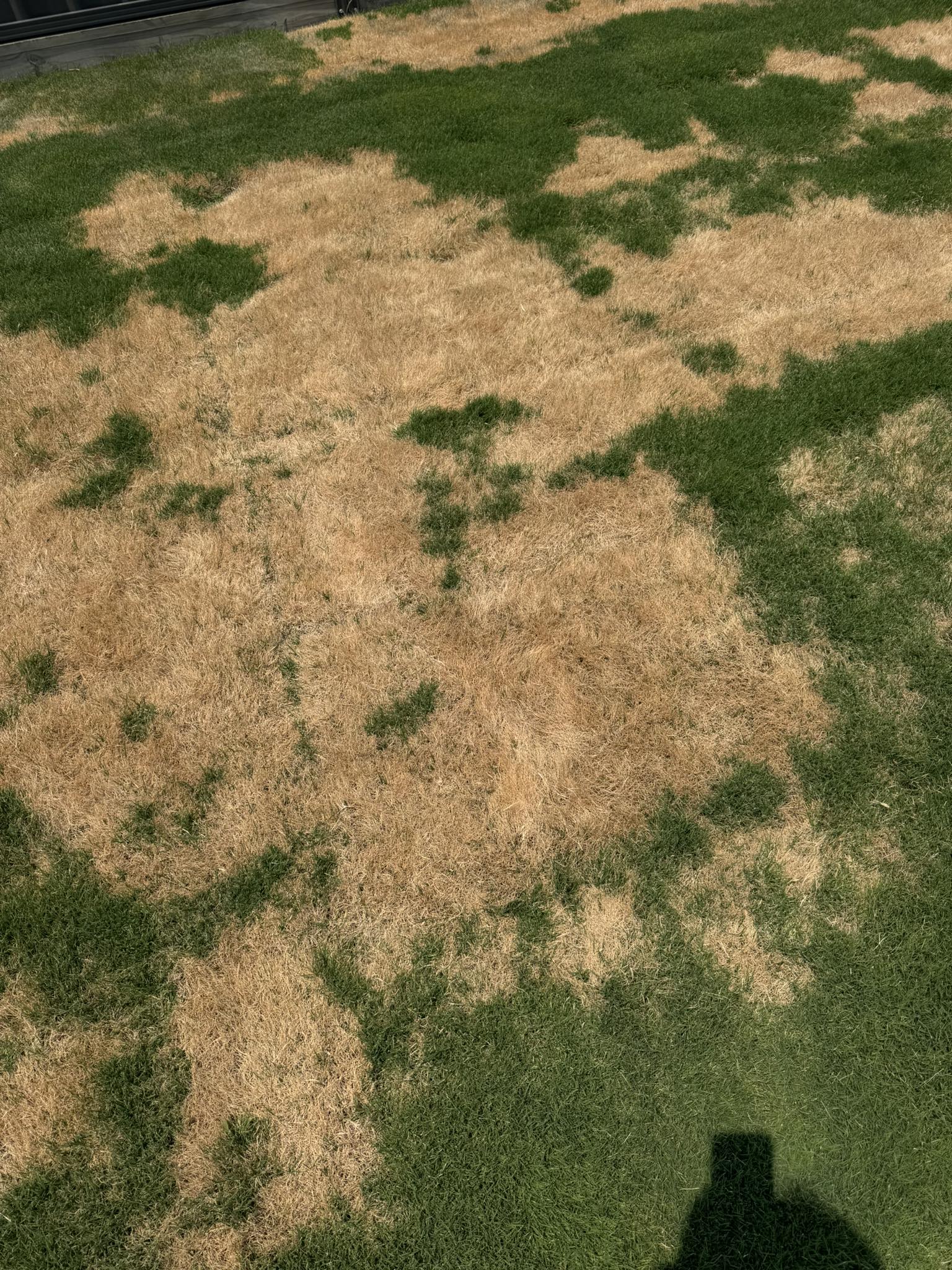
This is the part that most people don’t understand until I explain it — the mechanism by which compacted soil actually kills grass. Because it doesn’t happen overnight. It happens over years, quietly, in ways that look like other problems.
Water Can’t Get In
Compacted soil doesn’t absorb water the way healthy soil does. Instead of infiltrating down to where the roots are, water runs off the surface or sits on top of it. You water your lawn and the water either puddles or runs toward the lowest point in your yard. The roots — sitting in dry, compacted soil two inches down — never see it.
This is why compacted lawns brown out in summer even when homeowners are watering. The water isn’t reaching the roots. The roots are in sealed soil that water can’t penetrate. The grass dies of drought stress even with a sprinkler running.
Roots Can’t Go Deep
Grass roots follow the path of least resistance. In healthy, open soil they’ll go four to six inches deep — sometimes deeper. Those deep roots give the plant access to moisture and nutrients from well below the surface. They also anchor the plant against heat stress, drought stress, and winter stress.
In compacted soil, roots hit that hard layer and stop. They grow sideways in the top inch or two rather than down. Shallow roots mean a plant that’s completely dependent on surface moisture — which evaporates fast in Sudbury summers. It means a plant with almost no buffer against stress. One dry week and it’s brown. One hard winter and it doesn’t come back.
Air Can’t Reach the Root Zone
Grass roots need oxygen. All plant roots do. In healthy soil there are tiny air pockets between soil particles where oxygen lives. In compacted soil those pockets are gone — the particles are pressed flat against each other. No air means the roots literally suffocate. This is part of why severely compacted areas often don’t just have thin grass — they have no grass at all. The soil has become anaerobic and hostile to plant life.
It Looks Like Other Problems
Here’s the part that costs homeowners the most money. Compaction produces symptoms that look like other things. Brown grass looks like drought. Thin coverage looks like the wrong seed. Bare patches look like disease. Weeds look like a weed problem.
So homeowners treat those symptoms. They water more. They buy better seed. They apply weed killer. They fertilize. None of it works — because none of it addresses the actual cause. The money gets spent, nothing improves, and the homeowner concludes that their lawn is just hopeless.
The lawn isn’t hopeless. The diagnosis was wrong.
How to Fix It — And How Long It Takes
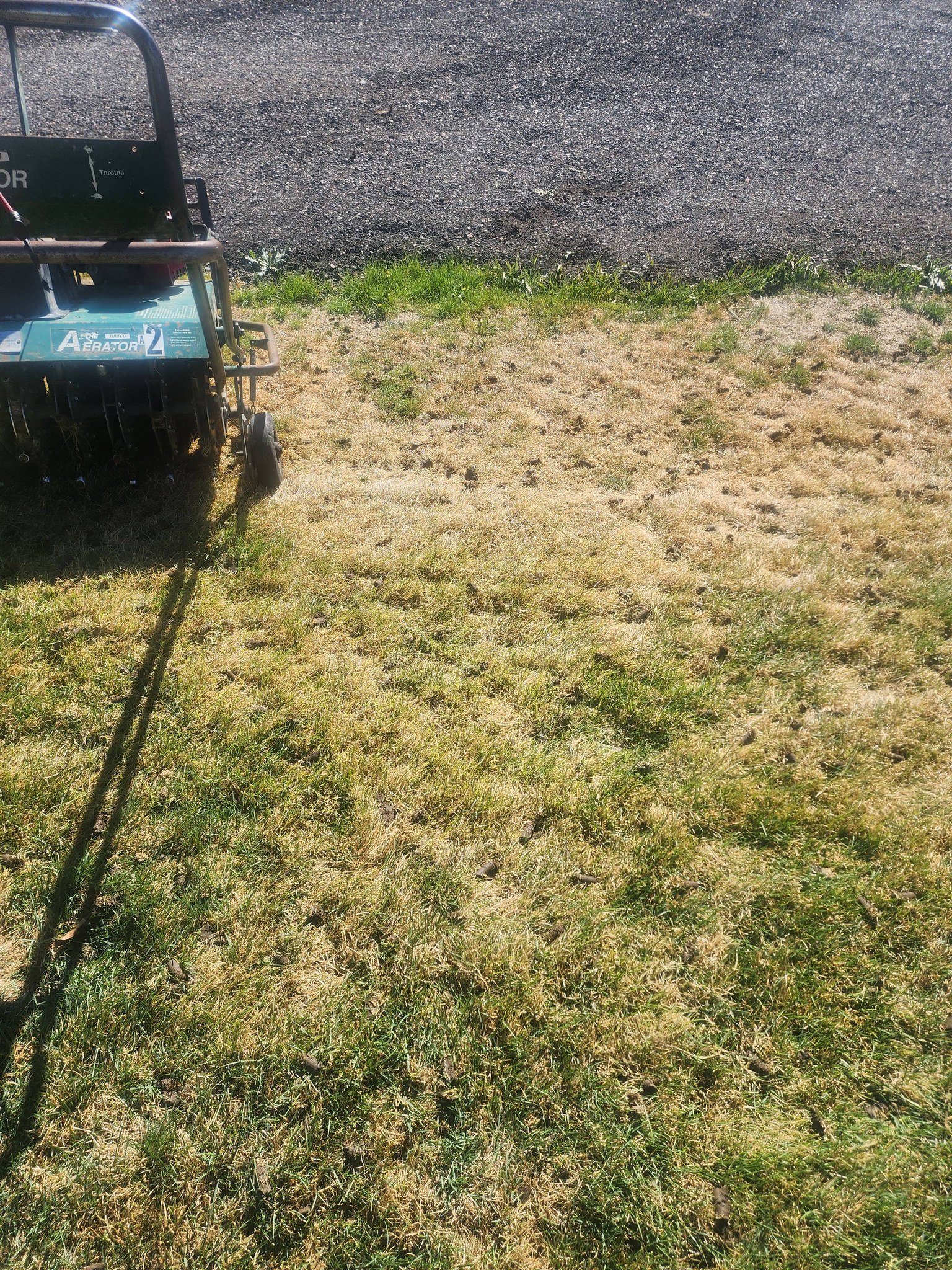
The good news is that compaction is fixable. It takes the right approach and some patience, but there’s nothing permanent about it.
For Mild to Moderate Compaction — Core Aeration
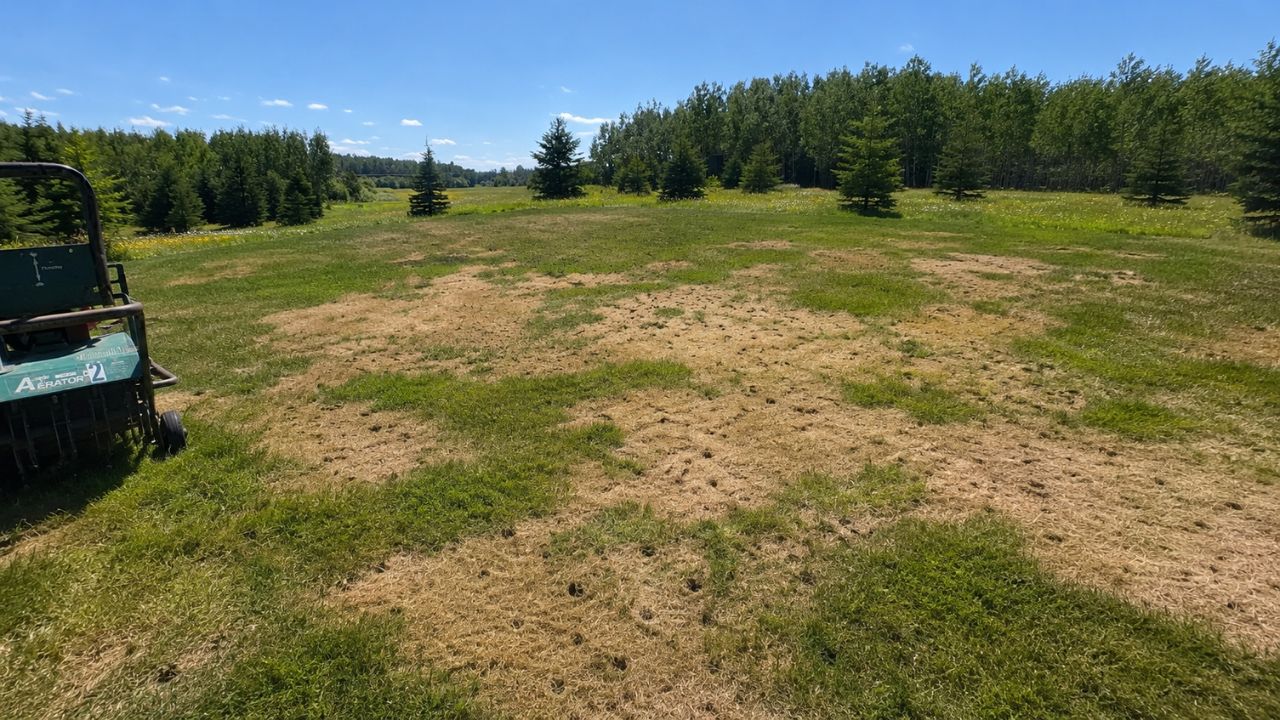
If the lawn still has reasonable grass coverage and the compaction hasn’t completely destroyed the root system, core aeration is the right starting point. A core aerator pulls out small plugs of soil — typically two to three inches deep — across the entire lawn. Each hole is a direct channel for water, air, and nutrients to reach the root zone.
Done in spring or fall — both are excellent times in Sudbury — core aeration produces visible improvement within one season. Combined with overseeding immediately after and a quality fertilizer application, it can significantly restore a lawn that’s been struggling for years due to compaction.
The key word is consistently. One aeration helps. Annual aeration — especially on Sudbury’s clay-heavy soil — is what keeps compaction from rebuilding. A lawn that gets aerated every year doesn’t develop the severe compaction I find on properties that haven’t been aerated in a decade.
For Severe Compaction — Full Restoration
When the compaction is severe — when the screwdriver won’t go in at all, when the soil has essentially sealed over completely, when the lawn coverage is more bare than grass — aeration alone won’t get there. The damage is too far gone for surface treatment.
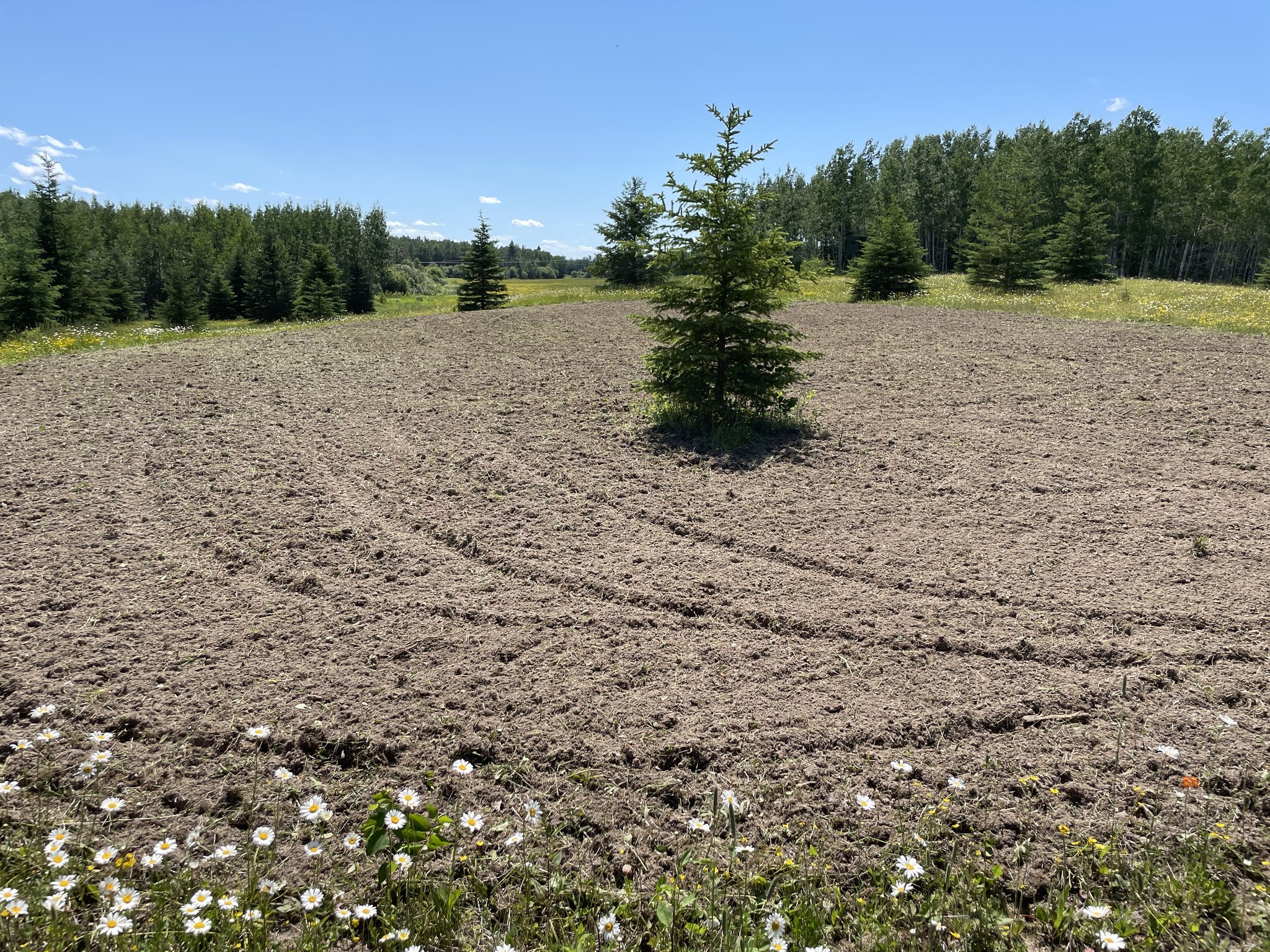
In these cases, proper restoration means tilling the soil four to six inches deep to mechanically break the compaction, incorporating quality topsoil to improve the soil structure, and then laying fresh sod or overseeding depending on the extent of the bare areas.
This is more involved and more expensive than aeration. But on a property with severe compaction, it’s the only approach that actually fixes the problem rather than treating around it. I’ve seen homeowners spend five years and significant money on seed, fertilizer, and surface treatments on a severely compacted lawn with no improvement — and then do one proper restoration and solve the problem for good.
How Long Does It Take to See Results?
For aeration on a moderately compacted lawn: you’ll see improvement within four to six weeks. The grass starts to green up more consistently, bare patches begin to fill in if you’ve overseeded, and the lawn handles summer heat better than it has in years.
For full restoration: the sod roots in within two to three weeks and the lawn looks dramatically different immediately. By the end of the first season it should be established and healthy.
The longer answer is that reversing years of compaction is a process. One good aeration improves things significantly. Consistent aeration over two or three seasons, combined with proper mowing height and appropriate watering, is what gets a Sudbury lawn from struggling to genuinely healthy and keeps it there.
How to Check Your Own Lawn Right Now
Here’s the test I use on every property. You can do it yourself in two minutes:
Go outside with a standard flathead screwdriver. Push it straight into the soil in five or six spots across your lawn — front, back, different areas. Don’t force it. Just push with normal hand pressure and see how far it goes.
If it goes in four inches or more with moderate resistance — your soil is in reasonable shape.
If it stops at two to three inches — you have compaction. Core aeration this season will make a real difference.
If it stops at one inch or less, or you can barely get the tip in — you have severe compaction. Aeration alone probably won’t be enough. A proper assessment is worth doing before you spend any more money on seed or fertilizer.
That test takes two minutes. It will tell you more about why your lawn is struggling than any other thing you could do.
Want to Know What’s Actually Going On Under Your Lawn?
If you’ve been fighting a lawn that won’t respond no matter what you try — reach out. I’ll come out, do the screwdriver test across your property, assess the soil condition properly, and give you a straight answer about what’s actually happening and what it would take to fix it.
No guessing. No treating symptoms. Finding the actual cause first.
📞 Call or text me: 705-507-6787
Or fill out the free quote form here — I get back to everyone same day.
— Ryan Lingenfelter
Owner, Cutting Edge Lawn & Landscaping
Garson, Ontario
Related Articles
- Core Aeration Services in Greater Sudbury
- The 2-Week Window in Sudbury That Makes or Breaks Your Lawn All Summer
- A Chelmsford Homeowner Asked Me Why His Grass Never Grows in That One Spot
- The Worst Lawn I’ve Ever Seen in Greater Sudbury — And What It Took to Fix It
- I Replaced a Sudbury Homeowner’s Dead Lawn in 4 Days
