

Every lawn has a story. And sometimes the most interesting stories are the ones about the spots that just won’t cooperate no matter what you do.
I’ve seen a lot of those spots over the years working on properties across Greater Sudbury. Dead patches that come back every spring in exactly the same location. Circles of thin, struggling grass surrounded by lawn that looks perfectly fine. Areas where seed just won’t germinate and sod dies within a season regardless of watering.
Most of the time, the explanation is one of three or four things I’ve seen before — drainage, compaction, shade, buried debris. I can usually make a reasonable guess before I even do a soil test.
But the job I’m about to tell you about caught me off guard. And it’s a good reminder that sometimes the real answer isn’t what you’d expect.
I’m Ryan Lingenfelter, owner of Cutting Edge Lawn & Landscaping in Garson, Ontario. Here’s what happened in Chelmsford last summer.
The Call From Chelmsford
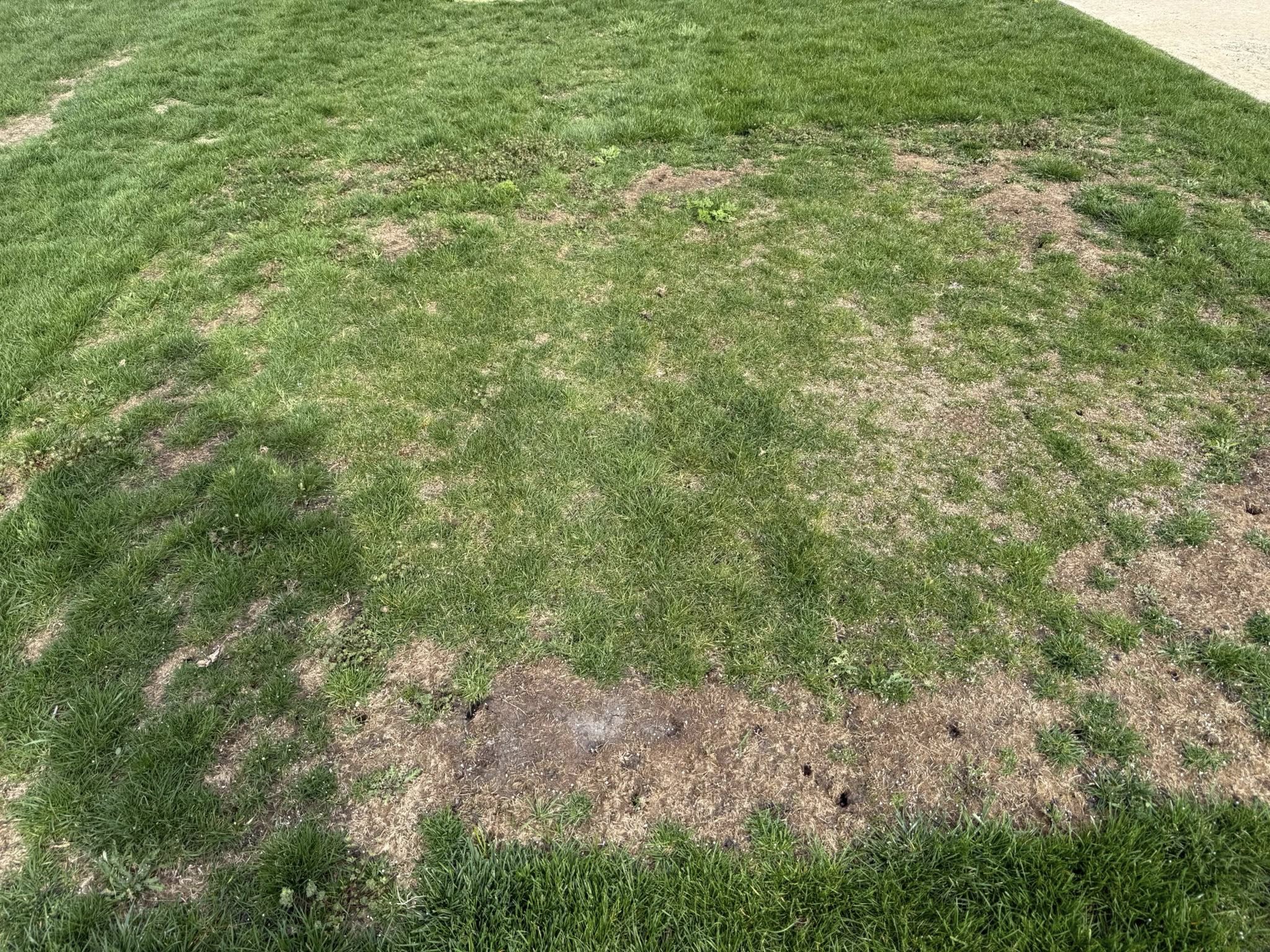
Mark called me in late May. He’d found us through Google and wanted someone to come out and look at a problem area in his front lawn.
He described it over the phone: a roughly circular patch about four feet across, right in the middle of the front lawn, where the grass had never grown properly since he moved in six years ago. He’d tried seed three times. He’d tried laying a small piece of sod once — it established okay, he thought, and then died over the following winter. The rest of his front lawn looked reasonable. This one spot was just perpetually thin, patchy, and embarrassing.
His theory was that there was something wrong with the soil in that specific area. Maybe someone had spilled something there years ago. Maybe a dog had used that spot repeatedly before he owned the house. Maybe it was a pH issue.
Those were all reasonable theories. None of them turned out to be right.
I told him I’d come out and take a look.
What I Found When I Got There
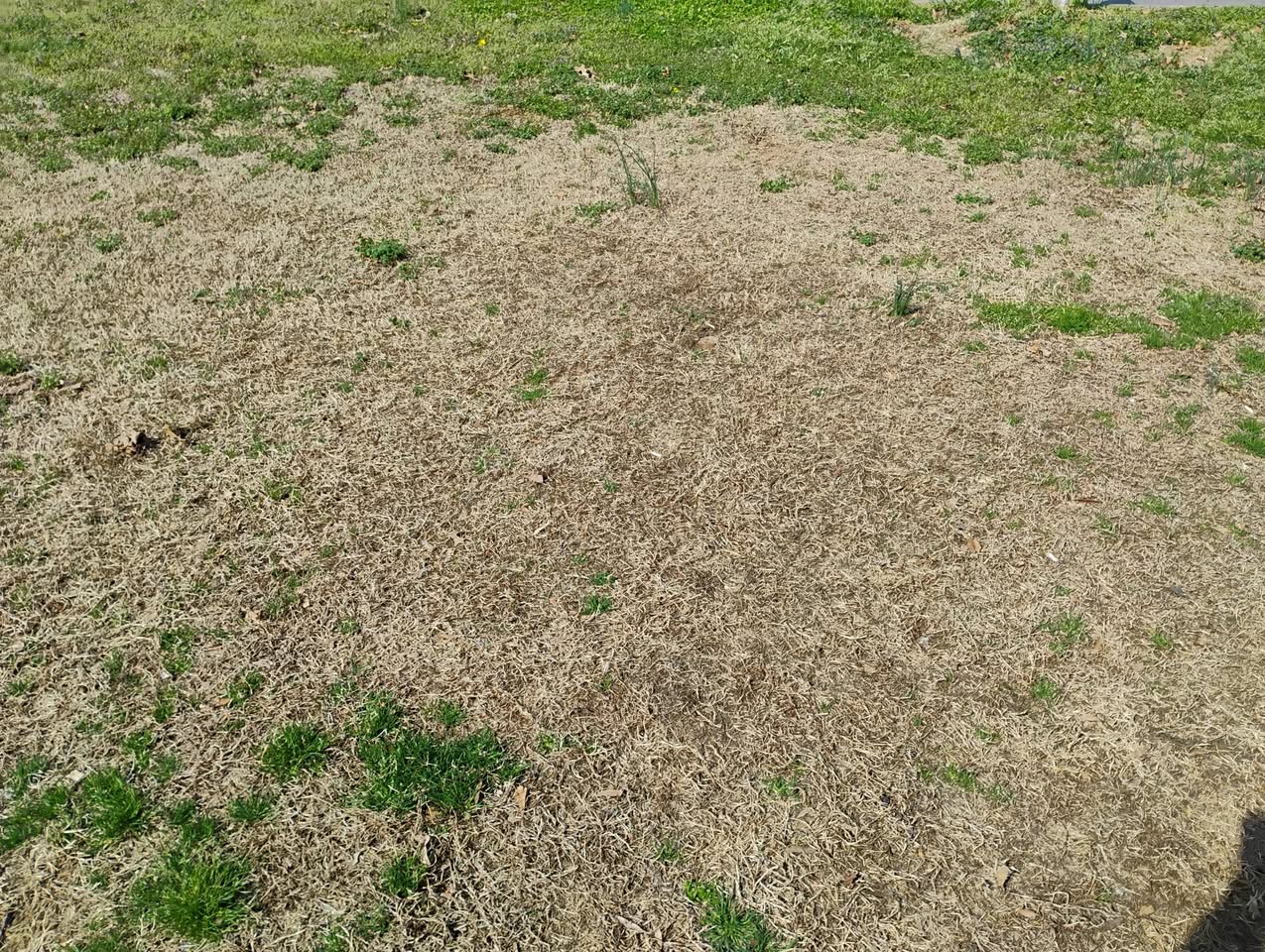
Mark’s front lawn was a standard Chelmsford residential lot — probably 1,200 square feet total with a long driveway running down one side. The problem area was exactly where he’d described it: a rough circle about four feet across, maybe five feet at its widest, sitting in the middle of the lawn with no obvious reason to be there.
The surrounding grass was decent. Not perfect — it had the typical Chelmsford clay-heaviness that most properties in that area deal with — but healthy enough. The patch stood out clearly.
First thing I did was the screwdriver test. I pushed a screwdriver into the ground in the good sections of the lawn — it went in with moderate resistance, normal for clay soil with decent moisture. Then I pushed it into the problem area.
Stopped almost immediately. About two inches down.
That’s not normal compaction. Normal compaction is resistance — this was a hard stop. Something solid was just below the surface.
I tried a few other spots in the same area. Same result. Two to three inches down, solid stop. In one spot it felt slightly different — less like hitting rock and more like hitting something with a hollow quality to it.
I looked at Mark and told him I thought there was something buried under there. He looked genuinely confused. “Like what?”
I told him I wasn’t sure yet. But we were going to have to dig to find out.
The Real Cause — What Was Actually Under There
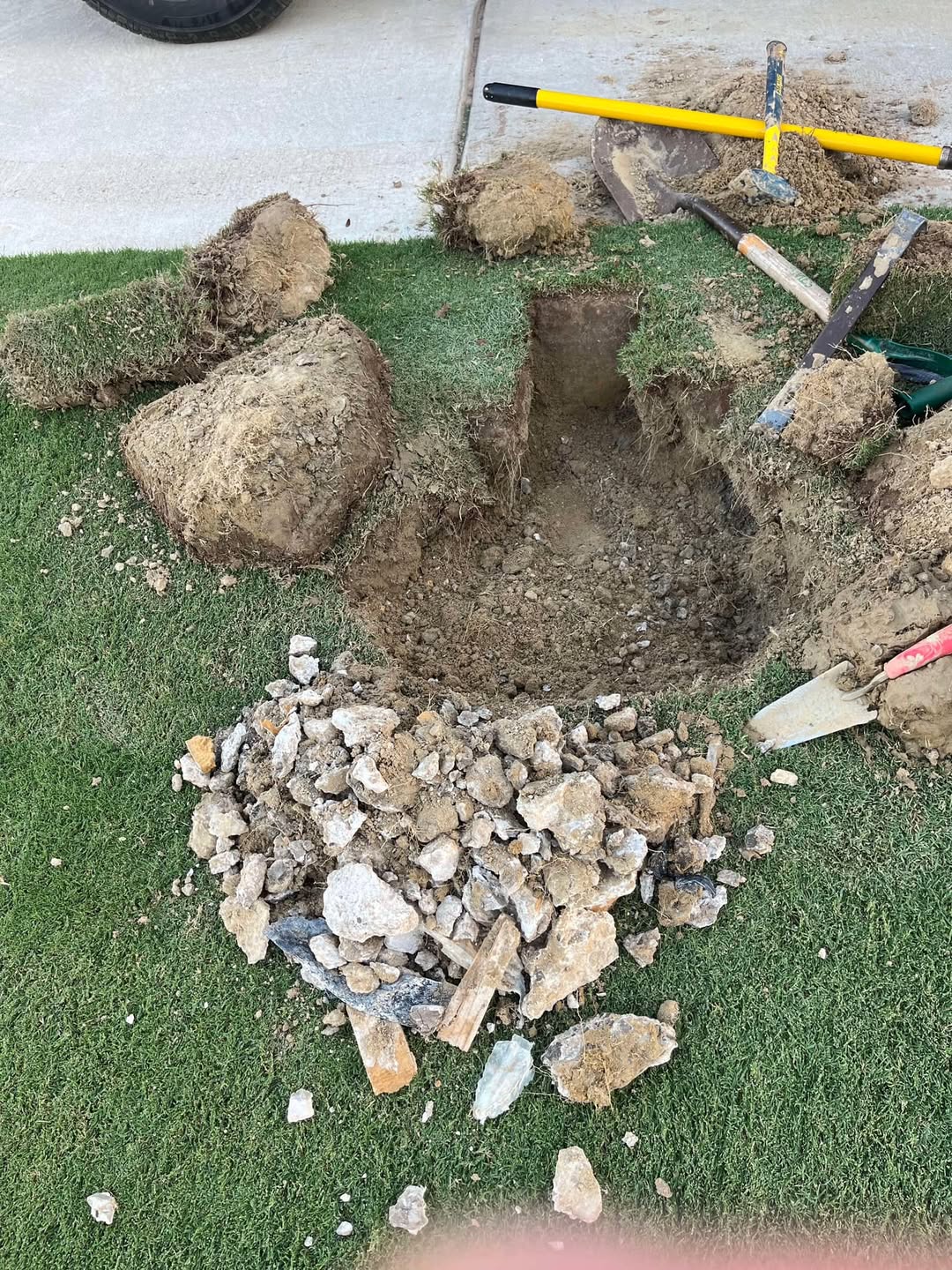
We dug down carefully, starting from the edge of the dead patch and working inward. About three to four inches below the surface, we hit it.
Concrete rubble. A collection of broken concrete pieces — some as small as a fist, some as large as a dinner plate — mixed in with what looked like old mortar and bits of brick. Whoever had done work on the property before Mark bought it had buried construction debris instead of hauling it away. They’d put a few inches of soil and sod on top and called it done.
Mark had been trying to grow grass over a buried concrete pile for six years.
The concrete was doing two things that made grass growth impossible. First, it was physically blocking root development. The grass would send roots down two to three inches, hit concrete, and have nowhere to go. Shallow roots mean a plant that can’t access water or nutrients from depth — which is why the patch looked stressed and thin even in wet years. Second, concrete is alkaline. As it sits in soil and moisture moves through it, it raises the pH of the surrounding soil. Most grass varieties prefer a slightly acidic to neutral pH. Highly alkaline soil directly adjacent to the root zone suppresses growth even if everything else is fine.
This is why Mark’s sod had established initially and then died. The sod roots would start growing down, hit the concrete, run out of room, and eventually fail — especially through a Sudbury winter where shallow roots have no buffer against freeze stress.
I showed Mark what we’d found. He was quiet for a moment and then said: “My neighbour told me the previous owner did some work on the front steps years ago. I always wondered where the leftover material went.”
Now he knew.
What We Did to Fix It
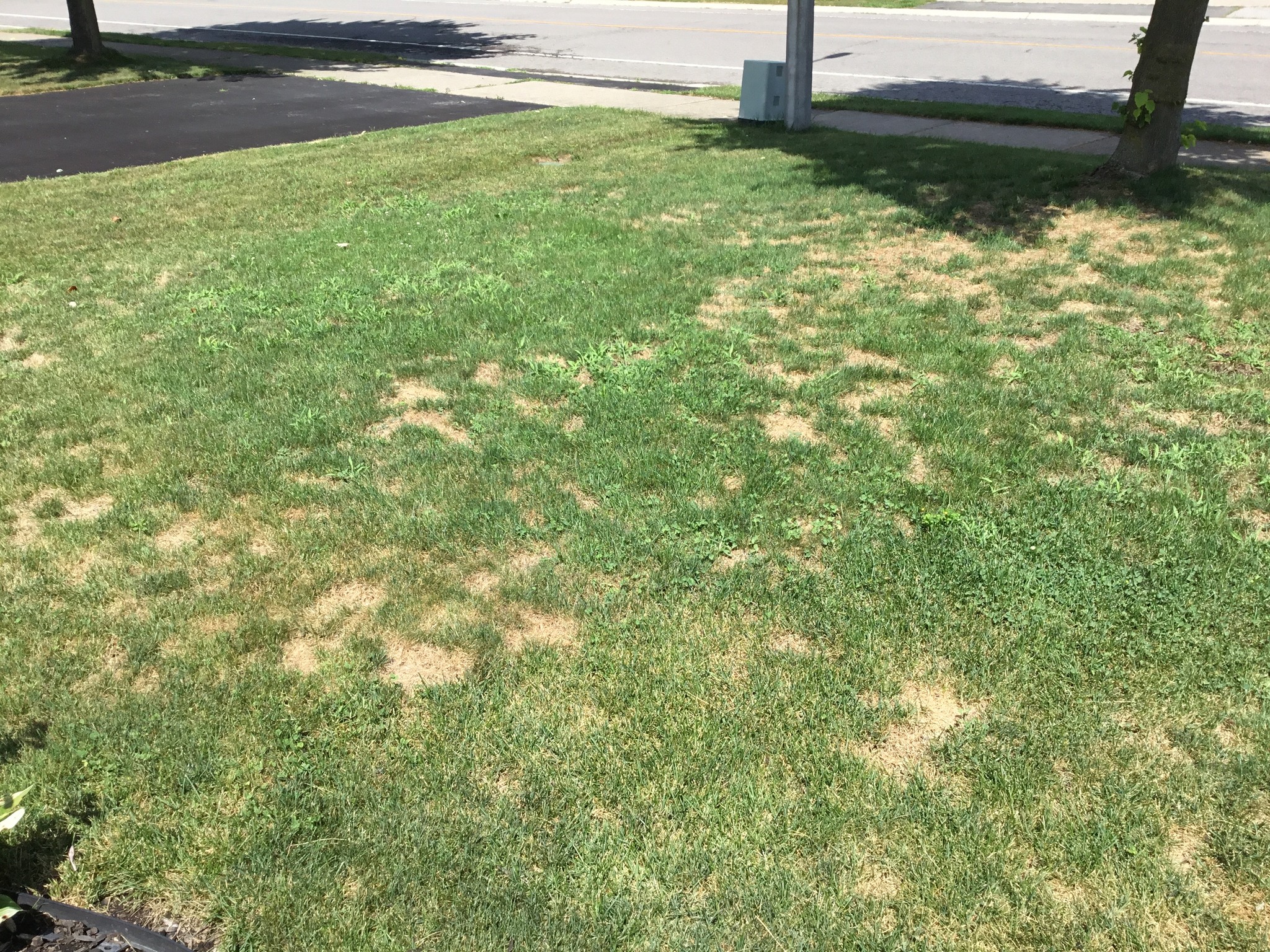
Once we knew what we were dealing with, the fix was straightforward — not quick, but straightforward.
Full Excavation of the Debris
We dug out the entire affected area down to clean soil — about 12 to 14 inches in the deepest spots where the larger concrete pieces were sitting. Everything came out. Every piece of concrete, brick, and mortar. We went slightly wider than the visible dead patch to make sure we weren’t leaving any material at the edges that would cause the same problem to creep back over time.
The pile of debris that came out of a four-foot circle was more than most people would expect. One of those situations where you can’t believe that much was under there.
Soil pH Correction
Because the concrete had been leaching alkalinity into the surrounding soil for years, we tested the pH of the soil in and around the excavated area. It was running high — around 7.8 to 8.0 in the immediate area, compared to 6.5 to 7.0 in the rest of the lawn. We applied a sulphur-based soil acidifier to bring the pH back into the range that grass actually grows well in.
This step matters. If you remove the concrete but leave the alkaline soil without correcting it, the grass still struggles — just more slowly than before.
Backfill With Quality Topsoil
We backfilled the excavated area in layers, compacting lightly as we went to avoid creating a low spot that would settle unevenly over time. Quality topsoil, mixed with some organic matter to help the soil structure in that area match the surrounding lawn.
We brought the level up slightly above the surrounding grade to account for settling over the first season.
Fresh Sod
Once the soil was properly prepared and the pH corrected, we laid fresh sod over the repaired area and matched it into the surrounding lawn. Pressed it down firmly, made sure the edges were tight against the existing grass, and rolled it.
The whole job took most of one day. Not the biggest job we’ve done by any stretch — but one of the more satisfying ones, because the cause was so specific and the fix was so definitive.
What the Patch Looks Like Now
Mark sent me a photo about three weeks after we finished. The sod had rooted in cleanly. By mid-summer the repaired area had filled in enough that you couldn’t tell where the patch had been — the grass was the same colour and density as the surrounding lawn.
He also told me something that made the whole thing click into place. He’d had a landscaper out two years earlier who’d looked at the same patch and told him to try a different seed blend and add lime to raise the pH. He’d followed that advice. It hadn’t worked — because of course it hadn’t. You can’t grow grass over buried concrete no matter what seed you use.
The lime recommendation was particularly counterproductive, actually — lime raises soil pH, and the pH in that area was already too high from the concrete. It had made the situation slightly worse.
The right diagnosis matters. And the right diagnosis requires actually digging in and finding out what’s happening below the surface rather than guessing from above it.
The Lesson — What Most People Get Wrong About Dead Patches
Mark’s situation was unusual — buried construction debris isn’t the most common cause of a dead patch. But the broader lesson applies to almost every persistent lawn problem I see.
Most homeowners approach a dead patch the same way: they try seed, it doesn’t work, they try better seed, that doesn’t work, they try sod, that works for a bit and then fails, and eventually they either give up or assume the spot is just cursed.
The patch isn’t cursed. There’s always a reason. And the reason is almost always underground — compaction, drainage, buried debris, a hardpan layer, old tree roots that have died and are decomposing, a buried pipe that’s leaking slightly, a frost pocket. Something you can’t see from the surface that no amount of overseeding is going to fix.
The way to find it is to dig. Not deep — in most cases four to six inches tells you what you need to know. But you have to actually look rather than just treating the symptom from above.
If you’ve got a spot on your lawn that just won’t grow no matter what you try, there’s something going on below the surface. Sometimes it’s simple to fix. Sometimes it takes a bit more work. But it’s almost always fixable once you know what you’re actually dealing with.
Got a Stubborn Dead Patch in Your Sudbury Lawn?
If you’ve been fighting the same spot for more than one season and nothing seems to work, reach out. I’ll come out, do a proper assessment — including digging in to see what’s actually going on — and give you a straight answer about what’s causing it and what it would take to fix it properly.
No guessing. No treating symptoms. Just finding the actual cause and fixing it.
📞 Call or text me: 705-507-6787
Or fill out the free quote form here — I get back to everyone same day.
— Ryan Lingenfelter
Owner, Cutting Edge Lawn & Landscaping
Garson, Ontario
Related Articles
- I Said No to a Lawn Job in Val Caron — Six Weeks Later They Called Me Back
- A Sudbury Client Wanted Turf — Here’s What We Did Instead
- I Replaced a Sudbury Homeowner’s Dead Lawn in 4 Days
- Sod Installation in Greater Sudbury
- Landscaping Services in Sudbury Ontario
