

I want to tell you about a call I got last spring from a homeowner in Val Caron.
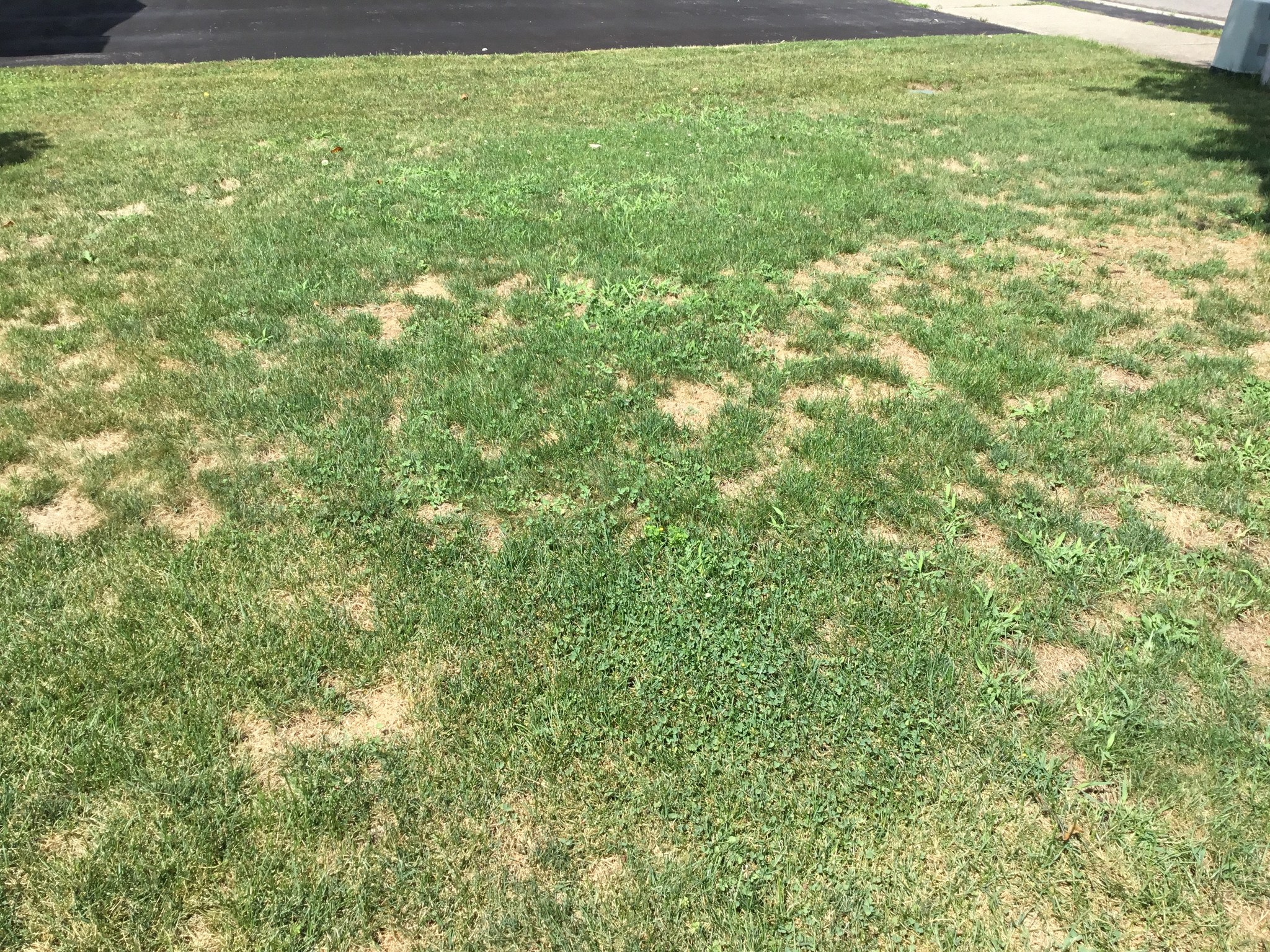
Her name is Sandra. She’d been dealing with the same lawn situation for four years — patchy, thin, half-dead by July every single summer. She’d tried seed twice. She’d tried fertilizer. She’d watered religiously one summer and barely at all the next just to see if it made a difference. Nothing worked consistently.
By the time she called me, she was done. She told me straight up on the phone: “I just want to put in turf. I don’t want to deal with this anymore.”
I hear this more than you’d think. And I always take it seriously when someone says it, because usually it means they’ve genuinely been through the wringer with their lawn and they’re not being dramatic. Sandra wasn’t being dramatic.
But I also knew, before I’d even seen her property, that turf probably wasn’t the right answer. I just needed to go out there and confirm it — and then have an honest conversation with her about why.
Here’s how that whole thing went.
The First Call — What She Actually Wanted
When Sandra called, I asked her a few questions before we even talked about turf or sod or anything else.
How long have you had this problem? Four years.
Has the lawn ever looked good, even briefly? She said yes — it looked okay the first summer after they moved in, but by the second year it was already going downhill.
Do you have kids or pets using the yard regularly? Two kids, no dogs.
Any areas that seem worse than others? She said the back half of the yard was worse than the front, and there was one corner near the fence that was basically just dirt.
That last detail was the one that made me think I knew what was going on. When a lawn deteriorates unevenly — worse in the back, specific dead patches in corners — it’s usually a drainage issue combined with soil compaction. That’s a fixable problem. Expensive to cover up with turf. Cheaper to actually solve.
I told her I’d come out and take a look before she made any decisions. She agreed.
What I Found When I Got There
Sandra’s yard was about 800 square feet of lawn in the backyard — not huge, but not small either. When I walked it, a few things were immediately obvious.

First, the soil. I pushed a screwdriver into the ground in a few different spots. In a healthy lawn with decent soil, a screwdriver should push in fairly easily. At Sandra’s place, I had to really push. Classic compacted clay — very common in the Val Caron and Hanmer areas. Water was sitting on top of the soil rather than draining through it, which meant the grass roots were either drowning after rain or completely dried out a day later. Neither is survivable long term.
Second, the thatch layer. There was a thick mat of dead organic material between the soil surface and the grass blades. Probably half an inch to three quarters of an inch thick. That’s too much. It was acting like a barrier — blocking water, blocking air, and preventing any seed she’d put down from making real soil contact. No wonder overseeding hadn’t worked.
Third, that corner she mentioned. I dug down a few inches. The soil was completely waterlogged — dark, dense, smelled like it stayed wet for extended periods. The grade sloped slightly toward that corner from the neighbour’s property. Water was draining onto her yard and pooling there. Nothing was going to grow in that corner without fixing the drainage first.
I walked back over to Sandra and told her exactly what I’d found. I showed her the screwdriver test. I showed her the thatch. I walked her over to the corner and explained what was happening with the drainage.
Then I told her what I genuinely thought: this lawn is fixable. And fixing it is going to cost significantly less than putting in turf.
She asked me how much less. I told her installing quality turf on 800 square feet in Sudbury would likely run her somewhere between $12,000 and $16,000 installed, depending on the company and the product. What I was proposing would cost a fraction of that.
She said: “Okay. Tell me what you’d actually do.”
What We Did Instead
We broke the project into two parts: fixing the drainage problem in the corner, and then restoring the lawn itself.

Part One: The Drainage Corner
The corner wasn’t going to grow anything until it stopped holding water. We built the grade slightly away from that corner so water would move toward the fence line and drain off the property rather than pooling. We brought in some quality topsoil to build that grade up properly. It’s not complicated work but it makes a permanent difference — that corner will never be a swamp again.
Part Two: Full Lawn Restoration
Once the drainage was sorted, we tackled the lawn itself. Here’s the sequence we followed:
Core aeration across the entire yard. We ran the aerator twice in different directions to break up that compacted clay. When you pull cores out of soil that dense, you can almost hear it breathe again. Every hole we pulled was a pathway for water, air, and nutrients to reach the root zone.
Dethatching. That thick mat of dead material had to go. We ran a dethatcher through the whole lawn and hauled away what came up. Sandra was surprised how much dead material was sitting in there — it filled several bags. Once it was gone, you could actually see the soil surface properly for the first time.
Topdressing with quality topsoil. We spread a thin layer of good topsoil across the whole lawn and worked it into the aeration holes. This improves the soil composition over the whole area, not just the obviously bad spots.
Fresh sod on the worst sections. The back third of the yard and the repaired corner were too far gone for overseeding to give good results in a reasonable timeframe. We laid fresh sod there. The rest of the lawn — the front two thirds that still had reasonable grass coverage — we overseeded with a quality cool-season blend after the aeration and dethatching.
Starter fertilizer. Applied across the whole area after everything was down. The aeration holes carry it straight to the root zone.
The whole job took two days. Sandra came home after day two and walked around her yard for a few minutes without saying anything. Then she said: “I can’t believe it looks like this already.”
The Conversation About Turf — What I Actually Said
Before we started the work, I want to share the full conversation I had with Sandra about turf because I think it’s useful for anyone in the same situation.
She asked me: “Is there any situation where you’d recommend turf over what you’re proposing?”
I told her honestly: yes, there are situations where turf makes sense. Deeply shaded areas where no grass variety will grow. Very small accent areas. Rooftop decks and balconies where the in-ground concerns don’t apply. Rental properties where a landlord genuinely wants zero maintenance and the area is small.
But for her situation — 800 square feet of backyard in Val Caron with two kids who use it — I had real concerns about turf that I walked her through.
The cost, first. $12,000 to $16,000 versus what we were proposing. That alone is a significant factor.
The heat, second. Artificial turf in a Sudbury summer sun can reach 50 to 70 degrees Celsius on the surface. Her kids play barefoot. Natural grass stays cool. This one landed with her immediately.
The snow, third. You can’t use a metal shovel on artificial turf without damaging it. With our winters, that’s a genuine inconvenience every single year.
And the freeze-thaw issue, fourth. Our freeze-thaw cycles in Greater Sudbury are aggressive. Over years, the base beneath artificial turf shifts, and the turf can lift, wrinkle, and pull away from edges. It’s not catastrophic, but it’s a maintenance headache and it shortens the effective lifespan.
Sandra listened to all of it and said: “Why don’t more people know this?”
I told her most people only hear the sales pitch. The artificial turf industry is good at marketing. They show you beautiful photos in mild climates and talk about 20-year lifespans. They’re less forthcoming about what happens in a place like Sudbury after eight winters.
She decided to go ahead with the natural restoration. And I think she made the right call for her situation.
What Her Lawn Looks Like Now
Sandra sent me photos about three weeks after we finished the job. The sod sections had rooted in well. The overseeded areas had germinated and were filling in. The corner that used to be a permanent mud patch was growing grass for the first time since she’d moved into that house.

She texted me one afternoon in late June and said her kids had been playing in the backyard every day. That’s the whole point, right? That’s what a lawn is actually for.
Last fall she sent me another message saying the lawn had held up all summer and she was happy with how it looked going into winter. No regrets about the turf decision.
I think about Sandra’s situation a lot when other homeowners call me about artificial turf. Because she represents the majority of people who ask about it — someone who’s genuinely frustrated with a lawn that hasn’t worked, and who deserves an honest conversation about why it’s been failing and whether there’s a better path forward before spending $15,000 on a solution that might not actually solve the real problem.
Sometimes the answer really is turf. But more often than not, the lawn is fixable — and the fix costs a lot less.
Is Your Lawn in a Similar Situation?
If you’ve been fighting the same lawn problems for years and you’re starting to think about turf as a way out, I’d encourage you to get an honest assessment before you make that call.
I’ll come out, walk your property, do the screwdriver test, check your drainage, look at your soil, and give you a straight answer about what’s actually going on and what it would cost to fix it properly. No pressure to book anything. Just a real conversation about your specific situation.
Sometimes the answer is that turf makes sense and I’ll tell you that. But a lot of the time, the lawn is more fixable than the homeowner thinks — and the savings compared to turf are significant.
📞 Call or text me: 705-507-6787
Or fill out the free quote form here — I get back to everyone same day.
— Ryan Lingenfelter
Owner, Cutting Edge Lawn & Landscaping
Garson, Ontario
Related Articles
- Artificial Grass in Sudbury — An Honest Take from a Lawn Professional
- Sod Installation in Greater Sudbury — Services and Pricing
- Core Aeration Services in Sudbury
- I Replaced a Sudbury Homeowner’s Dead Lawn in 4 Days — Here’s Exactly What We Did
- The 2-Week Window in Sudbury That Makes or Breaks Your Lawn All Summer
