I was wrapping up a site assessment in Val Caron last August when the homeowner — a woman named Kim — asked me something I’d never been asked before.
“Can you stay for ten minutes while I water? I want you to tell me if I’m doing it right.”
It was a reasonable request. Kim had been having the same conversation with herself for three summers: she was watering consistently, she was doing what she thought she was supposed to do, and the lawn was still struggling every July and August. Either something was wrong with the lawn itself, or something was wrong with how she was caring for it. She’d had the lawn assessed — by me, that day — and I’d told her the soil wasn’t severely compacted, the drainage was fine, the thatch wasn’t problematic.
The lawn looked like it should be responding to care. It wasn’t.
Which meant the issue was in the care itself.
So I stayed. And in ten minutes of watching her water, I understood exactly why the lawn had been struggling — and why no amount of soil work or seed or fertilizer was going to fix it until the watering approach changed.
I’m Ryan Lingenfelter, owner of Cutting Edge Lawn & Landscaping in Garson, Ontario. Here’s what I saw and what it means for any Sudbury homeowner trying to figure out why their lawn won’t respond.
Why She Asked Me to Stay
Kim had done her homework before calling me. She’d read several articles on the website — she mentioned the one about why Sudbury lawns go brown in July specifically, and the one about the week most Sudbury lawns start struggling. She’d understood the theory: water deeply and infrequently rather than shallowly and often. Don’t water every day for five minutes. Water two to three times per week for long enough to get moisture two to three inches down.
She thought she was doing that.
Her watering routine was twice a week, about twenty minutes per session with an oscillating sprinkler covering the back lawn. She’d been doing this all summer. By her calculation, that was consistent deep watering — exactly what the articles said to do.
But the lawn was still going thin and brown in August. Still struggling. Still not responding.
When I’d finished the soil assessment and hadn’t found the obvious underground culprits — compaction wasn’t severe, drainage was working, thatch was manageable — she’d made the logical conclusion: something was wrong with the watering. She just couldn’t figure out what.
“Show me,” I said. “Turn it on and let’s watch it.”
What I Saw in Those Ten Minutes
Kim turned on the oscillating sprinkler and we stood at the edge of the patio and watched.
The first thing I noticed was the speed. The sprinkler was covering the full lawn — about 800 square feet — in a fast cycle, maybe 30 seconds per pass. That means any given spot on the lawn was getting a brief hit of water every 30 seconds rather than a sustained application.
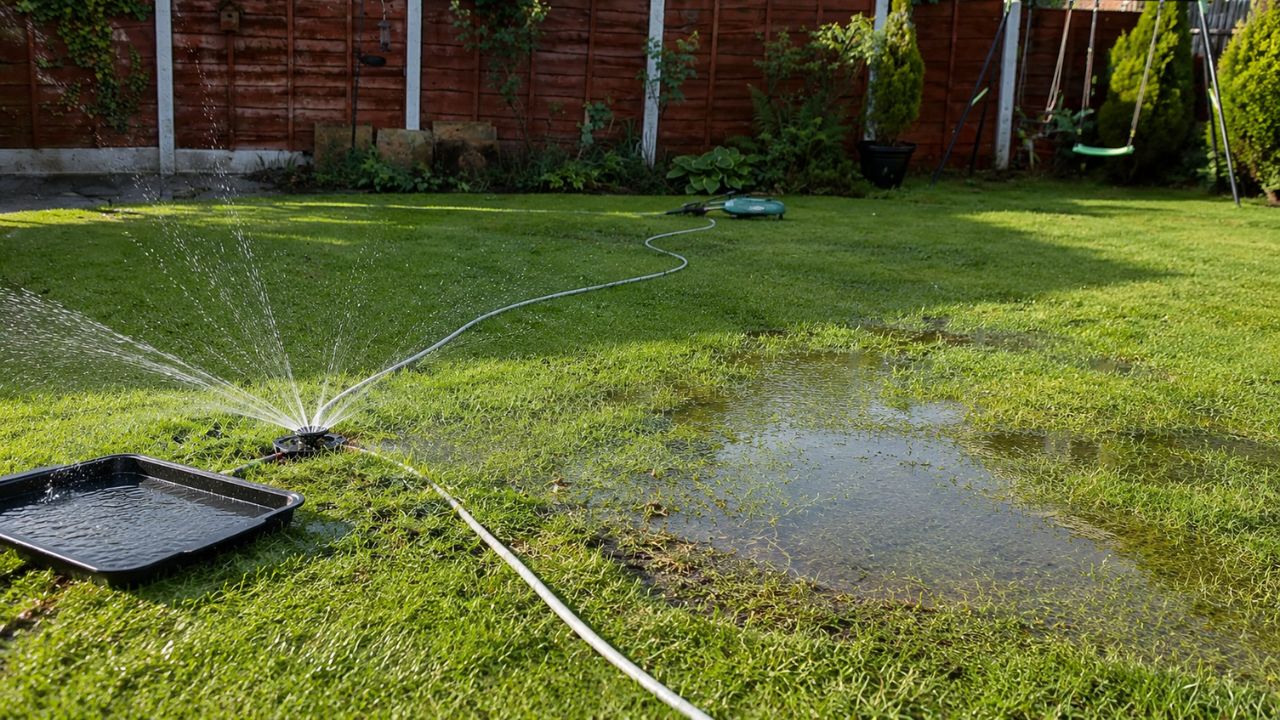
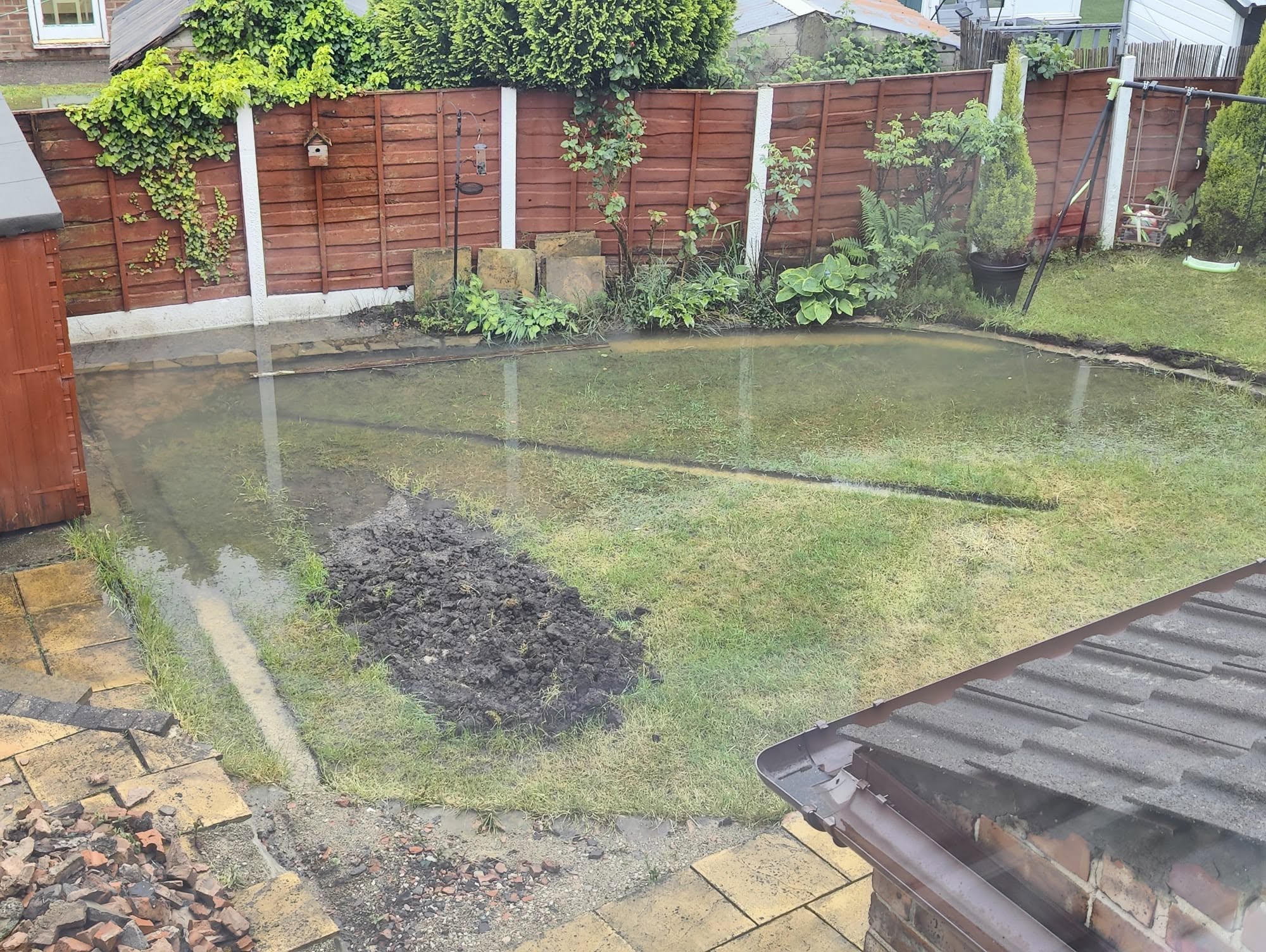
The second thing I noticed was what was happening to the water. Within about two minutes of the sprinkler running, I could see water starting to run off the low edge of the lawn toward the garden bed at the back. Not a lot — but movement. Water was reaching the surface saturation point and beginning to run rather than penetrate.
I walked to the centre of the lawn, crouched down, and pushed a finger into the soil. Then I walked to the edge near the runoff area and did the same.
The surface was wet. About half an inch down — wet. An inch down — barely moist. Two inches down — dry.
Twenty minutes of twice-weekly watering was wetting the top half inch of soil and then running off the surface rather than penetrating deeper. Kim’s lawn had been receiving water for three summers, consistently, and almost none of it had been reaching the depth where the roots actually lived.
I called her over and showed her what I’d found. I pushed a finger into the soil in a dry, unwatered section and then in the section the sprinkler had been running on for ten minutes. The difference in moisture wasn’t what she expected — the watered section was wet on top and nearly as dry underneath as the unwatered section.
She looked at me. “So I’ve been watering the surface.”
Exactly. For three years.
Why This Happens — The Sudbury-Specific Problem
What Kim was experiencing is more common on Sudbury properties than most homeowners realize — and it happens for a specific reason related to our soil type.
Greater Sudbury’s clay-heavy soil has a characteristic that works against conventional watering approaches: when it’s dry, it has low water infiltration rate. The surface of dry clay soil is almost hydrophobic — water hits it and spreads laterally rather than penetrating vertically. The first water to hit a dry clay surface runs off or sits on top far more than it soaks in.
The way to overcome this is to water slowly and for long periods — giving the clay time to absorb and allowing infiltration to build. Short, frequent watering sessions — even ones that feel substantial at 20 minutes — often don’t overcome the initial surface resistance. The water runs off before it reaches depth.
This is compounded by Sudbury’s summers. By August, the top inch or two of clay soil is often baked hard and dry. Watering onto that surface with a standard oscillating sprinkler produces exactly what I’d watched happen in Kim’s backyard — surface wetting and lateral runoff, with minimal penetration to depth.
I’ve documented in the most common cause of dead Sudbury lawns that compaction is the primary underground problem. Shallow watering is the above-ground equivalent — grass roots that can’t go deep from compaction, and water that can’t get deep from surface runoff. The lawn is trapped between two layers of dryness with a thin wet zone in between that isn’t enough to support established turf.
The Two Watering Problems I See Most Often in Sudbury
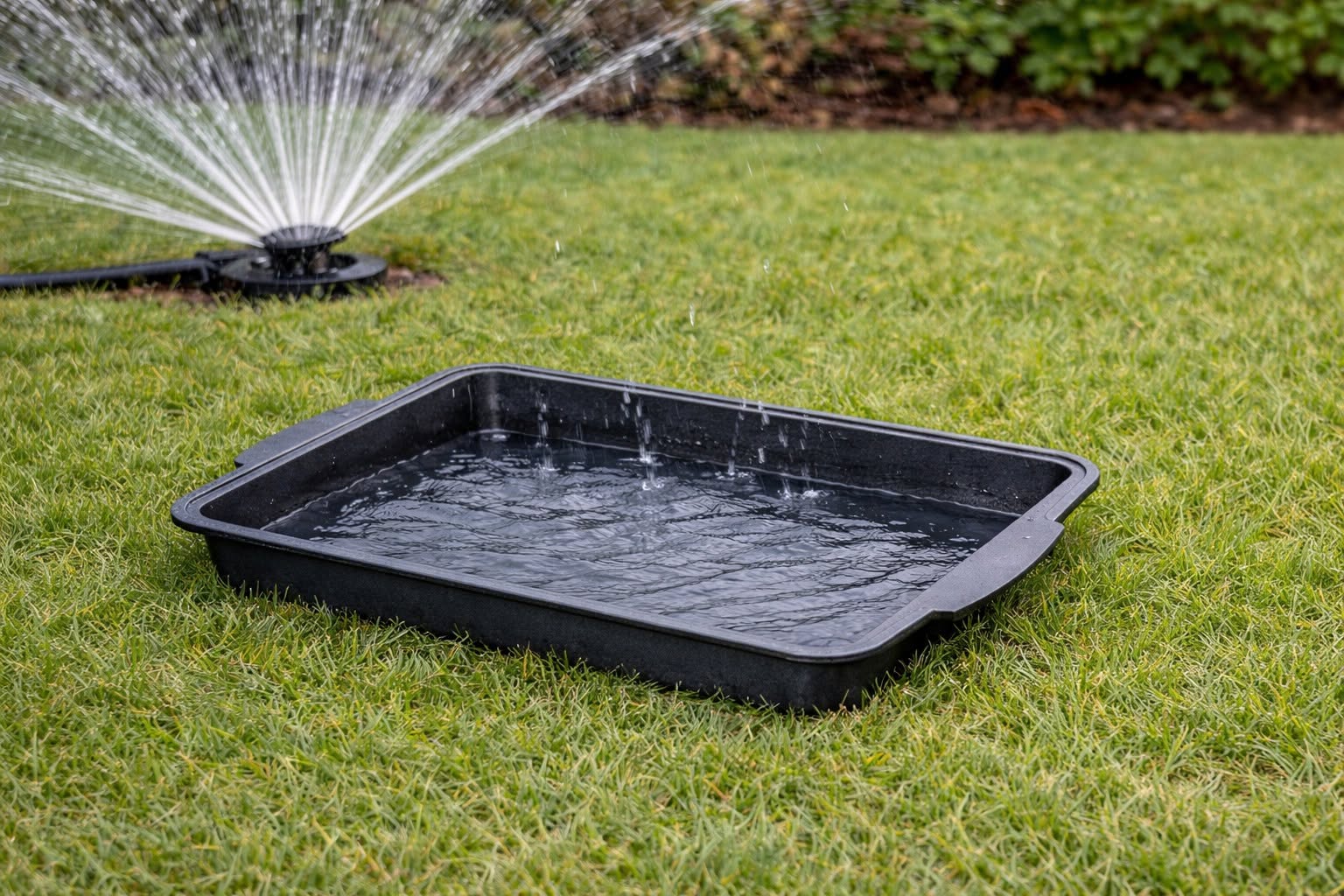
Kim’s situation — good intentions, consistent effort, wrong technique — is the most common watering problem I encounter across Greater Sudbury. But there’s a second one that’s almost as prevalent.
Problem 1 — Shallow and Frequent (Kim’s Issue)
Short watering sessions that wet only the top inch or two of soil. The grass roots follow the moisture — if moisture is always shallow, roots stay shallow. Shallow roots have no buffer against heat stress, no access to deeper soil moisture reserves, and fail quickly when surface moisture evaporates in summer heat.
This pattern creates a dependency cycle: the homeowner waters, the surface gets wet, the shallow roots absorb it, the surface dries in a day or two, the grass stresses, the homeowner waters again. The roots never go deep because there’s never a reason to — moisture is always at the surface. But the surface moisture isn’t reliable enough to sustain the lawn through hot stretches without stress.
Problem 2 — Evening Watering
The second problem I see consistently is watering in the evening rather than the morning. This one matters in Sudbury specifically because of our humid summer nights and the disease pressure that comes with them.
Grass that goes into the night wet — with moisture on the blades and at the surface — is in the ideal conditions for fungal disease. Dollar spot, necrotic ring spot, brown patch — all of these thrive in the cool, humid, wet conditions of a Sudbury summer night on a lawn that was watered at 7pm.
I’ve seen lawns that were genuinely being watered adequately — right depth, right frequency — but were dealing with chronic disease pressure specifically because of evening watering timing. Switching to morning watering resolved the disease issue within a season without any other changes.
Morning watering — before 9am if possible — gives the grass blades time to dry during the day, which dramatically reduces fungal disease pressure. The water goes into the soil where it belongs rather than sitting on leaf surfaces overnight.
For lawns that are already showing summer stress, I’ve covered what to watch for and how to tell whether browning is dormancy or disease in why Sudbury lawns go brown in July and when to actually worry.
What Proper Watering Actually Looks Like on a Sudbury Lawn
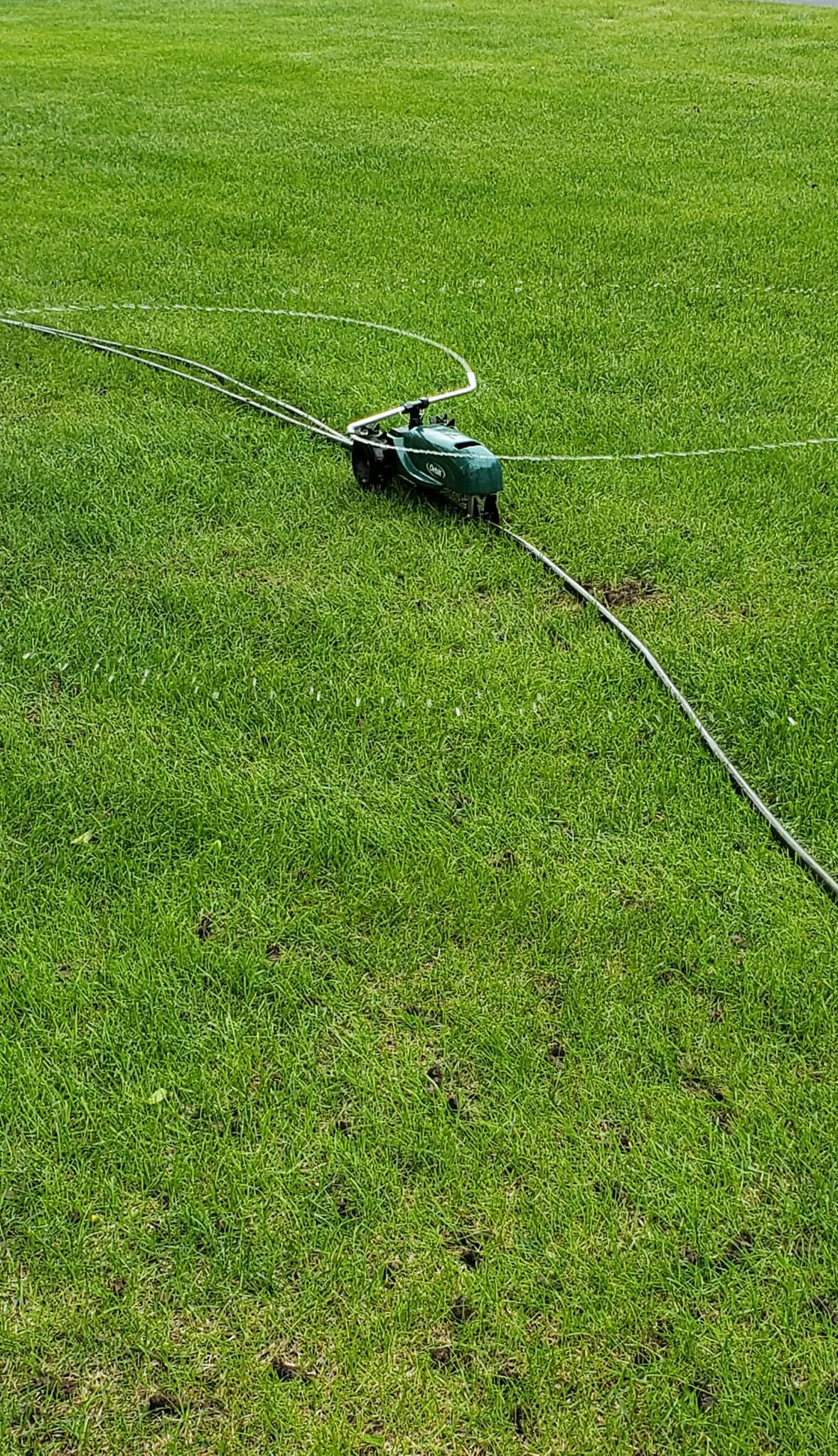
After I showed Kim what was happening with her current approach, I walked her through what the right technique looks like for Sudbury’s clay soil specifically.
The Depth Target
The goal of every watering session is to wet the soil two to three inches deep. Not the surface. Not one inch. Two to three inches — where the grass roots are, and where you’re trying to push them deeper toward.
How do you know if you’ve reached that depth? After a watering session, dig down with a trowel or push a finger into the soil. If it’s moist at two to three inches, you’ve done it. If it’s dry below an inch, you haven’t, regardless of how long the sprinkler was running.
The Frequency
Two to three times per week, deeply, is the right approach for a maintained Sudbury lawn in summer. Not every day briefly. Not once a week for a long time. Two to three times per week with sessions long enough to reach depth.
The gap between waterings is as important as the watering itself. Those one to two day gaps allow the top layer to dry slightly and the roots to extend downward in search of moisture rather than staying at the surface where water always arrives. Deep, infrequent watering trains roots to go deep over time. Daily shallow watering keeps roots shallow.
The Timing
Morning. Always morning. Before 9am ideally, but any time in the morning is better than evening. The goal is for the grass blades to dry during the day rather than going into the night wet.
How to Overcome Clay Surface Resistance
For lawns on dense clay soil where surface runoff is an issue — like Kim’s — there are two practical approaches.
First, cycle and soak. Run the sprinkler for ten to fifteen minutes, then stop and let the water soak in for twenty to thirty minutes, then run it again. This gives the clay surface time to absorb before more water is added, reducing runoff and increasing penetration. It takes longer but significantly more water reaches depth.
Second — and more effective long-term — core aeration. Aeration holes create direct pathways from the surface to depth, bypassing the clay surface resistance entirely. A freshly aerated lawn absorbs water dramatically better than an unaerated one. I’ve covered the full case for annual aeration on Sudbury clay in what to expect from lawn aeration in Sudbury. Solving the watering penetration problem with aeration is more effective and more permanent than trying to overcome clay surface resistance with technique alone.
New Sod — A Special Case
If you’ve recently had sod installed, the watering requirements are completely different from an established lawn — and the stakes are higher. I’ve covered exactly what happens when new sod doesn’t get watered correctly in what happens if you don’t water new sod in Sudbury’s first two weeks. New sod needs twice-daily watering in the first week — the normal deep-and-infrequent approach doesn’t apply until the sod is established.
What Happened With Kim’s Lawn
I gave Kim the same breakdown I’ve given you in this article. I showed her the cycle-and-soak approach, adjusted her sprinkler timer, and recommended fall aeration as the longer-term fix for the clay surface resistance issue.
She made the changes that week. Within three to four weeks, the lawn was responding visibly — greener in the areas that had been browning, less stress visible in the thin sections. By September, the lawn looked better than it had all summer.
She texted me: “I’ve been watering this lawn for three years and nobody told me I was doing it wrong.”
That’s the thing about watering. It looks like it’s working — the sprinkler is running, the surface gets wet, everything looks fine. But if the water isn’t reaching the roots, the lawn is operating on surface moisture that evaporates within hours of every session. The watering effort is real. The result isn’t what it should be.
The fix, in Kim’s case, required no soil work, no sod, no seed. Just a change in how the water was being applied. Sometimes the most impactful intervention is the simplest one — but you have to identify the actual problem first.
Want Someone to Actually Watch Your Lawn With You?
If your lawn has been struggling despite consistent watering and you’re not sure why — reach out. I’ll come out, walk the property, and if useful, watch your watering system run. Sometimes the most useful assessment is watching what actually happens on the ground rather than just looking at the soil.
📞 Call or text me: 705-507-6787
Or fill out the free quote form here — I get back to everyone same day.
— Ryan Lingenfelter
Owner, Cutting Edge Lawn & Landscaping
Garson, Ontario
Related Articles
- Why Your Sudbury Lawn Goes Brown in July — And When to Actually Worry
- This Is the Week Most Sudbury Lawns Start Struggling — Here’s How to Get Ahead
- What Happens If You Don’t Water New Sod in Sudbury’s First Two Weeks
- The One Thing I Always Find Under a Dead Sudbury Lawn
- Lawn Aeration Near Me in Sudbury — Cost, What to Expect, and What to Ask
- The 2-Week Window in Sudbury That Makes or Breaks Your Lawn All Summer
- 1,000 Lawn Jobs in Greater Sudbury — What Almost Every Property Has in Common