

By Ryan Lingenfelter · Cutting Edge Lawn & Landscaping, Garson, Ontario · June 2026
I’ve been cutting grass and doing lawn work in Lively since 2020. Five full seasons on properties spread across different parts of the community — the older streets near the centre of town, the newer subdivisions on the edges, the larger lots backing onto the treeline on the western side.
Lively is one of those communities that looks uniform from the outside but has meaningful variation in soil and drainage conditions once you start working properties at ground level. After five years of showing up weekly, I’ve learned what this town’s lawns actually need — and it’s specific enough that generic lawn care advice misses it in ways that matter.
This is what I’d tell any homeowner in Lively who wants to understand why their lawn behaves the way it does and what approach actually produces results here.
What makes Lively lawns different from the rest of Greater Sudbury

Lively sits on the southwest edge of Greater Sudbury, on terrain that’s meaningfully different from the clay-heavy areas in parts of Hanmer or Val Caron. The soil across most of Lively has a higher sand and silt content than you find in those eastern communities — not the sandy forest soil of a cottage lot, but a lighter, better-draining profile than the heavy clay I encounter regularly in other parts of the region.
This has consequences that run in both directions. The good news: compaction is somewhat less aggressive than on heavier clay. Lawns in Lively that haven’t been aerated in two years aren’t necessarily in as bad shape as a Val Caron property on similar clay soil would be after the same period. Roots penetrate more easily. Water moves through the profile more freely in normal conditions.
The challenging news: that same lighter soil dries out faster in summer. In a July heat stretch, a Lively lawn loses moisture from the root zone faster than a heavier-soil lawn in the same conditions. This is the variable I pay most attention to on Lively properties — the moisture retention question. A lawn that handles a two-week dry spell without significant stress on clay-influenced soil in Garson may start showing heat stress on the lighter Lively soil after ten days. Same grass variety. Same cutting height. Different soil moisture dynamics.
The practical implication: deep root development matters more in Lively than it does in parts of the region with heavier soil, because the moisture reservoir in lighter soil at any given depth is smaller. A lawn in Lively with roots at five to six inches can draw on a reasonable moisture reserve during dry spells. A lawn with roots at one to two inches — the shallow root system that comes from compaction, wrong cutting height, or no aeration — runs dry quickly when the surface dries and has almost nothing below to draw from.
Annual aeration in Lively isn’t about compaction as urgently as it is in heavier-soil parts of Sudbury. It’s about root channel development — creating the pathways that let roots push deeper into a soil profile where deeper means access to more consistent moisture. The timing and reasoning behind spring aeration in this climate is covered in the article on the best time to aerate a Sudbury lawn — the same principles apply in Lively with the soil moisture context added.
The drainage situation in Lively — and why it matters more than most homeowners realise
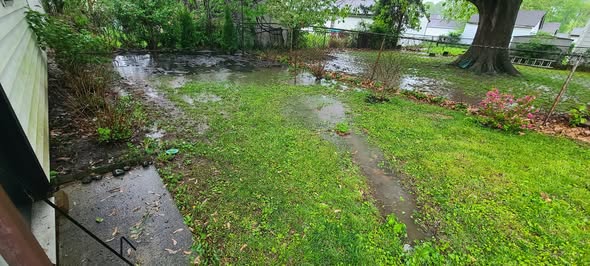
The terrain in Lively has enough grade variation across different parts of the community that drainage patterns vary significantly between properties — sometimes between adjacent properties on the same street.
The older streets near the centre of town were developed with grading that, in many cases, directs runoff toward the road and away from properties reasonably well. These lots tend to have fewer drainage problems than newer sections of the community where development was faster and grading sometimes less carefully executed.
The newer subdivisions on the edges of Lively — particularly sections developed in the last ten to fifteen years — have a pattern I see regularly: properties where the construction grading directed water from the road and neighbouring lots toward the back of the property, creating persistent wet conditions in back corners or along rear fence lines. Combined with the lighter soil that drains quickly in most of the yard, this creates a counterintuitive situation — a yard that dries out fast in the front and stays wet too long in the back. The lawn care approach that’s right for the front section is wrong for the back, on the same property.
The wet back-corner pattern produces the same symptoms regardless of what part of Sudbury it appears on — thin grass, moss establishing at the edges, a section that fails every season despite overseeding. I covered what’s actually happening in these situations and how to diagnose whether it’s a surface or underground drainage problem in the article on the Sudbury property where I found drainage problems underground. In Lively specifically, the cause is more often a grading issue than an underground pipe failure — the lighter soil moves surface water more readily, so grade problems show up faster and more dramatically than they would on heavier soil that holds water more uniformly across the property.
What I check on every new Lively property I assess: I walk the full perimeter looking at grade, press into the soil in both the front and back sections, and ask specifically about any area that stays soft or wet longer than the rest. The drainage pattern on a Lively property shapes the maintenance recommendations significantly. A property with a wet back corner gets different watering advice than a uniformly well-drained front lot — and I wouldn’t know to give different advice for different sections without checking the drainage first. The check I do before taking any new maintenance customer is described in the article on the one thing I check before accepting any new customer in Sudbury.
What I see most Lively homeowners getting wrong — and why it keeps happening

Five seasons in Lively means I’ve seen the same mistakes repeat often enough to describe them specifically. Here are the three that I find most consistently across properties in this community.
Watering too lightly and too frequently on the fast-draining sections. This is the most common mistake I see in Lively specifically, and it’s more damaging here than in parts of Sudbury with heavier soil. On clay-heavy soil, light daily watering at least keeps moisture in the top inch or two because clay holds water. On Lively’s lighter soil, light daily watering wets the top half inch and then drains through to below root depth before the roots can use it. The homeowner is running the sprinkler every morning and the grass roots are barely getting moisture because the water moves through fast.
The result is a lawn that’s being watered constantly and still goes blue-grey in afternoon heat because the roots have no moisture reserve to draw from. Homeowners in Lively who switch from daily twenty-minute watering to two long deep sessions per week — running long enough to saturate the soil to five or six inches before it drains — almost always see immediate improvement. The deep session saturates the profile fully before the fast-draining soil moves the water past root depth. I covered why daily light watering produces shallow roots and summer stress in the article on the Lively homeowner whose lawn looked worse every September — that case came from exactly this mistake on exactly this soil type.
Fertilizing at standard rates without adjusting for faster nutrient movement. The same drainage dynamics that move water through Lively’s lighter soil quickly also move soluble nutrients more rapidly than they move through heavier clay. Granular fertilizer applied at the rate recommended for a clay-soil lawn in parts of Hanmer or Garson may partially leach through a Lively lawn’s root zone before it’s fully taken up — particularly in a wet spring when the soil is moving water fast.
The adjustment I make on Lively properties: split the spring fertilizer application into two lighter doses rather than one standard application. First dose in late May after aeration. Second dose in mid-June, four weeks later. The same total nutrient input but delivered in a way that reduces leaching loss on faster-draining soil. The lawn gets the nutrition it needs without losing a significant portion of the application to drainage before the roots can access it. The fertilizing timing and approach for Sudbury generally is covered in the article on what I tell Sudbury homeowners about fertilizing — the Lively-specific adjustment is the split application on lighter soil.
Overseeding without accounting for faster surface drying. The three-week consistent moisture requirement after overseeding — the period when germinating seeds need the top quarter inch of soil to stay moist — is harder to maintain on Lively’s lighter soil than on heavier clay. The surface dries faster between watering events. Homeowners who overseed and then water on a standard schedule find that germination is patchy or incomplete because the surface dried out during critical germination windows.
On Lively properties, I recommend more frequent light watering specifically during the three-week establishment period after overseeding — not for general lawn health, but for the specific purpose of keeping the germination zone moist on fast-draining soil. Twice daily in the morning and early afternoon during the first two weeks, then tapering to once daily in week three as the seedlings establish roots. After the three-week establishment period, switch immediately to the deep infrequent schedule appropriate for the soil type. The overseeding timing and establishment requirements for Greater Sudbury are covered in detail in the article on when to overseed a Sudbury lawn.
What actually works for lawns in Lively — the full seasonal approach
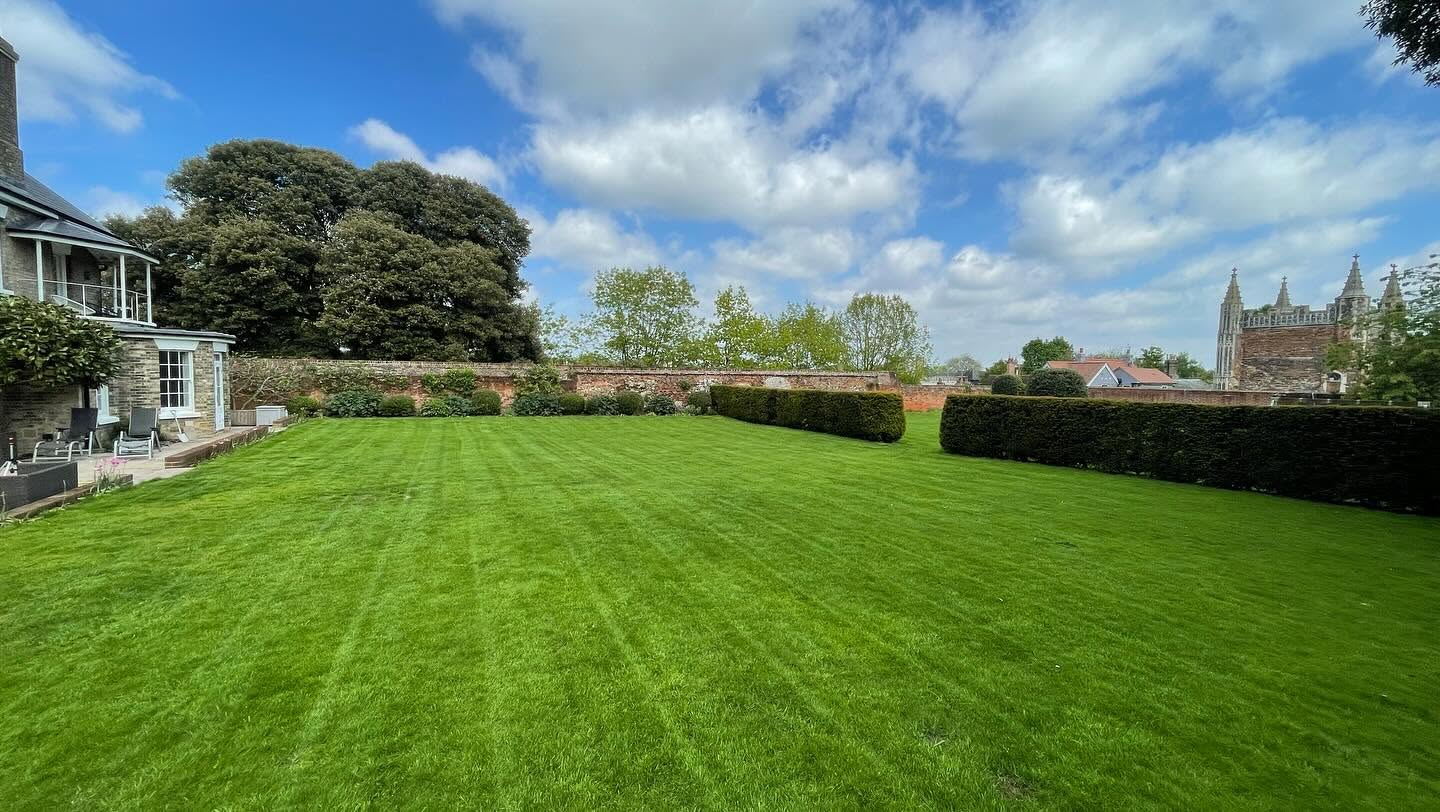
Here’s the complete seasonal approach I follow on Lively properties, adjusted for the soil and drainage conditions specific to this community.
Late April to mid-May — first cut and surface assessment. First cut at three and a half inches. Bag the clippings — lighter Lively soil doesn’t need the organic matter return as urgently as heavier clay does, and the first cut often has matted material that’s better removed. Walk the property and assess drainage: check the back sections specifically for any soft spots or wet areas that developed over winter. Flag anything that needs drainage attention before the service season begins.
Late May — aeration and overseeding window. Core aerate the full property. On Lively’s lighter soil, single-pass aeration is usually sufficient — the compaction issue is less severe than on heavier clay. Follow immediately with overseeding using a fescue-dominant blend suited to Sudbury conditions. Apply starter fertilizer at the same time — first half of the split application I described above. Water the day of overseeding with a deep session, then switch to twice-daily light watering for the three-week establishment period. The late May window and why it matters for this climate is covered in the article on spring vs fall aeration timing in Sudbury.
Mid-June — second fertilizer application. Four weeks after the spring application. Balanced fertilizer at the same rate as the spring dose. By this point the overseeded grass is established and the full lawn is in active growth — both will take up the nutrients efficiently in warm soil.
June through August — cutting at three inches, deep twice-weekly watering. Three inches minimum through summer — same as any Sudbury lawn. The cutting height recommendation doesn’t change with soil type. The watering schedule — two long deep sessions per week on bylaw-permitted days rather than daily light sessions — is particularly important on Lively’s faster-draining soil. Each session should run long enough to wet the soil to five to six inches. On sandy-influenced Lively soil, that may require a slightly longer session than on clay-heavy soil elsewhere in Sudbury because the water moves through faster before saturating the profile.
Watch the sun-exposed sections specifically in July. Lively’s lighter soil means the dry threshold comes faster on sunny exposed sections during heat stretches. The blue-grey colour that signals moisture stress — which I described in the article on what I notice in the first 60 seconds on any Sudbury property — appears earlier on Lively lawns than on heavier-soil lawns in the same heat conditions. Don’t wait for browning to respond. When you see blue-grey, water that day on your next permitted bylaw date.
Late August — winterizer application. Lower nitrogen, higher potassium. This application hardens the grass off before Sudbury’s winter — improving root strength, disease resistance, and freeze tolerance. Same timing as I’d recommend anywhere in Greater Sudbury. Don’t fertilize after mid-September.
October — last cut and shutdown. Final cut to two and a half inches. Blow out any irrigation system before hard frost. Note any drainage issues that developed through the season so they can be addressed before the following spring — a soft corner or wet section that appeared in October is easier and cheaper to fix in spring than after it’s been compounding for another winter.
If you’re in Lively and your lawn hasn’t been responding to standard care the way you’d expect — or if you’re seeing the watering problem, the patchy overseeding, or the persistent wet corner pattern I’ve described — give me a call. I’ll come walk the property, check the specific soil and drainage conditions on your lot, and give you recommendations that reflect what I actually find rather than generic advice that doesn’t account for where you live.
📞 705-507-6787 | Get a free quote online
— Ryan Lingenfelter
Owner, Cutting Edge Lawn & Landscaping
Garson, Ontario · 705-507-6787
