

Her name was Linda. She called me on a Thursday morning in September and the first thing she said was: “I don’t understand. I watered it all summer. I fertilized it in June. I had it cut every two weeks. And it looks worse now than it did in April.”
I told her I’d come out and take a look.
I’m Ryan Lingenfelter — I own Cutting Edge Lawn & Landscaping in Garson, Ontario, and I’ve been working on lawns across Greater Sudbury since 2020. Linda’s property is in Lively, and when I pulled up in front of it I already had a rough idea of what I was going to find. Not because I’m psychic — because I’ve seen this exact situation more times than I can count.
A lawn that went into summer looking okay, got tended to all season by a homeowner who genuinely cared, and came out the other side in September looking thinner, paler, and more patchy than it did in spring.
What went wrong isn’t complicated. But it also isn’t obvious — which is why it keeps happening. I want to walk you through exactly what I found on Linda’s property, because if your lawn is heading into September looking rough, there’s a good chance it’s the same story.
What the Lawn Looked Like When I Got There
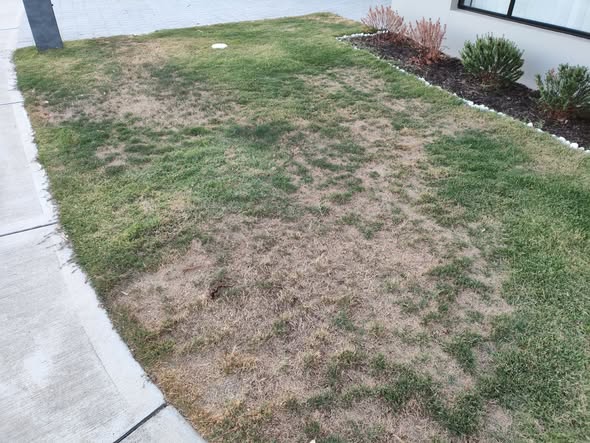
The lawn had maybe 60 to 65 percent coverage across the front yard. The rest was either bare soil, a thin fuzz of struggling grass that wasn’t going to survive the fall, or patches where creeping weeds had moved in and taken over.
The edges near the driveway and the side walkway were the worst — almost completely bare in a strip about six inches wide, which is a very specific pattern I’ll explain in a minute.
The grass itself was short. Very short. About an inch and a half in most places — tight and clipped-looking in a way that would have seemed neat and tidy at a glance, but when you know what you’re looking at, it tells you exactly what happened over the summer.
I crouched down and pushed my thumb into the soil. Hard. Dense. No give at all. I had to push with real pressure to get my thumb down an inch, and when I pulled it back out, the soil hadn’t crumbled or broken apart the way healthy soil does — it came out in a plug, like pushing into clay.
Which, under a Lively lawn, it pretty much is.
The Four Things That Made It Worse All Summer

I spent about twenty minutes walking the property and asking Linda questions about what she’d been doing through the summer. By the time we were done talking, the picture was clear.
1. Mowing too short, every time
Her lawn service was cutting it to about an inch and a half. Looked clean, looked sharp, looked like what you’d expect a maintained lawn to look like. The problem is that an inch and a half in Sudbury in July and August is not a maintained lawn — it’s a stressed one.
Short grass has almost no ability to shade the soil beneath it. The sun hits the ground directly, the soil dries out fast, and the roots — which need moisture — have nothing protecting them from the heat. A lawn cut to three to three and a half inches can handle a week of dry weather in August. A lawn cut to an inch and a half cannot.
The bare strips along the edges of the driveway and walkway? Classic scalping damage. The mower wheels tracked along those edges and the deck dipped slightly, cutting even shorter than the rest of the lawn. That extra quarter-inch meant the soil there got hotter and drier than anywhere else — and that grass died first.
2. Watering frequently but not deeply
Linda was watering three times a week, twenty minutes each time. That sounds like a lot. It isn’t — not in the way lawns actually need it.
Frequent, short watering keeps moisture in the top inch or two of soil. Grass roots grow toward moisture, so they stay shallow — right where the water is. Which is fine in spring when temperatures are moderate. In July when the soil surface hits 30 degrees, that top inch dries out between every watering session, and shallow roots mean the grass is constantly on the edge of stress.
Deep, infrequent watering — one inch once or twice a week — trains roots to push down into cooler, moister soil where they can actually survive a heat wave. Three light waterings a week trained Linda’s roots to stay exactly where they couldn’t survive the summer.
3. Fertilizing once in June and then nothing
She applied a granular fertilizer in early June, which was the right instinct. The problem is that a single fertilizer application in June doesn’t carry a lawn through to September. The nutrients were exhausted by mid-July, and for the back half of the summer the grass was running on empty — no fuel to maintain density, no reserves to respond to heat stress, nothing left to fight back when the weeds started moving in.
A slow-release application in June should be followed by another in late August or early September. That second application is actually the more important one for fall recovery and root development heading into winter.
4. No aeration — ever
When I asked Linda when the lawn was last aerated, she paused and said she wasn’t sure it ever had been. They’d been in the house for four years.
Four Sudbury winters. Four cycles of freeze-thaw. Four summers of foot traffic pressing the soil tighter. And underneath her lawn was the clay-heavy, compacted ground that makes up most of the soil profile in Lively — dense enough that water was running off the surface instead of penetrating, dense enough that roots had nowhere to go.
Everything else she’d done all summer — the watering, the fertilizing, the regular mowing — was working against compacted soil that couldn’t receive any of it properly. Water ran off. Nutrients couldn’t reach root depth. The grass was sitting on top of ground that had essentially locked it out.
What September Actually Is in Sudbury — and Why It Matters
Here’s something most homeowners don’t know: September is one of the best months of the entire year to work on a Sudbury lawn. Better than May in a lot of ways.
The soil is still warm from summer, which means seed germinates fast and roots establish quickly. The air temperatures have dropped, which means cool-season grasses — the kind growing on most properties here — are coming out of summer dormancy and entering their most active growth period of the year. Weeds are slowing down, which means new grass seed has less competition. And there’s typically more consistent rainfall in September than in July and August, which helps establishment.
A lawn that’s in rough shape in September isn’t a write-off. It’s actually sitting right at the start of its best recovery window. But that window closes fast — usually by mid-October in Greater Sudbury, sometimes earlier if frost arrives early. Once the ground cools below about 10 degrees, seed won’t germinate and the season for meaningful recovery work is done.
Which means if you’re reading this and your lawn looks rough, the time to move is now — not next spring.
What Her Lawn Needed — and What Yours Might Need Too

I gave Linda a straight answer, the same way I give everyone a straight answer: here’s what’s wrong, here’s what needs to happen, here’s what it costs, here’s what it won’t fix.
Her lawn needed three things done before the end of September.
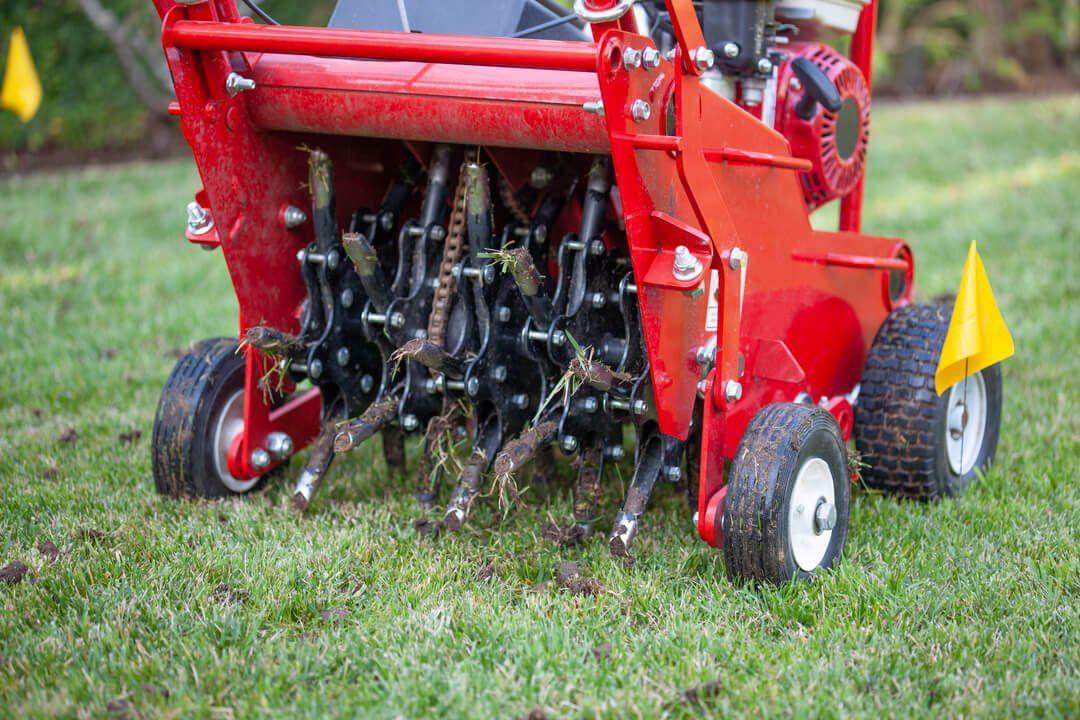
Core aeration first. Break up the compacted soil, open pathways for water and nutrients to actually reach root depth, create the conditions where everything else she does will actually work. Without this step, every other intervention is fighting an uphill battle.
Overseeding immediately after aeration. The cores pulled from the soil create ideal seedbed conditions — the seed falls into the holes, makes direct contact with soil, and germinates quickly. The thin and bare areas needed new grass established before winter, because bare soil in a Sudbury winter invites more weeds in spring.
A late-season fertilizer application. Not a high-nitrogen push — a root-building formula that supports the new seed and strengthens the existing grass going into dormancy. What you do in September and October directly determines how fast the lawn comes back in May.
I also told her to raise the mowing height to three inches for the last few cuts of the season, and to stop mowing entirely once the growth slows down — not to scalp it short before winter, which is a common mistake that leaves roots exposed to freeze damage.
Linda booked the aeration and overseed the same week. We got it done in late September. I saw the property in May the following year — the coverage was noticeably better, the bare edge strips had filled in, and the density across the front yard was the best it had been since they moved in.
None of it was complicated. It just needed to happen in the right order, at the right time, with an honest diagnosis of what was actually wrong.
If Your Lawn Is Heading Into Fall Looking Rough
Walk it this week. Same way I walked Linda’s. Push your thumb into the soil in a few spots. Look at how short it’s been cut all summer. Think about whether it’s been aerated recently — and if you’re not sure, that probably means it hasn’t.
If the soil is hard, the grass is thin, and there are bare patches forming: you’re looking at the same situation Linda was in. And September is the right time to fix it.
I’ll come out, walk the property with you, and give you a straight assessment — what’s wrong, what can be fixed this fall, what has to wait until spring, and what it costs. No pressure, no upsell, just an honest look from someone who works in Greater Sudbury soil every day.
📞 Call or text me: 705-507-6787
Or get a free quote here — I get back to everyone same day.
— Ryan Lingenfelter
Owner, Cutting Edge Lawn & Landscaping
Garson, Ontario
Related Articles
- Core Aeration Services in Greater Sudbury
- This Is the Week Most Sudbury Lawns Start Struggling — Here’s How to Get Ahead of It
- Grass Cutting Services in Greater Sudbury
