Every spring I walk lawns across Greater Sudbury and I see the same thing — homeowners standing over a patch of brown, flat, matted stuff and saying, “I don’t know what that is or where it came from.” Some of them have been fighting it for years without knowing what they were actually dealing with.
Here’s the thing: moss and dead grass can look really similar from a distance, especially in early spring before things green up. But they’re completely different problems, they have different causes, and they need different fixes. Treating one like it’s the other is a waste of time and money.
I’m Ryan Lingenfelter, owner of Cutting Edge Lawn & Landscaping in Garson, Ontario. I’ve been working on lawns across Sudbury since 2020, and I want to help you figure out exactly what you’re looking at — so you can actually fix it.
How to Tell Moss Apart from Dead Grass
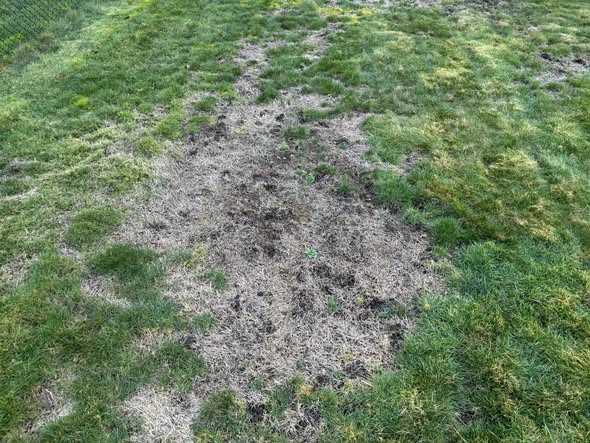
Get down close and look at the patch. Really look at it.
Moss is a low, dense, spongy layer. It has tiny leaf-like structures and feels soft — almost cushiony — when you press your hand into it. It’s usually a deep green when wet and turns brownish-grey when dry. It doesn’t have blades. It has no roots going into the soil in the way grass does. You can often peel it back like a mat.
Dead grass is different. You’ll see actual grass blades — just tan, straw-coloured, and brittle. The blades break when you bend them. There may still be some crown structure at the base, which matters a lot because that’s where grass regrows from. Dead grass patches are usually more irregular and mixed with living grass at the edges.
Quick test: grab a handful and pull. Moss peels away cleanly from the soil surface in a sheet. Dead grass resists a little and often brings up roots or thatch when pulled. If the soil underneath the dead-looking patch is dark and damp — moss is almost certainly the culprit, not dead turf.
Why Moss Shows Up in Sudbury Lawns

Moss doesn’t invade a healthy lawn. It fills in where grass has already given up — and in Sudbury, there are a few conditions that make moss feel right at home.
Shade is the big one. Moss thrives in low light. If you’ve got trees that have filled in over the years, a fence line, or a north-facing slope that barely sees sun — moss will show up there before anywhere else.
Moisture is the other major factor. Sudbury’s clay-heavy soil holds water, and areas that stay wet — near downspouts, in low spots, or in poorly drained beds — are prime real estate for moss. It loves sitting moisture that grass can’t tolerate long-term.
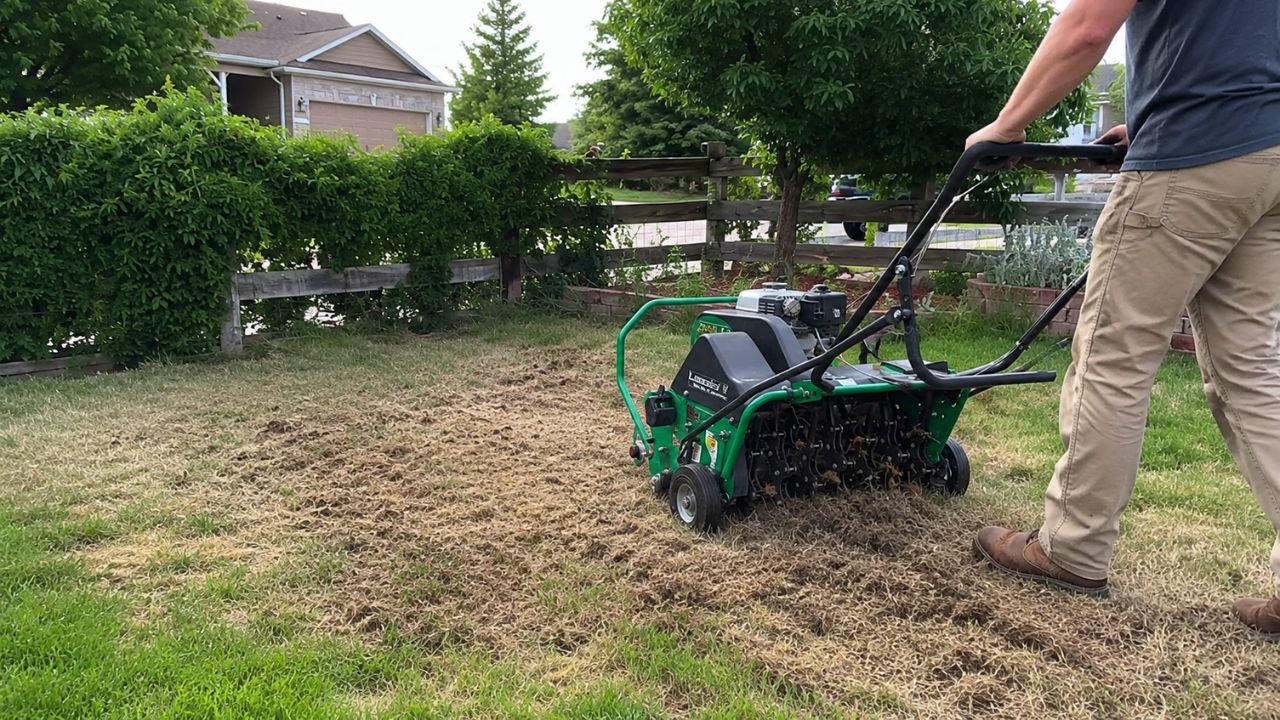
Soil compaction plays a role too. When soil gets packed tight, grass roots can’t establish properly. Moss doesn’t need deep soil. It just sits on top and spreads. If your lawn has heavy foot traffic or never gets aerated, compaction makes it easier for moss to take hold. (If you’re dealing with compaction, here’s what I charge for core aeration in Sudbury and what the service actually involves.)
Low soil pH is another one. Acidic soil — which is common in parts of Sudbury — favours moss over grass. Grass wants a pH around 6.0 to 7.0. When it drops below that, grass struggles and moss doesn’t mind at all.
Moss is a symptom. It’s telling you something about the conditions in that spot. Just raking it out and throwing seed down won’t work long-term if you don’t fix what’s causing it.
Why Grass Dies in Sudbury — And Whether It Can Come Back

Dead grass has its own list of causes, and the good news is that “dead” isn’t always permanent.
In Sudbury, the most common reasons I see grass die off are:
- Winter kill — Our winters are hard. Ice sheeting, freeze-thaw cycles, and late frost can kill off sections of lawn that were otherwise healthy going into fall. This usually shows up in spring as distinct patches that don’t green up with the rest of the lawn.
- Drought stress — Hot, dry summers can push grass into dormancy. Some of that comes back. Some of it doesn’t, especially if it was already thin going into the dry stretch.
- Grub damage — Grubs eat grass roots from below. The lawn looks fine until it doesn’t — and then sections start lifting like a carpet because the roots are completely gone underneath. This is one of the more frustrating ones to deal with.
- Thatch buildup — A thick thatch layer blocks water and nutrients from reaching the roots. The grass starves from below and dies in patches.
- Dog spots — The nitrogen in dog urine burns grass. These patches are usually small, round, and surrounded by a ring of darker green grass.
Here’s how to check if dead grass might recover: in early spring, scratch the crown at the base of the plant with your fingernail. If it’s green or white and firm inside — there’s life there. It may come back with some warmth and water. If it’s brown all the way through and crumbles — it’s gone, and you need to reseed or resod that area.
What to Actually Do About It

Once you know what you’re dealing with, the fix becomes a lot clearer.
If it’s moss:
- Rake it out or dethatch to remove the mat
- If shade is the problem, look at pruning lower tree limbs to let more light in
- Improve drainage in wet areas — grading, aeration, or fixing where water pools
- Get a soil test done. If pH is low, a lime application will raise it and shift conditions back in favour of grass
- Aerate to break up compaction, then overseed with a shade-tolerant grass mix in low-light areas
If it’s dead grass:
- Rake out the dead material — don’t seed over it, seed needs soil contact
- If grubs are involved, treat for them before reseeding or the same thing will happen again
- Aerate before overseeding to maximize seed-to-soil contact and germination
- For large dead areas, sod installation is faster than seed and gives you an established lawn much quicker
- Water consistently after seeding — the number one reason new seed fails in Sudbury is drying out in the first two weeks
The honest answer for a lot of lawns I see is that they have both — some dead patches and some moss moving in. In that case, you’re doing a full cleanup: rake, aerate, address drainage or pH if needed, overseed the bare spots, and stay on top of it through the season.
When to Call Me
If you’re looking at your lawn right now and you’re not sure what you’ve got, or you know what it is but you don’t want to deal with it yourself — that’s what I’m here for.
I do core aeration, overseeding, property cleanup, and sod installation across all of Greater Sudbury. I can take a look at your lawn, tell you straight what I see, and give you a fair quote on what it’ll take to fix it. No runaround, no upselling you on things you don’t need.
Give me a call or request a free quote online. Let’s sort out what’s actually going on with your lawn.
— Ryan Lingenfelter
Owner, Cutting Edge Lawn & Landscaping
Garson, Ontario | 705-507-6787
