
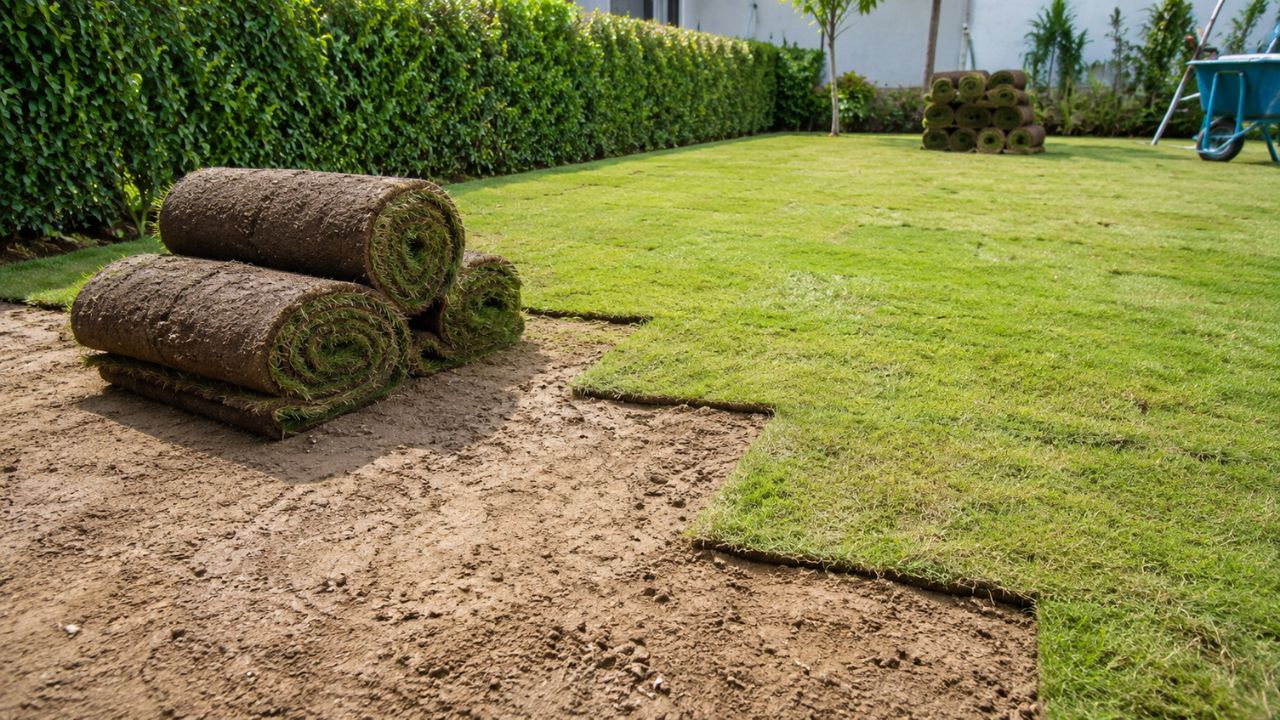
This question comes up on almost every sod installation job I do in Greater Sudbury. Sometimes the homeowner asks it before the delivery arrives. Sometimes they ask it after — because the sod sat longer than expected and they’re looking at it wondering if it’s still okay.
I’m going to give you the real answer. Not the optimistic version that makes the sale easier. The actual number, what affects it, and how to check whether sod you already have is still viable.
I’m Ryan Lingenfelter, owner of Cutting Edge Lawn & Landscaping in Garson, Ontario. I’ve been installing sod across Greater Sudbury since 2020. Here’s what you need to know.
The Honest Answer — The Window Is Shorter Than You Think

The honest answer to how long sod can stay rolled up is: 24 to 48 hours maximum under ideal conditions. In Sudbury’s summer heat, the practical window is often shorter — sometimes significantly shorter.
The professional standard I follow on every job is same-day installation. Sod is delivered in the morning, laid by end of day. That’s the approach that gives the best results, period.
I know that’s not always what happens. Deliveries get delayed. Jobs run over. Weather creates complications. And sod companies will sometimes tell you the sod is fine for two or three days. In mild conditions — spring or fall, cool temperatures, out of direct sun — that can be technically true. In a Sudbury July? It’s not.
Here’s why the window is so short and why it matters so much in our climate.
What Actually Kills Rolled Sod — The Science in Plain English

When sod is cut at the farm, the roots are severed from the ground. The sod piece — grass blades, thatch layer, and a thin layer of soil and roots — is then rolled up and stacked on pallets for delivery.
Rolling the sod creates a specific problem: the grass blades on the inside of the roll are pressed against the soil side of the next layer. No light. Minimal air circulation. And critically — heat buildup.
Grass is a living plant that generates heat through metabolic processes even when it’s been cut. When you stack dozens of rolls together on a pallet, that heat has nowhere to go. It accumulates. The interior temperature of a sod pallet in summer sun can reach significantly higher than the ambient air temperature — sometimes 10 to 15 degrees Celsius higher inside the stack.
This heat does several things simultaneously that damage the sod:
Root Die-Off
The roots — already stressed from being cut — are the most vulnerable part. Heat accelerates cellular death in the root tissue. Once the roots die, the sod cannot establish when it’s laid. It will look green for a week or two on whatever moisture is stored in the grass blades and soil layer, and then it will die. Not from lack of watering. Because there are no viable roots to establish.
This is the most important thing to understand: sod with dead roots can fool you. It looks fine when it arrives. It might even look fine for the first week after installation. The problems show up later — when the stored moisture runs out and the roots that were supposed to have established haven’t, because they couldn’t.
Anaerobic Decomposition
Without air circulation, the organic material in the soil layer of rolled sod begins to decompose anaerobically — without oxygen. This produces heat, which compounds the temperature problem. It also produces gases and byproducts that are actively harmful to root viability.
The smell is the giveaway. Fresh, viable sod smells like soil and grass. Sod that has been sitting too long smells distinctly sour or ammonia-like. That smell is anaerobic decomposition in progress. If you open a roll and it smells bad, the sod is in trouble regardless of what it looks like on the surface.
Desiccation
Even rolled up, sod loses moisture through the exposed grass blade ends. The outside rolls on a pallet — the ones most exposed to sun and wind — dry out faster than the interior ones. In a Sudbury summer day, the outer rolls on a pallet sitting in full sun can begin showing moisture stress within hours.
The Sudbury Factors That Shorten the Window

Sudbury’s climate shortens the viable window for rolled sod compared to what you’d find stated in general guides or by sod suppliers in milder regions. Here’s why:
July and August Heat
When sod is delivered during Sudbury’s hottest months — and many installations happen in July and August because that’s when people see their lawns have failed — the ambient temperature is already high. Add the pallet heat buildup on top of a 28 to 30 degree July day and interior pallet temperatures can reach dangerous levels for root viability within a few hours.
I’ve ordered sod for morning delivery on summer jobs specifically to get it in the ground before the afternoon heat peaks. Same-day installation in July isn’t just best practice — it’s genuinely important for the survival of the product.
Direct Sun on the Pallet
Where you store the sod between delivery and installation matters. A pallet sitting in full afternoon sun on a driveway or open yard accelerates every damage mechanism I described above. If there’s going to be any delay between delivery and installation, get the sod into shade — even partial shade — immediately. It won’t solve the problem if the delay is long, but it slows the deterioration.
Low Humidity Periods
Sudbury can have stretches of genuinely dry, low-humidity air in summer — especially with northwest winds. Low humidity accelerates the desiccation of the exposed grass blade ends significantly. What might last 36 hours in a humid stretch might last 18 in a dry, windy period.
The Practical Timeline — What Changes When
Here is what I’ve observed over dozens of sod installations across Greater Sudbury. These are approximate — conditions vary — but they give you a realistic picture:
0 to 12 hours: Fresh sod is fully viable. Same-day installation is always in this window. No concerns about viability.
12 to 24 hours (cool conditions — spring/fall, shade storage): Still viable for most of the pallet. Outer rolls showing slight moisture stress may have some edge die-off after installation but the majority establishes fine.
12 to 24 hours (summer heat, sun exposure): Starting to get into risk territory. Interior rolls still likely okay. Outer and top rolls showing visible stress. Prioritize installation — get it in the ground now.
24 to 48 hours (cool conditions): Marginal. Some root die-off has likely begun in the interior of the pallet from heat buildup. Outer rolls probably compromised. You might get acceptable results but you’re taking a risk.
24 to 48 hours (summer conditions): High risk of significant root damage throughout the pallet. Interior temperature has been elevated long enough that root viability across much of the pallet is questionable. I would not install this sod without checking every roll individually and being honest about the results.
Beyond 48 hours in summer: In my experience — do not install it. The cost of re-doing a failed sod installation is far higher than the cost of getting fresh sod. Have an honest conversation with your supplier about replacement.
How to Tell If Your Sod Is Still Viable

If you’re looking at sod that has been sitting longer than you’d like and you’re trying to decide whether to install it, here’s how I assess it.
The Smell Test
Open a roll from the interior of the pallet — not the outside, which has dried out regardless. Smell it. Fresh viable sod smells like soil and grass. If it smells sour, ammonia-like, or like something decomposing — that sod has been through anaerobic decomposition. The root damage at that point is likely significant. I don’t install sod that smells bad.
The Root Colour Check
Pull a roll open and look at the roots on the bottom. Healthy roots are white to cream coloured — firm and slightly moist looking. Stressed but possibly salvageable roots are tan to light brown. Dead roots are dark brown to black and will feel dry and brittle rather than slightly pliable. If the roots are mostly dark brown or black throughout — that sod is gone.
The Grass Colour
Pull a roll open and look at the grass on the inside — the blades that were pressed against the soil layer of the roll above it. Viable sod has grass that’s still green to yellow-green on the inside. Severely compromised sod has grass that’s gone white or grey on the inside, indicating cell death from heat and lack of light.
The Moisture Check
The soil layer should feel moist — not wet, not dry. If the soil layer is dry and crumbling, the sod has been without moisture too long. If it’s wet and slimy, anaerobic decomposition is advanced.
The Interior vs Exterior Difference
Always check rolls from the interior of the pallet, not just the outside. The outside rolls are always worse than the interior — they’re exposed to sun and wind. Checking only the outer rolls and concluding the sod is fine is a mistake. Get into the middle of the pallet and check several rolls from different positions.
What to Do If Your Sod Has Been Sitting Too Long
If you’ve assessed your sod honestly and concluded it’s compromised — here’s the practical path forward.
Contact your supplier immediately. Reputable sod suppliers understand that delivery delays and heat damage happen. If the sod arrived compromised or has been waiting longer than expected due to circumstances outside your control — make that call now. Document the condition with photos.
Don’t install sod you know is dead. I’ve heard the reasoning — “I already paid for it” or “maybe it’ll establish anyway.” It won’t. Dead roots don’t establish. You’ll spend two weeks watering grass that’s going to die, and then you’ll need to re-do the installation anyway. The time, water, and effort is wasted. Get fresh sod.
If it’s borderline — install quickly and water immediately. If the sod passes the smell and root colour tests but you’re on the edge of the timing window, get it in the ground as fast as possible and water it thoroughly the moment each section is laid. Don’t wait until the whole lawn is down. Water as you go. And water again within two hours of finishing.
The Bottom Line
Same day. That’s the standard I hold every sod installation to. Delivered in the morning, in the ground by afternoon. In Sudbury’s summer conditions, that’s not overcaution — it’s the approach that gives the sod the best possible chance to establish properly and give you the result you paid for.
If you’re planning a sod installation and you want it done with proper timing, proper soil prep, and a clear aftercare plan — reach out. I’ll make sure the sod goes down fresh and you know exactly what to do after to get it established properly.
📞 Call or text me: 705-507-6787
Or fill out the free quote form here — I get back to everyone same day.
— Ryan Lingenfelter
Owner, Cutting Edge Lawn & Landscaping
Garson, Ontario
Related Articles
- What Happens If You Don’t Water New Sod in Sudbury’s First Two Weeks
- Sod Installation in Greater Sudbury — Services and Pricing
- I Replaced a Sudbury Homeowner’s Dead Lawn in 4 Days
- I Said No to a Lawn Job in Val Caron — Six Weeks Later They Called Me Back
- Why Your Sudbury Lawn Goes Brown in July
