

I pull up to a new property, I get out of the truck, and before I do anything else — before I unload equipment, before I talk about price, before I even shake hands properly — I walk the lawn.
Not a quick glance from the driveway. I mean I actually walk it. The whole thing. Front yard, back yard, side strips, the edges along the driveway and fence line, the low spots, the high spots. I’m moving slowly and I’m paying attention to everything.
It takes maybe ten minutes. Sometimes fifteen on a bigger property. And it tells me more about what that lawn actually needs than anything the homeowner is going to say to me.
I’m Ryan Lingenfelter — I own Cutting Edge Lawn & Landscaping in Garson, Ontario. I’ve been doing this across Greater Sudbury since 2020, and that ten-minute walk is the same on every single property I visit — new client, returning client, quote call, service call. It doesn’t change. Because the lawn always tells you something the homeowner either doesn’t know or hasn’t thought to mention.
I want to walk you through exactly what I do and what I’m looking for — because honestly, you can do this same walk on your own property, and what you find might surprise you.
I Walk the Whole Property Before I Do Anything Else
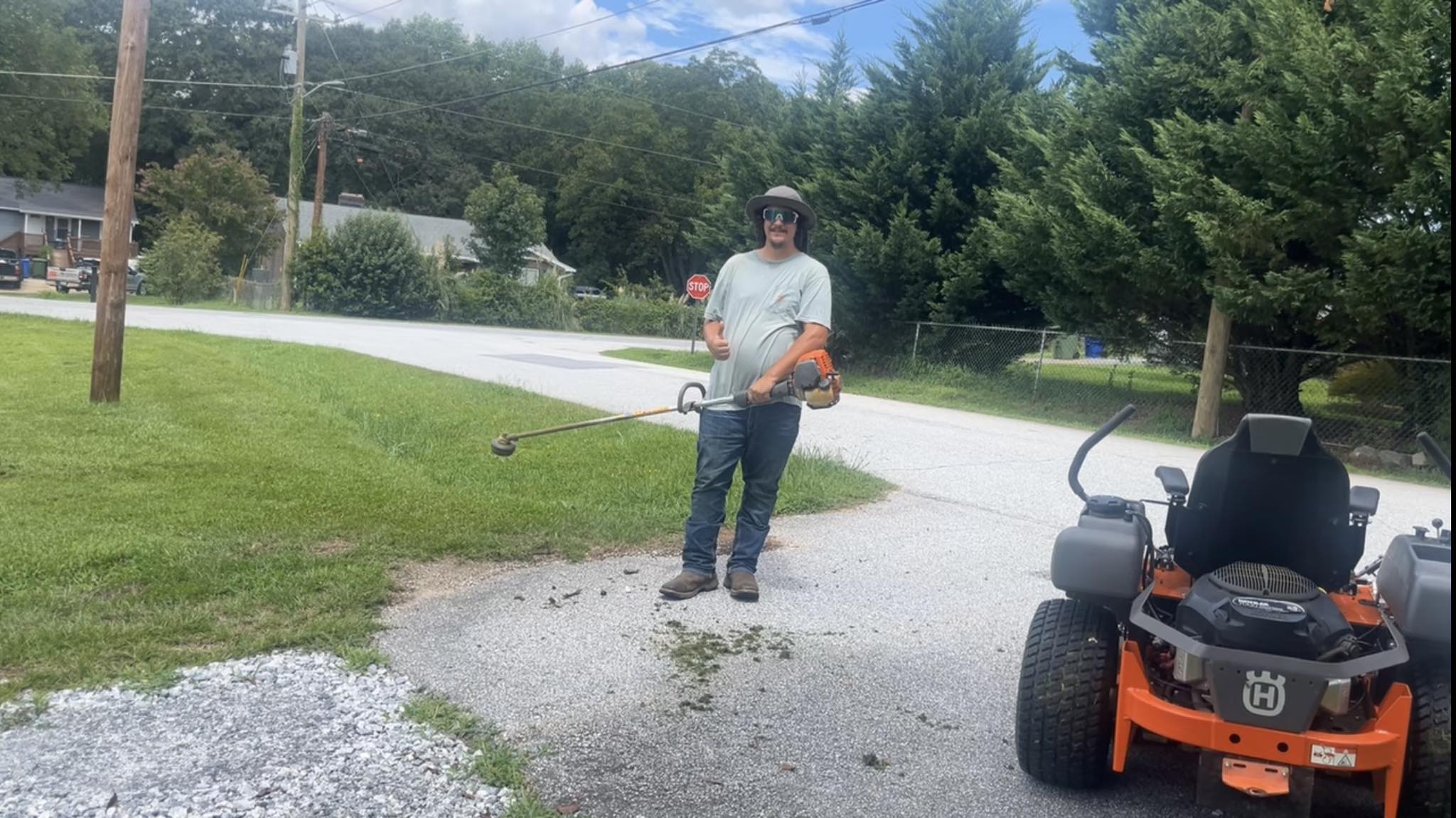
The walk isn’t random. I move in a pattern — I start at the front, work across in strips, then move to the back and repeat. I’m not rushing. I’m not thinking about the schedule or the next stop on my route. I’m just looking at the lawn in front of me.
What I’m doing is building a picture. Every lawn in Sudbury is different. Different soil profile, different drainage, different sun exposure, different history of care or neglect. A lawn in Chelmsford has different problems than a lawn in Val Caron, and a lawn in a subdivision built in the 1980s has different underlying issues than one built five years ago.
I can’t treat them the same way. And I can’t know how to treat them differently unless I look first.
The homeowner will usually follow me out. Sometimes they start talking immediately — telling me about the problem spots, pointing at the areas they’re worried about. I listen, and I make note of what they’re pointing at. But I also keep walking, because the spots they’re worried about are rarely the only spots that need attention. Usually they’re not even the root cause of the problem.
The root cause is almost always something you find when you get down and look at the soil.
What I’m Actually Looking at When I Walk It

There are five things I’m checking on every property, in roughly this order.
Soil compaction
I push my thumb into the soil in multiple spots across the lawn — front, back, edges, middle. What I’m feeling for is resistance. Healthy soil has give to it. When you push in, it yields slightly, crumbles a little when you pull back. Compacted soil doesn’t move. It feels like pushing into packed clay, because in most of Sudbury, that’s exactly what it is.
Compaction is the single most common underlying problem I find on Greater Sudbury properties. Our soil is clay-heavy. Freeze-thaw cycles press it tighter every winter. Foot traffic adds to it. And once soil compacts to a certain point, it doesn’t matter how much you water or fertilize — the grass can’t access what it needs because nothing is getting through the surface.
If my thumb goes in easily in most spots, the soil is in decent shape. If I’m pushing hard and barely moving, I know aeration is the first conversation we’re going to have.
Thatch depth
I grab a small plug of grass — just pull a handful out by the roots — and look at the layer between the green blades and the soil surface. That’s the thatch layer: dead organic matter, old roots, clippings that didn’t break down. A thin layer of thatch, about half an inch, is normal and actually beneficial. It insulates the soil and retains some moisture.
More than an inch and it becomes a problem. Thick thatch blocks water and air from reaching the soil, creates a warm moist environment at the surface that encourages disease and insects, and stops new seed from making contact with soil when you overseed. I find thick thatch on properties that have been cut short all summer for years — the clippings mat down instead of decomposing.
Coverage and density
I’m looking at what percentage of the ground is actually covered by healthy grass. Is it thick and dense — blades crowded together so you can barely see soil? Is it thin and wispy, with visible soil between every clump? Are there bare patches, and if so, where are they concentrated?
Bare patches along edges and driveways almost always mean scalping — mower deck dipping at the edge and cutting too short. Bare patches in low spots usually mean drainage problems. Random bare patches scattered across the lawn usually mean grub damage or disease. The location of the problem tells you what caused it.
Drainage patterns
I look at the grade of the property — where it slopes, where it levels out, where water would pool after a heavy rain. Sudbury gets significant rain in spring and fall, and compacted clay soil doesn’t absorb it fast. Properties with low spots or poor grading end up with standing water that drowns grass roots, encourages moss and algae, and creates muddy zones that stay wet for days.
Sometimes a drainage problem looks like a grass problem — homeowner sees dead or thin patches in a low area and assumes the grass is just struggling. The grass is struggling, but the cause is water sitting on the roots for too long after every rain. No amount of fertilizer or overseeding fixes a drainage issue.
Weed pressure and type
What weeds are present, how much of the lawn they’ve taken over, and which specific weeds they are all tell me different things. Creeping Charlie spreading through a lawn tells me the grass density is low enough for it to take hold — a thick healthy lawn crowds it out. Moss in shaded areas tells me the soil is compacted and the grass isn’t getting enough light. Crabgrass along edges tells me the lawn is being cut too short. Dandelions everywhere just tells me the lawn hasn’t had pre-emergent applied.
I don’t just want to know that there are weeds. I want to know what the weeds are telling me about the conditions underneath.
What Most People Tell Me vs What I Actually Find

Most homeowners, when they call me, have one specific complaint. The lawn is patchy. The lawn doesn’t green up like the neighbour’s. The lawn has dead spots that keep coming back no matter what they do. The lawn just looks tired all the time.
And almost every time, what they’re describing is a symptom. The walk tells me what’s actually causing it.
Here’s what I find most often on Greater Sudbury properties — and what it usually means:
- Patchy lawn with hard soil underneath: Compaction has prevented roots from establishing depth. The grass is surviving on the surface with nowhere to go. Aeration, overseeding, and a change in watering habits fixes most of it within a season.
- Lawn that looks fine in May but falls apart by July: Shallow roots from frequent light watering. The grass never learned to push deep because it didn’t need to — water was always right at the surface. Deep infrequent watering and a mowing height adjustment is the fix.
- Dead strips along driveways and walkways: Scalping damage from the mower deck dropping at the edge. The fix is raising the mowing height and paying attention on the edges. Doesn’t need chemicals, doesn’t need new sod — just needs different technique.
- Lawn that stays wet and muddy long after rain: Compaction plus grading. Water can’t get into the soil so it sits on the surface. Aeration helps, but sometimes there’s a grading or drainage conversation that needs to happen too.
- Lawn that looks reasonable but never looks great: Usually a soil health issue — pH off, nutrients depleted, no organic matter. A soil test tells me in fifteen minutes what years of guesswork haven’t figured out.
None of these are guesses I make from the driveway. They’re what I find when I actually get out and look.
Why This First Step Changes Everything That Comes After
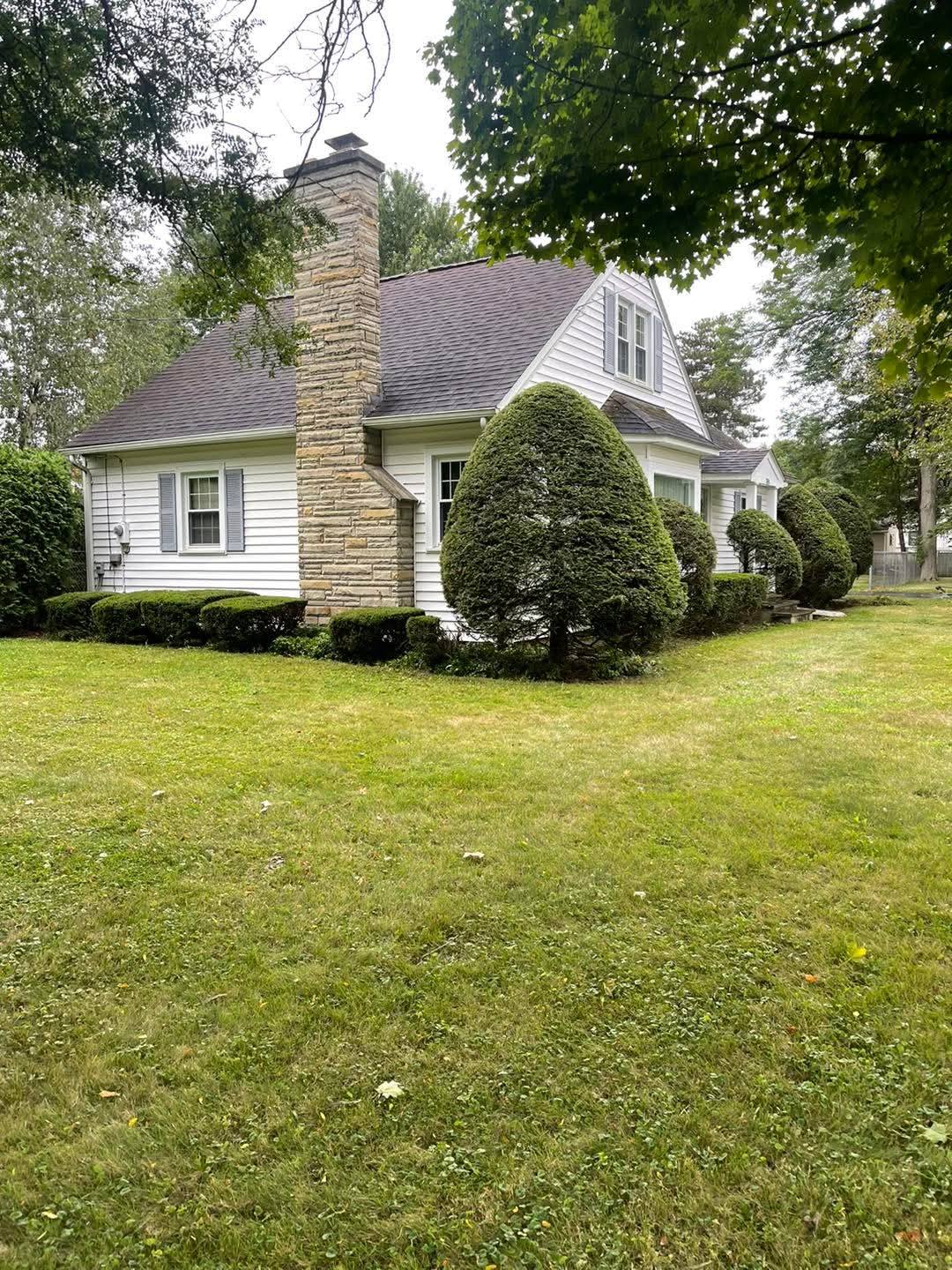
I’ve been called out to properties where someone spent two or three seasons applying fertilizer, overseeding every fall, watering all summer — and the lawn looked exactly the same as it did when they started. Sometimes worse.
Because the problem was never a lack of fertilizer or seed. It was compacted soil that couldn’t receive either of them. Every bag of product they applied ran off or sat on the surface without penetrating. The money and the effort were real. The results weren’t there because the diagnosis was wrong from the start.
The walk fixes that. Ten minutes of actually looking at the lawn — testing the soil, checking the thatch, reading the weed patterns, understanding the drainage — gives me enough information to tell a homeowner exactly what their lawn needs and, just as importantly, what it doesn’t need.
Sometimes that conversation saves them money. I’ve walked properties where the homeowner expected to hear they needed sod and a full renovation — and what I found was compaction and a mowing height issue. Two changes and an aeration job, not a full reinstall.
Sometimes it’s a harder conversation. I’ve walked properties where the damage was far enough along that the honest answer was: some of this needs to come out and start fresh. I’d rather tell someone that in September when there’s time to plan, than let them spend another summer on a lawn that isn’t going to recover with surface-level fixes.
Either way, the walk is how I give people an honest answer instead of a guess.
What You Can Do With This Right Now
Go walk your own lawn this week. Do exactly what I described — move slowly, push your thumb into the soil in several spots, pull a small plug and look at the thatch layer, look at where the thin and bare areas are concentrated and think about what might be causing them in those specific locations.
You don’t need to know everything about lawn care to do this. You just need to actually look — with some intention behind it, not just a glance while you’re walking to the car.
What you find might tell you something you didn’t know. And if it raises more questions than it answers — that’s exactly what I’m here for.
I’ll come out, do the walk with you, and give you a straight read on what’s going on and what makes sense to do about it. No obligation, no sales pitch — just an honest assessment from someone who does this every day across Greater Sudbury.
📞 Call or text me: 705-507-6787
Or fill out the free quote form here — I get back to everyone the same day.
— Ryan Lingenfelter
Owner, Cutting Edge Lawn & Landscaping
Garson, Ontario
Related Articles
- Core Aeration Services in Greater Sudbury
- This Is the Week Most Sudbury Lawns Start Struggling
- A Lively Homeowner Called Me in September Saying Her Lawn Looked Worse Than Spring
- Grass Cutting Services in Greater Sudbury
