
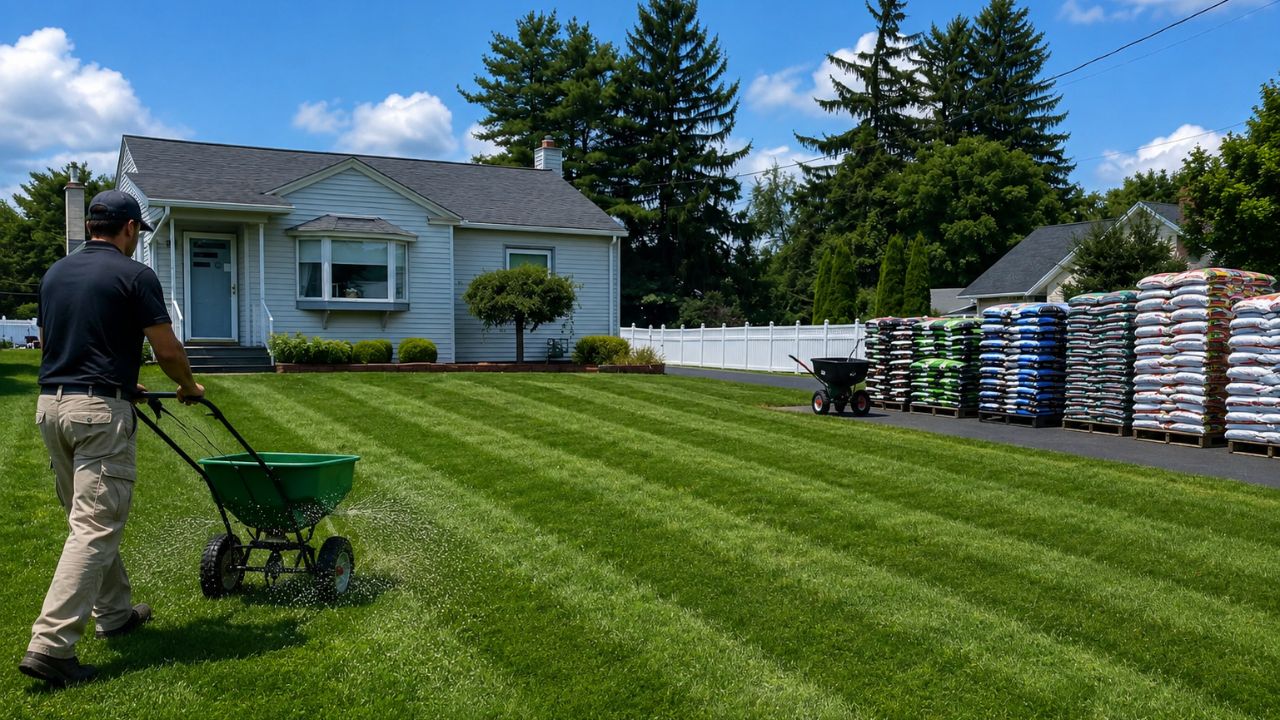
Fertilizing is one of the most common topics homeowners bring up when I’m on a quote visit. They want to know what to buy, when to apply it, how much, and whether the four-step seasonal program they’ve been using is the right call.
My honest answer surprises most of them. Because the honest answer isn’t about which fertilizer to buy. It’s about whether their lawn is in a condition to actually use fertilizer effectively — and for most lawns I see across Greater Sudbury, the answer is that it isn’t. Not yet.
That’s not what most lawn care companies tell you. Most companies want to sell you a fertilizer program. I’d rather tell you the truth about when fertilizing works and when it wastes your money — because the difference matters more than which product you choose.
The question I actually get asked — and what’s behind it
When a homeowner asks me about fertilizing, what they’re usually really asking is: why isn’t my lawn as good as I want it to be, and will fertilizer fix it?
They’ve been maintaining the lawn. They’ve been cutting it. Maybe they’ve been watering on a schedule. And the lawn still looks thin, or pale, or it struggles in summer, or the weeds keep coming back. They’ve heard that fertilizing is what you do to improve a lawn, so they want to know if that’s the missing piece.
Sometimes fertilizing is exactly what the lawn needs. But more often — and this is what I tell people honestly on quote visits — fertilizing is being applied to a lawn that can’t use it effectively, which means the money is going into the ground and producing very little visible result.
I’ve visited properties where homeowners had been running the same four-step fertilizer program for three or four years and the lawn had improved almost not at all. They assumed the fertilizer wasn’t strong enough, or the product was wrong, or their soil was just bad. In most cases the soil was fine and the product was fine. The problem was what was preventing the fertilizer from working — compaction, thatch, or wrong timing — and none of those had been addressed.
Understanding why fertilizer fails on certain lawns first is what makes the rest of this conversation useful.
Why fertilizer underperforms on most Sudbury lawns

There are three conditions that make fertilizer largely ineffective even when it’s applied correctly. All three are common on lawns across Greater Sudbury. If any of them are present, the fertilizer you put down is working at a fraction of its potential — and the results will be disappointing regardless of what product you choose or how carefully you follow the timing on the bag.
Compaction. This is the most common one. When soil is compacted — which in Greater Sudbury means most lawns that haven’t been aerated recently, given our clay-influenced soil and freeze-thaw cycle — the nutrients in fertilizer have difficulty moving from the surface into the root zone. Granular fertilizer dissolves in water and needs to travel downward through the soil to reach where the roots are. In compacted soil, water moves slowly and nutrient movement is limited. A lot of the fertilizer ends up staying near the surface, evaporating or running off rather than feeding the roots it was intended for.
I’ve seen homeowners apply quality fertilizer to compacted lawns for multiple seasons in a row with minimal results, then aerate once in late May and see the same fertilizer — applied at the same rate, same timing — produce dramatically visible improvement within six weeks. The fertilizer hadn’t changed. The soil’s ability to move it to the roots had. If you want to understand this connection more, I covered it in detail in the article about what I found on 52 Sudbury properties this spring — compaction was the single most common issue across all of them.
Thatch. A thick thatch layer intercepts fertilizer before it reaches the soil. Granules land on the organic mat, dissolve into it, and get held in the thatch rather than moving into the ground. The thatch becomes a nutrient-holding layer that the grass roots can’t efficiently access. This is particularly common on lawns that haven’t been aerated or dethatched in several years. I wrote about how thatch builds invisibly and what it does to a lawn’s performance over a full summer in this article on the most common problem I found this spring — it’s worth reading before you put any money into fertilizer on a lawn that hasn’t been assessed.
Wrong timing. This is the one that most homeowners don’t think about. Fertilizer applied to cold soil in early April — when it feels like spring but the soil temperature at root depth is still below 8 or 9 degrees Celsius — is largely wasted. The soil biology that processes nutrients isn’t active at that temperature. The grass roots aren’t in active growth mode. The fertilizer sits, either washing away with spring rain or just waiting until conditions are right, by which point it may have already leached past the root zone.
In Greater Sudbury, the spring fertilizer window doesn’t open until mid to late May — roughly when soil temperature at four inches consistently reaches 10 degrees. That’s two to three weeks later than most bag programs suggest, and significantly later than the “as soon as the snow melts” advice you’ll see online. That advice was written for warmer climates. It doesn’t apply here.
When fertilizing actually works — the conditions that need to be right first
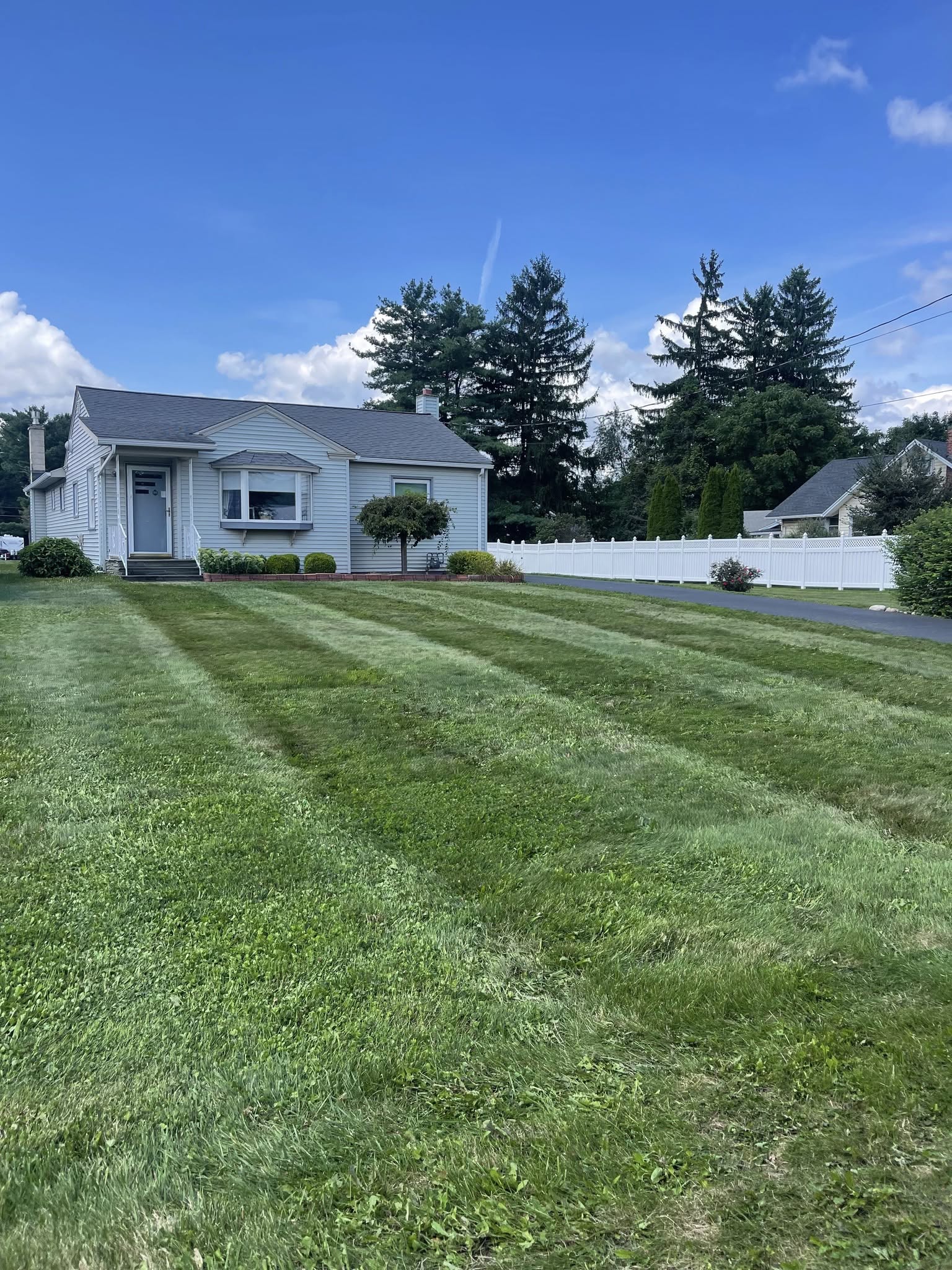
Fertilizing works well — genuinely, visibly well — when three conditions are in place. When all three are present, even a standard bag program produces results that make the investment obvious.
The soil is uncompacted and biologically active. This means aeration has happened recently enough that the soil structure is open, water and nutrients can move through it freely, and the microbial activity that processes organic matter and makes nutrients available to roots is functioning properly. On a lawn that was aerated in late May, fertilizer applied in early June moves through the soil the way it’s supposed to. On a lawn that hasn’t been aerated in three years, it mostly doesn’t. The single most useful thing you can do to make fertilizing work better is aerate first. I walk through the timing and process for this in the article on the best time to aerate a Sudbury lawn — specifically why the late May window matters for this climate.
The thatch layer is managed. Under half an inch of thatch is fine — nutrients can move through it without significant loss. Over half an inch, and an increasing percentage of what you apply is getting trapped before it reaches soil. Check your thatch before your first fertilizer application of the season. If it’s over half an inch, aeration will help decompose it. If it’s over an inch, dethatch before aerating. Then fertilize into open, managed soil rather than into a thick organic mat.
The timing is right for Sudbury’s soil temperature cycle. Here’s the schedule I follow on properties I maintain, adjusted for our climate:
- Late May — starter application. After aeration and overseeding. Lower nitrogen, higher phosphorus to support root development in the early growth period. This is when the soil is warm enough to process nutrients and the grass is in active growth. Not April. Not early May.
- Late June to early July — main season application. Balanced fertilizer, moderate nitrogen. The grass is in full growth mode, the soil is warm and biologically active, and the nutrients will be taken up quickly. This is the application that produces the visible colour and density improvement most homeowners are looking for.
- Late August to early September — pre-fall application. Lower nitrogen, higher potassium. Potassium supports the grass in hardening off before winter — improving root strength, disease resistance, and freeze tolerance. This application prepares the lawn for Sudbury winters specifically. Don’t skip this one.
- No late fall application. Fertilizing after mid-September in Sudbury risks pushing late-season growth that doesn’t have time to harden before frost. That growth is vulnerable to winter kill and can leave the lawn in worse shape in spring than if you’d skipped the application entirely.
The fertilizing approach I actually recommend for Sudbury lawns
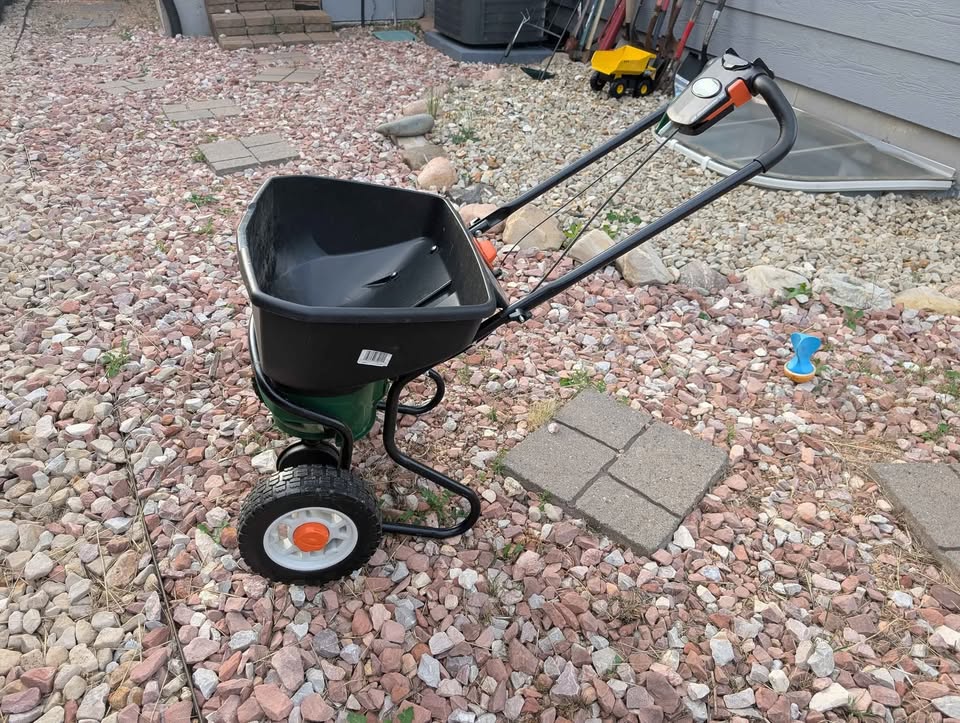
After all of that — here’s the practical recommendation I give homeowners when they ask me about fertilizing. Not what product to buy. The sequence that makes the product work.
Step one: assess before you spend. Before buying anything, check two things. Press a screwdriver into your lawn in a few spots — if it won’t go in four inches with moderate pressure, you have compaction. Part the grass and look at the thatch layer — if it’s over half an inch, you have thatch to manage. If either is present, address that first. Fertilizing without fixing compaction or thatch is like watering a plant through a clogged pot — some makes it through, most doesn’t.
Step two: aerate in late May before your first application. This is the single change that makes the biggest difference to fertilizer effectiveness on Sudbury lawns. The aeration holes create direct channels for nutrients to reach the root zone, the disturbed soil is biologically active and ready to process inputs, and any thatch buildup starts breaking down immediately. I covered this fully in the article on when to overseed a Sudbury lawn — aeration and fertilizing work together and the timing of both matters.
Step three: follow the three-application schedule for this climate. Late May starter, late June main application, late August pre-fall. Skip the early April application most bag programs suggest — the soil isn’t ready for it in Sudbury. Skip the October application — it does more harm than good here.
Step four: get a soil test every two to three years. A basic soil test — available at most garden centres for around $20 — tells you the pH of your soil and which nutrients are deficient. Sudbury soils can vary significantly in pH depending on the neighbourhood and the property history. Grass takes up nutrients most efficiently at a pH between 6.0 and 7.0. If your soil is outside that range, standard fertilizer programs won’t work as well regardless of what you spend. A lime application to raise pH or sulfur to lower it costs very little and can make everything else you do to the lawn significantly more effective.
Step five: match the product to the application. Starter fertilizer for the late May application — look for something like 10-20-10 or similar, higher middle number. Balanced fertilizer for the late June application — 20-10-10 or similar. Winterizer for late August — lower first number, higher third number, something like 12-0-20. You don’t need expensive specialty products. Standard products from any garden centre in these ratios will work fine on a properly prepared soil.
The homeowners I’ve seen get the best results from fertilizing aren’t the ones spending the most on products. They’re the ones who aerated first, timed their applications to Sudbury’s actual soil temperature cycle, and stopped applying in conditions where the fertilizer couldn’t be used. When all of that is right, even a basic fertilizer program produces a lawn that looks noticeably better season over season.
If you want me to walk your property and tell you honestly whether your lawn is in a condition to benefit from fertilizing right now — or whether there’s something else that needs to happen first — give me a call. I’ll tell you what I see.
📞 705-507-6787 | Get a free quote online
— Ryan Lingenfelter
Owner, Cutting Edge Lawn & Landscaping
Garson, Ontario · 705-507-6787
