
There’s a specific frustration I hear on quote calls a few times every season. It goes something like this:
“I’ve reseeded that spot three times. It grows for a week, then it’s gone. I don’t know what I’m doing wrong.”
I’m Ryan Lingenfelter, owner of Cutting Edge Lawn & Landscaping in Garson, Ontario. Since 2020, I’ve walked properties across Greater Sudbury — Garson, Val Caron, Hanmer, Lively, Chelmsford, Azilda, Capreol. Bare patches that won’t fill in are one of the most consistent problems I see. And almost every time, the homeowner has tried to fix it the same way — seed, water, wait — without understanding why the seed keeps failing.
Here’s the thing: when grass won’t establish in a bare spot after multiple attempts, the seed isn’t the problem. Something about that spot is preventing establishment. Until you figure out what that something is, you can seed it all summer and get the same result every time.
Let me walk you through every cause I’ve seen on Sudbury properties — and what you actually need to do about each one.
Cause 1 — Compaction: The Most Common Reason Seed Fails in Sudbury
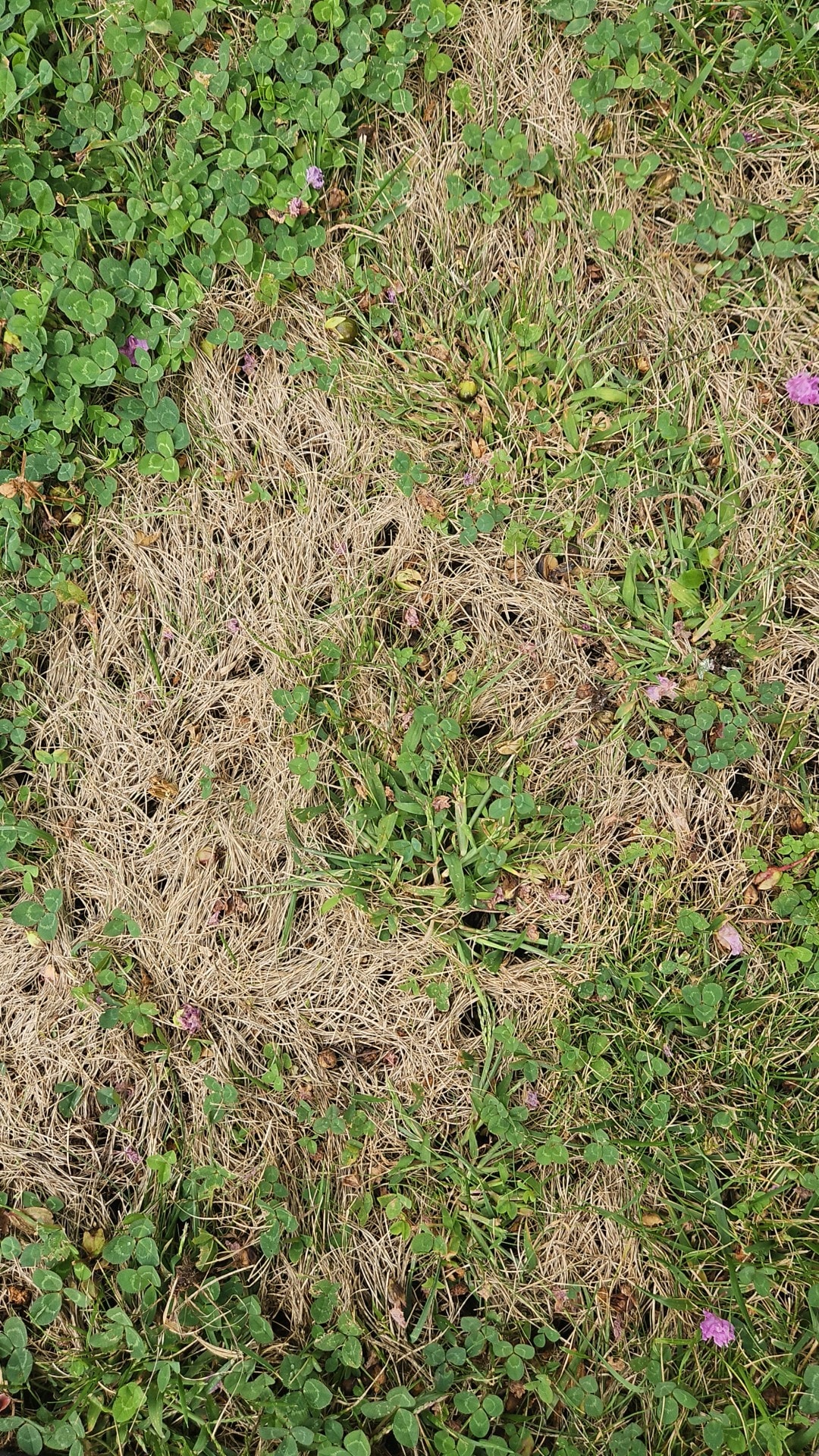
This is the one I find most often. Homeowner has a bare spot — maybe from dog activity, heavy foot traffic, or a patch that died out over winter — puts down seed, waters it, watches it sprout, and then watches it die off within two to three weeks. Repeat three times. Same result.
The reason: the soil underneath is compacted hard. New grass seed can germinate on the surface — it just needs moisture and warmth for that. But the seedling roots can’t penetrate the compacted layer below. Without roots that can push down into the soil, the seedling runs out of what it needs within a few weeks and dies. The grass never had a chance regardless of how much water it got.
Sudbury’s clay soil compacts hard under our freeze-thaw cycles, and bare spots are usually bare because of compaction — the existing grass couldn’t survive there either, for the same reason. You’re seeding into the same conditions that killed the grass the first time.
The test: push a screwdriver into the bare spot. If it stops at an inch or two without serious force, the soil is too compacted for grass roots to establish. Seed applied over that surface without breaking the compaction will fail the same way every time.
The fix: core aerate the area — ideally the whole lawn, but at minimum the affected spots — before overseeding. Aeration pulls plugs from the soil and opens channels that seedling roots can actually penetrate. On a compacted Sudbury clay lot, this is the difference between seed that establishes and seed that dies at the seedling stage. I’ve explained why aeration matters so much on Sudbury clay in more detail in the Sudbury lawn challenges article here.
Cause 2 — Drainage: When Water Is the Problem
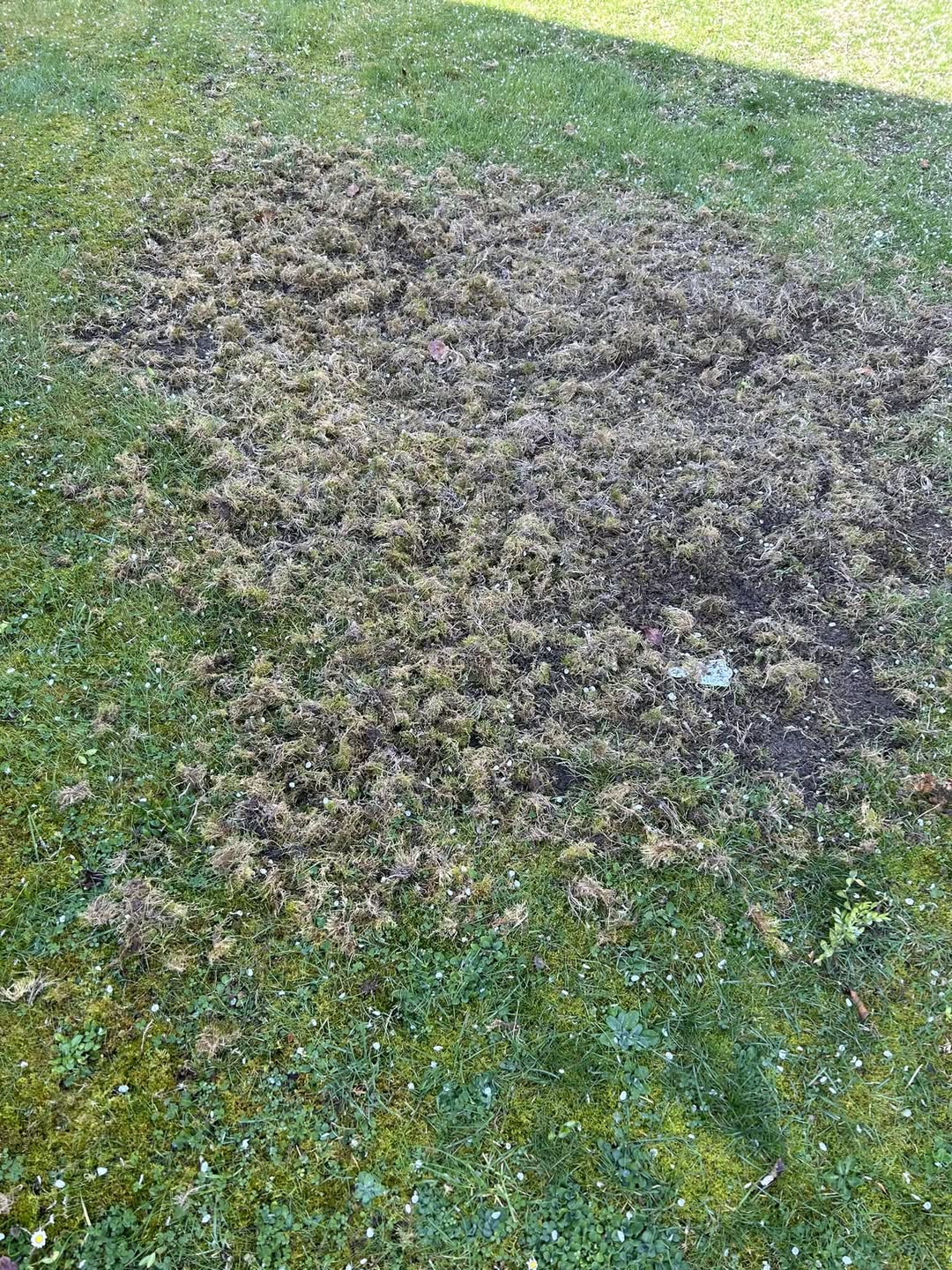
Drainage problems are the second most common cause of persistent bare patches across Greater Sudbury — especially in Val Caron and parts of Hanmer where low-area lots collect water.
The pattern: bare oval patch in a low area of the yard. Same spot every year. Reseeds in summer, looks okay by August, dead again by the following May. The homeowner has been doing this for years.
What’s happening: water pools in that low area in spring and after heavy rain, and sits there long enough to drown grass roots. Grass cannot survive in standing water — roots need oxygen, and waterlogged soil cuts off the oxygen supply. The grass dies in that spot every time conditions are wet, which in a Sudbury spring means every year without fail.
You can put premium seed on a drainage problem and it will fail on the same schedule as everything else. The seed isn’t the issue. The water is.
The fix depends on the severity. A minor low spot can often be addressed by top-dressing with quality soil to raise the grade slightly and improve drainage. A significant drainage problem — where water pools for days after rain — needs proper grading work: bringing in topsoil, building up the low area, and redirecting water flow away from that section of the yard. Once the drainage is corrected, grass will establish and hold in that spot. Without it, you’re seeding into a problem that hasn’t changed.
Before you seed any persistent bare patch for the second or third time, look at what the area does after a heavy rain. If water sits there for more than a few hours — drainage is your issue, not seed quality or watering technique.
Cause 3 — Shade and Root Competition

The third cause — and the one that’s genuinely the hardest to fix — is shade combined with tree root competition.
The pattern: bare or thin patch directly under a mature tree. May have had grass there years ago. Now nothing holds. Seed germinates, grows thin and pale, fades out by midsummer.
Two things are working against grass in that spot. First, not enough light. Grass needs direct sunlight for photosynthesis — most turf grass varieties need 4 to 6 hours of direct sun per day to stay healthy. Under a dense tree canopy, especially under mature maples which have thick leaf coverage, light levels can be far below that. The grass grows slowly, stays pale, and can’t compete.
Second, tree root competition. Mature trees have extensive root systems in the same soil zone where grass roots grow. Those tree roots are competing for water and nutrients with every grass plant in the area. The tree wins. It’s not a fair fight — the tree has a decades-established root system against a newly germinated seedling.
The honest fix for this situation: if the tree coverage is dense, grass is going to struggle there regardless of seed type or maintenance. Shade-tolerant grass mixes help at the margins but they don’t solve the problem when light levels are genuinely too low. The most practical long-term solution for a bare area under a dense mature tree is a defined garden bed — mulch or decorative stone under the drip line, bordered cleanly. It looks intentional, it’s low maintenance, and it stops the cycle of failed seeding.
If the area gets partial shade — a few hours of direct sun per day — it’s worth trying a quality shade-tolerant grass mix with proper soil prep. But go in with realistic expectations. Shade grass in partial shade conditions can look okay. Grass under a dense canopy with no direct sun is a losing battle.
Cause 4 — Why the Seed Itself Might Be the Problem

I’ve covered the three main site conditions that cause persistent bare patches. But sometimes the issue is simpler — the seed or the seeding method.
Wrong seed for Sudbury’s climate. Not all grass seed is created equal for northern Ontario conditions. Cheap box-store seed mixes often contain annual ryegrass — it germinates fast and looks good for a season, but it doesn’t overwinter in Sudbury. You get grass in summer and a bare patch again by May. Quality seed for a Sudbury lawn should be a cool-season perennial blend — Kentucky bluegrass, perennial ryegrass, and fescue — rated for our climate zone. Ask specifically at the supplier what’s in the blend and whether it’s suited for zone 4-5 winters.
No soil contact. Grass seed needs to be in contact with soil to germinate properly. Seed scattered over compacted or crusted soil surface without any soil preparation often just sits there — dries out before it can germinate, washed away by the first rain, eaten by birds. Before seeding any bare patch, scratch the surface with a rake to break it up and create a rough texture for seed to settle into. On larger areas, a core aeration before overseeding gives perfect germination conditions — the seed falls into the aeration holes, has direct soil contact, stays moist longer, and establishes significantly better than seed scattered over an untreated surface.
Inconsistent watering in the first two weeks. Grass seed needs consistent surface moisture for 14 to 21 days to germinate and establish the initial root system. One or two missed days during this window — especially in June and July heat — can kill seedlings that were just starting to establish. Once the seedlings have their first true leaves and are visibly growing, they become more resilient. Before that point, they’re completely dependent on consistent moisture.
Mowing too early or too short. First mow over newly established grass should happen when it reaches about 3.5 to 4 inches — not before. Mowing young seedlings before they’ve built adequate root depth pulls them out of the soil. And once established, keeping the lawn at 3 inches is what gives the new grass the root depth to survive summer heat and compete against weeds moving in. I’ve covered why mowing height matters so much in the May mowing mistake article.
The Right Sequence — How to Actually Fix a Bare Patch in Sudbury
If you’ve been seeding the same spot with no lasting success, here’s the sequence that works — addressing cause before applying the fix.
Step 1 — Diagnose the cause first. Is the spot compacted? Does water pool there after rain? Is it under a dense tree canopy? Answer these questions before buying seed. The diagnosis determines everything else.
Step 2 — Fix the underlying condition. Compaction: aerate before seeding. Drainage: grade the area or top-dress to raise the grade. Shade: accept the limitation and choose the right approach for how much light the spot actually gets.
Step 3 — Prepare the surface properly. Rake the bare area to break up any crust. If the soil quality is poor — thin topsoil over hard clay — add an inch of quality topsoil before seeding. The seed needs something to root into.
Step 4 — Use the right seed. Quality perennial cool-season blend suited to Sudbury’s climate. Not annual ryegrass. Not cheap box-store mix. Ask what’s in the blend before buying.
Step 5 — Water consistently for 14 to 21 days. Twice daily in the first two weeks if the weather is warm and dry — just enough to keep the top inch of soil moist. Not soaking, not letting it dry out. Consistent. After the seedlings are visibly established, transition to the deep infrequent watering that builds root depth. You can read more about proper watering technique in the Sudbury lawn watering guide here.
Step 6 — Don’t mow until the new grass reaches 3.5 to 4 inches. Then set the deck at 3 inches and leave it there. The new grass needs root depth before it can handle being cut, and it needs to be cut at the right height to build that depth going forward.
Done in this sequence, most Sudbury bare patches that have been failing to fill in for multiple seasons will establish properly within 3 to 4 weeks of correct seeding.
When to Call Someone Instead of Doing It Yourself
Most bare patch repairs are doable by any homeowner following the steps above. Where it makes sense to call someone:
- You have multiple bare patches across the whole lawn — that’s typically a compaction problem that needs professional aeration across the full property, not just spot repairs
- You have a drainage issue that requires grading work — that’s a job that needs equipment and proper grade assessment
- The lawn has deteriorated past the point where patching makes sense and needs full overseeding or partial sod installation
Give me a call and I’ll walk the property and tell you which situation you’re in before anything is priced or scheduled.
📞 705-507-6787
🔗 Get a Free Quote
📍 Serving Greater Sudbury — Garson, Val Caron, Hanmer, Lively, Chelmsford, Azilda, Capreol
— Ryan
Frequently Asked Questions
Why won’t grass grow in bare patches on my Sudbury lawn?
The four most common reasons on Greater Sudbury properties: compacted clay soil that seedling roots can’t penetrate, drainage issues where water pools and drowns roots, shade and tree root competition under mature trees, and incorrect seeding method — wrong seed variety, no soil contact, or inconsistent watering during establishment. When a bare patch has been reseeded multiple times with no lasting result, the seed isn’t the problem. Something about the site conditions is preventing establishment. Diagnosing the cause before reseeding again is the only way to get a different result.
How do I fix a bare patch on my lawn in Sudbury Ontario?
Start by diagnosing the cause — compaction, drainage, shade, or seeding method. For compacted soil, aerate before seeding. For drainage issues, address the grading before applying seed. For shade, choose a shade-tolerant seed mix or consider a garden bed alternative. For seeding method issues: use a quality perennial cool-season blend, scratch the surface before seeding, water twice daily for 14 to 21 days through germination, and don’t mow until the new grass reaches 3.5 to 4 inches. Done in the right sequence, most Sudbury bare patches establish properly within 3 to 4 weeks.
Can I overseed a bare patch in June in Sudbury?
Yes — June is actually a reasonable time to overseed in Greater Sudbury. Soil temperatures are warm enough for germination and there’s typically enough moisture. The main risk in June is heat drying out the surface before seedlings establish — watering twice daily in the first two weeks is especially important in warm June weather. Avoid seeding during a heat wave when temperatures are above 30 degrees and the soil dries out within hours of watering. Early morning seeding with consistent moisture management through the germination window works well in Sudbury’s June conditions.
Why does my Sudbury lawn have bare patches in the same spots every year?
Recurring bare patches in the same location almost always point to a site condition problem — either drainage (water pools there every spring), compaction (the soil in that spot is harder than surrounding areas), or ongoing competition from tree roots and shade. Reseeding without addressing the underlying condition produces the same result every year. The fix requires identifying what’s different about that specific spot and correcting it — drainage grading, aeration, or accepting that the conditions don’t support turf grass and choosing an alternative.
What is the best grass seed for overseeding bare patches in Sudbury?
A quality perennial cool-season blend suited to northern Ontario’s climate zone 4-5 — typically a mix of Kentucky bluegrass, perennial ryegrass, and fine fescue. Avoid cheap box-store blends that contain annual ryegrass — it germinates fast but doesn’t overwinter in Sudbury and the bare patch comes back the following spring. Ask specifically at the supplier whether the blend contains perennial varieties and whether it’s rated for our climate. The seed cost difference between a quality blend and a cheap mix is small compared to the labour of reseeding a failed patch again next season.
Should I aerate before overseeding bare patches in Sudbury?
Yes — especially on Sudbury’s clay-heavy soil. Core aeration before overseeding significantly improves establishment success. The aeration holes provide direct soil contact for seed, retain moisture longer than surface seeding, and most importantly break the compaction layer that prevents seedling roots from establishing. On properties that have had persistent seeding failures, aeration before overseeding is often the single change that makes the difference. If the whole lawn has multiple bare patches, a full property aeration followed by overseeding is more effective than spot-treating individual patches without addressing the underlying compaction.
Ryan Lingenfelter is the owner of Cutting Edge Lawn & Landscaping in Garson, Ontario. Since 2020, his crew has provided full lawn care services across Greater Sudbury — Garson, Val Caron, Hanmer, Lively, Chelmsford, Azilda, and Capreol. Cutting Edge is licensed, insured, BBB A+ rated, and ThreeBest Rated for lawn care services in Sudbury.
📞 Phone: 705-507-6787
📍 Service Area: Greater Sudbury, Ontario
🔗 Free Quote: cuttingedgelawn.ca/quote
Helpful Lawn Care Services in Sudbury
- Core Aeration for Healthy Lawns
- Grass Cutting Services in Sudbury
- Sod Installation in Sudbury
- Property Cleanup Services
- Mulch & Decorative Stone
- Hedge Trimming Services
Continue Reading
- Brown Patches on Your Sudbury Lawn? Here’s the Cause
- My Sudbury Lawn Has Weeds Everywhere — Here’s What I Actually Do About It
- The Worst Sudbury Lawn I’ve Ever Seen — And How We Brought It Back
