

Her name is Karen. She lives in New Sudbury, and when we finished the aeration and overseed on her property she asked me something I hadn’t been asked before: “Can I send you photos every week so you can tell me if it’s going the way it should?”
I said yes. Mostly because I was curious myself — I don’t always get to watch a lawn recover week by week from a distance. I do the work, I check in, but I’m not usually seeing it through someone else’s eyes every seven days.
What followed was eight weeks of photos in my messages every Sunday morning. Same spot in the front yard, same angle, same time of day because she’s that kind of person. And what those photos showed — both what changed and when it changed — is something I think every homeowner who’s ever overseeded or renovated a lawn and wondered “is this working?” should see.
I’m Ryan Lingenfelter — I own Cutting Edge Lawn & Landscaping in Garson, Ontario. I’ve been working on lawns across Greater Sudbury since 2020. This is Karen’s story, week by week, exactly as it happened.
What We Did Before Week One Started
Karen had called me in late August. Her lawn had reasonable coverage — maybe seventy percent — but it was thin, uneven, and she had two distinct problem areas: a shaded patch along the north side of the house where the grass had been fighting the shade and losing for years, and a heavily trafficked path across the back corner of the yard where the kids cut through to the neighbour’s fence every day and had worn the grass down to near-bare soil.
I walked the property, did the soil test with my thumb in several spots, and found moderate compaction — not as severe as some properties I’ve seen in Greater Sudbury, but enough that water wasn’t penetrating the way it should and roots were staying shallower than they needed to be.
We agreed on the full program: core aeration across the entire lawn first, then heavy overseeding with a shade-tolerant mix in the north-side patch and a high-traffic-rated mix along the worn path, followed by a standard overseeding rate across the rest of the lawn to thicken what was already there.
We did the work on a Tuesday in early September. I told Karen what to expect, roughly when to expect it, and what not to do in the meantime. And then the Sunday photos started.
Week One — What We Started With
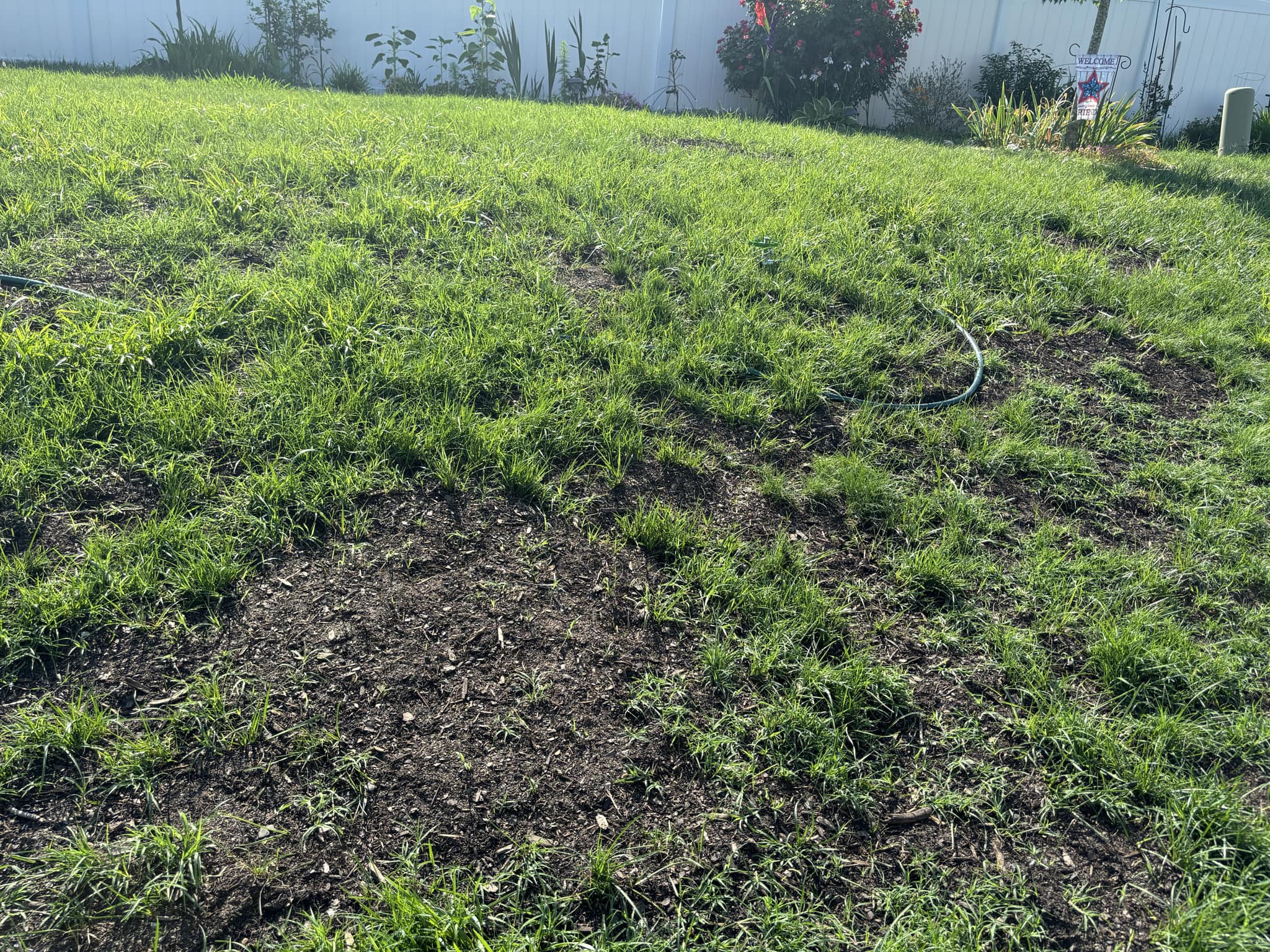
The first photo came in six days after we finished the work. Karen’s message with it said: “Okay I know you said to be patient but it looks exactly the same.”
It did look exactly the same. That’s correct. That’s what week one is supposed to look like.
The aeration cores were still visible — small plugs of soil scattered across the lawn surface that look a bit messy for the first week or two before they break down and work back into the grass. The seed we’d applied wasn’t visible at all, which is how it should be — it’s on and in the soil, not sprouting yet.
I told her: this is right. The soil is doing something you can’t see yet. The cores are breaking down and the organic matter is working back in. The seed is absorbing moisture and going through the germination process underground. There is nothing wrong with a lawn that looks the same one week after aeration and overseed — the concern would be if it looked the same at week four.
Keep watering. Short and frequent right now — I’d told her to water two to three times a day for ten minutes each to keep the top half-inch of soil consistently moist for germination. Don’t walk on it. Don’t mow it yet. Just water and wait.
Weeks Two Through Four — The Part Nobody Warns You About
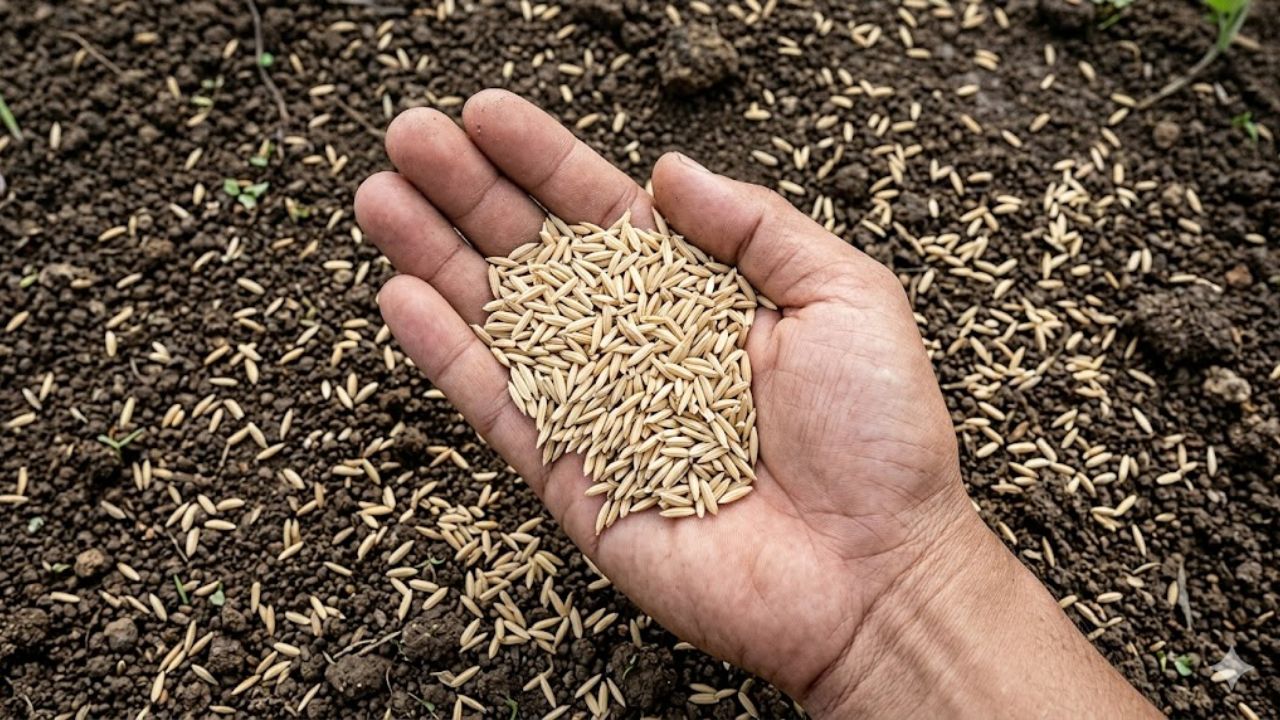
Week two photo: “I can see something. Little green fuzz in a few spots. Is that it?”
Yes. That’s it. That’s germination starting.
What happens between week two and week four is the part that tests most homeowners’ patience harder than any other stage. You can see something is happening. There are thin wisps of new green in patches. But it looks fragile and uneven — thick in some spots, barely there in others, and in the problem areas it seems like nothing is happening at all yet.
Karen’s week three message was: “The shaded patch on the side of the house has almost nothing. Is the shade-mix not working?”
Shade-tolerant seed mixes germinate slower than standard mixes. The reduced light means slower photosynthesis, slower establishment. I’d warned her about this but week three is when it starts to feel real. I told her: the north-side patch will run about a week behind the rest of the lawn. Don’t judge it yet.
Week four photo: she stopped adding a message. Just sent the photo. The lawn had clearly changed — new growth visible across most of the main lawn area, thinner but present in the shaded patch, and the worn path in the back corner was showing green fuzz where bare soil had been four weeks earlier.
This is the stage where the most common mistake happens. The lawn looks like it’s coming in but it’s still fragile — roots are shallow, the new grass is not established, it cannot handle foot traffic or mowing yet. I’ve seen homeowners get impatient at week four, mow because the new growth is getting a bit long and scraggly-looking, and set their recovery back by two weeks. The new grass gets cut before the roots have any real depth and it stresses immediately.
Don’t mow until the new grass reaches three inches. Water consistently. Keep traffic off it. Week four is not the finish line.
Weeks Five and Six — When It Actually Starts to Show
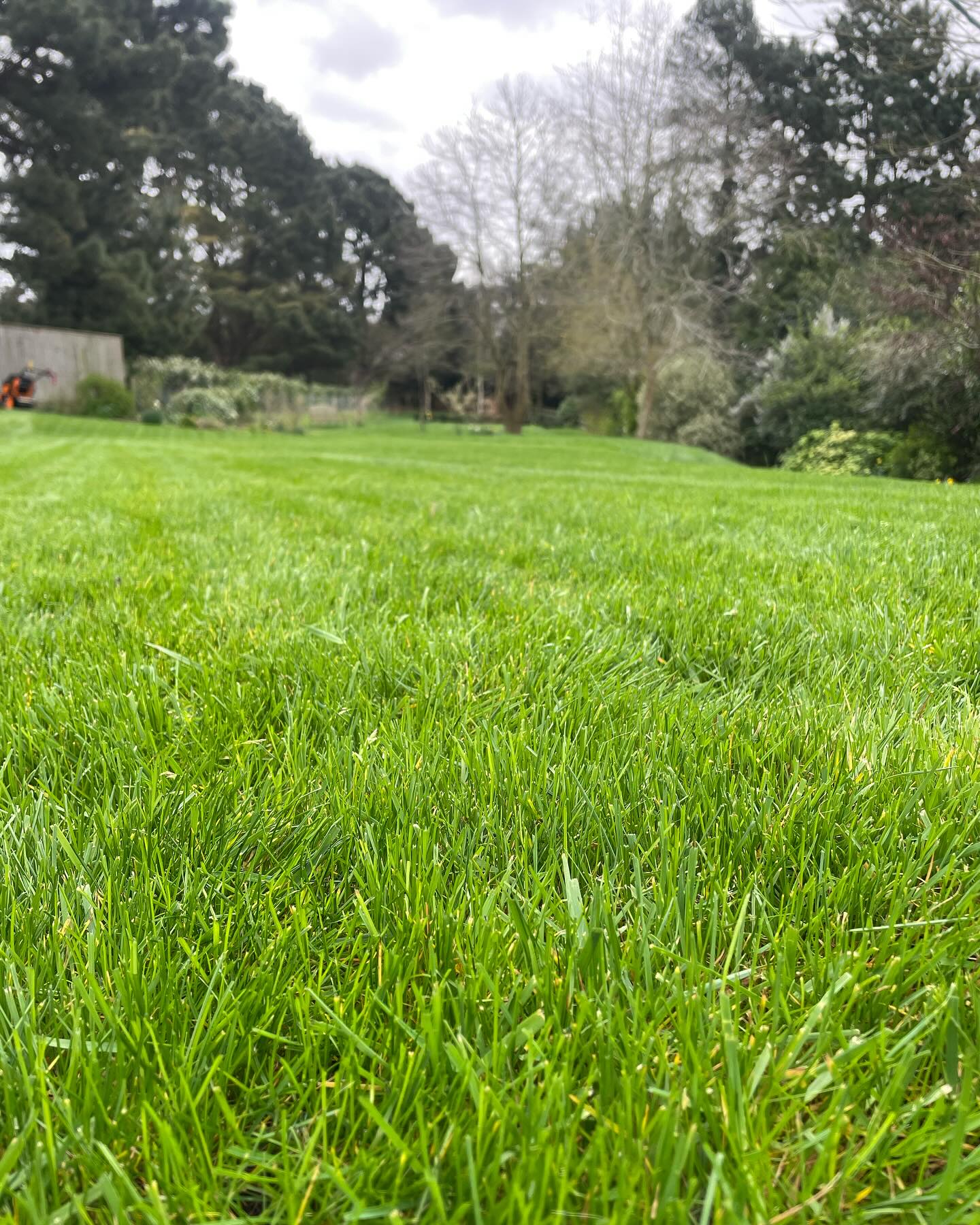
Week five was the first photo where Karen’s message was something other than a question or concern. She said: “Okay. I see it now.”
By week five on a September overseed in Sudbury — with soil still warm from summer, consistent watering, and good seed-to-soil contact from the aeration — the new grass is usually past the fragile stage. Roots have pushed down into the loosened soil from the aeration, the blades are filling in, and the density across the lawn starts to visibly increase.
What Karen was seeing at week five was a lawn that was noticeably thicker than when we started. The worn path in the back was covered — not perfect, not fully established, but green and filling in. The main lawn area had that dense, almost fluffy look that new grass has before the first mow.
The shaded north patch was still running behind. Sparse compared to the rest, but actively growing. I told her this was going to take the full eight weeks and possibly one more week on top of that — shade establishment is slower and there’s no shortcut to it. The right seed, the right watering, and time.
Week five is also when I usually tell homeowners they can do the first mow — gently, at the highest deck setting, taking off no more than a third of the blade. The first cut actually encourages lateral growth and tillering, which is what makes grass dense rather than just tall. Karen mowed at week five and a half. She sent me a photo of the lawn immediately after and said it looked “more like a real lawn than it ever has.”
I told her we were halfway there and the next two weeks would show the biggest visible change of the whole process.
Weeks Seven and Eight — What the Lawn Looked Like at the End
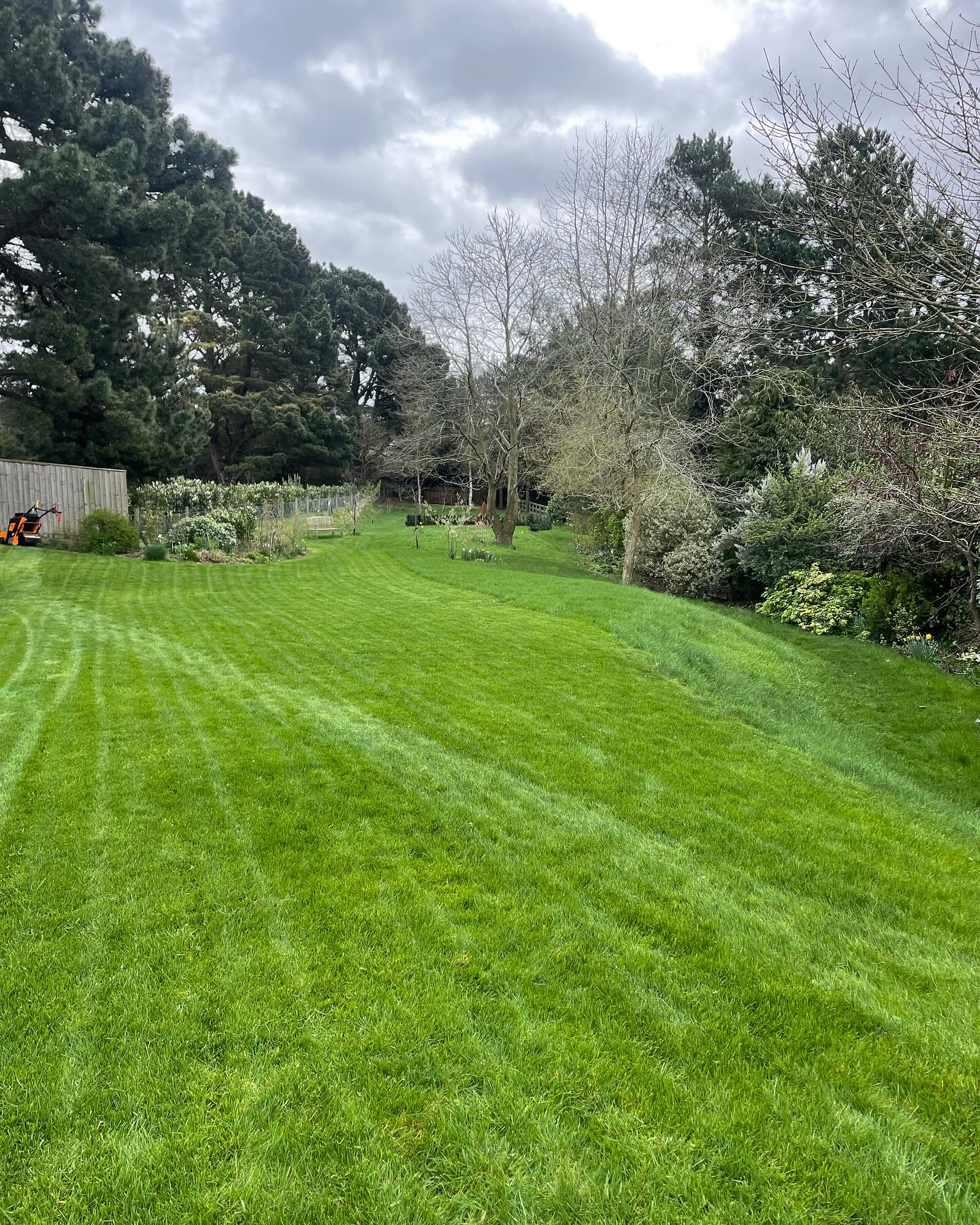
Week seven photo. No message. Just the photo and a single emoji — the one with the wide eyes.
I understood. The lawn had changed enough that it was visible just looking at the image. Dense coverage across the main yard. The back path filled in and green, indistinguishable from the rest of the lawn in the photo. The shaded patch still slightly thinner than the full-sun areas — that gap doesn’t fully close in one season — but genuinely covered and actively growing rather than the struggling sparse patch it had been all summer.
Week eight was the last Sunday photo. Karen sent it with a message that said: “I’m going to keep taking these even though you don’t need them anymore. I just want to watch it.”
The lawn at eight weeks from a September aeration and overseed in Greater Sudbury was unrecognizable from what we’d started with. Coverage was close to ninety-five percent across the main yard. Density was high enough that creeping weeds, which had been filling thin spots before we started, had nowhere to establish. The north-side shade patch was at maybe seventy-five percent — strong enough to hold through winter and continue filling in the following spring.
Total elapsed time from the day we did the work to the end of week eight: fifty-six days. The lawn went from thin and uneven with two significant problem areas to the best it had looked, by Karen’s own account, since she’d moved in.
What This Eight-Week Process Actually Teaches
The reason I’m telling Karen’s story isn’t to sell aeration and overseeding. It’s because the number one reason lawn renovation work fails in Sudbury isn’t the wrong product or bad timing or poor technique — it’s homeowner expectations in weeks two, three, and four.
People do the right work and then lose faith in it before it’s had time to finish. They mow too early, they walk on it too soon, they reduce watering because “it seems like it’s taking.” Or they look at the lawn at week three, decide it isn’t working, and either give up or do something that actively interrupts the process.
The work Karen had done — core aeration followed immediately by overseeding in early September — is one of the highest-value things you can do for a Sudbury lawn. The results are real and they’re lasting. But they require eight weeks of patience, consistent watering, and keeping traffic off the lawn while it establishes.
If your lawn went into this fall thin, patchy, or with problem areas that didn’t recover from the summer, September is still the right window to act. Once soil temperatures drop below about 10 degrees — which in Greater Sudbury usually happens somewhere between mid and late October — germination stops and the window closes until next spring.
The lawns that come back strong in May are almost always the ones that had work done in September. Not the ones that waited.
If you want to know whether your property is a candidate for aeration and overseeding this fall — or whether what you’re dealing with needs a different approach, like sod installation for areas too far gone to overseed — I’ll come out, walk the property, and give you a straight answer.
📞 Call or text me: 705-507-6787
Or fill out the free quote form here — I get back to everyone the same day.
— Ryan Lingenfelter
Owner, Cutting Edge Lawn & Landscaping
Garson, Ontario
Related Articles
