
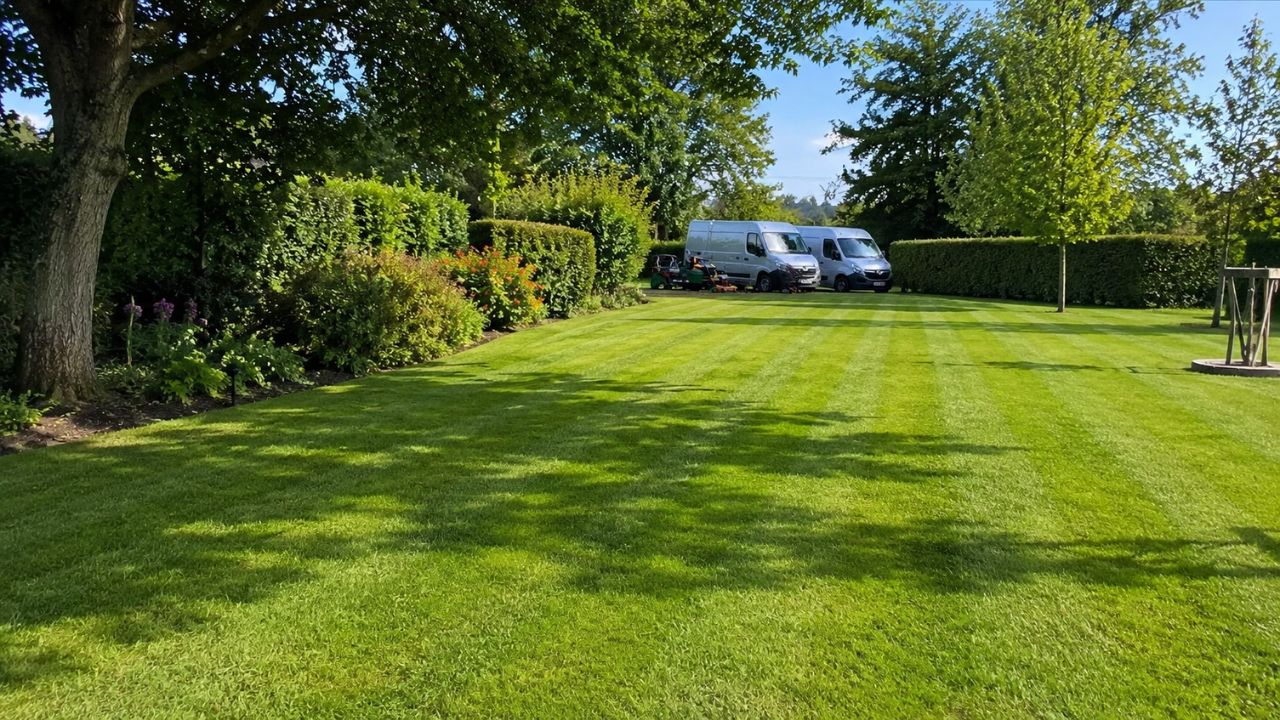
Some jobs you take and regret. Some jobs you turn down and wonder if you were wrong. And some jobs you turn down three times, and then the fourth time the phone rings you actually stop and think about it differently.
I’m Ryan Lingenfelter — I own Cutting Edge Lawn & Landscaping in Garson, Ontario. I’ve been working on lawns across Greater Sudbury since 2020, and in that time I’ve turned down work. Not a lot — but sometimes the right answer is no, and I’d rather say that up front than take money for something I can’t deliver on.
This is the story of a property in Val Caron I said no to three times before I finally said yes. And the reason I’m telling it is because what happened on that property explains, better than anything else I can think of, exactly how I decide what jobs to take and why I won’t take a job just because someone is willing to pay for it.
The First Time He Called
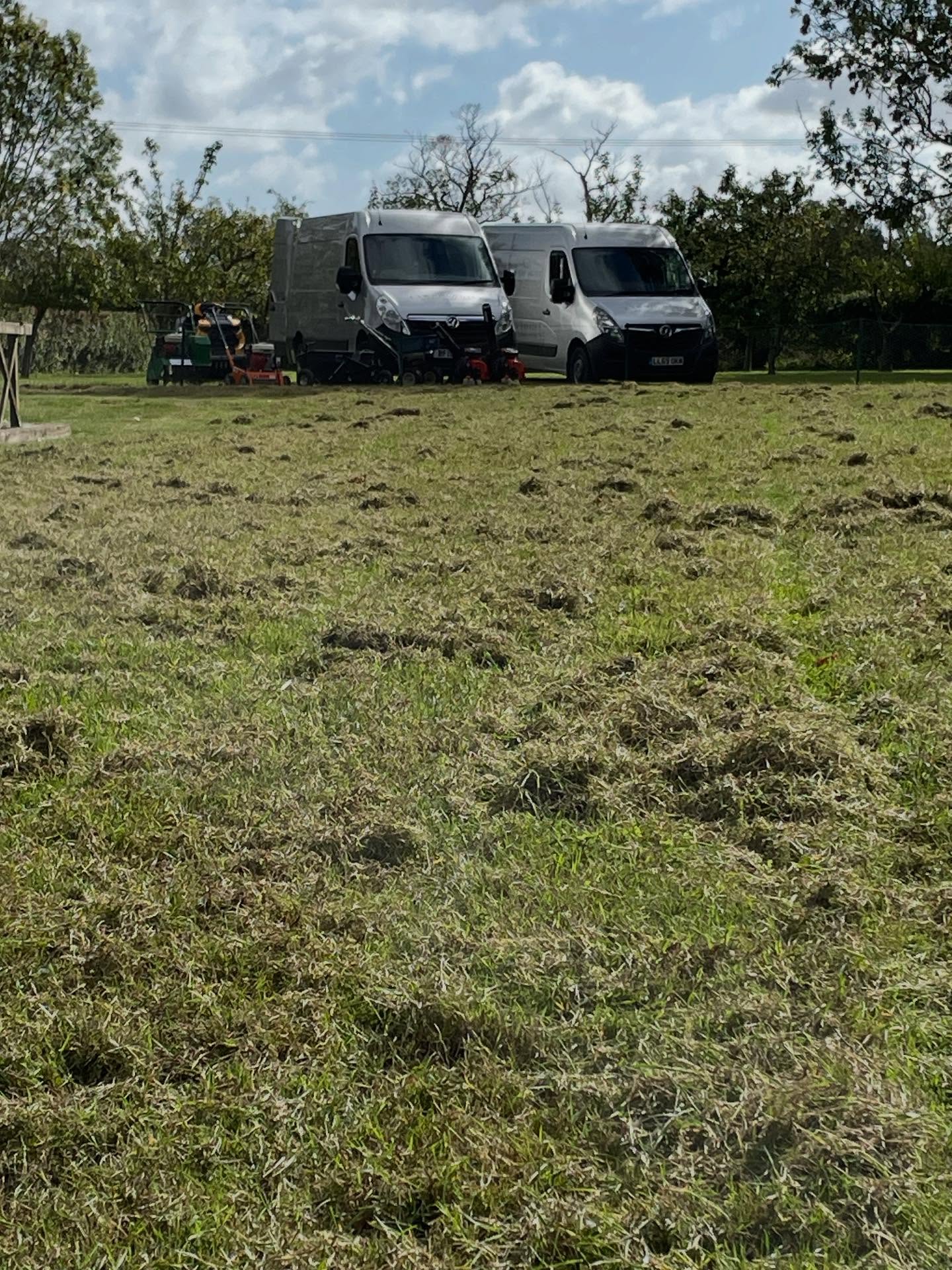
His name is Doug. He called me in May, two years ago now. He wanted grass cutting — regular maintenance, every two weeks, front and back.
I went out to do a quote. I pulled up, got out of the truck, and before I even got to the front door I could see the lawn from the driveway and I already had questions.
The coverage was maybe forty percent. Not thin — I mean genuinely less than half the yard was grass. The rest was bare soil, packed hard, with patches of creeping weed filling in the gaps the grass had left. There was a low section along the back fence line that was visibly lower than the rest of the yard, muddy-looking even though it hadn’t rained in four days. The edges along the driveway were completely bare — not thin, bare — in a strip about eight inches wide all the way across the front.
I walked the whole property. Pushed my thumb into the soil in about six spots. Barely moved anywhere I tried. The soil was as compacted as I’ve seen on a residential property — dense clay, no give, completely locked up.
Then Doug came out and said: “So what do you charge for cutting?”
And I had to have a conversation he wasn’t expecting.
I told him straight: I can’t take this property on for maintenance right now. Not because I don’t want the work — because putting a mower on this lawn in its current state every two weeks isn’t going to help it. It’s going to maintain a problem, not fix one. What this property needs before anything else is aeration, significant overseeding, and a real look at that drainage issue in the back. Once the lawn has coverage and the soil is in a condition where grass can actually grow, I can maintain it properly. Right now there’s not enough lawn to maintain.
He thanked me, said he’d think about it, and we hung up.
The Second and Third Times — Same Answer

He called again in August of that same year. Same ask — just grass cutting, just maintenance, same price conversation.
I remembered the property. I asked him whether he’d had any work done on the soil since spring. He hadn’t. He’d been cutting it himself in the meantime, short, every week and a half, and the lawn looked about the same as when I’d seen it — maybe slightly worse because the summer heat had pushed the sparse grass further into stress.
Same answer from me. I can’t maintain a lawn that doesn’t have the foundation to respond to maintenance. I’m not going to take your money every two weeks for a service that won’t move the needle. If you want to talk about what actually needs to happen first, I’m here for that conversation. If you just want someone to cut it as-is, I’m probably not the right fit right now.
He called a third time the following spring — May again, almost exactly a year after the first call. I went back out. Walked the property again.
A little better than the year before. He’d thrown some seed down in fall — I could see it had taken in a few patches, maybe added five or eight percent coverage in the best areas. The compaction was the same. The drainage issue in the back was the same. The bare edges were the same.
I gave him the same honest read. The overseeding he’d done himself had helped slightly but it was working against compacted soil — the seed that germinated did so despite the conditions, not because of good conditions. For the lawn to actually change, the soil needed to change first.
He said he’d call me back.
I didn’t hear from him for four months.
What Changed — and Why I Finally Said Yes
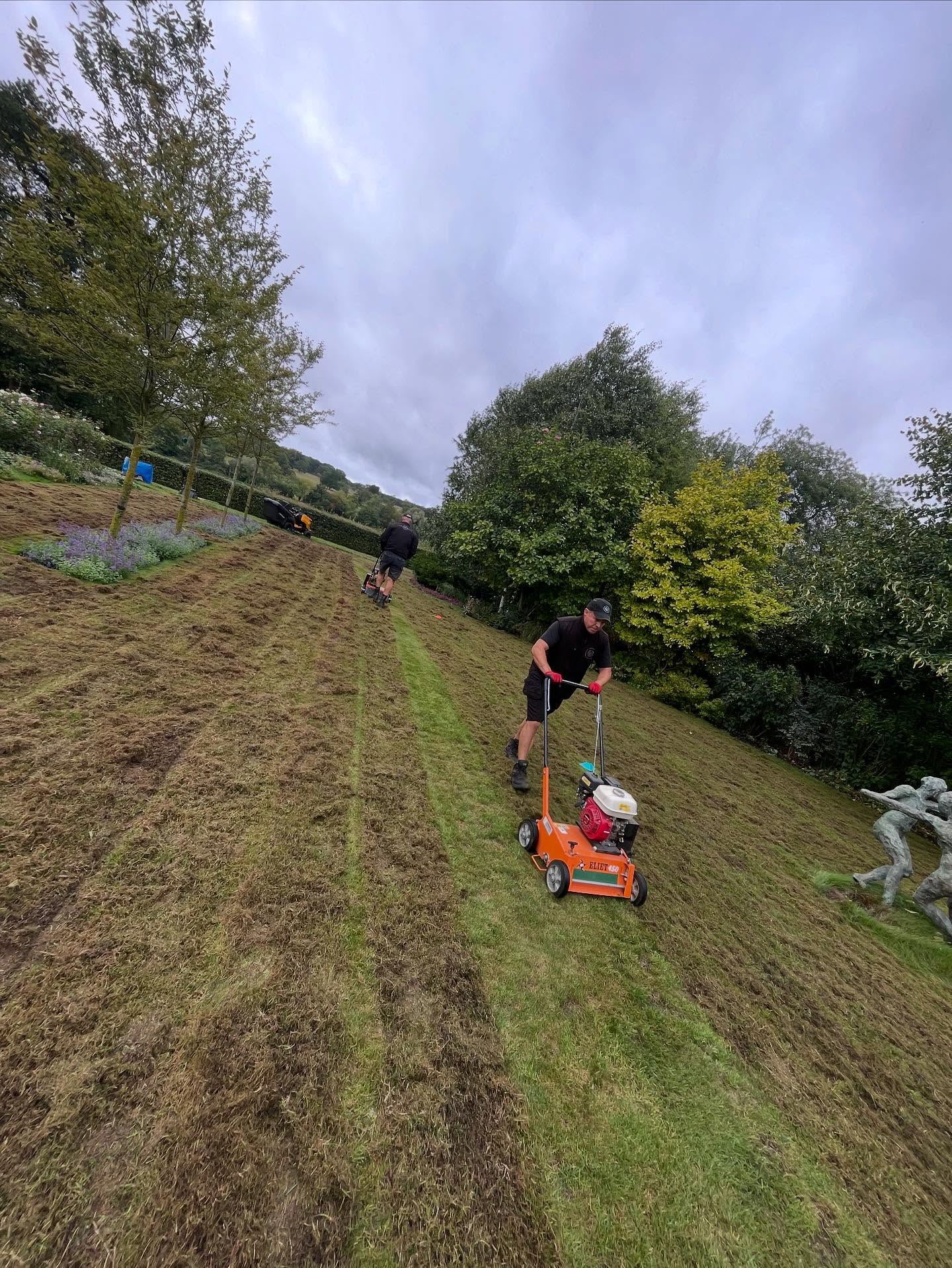
He called me in September of that second year. Different conversation from the start.
He said: “I’ve been thinking about what you said every time I look at this lawn. I want to do it the right way. Tell me what it actually needs and what it’s going to cost.”
That’s a different ask than “what do you charge for cutting.” That’s someone who’s decided they want the problem fixed, not just managed. And that’s a job I can take and actually deliver on.
I went back out. Walked it again — fourth time on this property now, which is not something I do for every quote, but I wanted a fresh look going into fall. September is one of the best windows for core aeration and overseeding in Greater Sudbury. Soil is still warm from summer, cool-season grasses are coming out of heat stress and into their most active growth period, and new seed establishes quickly before the ground freezes.
Here’s what I told Doug the property needed, in order:
- Core aeration across the entire lawn. The compaction was the root cause of everything else. Until the soil structure was opened up, nothing else we did would work as well as it should. Water couldn’t penetrate. Roots couldn’t push deep. Seed couldn’t make soil contact. Aeration was the first step, non-negotiable.
- Topdressing with compost in the bare areas. The spots with no coverage at all needed organic matter introduced into the soil before seed would establish reliably. Straight seed onto bare compacted clay in those patches was the reason his DIY overseeding hadn’t fully taken — the seed had nowhere healthy to root into.
- Heavy overseeding immediately after aeration. The cores pulled from the soil create perfect seedbed conditions — seed falls into the holes, makes direct soil contact, germinates faster. We seeded at roughly double the standard rate given how much bare area there was. More seed going down in September means more coverage by the time the ground freezes.
- A drainage solution for the back low spot. This one was going to be a longer conversation. A depression that stays wet after every rain isn’t a grass problem — it’s a grading problem, and grass alone won’t fix it. I told him we could address it with a grading adjustment and some topsoil, but that it was a separate job from the aeration and overseed and would cost more. He decided to deal with it in spring.
- A fall fertilizer application. A root-building slow-release formula to support the new seed and strengthen existing grass heading into dormancy. What happens to root development in fall is what determines how fast everything comes back in May.
I quoted him the full job. He said yes the same day.
What the Property Looks Like Now
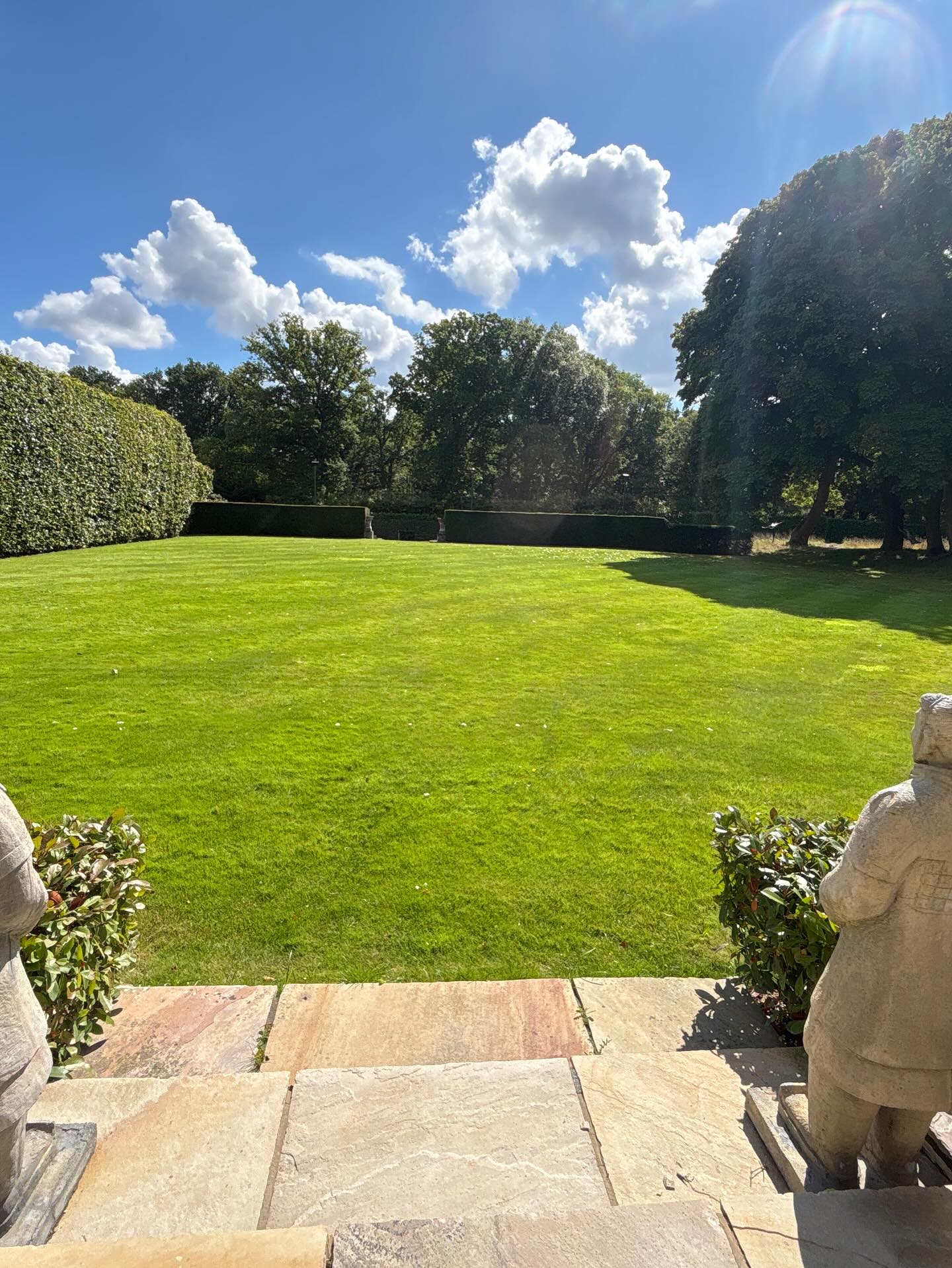
I’ve been maintaining Doug’s lawn for a full season now — regular grass cutting, one aeration in spring, a fertilizer program through the season. It looks like a different property.
The coverage across the front is close to ninety percent now. The bare edges along the driveway filled in through last spring — new grass establishing in areas that had been bare for at least two years before we started. The patchy, thin texture that was there when I first walked the property is gone. The lawn is dense enough now that the weeds that used to creep in and fill the gaps don’t have gaps to fill.
We did the grading work in the back this spring. Brought in topsoil, corrected the low spot, sodded the area rather than seeding it because Doug wanted it done fast and sod was the faster path to coverage in a spot that had been problem area for years. That section is now level, drains properly after rain, and looks the same as the rest of the yard.
Doug told me a few weeks ago that he wished he’d done it two years earlier. I told him the same thing I believe about most lawn renovation work: it only works when the homeowner is ready to do it properly. If he’d hired me in that first May when all he wanted was the grass cut, I’d have been mowing weeds and bare soil every two weeks and he’d have been paying for a result that wasn’t going to come.
The timing was right when he called in September and asked for the honest answer. That’s when the job made sense to take.
Why I Turn Down Work Sometimes — And What It Means When I Take It
I’m not in the business of maintaining problems. I’m in the business of fixing them and then maintaining the result.
When I turn down a job, it’s not because I don’t want the work. It’s because I can see that the work being asked for won’t produce the result the homeowner is expecting, and I’d rather say that clearly up front than collect a cheque for two seasons while nothing changes.
Not every property I look at is a Doug situation. Most lawns I quote are in reasonable shape and maintenance is exactly the right service. But when I walk a property and what I see tells me the foundation isn’t there — the soil is locked up, the coverage is too far gone, there’s a drainage issue that’s going to undercut everything else — I’m going to tell you that, even if it’s not what you called me about.
Because the alternative is taking your money, cutting your grass every two weeks, and watching the lawn stay exactly the same while you wonder why it never seems to get better.
If you want an honest read on your property — what it actually needs, what it doesn’t, what order things should happen in — that’s the conversation I’m here for.
📞 Call or text me: 705-507-6787
Or fill out the free quote form here — I get back to everyone the same day.
— Ryan Lingenfelter
Owner, Cutting Edge Lawn & Landscaping
Garson, Ontario
Related Articles
- The First Thing I Do When I Pull Up to a New Property in Sudbury
- A Lively Homeowner Called Me in September Saying Her Lawn Looked Worse Than Spring
- This Is the Week Most Sudbury Lawns Start Struggling — Here’s How to Get Ahead of It
- Core Aeration Services in Greater Sudbury
- Sod Installation in Greater Sudbury
