

By Ryan Lingenfelter · Cutting Edge Lawn & Landscaping, Garson, Ontario · June 2026
This spring I went out and quoted 52 properties across Greater Sudbury. Garson, Val Caron, Hanmer, Lively, Chelmsford, Azilda, Capreol — all over the map. Different sizes, different ages, different histories of how they’d been looked after.
On most of them, I found the same problem.
Not a similar problem. The same one. Showing up in slightly different forms but with the same cause, the same consequences, and the same fix. And on almost every property where I found it, the homeowner had no idea it was there — even when they’d been maintaining the lawn carefully for years.
Here’s what it was, why it matters, and how to check your own lawn for it today.
What I found on property after property
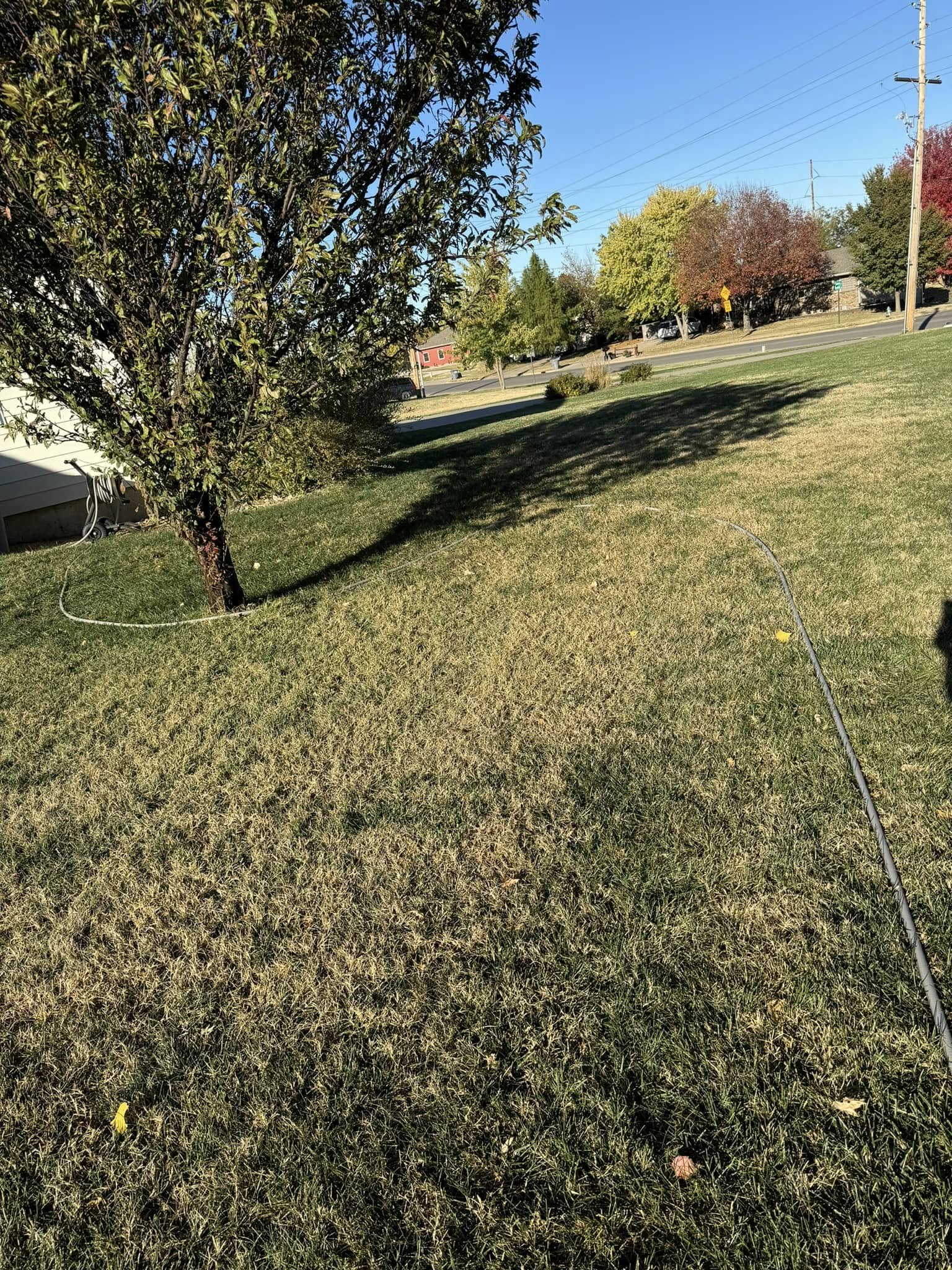
The problem was thatch. Specifically, a thatch layer that had built up past the point where it was helping the lawn and into the range where it was quietly working against it.
Thatch is the layer of dead and partially decomposed organic material — old grass stems, roots, clippings — that accumulates between the soil surface and the base of the living grass above it. A thin layer, under about half an inch, is normal and actually beneficial. It insulates the soil, holds a bit of moisture, and protects the crown of the grass plant from temperature extremes.
But when thatch builds past half an inch — and on the properties I visited this spring it was regularly sitting at an inch, an inch and a half, even two inches on lawns that hadn’t been aerated in years — it stops being helpful and starts being a problem.
Of the 52 properties I visited, I found problematic thatch levels on 38 of them. That’s more than seven out of ten lawns. Most of those homeowners were actively maintaining their lawns — mowing regularly, fertilizing seasonally, some of them watering on a schedule. None of that was wrong. But the thatch underneath was limiting what any of those inputs could actually do.
Why nobody noticed it was there
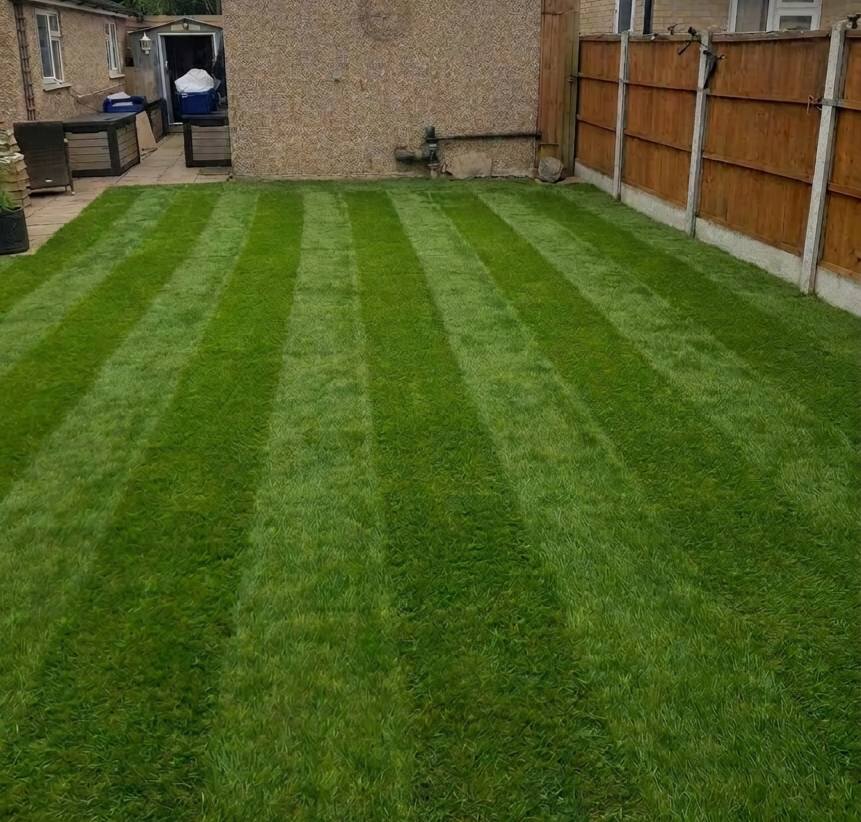
Here’s the thing about thatch that makes it so easy to miss — in spring, it doesn’t look like a problem at all.
In May and early June, a lawn with two inches of thatch can look genuinely healthy. The temperatures are mild, the soil holds moisture easily from snowmelt and spring rain, and the grass grows aggressively in those conditions almost regardless of what’s happening underneath. The thatch layer stays moist in cool weather, so water moves through it reasonably well. The grass roots grow into the thatch itself because conditions are good enough that they don’t need to push deeper. Everything looks fine.
So when I showed up at a property in May and told a homeowner their lawn had a significant thatch problem, a lot of them looked at me like I was making something up. The lawn was green. It had been green all spring. The previous company that came out hadn’t mentioned anything. Why was I bringing up a problem they couldn’t see?
I’d get on my knees, part the grass with my fingers, and show them. Right there between the soil and the living grass — a dense, grey-brown mat of compressed organic material. Some of them had never looked at their lawn that way before. Some of them had been maintaining that lawn for a decade and genuinely didn’t know it was there.
The reason nobody catches it is that thatch builds slowly. It doesn’t appear overnight. It accumulates over years — a little more each season — and the lawn adjusts gradually to working around it. By the time it’s thick enough to cause real damage, the lawn has been compensating for it so long that the decline feels like a gradual mystery rather than a traceable cause.
The other reason it gets missed is that most lawn care services that come to fertilize or treat for weeds aren’t assessing the lawn at that level. They’re applying a product and moving on. If they notice the thatch, it’s not usually in their scope to address it. So it keeps building.
What thatch does to a lawn over a full summer
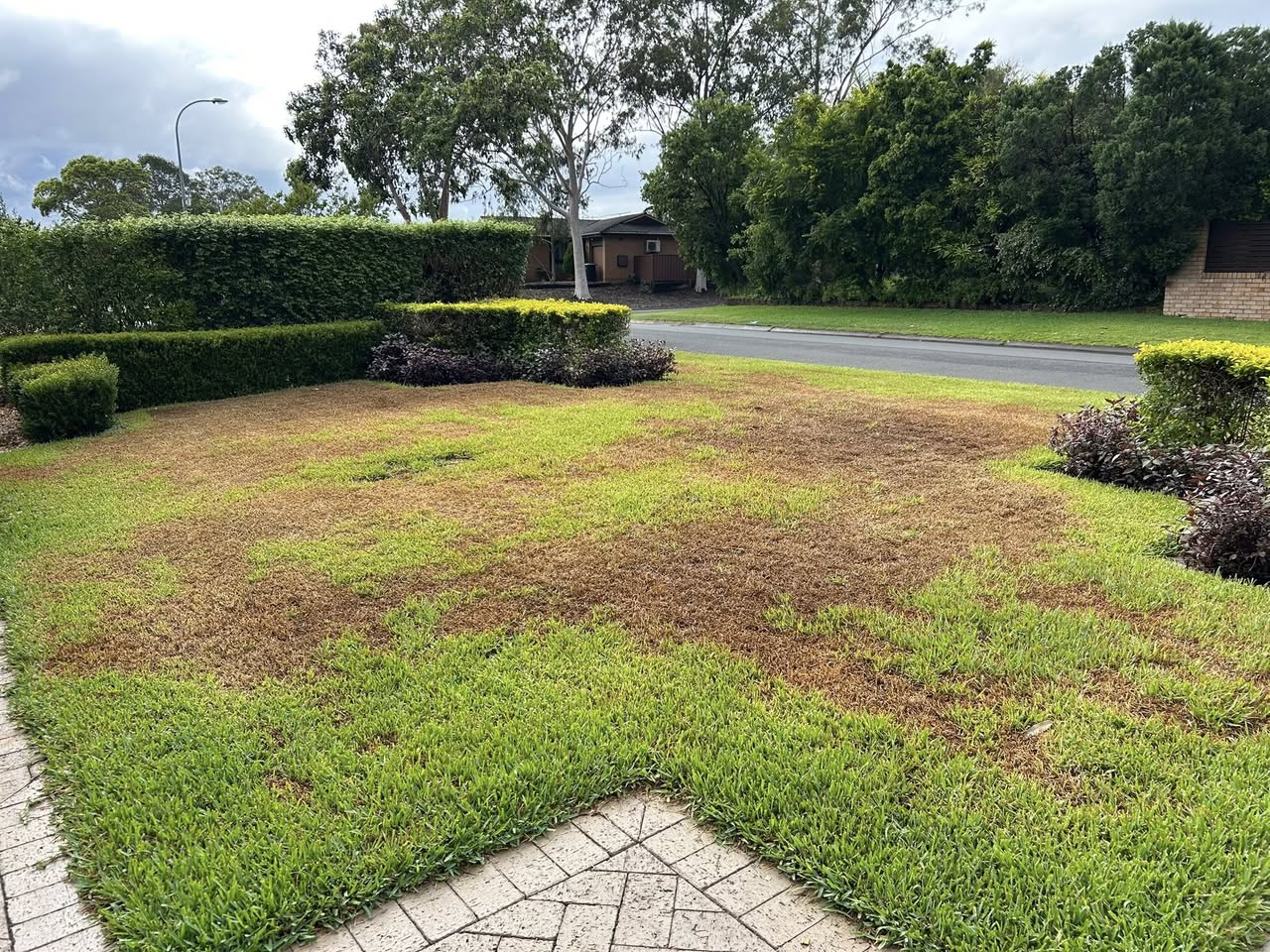
In spring, thick thatch is mostly invisible in its effects. In summer, it becomes the reason a well-maintained lawn falls apart.
Here’s the sequence I’ve watched play out on lawns across Greater Sudbury, season after season.
July arrives. Temperatures climb. A stretch of hot, dry weather hits — the kind that happens most summers in Sudbury, usually for one to two weeks in mid-July. The homeowner has been watering on schedule. The fertilizer went down in May. The lawn looked great three weeks ago.
Then the thatch dries out.
When a thick thatch layer dries, it becomes nearly hydrophobic — it repels water rather than absorbing it. The sprinkler runs. The water hits the thatch surface and runs sideways off the lawn rather than soaking through to the soil. The homeowner increases watering frequency, thinking the lawn needs more water. The water still isn’t getting through. The grass roots — which have been growing into the thatch layer rather than deep into the soil because the thatch has been the moisture zone all spring — are now cut off from water entirely.
Within a week of that dry stretch the lawn starts showing stress. The blue-grey tint that means the grass is losing more water than it’s taking in. Then the yellowing. Then the browning in the sections with the thickest thatch, usually the spots that get the most sun and dry out fastest.
Fertilizer has the same problem. Nutrients applied to a lawn with thick thatch get trapped in the organic layer rather than moving into the soil where roots can access them. The homeowner sees the fertilizer isn’t working and either applies more — which makes the situation worse — or gives up on it and assumes their soil just doesn’t respond.
Weed pressure increases too. Thin, stressed turf in summer creates gaps that weeds exploit. Dandelions and creeping charlie don’t care about thatch. They root through it fine. The grass can’t compete effectively from a weakened position and the weeds consolidate their foothold through July and August.
By September the lawn that looked good in May has patchy brown sections, visible weed coverage, and a homeowner who can’t figure out what went wrong. They spent money on fertilizer. They watered. They cut it regularly. The lawn got worse anyway.
The thatch was the reason. It was always the thatch.
How to check your own lawn right now — and what to do if you find it
Checking for thatch takes about thirty seconds. Go to your lawn, find a section in an open area away from the edges, and crouch down. Part the grass with your fingers and push them down toward the soil surface. Look at what’s between the base of the living grass blades and the soil.
If you can get your fingers to the soil easily and the material between is minimal — less than half an inch — your thatch level is fine. Nothing to do there.
If you feel a dense, springy, matted layer before your fingers reach soil — and that layer is more than half an inch thick — you have thatch that’s worth addressing. If you can’t get your fingers to the soil at all without real resistance, the layer is significant and it’s almost certainly affecting your lawn’s performance.
What to do about it depends on how thick it is.
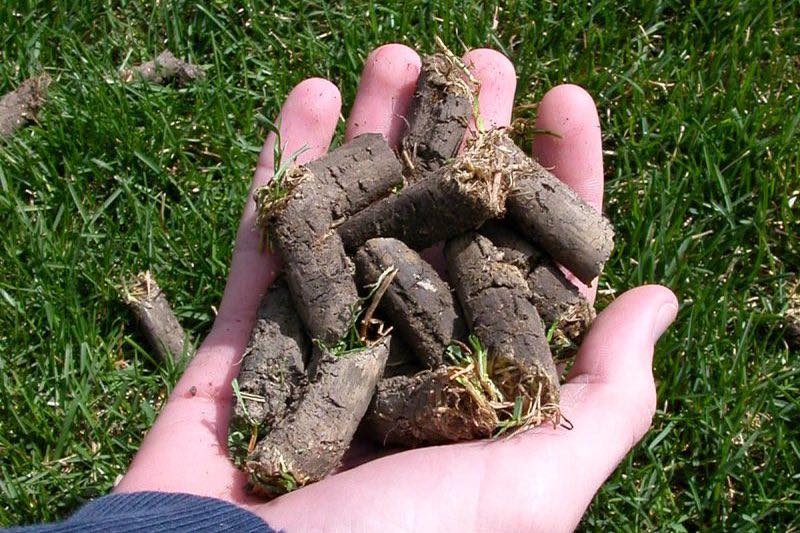
Half an inch to three quarters of an inch: Core aeration in late May to mid-June handles this well. Aeration pulls plugs of soil to the surface and creates channels that introduce oxygen and soil microbes into the thatch layer. Those microbes decompose the thatch naturally over the following weeks. One properly timed aeration per year keeps thatch from building to problem levels on most lawns in Sudbury.
An inch or more: Power dethatching first, then aeration. A power dethatcher — also called a vertical mower or scarifier — uses rotating tines to pull the thatch physically out of the lawn. It’s aggressive and the lawn looks rough immediately after, which is why a lot of homeowners avoid it. But on a lawn with thatch over an inch, aeration alone won’t resolve it fast enough. Dethatch, then aerate, then overseed into the open ground while the soil is disturbed. The lawn recovers within three to four weeks and comes back noticeably stronger.
The timing matters. In Greater Sudbury, late May to mid-June is the window for this work. The soil is consistently warm, the grass is growing actively and can recover quickly from the disturbance, and you’re ahead of the summer heat that turns a stressed lawn into a damaged one. Doing this work in September is better than not doing it, but the recovery window before dormancy is short. Spring is when it counts.
If you’re in Greater Sudbury right now and you haven’t checked your thatch level, go check it today. Part the grass, look at what’s there, and be honest with yourself about what you find. If it’s over half an inch and you haven’t aerated this season, that’s the most useful thing you can do for your lawn before July gets here.
If you want me to come out and assess it properly — walk the whole property, check the thatch, look at the compaction, tell you what I actually think needs to happen — give me a call. No charge for the visit, no obligation to book anything. I’ll just tell you what I see.
📞 705-507-6787 | Get a free quote online
— Ryan Lingenfelter
Owner, Cutting Edge Lawn & Landscaping
Garson, Ontario · 705-507-6787
