
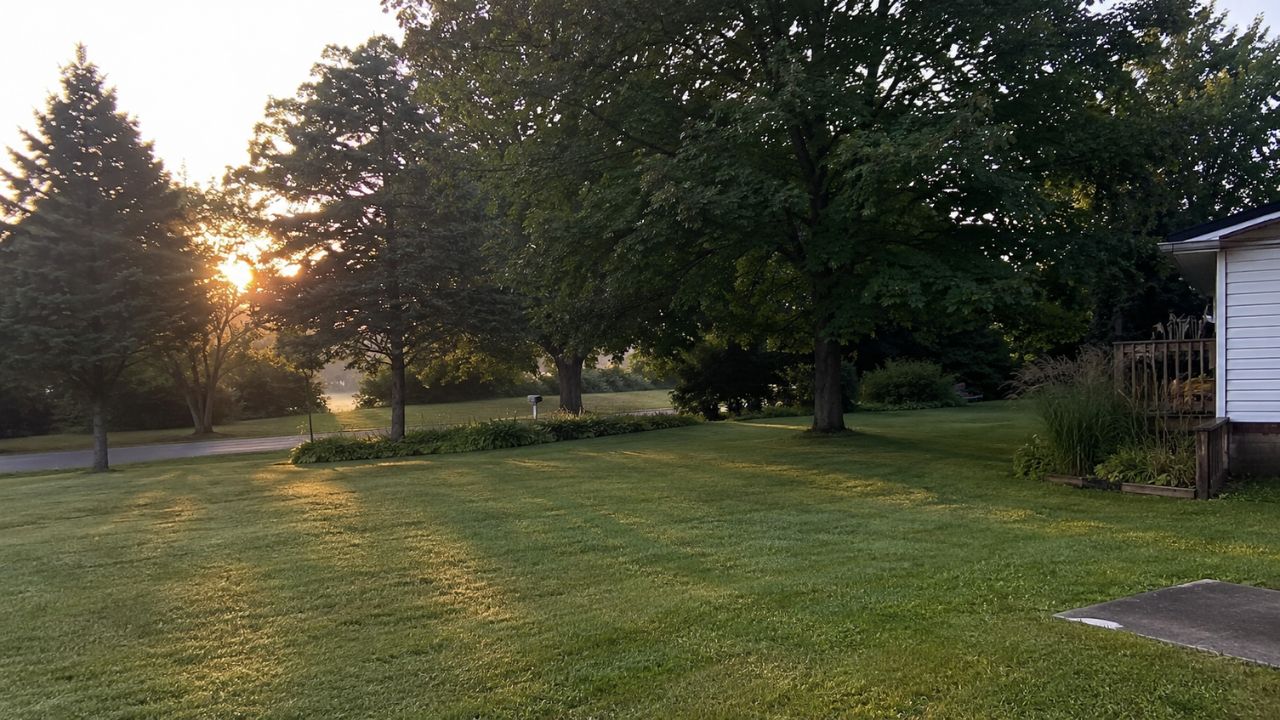
I pull up to a lot of properties across Greater Sudbury. Most of the time, nobody is outside when I arrive — people are inside having coffee, getting ready for work, going about their morning. I knock or ring, introduce myself, get access to the property, and we get started.
That’s how it usually goes.
This one was different. I pulled onto the street in Azilda at seven in the morning, and before I’d even shut off the truck, I could see someone standing in the front yard. Standing there, arms crossed, watching the street.
Her name is Carol. She’d been up since five-thirty, she told me later. She’d made coffee, sat at her kitchen table, and tried to read the news. She couldn’t focus. She kept looking out the window at the front lawn. By six-fifteen, she’d given up on sitting inside and just came out to wait.
I want to tell you Carol’s story because I think it says something real about what a lawn actually means to someone — and why some people carry this particular kind of weight for years before they finally do something about it.
Why She Was Already Outside at 7am
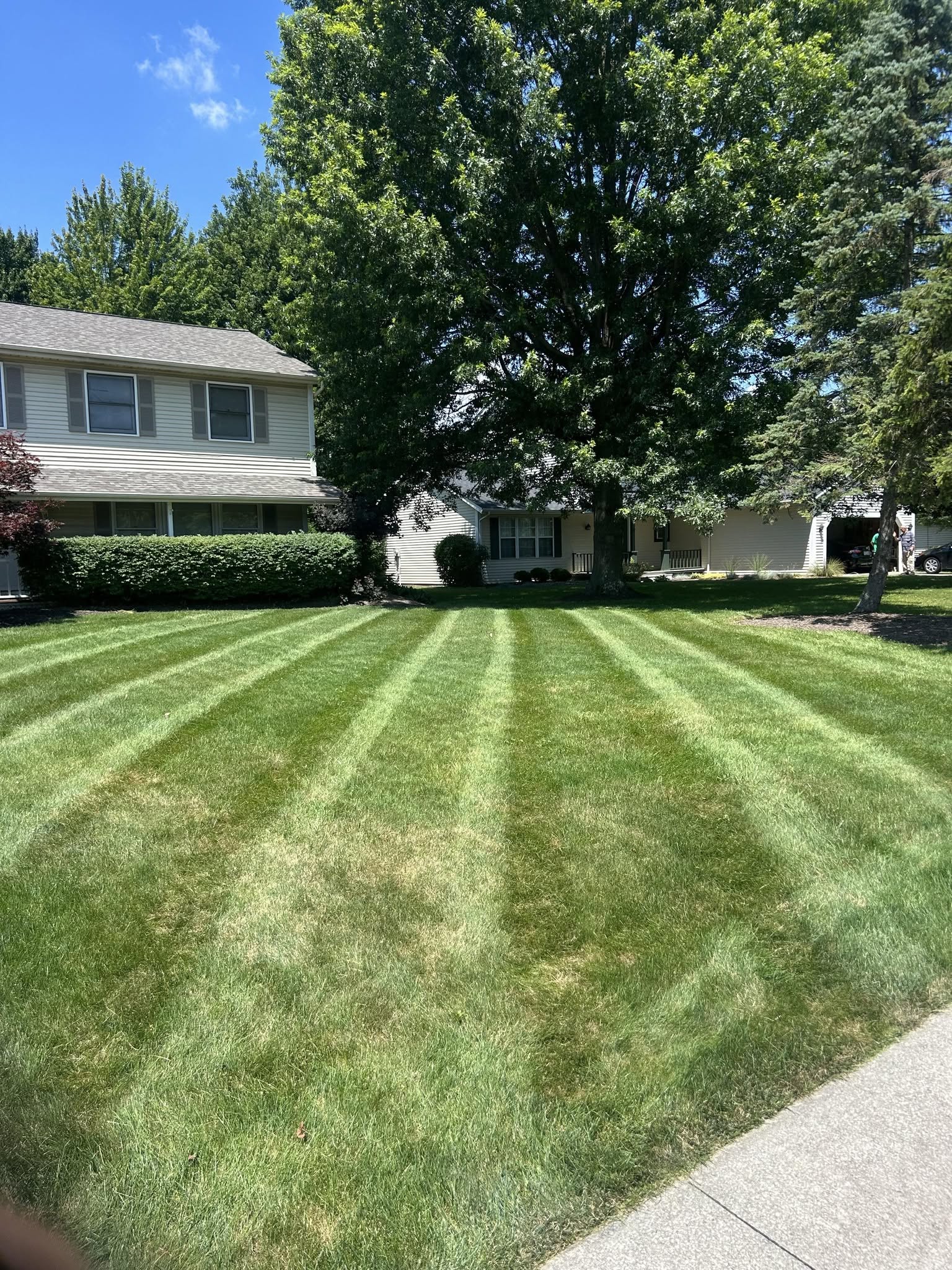
Carol was sixty-three years old. She’d lived in that house in Azilda for twenty-six years. She and her husband had moved in when their kids were young, and the lawn — the whole yard — had been part of the life they’d built there. Summers in the backyard. The kids playing. Neighbours stopping by.
Her husband had passed away four years before she called me. He’d been the one who looked after the yard. Not because that was some kind of arrangement they’d made — just because he liked it. It was one of the things he did. Saturday mornings with the mower. Spring cleanup. He’d aerated every fall for as long as Carol could remember.
After he passed, Carol had tried to keep up with it. She’d hired someone for the first summer — a company she’d found on Facebook. They’d mowed but hadn’t done much else and weren’t particularly reliable. The second summer she’d tried someone else. Same result, more or less.
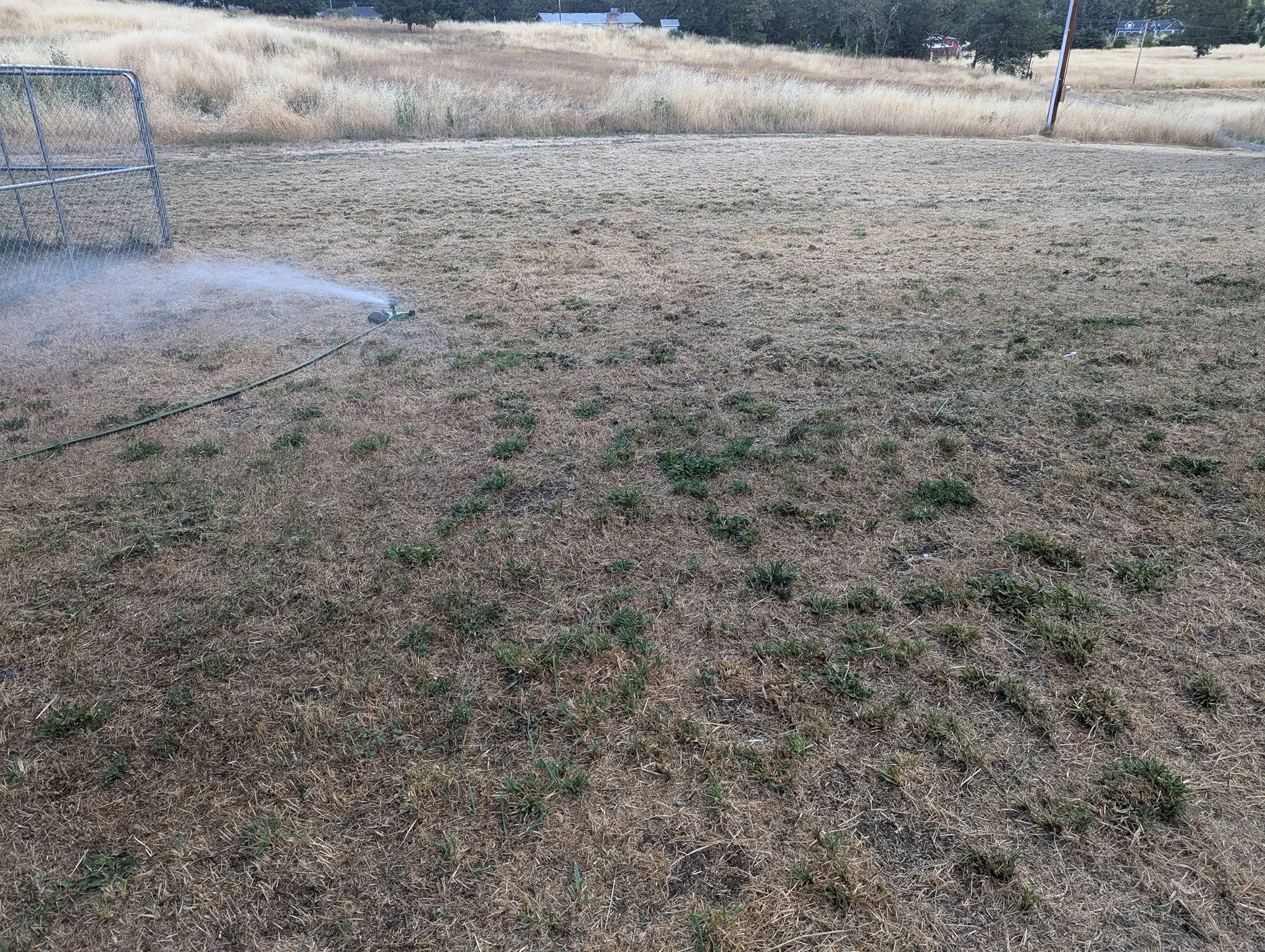
By the third and fourth year, the lawn was visibly declining. The grass was thin and patchy. A section in the back had started going bare. The front had weeds Carol didn’t recognize establishing themselves in the thin spots. She’d bought seed at the hardware store twice and spread it herself, following the instructions on the bag. It hadn’t taken.
She told me all of this while we walked the front yard together that morning. She’d been carrying it for four years — the declining lawn, the failed attempts to fix it, the way it looked when she pulled into her own driveway. It wasn’t just the lawn. The lawn was connected to everything.
“I kept thinking I should call someone properly,” she said. “I just kept not doing it.”
She’d found us through a Google search two weeks earlier. She’d read several of the articles on the website before calling — the one about the Sudbury homeowner who apologized when I arrived, the one about the job I’m most proud of in five years. She said she’d read those and felt like she understood what kind of company she was calling before she picked up the phone.
When I’d confirmed the booking for seven in the morning, she’d been so relieved she’d marked it in her calendar in red and set two alarms.
Which is why she was already standing in the yard when I pulled up.
What the Lawn Looked Like — and What Had Caused It
Once Carol had told me the background, we walked the full property together. I wanted her with me while I assessed it so she could see what I was seeing and understand what had actually happened and why.
The front lawn was about 800 square feet — not large. The back was bigger, closer to 1,400 square feet. Combined, roughly 2,200 square feet of lawn to assess.
The Front
The front lawn was thin but not dead. Coverage was maybe 50 to 60 percent — significant bare and semi-bare patches, but the majority still had some grass present. The weeds Carol had mentioned were plantain and creeping charlie primarily, both of which establish aggressively in thin, compacted turf where the grass can’t compete.
The screwdriver test stopped at about one and a half inches in most spots. Clay soil — typical for Azilda — compacted over four winters without aeration. The thatch layer was building back toward three quarters of an inch. Not catastrophic, but thick enough to be preventing the overseeding Carol had tried from making soil contact. The seed had germinated in the thatch rather than the soil and died when it dried out. That’s why it hadn’t taken — not because the seed was wrong or Carol had done it incorrectly.
The Back
The back was more serious. The bare section Carol had described was about 200 square feet near the back right corner — completely bare soil, some moss starting to establish at the edges. The screwdriver test there stopped at barely an inch. In one spot I could barely get the tip in at all.
I checked the drainage. The back right corner was the low point of the yard — water from two sides was directing toward it. Four years of water pooling in that corner on compacted clay had created a zone where the soil was alternately waterlogged and then baked dry. Nothing had grown there because nothing could.
This is the pattern I find consistently across properties in this region — and I’ve documented it in detail in what almost every struggling Sudbury property has in common. Compaction, thatch buildup, and an unresolved drainage problem — these three things, working together, explain the majority of lawn failures I see across Greater Sudbury.
I walked Carol through each finding as I worked through the property. I showed her the screwdriver test. I showed her the thatch. I walked her to the back corner and explained what the drainage issue was doing to the soil. I watched her connect the pieces — four years of what had felt like mysterious, intractable lawn failure suddenly having specific, identifiable, fixable causes.
She said: “So it wasn’t just me. It wasn’t because I was doing something wrong.”
I told her no. The overseeding hadn’t worked because the conditions underneath weren’t right for it to work. The lawn had declined because the maintenance it needed — aeration, drainage attention — hadn’t happened. Not because she’d failed. Because the right work hadn’t been done.
She nodded slowly and said: “Okay. What do we do?”
What We Did — and How the Day Went
The scope of the work was clear from the assessment. The back corner needed drainage correction before any sod work. The rest of the back lawn needed full removal and replacement — the compaction was too severe and the bare coverage too extensive for overseeding to produce a good result in a reasonable timeframe. The front lawn, with its better coverage, was a candidate for aggressive aeration and overseeding rather than full replacement.
We broke it into a clear sequence:
Morning — Drainage and Back Lawn
Started with the drainage correction in the back corner. Built up the grade with quality topsoil to redirect water away from the corner toward the fence line. Extended the drainage path so water could exit the property rather than pool. This took about ninety minutes and needed to be done before anything else went in that area.
Then full surface removal of the back lawn — sod cutter across the entire backyard. Everything off. Carol came out to watch this part. She stood at the edge of the patio and watched the old lawn get stripped away in rows. It looked dramatic. It always does. But it was necessary — there was no point trying to save a lawn that had been compromised this thoroughly at the soil level.
Tilling the backyard — four to six inches deep, two passes. Then topsoil spread and incorporated throughout. Starter fertilizer worked into the surface layer. By noon, the backyard was prepped and ready.
Afternoon — Sod in Back, Aeration and Overseed in Front
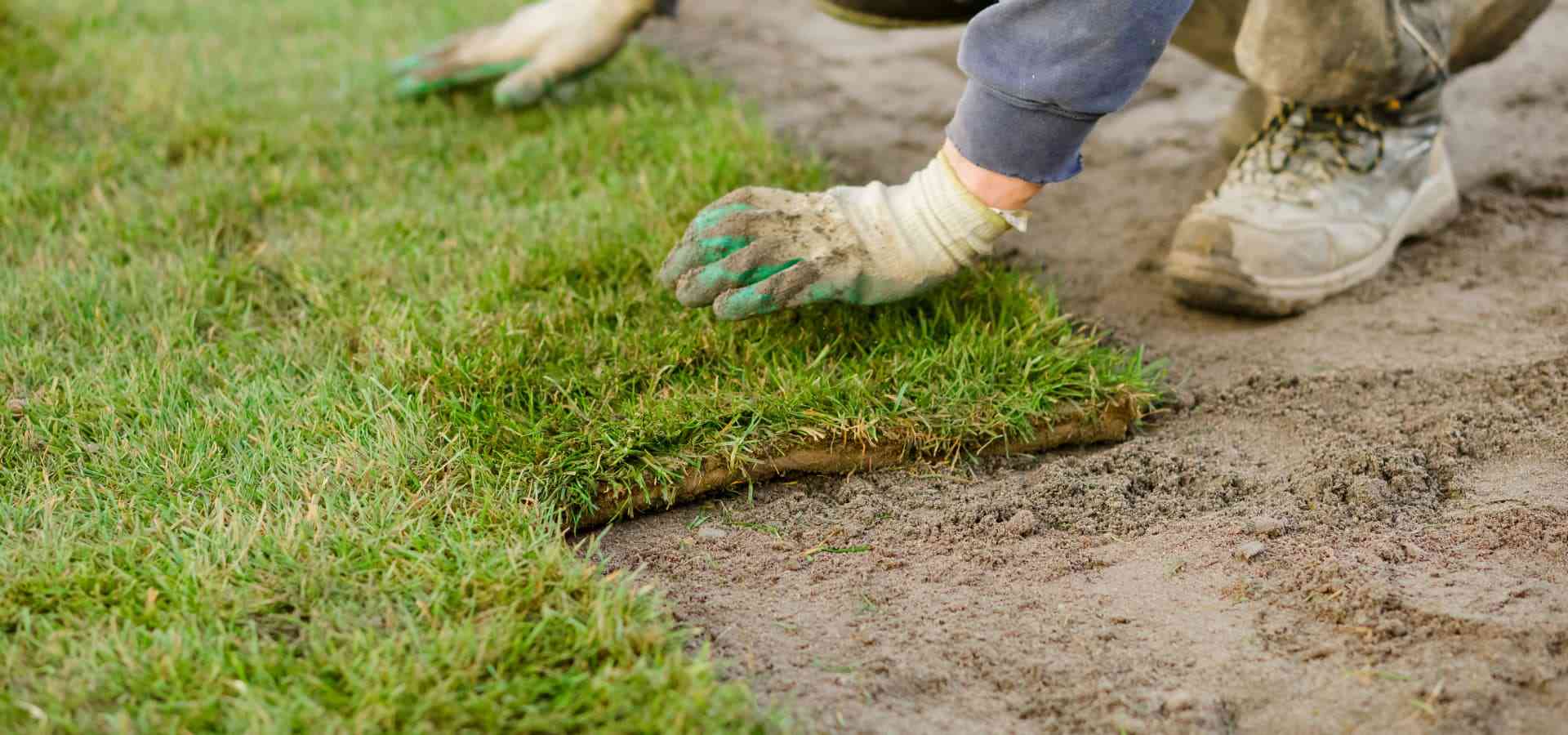
Fresh sod delivered at noon — ordered for same-day delivery and installation. I’ve explained in detail why the timing window for rolled sod matters so much in how long sod can stay rolled up before it dies. Same day, every time.
Laid the entire backyard through the afternoon. Staggered joints, tight seams, extra care around the drainage-corrected back corner to follow the new contour cleanly. Rolled after installation.
While sod was going down in the back, I ran core aeration on the front lawn — two passes in different directions. Then broadcast quality overseeding mix across the entire front at full rate, worked lightly into the aeration holes with a rake. Starter fertilizer applied.
The approach for the front — aeration and overseeding rather than full replacement — was the right call given that 50 to 60 percent coverage was still present. I’ve covered when overseeding works versus when full replacement is needed in landscaping services in Sudbury — what’s included and what to expect. The coverage threshold matters, and the front lawn was still above it.
By four-thirty in the afternoon, both the front and back were done. Final cleanup — blow-off of all hard surfaces, edges tidied, every piece of equipment off the property.
Total time on site: nine and a half hours.
What She Said When We Finished
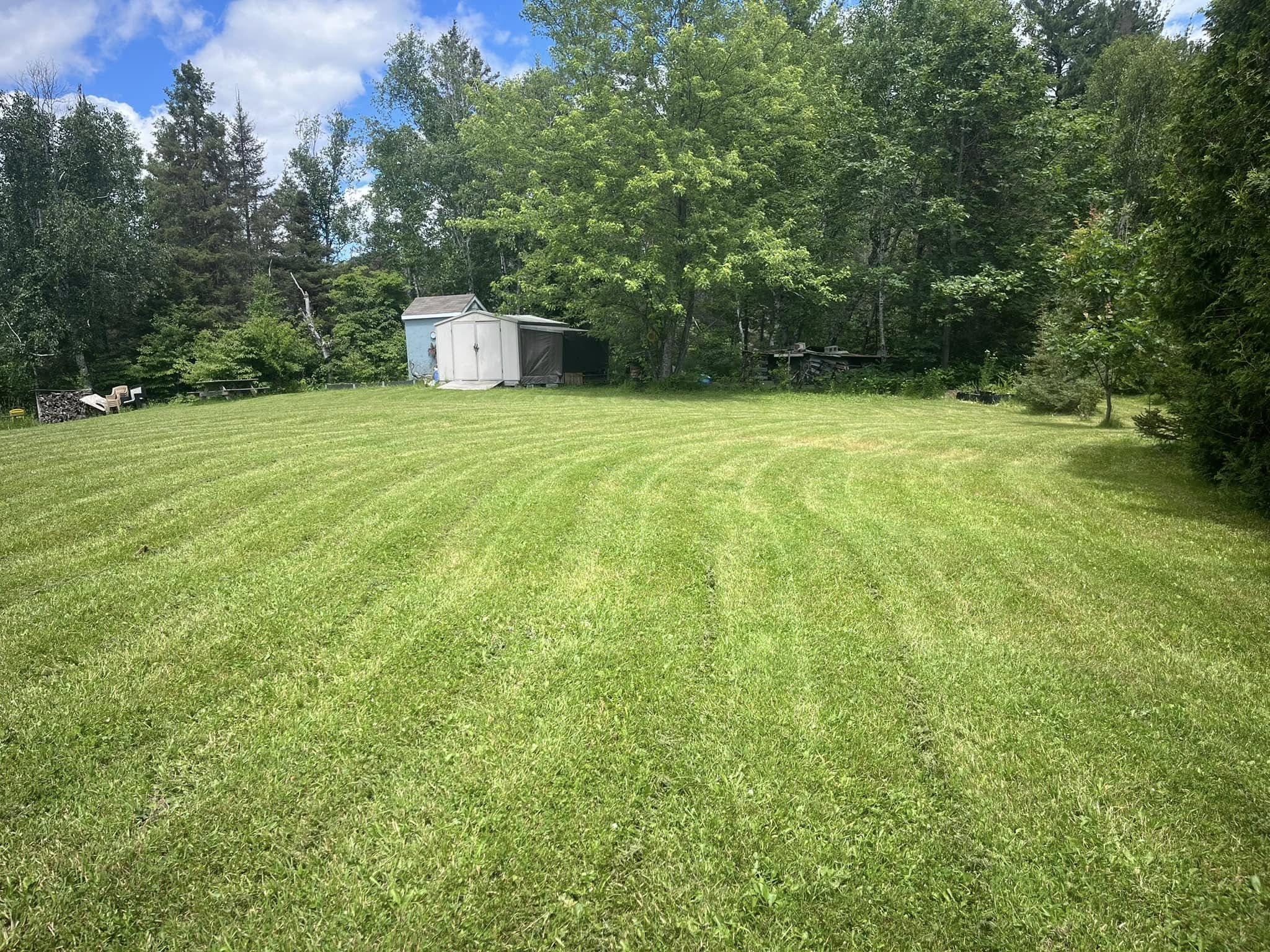
Carol had been in and out during the day — watching from the patio for a while, going inside, coming back. When I knocked on the door to let her know we were done and to walk through the aftercare, she came outside and stood at the edge of the front lawn for a moment before saying anything.
The front had a fresh overseeded look — not the instant green of the sod in the back, but clean and prepared. The back was fully green. The bare corner was covered. The property looked like someone lived there and cared about it.
She stood there quietly for a moment. Then she said: “He would have loved this.”
Same words, almost exactly, that I’d heard from Margaret — the homeowner whose story I told in the job I’m most proud of in five years of doing this work. Different person, different property, different part of Greater Sudbury. Same words.
I’ve thought about that a lot. About how a lawn can carry that kind of weight for someone — not as a piece of grass, but as a connection to someone they loved and a version of their home they want to get back to.
I walked Carol through the watering schedule for the new sod — twice daily for the first week, once daily for week two, every other day for week three. The full schedule is in what happens if you don’t water new sod in Sudbury’s first two weeks. She wrote it down carefully and said she’d set reminders on her phone.
I also told her about the fall maintenance schedule — aeration booked for October, which would address any compaction that had rebuilt through the first season and set the lawn up properly for winter. The full sequence is in how to prepare a Sudbury lawn for winter — the October checklist.
Before I left, she said one more thing. She said: “I wish I’d done this two years ago.”
I told her what I always say when people say that. I told her she’d done it now, and that was what mattered. The lawn has no memory of the last four years. It only knows what’s happening from this point forward.
Why I’m Telling You This
I share these stories — Carol’s, Margaret’s, the others — not as marketing. Not to show off the work. I share them because I think they illustrate something true about what this work is actually about, when it’s done the way it should be done.
People don’t call a lawn care company because they need grass. They call because the lawn is connected to something — the way they feel about their home, the way they want their kids to experience the yard, a person they loved, a version of their property they remember and want back.
Understanding that is what makes the difference between doing a job and actually helping someone.
If your lawn has been on your mind — if you’ve been driving past your own house and feeling that particular low-grade weight that Carol described — reach out. I’ll come out, walk the property, tell you exactly what’s going on and what it would take to fix it properly. No judgment about how it got to where it is. Just an honest conversation and a clear path forward.
📞 Call or text me: 705-507-6787
Or fill out the free quote form here — I get back to everyone same day.
— Ryan Lingenfelter
Owner, Cutting Edge Lawn & Landscaping
Garson, Ontario
Related Articles
- 5 Years of Lawn Work in Sudbury — The One Job I Still Think About
- A Sudbury Homeowner Apologized to Me When I Arrived — I Told Her She Had Nothing to Be Sorry About
- 1,000 Lawn Jobs in Greater Sudbury — What Almost Every Property Has in Common
- What Happens If You Don’t Water New Sod in Sudbury’s First Two Weeks
- How Long Can Sod Stay Rolled Up Before It Dies?
- How to Prepare Your Sudbury Lawn for Winter — October Checklist
- Landscaping Services in Sudbury Ontario — What’s Included and What to Expect
- Sod Installation in Greater Sudbury
