
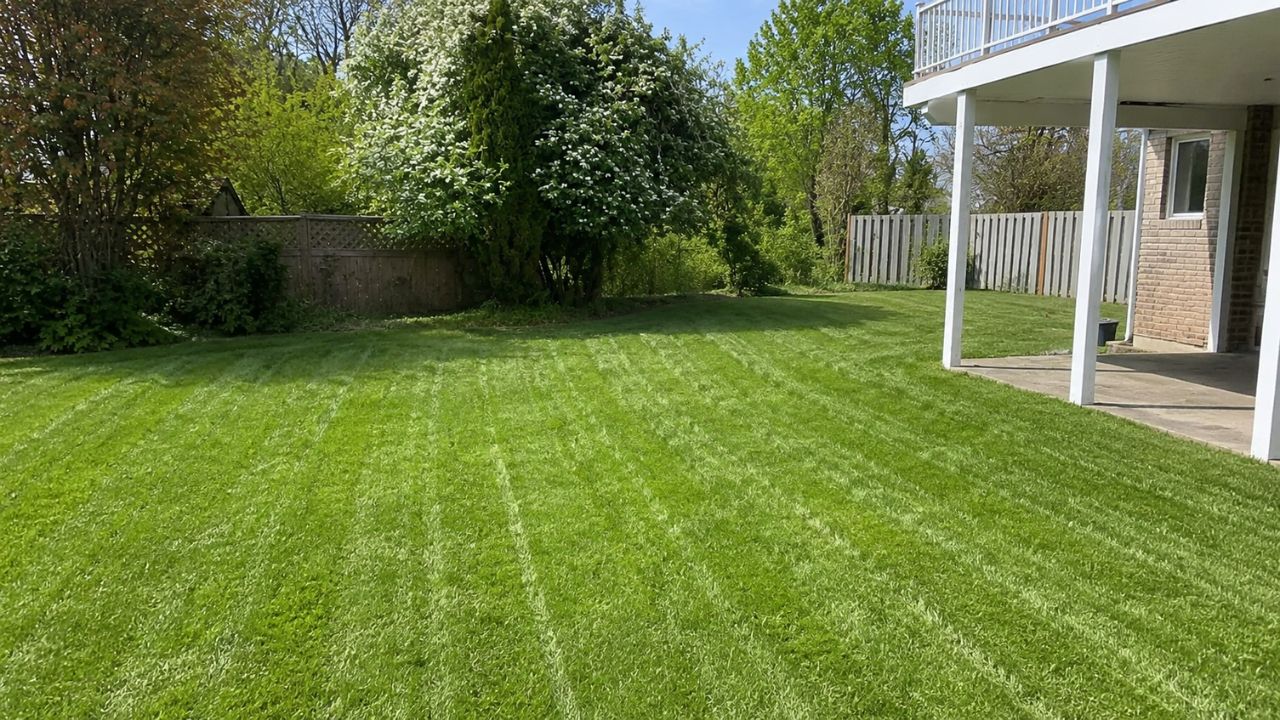
People ask me sometimes what the best part of this work is. I usually say something practical — the consistency of it, being outside, running my own schedule. All of that is true.
But if I’m being completely honest, the best part is the moments right after a job is finished when a homeowner sees their property for the first time and their face does something they weren’t expecting.
I’ve had a few of those moments in five years of working across Greater Sudbury. Some were bigger jobs. Some were more technically complex. But there’s one job — one specific property, one specific moment — that I still think about regularly.
It wasn’t the largest job I’ve done. It wasn’t the most expensive. It wasn’t even the most complicated from a technical standpoint.
But it’s the one I’m most proud of. And I want to tell you why.
Five Years. Hundreds of Properties. One Job.
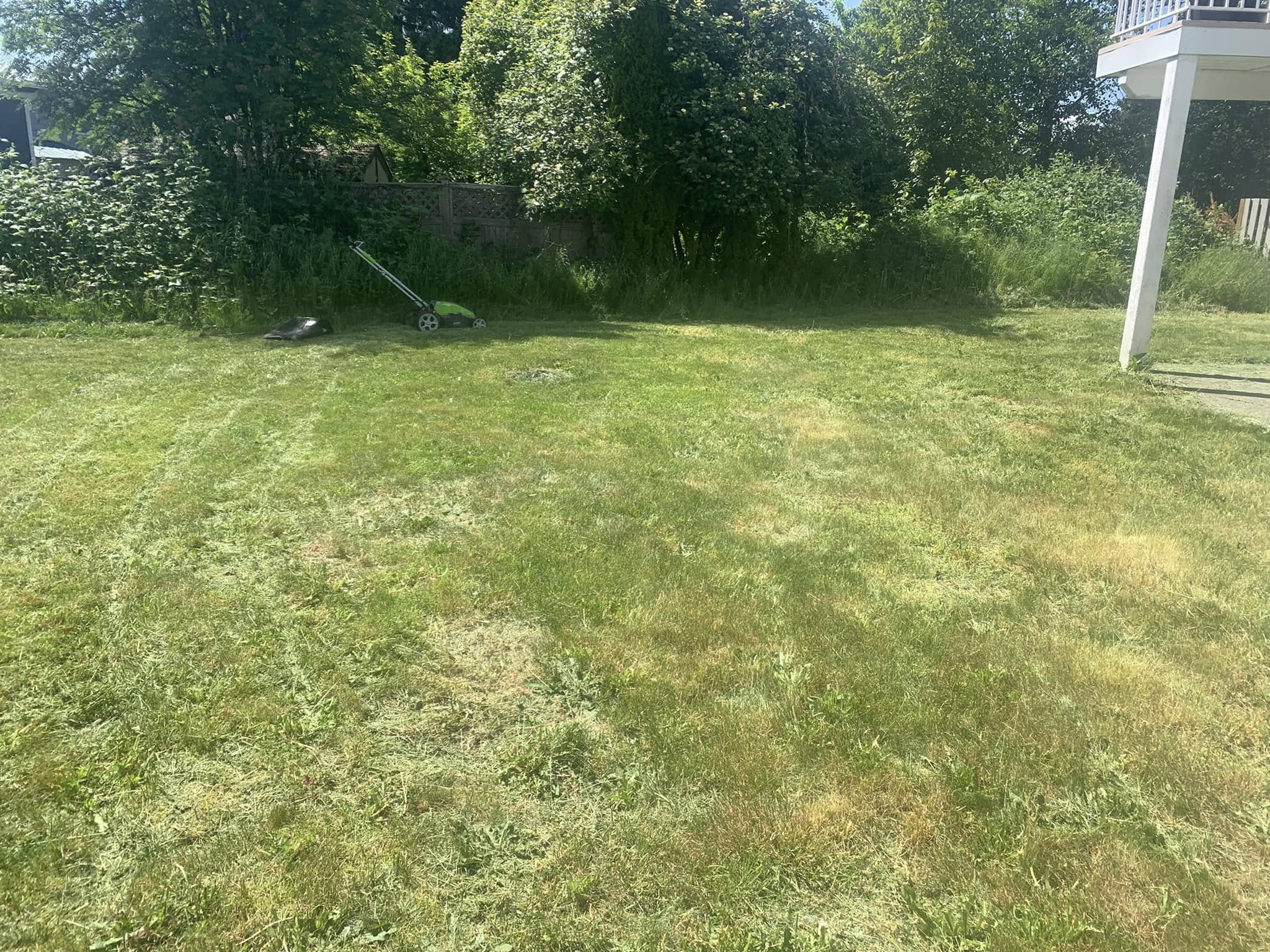
When I started Cutting Edge Lawn & Landscaping in May 2020, I was operating out of Garson with a clear premise: owner-operated, accountable, do the work properly. No crews the homeowner has never met. No quotes over the phone for jobs that need to be seen. No taking money for results I couldn’t stand behind.
Five years later, that premise hasn’t changed. What has changed is the accumulation of jobs and properties and homeowners across Greater Sudbury — Hanmer, Val Caron, Chelmsford, Lively, Capreol, Azilda, the city proper. Hundreds of properties. Thousands of cuts. Dozens of full restorations.
In that time I’ve learned things about Sudbury lawns that you can only learn by doing the work here, in this climate, on these specific soil types, through these specific winters. I’ve seen what freeze-thaw cycles do to clay-heavy soil over a decade. I’ve seen what happens when drainage problems go unaddressed for years. I’ve seen lawns that looked hopeless come back completely.
And through all of it, one job stands above the rest. Not because of the scale. Because of what it meant to the person whose lawn it was.
The Property — What I Was Walking Into
The call came from a woman named Margaret. She was in her late sixties, living alone in a house in Val Caron that she and her husband had bought in the 1990s. Her husband had passed away three years before she called me. He had been the one who looked after the yard.
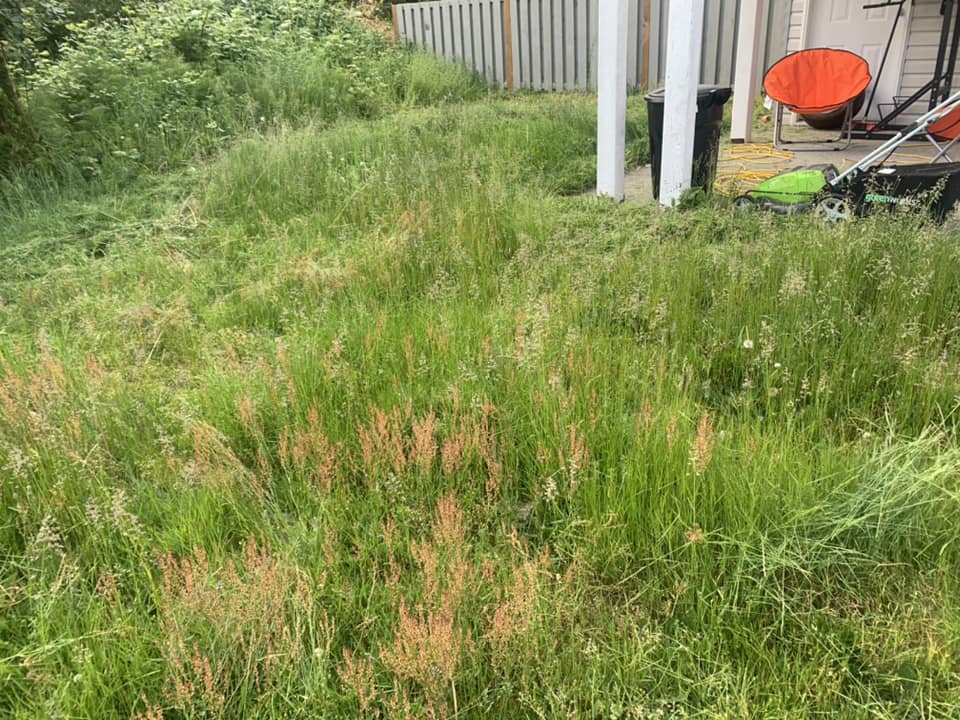
She told me all of this on the phone in a matter-of-fact way, not looking for sympathy. She just wanted me to understand why the lawn was in the condition it was in. After he passed, she’d tried to keep up with it herself for the first year. Then her health had gotten difficult and she’d had to let it go. By the time she called me, it had been essentially unmanaged for two full years.
I went out the next morning.
The property was a standard Val Caron residential lot — front and back combined, maybe 1,800 square feet of lawn. The front was patchy and weed-heavy. The back was significantly worse — large bare sections, a thick mat of dead thatch, and one corner near the back fence that was completely bare soil with some moss creeping in from the fence line.
Margaret met me at the door and walked the yard with me. She pointed out the spots she knew were bad. She was matter-of-fact about it the same way she’d been on the phone — not embarrassed exactly, but carrying something. The weight of a yard that had been someone else’s pride and then become something she couldn’t look after and couldn’t fix.
I did the assessment carefully. Screwdriver test across the lawn — compaction throughout, worst in the back sections. Thatch layer about an inch thick in most areas. The bare corner had a drainage issue — slight slope directing water there from the neighbour’s property. Soil pH on the low side.
I told her what I found and what it would take to fix it. She listened carefully and then asked me one question: “Can you make it look the way it used to?”
I told her I couldn’t promise exactly how it used to look — I hadn’t seen it then. But I could make it look like a healthy, well-maintained lawn that someone took care of. That I was confident about.
She said: “That’s enough. When can you start?”
The Restoration — Three Days of Work
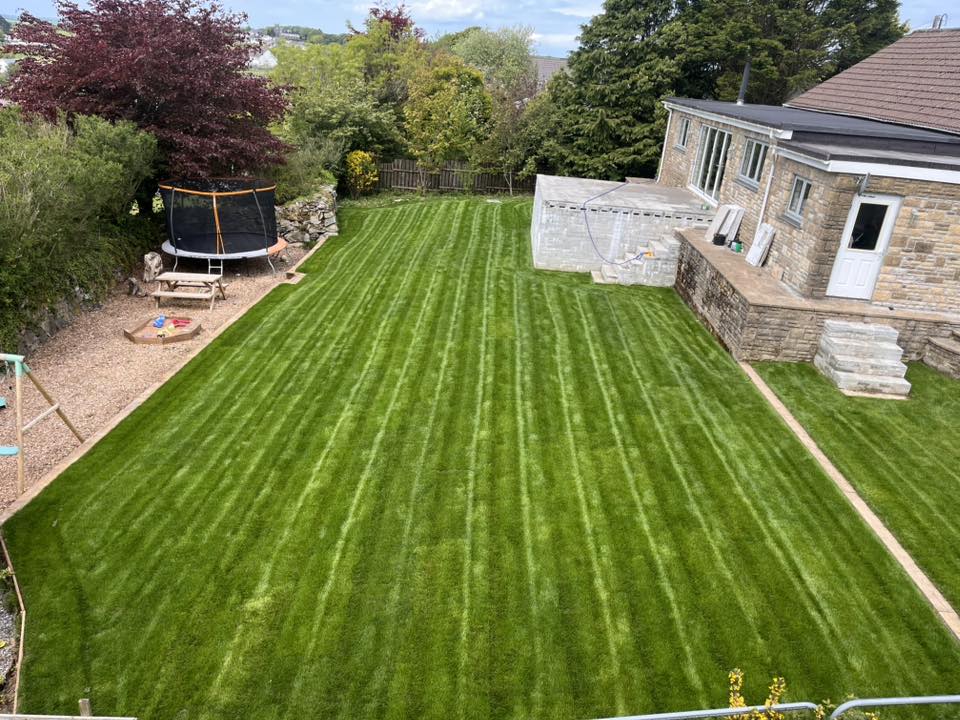
We did the job over three days in late June.
Day 1 — Drainage and Removal
We started with the drainage problem in the back corner. Regraded with quality topsoil to redirect water away from that corner toward the fence line. Built it up properly so it would hold the correction through freeze-thaw cycles rather than settling back into the old pattern.
Then full surface removal across both front and back. Sod cutter across the entire lawn area. Everything stripped to bare soil — dead grass, thatch, weeds, all of it hauled away. Clean slate by end of day.
Day 2 — Soil Rehabilitation
Tilling — four to six inches deep, two passes in different directions across the entire area. Breaking up the compaction that had built up over years of no aeration on clay-heavy Val Caron soil.
Quality topsoil spread and worked in across the whole area. Soil pH amendment applied in the sections that had tested low. Grading pass to make sure everything was level and draining correctly.
Starter fertilizer incorporated into the top layer before we finished for the day.
Day 3 — Sod Installation
Fresh sod delivered early morning. We laid the entire front and back in one day — 1,800 square feet total. Staggered joints throughout. Tight seams. Extra care around the graded back corner to follow the new contour cleanly.
Rolled the whole property after installation. Walked every seam, pressed down any edges that had lifted, cleaned up every piece of debris from both days of prep work.
By four in the afternoon the job was done.
Margaret had been inside most of day three. When I knocked on the door to let her know we were finished, she came out onto the front step and stopped.
She stood there for what felt like a long time — maybe thirty seconds, maybe a minute. Looking at the front lawn. Then she walked around the side of the house to the back and stood there too.
She didn’t say anything for a while.
The Moment I Remember Most
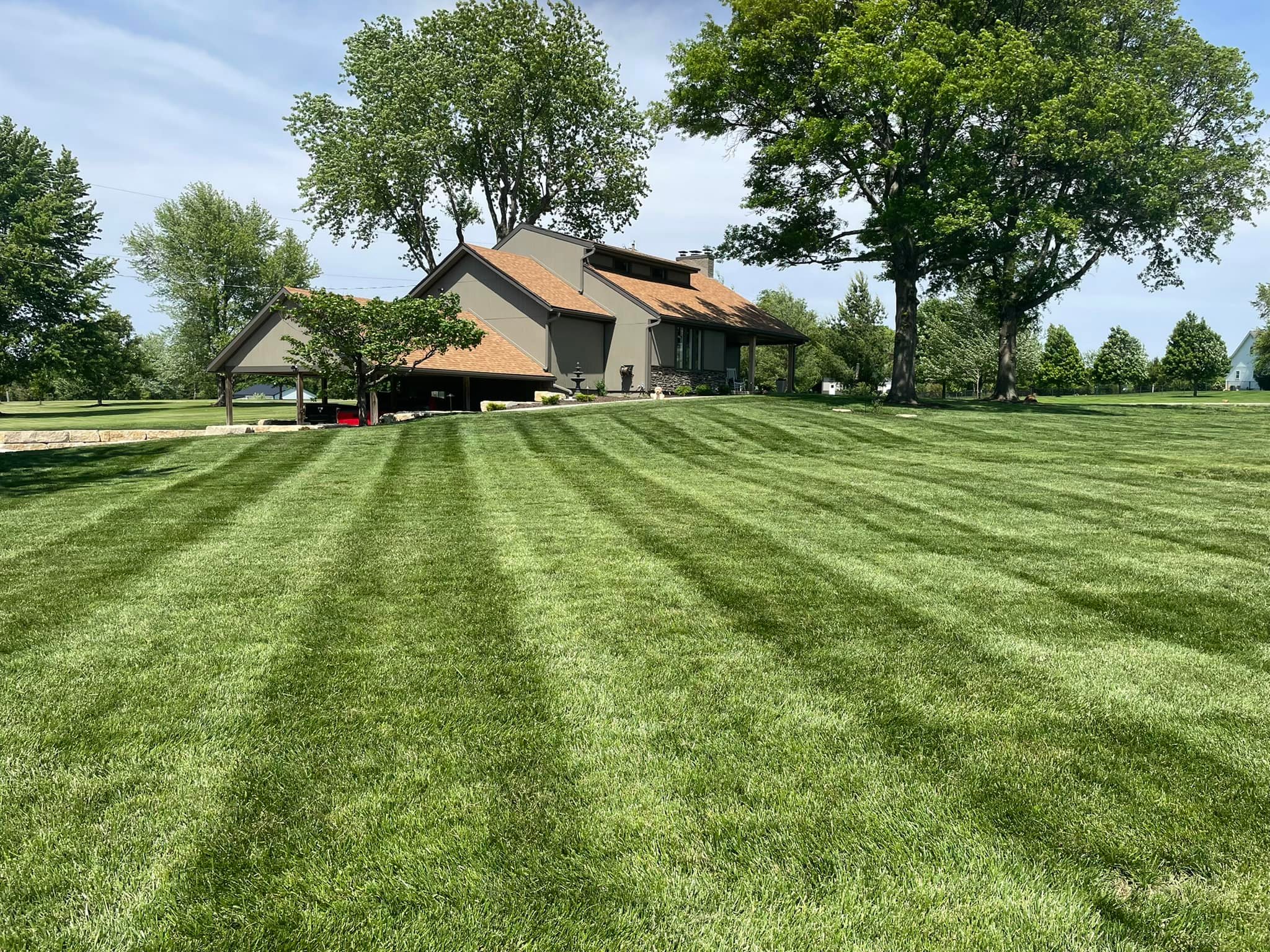
When Margaret finally spoke, she didn’t say what I expected.
She didn’t say “it looks great” or “thank you” or any of the things people usually say. She said: “He would have liked this.”
And then she said thank you and went back inside.
I drove home that evening thinking about that. About what a lawn actually means to someone. Not the grass itself — the grass is just a plant. But what it represents. The care someone put into a property. The Sunday afternoons. The pride of a well-kept yard on a street where you’ve lived for thirty years. The continuity of something that mattered to a person you loved.
That’s what Margaret got back when the lawn was restored. Not just green grass. Something that connected her to her husband and to the version of that property she remembered.
I’ve thought about that job more than any other in five years. Not because it was technically impressive — I’ve done more complex work. Not because it was the biggest job — it was a standard residential restoration. But because of what it clearly meant to her, and because it reminded me why this work is worth doing properly.
A lawn is just a lawn. Until it isn’t.
What Five Years in This Work Has Taught Me
I want to share a few things I’ve genuinely learned in five years of working on Sudbury properties, because I think they’re useful regardless of whether you ever hire me.
Most lawn problems have a cause below the surface. Compaction, drainage failure, buried debris, pH imbalance. Treating the surface without finding the cause just delays the same failure. Diagnosis first, always.
Timing matters more than most people realize. The right work done at the wrong time in Sudbury’s climate produces worse results than the right work done at the right time. Our spring window, our fall window — these are real and they’re short. Working with the season rather than against it is half the battle.
Cheap fixes are usually the most expensive ones. I’ve re-done work on properties where someone else did it first for less money and it failed. The homeowner paid twice. Doing it right once costs less than doing it wrong and then doing it right.
The condition of a property affects how people feel about their home. This one took me a while to fully appreciate. A lawn isn’t just an aesthetic thing. For a lot of people it’s tied up with pride, memory, and the way they experience their own space every day. When we restore a lawn properly, we’re not just fixing a plant problem. We’re giving something back.
That’s what I’ve learned in five years. And that’s why Margaret’s job is the one I’m most proud of.
Is Your Lawn Something You Want to Get Back?
If your lawn has gotten away from you — whether it’s been a year or five years — and you want to know what it would take to bring it back properly, reach out. I’ll come out, walk the property, tell you exactly what’s going on and what a real fix would involve.
No judgment about how it got there. Every lawn is fixable. Some just take more work than others.
📞 Call or text me: 705-507-6787
Or fill out the free quote form here — I get back to everyone same day.
— Ryan Lingenfelter
Owner, Cutting Edge Lawn & Landscaping
Garson, Ontario
Related Articles
- A Sudbury Homeowner Apologized to Me When I Arrived — I Told Her She Had Nothing to Be Sorry About
- The Worst Lawn I’ve Ever Seen in Greater Sudbury — And What It Took to Fix It
- I Said No to a Lawn Job in Val Caron — Six Weeks Later They Called Me Back
- Why I Started Cutting Edge Lawn & Landscaping in Garson
- Sod Installation in Greater Sudbury
