They’d already done their research. Measured the lawn. Called one sod supplier and gotten a price. By the time they reached me they were essentially asking me to confirm what they’d already decided.
“We want to redo the whole front lawn. How soon can you do it?”
I went out and walked the property first. Which is what I always do before agreeing to anything. And fifteen minutes into that walk I told them something they weren’t expecting: I don’t think you need sod. I think you’re about to spend $3,000 on a solution to a problem that costs a few hundred dollars to fix.
I’m Ryan Lingenfelter, owner of Cutting Edge Lawn & Landscaping in Garson, Ontario. Since 2020, I’ve installed and maintained lawns across Greater Sudbury — Garson, Val Caron, Hanmer, Lively, Chelmsford, Azilda, Capreol. I’ve also talked homeowners out of sod more than once. Not because I don’t install it — I do — but because sod is the right answer to a specific set of problems, and installing it on a property that doesn’t have those problems wastes money and often produces results that don’t last.
Here’s what I saw on their property and why I said what I said.
What I Found When I Walked the Property
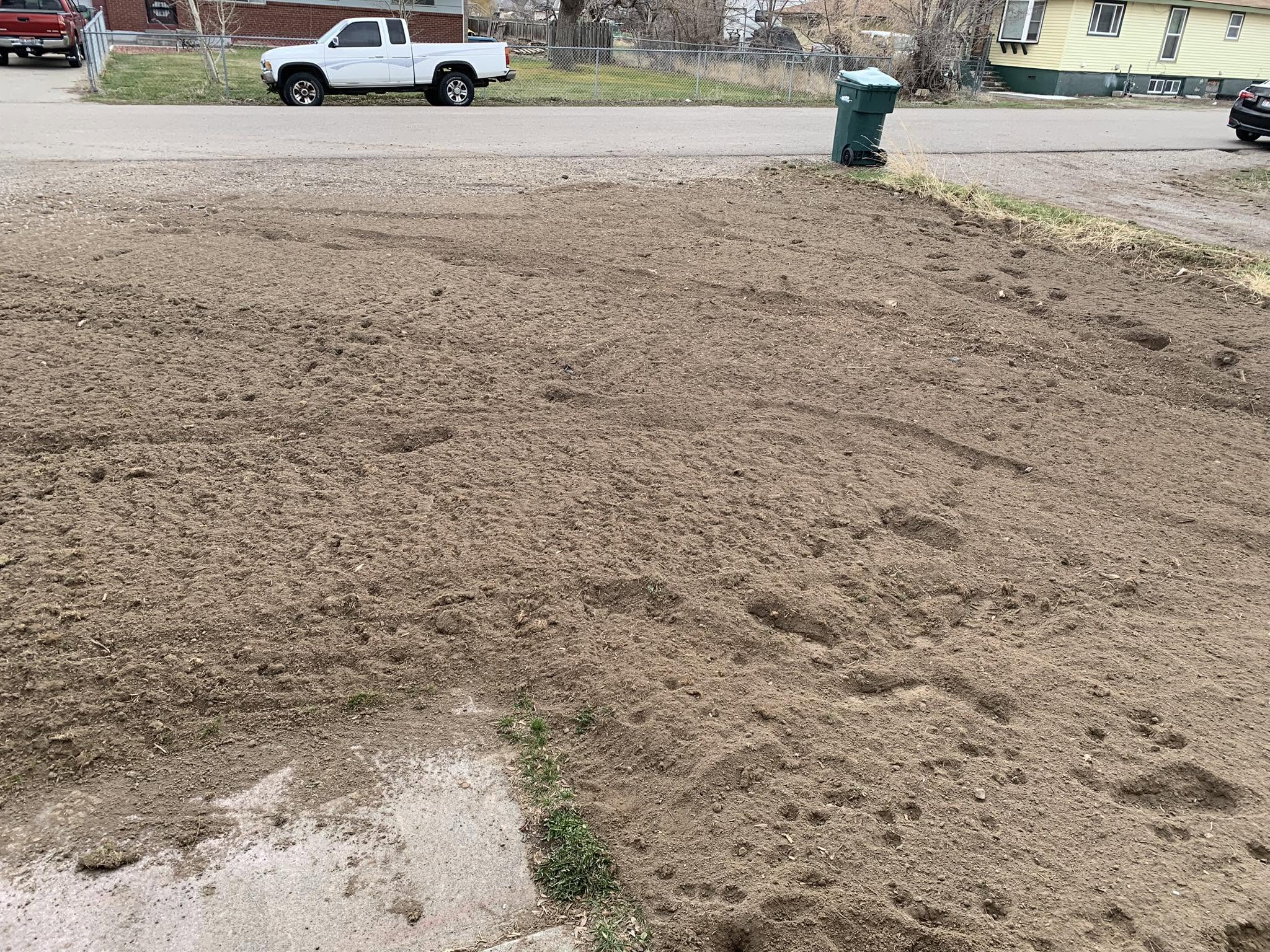
The front lawn looked rough. I’ll give them that. It had thinned significantly over the previous two seasons, there were weeds distributed through the thin spots, and in the areas near the driveway the grass had essentially given up. Looking at it from the street in early spring, I understood completely why “rip it out and start fresh” felt like the right answer.
But here’s what the lawn looked like up close.
The grass that was there was still alive. Not thriving — thin, pale, struggling — but alive. When I crouched down and looked at the turf coverage carefully, it was probably 55 to 60 percent live grass across the front. The thin areas were real, but they were thin because of compaction and short mowing history, not because the grass had died.
The screwdriver test told me the rest of the story. I pushed it into the soil in four spots across the front. In all four it stopped within an inch and a half. The soil was packed hard — years of Sudbury freeze-thaw cycles with no aeration to reset it. The grass wasn’t thin because it was diseased or because the soil was chemically wrong. It was thin because the roots couldn’t grow. They were hitting compacted clay at 2 inches and stopping.
Then I asked about the mowing height. “I usually keep it pretty short. Maybe 2 inches, sometimes less in spots.” There it was. Short mowing, no aeration, compacted Sudbury clay — the three-part combination that produces exactly the lawn I was looking at. Thin, pale, weedy in the gaps, going brown every July.
I told them: this lawn doesn’t need to be replaced. It needs the conditions to be fixed. And if we install sod without fixing those conditions, the new sod is going to produce the same lawn in three years that you have right now.
Why Sod Wasn’t the Answer for This Property
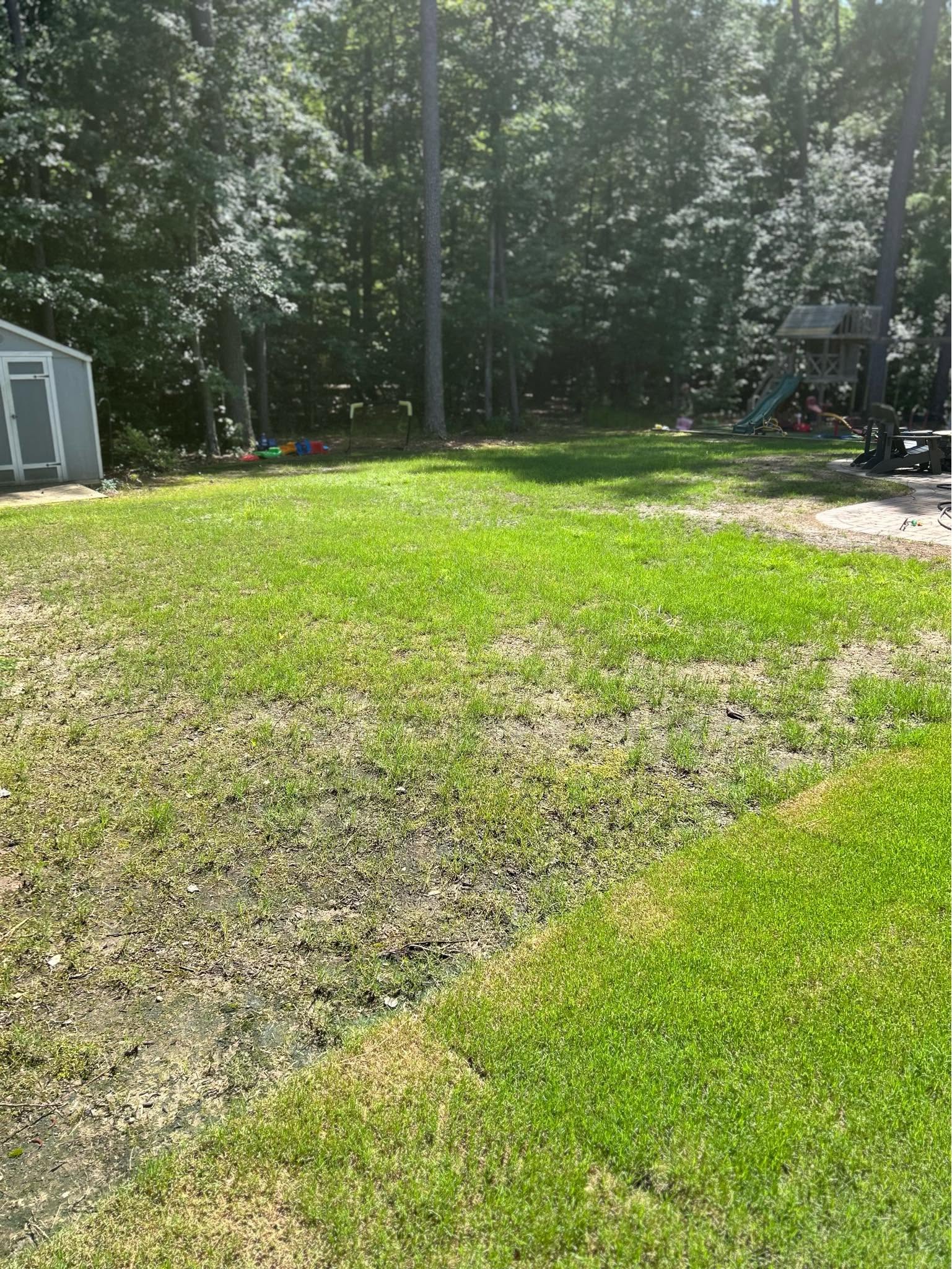
Sod is the right answer when the grass is genuinely gone — when you’re looking at bare soil, significant areas with no live turf, or situations where the lawn has been so damaged that recovery through overseeding would take too long or be too uncertain. Sod is also the right answer when soil preparation is being done properly as part of the installation, so the new turf is going into conditions that support establishment.
What sod is not the answer to is a lawn that’s struggling because of compaction and wrong mowing height on a property where more than half the grass is still alive. In that situation:
The sod goes onto the same compacted soil. Unless the installation includes proper soil prep — full removal of existing turf, tilling to 4 to 6 inches, topsoil amendment if needed — the new sod lands on the same conditions that produced the struggling lawn. Within 2 to 3 years, the sod’s own root mat is compacting the same clay underneath it and the lawn starts thinning the same way the previous one did. I’ve covered what proper soil prep actually involves in the sod soil prep article here — it’s a significant undertaking and most budget sod installations skip parts of it.
The mowing height problem doesn’t change. If the homeowner continues cutting at 2 inches after new sod is installed, they’re doing the same thing to the new lawn that damaged the old one. New sod doesn’t make you immune to wrong mowing habits. The root depth problem comes back on the same timeline. This is exactly what the sod longevity article covers — what determines whether sod lasts is maintenance habits, not just installation quality.
They’re spending $3,000 to solve a problem that costs $300. Core aeration to break the compaction: $150 to $200. Overseeding the thin areas after aeration: $50 to $100 in quality seed. One full season of mowing at 3 inches and watering correctly: $0 in additional cost. Total: under $300 to address the actual problem. The sod installation would have addressed the visible symptom while leaving the cause intact — and produced the same symptom again within a few years.
What I Recommended Instead — And What It Cost
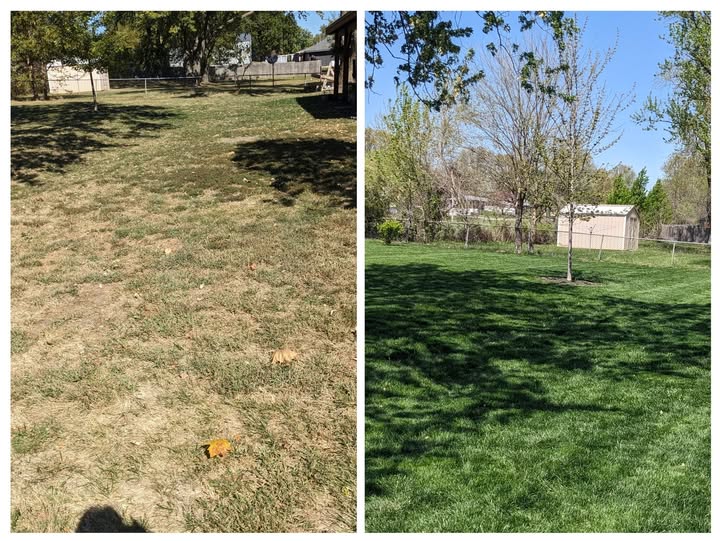
Here’s exactly what I told them to do and what each piece cost.
Core aeration — late May. Full front lawn aeration with commercial equipment. This was the most important single step. Open the compacted clay so roots have somewhere to grow, so water can penetrate, so any seed we put down has direct soil contact in the aeration holes. Our core aeration service on their front lawn: around $150.
Overseeding immediately after aeration. Quality perennial cool-season seed blend suited to Sudbury’s climate — not the cheap annual ryegrass mixes that germinate fast and don’t overwinter. Applied right after aeration while the holes were open. Seed fell into the holes, had direct soil contact, stayed moist longer than surface-sown seed. Seed cost for their front lawn: about $60.
Raise the mowing deck to 3 inches and leave it there. I explained why mowing height was the underlying cause of the root depth problem. This cost nothing. It was a conversation and a deck adjustment. The full mowing height explanation is in the May mowing mistake article — it’s the single most impactful change most Sudbury homeowners can make.
Water correctly. Switch from daily light watering to deep twice-weekly sessions. Let the aeration holes draw water down to where the roots are being encouraged to grow. The full watering technique for Sudbury clay is in the Sudbury watering guide here.
Total cost of the recommendation: roughly $210 plus their time adjusting habits. Against the $3,000 sod quote they’d been planning.
They were skeptical. I understood why — the lawn looked bad and spending $210 on it felt like throwing money at something that needed to be replaced. I told them: give it one full season. If the lawn doesn’t look genuinely better by September, call me and we’ll talk about sod at that point. But I don’t think we’ll be having that conversation.
What the Lawn Looked Like by August
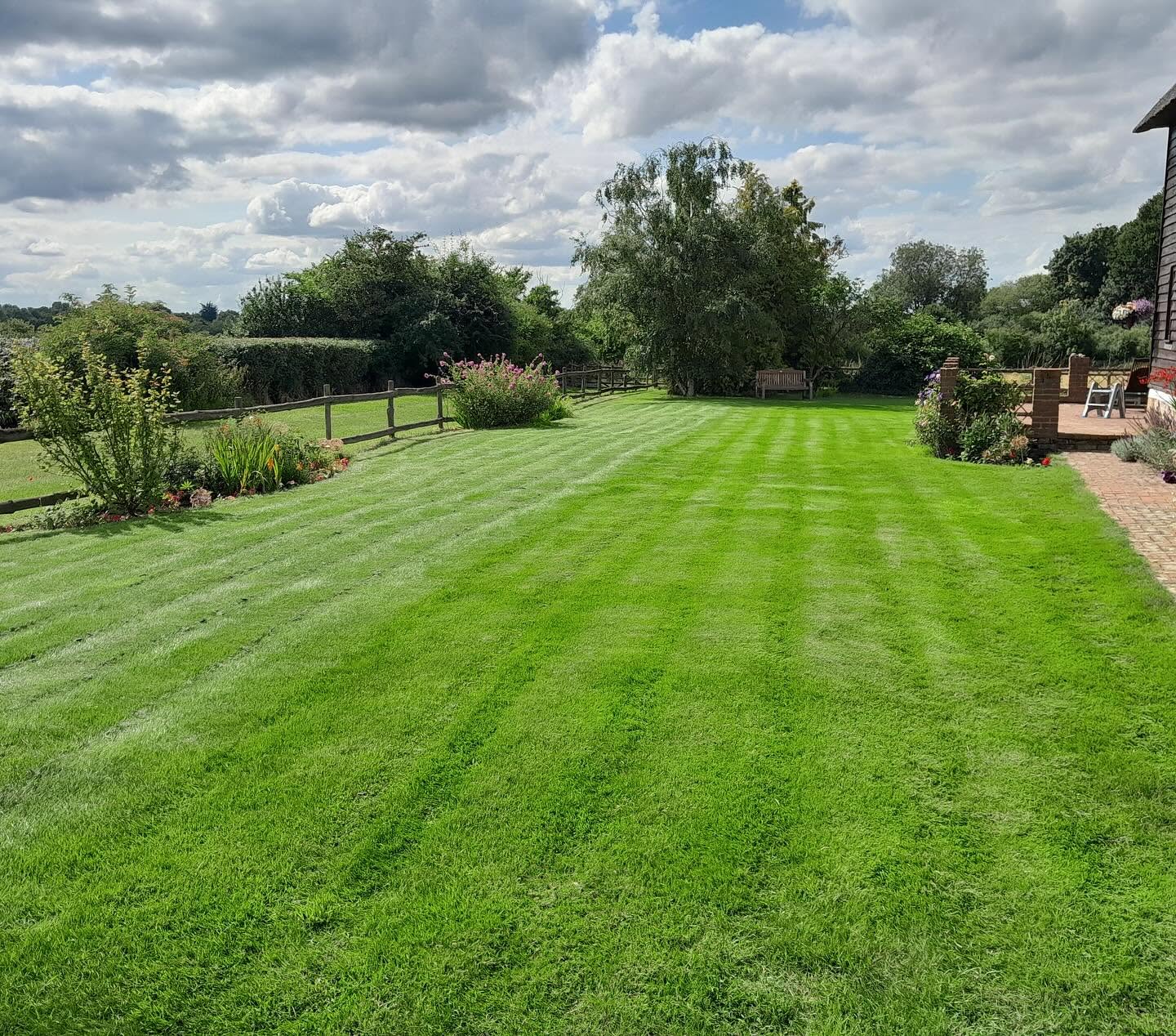
I drove past the property in late August. They texted me a photo around the same time.
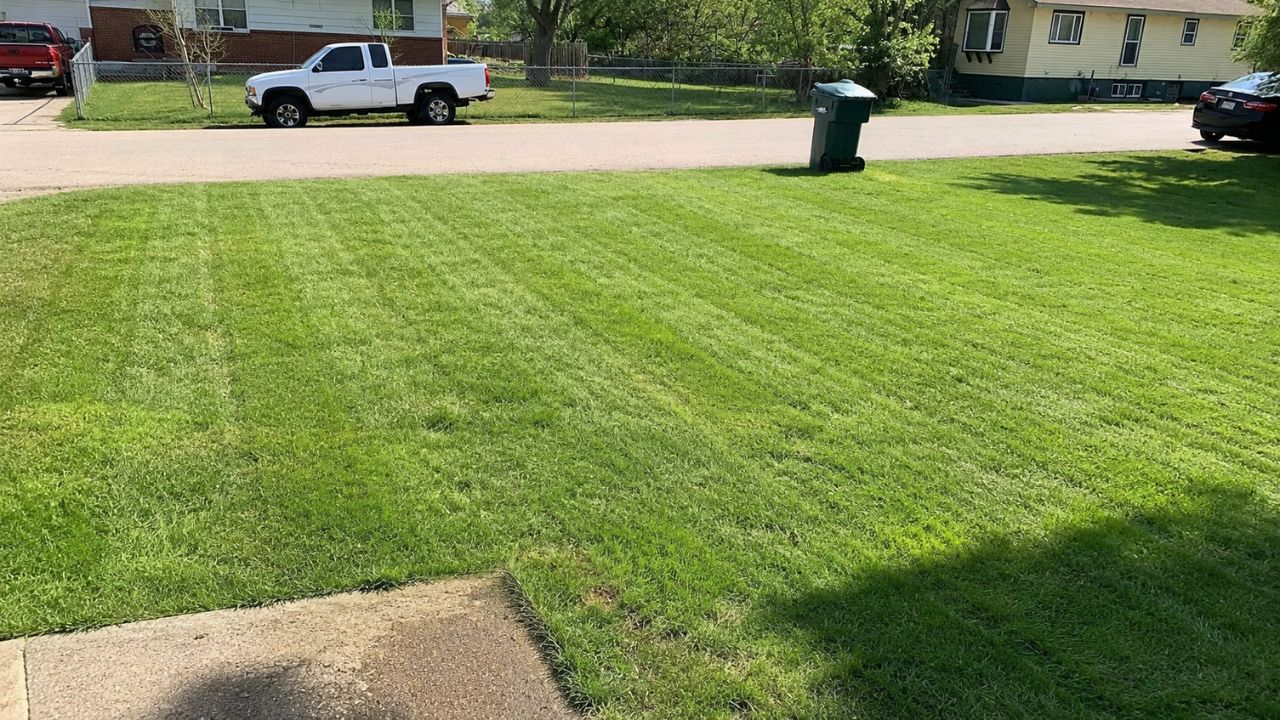
The front lawn was noticeably denser than it had been in spring. The thin areas that were the most visible problem in May had filled in significantly from the overseeding — still not as thick as the established areas, but green and growing and no longer showing bare soil. The colour across the whole lawn was deeper than it had been — the 3-inch mowing height through the season had let the grass produce more chlorophyll and the roots had gone deeper into the aerated soil.
No browning in July. That was the detail that struck them most. The lawn that had gone patchy and brown every July for the previous two years — held its colour through a dry stretch in mid-July. Because the roots were deeper. Because the aeration had opened the soil and the mowing height had encouraged the roots to follow moisture down.
Was it perfect? No. It needed another aeration the following spring and the thin areas would keep filling in through a second season. Sod produces a uniform result immediately — there’s a visual argument for it that’s real. But the lawn at the end of that first season of correct maintenance looked dramatically better than the spring version, was on a trajectory of continued improvement, and cost $2,800 less than the alternative.
They didn’t call me about sod.
When Sod IS the Right Answer in Sudbury
I want to be clear: I’m not anti-sod. There are situations where it’s exactly the right call, and I install it across Greater Sudbury when those situations exist.
When the lawn is more bare soil than grass. If the live turf coverage is below 40 to 50 percent, restoration through overseeding becomes less certain and takes longer. At that point sod’s speed and reliability start to make sense. A lawn that’s genuinely more weeds and bare soil than grass is a different situation from one that’s thin and struggling.
When a new build or significant construction has left no topsoil. New construction in Sudbury often scrapes the topsoil and leaves raw clay or fill. Seeding on that surface is possible but difficult. Sod installation with proper topsoil added first produces a much more reliable and faster result in that situation.
When the timeline requires it. Selling the house in six weeks and need the front lawn to look presentable. Just moved in and want a usable lawn for the kids this summer. Overseeding takes time to establish — sod is ready for light use within four to six weeks. When the timeline genuinely requires instant coverage, sod is worth the premium.
When specific problem areas need instant coverage. A 10-foot drainage repair that left bare soil. A section that was completely dead from a grub infestation last year. Small, defined areas where the surrounding lawn is healthy and you need that one spot brought up to match — spot sodding those areas makes more sense than trying to overseed them to match established turf.
The full picture of sod installation costs and what to expect in Greater Sudbury is in the sod longevity guide here. If you’re genuinely in one of the above situations, the investment makes sense and produces real results. The key is matching the solution to the actual problem — not the most visible symptom of the problem.
How to Know Which Situation You’re In
If you’re looking at your lawn right now and wondering whether you need sod, here’s the honest quick assessment.
Walk the lawn and estimate what percentage of the surface is live grass versus bare soil or weed-only coverage. If it’s above 50 percent live grass — even thin, struggling grass — aeration and overseeding is almost certainly the right starting point. If it’s below 40 percent live grass with large areas of bare soil — the sod conversation becomes more relevant.
Do the screwdriver test. Push a standard flathead screwdriver firmly into the soil in a few spots. If it stops within 2 inches, the soil is compacted and compaction is the primary cause of the thinning — not the grass itself dying. Fix the compaction before deciding anything else. I walk through exactly what to look for in the first 60 seconds property assessment article here.
Ask yourself honestly whether the mowing height has been right. A lawn cut at 2 inches or less for multiple seasons has shallow roots and will look thin and stressed on Sudbury clay regardless of what else is done. Changing the mowing height and aerating produces visible improvement on those lawns without replacement.
If after that honest assessment you still can’t tell which situation you’re in — give me a call and I’ll walk the property. I’ll tell you what I see, and whether that’s an aeration and overseeding conversation or a sod conversation. Either way, you’ll have the right answer for your specific property before spending anything.
📞 705-507-6787
🔗 Get a Free Quote
📍 Serving Greater Sudbury — Garson, Val Caron, Hanmer, Lively, Chelmsford, Azilda, Capreol
— Ryan
Frequently Asked Questions
How do I know if I need sod or just overseeding on my Sudbury lawn?
The key question is how much live grass is still present. If more than 50 percent of the lawn surface has living turf — even thin, struggling grass — core aeration followed by overseeding almost always produces better results at a fraction of the sod cost. If less than 40 percent is live grass with large areas of bare soil, sod becomes more relevant. Do the screwdriver test first: if the soil is compacted, that’s the primary cause of thinning and fixing it is cheaper and more effective than replacing the lawn.
Is overseeding cheaper than sod in Sudbury?
Significantly cheaper. A professional core aeration on a standard Sudbury residential lot runs $150 to $200. Quality overseeding adds $50 to $100 in seed cost. Total: $200 to $300 in most cases. A full sod installation on the same property runs $2,500 to $5,000+ depending on size and soil prep requirements. For lawns that still have significant live turf coverage, overseeding after aeration produces comparable long-term results at a fraction of the cost — and the lawn often looks genuinely good within one growing season.
Why does my Sudbury lawn keep going thin even after I’ve tried to fix it?
If the lawn has been thinning progressively despite attempts to fix it, the cause is almost always one of three things: mowing too short (which forces shallow roots that can’t handle summer heat), compacted soil that the roots can’t penetrate (requiring annual core aeration to reset), or a drainage problem creating recurring dead zones. All three are fixable without sod replacement. Identifying which one is causing the problem — or which combination — determines the fix. A property walk before spending on either sod or repair work is the most reliable way to get the right answer for your specific situation.
How long does it take to restore a Sudbury lawn through overseeding instead of sod?
Visible improvement within 4 to 6 weeks of aeration and overseeding. Genuinely good-looking lawn by end of first summer on most properties. Full density matching established turf by the second growing season. Sod produces uniform coverage faster — 4 to 6 weeks to established turf. The trade-off is cost: overseeding takes longer but costs a fraction of sod. For most homeowners not under time pressure, the overseeding timeline is completely acceptable given the price difference.
When is sod installation actually worth the cost in Sudbury?
When the lawn has less than 40 percent live turf coverage and large areas of bare soil, when the timeline requires instant coverage, when new construction left no topsoil and seeding conditions are poor, or when specific problem areas need to match established surrounding turf. Outside of these situations, most Sudbury lawns that look like they need replacement actually need compaction addressed and mowing height corrected — a $200 to $300 fix rather than a $3,000 one.
Does the sod installation include soil preparation in Sudbury?
It depends entirely on the contractor and the quote. Proper sod installation requires removing existing turf, tilling to 4 to 6 inches, assessing topsoil depth and adding quality topsoil if needed, grading for drainage, and applying starter fertilizer before any sod goes down. Many budget quotes skip significant parts of this process. Always ask specifically what soil preparation is included before agreeing to a sod installation — and be skeptical of quotes that don’t address soil prep in detail. The full soil preparation process is covered in the sod soil prep article.
Ryan Lingenfelter is the owner of Cutting Edge Lawn & Landscaping in Garson, Ontario. Since 2020, his crew has provided full lawn care services across Greater Sudbury — Garson, Val Caron, Hanmer, Lively, Chelmsford, Azilda, and Capreol. Cutting Edge is licensed, insured, BBB A+ rated, and ThreeBest Rated for lawn care services in Sudbury.
📞 Phone: 705-507-6787
📍 Service Area: Greater Sudbury, Ontario
🔗 Free Quote: cuttingedgelawn.ca/quote
Helpful Lawn Care Services in Sudbury
- Sod Installation in Sudbury
- Core Aeration for Healthy Lawns
- Grass Cutting Services in Sudbury
- Property Cleanup Services
- Mulch & Decorative Stone
- Hedge Trimming Services
Continue Reading
- How to Prepare Soil Before Laying Sod in Sudbury
- How Long Does Sod Last in Sudbury? 1, 3 and 5 Year Guide
- The Worst Sudbury Lawn I’ve Ever Seen — And How We Brought It Back
