
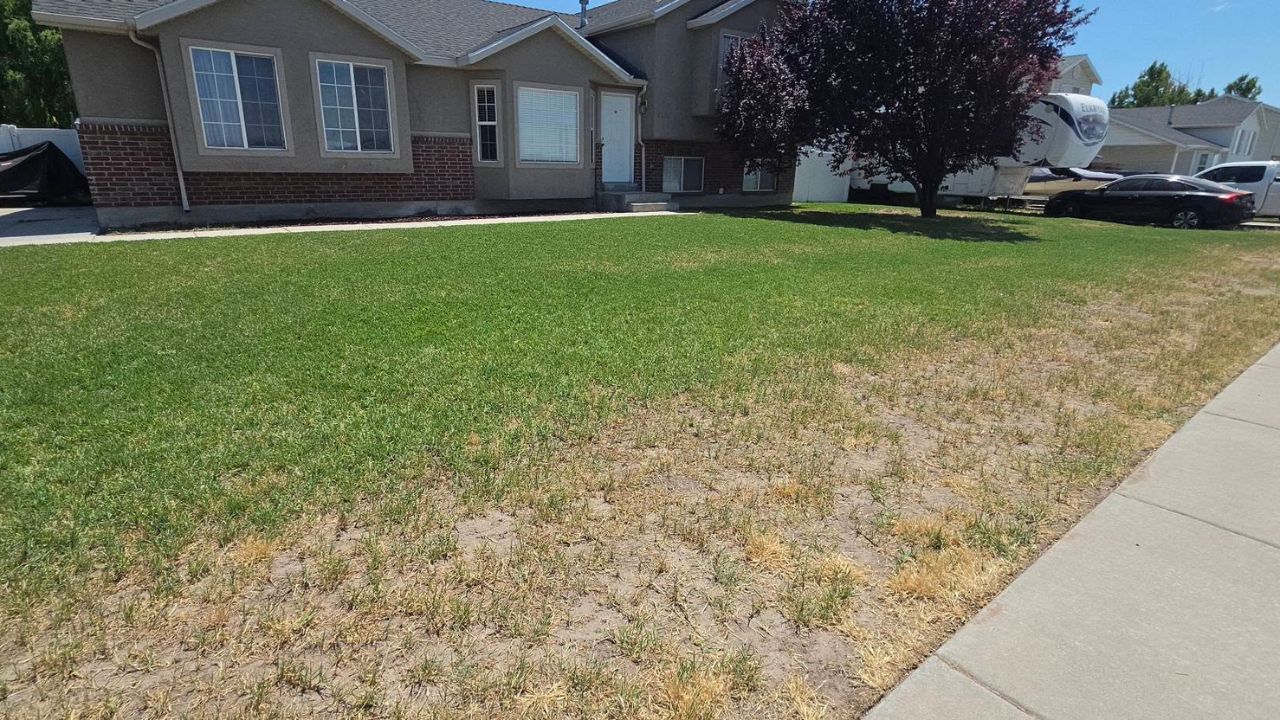
About one in every ten calls I get for a quote in Sudbury ends with me not taking the job. Not because the property is too difficult. Not because I’m too busy. Because after the initial conversation or the property walk, I’ve concluded that taking the job would not produce a result that satisfies either of us — and I’d rather spend twenty minutes saying that honestly upfront than spend a season delivering something that doesn’t match what the homeowner expected and having that conversation at the end instead.
People are sometimes surprised when I decline. A few have pushed back. Most, once I explain the reasoning, tell me they appreciate the honesty even when it’s not the answer they wanted. A few have become clients anyway after a different conversation that clarified something on both sides.
Here’s exactly what the three situations look like that lead me to turn down a quote, and what I tell the homeowner in each one.
What Turning Down a Job Actually Looks Like
It’s never a form rejection. I don’t send an email saying we’re not taking new clients or that the property isn’t in our service area. Every declined quote is a conversation — either on the phone before a visit or in person after the property walk — where I explain specifically what I’ve concluded and why, and what I think the homeowner should do instead of hiring me.
The conversation is uncomfortable sometimes. Nobody calls a contractor hoping to be told the contractor won’t take their job. But the discomfort of that conversation is significantly less than the discomfort of being several months into a service relationship where the expectations on one side and the deliverable on the other are misaligned and getting more misaligned as the season progresses. I know what that looks like from the homeowner side because I’ve been there — I described that experience in the piece about hiring a bad landscaper before I became one. The decline conversation that feels bad for twenty minutes is better for everyone than the season-end conversation that feels bad for twenty minutes and leaves a damaged lawn and a damaged working relationship behind it.
The three situations that lead to a decline are distinct from each other. One is about the property. One is about the goal. One is about the relationship. Each of them is a different kind of mismatch, and each requires a different conversation.
The Three Reasons I Decline a Quote Request
Reason one: The property needs something I can’t deliver
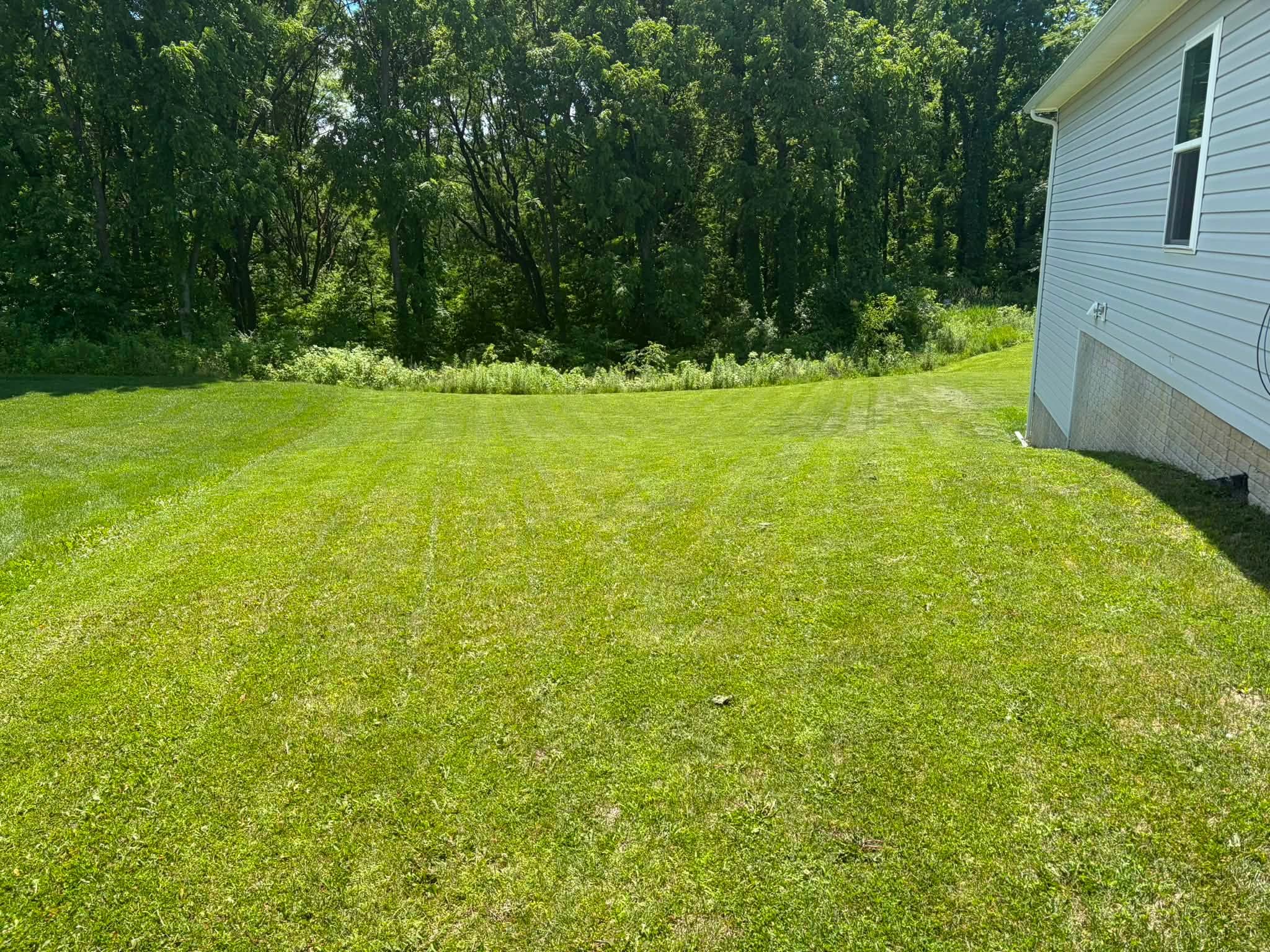
Sometimes I walk a property and what it needs to get to the result the homeowner is describing is outside what ongoing lawn care can provide. Not outside what I can do technically — outside what any lawn care service can deliver given the specific physical constraints of that property.
The most common version of this in Sudbury involves bedrock depth. A property where the topsoil is consistently two inches deep across the main section, with bedrock that close to the surface and in full southern exposure, has a hard ceiling on what it can support in terms of grass density and drought resistance. I can maintain that property. I can’t turn it into the thick, uniform, deep-green lawn the homeowner has described as their goal — not with any product, any frequency of service, or any amount of effort, because the physical conditions underneath don’t support that outcome.
When I identify this situation on a property walk, I tell the homeowner directly. I explain what the soil profile looks like, what it’s capable of supporting, and what a realistic good outcome for their specific property looks like. Sometimes that conversation shifts their expectation to something achievable and we proceed. Sometimes they want the outcome they described and aren’t interested in a different version of good — and in that case I refer them to someone else rather than take a job I already know won’t satisfy them.
The Sudbury-specific reason this comes up more often here than anywhere else I’ve worked is the same reason everything about lawn care is different here — the Canadian Shield geology that I described in the why Sudbury is different piece creates property constraints that have a hard physical ceiling. A homeowner who came from southern Ontario and is comparing their Sudbury property to their previous deep-soil lawn is sometimes holding an expectation that their current property simply cannot meet regardless of who services it.
Reason two: The goal and the budget don’t match the property’s starting point
The second situation is about the gap between where the property is and where the homeowner wants it to go, measured against the timeline and budget they have in mind. When all three of those align, the job makes sense. When the gap is large, the timeline is short, and the budget is tight, the job doesn’t make sense for either of us — not because the goal is unreasonable in principle, but because the path from the current state to the described outcome requires more time and investment than the homeowner has indicated they’re prepared for.
I find out about this in the question I ask before every quote — the one I described in detail in the one question before the quote piece. What does this lawn look like in your mind when it’s done right? The answer tells me the target. The property walk tells me the starting point. The budget conversation tells me what’s available to close the gap. When those three pieces don’t add up to a realistic path, the honest thing to do is say so before taking a deposit rather than after spending half a season on a job that was never going to arrive at the destination.
What I tell homeowners in this situation is specific: here’s what the property needs, here’s what that realistically costs and takes in time, and here’s what I can do within the budget and timeline you’ve described — which may be a different, more modest goal than the original one. If the scaled-back goal still works for them, sometimes we proceed on that basis. If the original goal is non-negotiable and the budget and timeline are also non-negotiable, I can’t make those three things compatible and it’s better for both of us if I say so clearly. I assess the property honestly rather than taking the work and hoping the gap closes. I’ve seen enough properties where previous contractors took exactly that approach — the 300 Sudbury quotes I’ve done have included a lot of properties where the previous contractor’s gap-closing strategy was to keep invoicing rather than to have the honest conversation — to know that it doesn’t end well.
Reason three: The working relationship won’t work
The third situation is the most personal and the hardest to explain, but it’s also the most important one to trust when it shows up. Sometimes an initial conversation or a property visit makes clear that the working relationship that would develop from taking this job isn’t one that will serve either party well.
The signals vary. A homeowner who treats the initial conversation as a negotiation to get the lowest possible price for services they’ve described as urgent tells me something about how the relationship will go when something doesn’t go perfectly. A homeowner who’s been through multiple previous companies and describes each of those companies as entirely at fault tells me something — not necessarily that they were wrong about those companies, but that I’m entering a situation with a high bar and a history that may be difficult to separate from. A homeowner who asks for a quote but is clearly looking for validation of a plan they’ve already decided on rather than honest professional input tells me that the input I’d provide won’t be welcome when it differs from their plan.
None of those situations are disqualifying on their own. People who’ve had bad previous experiences — and Greater Sudbury has enough of them, as I described in the piece about the homeowner who said she’d never trust a lawn company again — deserve the benefit of the doubt and often become the best long-term clients once trust is established. What I’m reading for is whether the specific dynamic of this conversation suggests a working relationship that will allow me to do the job properly. When it clearly won’t, turning down the work is better than trying to force a relationship into a shape it can’t hold.
What I tell these homeowners is honest and direct without being harsh. I tell them I don’t think we’re the right fit for what they’re describing, I tell them specifically what I think they should look for in whoever they do hire, and I wish them well with it. That’s the full conversation. No elaborate explanation, no defence of my position, no attempt to change their approach to working with a contractor. Just a clean, honest close that leaves them with something useful.
What I Actually Tell Them — The Exact Conversation
The words I use vary depending on which of the three reasons applies, but the structure is always the same: what I’ve concluded, why I’ve concluded it, and what I think they should do instead. Three parts, delivered in that order, without hedging or excessive qualification.
For a property constraint decline: “After walking this property, I want to be honest with you about what I can and can’t deliver here. The soil depth in your main section is about two to two and a half inches over bedrock, and the goal you’ve described — a thick, uniform lawn across that whole section — has a physical ceiling that this soil profile can’t support regardless of how the property is maintained. I can maintain what’s here and keep it in the best condition the soil allows, but I can’t deliver the result you’re describing and I’d rather tell you that now than take your money for a season and arrive at this conversation in October. What I’d suggest is a scaled-back goal — a lawn that looks well-maintained and performs well within its constraints — and if that works for you I’m happy to talk about what that looks like.”
For a goal-budget-timeline mismatch: “The property needs more work than the timeline and budget you’ve described will cover, and I don’t want to start something I can’t finish the way it should be finished. Here’s what the full job actually requires, here’s what it costs, and here’s what a realistic timeline looks like. If any of those numbers work within what you have available, I’m glad to talk about a modified version. If they don’t, you should hear that now from me rather than in month three when the results aren’t matching the expectation.”
For a relationship fit decline, the conversation is shorter: “I’ve thought about this and I don’t think we’re the right fit for this job. I’d recommend you look for someone who [specific recommendation based on what they described], and I hope you find the right person for it.”
The common thread is that every version of the conversation includes a specific recommendation for what to do next. I’m not leaving someone without a path forward — I’m redirecting them toward a better one for their situation, even if that path doesn’t include me.
Why Turning Down Work Makes the Work I Do Accept Better

The practical effect of turning down one in ten jobs is that the nine I accept are better matched to what I can actually deliver. Every job that’s a bad fit for one of the three reasons I described is a job that produces a dissatisfied client, a difficult season, and a result that doesn’t reflect what we’re capable of. The alternative — taking every job that calls, regardless of fit — produces a higher volume of work and a lower rate of satisfaction, which is not a trade I’m willing to make.
There’s also a longer-term effect that’s harder to quantify but clearly real. The homeowners I decline often come back later, sometimes in the same season, after circumstances have changed — the budget has shifted, the timeline has adjusted, or the initial conversation clarified something that made the fit clearer. A homeowner who was told honestly that their goal and their budget don’t match, and was given a specific path toward a modified goal, is not a lost client. They’re a client who had a useful conversation and knows exactly what they need to bring when they’re ready to proceed.
The homeowners who’ve had bad experiences with other companies specifically appreciate the decline conversation when it happens. They’ve already received the alternative — a contractor who said yes, did the work, and delivered something that didn’t match the expectation. A contractor who says “I don’t think this is the right fit and here’s why” is something they haven’t encountered before, and it tends to change how they think about the next company they call.
If you’re considering calling me for a quote on a Sudbury property, the honest version of the conversation is the only version I know how to have. Sometimes that conversation ends with a job. Sometimes it ends with a referral in a different direction. Either way it ends with both of us having accurate information, which is a better starting point than a contract signed before anyone was sure what they were agreeing to. For everything we offer, the complete 2026 service breakdown is the right starting point.
Call or text: 705-507-6787
Or fill out the free quote form on the site.
We cover Garson, Val Caron, Hanmer, Lively, Chelmsford, Azilda, Capreol, and surrounding areas.
— Ryan Lingenfelter
Cutting Edge Lawn & Landscaping
Garson, Ontario
705-507-6787
