
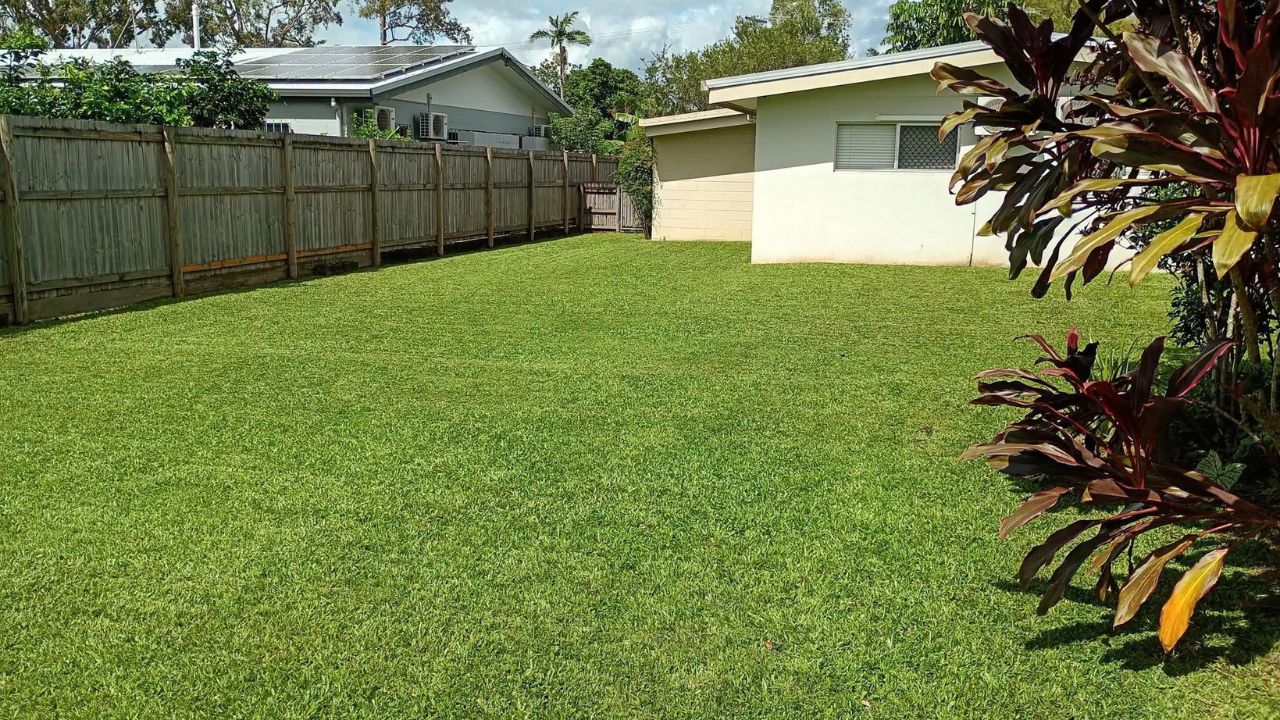
I started Cutting Edge Lawn and Landscaping in Garson in 2020. That’s six full seasons of working on properties across Greater Sudbury — Garson, Val Caron, Hanmer, Lively, Chelmsford, Azilda, Capreol — through whatever each season decided to deliver. Some of those seasons were straightforward. Some weren’t. 2026 is somewhere in the middle, but it has specific characteristics that are worth talking about directly because they’re affecting how properties across Sudbury are performing this year in ways that aren’t fully explained by the standard seasonal advice.
This piece is my honest take on what has genuinely changed in Sudbury lawn care since I started, what is different specifically about this season, and what has remained absolutely constant despite everything — because some things don’t change regardless of the year on the calendar or what the weather is doing, and those things are still the ones that decide the outcome on every property I work on.
What Has Actually Changed in Sudbury Lawn Care Since 2020
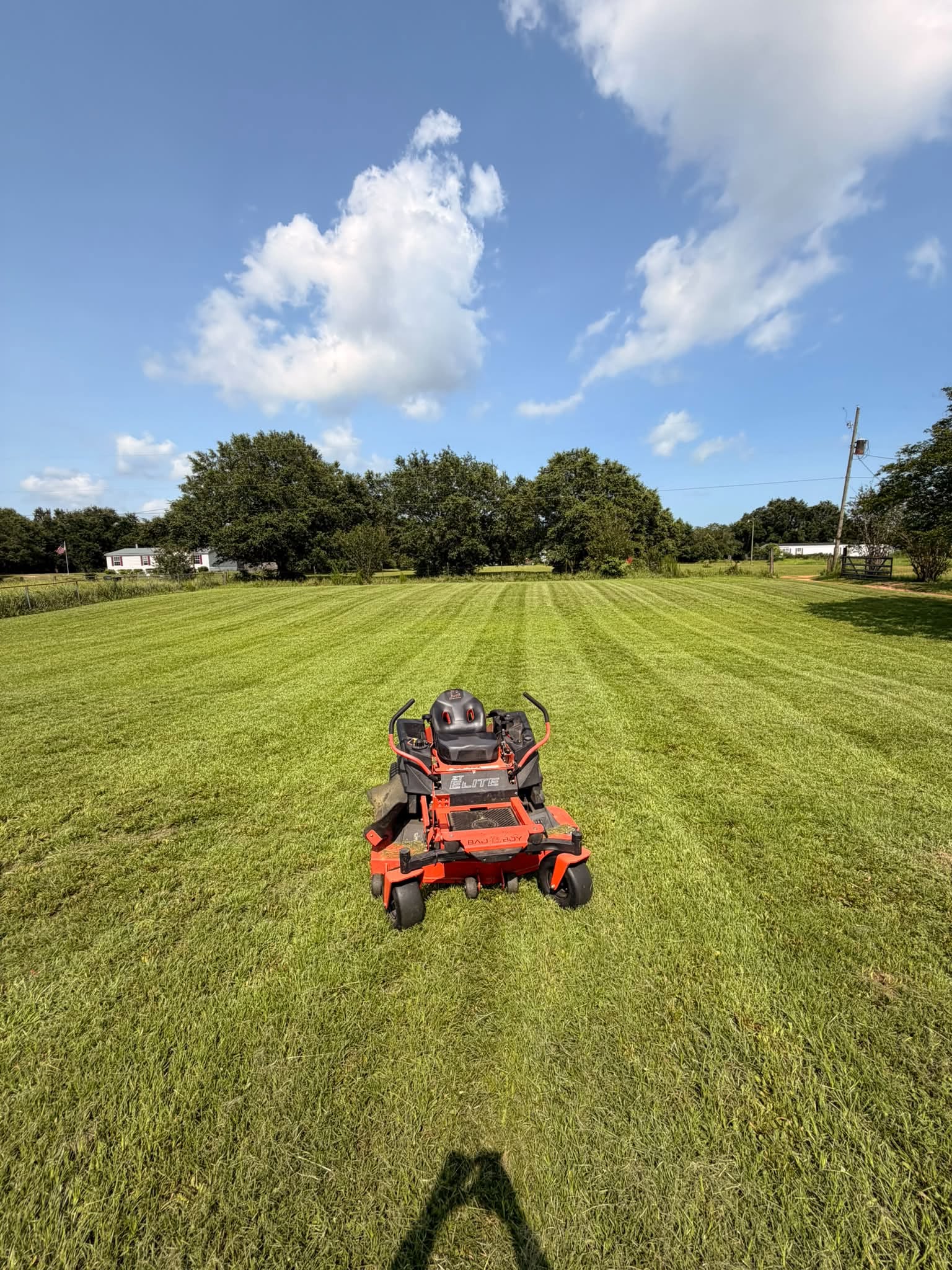
The most significant change I’ve seen across Greater Sudbury since 2020 is not equipment or products or technique. It’s homeowner expectations and homeowner knowledge. The average Sudbury homeowner who calls me in 2026 knows significantly more about their property than the average homeowner who called me in 2020 or 2021 — they’ve done more research, they’ve watched more content, they’ve had more conversations with neighbours about what works and what doesn’t. They come to the first conversation with specific questions about soil pH, about mowing height, about the difference between overseeding and reseeding. That shift has made the first conversation more useful and the initial assessment more productive because I’m starting from a higher baseline of shared understanding.
The flip side of that is that the gap between good information and bad information available online has also widened. More homeowners are arriving with specific knowledge, but some of that knowledge is accurate for conditions in southern Ontario and not accurate for Sudbury. The same generic lawn care content that was always written for deep-soil properties is now being consumed by more people who are applying it to Sudbury properties where the assumptions don’t hold. I’ve had more conversations in 2025 and 2026 than in any previous season about why the advice someone followed from a well-produced YouTube channel produced disappointing results — and in almost every case the answer traces back to the foundational difference I described in the why Sudbury is different piece. The information is better than it was. Its fit for this specific environment is still inconsistent.
The second change is the development pressure on new areas of Greater Sudbury. The newer subdivisions that have been built out across the south end and in areas outside the traditional city core over the past four years have added a significant number of properties with the specific new-build soil conditions I described in the new subdivisions piece — construction compaction, thin imported topsoil, fast-germination seed mix over an inadequate base. A larger share of the properties I assess in 2026 are new builds than in 2020, and that changes the composition of the work. New build lawns need a specific approach that’s different from established property maintenance, and the number of homeowners dealing with a new build lawn that isn’t establishing the way they expected has increased year over year as more of those developments have completed.
Third change: the quote conversation has gotten longer. Not because homeowners are harder to deal with — they’re not — but because the properties I’m being called to assess are more varied and more complex than the early years of the business. When I started, most of my calls were straightforward maintenance. In 2026, a significant proportion of the first conversations I have involve a property that’s been through a difficult history — previous contractor problems, neglect during a difficult year, accumulated compaction from missed structural maintenance, or a specific persistent problem that multiple previous attempts haven’t resolved. I described my approach to those conversations in the piece about turning down one in ten quote requests — the work that isn’t a fit has become more important to identify clearly as the range of incoming requests has broadened.
The Weather Pattern Shift That Every Sudbury Property Owner Is Feeling
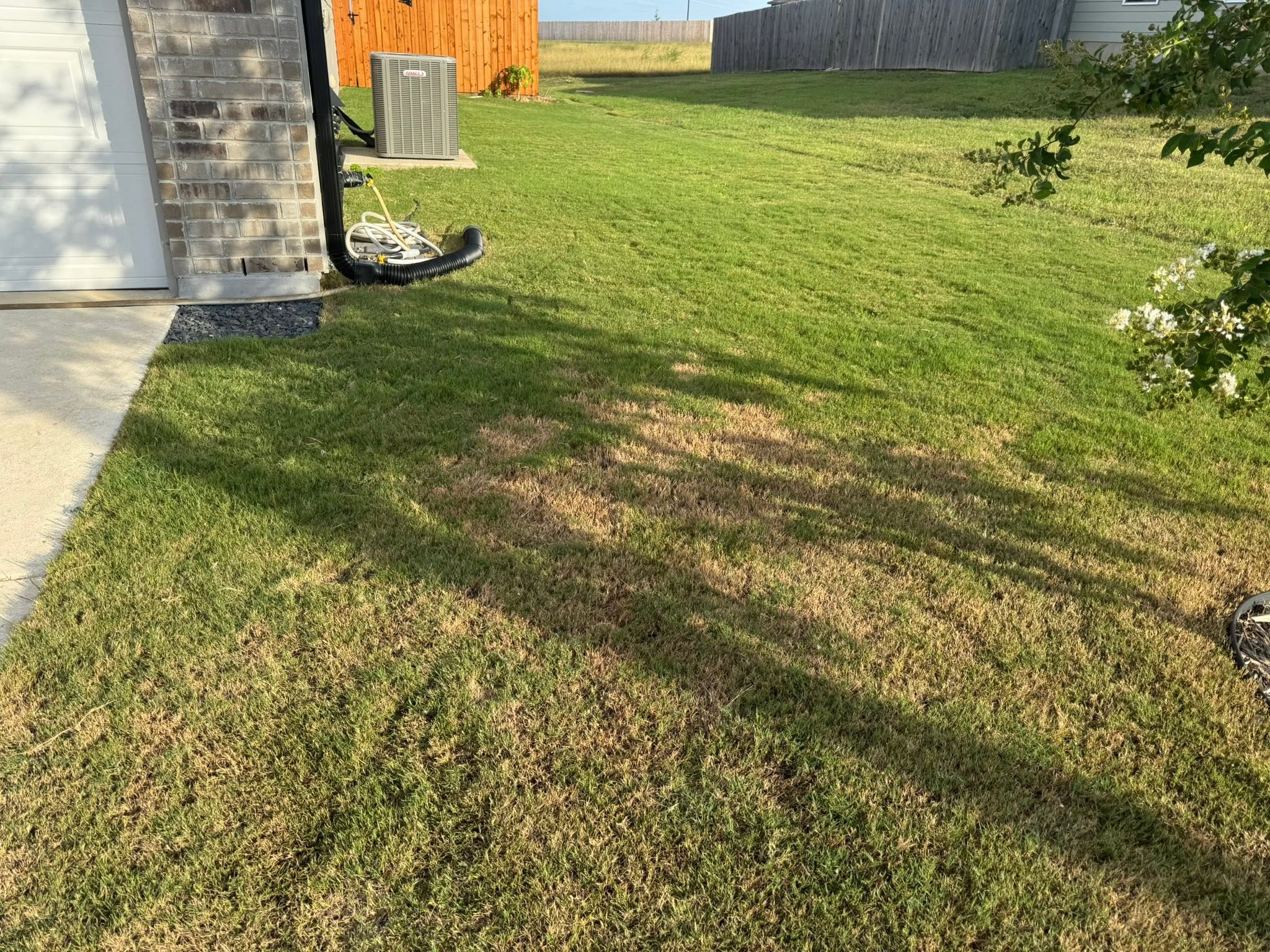
The 2026 season in Greater Sudbury has delivered a specific pattern that’s pushing properties harder than a typical year: extended dry stretches through June and July with sharper, shorter intense rain events between them rather than the more distributed moderate rainfall that characterises a typical Sudbury summer. The result is a lawn care season that swings between periods of heat and moisture stress and periods of heavy saturation, with less of the steady moderate middle ground that established lawns handle best.
The drought resilience that I described in the drought survival piece — built through spring aeration, correct mowing height, and deep infrequent watering — is more relevant in 2026 than in any season since I started. Properties that were managed correctly through spring are handling the dry stretches. Properties that weren’t are showing stress faster and more severely than they would in a more moderate year. The gap between a well-prepared Sudbury lawn and a poorly-prepared one is wider in 2026 than it has been, because the season is demanding more of both.
The intense short rain events that follow the dry stretches are creating their own problems. Heavy rainfall on compacted Sudbury soil — which is exactly what thin Shield-derived topsoil becomes after an extended dry stretch — produces significant surface runoff rather than absorption, because the dry surface is less permeable than normally conditioned soil. Properties that don’t have good drainage management and adequate soil structure to absorb rapid moisture input are showing water pooling in low spots and saturated zones at the soil surface that dry out unevenly over the following days. This pattern of dry-compact then wet-pool is harder on root systems than either drought or saturation alone, because the roots are cycling between moisture stress and oxygen stress without adequate recovery time between them.
The storm intensity component of this year’s pattern has also produced more hail events across Greater Sudbury than typical. I described the full post-hailstorm recovery process in the hailstorm first week piece — that piece has been more relevant this season than any previous year because the frequency of significant hail events across different parts of Greater Sudbury has been higher. If you’ve had a storm come through your part of the city this season and you’re not sure how to read the damage, that piece walks through the exact assessment process.
What Has Not Changed — The Fundamentals That Still Decide Everything
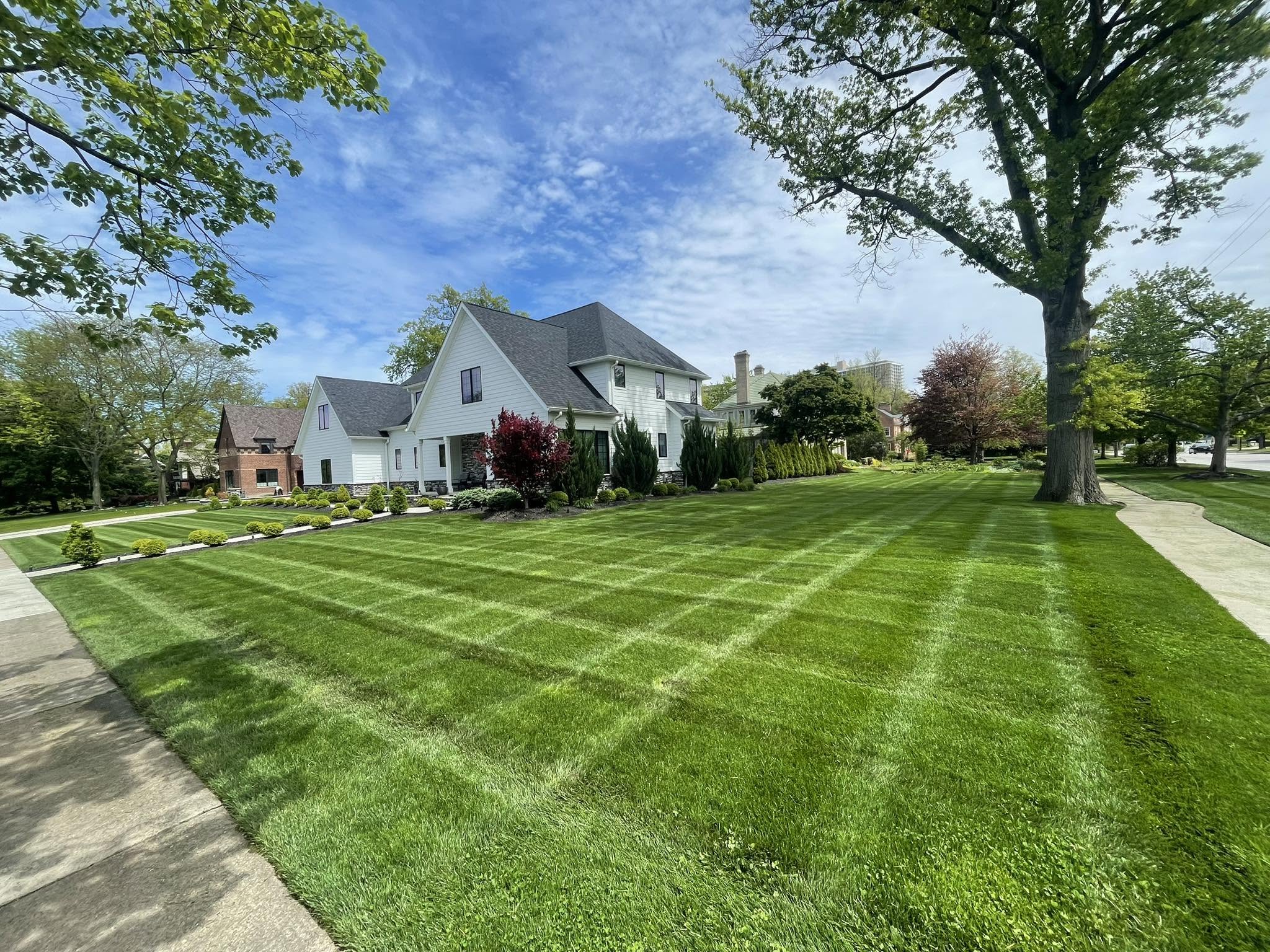
Everything I described above is real and relevant to this specific season. None of it changes what decides the outcome on a Sudbury lawn, because the fundamentals haven’t moved since 2020 and they won’t move in 2027 or 2030. The season changes. The underlying physics of how Sudbury soil and grass interact does not.
Mowing height still decides more than anything else visible
Three to three and a half inches. In 2026 as in every year before it. The case for correct mowing height on a Sudbury property — thin topsoil over Shield, roots that need every energy advantage available to push through limited depth, heat stress that arrives earlier in a dry summer than in a typical one — is if anything stronger in 2026 than in previous seasons because the dry stretches are longer and the consequences of shallow roots are more visible. A lawn mowed at the correct height going into the first dry stretch of 2026 had a meaningfully better chance of holding green than the same property mowed short. That is the same conclusion I reached in the first season I was working on Sudbury properties, and it is the same conclusion I will reach in every season after this one.
It’s still the first thing I check when I walk a property for the first time — the initial assessment that tells me the most about a property before any conversation, which I described in the 300 Sudbury quotes piece. In six years and over 300 properties, the mowing height has never stopped being the most consistent predictor of how the rest of the lawn is doing.
Annual spring aeration is still non-negotiable on Sudbury soil
The compaction that Sudbury winters produce on thin Shield-derived soil is still happening every year. It was happening in 2020 and it is happening in 2026. The intervention that addresses it — core aeration every spring before the growing season begins — is still the most important structural maintenance decision a Sudbury property owner makes each year. I’ve described why in multiple pieces, most directly in the core aeration page. Nothing about 2026 has changed this. If anything, the harder dry stretches this season have made the aeration-or-not split between properties more visible than in previous years — aerated soil absorbs the short intense rain events and holds the moisture through the dry stretches more effectively than compacted soil does.
The soil underneath still decides the ceiling
The Canadian Shield bedrock that sits under most of Greater Sudbury was there in 2020 and is there in 2026. The thin topsoil profiles that create hard ceilings on what some Sudbury properties can support haven’t changed. The variation from one end of a property to the other — deep soil in one section, three inches over bedrock in another — hasn’t changed. The fundamentals of what makes Sudbury different from the rest of Ontario, which I described in the why Sudbury is different piece, are geological. They predate the lawn care industry by about two billion years and will outlast every trend and technique that comes and goes in the industry between now and whenever I stop doing this work.
What changes from year to year is how much the season demands from the ceiling — a dry summer demands more from a shallow-soil property than a moderate one does, and the ceiling becomes visible faster. What never changes is where the ceiling is and what it takes to work effectively within it.
What I’m Doing Differently on Sudbury Properties This Season Specifically
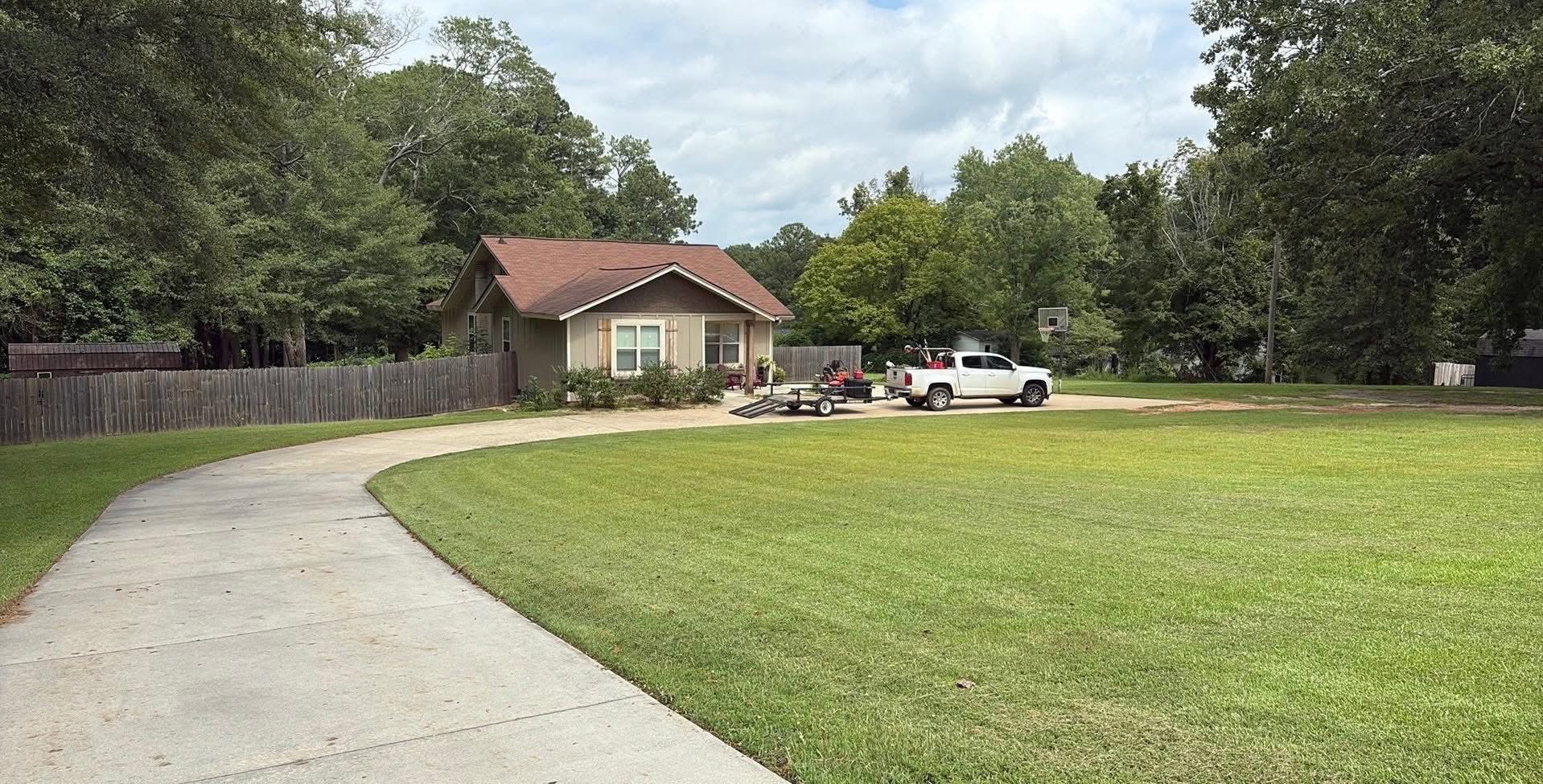
Given the specific pattern of this season — longer dry stretches, sharp intense rain events, higher storm frequency — there are three adjustments I’ve made to how I’m working on properties in 2026 that are different from a typical season.
Watering schedule checks earlier in the season
In a typical Sudbury summer I start having watering schedule conversations with clients in late June when the first dry stretch of the season arrives. This year I started those conversations in late May because the dry pattern established itself earlier and more aggressively than a typical year. Properties that were on a casual or irregular watering schedule in May were already showing stress signals by the first week of June. I moved the schedule check forward across my entire client list and made the deep-infrequent recommendation earlier and more specifically than in previous seasons. The properties that made the adjustment in May handled June better than they would have on the casual schedule. The ones that didn’t were catching up through June on a deficit that a typical year would have given them another month to avoid building.
Post-storm assessments as a standard offering this season
The higher frequency of significant hail and storm events in 2026 has made post-storm property assessment a standard part of what I offer this season rather than an occasional add-on. After any significant storm event across Greater Sudbury, I contact clients in the affected area within 48 hours and offer a walk. Not because every storm produces damage that needs intervention — many don’t — but because the window for catching damage that does need intervention is short, and the homeowners who get the walk within 48 hours have significantly better information for making the recovery decisions than the ones who wait two weeks and then call because something doesn’t look right.
More specific soil depth conversations on new build properties
The volume of new build properties I’ve assessed in 2026 has pushed me to make the soil depth conversation more direct and earlier in the quote process than in previous years. A homeowner in a new Sudbury subdivision calling me about a lawn that isn’t establishing the way they expected needs to hear, in the first conversation, what their topsoil depth is likely to be and what that means for their realistic expectations — before we talk about services or pricing. Getting that conversation done first means that the work I quote is attached to a realistic outcome for their specific property rather than to an expectation the property can’t support. I turn down fewer jobs when the expectation is set correctly upfront, and the jobs I do take go better when both parties started with an accurate picture of the property’s ceiling.
2026 is a harder season than average on Sudbury properties. It’s also the season where the gap between properties that were prepared correctly and properties that weren’t is most visible — which means it’s a useful season for understanding what the fundamentals actually produce when they’re tested. If your property is underperforming this summer and you want an honest read of what’s driving it and what the correction looks like, that’s the conversation I’m set up to have. For everything we offer across the season, the complete 2026 service breakdown is the right starting point.
Call or text: 705-507-6787
Or fill out the free quote form on the site.
We cover Garson, Val Caron, Hanmer, Lively, Chelmsford, Azilda, Capreol, and surrounding areas.
— Ryan Lingenfelter
Cutting Edge Lawn & Landscaping
Garson, Ontario
705-507-6787
