

Every few months I have a conversation with a homeowner who has recently moved to Sudbury from somewhere else in Ontario — Toronto, Hamilton, Barrie, Kitchener — and they’re frustrated.
They did everything right. They followed the lawn care advice they’d always followed. They bought the same products, used the same schedule, applied the same logic that had worked on their previous property for years. And the results in Sudbury are different. The lawn doesn’t respond the way it should. The soil behaves differently. Things that were easy somewhere else are harder here, and nobody told them why.
I’m Ryan Lingenfelter, owner of Cutting Edge Lawn & Landscaping in Garson, Ontario. Since 2020, I’ve maintained and assessed properties across all of Greater Sudbury — Garson, Val Caron, Hanmer, Lively, Chelmsford, Azilda, Capreol. Before that, I grew up here. I’ve spent enough time doing lawn care work across different parts of this province to say with confidence: Sudbury is genuinely different. Not slightly different. Fundamentally different in ways that require a different approach from the ground up.
Here’s exactly what makes it different — and what that actually means for how you manage a property in this city.
The Bedrock Underneath Everything — Literally

The single most important thing that makes Sudbury landscaping different from anywhere else in Ontario is what’s underneath your feet. In most of southern Ontario — the places that most landscaping advice is written for — you have deep soil profiles over sedimentary geology. The topsoil sits over subsoil over clay layers over limestone or other relatively soft sedimentary rock, and the whole stack might be thirty, fifty, or a hundred feet deep before you hit anything that stops a root.
In Sudbury, you have Canadian Shield. Precambrian rock — among the oldest exposed rock on the planet — that in many parts of Greater Sudbury sits within inches of the surface. The topsoil layer on a Sudbury property might be four inches deep. It might be two inches. In some areas, the bedrock is at the surface.
This changes everything about landscaping. Roots can’t go down past the bedrock. Water drains through thin soil quickly — or doesn’t drain at all if there’s an impermeable layer — rather than filtering gradually through deep soil the way it does in most of southern Ontario. The moisture reserve that deep-soil properties can draw on through a dry July simply doesn’t exist on many Sudbury lots. The soil that does exist is often clay-heavy, compacting aggressively under any load.
When someone from Mississauga or Guelph tells me their lawn care approach “should work” in Sudbury because it works everywhere else in Ontario, I understand why they believe that. But what works in Mississauga assumes a soil depth and geological profile that Sudbury doesn’t have. The advice is designed for a fundamentally different physical environment.
The Climate — Not Southern Ontario’s Winters, But Something More Extreme

Sudbury gets cold. Significantly colder than southern Ontario, for longer, with more freeze-thaw cycles through the shoulder seasons than most of the province experiences. The average January temperature in Sudbury runs roughly ten degrees colder than Toronto. The frost-free season is meaningfully shorter. The spring melt in Sudbury is later, faster, and more dramatic than what southern Ontario properties experience.
Why does this matter for landscaping specifically?
Because our winters do more damage to soil structure than winters in southern Ontario. Six months of consistent snow load on thin, clay-heavy soil over bedrock compresses the soil more severely than the same load on a deep-soil southern Ontario property. The freeze-thaw cycles that run through March and April in Sudbury — ground freezing overnight, thawing during the day, repeatedly — work the soil in ways that accelerate compaction and disrupt any soil structure that was developing.
By the time spring actually arrives in Sudbury, the soil on most properties is significantly more compacted than it was the previous October. This happens every year. And it means that the maintenance approach that addresses this — specifically, annual spring core aeration — is not optional in Sudbury the way it might genuinely be optional on a well-established southern Ontario property with good soil depth. On a Sudbury property, skipping aeration for a few years produces progressively worse soil structure in a way that southern Ontario soils are simply more resilient against.
I’ve written about the specific case for annual aeration in Sudbury in the Sudbury aeration timing guide here. But the underlying reason it matters so much comes back to this: our climate does things to our soil every winter that other Ontario climates simply don’t do to theirs.
The Soil Chemistry That Southern Ontario Doesn’t Have to Worry About
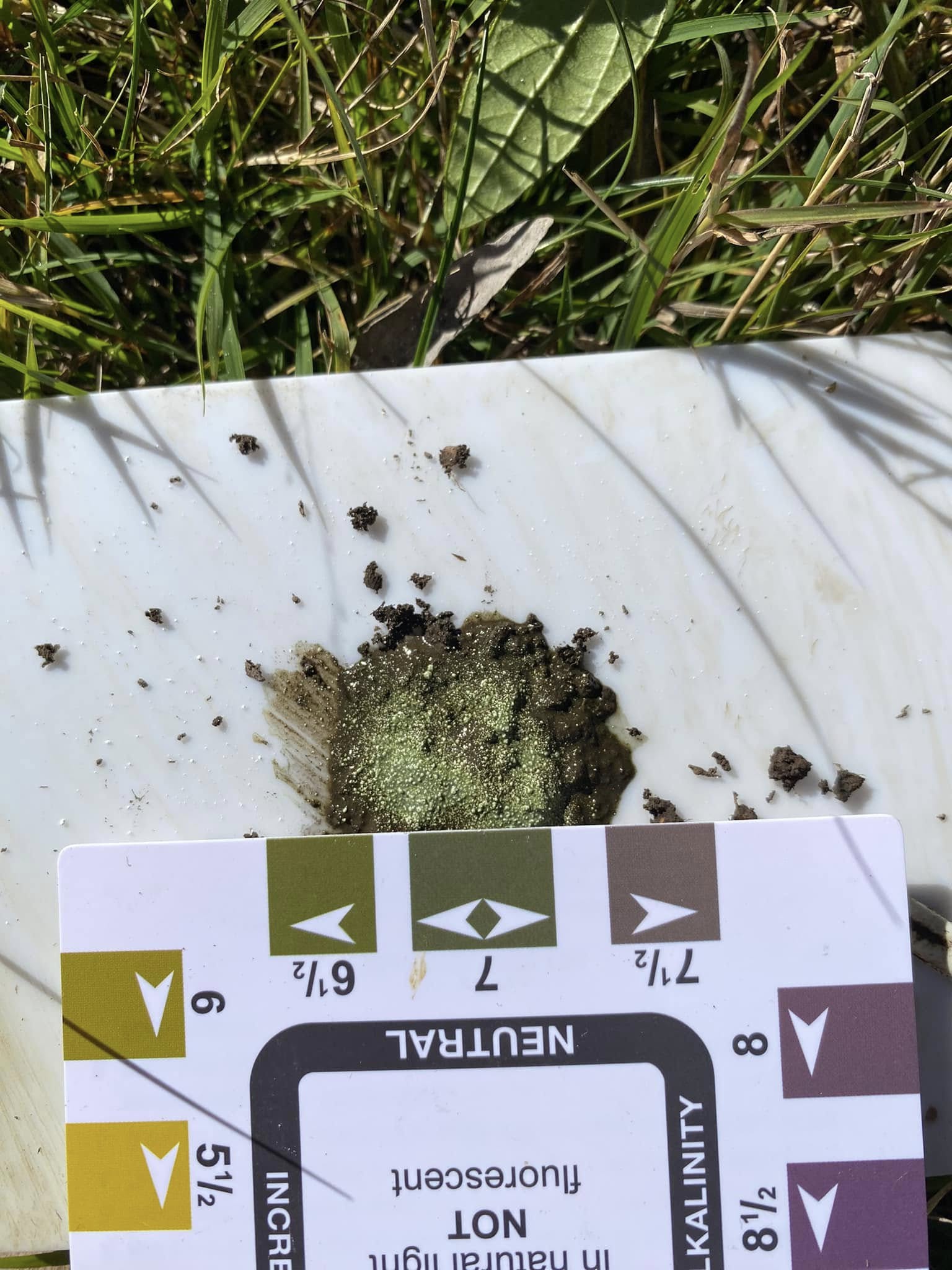
Sudbury’s soil chemistry is different from most of Ontario’s, and the reasons are layered.
The Canadian Shield geology produces naturally acidic soil in this region — more acidic than the limestone-derived soils of much of southern Ontario, which tend toward neutral or slightly alkaline pH. Most cool-season lawn grasses perform best between pH 6.0 and 7.0. Sudbury soils in many areas start below that range before any other factors are considered.
Then there’s the history. Sudbury’s nickel and copper smelting operations from the early 1900s through the 1970s released sulfur dioxide at levels that created acid deposition across an enormous area surrounding the smelters. This acidified soils that were already on the acidic end of the spectrum and deposited heavy metals across a significant radius. The Sudbury Regreening Program — one of the largest land restoration projects in the world — has dramatically improved the landscape over fifty years. But soil chemistry recovery is slow, and in certain parts of Greater Sudbury, the legacy of that history is still present in residential soil today.
The practical effect: fertilizer applied to soil with a pH below 6.0 doesn’t perform the way it should. The grass can’t access the nutrients properly because the soil chemistry is blocking uptake. A homeowner from southern Ontario who applies fertilizer on the same schedule that worked perfectly on their previous property may get consistently disappointing results in Sudbury not because they’re doing anything wrong, but because the soil chemistry in Sudbury requires a different first step that nobody told them about.
That first step is a soil pH test — under twenty dollars, available at garden centres, and the most useful diagnostic tool available for a Sudbury property owner who’s been frustrated by consistent underperformance despite doing everything the standard guides recommend. I talked about this in more detail in the Sudbury soil history article here.
The Terrain — What Canadian Shield Landscape Actually Looks Like on a Residential Lot

Drive through any established Sudbury neighbourhood and you notice something that doesn’t show up in most Ontario cities: the terrain variation. Rock outcroppings in front yards. Significant slope changes from one property to the next. Lots that step up or down over bedrock rather than grading smoothly. Natural drainage channels that follow the Shield topography rather than following a planned municipal drainage system.
This creates landscaping challenges that are genuinely uncommon in southern Ontario. Slope management on Shield terrain is different from slope management on graded clay lots. Drainage on properties with bedrock close to the surface behaves completely differently from drainage on deep-soil lots. A low area that pools water on a deep-soil property might drain within hours. The same low area on a Sudbury Shield property, with nowhere for the water to percolate, might hold water for days.
The implications for lawn care are significant. Mowing equipment that works perfectly on flat suburban lots encounters challenges on Sudbury’s varied terrain. Seeding strategies that work on flat surfaces need adjustment on slopes where seed washes before it establishes. Drainage problems that would be addressed with simple grading on a southern Ontario property require different solutions when the option of grading into deep soil doesn’t exist.
Properties along and off Highway 144, in particular, face the full expression of this terrain challenge on lots that are often larger than standard residential and sitting directly on exposed Shield. I’ve written specifically about what approach actually works on those properties in the Highway 144 property guide here.
What This Means for How Sudbury Properties Are Actually Managed
I want to be direct about what these differences actually require in practice — not because the adjustments are complicated, but because knowing them saves Sudbury homeowners from years of frustration following advice that was never designed for their environment.
Aeration is not optional here
On a good deep-soil southern Ontario property with established grass, you might honestly get away with aerating every other year or less. On a Sudbury property with thin soil over Shield and significant winter compaction every season, annual spring aeration is maintenance. The soil needs to be physically opened up every year because the winter closes it every year. The compaction that builds without annual aeration on a Sudbury property accumulates faster and with more impact than on properties with more forgiving soil depth.
Mowing height matters more here because roots have less room
Three inches minimum, always. In Sudbury specifically, the case for correct mowing height is even stronger than elsewhere because the roots have less depth available to them. A lawn with thin topsoil over Shield needs every advantage it can get in root development. Short mowing forces shallow roots that have nowhere to go when the thin surface layer dries out in July. Three inches is the height at which the grass blade can produce enough energy to push roots as deep as the soil allows.
I’ve written about the specific July consequences of short mowing in Sudbury in the mowing height article here.
Watering approach needs to be adapted to thin soil
Deep twice-weekly watering is the right approach on most Sudbury properties — the same principle that applies everywhere. But the “deep” part has a different context on a Shield property. On a property with four inches of topsoil over bedrock, you’re not trying to push water six inches down — there’s no six inches. The watering goal is to push moisture through the available soil depth to the bottom of the root zone without creating runoff. Understanding the actual depth of your soil changes how you think about watering duration.
The full approach to Sudbury summer watering is in the Sudbury watering guide here.
Fertilizer without a pH test is often wasted money in Sudbury
Southern Ontario advice on fertilizing assumes a soil pH in a range where grass can use what’s applied. In Sudbury, that assumption can be wrong, and the same fertilizer that works efficiently elsewhere in the province sits on top of soil chemistry that limits uptake. Test the pH first. If it’s below 6.0, lime before fertilizing. The lime is the intervention that makes the fertilizer work — without it, you’re spending money on fertilizer that isn’t fully reaching the grass.
Seed selection needs to account for Sudbury’s conditions
Cool-season seed blends marketed broadly for Ontario often assume growing conditions — soil depth, consistent moisture, pH range — that don’t apply to the challenging sections of many Sudbury properties. Drought-tolerant fine fescue blends perform better on thin-soil, high-sun-exposure Sudbury sections than Kentucky bluegrass blends that need deeper soil and more consistent moisture to establish well. This is a detail that rarely comes up in generic Ontario seed advice but matters significantly here.
Why Generic Ontario Lawn Advice Consistently Underperforms in Sudbury
I want to address this directly because it’s the source of a lot of homeowner frustration and money wasted on approaches that weren’t designed for this environment.
The vast majority of lawn care content available in Canada — the articles, the product guides, the bag instructions, the YouTube channels — is written with southern Ontario in mind. Not because there’s anything wrong with that content for its intended context, but because southern Ontario is where the majority of the population lives and where most of the lawn care industry operates. The advice is optimized for deep-soil, milder-winter, limestone-derived soil properties. It works well for those properties.
Sudbury is not that environment. And the gap between what southern Ontario advice assumes about the soil, climate, and terrain and what actually exists on a Sudbury property is wide enough that following generic Ontario advice in Sudbury produces consistently mediocre results — not because the homeowner is doing anything wrong, but because the advice was designed for a different place.
The homeowners who get good results in Sudbury are almost always the ones who’ve either figured out through years of trial and error what the adjustments need to be, or the ones who got honest advice early from someone who actually understands this specific environment. The older established neighbourhoods in Sudbury where lawns have held up for fifty years are full of both types.
If you’re new to Sudbury, or if you’ve been here for years and consistently frustrated by lawn care results that don’t match what you’d expect from the effort you’re putting in, a property assessment is the most direct path to understanding what your specific lot actually needs. I do these for free across Greater Sudbury — I’ll walk the property, tell you what I see, and give you a straight answer about what the approach should be for your specific soil, terrain, and conditions.
Call me at 705-507-6787 or fill out the free quote form here. This is the conversation I find most satisfying — not because it’s complicated, but because the gap between what someone’s been doing and what will actually work here is almost always bridgeable once you understand what makes this place different.
— Ryan
Frequently Asked Questions
Why is lawn care harder in Sudbury than in southern Ontario?
Three main reasons: the Canadian Shield bedrock creates thin soil profiles with limited root depth and different drainage behaviour; Sudbury’s colder, longer winters cause more severe annual soil compaction than southern Ontario climates; and the soil chemistry — naturally acidic from Shield geology, further acidified historically by industrial activity — limits how well fertilizer performs without pH correction first. Together, these factors mean that standard Ontario lawn care advice, designed for deep-soil southern Ontario properties, consistently underperforms in Sudbury without adjustment.
Is annual core aeration really necessary in Sudbury?
Yes — more so than in most of Ontario. Sudbury’s winters are colder and longer, causing more severe annual soil compaction on thin Shield-derived soils than southern Ontario properties experience. Annual spring aeration addresses this compaction every year so it doesn’t build up progressively. On a well-established deep-soil southern Ontario property, you might skip aeration for a year without significant consequence. On a Sudbury property, skipping it accumulates damage faster because there’s less soil depth to absorb the impact.
Does the Canadian Shield actually affect residential lawn care in Sudbury?
Yes, directly. The thin topsoil layer over bedrock limits root depth, reduces moisture reserves available to grass during dry periods, and creates drainage behaviour that varies significantly from lot to lot depending on where the bedrock sits relative to the surface. Properties with particularly shallow topsoil need drought-tolerant seed varieties, more careful watering management, and realistic expectations about which sections will go dormant during July dry stretches rather than maintaining the deep-soil resilience that’s possible in other parts of Ontario.
Should I test my soil pH before fertilizing in Sudbury?
Yes — before significant fertilizer investment on a Sudbury property, a soil pH test is worth doing. Sudbury soils tend toward acidity due to Shield geology and, in some areas, historical industrial impact. Below pH 6.0, grass cannot efficiently use the nutrients in fertilizer regardless of product quality. Lime application to correct the pH before or alongside fertilizing is often the intervention that makes the fertilizer work, not an additional luxury. Basic soil tests are available from garden centres for under twenty dollars.
How is landscaping in Sudbury different from other Northern Ontario cities?
Sudbury shares some characteristics with other Northern Ontario cities — colder winters, shorter growing seasons — but has specific features that distinguish it even within Northern Ontario. The Canadian Shield geology is more dramatically expressed in residential areas here than in many comparable cities. The industrial history and its soil chemistry legacy is unique to Sudbury. And the terrain variation from Shield topography creates slope and drainage challenges that aren’t typical even of other Northern Ontario properties. Sudbury is genuinely distinct, and that distinction shows up in how properties need to be managed.
Ryan Lingenfelter is the owner of Cutting Edge Lawn & Landscaping in Garson, Ontario. Since 2020, his crew has provided full lawn care services across Greater Sudbury — Garson, Val Caron, Hanmer, Lively, Chelmsford, Azilda, and Capreol. Cutting Edge is licensed, insured, BBB A+ rated, and ThreeBest Rated for lawn care services in Sudbury.
📞 Phone: 705-507-6787
📍 Service Area: Greater Sudbury, Ontario
🔗 Free Quote: cuttingedgelawn.ca/quote
Helpful Lawn Care Services in Sudbury
- Core Aeration — Essential on Sudbury’s Thin Shield Soil
- Grass Cutting Services Sudbury
- Sod Installation for Challenging Sudbury Sections
- Spring and Fall Property Cleanup Sudbury
Continue Reading
- Why Lawns Near Sudbury’s Old Smokestacks Still Look Different Today
- This Old Sudbury Subdivision’s Lawns Still Look Like the 70s
- I Walked 40 Sudbury Properties This May — What Almost Every Lawn Was Missing
