
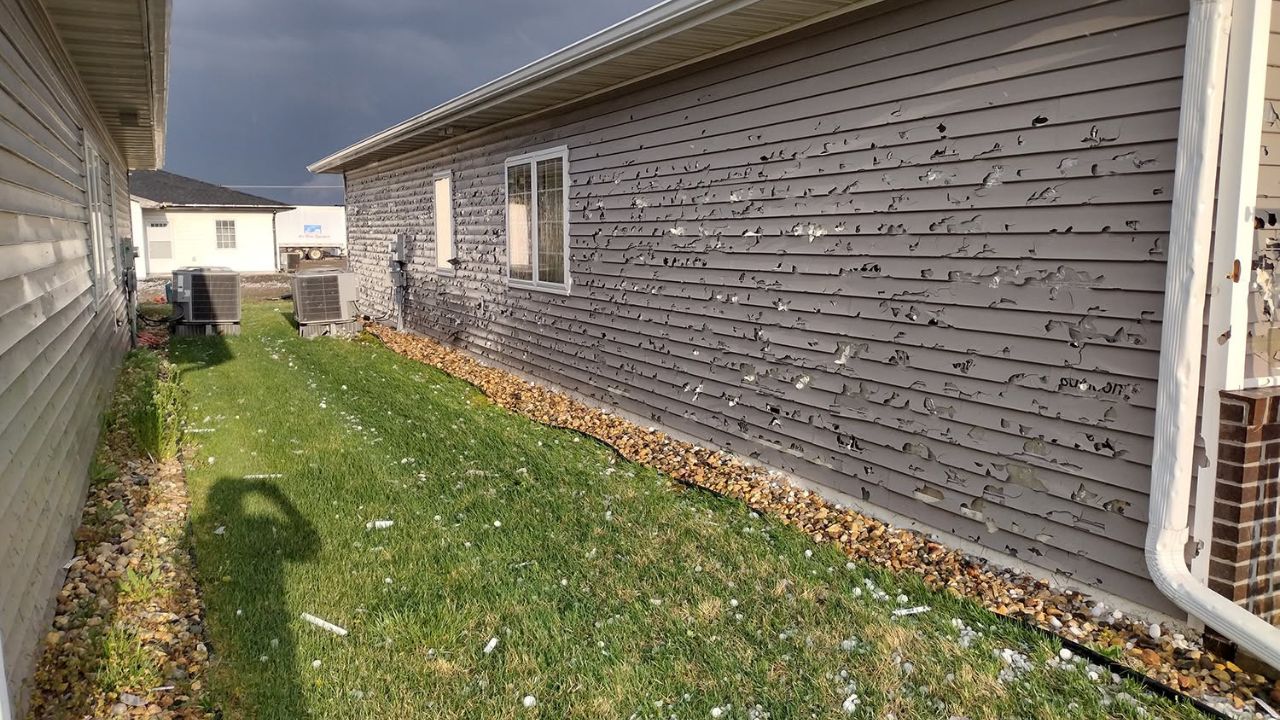
Sudbury gets hail. Not every summer and not everywhere at once, but when a serious hailstorm comes through Greater Sudbury — the kind that leaves dents in cars and strips leaves off trees — it leaves a lawn that looks significantly worse than it did an hour before the storm. I’ve assessed properties the day after major hailstorms and the morning after minor ones, and the consistent thing I see is homeowners who don’t know what the damage actually is, what it means for their lawn’s recovery, and what they should and shouldn’t do in the days immediately after.
This piece covers exactly that — what hail does to a Sudbury lawn structurally, what the first week of response looks like, and how to tell the difference between damage that heals on its own and damage that needs intervention. The timing matters because getting the first week right is the difference between a lawn that recovers fully and one that develops secondary problems that take the rest of the season to fix.
What Hail Actually Does to a Sudbury Lawn
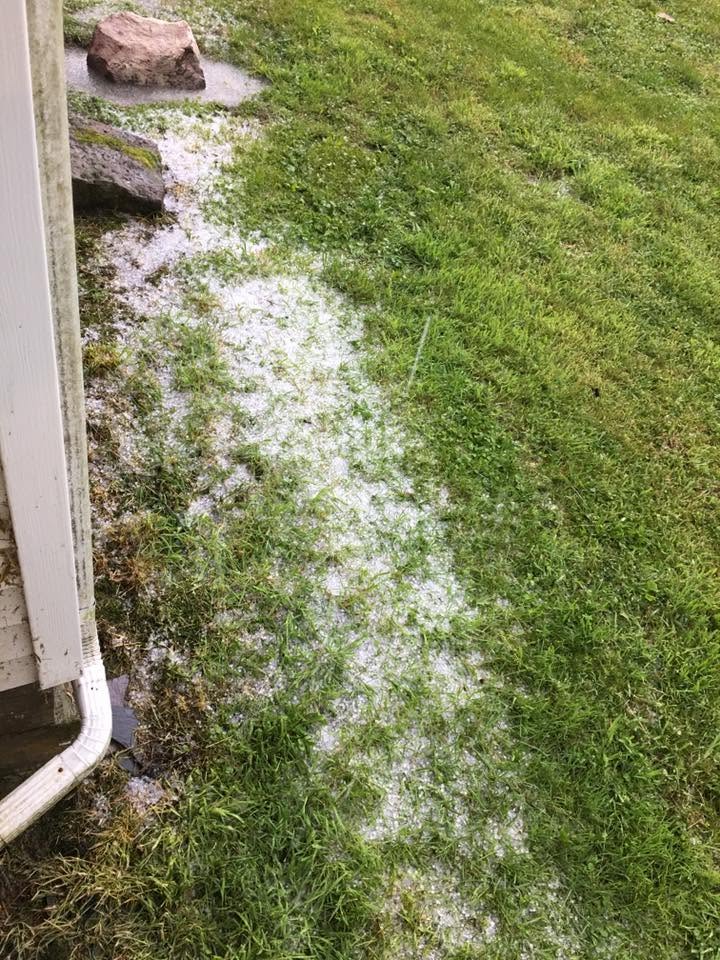
Hail damage to a lawn is not the same as drought damage or disease damage, and understanding the difference changes what you do about it. When hailstones hit grass blades at speed, they do three things simultaneously: they bruise and split the blade tissue, they flatten the grass in the direction the storm was moving, and on heavier storms they compact the soil surface from the cumulative impact force of thousands of stones hitting the same area over several minutes.
The bruised and split blade tissue is the most visible part of the damage. Grass blades that have been struck by hail turn white, pale, or translucent in the damaged sections within a few hours of the storm — the tissue death from the impact is fast, and a lawn that was uniformly green the morning of a storm can look silvery or pale across entire sections by evening. This is alarming to look at but is usually less serious than it appears, for a reason I’ll come back to in a moment.
The flattening is the second visible symptom. A heavy hailstorm followed by rain pushes the grass flat in a consistent direction — it mats down against the soil and in the days after the storm it stays matted rather than standing upright. This matting creates two secondary problems: it reduces the photosynthetic surface area available to each plant, slowing recovery, and in wet conditions it creates the kind of dense surface layer that holds moisture and reduces air circulation — conditions that favour fungal development if the matting isn’t addressed in the right window.
The soil compaction from hail impact is the least visible and most Sudbury-specific consequence. On a deep-soil property with significant topsoil depth, the compaction from even a heavy hailstorm is distributed through enough soil volume that the effect on the root zone is minimal. On a Sudbury property with three to five inches of topsoil over bedrock — the thin-profile soil over Shield that I described in detail in the why Sudbury is different piece — the impact compaction from a major hailstorm is transmitted through the full available soil depth with significantly less buffering. The result is a post-storm soil surface that’s measurably more compacted than it was before the storm, which affects how water moves through the root zone and how easily the recovering grass can push new growth through the surface.
Days 1 to 3: What to Do and What to Leave Alone
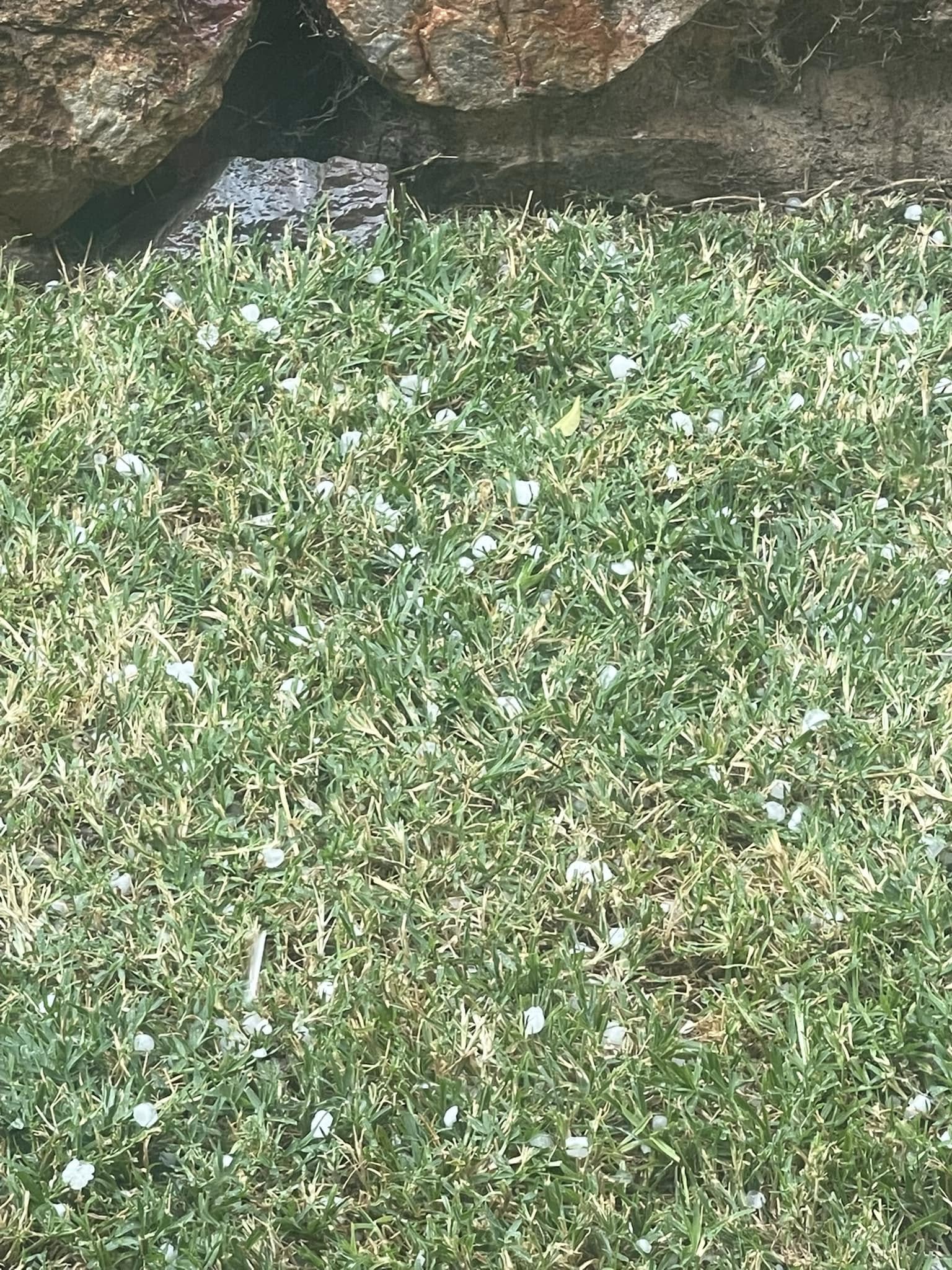
The first three days after a major hailstorm are a waiting and assessment period, not an intervention period. The instinct to act immediately — to rake the flattened grass upright, to fertilize for recovery, to water heavily to help the lawn along — is understandable but counterproductive in the immediate post-storm window. Here’s the specific reasoning behind each restraint.
Don’t rake or mow in the first 72 hours
Flattened, bruised grass blades in the first 72 hours after a hailstorm are structurally weakened. The impact has split blade tissue, reduced cell wall integrity, and in many cases partially separated the blade from the growing point at the base. Walking over this grass with a mower or dragging a rake across the surface adds mechanical stress to plant tissue that’s already compromised. Mowing bruised blades cuts into damaged tissue rather than healthy tissue and creates wound openings in a stressed plant — the equivalent of cutting an already-bruised surface. Wait until the grass shows active upright regrowth before any mowing or raking.
Don’t fertilize immediately after the storm
Fertilizer applied to a lawn that’s in active stress from hail damage stimulates top growth at a moment when the plant needs to direct energy toward cellular repair rather than new growth. High-nitrogen fertilizer on a post-hail lawn pushes blade production that the plant can’t support while it’s also managing the tissue repair from impact damage — the result is weak, thin new growth that’s more vulnerable to the next stress event rather than the recovery flush the homeowner is hoping for. Hold fertilizer until the lawn shows clear recovery signs — typically seven to fourteen days after the storm.
What to do in days 1 to 3: assess and document
Walk the property on day two and take photographs of the damaged sections from consistent angles. This documentation matters for two reasons: it gives you a baseline to measure recovery against in the following weeks, and if you have home insurance that covers landscape damage from hail events, the documentation from within 48 hours of the storm is significantly more useful than photos taken a week later after some natural recovery has begun.
On the assessment walk, note which sections are showing the pale, silvery blade damage versus which sections appear physically flattened but still green. The pale sections have tissue death in the blade material. The flattened green sections have structural displacement but intact tissue. Both recover, but on different timelines and through different processes — and on a Sudbury property, the pale sections over shallow bedrock in full sun exposure will be slower to recover than the same damage on deeper-soil sections of the same property, for the same reasons I described in the drought survival piece. The soil depth underneath determines how much recovery resource the plant can draw on regardless of what the surface damage looks like.
One thing to do immediately: clear debris from drainage channels
If the hailstorm included heavy rain — which most significant Sudbury hailstorms do — check any drainage channels, downspout outlets, and low points in the property for debris accumulation. Hail strips leaf and twig material from trees and deposits it in concentrated piles that can block drainage on a property where water movement was already managed carefully. On a Sudbury property with bedrock close to the surface and limited drainage capacity in the soil itself, a blocked drainage outlet that holds water on the lawn surface for 24 to 48 hours post-storm adds waterlogging stress on top of the physical hail damage. Clear the channels on day one and let the water move.
Days 4 to 7: The Recovery Window That Decides the Outcome
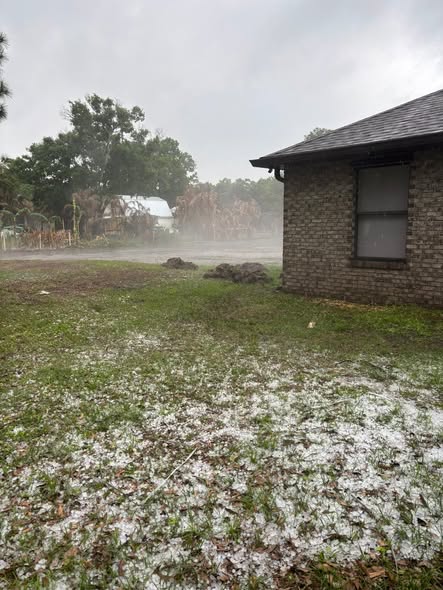
By day four, the lawn will be telling you clearly which sections are recovering and which sections are not. Active upright growth returning through the flattened, pale surface is the sign of recovery — the grass is pushing new growth from the crown and growing point at the base, which means the crown survived the impact and the plant is functional. No upright growth, or growth that appears thin and discoloured rather than the normal green of new blade material, is the sign of a section that’s struggling to recover and may need intervention.
Light raking on day four or five
Once upright regrowth is visible — typically day four to five after a major storm — a light raking pass through the still-matted sections helps lift the compressed surface layer, improves air circulation through the canopy, and removes the dead blade material from the initial impact damage that’s now sitting on top of the recovering grass. This is not an aggressive pass — you’re lifting and aerating the surface, not pulling material out of the ground. The goal is to open the mat so that the new growth coming through from below has access to light rather than being shaded by the dead layer above it.
Don’t rake sections that aren’t showing upright regrowth yet. Those sections need more time, and disturbing them before the crown has begun producing new growth removes the residual blade material that’s still providing minimal photosynthetic function and temperature buffering for the recovering crown underneath.
Resume normal watering on day four
The deep infrequent watering schedule that a healthy Sudbury lawn should be on — described in the context of the drought survival piece — resumes on day four. Not daily watering, not extra watering to help recovery along, just the normal schedule. The recovering plants need consistent moisture availability, not saturation. The root system damage from the impact compaction is already limiting the efficiency with which roots can take up water — adding excess water on top of compromised root function creates the same oxygen depletion problem I described in the daily watering piece.
First mow on day six or seven
When upright regrowth is established across the recovering sections and the lawn is showing consistent new growth through the mat, the first post-storm mow happens at day six or seven. Height set at three and a half inches — higher than whatever it was set at before the storm if it was lower than that. The first mow after a major stress event is not the moment to cut aggressively. You’re removing the top of the dead and damaged material while leaving enough blade length to support continued rapid recovery. One-third rule applies strictly: never remove more than one-third of the blade length in a single mow, and on a post-hail recovery mow, err toward taking even less.
Sharp blade on the mower, mandatory. Hail-damaged grass blades that are cut with a dull blade rather than sheared cleanly fray and brown at the cut edge — the damage is visible within 24 hours and slows the recovery of the blade tissue at the cut point. If you’re not sure when the mower blade was last sharpened, this is the mow to sharpen it for.
What the Lawn Needs If It Doesn’t Recover on Schedule
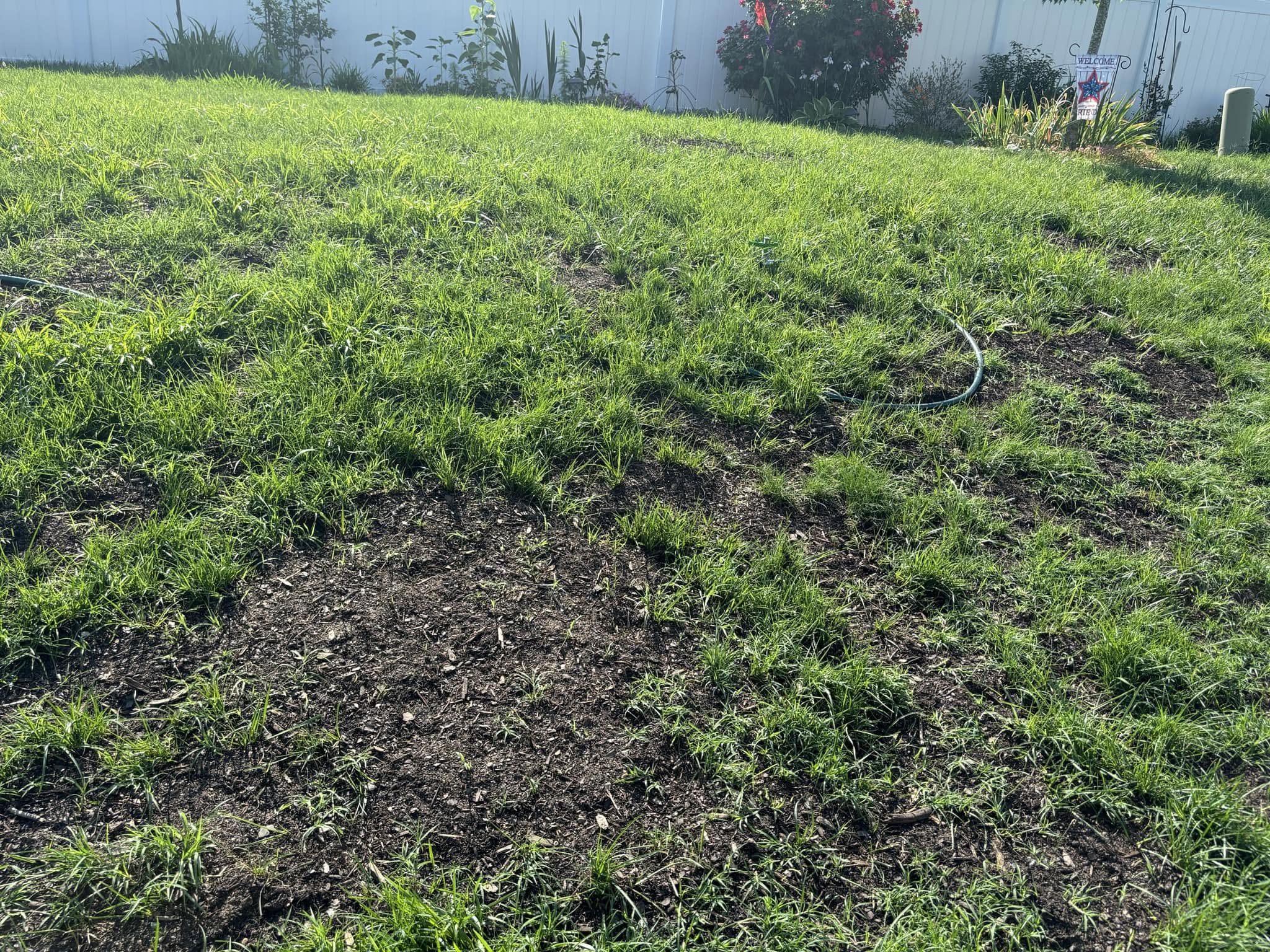
By day ten to fourteen after a major hailstorm, the sections that are going to recover through the natural process described above will be visibly recovering. New growth is consistent, colour is returning to normal, and the lawn is progressing toward the appearance it had before the storm. Sections that are not recovering on that timeline — still pale, still flat, showing no consistent new upright growth by day ten — need a different assessment before any intervention.
The first thing I do on a post-hail property where sections aren’t recovering on schedule is the same crown check I use when a lawn appears dead in summer heat — I described the exact process in the lawn that looked dead in July piece. Pull a handful of grass from the centre of the non-recovering section, including the crown at the base. Firm, faint green or white crown with intact roots: the plant is alive and recovering slowly — give it more time. Dry, brittle crown that pulls apart without resistance: the crown was killed by the hail impact and this section needs to be overseeded.
Crown death from hail impact is most common in sections where the grass was already stressed before the storm — thin sections over shallow bedrock, sections that had been mowed too short and had shallow root systems, areas that were already showing weak growth from compaction or drainage problems. The hailstorm doesn’t create the vulnerability in those sections. It exposes it. A section that doesn’t recover after a hailstorm was usually a section that was managing a pre-existing problem before the storm hit — the storm just pushed it past the threshold it was managing to hold.
Aeration before overseeding non-recovering sections
Sections where the crown is confirmed dead need overseeding, but on a Sudbury property the sequence matters. The impact compaction from the hailstorm in those sections, combined with whatever pre-existing compaction was already there, creates a surface that’s too dense for seed to establish good soil contact without aeration first. The sequence I use is the same as any Sudbury overseeding job — aeration first to open the soil, then seed into the channels, as I described in the 4 services in one week piece. On new subdivisions where the construction compaction was already significant before the storm, the post-hail aeration need is even higher — the impact compaction on top of construction compaction can be dense enough that seed placed on the surface has almost no path to establish. I covered the specific soil conditions on new Sudbury builds in the new subdivisions piece.
The timing for overseeding non-recovering post-hail sections depends on where in the season the storm hit. A mid-summer hailstorm that leaves dead sections in July gives those sections enough of the remaining growing season to establish if seed goes down within two to three weeks of confirming the crown is dead. A late-season storm in August or September compresses that window significantly — seed that goes down after mid-August on a Sudbury property is racing against the first frost and may need to be treated as a fall establishment project rather than a current-season recovery.
If you’ve had a major hailstorm come through your part of Greater Sudbury and you’re not sure whether what you’re seeing is normal recovery or something that needs intervention, a property walk two weeks after the storm is the right call. By that point the sections that are going to recover on their own are recovering, and the sections that need help have had enough time to show clearly that they need it. For everything we offer across the season, the complete 2026 service breakdown is the right starting point.
Call or text: 705-507-6787
Or fill out the free quote form on the site.
We cover Garson, Val Caron, Hanmer, Lively, Chelmsford, Azilda, Capreol, and surrounding areas.
— Ryan Lingenfelter
Cutting Edge Lawn & Landscaping
Garson, Ontario
705-507-6787
