
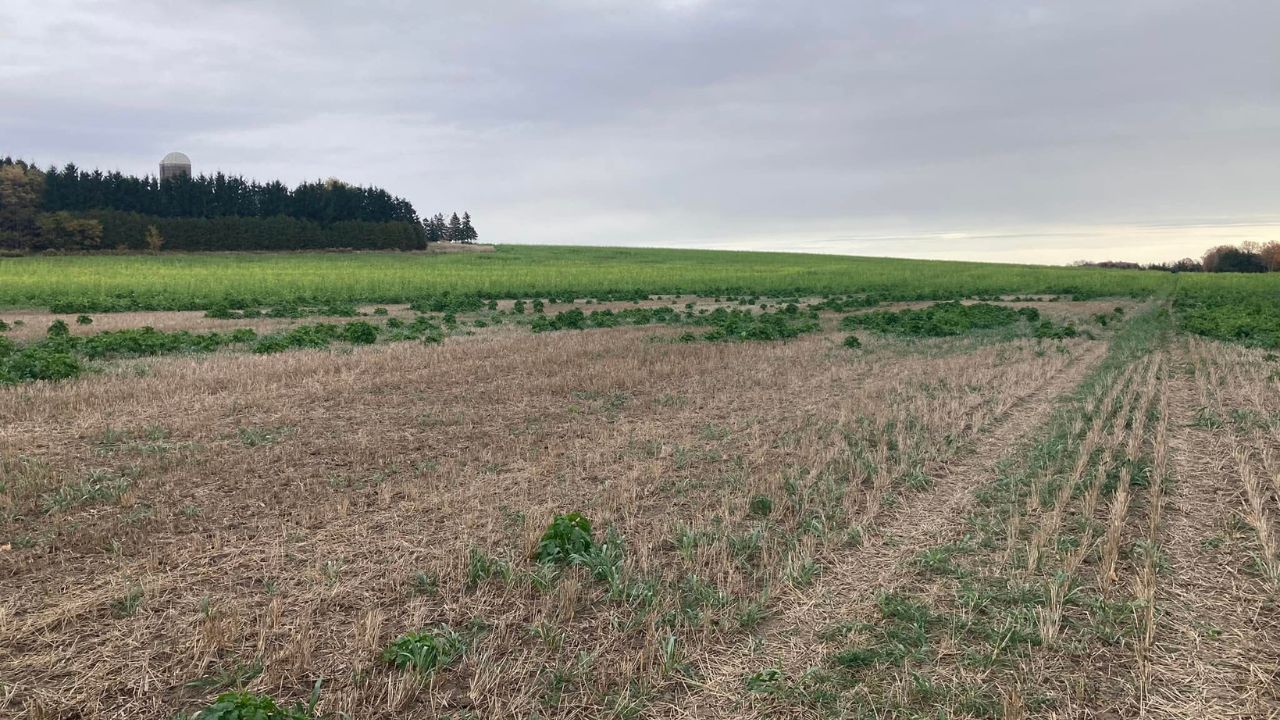
I’m not a soil scientist. I want to be upfront about that.
But I’ve pushed a screwdriver into Sudbury soil on hundreds of properties and watched what happens. I’ve seen the same clay come out of the aeration machine on a Val Caron property that came out of a Garson property three kilometres away. I’ve watched water sheet off the surface of a dry Sudbury lawn in August and soak into a southern Ontario lawn on the same day. I’ve seen what five winters of freeze-thaw cycles do to clay that nobody’s been aerating.
I’m Ryan Lingenfelter, owner of Cutting Edge Lawn & Landscaping in Garson, Ontario. Since 2020, I’ve maintained properties across Greater Sudbury — Garson, Val Caron, Hanmer, Lively, Chelmsford, Azilda, Capreol. What I know about Sudbury soil comes from working in it every week, not from a laboratory. But what I know is practical and specific — and it explains almost every lawn problem I see in this city.
Here’s what Sudbury soil is, what it does, and why it makes lawn maintenance in this city genuinely different from almost anywhere else in Ontario.
What’s Actually in the Ground in Greater Sudbury
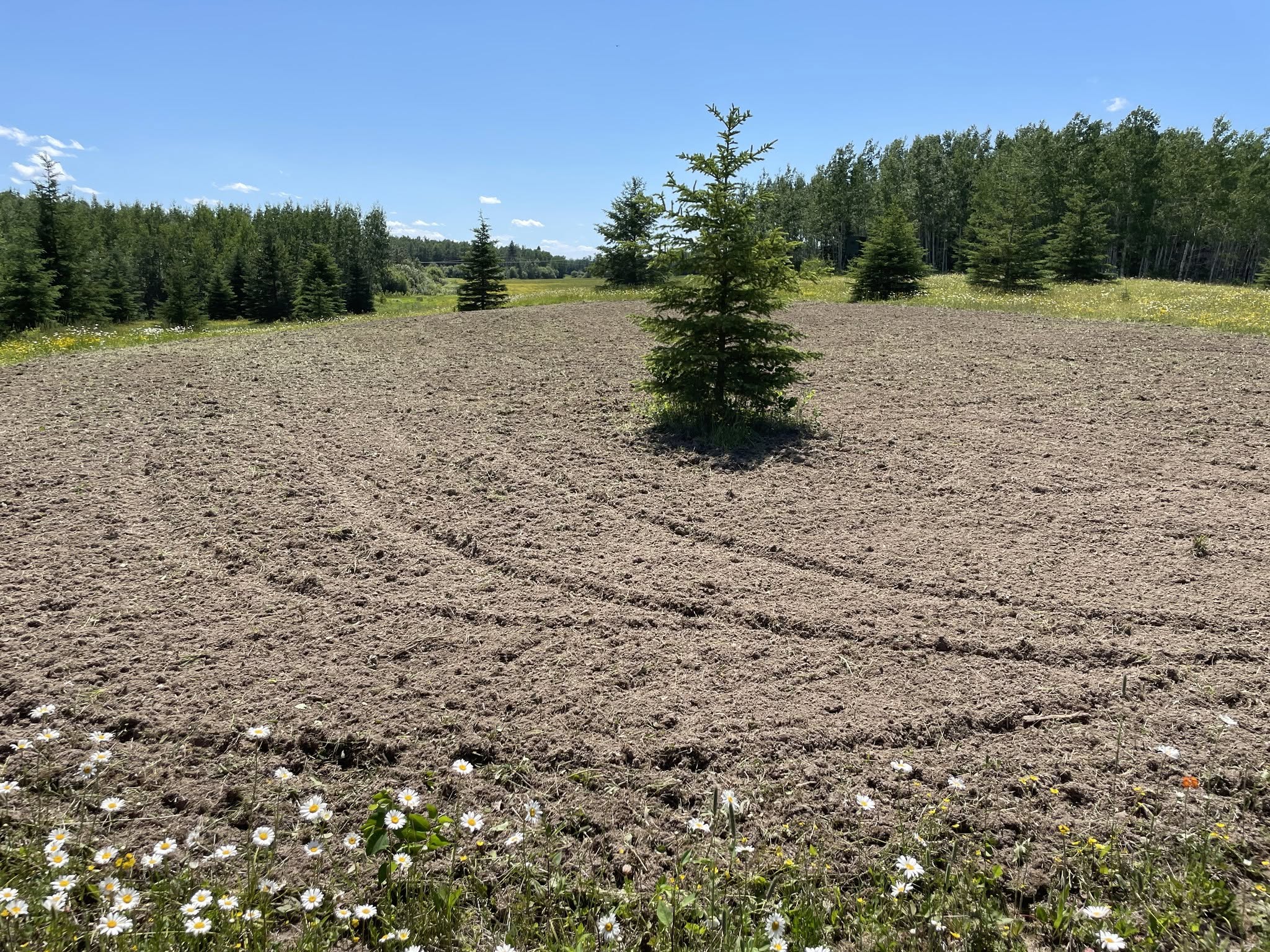
Greater Sudbury sits on some of the oldest exposed rock on Earth — the Canadian Shield, Precambrian bedrock that’s over a billion years old. That bedrock is close to the surface across most of the city. In some parts of Sudbury you can see it. In others it’s a metre or two down. Everywhere in this city, it’s the floor that everything else sits on.
What sits on top of that bedrock is glacial material — soil deposited by glaciers during the last ice age. The glaciers that covered this region moved slowly and ground everything in their path into fine particles. When they melted, those particles settled out in layers. What we got in Greater Sudbury, across most residential areas, is heavy glacial clay.
Not all clay is the same. The clay in southern Ontario — the kind that makes the Niagara escarpment and the farmland around Hamilton — is dense but often mixed with organic material that accumulated over thousands of years of forest growth. The clay in Sudbury is different: finer particle size, less organic matter, and sitting directly over Shield bedrock that stops drainage cold. Water can’t drain down through bedrock. It has to go sideways or stay where it is.
Under a microscope, clay particles are flat and plate-like — incredibly thin sheets that stack together like cards in a deck. The flat structure is what gives clay its characteristic behaviour: when wet, the plates slide against each other and the soil becomes plastic and moveable. When dry, the plates lock together and the soil becomes hard. When frozen, water gets between the plates, expands, and forces them apart — then when it thaws, they settle back but not always in the same configuration. This freeze-thaw cycling, repeated hundreds of times over a Sudbury winter, is what produces the compaction we see every spring on un-aerated Sudbury lawns.
That physical structure — fine flat plates, poor drainage, bedrock floor, glacial origin with minimal organic matter — is why Sudbury soil behaves the way it does on lawns. And why generic lawn care advice that works on southern Ontario soil doesn’t produce the same results here. I’ve covered the full picture of what makes Sudbury genuinely harder on lawns in the Sudbury lawn challenges article here.
Why Sudbury Clay Compacts the Way It Does — And What It Looks Like
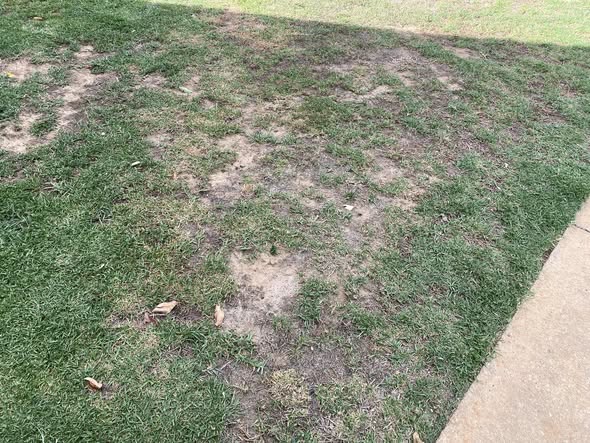
When I do the screwdriver test on a new Sudbury property — push a standard flathead into the soil with moderate force and see how far it goes — I’m testing how compacted the clay has become.
On a well-maintained, regularly aerated Sudbury lawn, the screwdriver goes in 4 to 6 inches. The soil has pore spaces — gaps between the clay particles where air, water, and roots can move. On an un-aerated Sudbury lawn after three or four years of freeze-thaw cycling, the screwdriver stops at an inch. Sometimes less. The clay has compressed into something that approaches the density of compacted road base.
What’s happening at the particle level: those flat plate-like clay particles are being forced into tighter and tighter alignment by the repeated freeze-thaw action. Each winter, water gets into the spaces between particles, expands, and pushes them apart. When it melts, they settle. But they don’t settle back to exactly where they were — they settle slightly closer together each time. Five winters of this, with no aeration to mechanically reopen the structure, and the soil has become significantly denser than it was when the lawn was first established.
The consequence for grass roots is simple and severe. Roots can’t grow through compacted clay. They hit the dense layer and stop. Instead of growing 6 to 8 inches deep where moisture is available even in a dry Sudbury July, they crowd into the top 2 inches of soil — the loose zone above the compaction layer. When that surface dries out, which it does within days of heat and no rain, the roots are out of options. The lawn goes brown.
This is why the same property can have a green lawn one July and a patchy brown one the next without the homeowner changing anything they did. The compaction accumulated silently over winters. The threshold where it starts affecting performance gets crossed eventually, and then July reveals it. The year-by-year deterioration pattern is something I’ve documented precisely in the aeration article here.
What Sudbury Clay Does to Water — And Why It Matters for Irrigation
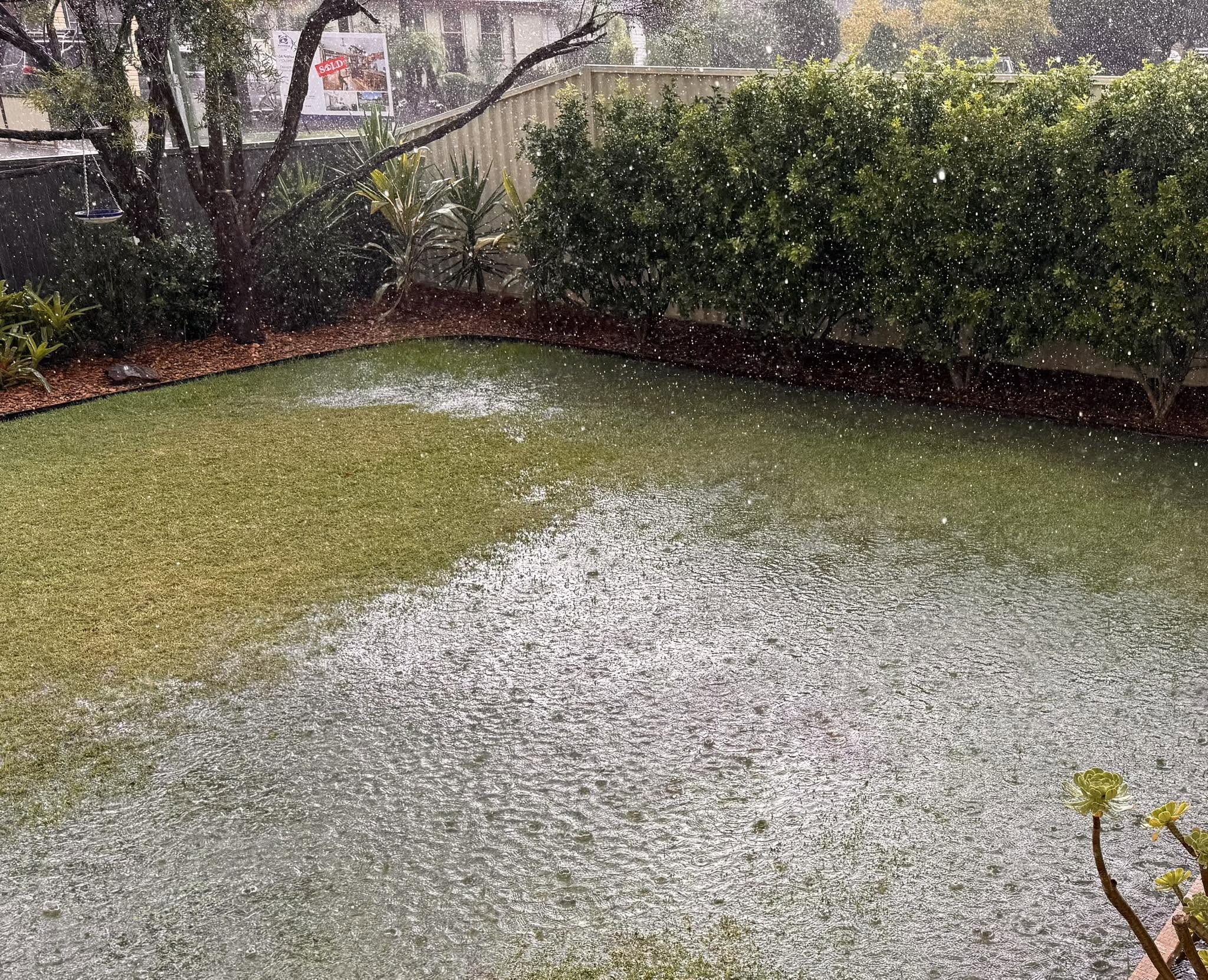
The flat plate-like structure of clay particles creates something interesting when it comes to water: clay can hold enormous amounts of moisture, but it absorbs water very slowly. A loamy soil absorbs water at roughly four times the rate of a heavy clay soil.
On a Sudbury lawn in summer, this creates a specific problem. Run a sprinkler for 20 minutes and the surface of compacted clay gets wet — but the water doesn’t penetrate quickly. It pools on the surface briefly, then runs off the sides of the lawn toward the street or low spots. The clay below the surface stays dry. You can water a compacted Sudbury lawn for 30 minutes and have bone-dry soil 3 inches down.
This is why I tell homeowners in Sudbury to water deeply and infrequently rather than lightly every day. Short daily watering applies water faster than compacted clay can absorb it — most of it runs off. A long slow watering session, applied at a rate the clay can absorb, actually gets moisture to root depth. A good oscillating sprinkler set to low volume, running long enough to put an inch of water into the soil over an hour or more, is more effective than a high-output sprinkler run for 20 minutes. The clay needs time to absorb it.
Aeration changes this dramatically. The holes pulled by an aerator create channels that bypass the compaction and allow water to penetrate directly to root depth. A freshly aerated Sudbury lawn absorbs water at a noticeably higher rate than the same lawn before aeration — the channels create preferential flow paths into the soil that weren’t there before. This is one of the reasons aeration produces such visible results on Sudbury properties even in the same season it’s done. The full watering approach for Sudbury conditions is in the Sudbury watering guide here.
The bedrock floor under Sudbury clay also means that water that does penetrate has nowhere to go vertically. It hits the bedrock and either moves laterally through the soil or stays in place. This is why drainage problems are so common on Sudbury properties — low areas collect water because it can’t drain down and the clay slows lateral movement. The same soil that makes July drought stress worse also makes spring waterlogging worse. Both extremes come from the same material. I’ve covered the drainage problem specifically in the bare patches and drainage article here.
What Organic Matter Does — And Why Sudbury Soil Has Less of It Than You Might Expect
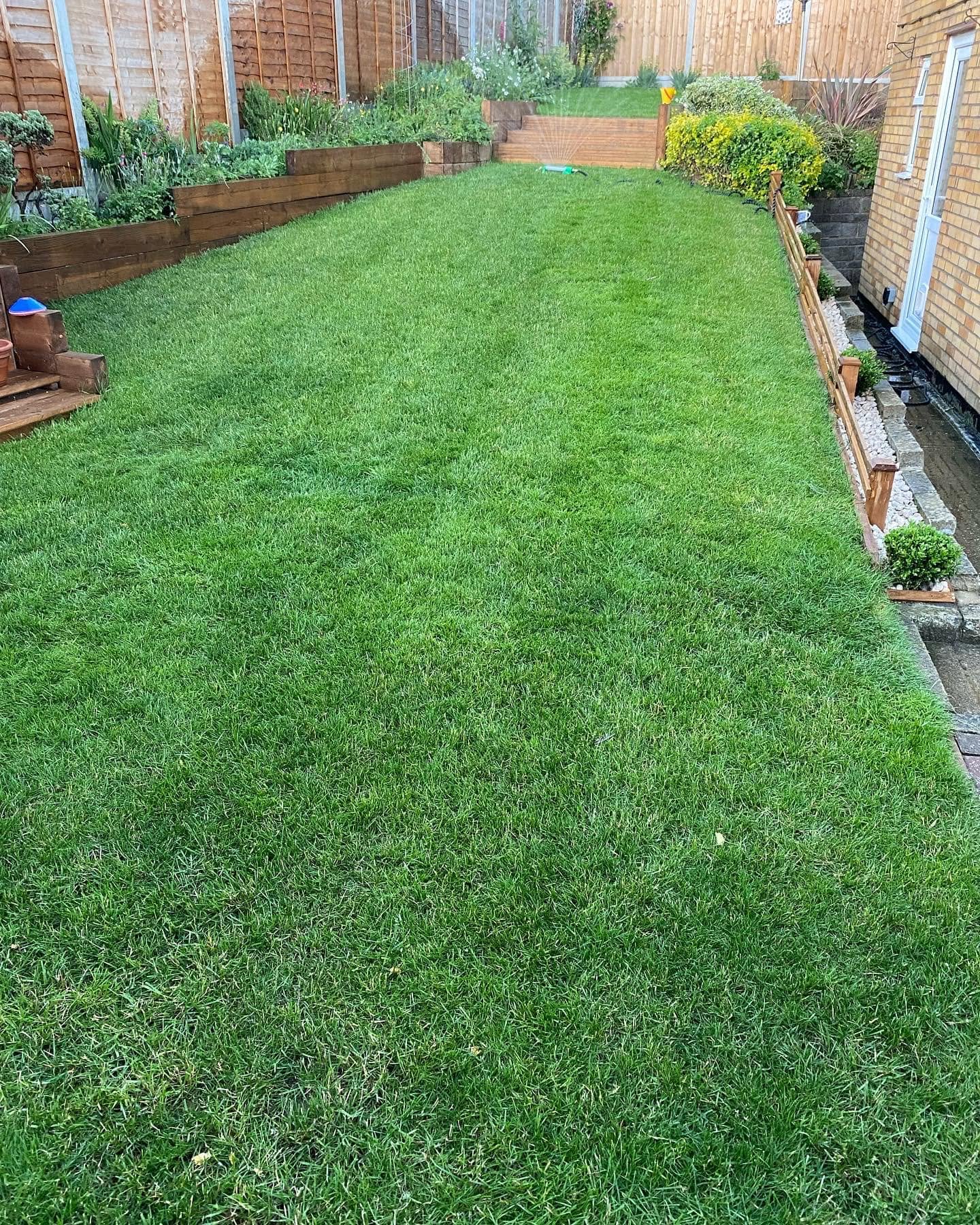
Healthy soil isn’t just mineral particles — it’s a community. Organic matter, microorganisms, earthworms, fungal networks — all of these work together to create the soil structure that allows grass roots to thrive. On a healthy agricultural or garden soil, organic matter might be 5 to 8 percent of the total composition. On most Sudbury residential properties, it’s significantly lower.
There are a few reasons for this. First, the glacial clay that dominates Sudbury residential soils is mineral-heavy and organic-matter-light at baseline — it didn’t accumulate the centuries of forest leaf litter that enriches southern Ontario clay. Second, construction on new Sudbury subdivisions typically scrapes whatever topsoil exists and grades the property with raw clay or fill before applying a thin layer of imported topsoil. On many Garson and Hanmer subdivision properties I’ve walked, that topsoil layer is 2 inches or less — barely enough to establish initial grass and insufficient for a root system with any depth.
Third, lawns that are never aerated and are maintained without returning organic matter to the soil steadily deplete what’s there. Clippings that are always bagged remove organic material rather than returning it. Thatch that builds up without decomposing adds a layer that further slows water penetration. Over years, the soil under a poorly maintained Sudbury lawn becomes less biologically active and less structurally resilient.
This is part of why I leave aeration plugs on the surface after every aeration job. Those plugs — which break down within two to three weeks — return soil material and whatever organic matter exists back to the surface. Over years of annual aeration, this slow return of material starts improving the organic content of the top layer. It’s not dramatic in one season. But it accumulates. Lawns that have been aerated annually for five years have noticeably better soil structure than the same lawn did at the start — the organic matter percentage creeps up, the soil supports more biological activity, and the grass roots have more to work with. The long-term improvement from consistent correct maintenance is something I’ve seen documented on properties I’ve maintained since 2020. It’s real and measurable by the fifth year.
What adds organic matter fastest: leaving clippings on the lawn after every cut. Short clippings from a lawn cut on schedule break down within 24 to 48 hours, return nitrogen and organic material to the soil, and are essentially invisible after a day. It’s the simplest zero-cost improvement available on any Sudbury lawn. The full mowing approach that makes this work is in the mowing height article here.
What This Means for Everything You Do on Your Sudbury Lawn
Understanding what Sudbury soil is — and how it behaves — explains almost every lawn care decision that’s specific to this city.
Why aeration is annual here and optional elsewhere. In loamier southern Ontario soil, freeze-thaw compaction is less severe and organic matter helps maintain structure between aeration cycles. In Sudbury clay, the compaction is aggressive and annual aeration is the only reliable way to reset it before it accumulates into real root restriction. I’ve covered this in the year-by-year aeration article — the consequences of skipping it compound faster here than anywhere else in the province.
Why 3-inch mowing height matters more in Sudbury. Short mowing limits root depth. On southern Ontario loam, shallow roots still have some access to moisture and organic material throughout the soil profile. On Sudbury clay, shallow roots hit the compaction layer at 2 inches and stop — there’s nothing above that layer in a dry July. Three-inch mowing combined with aeration is what gives roots the depth to function through summer heat. Without both, the clay wins. The mowing height reasoning is in the May mowing mistake article.
Why soil prep before sod matters more in Sudbury. Sod laid on Sudbury clay without proper soil preparation — tilling, topsoil addition, grade correction — will produce shallow roots that hit the compaction layer within 2 to 3 seasons. The soil underneath determines what the sod can become. Everything about what proper prep looks like is in the sod soil prep article here.
Why watering technique is more important here. Sudbury clay’s slow absorption rate means the technique matters as much as the volume. Deep infrequent watering, applied slowly enough for the clay to absorb, is categorically different from daily light watering — not just in the short term but in what it trains the root system to do over a season. The full watering guide is in the Sudbury watering article.
Everything I do on Sudbury properties — the aeration timing, the mowing height, the overseeding approach, the watering advice — comes back to understanding what the soil is and how it behaves. The soil is the whole game here. Get that right and the grass follows. Ignore it and you can do everything else correctly and still fight an uphill battle every July.
If You Want Someone Who Actually Knows This Soil
We work in Sudbury clay every week. We know what it does in May versus August, what it looks like when it hasn’t been aerated in three years versus one, and what it takes to make a lawn root deeply enough to survive what Greater Sudbury throws at it.
If you want a property walk and an honest assessment of what your soil and lawn actually need — give me a call.
📞 705-507-6787
🔗 Get a Free Quote
📍 Serving Greater Sudbury — Garson, Val Caron, Hanmer, Lively, Chelmsford, Azilda, Capreol
— Ryan
Frequently Asked Questions
What type of soil does Greater Sudbury have?
Most residential properties in Greater Sudbury have heavy glacial clay soil sitting on Canadian Shield bedrock. The clay is fine-particle, low in organic matter compared to southern Ontario clay, and sits over bedrock that prevents vertical drainage. This combination creates the characteristic Sudbury lawn challenges: aggressive compaction from freeze-thaw cycles, poor water penetration when dry and waterlogging when wet, and root restriction that limits how deeply grass can grow without annual aeration to mechanically reopen the soil structure.
Why does Sudbury clay compact so severely every winter?
Clay particles have a flat, plate-like structure at the microscopic level. Water gets between these plates during freeze-up, expands, and forces them apart. When it thaws, the plates settle — but slightly closer together than before. Repeated hundreds of times through a Sudbury winter, this cycle progressively compacts the clay. Annual core aeration mechanically disrupts this process by pulling plugs from the soil and creating channels that give roots, water, and oxygen a path through the compacted layer. Without annual aeration on Sudbury clay, compaction accumulates year over year until it becomes severe enough to prevent meaningful root growth.
Why does water run off my Sudbury lawn instead of soaking in?
Compacted Sudbury clay absorbs water very slowly — the tightly packed flat clay particles create a near-impermeable surface when dry. Water applied faster than the absorption rate sheets off rather than soaking in. The fix is a combination of core aeration, which creates channels that bypass the compacted surface layer, and watering technique — slower application over longer periods gives the clay time to absorb rather than shedding. A heavy-output sprinkler run for 20 minutes produces more runoff than penetration on compacted Sudbury clay. A low-output sprinkler run slowly over an hour or more achieves significantly better penetration.
Does Sudbury soil have less organic matter than other Ontario soils?
Yes, typically. Sudbury’s glacial clay has a lower baseline organic matter content than southern Ontario clay, which accumulated more organic material from centuries of different forest cover and different glacial history. New subdivision lots in Sudbury often have as little as 2 inches of imported topsoil over raw clay — insufficient for deep root development. Annual core aeration that returns plug material to the surface, combined with leaving clippings on the lawn rather than bagging them, gradually improves organic matter content over multiple seasons. The improvement is real but gradual — noticeable after three to five years of consistent practice.
Why is Sudbury soil harder to grow grass in than southern Ontario soil?
Three compounding factors: heavier clay with less organic matter at baseline, bedrock close to the surface that prevents vertical drainage, and a more aggressive freeze-thaw cycle that compacts the clay harder every winter. Southern Ontario clay is generally more loamy, has higher organic matter, and doesn’t compact as severely from milder winters. The combination in Sudbury means roots have less room to grow, water has less ability to drain or penetrate, and the soil structure requires more active management — specifically annual aeration — to maintain the conditions that support healthy grass.
How does Sudbury soil affect when I should aerate?
Late May to mid-June is the best spring window for core aeration in Greater Sudbury — after the ground has fully thawed and dried enough for equipment to penetrate properly, and before the summer heat. This timing gives the lawn the full growing season to respond to the opened soil. Fall aeration in late August to September is also effective and pairs well with overseeding. The key in Sudbury is annual frequency — the clay compaction cycle is aggressive enough that even one skipped year produces measurable deterioration in soil structure compared to annual aeration.
Ryan Lingenfelter is the owner of Cutting Edge Lawn & Landscaping in Garson, Ontario. Since 2020, his crew has provided full lawn care services across Greater Sudbury — Garson, Val Caron, Hanmer, Lively, Chelmsford, Azilda, and Capreol. Cutting Edge is licensed, insured, BBB A+ rated, and ThreeBest Rated for lawn care services in Sudbury.
📞 Phone: 705-507-6787
📍 Service Area: Greater Sudbury, Ontario
🔗 Free Quote: cuttingedgelawn.ca/quote
Helpful Lawn Care Services in Sudbury
- Core Aeration for Healthy Lawns
- Grass Cutting Services in Sudbury
- Sod Installation in Sudbury
- Property Cleanup Services
- Mulch & Decorative Stone
- Hedge Trimming Services
Continue Reading
- Why Sudbury Is One of the Hardest Places in Ontario to Maintain a Lawn
- What Happens to a Sudbury Lawn That Never Gets Aerated
- How to Fix a Sudbury Lawn Step by Step — Start Here
