
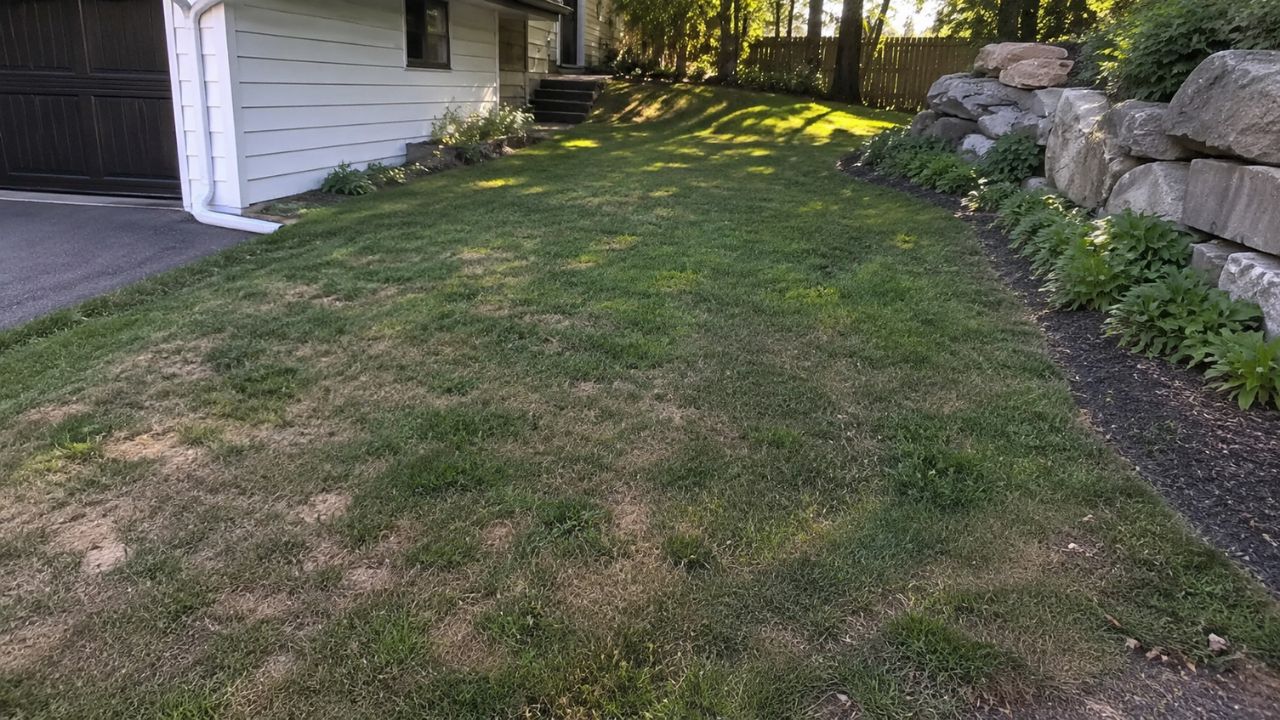
I say this not to be dramatic, and not to make excuses — but because it’s genuinely true and it matters for how you approach lawn care here: maintaining a good lawn in Sudbury is harder than in most places in Ontario.
Homeowners who move here from southern Ontario, or who compare their results to what they see on YouTube tutorials filmed in Toronto or Hamilton, often feel like they’re doing something wrong. Their lawn doesn’t respond the way it should. Things that work for other people don’t seem to work here. They spend money on seed and fertilizer and don’t get the results they expected.
It’s not because they’re doing it wrong. It’s because Sudbury has a specific combination of conditions that stack against lawn growth in ways that most of Ontario doesn’t have to deal with. Understanding what those conditions are — and how to work with them rather than against them — changes everything about how you approach lawn care here.
The Canadian Shield Underneath Everything
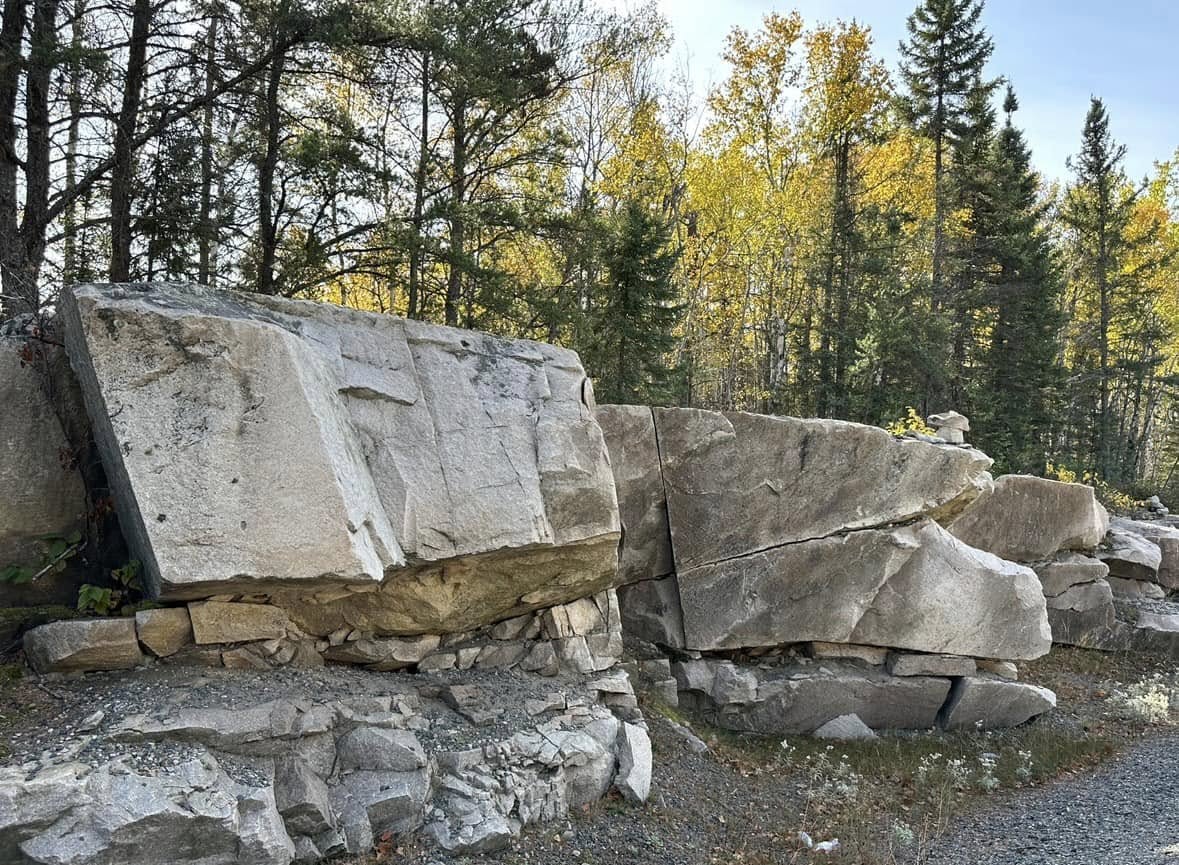
Sudbury sits on the Canadian Shield — one of the oldest rock formations on Earth, and one of the most unforgiving substrates for growing anything. The bedrock comes close to the surface across much of Greater Sudbury, sometimes within a foot or two of the ground level, sometimes less.
What this means for lawns is that the soil depth available for roots is often severely limited. Grass roots want to go four to six inches deep — deeper on a healthy, well-maintained lawn. When rock is two inches below the surface, that’s simply not possible. Roots hit the Shield and stop. The grass stays shallow-rooted, which means it dries out faster in summer, heaves more in spring freeze-thaw cycles, and has less resilience to any kind of stress.
You can’t fix bedrock. What you can do is maximize every inch of soil you have — keeping it loose, well-aerated, and high in organic matter so roots use every bit of available depth rather than being further restricted by compaction on top of the shallow cap. Core aeration on Shield-influenced properties isn’t just helpful — it’s essential. It’s the difference between roots using 2 inches of soil and roots using 2.5 inches, and on a shallow soil profile, that half inch matters.
On properties where bedrock is very close to the surface, traditional lawn establishment sometimes doesn’t work at all. These are the situations where bringing in quality topsoil to build depth — sometimes 4 to 6 inches — before laying sod or seeding is the only approach that produces a lasting result.
The Soil That’s Left — Heavy Clay, Low Organic Matter
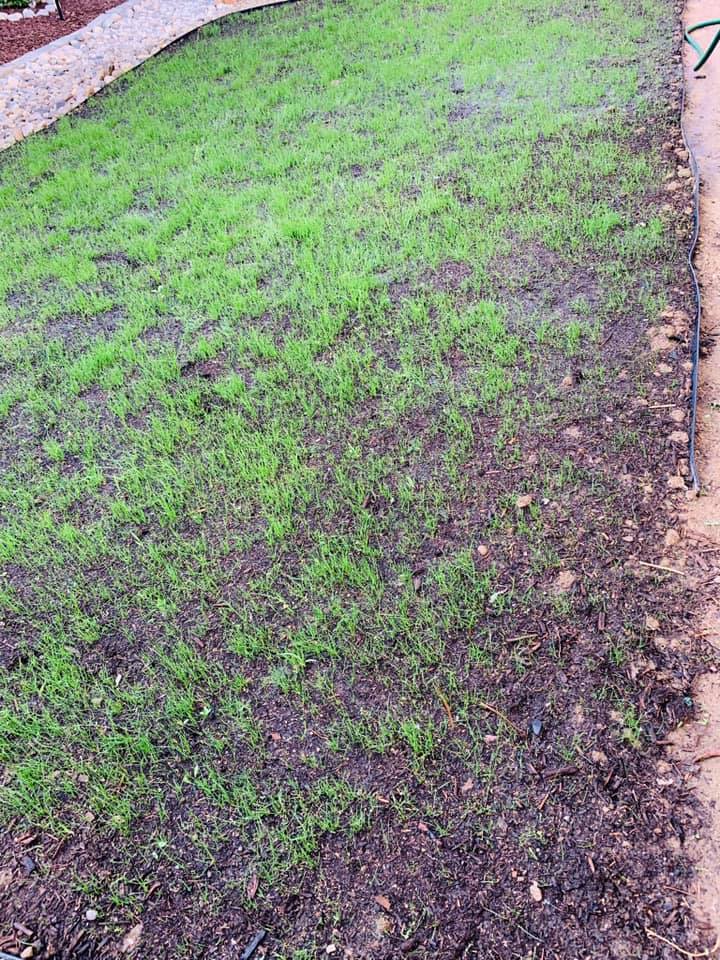
Where there is soil in Sudbury, it tends to be heavy clay in many residential areas — especially the older established neighbourhoods. Clay soil has specific characteristics that make lawn care harder than on the sandier, loamier soils that cover much of southern Ontario.
Clay compacts easily. Heavy foot traffic, freeze-thaw cycles, equipment weight — all of it presses clay particles together until the soil becomes dense and impermeable. Water pools on the surface rather than soaking in. Roots can’t push through it. Air can’t circulate. Soil temperature fluctuates more dramatically because there’s no insulating organic matter buffering the extremes.
Clay also stays wet longer in spring and dries into hard cracks in summer. A Sudbury lawn on heavy clay is waterlogged in May, rock-hard in July, and both conditions stress grass in different ways. It’s a constant battle between too much moisture and not enough, with a narrow window of actually good conditions in between.
The organic matter content of Sudbury soil is generally lower than in parts of Ontario with more agricultural history. Organic matter is what gives soil its life — its ability to hold moisture, release nutrients slowly, and support the microbial activity that makes everything else work. Building organic matter takes time, but topdressing with quality compost after aeration year after year does it. It’s slow, but it works, and the difference between a Sudbury lawn on depleted soil and one with a few years of compost topdressing is visible.
The Climate — Shorter Season, More Extreme Swings
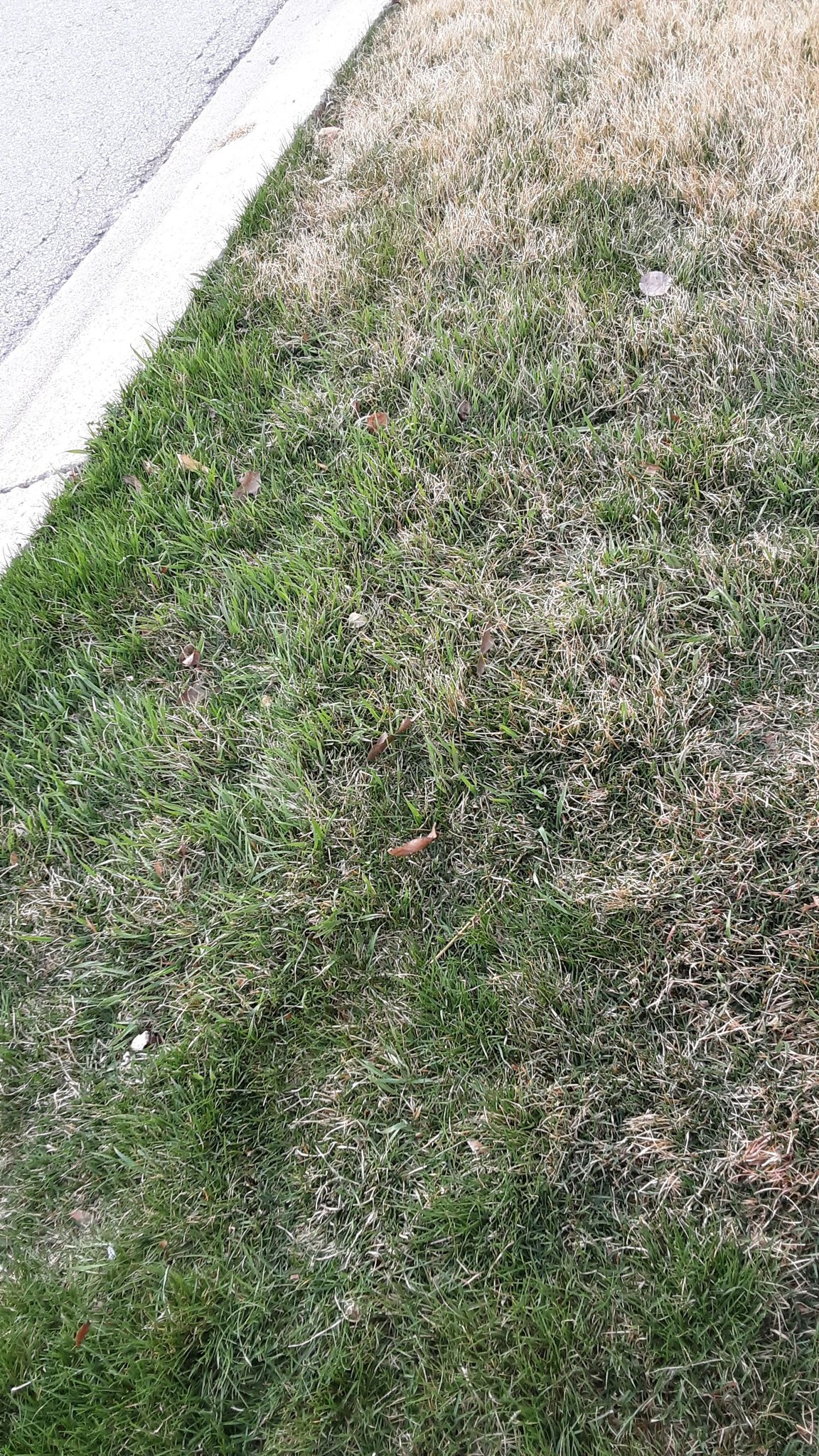
Sudbury’s climate compounds everything. We get a shorter growing season than most of Ontario — meaningful lawn care season starts in mid-May and winds down in October, compared to April through November in the GTA. That’s weeks less time for the grass to establish, recover, and prepare for winter.
Our winters are longer and harder. The snow load on lawns here is significant — heavy wet snow sitting on frozen ground for months creates compaction, thatch matting, and snow mould conditions that southern Ontario lawns simply don’t experience to the same degree. Every spring, Sudbury lawns are coming out of a more severe winter than most Ontario grass ever faces.
The freeze-thaw cycles we get — temperatures crossing the freezing point repeatedly in late fall, early spring, and sometimes mid-winter during warm stretches — are particularly hard on lawns. Each freeze-thaw cycle heaves the soil, disrupts root-soil contact, and stresses the grass crowns. A lawn that’s been well-maintained and has deep roots handles these cycles better. A lawn on compacted, shallow soil with weak roots can suffer significant crown damage from a single bad freeze-thaw week.
Summer in Sudbury also swings harder than people expect. We get genuine heat waves — 30-plus degrees for a week or more — that push cool-season grass into dormancy fast, especially on the shallow, clay-heavy soils common here. A July heat wave that would stress a Toronto lawn significantly can genuinely damage a Sudbury lawn that isn’t properly prepared.
What Actually Works Here — A Different Approach Than Most of Ontario
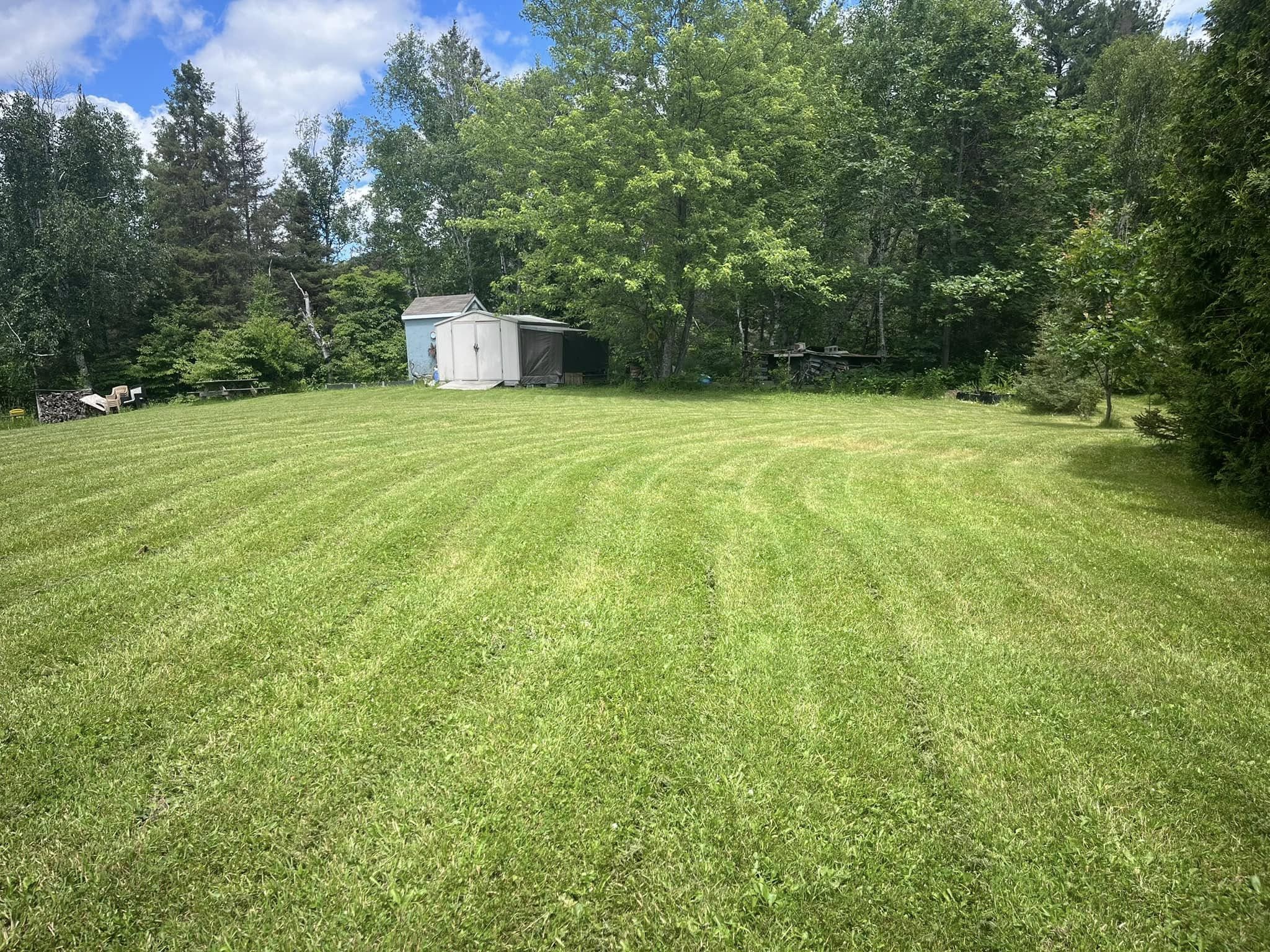
None of this means you can’t have a good lawn in Sudbury. Plenty of properties across Greater Sudbury have excellent lawns — thick, green, resilient through summer heat and winter freeze. But the approach that gets you there is different from what works in most of Ontario, and that’s the gap between homeowners who struggle here and those who don’t.
Aerate every year — not every few years. In Sudbury, with our clay-heavy soil and freeze-thaw compaction cycles, annual core aeration isn’t maintenance — it’s survival. Southern Ontario homeowners might get away with aerating every two or three years. Sudbury lawns need it every spring, sometimes fall as well on properties with serious compaction.
Build soil organic matter continuously. Compost topdressing after every aeration, leaving clippings on the lawn when conditions allow, choosing slow-release organic fertilizers over synthetic quick-release — all of these build the organic matter that Sudbury soil is naturally short on. It’s a years-long project, not a one-season fix, but it changes the fundamental behavior of the soil.
Cut higher than feels comfortable. At 3 to 3.5 inches on Sudbury’s shallow soil, grass has more reserve to draw on during the heat and drought stress that hits every summer. Short grass on shallow soil in July is a recipe for dead patches. Tall grass on the same soil handles it significantly better.
Use cold-hardy seed varieties. Not all grass seed is equal in Sudbury’s climate. Creeping red fescue and hard fescue handle our winters and our shallow, acidic soil better than Kentucky bluegrass mixes designed for southern Ontario conditions. Match the seed to the actual climate you’re in.
Accept that some things are limitations, not failures. A property with 2 inches of soil over bedrock is not going to look like a Mississauga lawn no matter what you do. A deeply shaded corner under a massive spruce is not going to be dense green turf. Knowing where the limits are and working within them — choosing ground covers, adjusting expectations, focusing energy on the sections that can actually thrive — is part of getting lawn care right in Sudbury.
If you’ve been struggling with your lawn here and feeling like you’re doing something wrong — you’re probably not. You’re just dealing with conditions that are genuinely harder than most places in Ontario. The right approach, done consistently, does work. It just needs to be the right approach for Sudbury specifically.
If you want to talk through what that looks like for your property, reach out. I’m happy to come take a look and give you a straight assessment.
— Ryan Lingenfelter
Cutting Edge Lawn & Landscaping, Garson, Ontario
📞 705-507-6787
Serving all of Greater Sudbury — Garson, Hanmer, Val Caron, Lively, Chelmsford, Azilda, Capreol, and Sudbury proper. We offer core aeration, sod installation, grass cutting, property cleanup, and full lawn maintenance. Free quotes, no pressure.
Get a Free Quote |
Call 705-507-6787
