
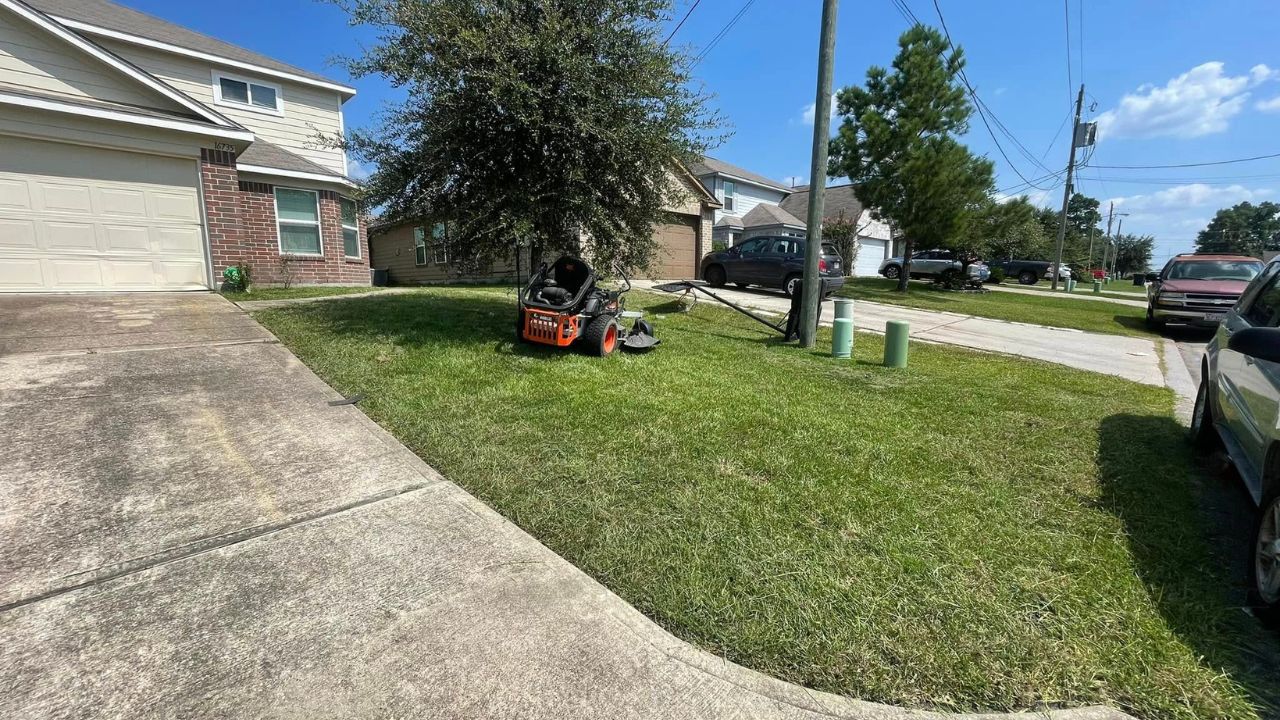
August is when I get the most distressed calls of the season. Half a lawn dead. Sections that won’t green up no matter how much water goes on. Patches that pulled up like carpet. A lawn that looked fine six weeks ago and now looks like it’s failing everywhere at once.
Almost every one of those August crises was preventable in June. Not in every case — some things are genuinely unpredictable — but the majority of summer lawn failures I see across Greater Sudbury follow a pattern: a problem that was building slowly in May and June, visible to someone who knew what to look for, that crossed a threshold once August heat arrived and became suddenly, dramatically obvious.
We’re in the window right now. Late June. Here’s what to look for and what to do about each one before you’re making the August call.
I’m Ryan Lingenfelter, owner of Cutting Edge Lawn & Landscaping in Garson, Ontario.
Problem 1 and 2 — The Compaction and Cutting Height Pair

I’m combining these two because they almost always occur together, they amplify each other’s damage, and addressing one while ignoring the other consistently produces disappointing results.
Problem 1: Compaction That’s Already Rebuilt
If you didn’t aerate this spring — or didn’t aerate last fall either — and your property is on the clay-heavy soil common across most of Greater Sudbury, your soil is significantly more compacted right now than it was after your last aeration. Sudbury winters rebuild compaction faster than most homeowners expect. I’ve documented the timeline in detail across years of notes on local properties — on Sudbury clay without annual aeration, compaction measurably worsens within 18 to 24 months of the last treatment, sometimes faster on high-traffic properties.
What compaction does in summer: it blocks water from reaching root depth. Your watering runs off the surface or pools and evaporates rather than getting to where roots need it. The lawn handles early summer fine because temperatures are still moderate and demand is low — but when August heat arrives and the plant needs deep moisture to cope with stress, compacted soil can’t deliver it. That’s when the browning becomes rapid and severe rather than gradual.
What to do now: Core aeration in late June is not ideal — ideally you’d do this in spring or fall — but on a property where compaction is severe and summer heat is coming, it’s still better than waiting until fall while the lawn declines further. If you’re going to aerate now, do it during a cooler, overcast period rather than during a heat wave, and water immediately after.
Problem 2: Cutting Height Below 3 Inches
Short cutting through May and early June has been building a shallow root system on your lawn whether you knew it or not. Every cut below 3 inches pushes the plant to redirect energy from root development into emergency leaf regrowth. Over six weeks of weekly cuts at 2 inches, your grass has roots sitting an inch or two below the surface — exactly the zone that dries out within hours on a hot August day.
The damage isn’t visible yet because June temperatures haven’t pushed the plant into heat stress. But the shallow root system is already established. When August heat arrives, that’s when you find out exactly how shallow they are.
What to do now: Raise your deck height to 3 inches immediately — today, on your next mow. Don’t drop it back down for convenience or aesthetics. Keep it at 3, or 3.5 inches in the hottest parts of July and August. The root system won’t fully recover from six weeks of short cutting in two weeks, but every cut at the correct height from now on starts rebuilding it. The full explanation of why this matters so much for Sudbury’s specific climate is in why Sudbury lawns go brown in July.
Problem 3 — Shallow Watering That Feels Like Enough
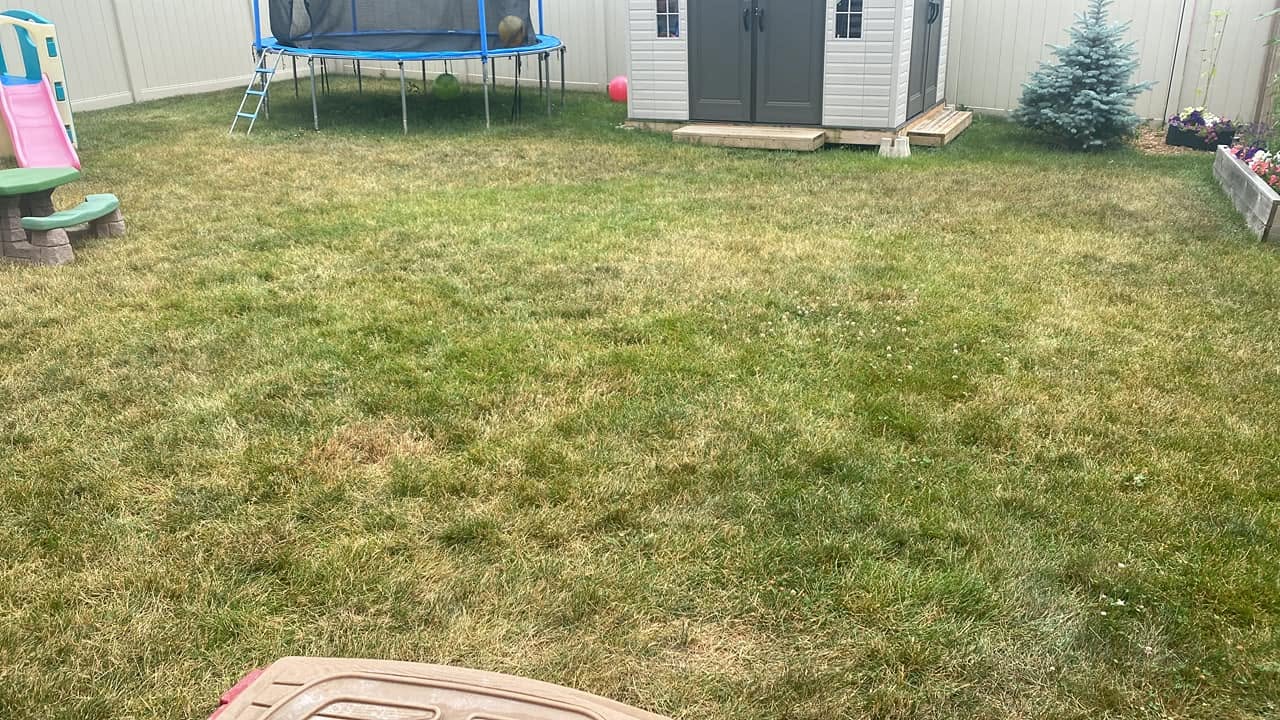
This is the invisible problem — the one where the homeowner is genuinely doing something, doing it consistently, and is still going to see their lawn fail in August because what they’re doing isn’t achieving what they think it is.
I watched this exact situation play out on a Val Caron property last season — a homeowner who had been watering twice a week all summer, surface of the lawn was always wet after each session, and the soil two inches down was consistently dry. The full story is in what I saw when a homeowner asked me to watch her water her lawn. The watering effort was real. The result wasn’t reaching the roots.
On Sudbury’s clay-heavy soil, this problem is more common than it should be because clay doesn’t absorb water the way sandy soil does. When clay is dry, it resists surface water — the water hits the surface and runs off laterally or evaporates rather than penetrating down. A standard oscillating sprinkler running for 20 minutes on dry clay can leave the top half inch wet and everything below it dry.
The lawn handles this fine in June when temperatures are moderate and the plant’s demand is low. In August, when heat increases demand and the plant needs moisture from depth, it finds nothing there.
What to do now: The check takes two minutes. Push a finger or trowel into the soil after your next watering session — check moisture depth at 2 inches. If it’s wet at that depth, your watering is working. If it’s dry below an inch despite a full watering session, switch to a cycle-and-soak approach: run the sprinkler for 10 minutes, pause for 20 to 30 minutes to let the clay absorb, then run again. Longer total time, significantly better penetration.
Problem 4 — The Grub Window Nobody Watches
This is the most time-sensitive item on this list — and the one where the window for effective action is genuinely narrow.
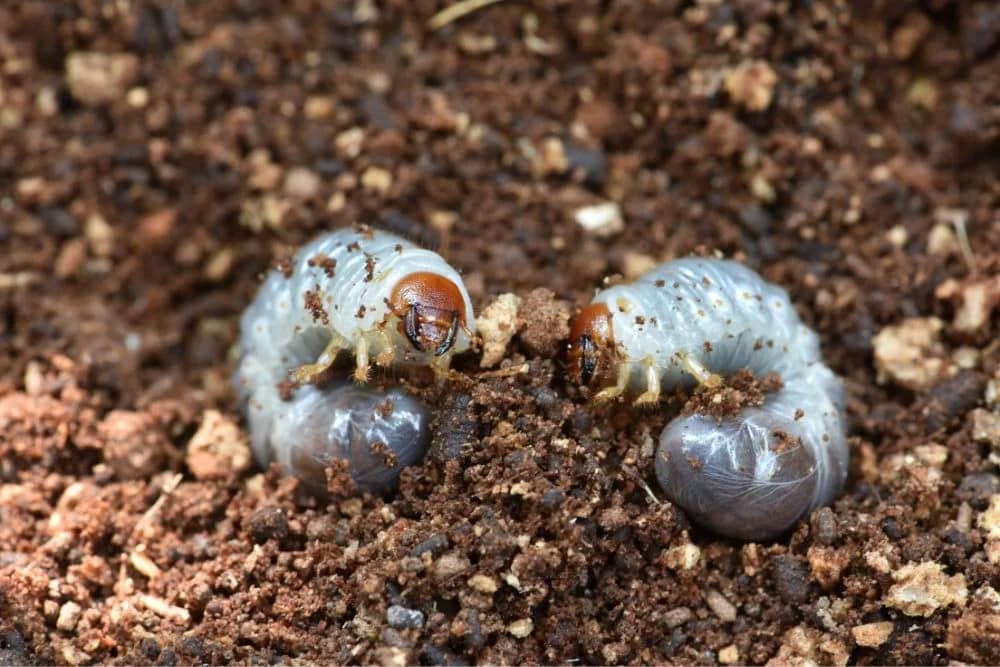
Grub larvae — the immature stage of beetles like the European chafer and June beetle, both present across Greater Sudbury — hatch from eggs in early to mid summer and begin feeding on grass roots almost immediately. Through June and July they’re small, feeding and growing. By August they’re large, they’ve consumed significant root mass, and the damage becomes suddenly, dramatically visible above ground.
I described this exact timeline in detail in the Lively lawn that looked completely healthy in May and was half dead by August — the homeowner had no warning because the damage was entirely below ground while the grass above stayed green. The lawn didn’t fail slowly. It failed all at once when August heat pushed it past the threshold of what the damaged root system could support.
The treatment window matters here: grub treatments applied in late June through mid-July target the young larvae when they’re most vulnerable and actively feeding near the surface. By August, the larvae have burrowed deeper, the above-ground damage is already done, and treatment is significantly less effective at that point regardless of product.
What to do now: Watch for increased bird activity — crows and starlings pecking at specific lawn sections more than usual is the earliest visible signal, often weeks before grass shows any symptoms. Do the tug test on any suspicious areas: grab a handful of grass and pull gently. Grass with grub-damaged roots pulls up with almost no resistance. If you find this, act now rather than waiting to see if it gets worse. Late June is still within the effective treatment window. August is not.
Problem 5 — The Drainage Issue You Haven’t Fixed Yet
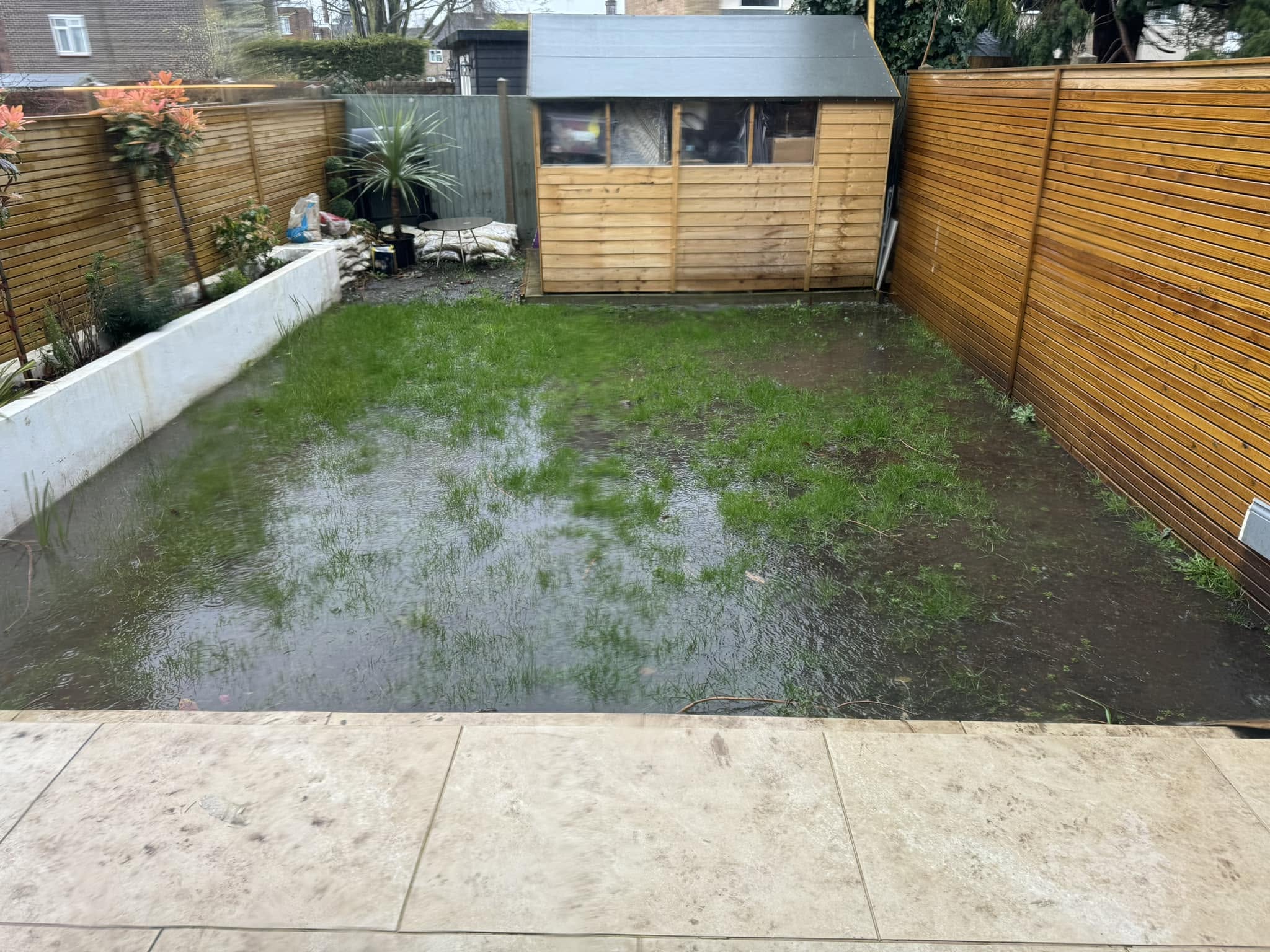
Almost every property across Greater Sudbury has at least one drainage quirk — a low spot that holds water after rain, a grade that directs runoff from a neighbour’s property, an eaverstrough discharging onto the lawn. In spring and early summer, these spots are noticeable but often tolerable. The lawn stays green, the water eventually drains or evaporates, and it doesn’t look critical.
In August, those same spots become the first sections to fail. The alternating waterlogged-then-baked cycle that’s been running all season — wet after every rain, baked dry in between — has been steadily destroying root systems in those specific areas. When August heat arrives and the rest of the lawn is managing, those spots often die rapidly because the roots have been compromised all season while the grass above kept looking okay.
I’ve turned down jobs specifically because of unresolved drainage — the most documented version is in the Val Caron homeowner I turned down three times before finally saying yes. The sod wouldn’t hold in that spot until the drainage was corrected, regardless of how well everything else was done. The same principle applies to your existing lawn: any section experiencing chronic drainage stress is carrying damage that will show up in summer heat even if it looks fine right now.
What to do now: Walk your lawn after the next significant rain — one to two hours after. Any section still holding standing water at that point has a drainage problem. Identify where the water is coming from (your grade, a neighbour’s runoff, a downspout) and whether a simple fix is possible before summer peaks. A grade correction in a problem corner, or redirecting a downspout discharge, done now gives you the rest of the season to evaluate whether it worked. Left until after the damage appears in August, you’re fixing the soil and the drainage rather than just the drainage.
The June Checklist — What to Do This Week
Working through all five of these in one week is achievable. Here’s the priority sequence:
- ✅ Raise mowing height to 3 inches — do this on your next cut, today if possible
- ✅ Screwdriver test in 5 spots — if stopping at less than 2 inches, add core aeration to the near-term agenda
- ✅ Moisture depth check after next watering — push a finger to 2 inches, confirm water is actually penetrating
- ✅ Walk the lawn for unusual bird activity and do tug tests in any suspicious sections — grub window is open now
- ✅ Rain walk after the next significant rain — identify any standing water sections and note where the water is coming from
None of these take more than a few minutes. All of them change your August outcome meaningfully if they catch something. The most common version of this conversation I have in August starts with “it happened so fast” — and it did happen fast above ground, but the cause was building all June.
Want Help Working Through This on Your Specific Property?
If you do the checklist above and find something you’re not sure how to address — or if you’d rather have someone walk the property properly and tell you what they actually see — reach out now, while the June window is still open.
📞 Call or text me: 705-507-6787
Or fill out the free quote form here — I get back to everyone same day.
— Ryan Lingenfelter
Owner, Cutting Edge Lawn & Landscaping
Garson, Ontario
Related Articles
- Why Your Sudbury Lawn Goes Brown in July — And When to Actually Worry
- A Sudbury Homeowner Asked Me to Watch Her Water the Lawn — Here’s What I Saw
- The Sudbury Lawn That Looked Fine in May and Was Half Dead by August
- Two Sudbury Neighbours Did the Exact Same Lawn Routine — Only One Lawn Thrived
- Hosting Canada Day in Sudbury? Here’s the 5-Day Lawn Prep You Need Right Now
