By Ryan Lingenfelter · Cutting Edge Lawn & Landscaping, Garson, Ontario · June 2026
Walk into any garden centre in Sudbury in May and you’ll find a wall of grass seed bags. Sun mix. Shade mix. All-purpose mix. Quick-repair. Premium lawn. Economy lawn. Most of them don’t tell you whether the varieties inside them will actually perform in Greater Sudbury’s specific climate — because they were packaged for a broad regional market that includes climates meaningfully warmer and more forgiving than ours.
After six seasons of overseeding, sod installation, and lawn restoration across Greater Sudbury, I know which varieties establish well here, which ones perform through summer and survive our winters reliably, and which ones look impressive for one season before declining into the second. Here’s the honest breakdown — two types that belong in almost every Sudbury seed mix, and three that I actively steer homeowners away from regardless of what the bag says about them.
The 2 that work — why Kentucky Bluegrass and creeping red fescue belong together in Sudbury
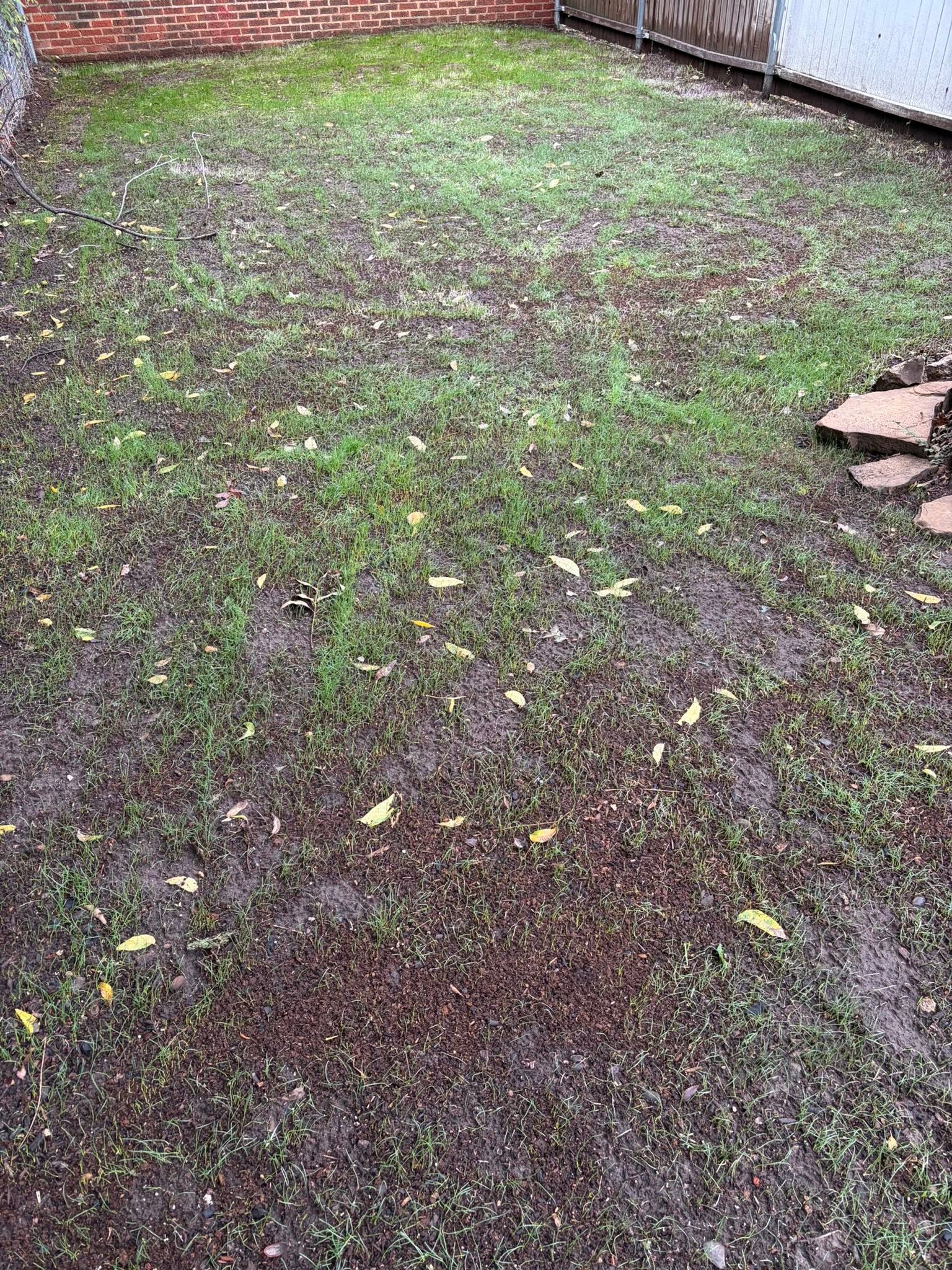
The combination that works best on the majority of Greater Sudbury residential lawns is a blend of Kentucky Bluegrass and creeping red fescue — typically at a ratio of roughly 60 to 40, or 70 to 30 Kentucky Bluegrass to fescue, depending on the sun conditions of the specific property.
Kentucky Bluegrass is the workhorse of cool-season lawn grasses in climates like ours. It has genuine winter hardiness for Northern Ontario conditions — not just tolerance, actual hardiness, meaning it goes dormant in a way that protects the crown and root system through deep freezes and comes back reliably in spring. Its most important characteristic for Sudbury lawns is that it spreads through rhizomes — underground stems that extend laterally and produce new plants. This spreading habit means that Kentucky Bluegrass actively fills in bare spots and thin areas over time, without any additional seeding. A lawn with an established Kentucky Bluegrass component self-repairs minor damage. A lawn without it relies entirely on whatever you put down to fill in gaps.
Kentucky Bluegrass does have a limitation in Sudbury conditions: it’s less shade tolerant than fescues. In full sun it excels. Under tree canopy or on north-facing sections that receive less than four hours of direct sun, it thins and eventually gives way to whatever can outcompete it in the shade — which in our climate is usually moss or weeds. This is where the fescue component of the blend becomes essential.
Creeping red fescue fills the ecological niche that Kentucky Bluegrass can’t cover. It tolerates shade significantly better than bluegrass — thriving in areas with two to four hours of direct sun where bluegrass would thin out. It also handles the dry, sandy, low-nutrient soil conditions that exist in parts of Greater Sudbury — particularly on the shield-influenced properties with minimal topsoil — better than bluegrass, which needs more nutrient-dense soil to perform at its best. In the partially shaded areas of a mixed property, fescue carries the lawn where bluegrass can’t.
Creeping red fescue also has a fine texture that blends visually with bluegrass without creating the coarse, thatchy appearance that some fescue varieties produce. The two varieties together produce a lawn that looks uniform even though it’s a mixture — because the texture and colour compatibility between the two varieties is good enough that the transition between them in different sections of the property is gradual rather than abrupt.
Together, this blend produces a lawn with sun performance from the bluegrass, shade coverage from the fescue, self-repair capability from the bluegrass rhizomes, and winter hardiness from both. It’s not the only blend that works in Sudbury — but it’s the one I use most consistently because it performs across the widest range of property conditions in this region.
How the 2 complement each other through Sudbury’s specific seasonal conditions
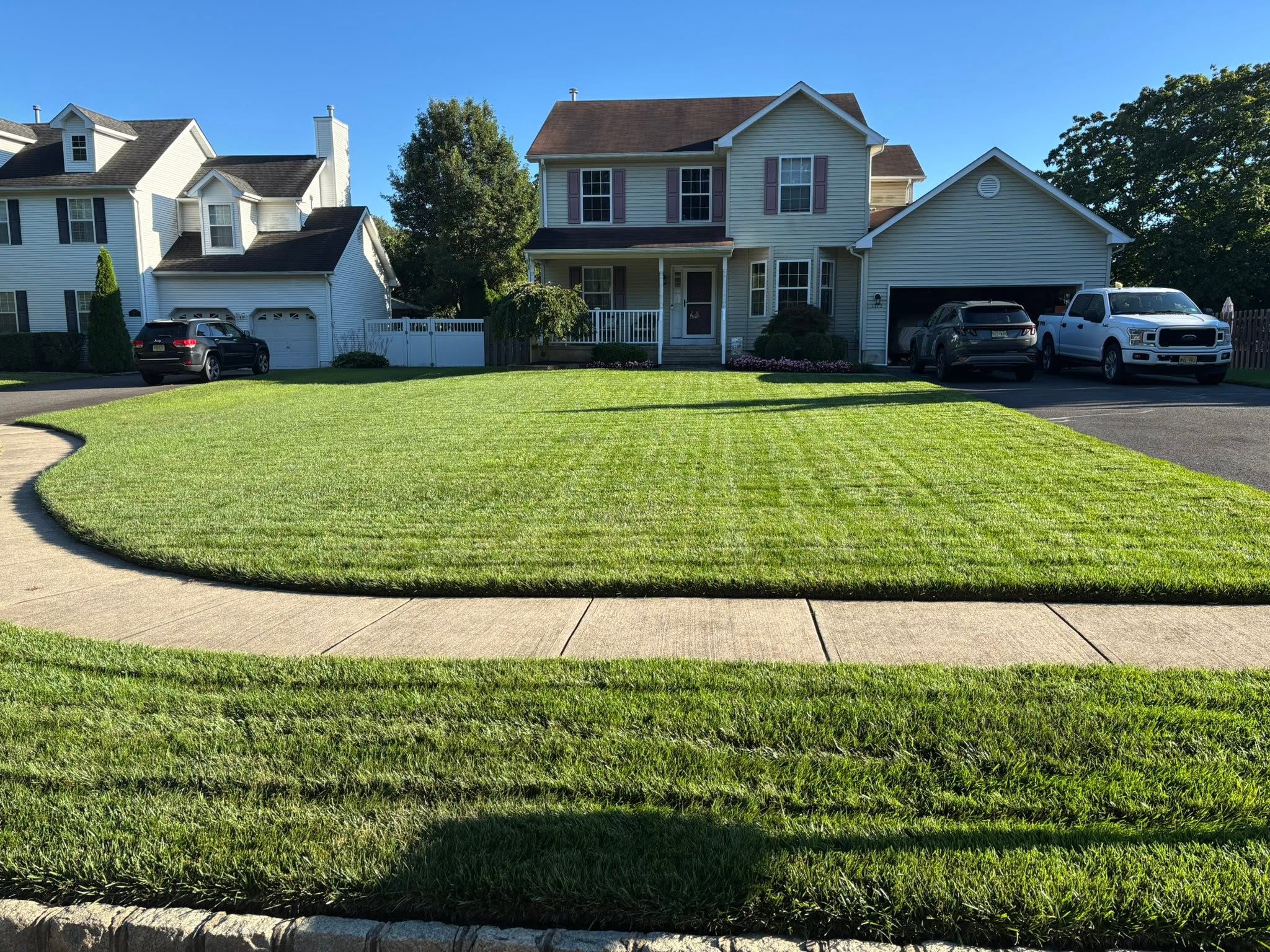
The bluegrass-fescue combination doesn’t just work in theory — it works through the specific seasonal demands of a Greater Sudbury growing year in ways that become clear when you look at each season.
Spring emergence. Both Kentucky Bluegrass and creeping red fescue are cold-tolerant enough to begin active growth when soil temperatures cross 8 to 10 degrees Celsius — earlier than some other cool-season varieties, and earlier than the soil in Greater Sudbury warms in April. They don’t need the soil to be warm — just thawed and above a minimal threshold. This means the spring green-up happens earlier and more completely than with varieties that need warmer conditions to initiate growth. By the time the 4-hour spring window I described in the article on the critical late May window for Sudbury lawns opens, a bluegrass-fescue lawn is already in active growth and ready to respond to aeration and overseeding inputs.
Summer performance. Kentucky Bluegrass has moderate drought tolerance — it goes semi-dormant in severe summer drought, which is normal and recovers when water returns, but it handles the mild-to-moderate dry stretches of a typical Sudbury July better than varieties with less drought adaptation. Creeping red fescue has notably good drought tolerance for a cool-season grass — its fine-bladed structure reduces water loss relative to broader-bladed varieties, and its deep root system in good soil accesses moisture from further down the profile. Together, a well-established bluegrass-fescue lawn handles the watering bylaw restrictions of Greater Sudbury’s summer — the odd-even schedule that limits watering frequency — better than many other variety combinations. I covered what the bylaw means practically for summer lawn management in the article on Sudbury lawn care news mid-2026.
Winter survival. Both varieties are genuinely winter hardy in Greater Sudbury’s climate. Not just cold tolerant — winter hardy, meaning the dormancy process they go through is designed for deep, sustained cold rather than just occasional frost. The freeze-thaw cycle that Greater Sudbury goes through — multiple events per spring, sustained deep freezes through January and February — doesn’t damage either variety when they’re healthy going into dormancy. They emerge in spring with the same density they had in fall, which is the most basic test of winter hardiness in this region.
Recovery from damage. The bluegrass rhizome spreading habit becomes most valuable in spring when winter damage, snow mould, or freeze-thaw surface disruption has created thin areas. A lawn with a good bluegrass component begins actively filling those areas from the surrounding healthy grass as soon as temperatures support growth. A lawn without bluegrass — a pure fescue lawn, for example — holds what it has but doesn’t self-repair. Every thin spot in a pure fescue lawn stays thin until it’s overseeded. Every thin spot in a bluegrass-fescue blend gets worked on by the bluegrass rhizomes from the moment the soil warms in spring.
The 3 that don’t work — what goes wrong and when
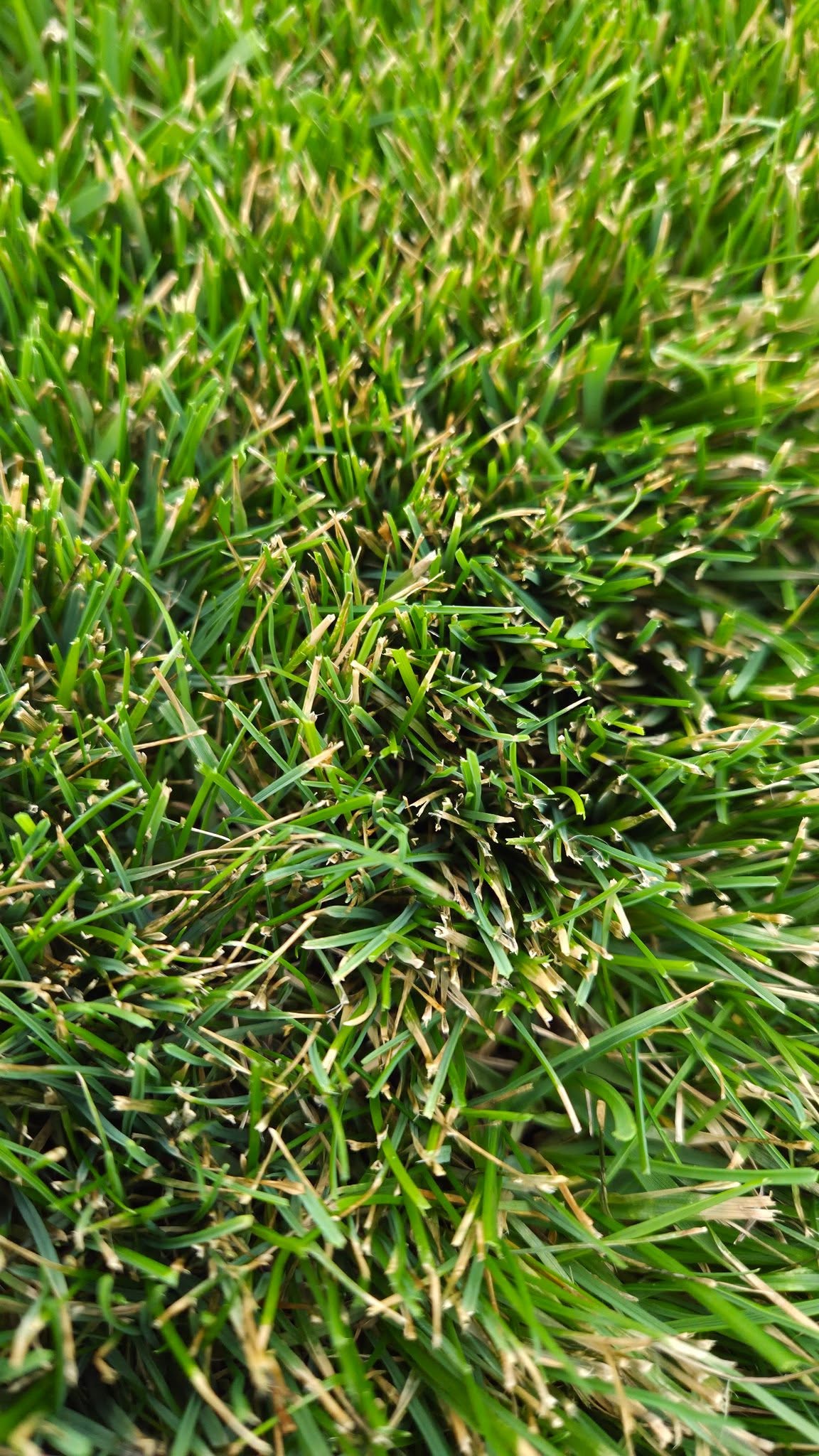
Now the other side — three grass varieties that show up consistently in seed bags sold in Greater Sudbury and that I actively recommend homeowners avoid for permanent lawn establishment here.
Perennial ryegrass — looks great for one season, declines reliably by the second. Perennial ryegrass is in more seed mixes sold in Sudbury than any other variety, largely because it germinates fast — within five to seven days under good conditions, compared to the fourteen to twenty-one days that Kentucky Bluegrass requires. It looks impressive quickly. Homeowners see rapid results and assume the product is performing well.
Then the first winter arrives. Perennial ryegrass is rated as winter hardy down to approximately USDA Zone 5. Greater Sudbury sits at the boundary of Zone 4 and Zone 5, with winters that regularly produce conditions beyond what perennial ryegrass is designed for. In a typical Sudbury winter — sustained cold below -20°C, significant freeze-thaw events in March — perennial ryegrass experiences meaningful winter kill. Not total death in most cases. But thinning. The sections that were densest with ryegrass in October are noticeably thinner in May. By the second spring, a lawn seeded primarily with perennial ryegrass is visibly declining relative to its appearance in year one. The homeowner assumes something is wrong with their maintenance. What’s wrong is the variety.
The other problem with perennial ryegrass in blends is that its fast germination crowds out the slower-germinating Kentucky Bluegrass in the first season. A blend that’s 40 percent perennial ryegrass and 30 percent Kentucky Bluegrass often ends up as an effectively ryegrass-dominant lawn in year one — because the ryegrass establishes so quickly that it monopolises the available light and space before the bluegrass can compete. When the ryegrass thins in winter, there’s less established bluegrass to compensate because it was suppressed during establishment. You end up with a thin lawn after winter one rather than the self-repairing bluegrass-fescue blend that was supposed to be underneath.
My recommendation: avoid seed mixes with more than 10 to 15 percent perennial ryegrass content for any permanent lawn establishment in Greater Sudbury. The fast germination is not worth the winter decline trade-off in this climate.
Tall fescue — wrong texture, wrong growth habit, wrong look for residential Sudbury lawns. Tall fescue is a coarse-bladed bunch grass — it grows in clumps rather than spreading, and its blade width is noticeably wider than Kentucky Bluegrass or creeping red fescue. In a mixed lawn, tall fescue produces an uneven texture that’s visible from a distance — coarse green clumps in a finer-textured background. This textural clash looks like weeds to most homeowners, even though it’s intentionally planted. I regularly encounter lawns where homeowners are trying to remove what they think is a broadleaf weed that has invaded — and what they’re actually pulling is tall fescue that was in the seed mix they spread three years earlier.
Tall fescue’s bunch growth habit also means it doesn’t self-repair. When a clump dies — from winter damage, drought, grub activity — it leaves a circular bare spot the size of the original clump. Without rhizomes to spread from the surrounding grass, that spot stays bare until it’s reseeded. On a lawn with significant tall fescue content, the bare-spot maintenance requirement is higher than on a comparable bluegrass-fescue blend.
Tall fescue does have a legitimate application — athletic fields, rough-use areas where durability under heavy traffic is the priority and appearance is secondary. In residential lawn contexts in Sudbury, it produces the wrong appearance and the wrong maintenance profile for the use case.
Annual ryegrass — shouldn’t be used for permanent lawns at all. Annual ryegrass is sometimes included in very cheap seed mixes as a low-cost filler. It germinates extremely quickly, produces a green lawn within ten days, and is dead by the following spring — because it’s an annual, meaning it completes its life cycle in one year and doesn’t overwinter. It’s occasionally appropriate for temporary erosion control on bare soil that will be landscaped the following year. It’s never appropriate for a permanent residential lawn in any climate, including Sudbury.
The problem is that the bag doesn’t always distinguish clearly between annual ryegrass and perennial ryegrass. Look for the word “annual” in the variety name or in the species list — it’s typically listed as Lolium multiflorum on the fine print, versus Lolium perenne for perennial ryegrass. Any amount of annual ryegrass in a permanent lawn seed mix is a red flag. A cheap seed mix with annual ryegrass will look impressive in September of year one and be mostly dead in May of year two.
How to read the seed bag before you buy — what to look for and what to avoid
The information you need to evaluate a grass seed mix is on the bag — it just requires knowing where to look and what the numbers mean.
Find the pure seed percentage breakdown. All seed bags sold in Canada are required to list the percentage composition by variety. This is usually in a table on the back or side of the bag, sometimes labelled “Variety Composition” or “Pure Seed Analysis.” The percentages tell you exactly what you’re buying. A bag labelled “Sun and Shade Mix” might be 60 percent perennial ryegrass, 20 percent Kentucky Bluegrass, 15 percent creeping red fescue, and 5 percent annual bluegrass. The name on the front of the bag tells you nothing about the variety composition. The table on the back tells you everything.
For a Sudbury residential lawn, what I’m looking for in that table: Kentucky Bluegrass as the dominant variety or close to dominant, creeping red fescue as the secondary component, and anything else — ryegrass of any kind, tall fescue, fine fescue varieties other than creeping red — as minimal inclusions or absent entirely. If perennial ryegrass exceeds 15 percent of the blend, I recommend a different product. If annual ryegrass appears in any percentage, I put the bag back.
Check the germination rate. The table will also list the germination rate for each variety — the percentage of seeds in the batch that are viable. Quality seed from reputable suppliers typically shows 85 to 95 percent germination. Cheap seed can show 60 to 70 percent — meaning 30 to 40 percent of what you’re spreading is dead seed. At that germination rate, you need to apply significantly more product per square foot to achieve the same coverage, which usually means the apparent savings on the cheap seed evaporate when you account for the volume needed.
Check the other crop and weed seed percentages. This is where very cheap mixes sometimes reveal their limitations. The table lists not just the grass seed varieties but also the percentage of “other crop” seed and “weed” seed in the mix. Quality mixes have zero or near-zero weed seed content. Cheap mixes sometimes have non-trivial weed seed percentages — which means you’re buying weed seeds along with grass seeds and distributing them across your lawn. Any weed seed percentage above 0.1 percent is worth paying attention to.
Look for certified seed. The words “certified seed” on a grass seed bag indicate that the variety composition has been independently verified — the seed was grown under supervised conditions and tested before packaging. Certified seed costs slightly more than uncertified, but the variety composition is what the label says it is. With uncertified mixes, the label composition is the seller’s claim without independent verification.
The overseeding timing and technique that produces the best results with a correct seed blend in Greater Sudbury are in the article on when to overseed a Sudbury lawn — the late May to mid-June window and the aeration-first sequence that maximises germination. And the establishment care after installation — whether you’re overseeding or doing a full sod installation — is covered in the article on the 21-day make-or-break window after sod installation in Sudbury. Getting the variety right is the foundation. The timing and technique build on it.
If you want a recommendation for a specific seed mix that’s available locally and appropriate for your property’s conditions — sun coverage, soil type, maintenance expectations — give me a call. I’ll tell you what to buy and where to get it.
📞 705-507-6787 | Get a free quote online
— Ryan Lingenfelter
Owner, Cutting Edge Lawn & Landscaping
Garson, Ontario · 705-507-6787