
By Ryan Lingenfelter · Cutting Edge Lawn & Landscaping, Garson, Ontario · June 2026
Most sod installation content focuses on the day of installation — how to prepare the soil, how to lay the rolls, how to roll it in, how to water immediately after. That information matters. But the day of installation isn’t when sod succeeds or fails. The twenty-one days after installation are when that determination is made.
I’ve installed sod on properties across Greater Sudbury since 2020. When a sod job doesn’t establish the way it should, the failure almost always traces back to something that happened — or didn’t happen — in the first three weeks after the rolls went down. Not on the installation day. In the twenty-one days that followed.
Here’s what’s actually happening in those twenty-one days, what the sod needs from you each week, and how to know whether you’re heading toward a successful establishment or a recovery conversation.
Days 1 to 7 — what the sod is doing underground and what you need to do above it
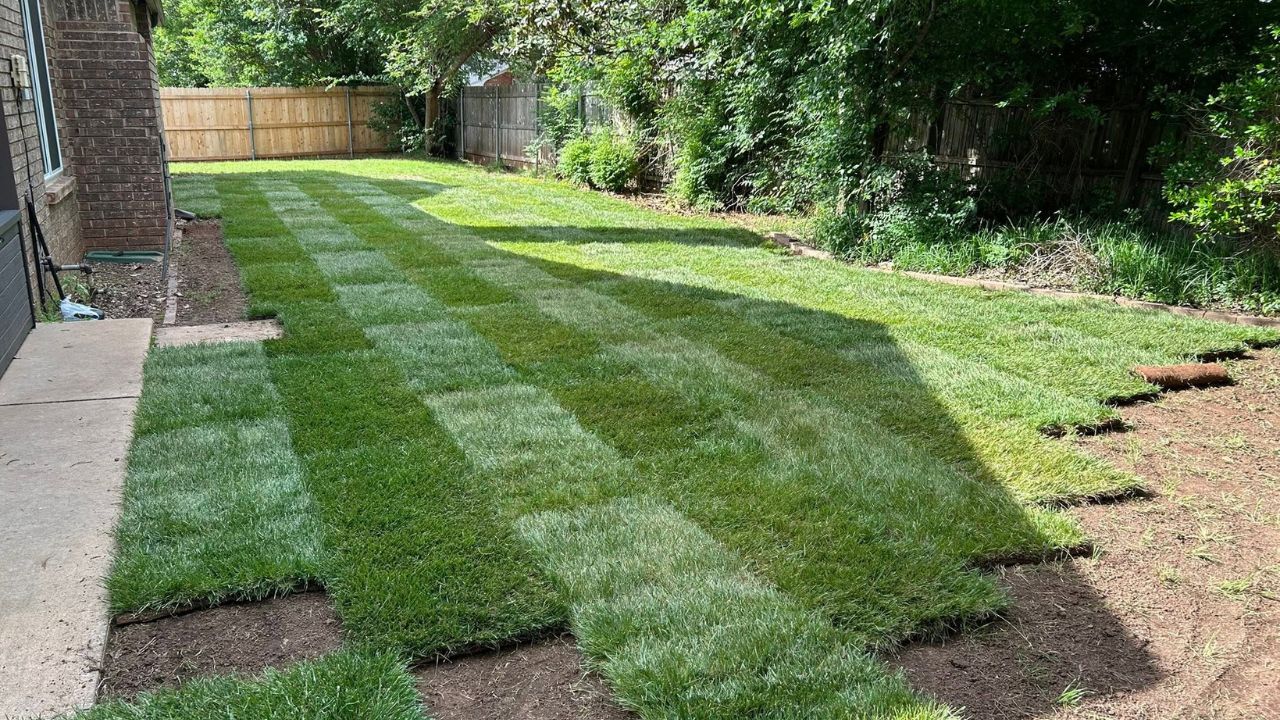
On installation day, the sod roots are cut — they were separated from their growing environment when the sod was harvested, spent time on a pallet, and then were placed on your property’s soil surface. The grass blades are alive. The roots are alive. But they haven’t made contact with the soil beneath them in a meaningful biological sense yet. The sod is sitting on your soil like a mat resting on a table.
In the first seven days, the primary objective is establishing that biological contact — getting the root system of the sod to begin growing into the soil beneath it rather than just resting on it. Until that happens, the sod has no moisture access except through the thin layer of soil attached to the harvested roots. It’s completely dependent on what you apply from above.
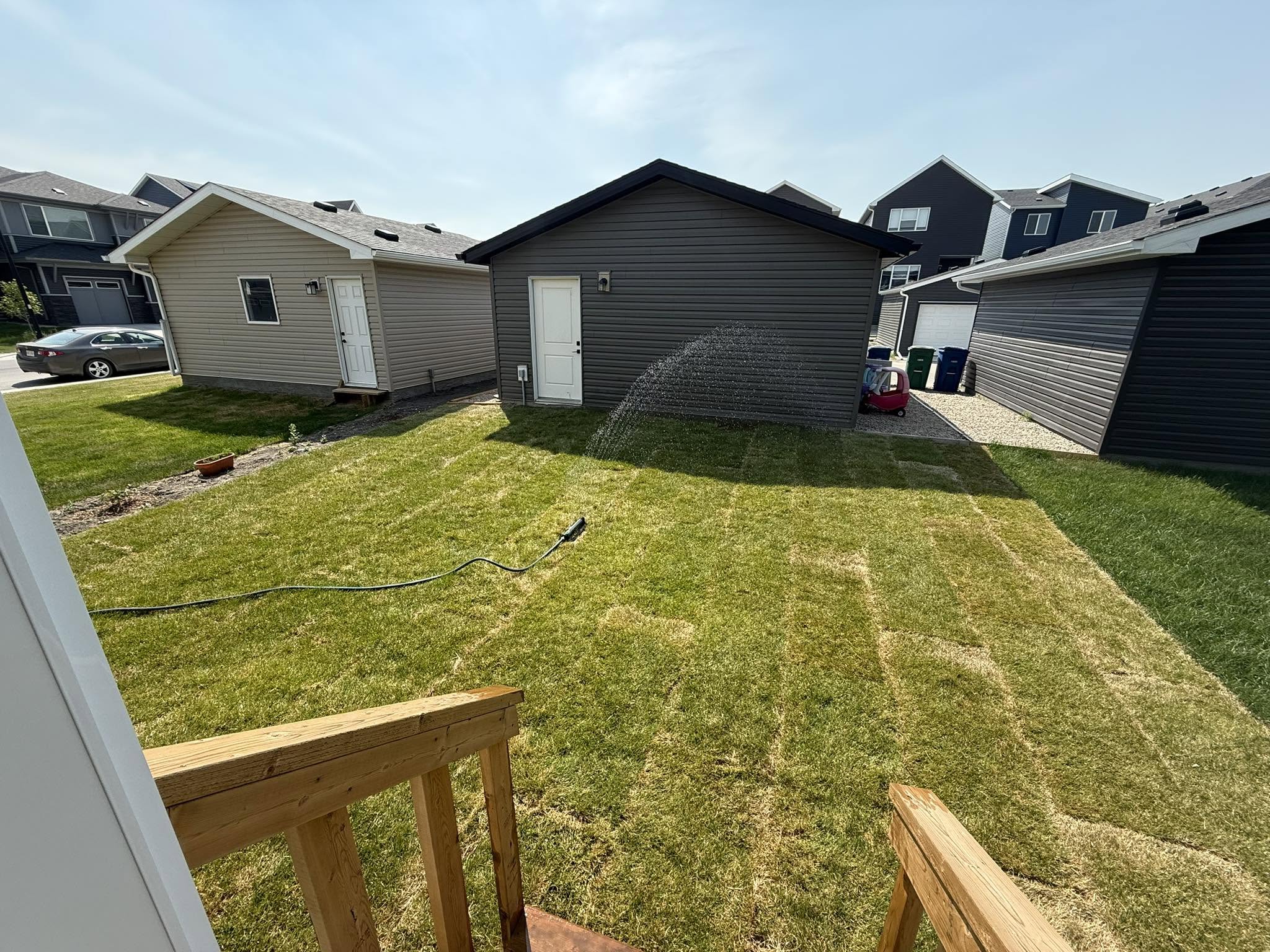
Watering in week one — the most critical period. The sod needs consistent moisture in the top two to three inches of soil throughout day one through day seven. Not deep watering — that comes later. The roots haven’t grown into the soil yet, so deep watering that wets only the lower profile isn’t reaching where the sod is drawing moisture from. What it needs is the harvested root layer and the soil immediately beneath it to stay consistently moist.
In Greater Sudbury’s summer conditions — typically 20 to 28 degrees in the installation season — this means watering at least once per day, and twice per day during any stretch above 25 degrees. Morning and early afternoon are the best windows. Evening watering that leaves the surface wet overnight promotes fungal development on new sod, which is more vulnerable to disease than established grass.
The Greater Sudbury watering bylaw — odd-even schedule based on your address number, active June 1 through September 30 — applies to new sod starting from installation day. However, new sod in May and September is typically permitted to water more frequently as an exception for establishment purposes. If your installation is in June, July, or August, you’re working within the bylaw restrictions from day one. This means that installation timing — specifically avoiding peak summer installations where the bylaw’s every-other-day restriction conflicts with the twice-daily requirement of week one — is something I plan around deliberately. I covered the full bylaw details in the article on Sudbury lawn care news mid-2026 — including the new sod exception that may apply depending on your installation month.
Traffic — none in week one. Zero foot traffic on new sod in week one. The sod has no root attachment to the soil. Foot pressure pushes it sideways, disrupts the seam alignment, and breaks the fragile root contact that’s beginning to form at the soil interface. If you have children or dogs, they need to stay off the new sod entirely for the first seven days. No exceptions. The one footprint you allow on day three is the weak spot that shows up as a depression when the sod roots for the full winter and shrinks to match the compressed shape.
The pull test at day 7. On day seven, go to a corner of the newly installed sod — not the centre, a corner where you can check without damaging the main area — and try to gently lift the edge. In the first two or three days, it lifts easily, like a mat. By day seven on a well-watered installation in good soil conditions, it should resist lifting. You should feel some pull-back as the roots that have begun to anchor to the soil resist the lift. If it still lifts like a mat with no resistance at day seven, your watering has been insufficient or the soil contact wasn’t established well on installation day. Increase watering frequency for week two.
Days 8 to 14 — the week where most Sudbury sod jobs fail
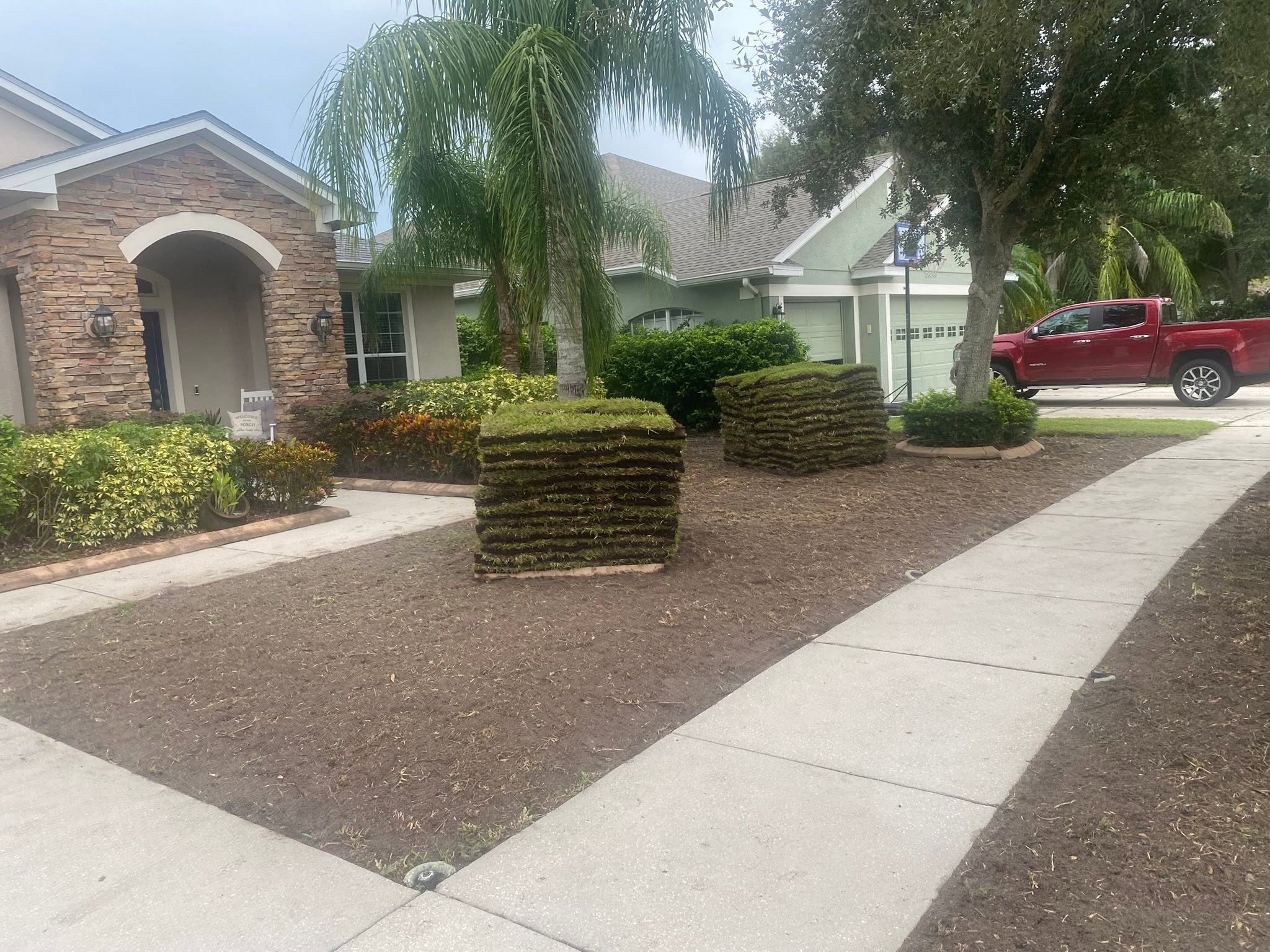
Week two is where most sod establishment failures happen. Not because anything dramatic goes wrong — because homeowners relax. The sod looks green. It looks like lawn. The installation day urgency has faded. Watering frequency drops. Traffic restrictions get forgotten. And the roots that are in the middle of the most active phase of their establishment get stressed before they’ve finished the job.
Here’s what’s actually happening in the soil during days eight through fourteen: the root system is growing rapidly. The individual root tips that made first contact with the soil in week one are now extending — pushing down, spreading laterally, making the thousands of connections that will eventually hold the sod firmly in place and give it access to the soil’s moisture and nutrient reserves. This growth is energy-intensive for the plant. It requires consistent moisture to continue. A three-day dry period in week two — because the homeowner thought the sod was established enough to cut watering to every other day — can stall or reverse the root extension that was underway.
Watering in week two — maintain frequency, shift toward slightly deeper. The sod still needs once daily watering at minimum through week two, but the character of the watering can begin to shift. Rather than two short sessions that keep only the top inch moist, transition to one longer session that wets the top two to three inches, plus one shorter session in the afternoon on hot days. You’re starting to encourage the roots to follow the moisture downward rather than staying at the surface, while still maintaining the surface moisture that the emerging root system needs.
In Greater Sudbury’s clay-influenced soil — which retains moisture longer than sandy soils — the deep watering sessions don’t need to be as long as they would on sandy soil. Clay holds what you put in it. But it also takes longer to drain and warm, which means the timing of watering matters more on clay. Water in the morning so the surface has time to partially dry before evening. Evening-damp clay surface on new sod is fungal territory.
Traffic in week two — minimal and careful. Light foot traffic can begin in week two — one person at a time, walking carefully, not running or playing. No equipment. No concentrated traffic patterns. The sod can handle gentle pressure by day ten in most cases, but not the repetitive pattern traffic that starts to create depressions. If you have a dog, introduce them with supervision and redirect if they’re running, digging, or pulling at the sod edges.
Watch for edge lifting. In week two, sod edges and seams can begin to lift or separate if the installation had any gaps, if the soil was uneven at the seam lines, or if the edges dried out while the main sections stayed moist. Check the seams every two or three days. Lifted edges that are caught early can be pressed back down with a hand roller or the back of a flat shovel. Lifted edges that dry out and curl are harder to correct and leave a visible seam line in the finished lawn. The importance of edge and seam care during installation is something I covered in the article on how long sod can stay on a pallet before it dies — the same attention to edge and seam quality that matters on installation day needs to continue through the establishment window.
The pull test at day 14. By day fourteen, a well-established sod installation should provide meaningful resistance when you try to lift a corner. The root extension into the soil should have progressed enough that lifting an edge feels like pulling on something attached rather than picking up a mat. If the resistance is strong — if you need to exert real pull force to separate the sod from the soil — establishment is proceeding well. If it still lifts easily with light force, there’s a problem with either watering, soil contact, or the viability of the sod itself that needs to be addressed before week three.
Days 15 to 21 — what successful establishment looks like and how to confirm it
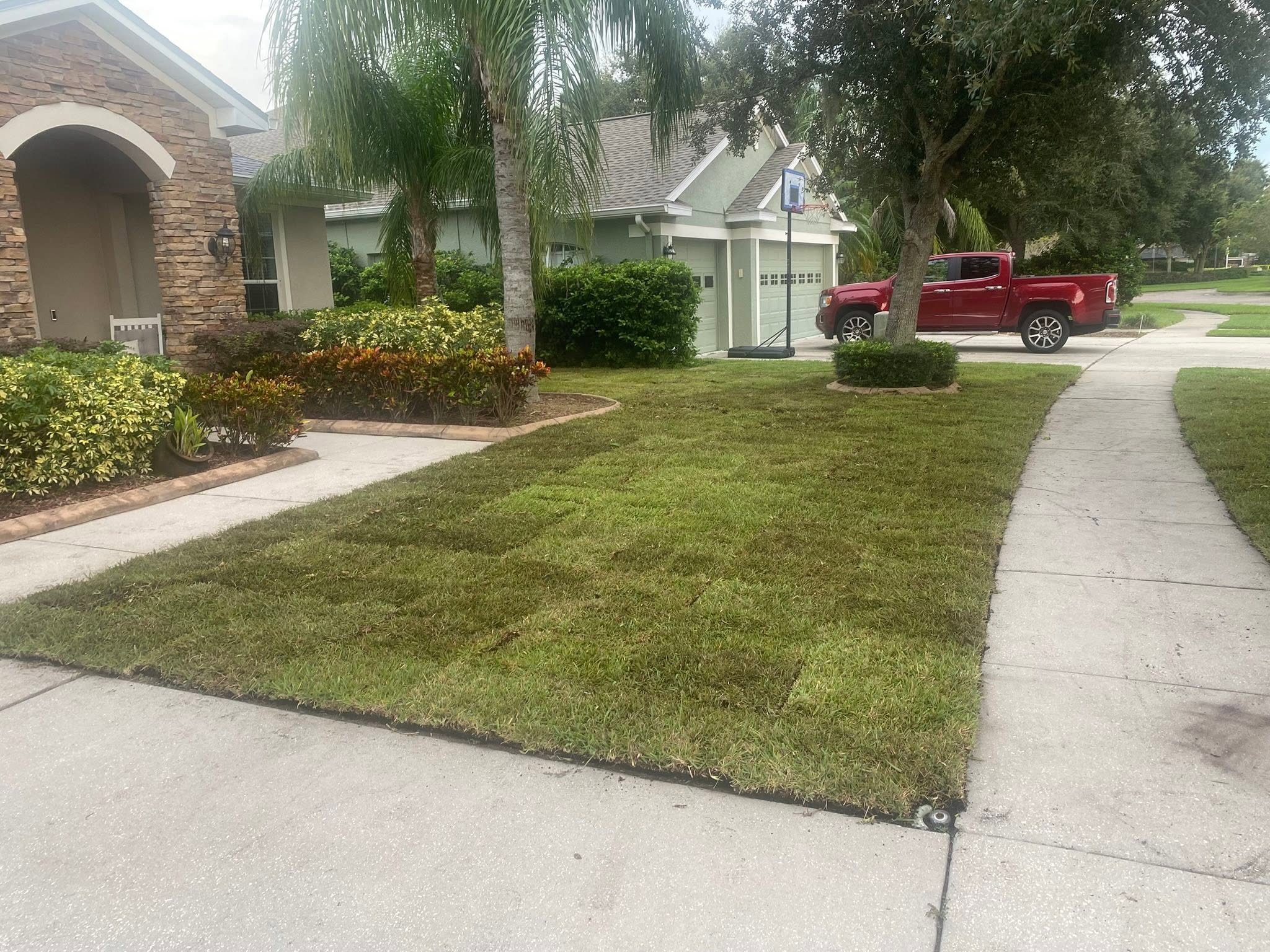
By day fifteen, successfully established sod is making itself visually obvious. The colour has settled from the slightly dull green of harvested sod into the mid-green of actively growing grass. The seams are beginning to knit — the individual rolls are less visually distinct as the grass grows and fills the gaps. The surface feels firm underfoot in a way that first-week sod doesn’t, because the roots have created attachment points that prevent the mat from shifting under pressure.
In Greater Sudbury’s climate, the speed of this progress in week three depends significantly on what the weather has done. A warm, consistently moist week three accelerates establishment. A hot, dry week three — the kind of stretch that hits most Sudbury summers in mid-July — stresses the root extension at exactly the point when it needs to be progressing fastest. This is one of the reasons I favour late May and early June installations whenever the homeowner’s schedule allows: the weather conditions in that window are more consistently supportive of establishment than mid-summer conditions. I covered the full timing rationale in the article on buying sod in Sudbury — timing and sourcing are the two variables that most directly predict establishment success.
Watering in week three — begin the transition to deep infrequent. By day fifteen, if establishment is proceeding well, you can begin extending the interval between watering sessions while increasing the depth of each session. Instead of daily watering, shift to every other day but run longer — long enough to wet the soil profile to four inches. You’re training the root system, which is now active and growing, to follow the moisture downward. The roots that chase moisture deep into the soil are the roots that will keep the lawn green in a July heat stretch six weeks from now without requiring daily watering. The roots that were trained on surface moisture by constant shallow watering are the roots that struggle the moment the sprinkler is off for two days.
Under the Greater Sudbury watering bylaw, watering every other day on your permitted address days aligns well with week three’s transition schedule — if you’re on odd addresses, you water on odd dates, which produces roughly an every-other-day frequency depending on the calendar. Work with the bylaw schedule rather than against it during this transition week.
The definitive pull test at day 21. On or around day twenty-one, do the full pull test. Not at the edge — in the middle of a section, away from seam lines. Try to lift a hand-sized section of sod. If the establishment has succeeded, you won’t be able to lift it without tearing. The roots will have penetrated the soil deeply enough that the sod and the soil beneath it are effectively one system. If you can lift it with reasonable effort — if it comes up without tearing, as a mat — establishment has not completed and you need another week of the week two protocol before transitioning to normal maintenance.
Most sod installations in good soil conditions with proper watering pass the day-21 pull test firmly. Installations that had watering gaps in week two, were in abnormally hot conditions, or were on soil that had preparation problems may need days 22 to 28 at the week-two watering schedule before they’re ready to transition.
The transition out of the establishment window — what changes on day 22
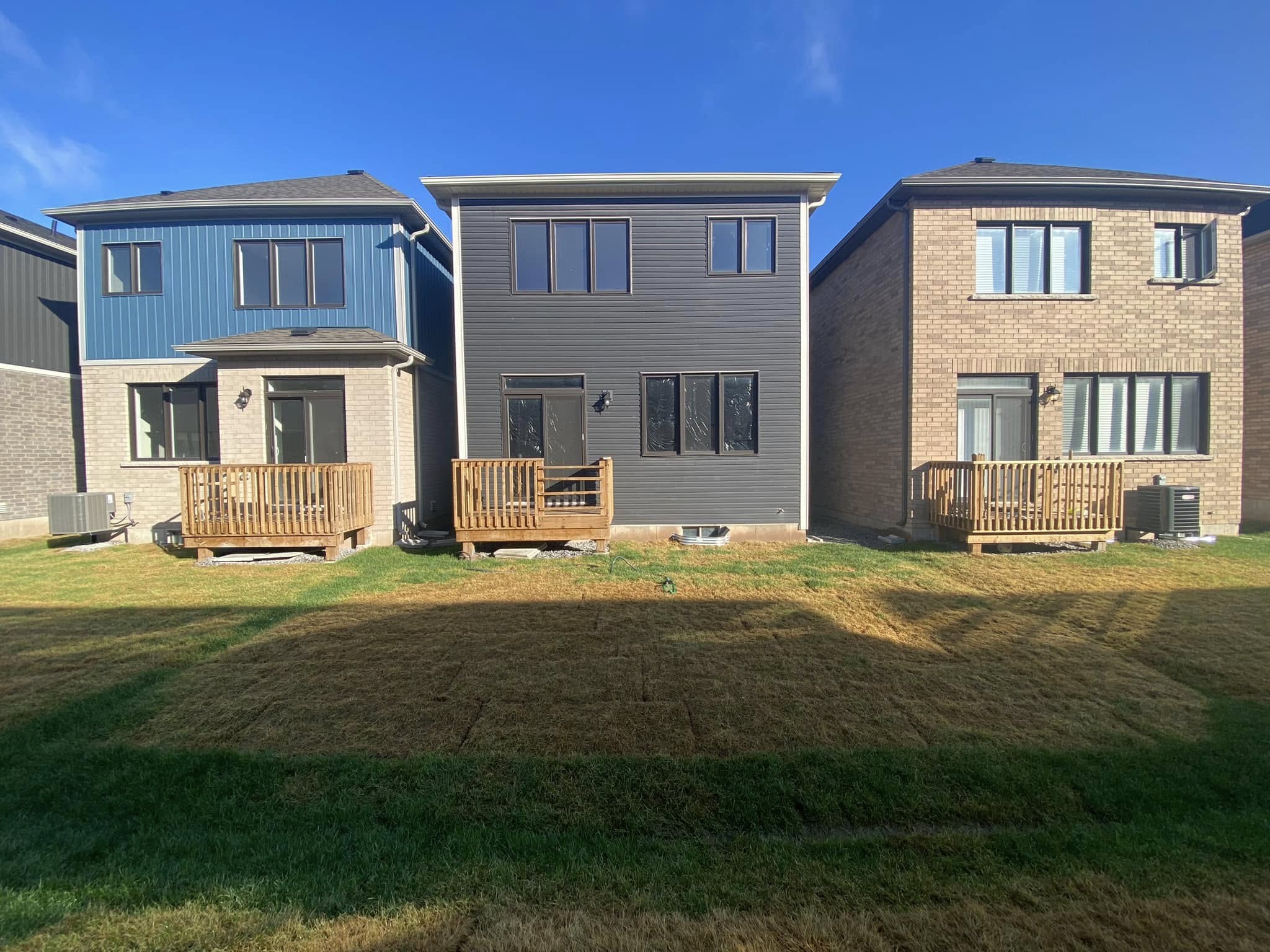
Once the day-21 pull test confirms that establishment is solid — or once a few extra days at the week-two protocol have brought a slower-establishing installation to that point — several things change in how you manage the lawn.
Watering transitions fully to deep weekly schedule. One deep session per week on your permitted bylaw day, long enough to wet the soil profile to four to five inches. No more daily or every-other-day watering. The root system that has established over the first three weeks is now capable of accessing deep soil moisture, and deep weekly watering will train it to continue going deeper. Daily surface watering from this point produces shallow roots on established sod just as it does on established grass — you’re undoing the root depth progress the establishment window created. I covered why this transition matters so much for summer resilience in the article on the Sudbury lawn that looked fine in May and was dead by August — the watering pattern after establishment determines whether the lawn has the root depth to handle July conditions.
First cut — when and how. The first cut on new sod should happen when the grass has grown to four inches — not before. Cutting before four inches puts a blade over a root system that may not yet be fully established, and the blade vibration and traction of a mower over very new sod can disrupt attachment in sections that haven’t fully knit yet. At four inches, the root system is typically firm enough to withstand mowing. Cut at three and a half inches — slightly higher than the maintenance height — for the first cut. Return to three inches on the second cut one week later.
Make sure the mower blade is sharp before the first cut on new sod. A dull blade tears rather than cuts, and the tearing motion exerts lateral force on the sod surface that can still disrupt root attachment in the three to four week timeframe. A sharp blade cuts cleanly and puts minimal mechanical stress on the root system. If you haven’t sharpened the blade this season, do it before the first cut on new sod.
Traffic returns to normal. Full normal traffic — foot traffic, children playing, dogs running — is appropriate once the day-21 pull test is passed. The sod is now attached and will handle normal use without displacement. However, any traffic patterns that were creating visible wear before the installation are worth monitoring — if you had a path worn into the previous lawn from repeated foot traffic along the same line, that traffic pattern will begin affecting the new sod the same way it affected the old lawn. Managing traffic patterns is a long-term consideration, not just an establishment-period one. Targeted aeration along high-traffic paths is part of the annual maintenance that keeps those sections from compacting faster than the rest of the lawn. I covered this in the article on the 4-hour spring window that determines your Sudbury lawn all year — the spring aeration sequence that opens the soil for the growing season applies to new sod in its first spring just as it applies to established lawns.
The sod is now your lawn. After day 21, the sod you installed has become the lawn the property will have going forward. Its trajectory from this point is determined by the maintenance decisions you make — cutting height, watering approach, annual aeration, thatch management — exactly as I described in the article on the 4-step weekly routine that keeps a Sudbury lawn in shape. The establishment window is over. The maintenance window — which runs for as long as you own the property — has begun.
If you had sod installed recently and you’re not sure whether your establishment is on track — or if you’re planning an installation and want to talk through the timing and aftercare before anything is ordered — give me a call. I’ll tell you honestly where things stand and what the next steps should be.
📞 705-507-6787 | Get a free quote online
— Ryan Lingenfelter
Owner, Cutting Edge Lawn & Landscaping
Garson, Ontario · 705-507-6787
