
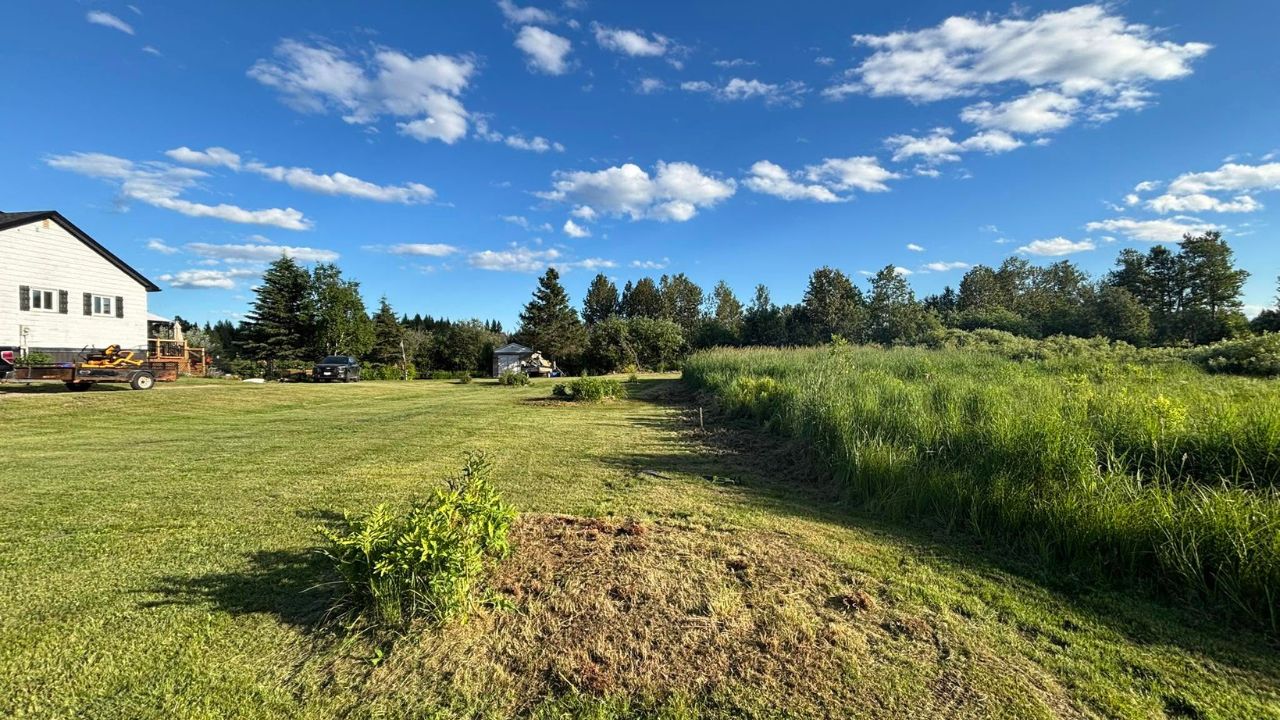
By Ryan Lingenfelter · Cutting Edge Lawn & Landscaping, Garson, Ontario · June 2026
Most lawn care advice is about what to do in spring, what to do in fall, what products to buy, what problems to fix. Very little of it is about the weekly routine — the thing you actually do every seven days that determines what the lawn looks like by the end of the season.
I maintain lawns across Greater Sudbury every week. The routine I follow on each visit isn’t complicated. It doesn’t require specialty equipment. It takes about twelve minutes on a standard residential lot. And the difference between following it consistently and cutting corners on it — over twenty weeks of a Sudbury growing season — is the difference between a lawn that ends October in excellent shape and one that needs corrective work before next spring.
Here are the four steps, with the time allocation for each, and why each one is in the routine.
Step one — the 60-second property read before you touch anything (2 minutes)
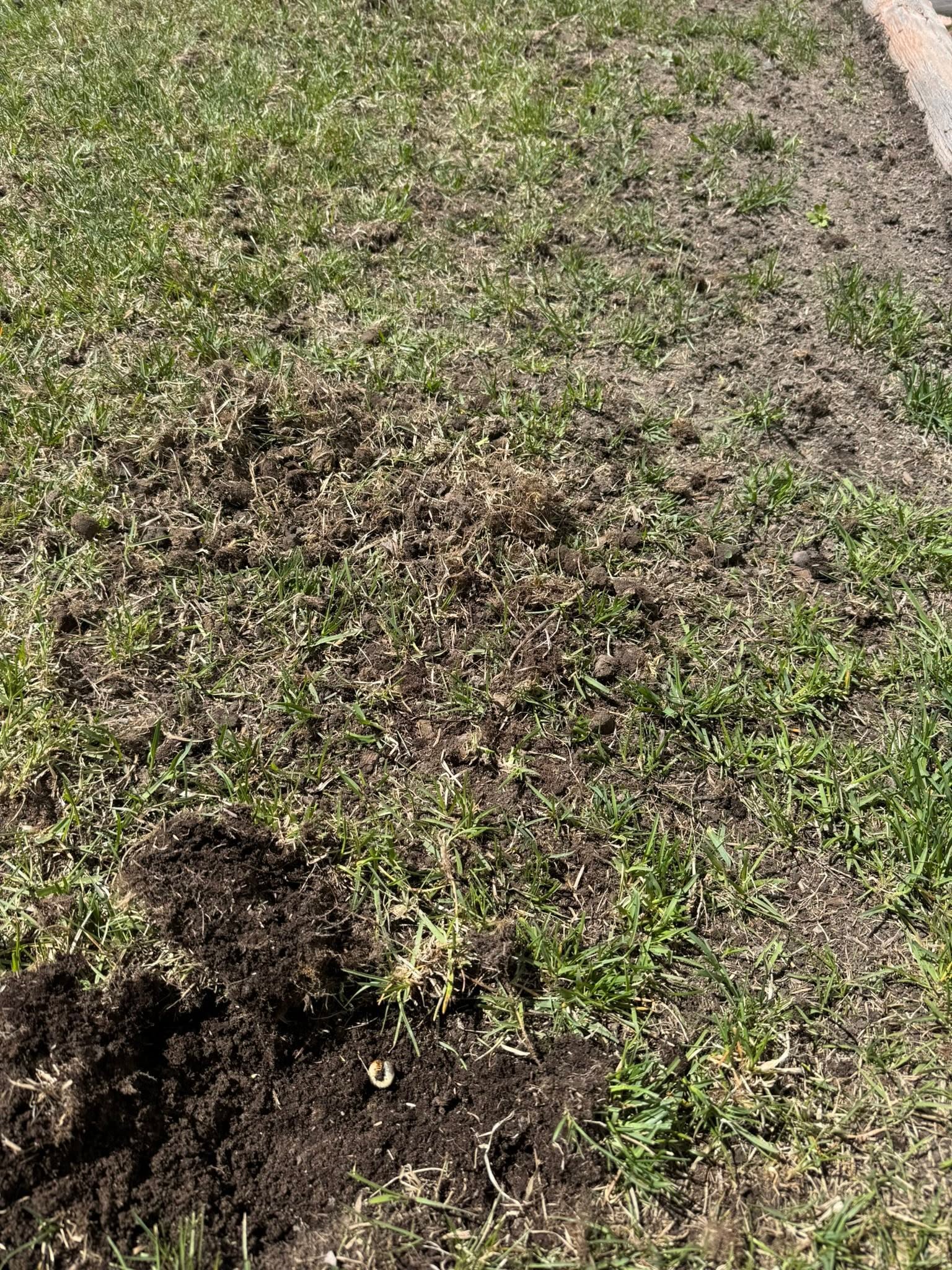
Before the mower starts, before anything is moved or touched, I spend sixty seconds walking the perimeter of the lawn and reading what’s changed since the last visit.
This is the step most homeowners skip entirely. They walk out, start the mower, and cut. The read takes two minutes including walking the perimeter — sixty seconds of actual observation, sixty seconds of walking — and it’s the step that catches everything important before it becomes a problem that costs money to fix.
Here’s what I’m looking for in those sixty seconds:
Colour change in any section since last week. A section that was mid-green seven days ago and is now showing blue-grey or pale yellow is telling me something changed — either a moisture situation, a heat stress event, or the beginning of a problem developing in that area. I note it and adjust the visit accordingly. If a section is stressed, I cut it at a higher height than the rest of the lawn that week — not lower, which would be the wrong instinct.
Anything new on the surface. Debris from wind or storm. A branch that fell. A child’s toy left on the grass. Anything that shouldn’t go through the mower blade. This check prevents equipment damage and prevents debris from being thrown by the blade — which is a safety issue and also a mess issue that takes time to clean up.
How much the grass grew since the last cut. Not an exact measurement — a visual read. In a warm wet week, the grass may have grown an inch and a half. In a dry hot week, growth slows and it may have grown half an inch. That growth amount determines the cutting height this week. If the grass grew more than expected and is approaching five inches, I need to think about the one-third rule — never removing more than a third of the blade in one cut. A five-inch lawn that should be maintained at three inches needs to come down in two passes over two visits, not one aggressive cut this week. The consequences of over-cutting in one visit — the yellowing, the stress, the recovery time — are the same whether it’s your lawn or a customer’s lawn. I demonstrated exactly what that looks like on my own property in the article on the 6-week experiment I ran deliberately letting my Garson lawn go — the step-down recovery sequence after overgrowth takes longer than most people expect.
Any new soft spots or areas of concern. A soft section that wasn’t there last week is a drainage signal. Catching it at week one versus week six means the difference between a simple grade check and a much more involved conversation about what’s happening underneath. This is the quick version of the full drainage assessment I do on new properties — described in the article on the one thing I check before accepting any new lawn customer in Sudbury. The weekly version takes thirty seconds, not thirty minutes, because I’m checking for change rather than doing an initial evaluation.
Two minutes. Before the mower starts. Every single week. This step is why I catch things early instead of late.
Step two — cut at the right height, in the right direction (6 minutes)
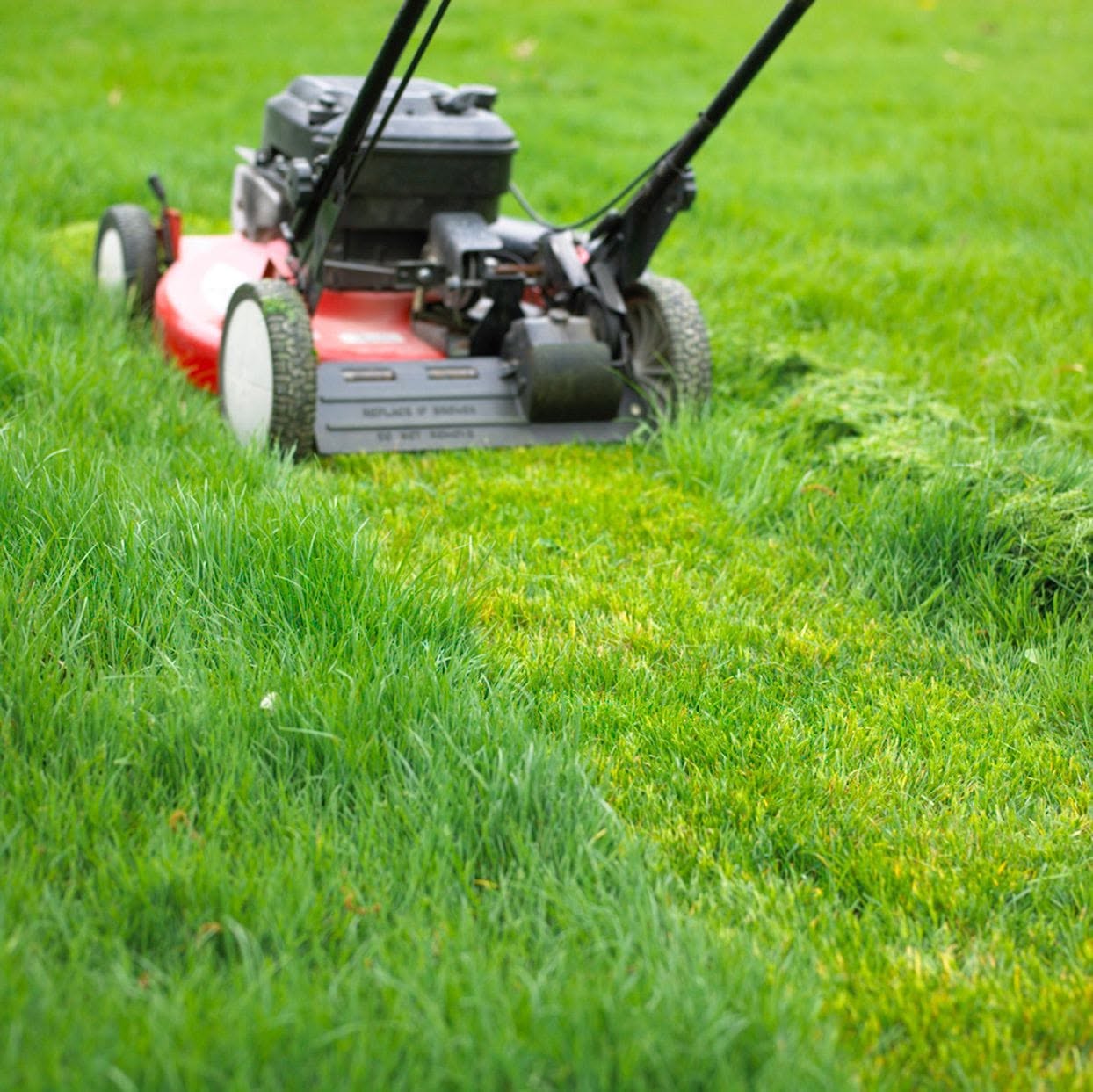
Six minutes is roughly how long it takes to cut a 2,000 square foot lawn at a walking pace with a self-propelled mower. On a smaller lot it’s four minutes. On a larger lot, eight. The time is what it is — the variables I control are the height and the direction.
Height — three inches through the growing season, always. Not whatever the middle dial setting is. Not whatever looks short and neat. Three inches, measured at the blade. I check the deck height at the start of every season and verify it hasn’t shifted if the mower was serviced or moved. On some mowers the deck can drift between seasons — a bolt loosens, a wheel height adjustment shifts — and you can end up cutting at two and a half inches without realising it. Half an inch lower than three inches sounds minimal. Over twenty visits on Sudbury’s clay-influenced soil in summer heat, that half inch is the difference between a root system at four inches and a root system at two.
In July during heat stretches, I raise to three and a half inches. The extra blade length shades the root zone, slows moisture evaporation, and keeps the plant in a better metabolic state to handle heat stress. I drop back to three inches when temperatures normalise. At the very end of the season — the last cut of the year, typically in October — I bring it to two and a half. Shorter final cut reduces the snow mould risk that comes from long grass sitting under the first snowfall for weeks. Not shorter than two and a half. Just slightly below the summer maintenance height for that specific last visit.
Direction — alternate every week. Cutting in the same direction every visit causes the grass to lean permanently in that direction, produces ruts over time, and creates a compaction pattern along the mowing lines. Alternating the cut direction each week — north-south one week, east-west the next, diagonal the following week — produces more upright grass, a better finished appearance, and avoids the compaction and lean-over that fixed-direction mowing creates. It takes zero extra time. It makes a visible difference in how the lawn looks and in the long-term health of the soil surface.
Clippings — leave them except in specific situations. The standard advice to bag clippings is outdated. Clippings from a lawn cut at the right height and on a regular schedule are a free fertilizer source — they decompose within a week and return nitrogen to the soil without contributing meaningfully to thatch when the grass is being cut correctly. I leave clippings on every visit except three: the first cut of the season when there’s winter debris mixed into the surface material, after a period of overgrowth when the clipping volume is too high for the lawn to break down quickly, and when there’s a visible disease issue that could be spread by redistributing infected clipping material. In all other cases, leaving clippings is both better for the lawn and faster for the visit.
Step three — edge the borders that matter (3 minutes)
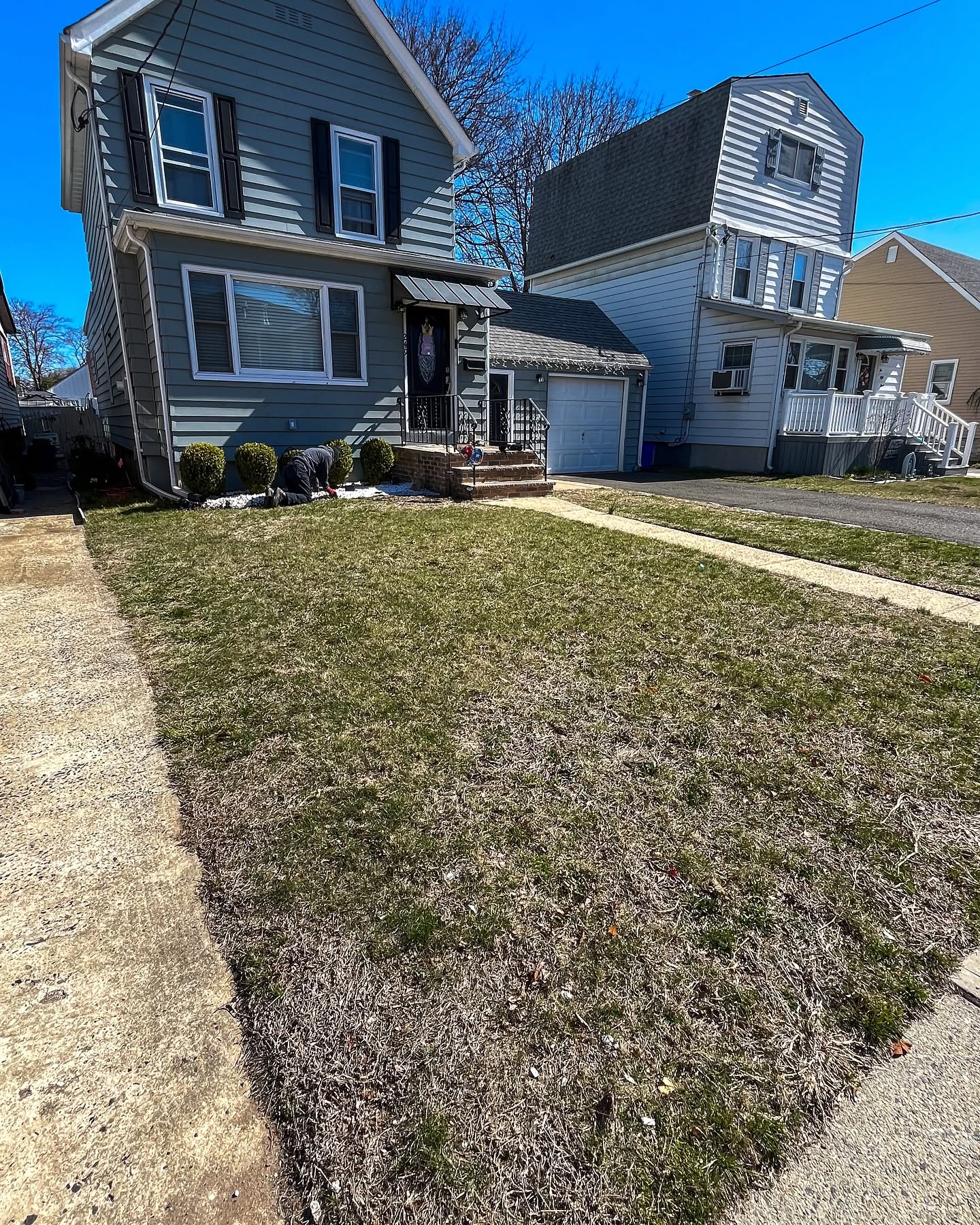
Three minutes of edging is what separates a maintained lawn from a lawn that’s been cut. The visual difference between a freshly edged border and a string-trimmed one is immediate and significant — one has a defined line, one has a soft line that the eye reads as unfinished.
There are three borders that matter on most Sudbury residential properties:
The driveway edge. The line where the lawn meets the driveway is the most visible edge on the property from the street. A sharp defined line there reads as professional regardless of how the rest of the lawn is doing. A soft overgrown edge there reads as neglected even if the grass was cut yesterday. I use a mechanical step edger — not a string trimmer — along the driveway. The step edger cuts a vertical line into the soil, removing the grass that has crept over the edge and producing a clean vertical drop from the lawn surface to the driveway. That line holds between visits. A string trimmer line doesn’t — it feathers back within a week because it’s cutting the grass blades at an angle rather than cutting the root mass that’s causing the encroachment.
The front walkway edge. Same principle as the driveway. The walkway edge is visible from the street and from the approach to the front door. Sharp edge here = maintained property. Soft edge here = property that needs attention. Three minutes total covers driveway and front walkway on most standard lots.
Garden bed borders where they meet the lawn. Not every bed border needs edging every week — established clean edges hold for two to three weeks before the grass re-encroaches enough to need re-cutting. But the check is part of the weekly read, and when the border is starting to blur, the edge work is done that visit. I described the diagnostic value of bed border quality in the article on the hardest question I was ever asked by a Sudbury homeowner — the edge quality tells you the history of how carefully a lawn has been managed, and maintaining it well is part of that history being positive.
One thing the edging step is not: a full-property string trimming session around every tree, post, downspout, and obstacle on the lot. Trimming around obstacles is part of the cut — it’s done with the mower where possible and with the string trimmer in the tight spots the mower can’t reach. Edging is specifically the borders between the lawn and hard surfaces. It’s a different job with a different tool, done at the end of the mowing pass rather than during it, and it takes three minutes rather than ten because it’s targeted rather than comprehensive.
Step four — the 60-second close that most people skip entirely (1 minute)
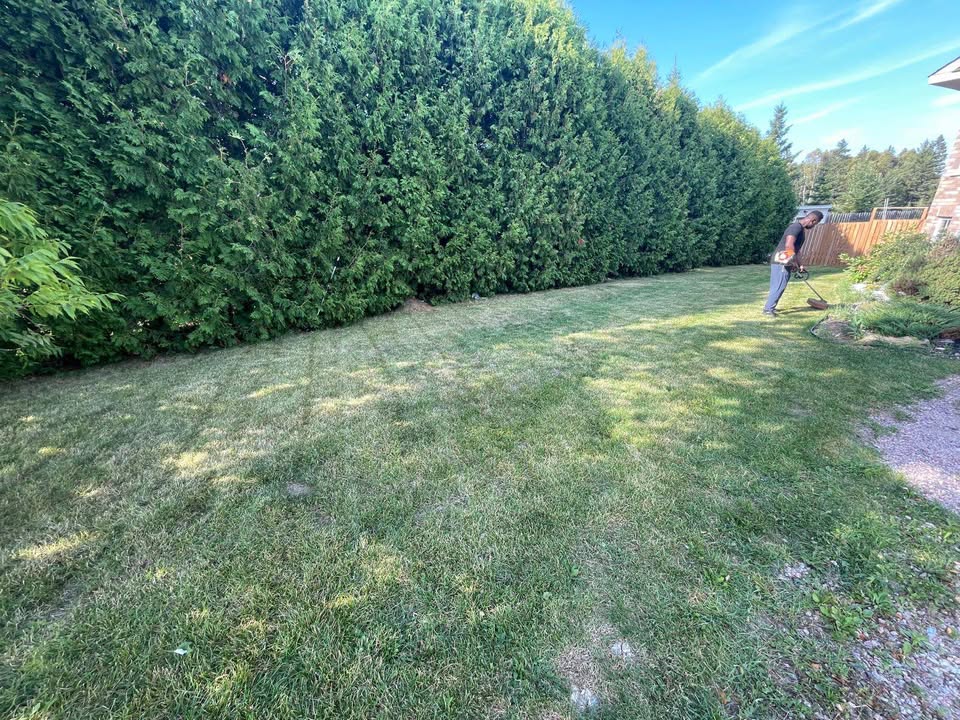
The last sixty seconds of the weekly routine are spent looking at what you just did — not cleaning up, not loading equipment, but looking at the lawn after the cut and the edging are complete.
This closing read is the quality check that tells you whether this week’s visit produced what it should have. It’s not a detailed assessment — that’s what step one is for. It’s a confirmation pass. A quick visual sweep from the street-side view, then from the back of the property looking forward. Three questions:
Is the cut height consistent across the full surface? Uneven height after a cut tells you either the deck isn’t level (a maintenance issue to fix) or there are high spots in the lawn grade that are being scalped on the passes over them (a grading issue to monitor). Consistency from this angle takes five seconds to confirm or flag.
Is the edge line clean and defined? From ten feet away, does the driveway edge look like a straight defined line or like a soft irregular border? If it’s not clean, spend thirty more seconds of targeted edging on the section that isn’t. The close look catches the spot you missed or that the mower threw debris over.
Is there anything the visit revealed that should be noted for next week or actioned before then? A new soft section you noticed during the cut. A patch that went from borderline to visibly stressed between step one and completion. A weed that appeared in a section that was clean last week. These observations are worth thirty seconds to note — either mentally or in a simple log — because they’re the early signals that produce early interventions rather than late-season corrections.
One minute. Done while you’re still at the property, before you’ve moved the equipment back to the truck or garage. It costs nothing and it closes the loop on the visit with information rather than just a cut lawn.
Why the twelve minutes matter more than the product you use
The four-step routine takes twelve minutes — two for the read, six for the cut, three for the edge, one for the close. It doesn’t include any products. It doesn’t require a soil test or a fertilizer application or anything beyond a mower and an edger. And yet the consistent execution of this routine, every seven days through the Greater Sudbury growing season, produces better results than any product applied on top of a lawn that’s being cut wrong, cut inconsistently, or cut without the assessment step that tells you what the lawn actually needs that week.
The reason is compounding. Twenty weeks of correct cutting height is twenty weeks of the root system getting what it needs to push deeper. Twenty weeks of the closing read is twenty weeks of early signal detection before problems compound. Twenty weeks of proper edging is twenty weeks of the lawn looking maintained rather than looking cut. None of those individual weeks is dramatic. The accumulated effect of twenty of them is.
This is the weekly implementation of the broader principle I described in the article on the Val Caron homeowner who asked what I’d do to his lawn over twenty years — the long-game framing that produces the best lawns isn’t seasonal intervention, it’s consistent weekly discipline applied in the right direction. The twelve-minute routine is what that weekly discipline looks like on the ground.
And it connects directly to what I found when I looked at the best 500 lawns across Greater Sudbury, as described in the article on the 5 things every great Sudbury lawn has in common — the great lawns aren’t great because of a single dramatic intervention. They’re great because the weekly basics have been done correctly for long enough that the compounding effect is visible in the soil depth, the root system, and the lawn’s resilience through summer.
Twelve minutes. Four steps. Every week. That’s the routine.
If you want someone else to do those twelve minutes on your property — reliably, at the right height, with the read at the start and the close at the end — give me a call.
📞 705-507-6787 | Get a free quote online
— Ryan Lingenfelter
Owner, Cutting Edge Lawn & Landscaping
Garson, Ontario · 705-507-6787
