
By Ryan Lingenfelter · Cutting Edge Lawn & Landscaping, Garson, Ontario · June 2026
I’ve been doing quote visits and lawn assessments across Greater Sudbury since 2020. In that time I’ve been asked a lot of questions. What does aeration cost. Why is my lawn brown in July. How often should I water. What’s wrong with this corner. Why did my sod fail. Can you fix it before the summer. How long will it take.
Good questions. I answer them every week.
Last spring I was on a quote visit in Val Caron — a homeowner named David who’d called me after seeing one of the articles on this site. We’d walked his property, I’d done the assessment, told him what I found. Reasonable compaction, thatch building toward the half-inch threshold, cutting height about right, watering pattern the one thing I’d change. Standard picture. Good starting point.
We were standing near his back fence wrapping up when he asked me something I genuinely hadn’t been asked before. Not in that form. Not with that specific intention behind it.
I want to tell you what it was — because the answer I gave him, and the conversation that followed, is probably the most useful thing I’ve said to any single homeowner in Greater Sudbury in the past six years.
The visit — what brought me to his property in the first place
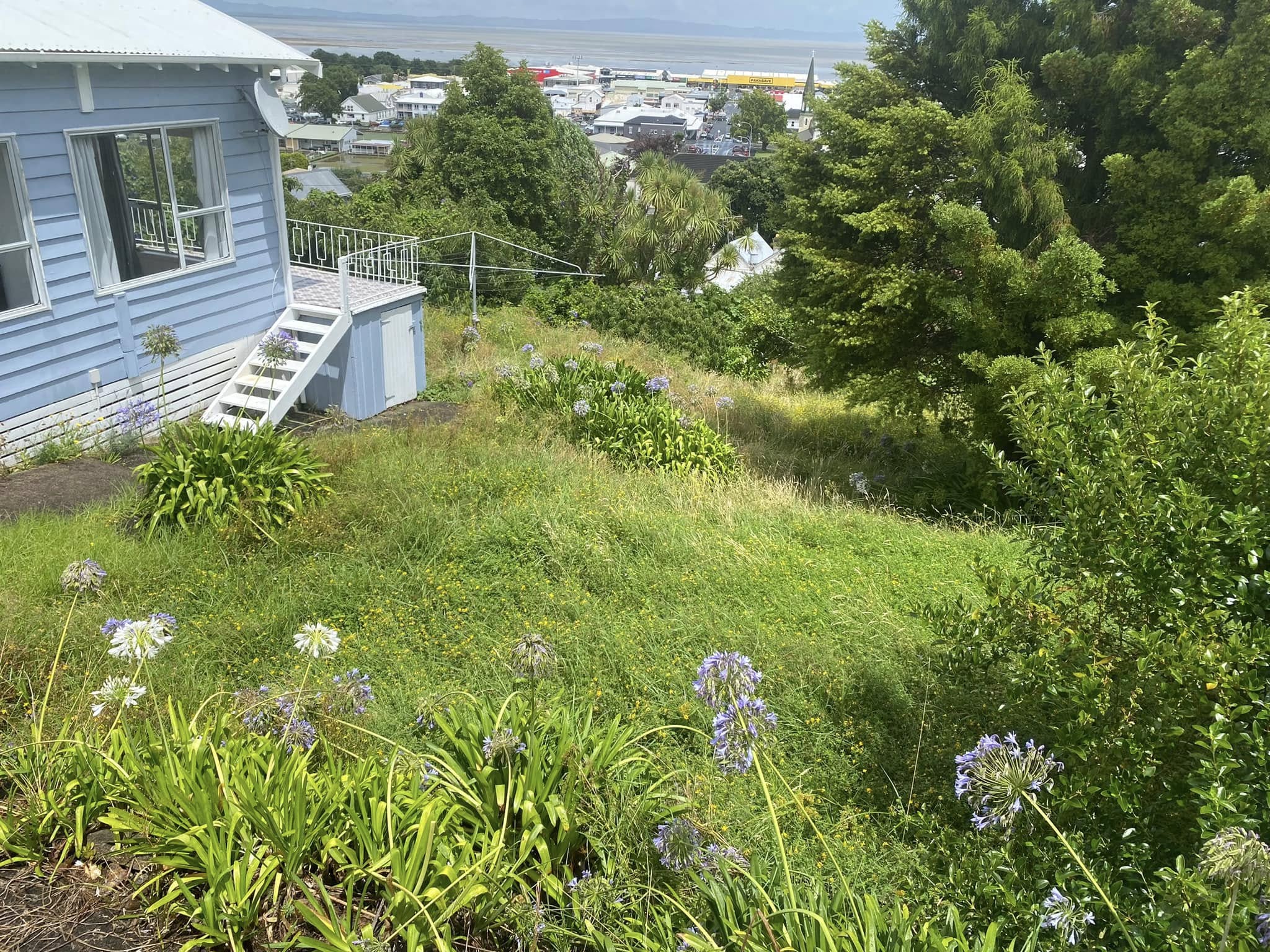
David had owned the property in Val Caron for about six years. He was meticulous — the kind of homeowner who keeps notes on what he’s done to the lawn, when he fertilized, what product he used, when he overseeded. He’d aerated twice in six years. He watered on a schedule. He’d read enough to know that cutting height mattered and had been maintaining at roughly the right height for most of that time.
His lawn looked decent. Not excellent — there was a section near the south fence that was thinner than the rest and hadn’t responded fully to two rounds of overseeding. The overall colour was a step below what it could have been. But for a homeowner managing it himself without professional input, he’d done better than most.
He’d called me not because something was dramatically wrong but because he felt like the lawn had plateaued. He was doing the right things and the lawn was okay — but it hadn’t improved meaningfully in the past two or three seasons. He wanted to understand why, and whether there was something he was missing.
The assessment told me a few things. The thatch was creeping toward half an inch — not urgent but worth managing this season. The compaction was moderate; two aerations in six years on Val Caron’s clay-influenced soil was not quite enough to stay ahead of it. The soil in the thin south fence section had slightly less topsoil depth than the rest of the property — about two and a half inches versus the three and a half to four inches I found in the main lawn area. That topsoil differential explained why the overseeding never fully took there despite correct technique and timing.
I told him all of that. He listened carefully, asked clarifying questions, wrote things down. Then he asked what he needed to do first and what the realistic improvement looked like this season if he followed the recommendations.
Standard conversation. Good conversation. And then, as we were walking back toward the gate, he stopped and asked the question.
The question — and why it stopped me
He said: “What would you do to this lawn if you knew you were going to own this house for twenty more years?”
I stood there for a moment.
Not because I didn’t have an answer. I had an answer immediately. It stopped me because I realised nobody had ever asked me that before — and that the answer to that question was meaningfully different from the answer to every question I’d been answering for six years.
Every lawn question I normally get is about the current season. What do I do this spring. How do I fix this patch. What happened this summer. What should I do before winter. The time horizon is months, occasionally a full year. The framing is reactive — something is wrong or could be better and what’s the fastest path to better.
David’s question had a twenty-year time horizon. That changed everything about the answer.
When you’re thinking about a lawn over twenty years, the priorities are completely different from when you’re thinking about a lawn over one season. The things that produce the fastest visible improvement in the short term are not always the things that produce the best lawn over two decades. And the things that matter most over twenty years are often the ones that show the least visible return in year one — which is why nobody prioritises them when they’re thinking season by season.
I told him I needed a few minutes to think about it properly before I answered. We sat down on his back step and I walked through it out loud.
The honest answer I gave him — and what it led to
Here’s what I told David I would do to that lawn over twenty years, in roughly the sequence I’d prioritise it.
First — build the soil, not just maintain the surface. The topsoil differential I’d found in the south fence section — two and a half inches versus four inches in the main lawn — was the single most limiting factor on that property for long-term performance. In the short term you can work around thin topsoil. Over twenty years it compounds. Every season that thin section underperforms relative to the rest of the lawn, every overseeding that takes marginally rather than fully, every summer heat stretch that hits it harder than the rest — all of that traces back to inadequate soil depth that no surface treatment fully compensates for.
What I’d do: thin annual topdressing with quality compost — a quarter inch per application, once in late May after aeration. Not a dramatic intervention. Just consistent organic matter addition over time. After five seasons of that, the soil in that south section would have meaningfully more biological activity, better moisture retention, and more depth for roots to work with. After ten seasons it would be unrecognisable from a soil quality standpoint. The surface work would finally take the way it was supposed to because the foundation would be there to support it. This is the long-game version of what I described in the article on why I stopped giving every Sudbury homeowner the same advice — the topsoil depth variable that differentiates long-term outcomes even on properties doing everything else right.
Second — aerate annually without exception, and treat it as infrastructure maintenance rather than a seasonal service. Most homeowners aerate when they notice the lawn is struggling. The right framing for a twenty-year lawn is to aerate every single late May whether the lawn looks like it needs it or not — because compaction in Greater Sudbury’s clay soil builds every year regardless of how the surface looks, and annual aeration keeps it from ever reaching the levels that require aggressive remediation. David had aerated twice in six years. That’s reactive management. Over twenty years, reactive management means the compaction periodically gets ahead of you and produces the kind of decline that takes two or three seasons to correct. Annual aeration means it never gets ahead of you. I covered the specific reason the late May window matters for this in the article on the best time to aerate a Sudbury lawn — the same reasoning applies whether you’re thinking about one season or twenty.
Third — get a soil test every three years and use it to adjust inputs rather than applying the same fertilizer program indefinitely. Soil chemistry changes over time. Consistent fertilization without soil testing can create nutrient imbalances — too much of one thing, not enough of another — that don’t show up dramatically in year three but compound over ten or fifteen years into soil conditions that are actively difficult to work with. A $20 soil test every three years tells you whether the pH is drifting, which nutrients are accumulating, and whether you need to adjust what you’re applying. Over twenty years, the lawn that gets periodic soil testing and adjusted inputs will be in meaningfully better soil condition than the lawn that gets the same program every year regardless of what the soil actually needs. I discussed soil testing and fertilizer timing in the article on what I tell Sudbury homeowners about fertilizing — the same principles apply over a multi-year horizon.
Fourth — overseed every two to three years whether the lawn looks thin or not. The grass varieties that perform best in Greater Sudbury — creeping red fescue, Kentucky bluegrass — spread slowly and naturally thin in high-traffic areas or after harsh winters. Overseeding when thinning becomes visible means you’re playing catch-up. Overseeding on a light schedule before visible thinning means the lawn density never drops far enough for weeds to gain the foothold they need. Over twenty years, the consistently overseeded lawn is dramatically denser and more weed-resistant than the lawn that only gets seed when something has gone visibly wrong. The timing principles are the same as I described in the article on when to overseed a Sudbury lawn — late May to mid-June, after aeration, with the right blend for the specific conditions on that property.
Fifth — document what you do and when. David already did this. I told him to keep doing it and treat the records seriously. Over twenty years the property will have different owners, different service companies, potentially different maintenance approaches at different points. The homeowner who has records of what was done, when it was done, and what the results were has an enormous advantage in diagnosing problems and making good decisions compared to the homeowner who is guessing based on how the lawn looks today. What worked, what didn’t, where the thin sections were and what addressed them — that’s genuinely valuable information over a multi-decade timeframe.
David listened to all of it and said something I didn’t expect. He said: “Nobody has ever talked to me about my lawn that way before. Every conversation I’ve had has been about this season. You just described a plan for the life of my ownership.”
That hit me. Because he was right — and it made me realise how much of what I do is short-term by default, not because short-term is the right frame, but because nobody asks the long-term question.
Why that question should matter to every Sudbury homeowner
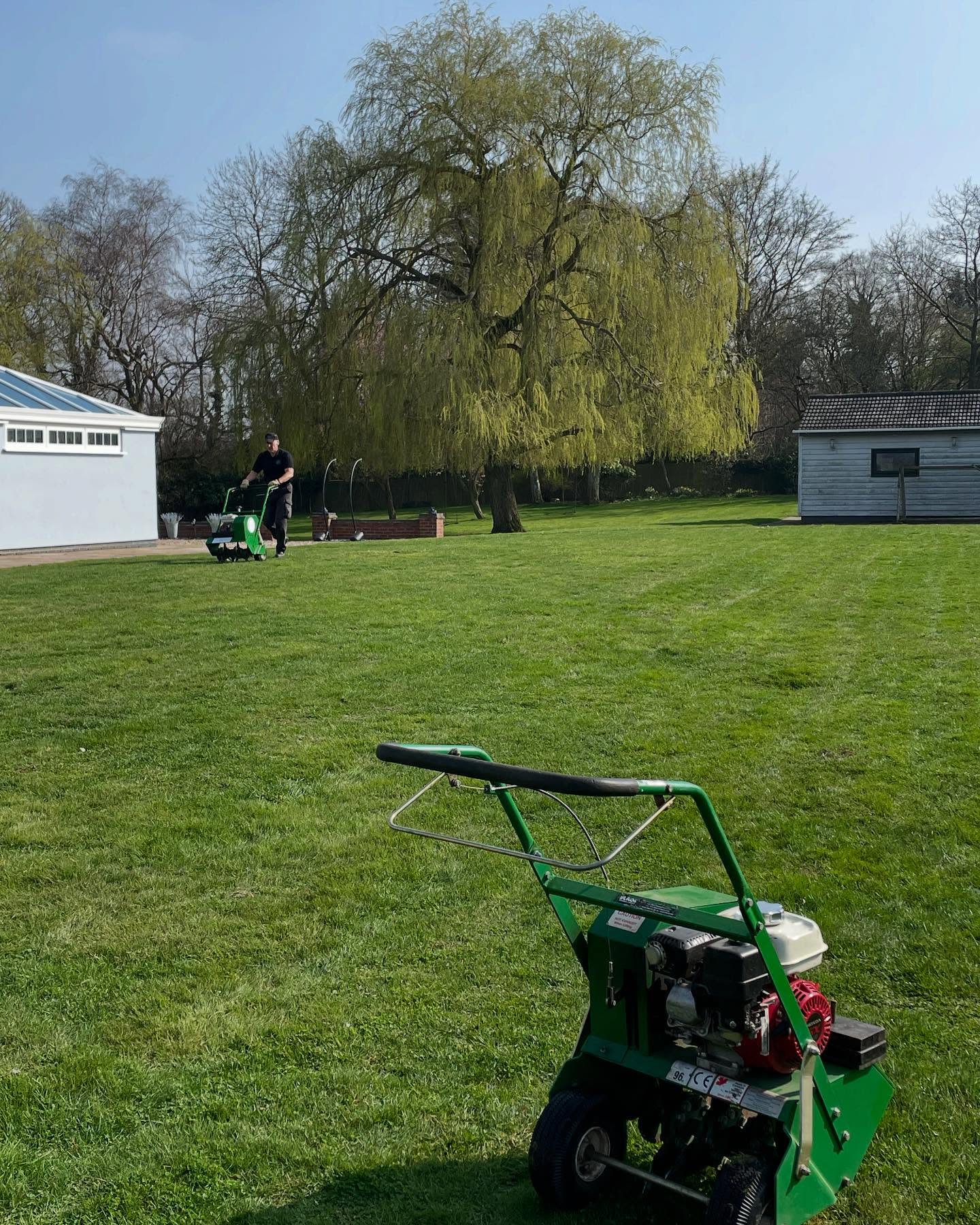
Most homeowners in Greater Sudbury will own their current property for ten, fifteen, twenty years or more. The lawn they maintain over that period is either getting incrementally better with each season or incrementally worse. There’s rarely a steady state. The soil is either building organic matter and biological health through consistent good management, or it’s compacting, losing topsoil depth, and drifting toward conditions where surface treatments stop working as well as they should.
The choices that determine which direction that goes are often not dramatic. They’re the difference between aerating every year versus every few years. Between topdressing occasionally versus never. Between soil testing periodically versus applying the same program forever. Between overseeding preventively versus reactively. None of those choices produces a visible result in week one. All of them produce a visible result in year ten.
The reason I find David’s question so useful is that it reframes the decisions correctly. When the time horizon is this season, the highest-priority question is what’s wrong and how do I fix it fast. When the time horizon is twenty years, the highest-priority question is what foundation am I building and will the inputs I’m choosing now leave the soil in better or worse condition for the inputs I’ll want to use in a decade.
Those are genuinely different questions. And the second one produces better lawns over the long run than the first one, consistently.
I’ve used David’s question as a framing tool on quote visits ever since that afternoon in Val Caron. Not on every visit — most homeowners want help with what’s in front of them right now, and that’s a legitimate thing to want. But when I’m talking with a homeowner who’s thinking carefully about their property and wants to understand the bigger picture, I now ask them directly: how long are you planning to be in this house?
The answer changes what I tell them. And in most cases, it produces a better plan than the one I would have given if I’d only been thinking about what the lawn needs this season.
If you want that kind of conversation about your property — not just what to do this spring but what you’re building toward over the years you plan to own it — give me a call. I’ll come walk the property, do a proper assessment, and give you both the short-term picture and the long-term one.
📞 705-507-6787 | Get a free quote online
— Ryan Lingenfelter
Owner, Cutting Edge Lawn & Landscaping
Garson, Ontario · 705-507-6787
