
By Ryan Lingenfelter · Cutting Edge Lawn & Landscaping, Garson, Ontario · June 2026
When I started Cutting Edge Lawn & Landscaping in Garson in 2020, I had a standard set of advice I gave to pretty much every homeowner I met. Aerate in spring. Don’t cut below three inches. Water deeply once a week. Fertilize in late May and late August. Don’t overseed in fall.
That advice isn’t wrong. It’s still the foundation of what I tell people. But for the first year or two I was handing it out like a pamphlet — the same set of recommendations to every property, every soil type, every neighbourhood. And I was wondering why the results weren’t as consistent as they should have been.
The same advice, applied to different properties with different histories and different underlying conditions, was producing noticeably different outcomes. Some lawns responded the way I expected. Others improved slowly. A few barely moved despite homeowners doing exactly what I’d told them.
One specific season forced me to stop and think about why. Here’s what I figured out — and why it changed how I assess every property I walk today.
What the same advice looked like — and why it seemed reasonable at first
The standard advice I was giving was built on sound agronomic principles for cool-season grasses in northern Ontario. Aerate to address compaction, which is real and common across Greater Sudbury’s clay-influenced soil. Three inches cutting height to shade the root zone and reduce heat stress. Deep weekly watering to encourage root depth rather than surface dependency. Fertilize in the windows when soil temperature supports nutrient uptake. Don’t overseed in fall because our frost window is too short for reliable establishment.
All of that is correct for a median Sudbury lawn. The problem is that the median doesn’t describe most individual properties very accurately. Greater Sudbury spans a large geographic area with meaningful variation in soil type, drainage patterns, shade cover, topsoil depth, and previous land use. A property in a newer Chelmsford subdivision sits on compacted construction fill with minimal topsoil. A property on an older Garson street has decades of leaf matter building organic content into the soil. A Hanmer property near low-lying land has drainage dynamics that a Lively property on a slight grade simply doesn’t have.
The same advice applied to all of those produces different results because the starting conditions are different. Telling a homeowner on minimal topsoil to aerate and overseed without first building soil depth is setting them up for marginal improvement. Telling a homeowner with drainage failure to water deeply once a week is giving them an instruction that the underlying problem will prevent from working correctly. Telling a homeowner with a heavily shaded north-facing yard to use the same grass mix as a full-sun property produces a lawn that looks okay for one season and declines from there.
Generic advice works generically. Most lawns in Sudbury are not generic. That’s what took me too long to fully absorb at the start.
The season that changed how I work

The season that made it concrete was the summer of my second year. I had two neighbouring properties in Val Caron — both residential, similar lot sizes, on the same street about four houses apart. I’d given both homeowners essentially the same recommendations in spring. Both of them had followed the advice reasonably well. By mid-July the results were noticeably different.
Property one looked good. The aeration had produced visible improvement. The grass was dense, a healthy mid-green, handling the July heat stretch without significant stress. The homeowner was happy.
Property two was struggling. The thin sections hadn’t filled in after overseeding the way they should have. The colour was still pale in the open areas despite correct cutting height. The lawn had browned in two sections during the July heat stretch despite consistent deep watering.
Same street. Same advice. Different results.
I went back to property two in late July and did a more thorough assessment than I’d done in spring. What I found was that the two struggling sections had topsoil depth of about two inches over dense compacted fill — almost certainly construction-related, given that several houses on that part of the street had been built around the same decade and the fill pattern was consistent. The aeration I’d done in May had pulled plugs through two inches of soil and then hit resistance. The tines hadn’t reached the depth needed to produce the root channel improvement that aeration creates on properties with adequate topsoil.
The overseeding hadn’t established properly in those sections because two inches of topsoil doesn’t have enough depth for a root system to develop the way it needs to. The seed germinated, started growing, and then hit the same dense fill the aeration tines had hit. Shallow roots, limited moisture reservoir, browning in heat.
Property one had been on the street longer — an older build on that same block — with significantly better topsoil depth throughout. The aeration had worked properly because there was soil for it to work in. The overseeding had established well for the same reason.
Same advice. Different subsurface conditions. Different outcomes — completely predictably, if I’d assessed the subsurface conditions before applying the same treatment to both properties.
That case is directly related to what I now check before accepting any new maintenance customer — the drainage and soil depth assessment I described in the article on the one thing I check before taking any new lawn customer in Sudbury. The Val Caron comparison was the case that made that check a standard part of how I work.
The three things that make every Sudbury lawn different from every other one
After that season I started paying more attention to the variables that differentiate properties — not just their surface condition but the underlying factors that determine how they’ll respond to any given treatment. Here are the three that matter most in Greater Sudbury specifically.
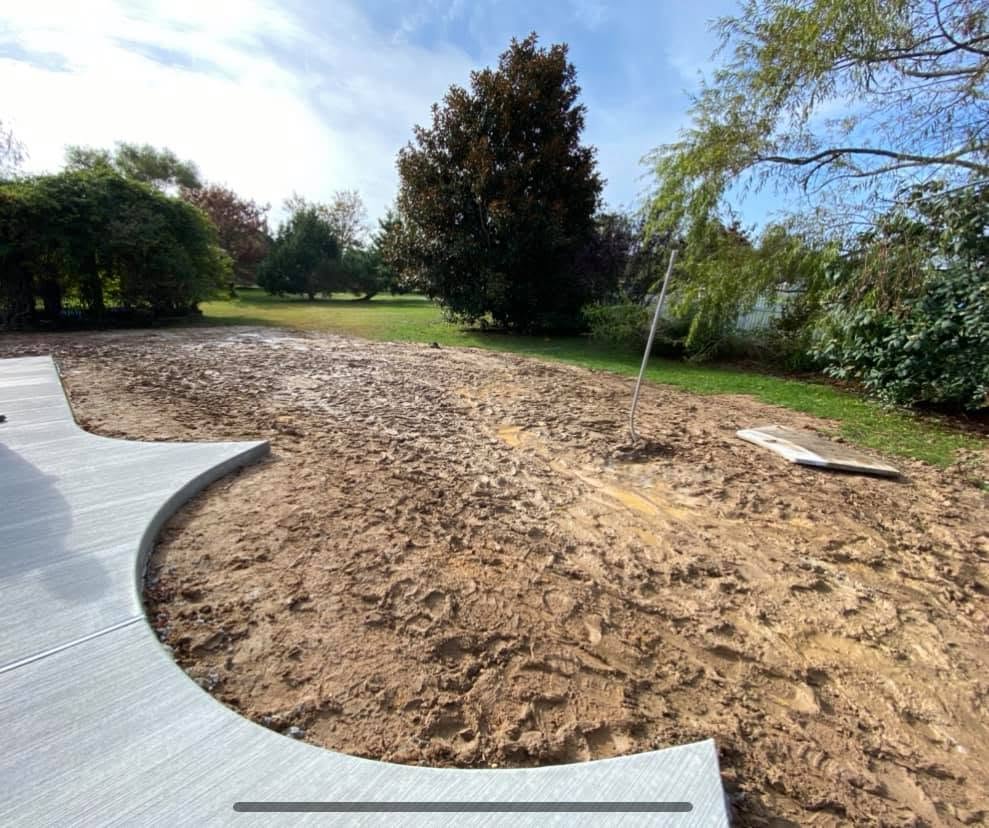
One — topsoil depth and quality. This is the variable I underweighted most in my early years. Greater Sudbury has significant variation in topsoil depth across different neighbourhoods and property histories. Older established residential streets in Garson, Val Caron, and Hanmer often have reasonable topsoil depth built up over decades. Newer subdivisions in Chelmsford, parts of Lively, and other areas with significant development in the last twenty years are frequently on minimal topsoil over compacted fill or exposed subgrade.
The practical difference: aeration on four inches of quality topsoil produces dramatically better root channel improvement than aeration on two inches of topsoil over hardpan. Overseeding establishes reliably on adequate topsoil and marginally on minimal topsoil. Fertilizing produces visible response on good soil depth and limited response on thin topsoil because the nutrient holding capacity isn’t there. Before I give advice about any of those services, I now check topsoil depth — a screwdriver push to the resistance point, multiplied across a few spots on the property. It takes thirty seconds and tells me whether the standard recommendations apply or whether soil building needs to come first.
Two — drainage pattern specific to the property. Greater Sudbury’s terrain creates meaningful drainage variation between properties even on the same street. A property with a slight grade directing runoff from a neighbour’s higher lot into a back corner has a persistently wet section that the property on the other side of the street — with a grade directing runoff away — doesn’t have. A property next to a former wetland area or natural drainage channel has water table dynamics that a property three streets away doesn’t experience.
The advice that works on a well-drained property — deep weekly watering, spring aeration, overseed in late May — doesn’t all translate directly to a property with drainage complications. On a well-drained property, deep watering encourages roots to go down where consistent moisture lives. On a property with a high water table in specific sections, the roots already can’t go down because the lower soil is saturated. The watering advice is wrong for that section — not in general, but for that specific spot on that specific property. I covered what drainage failure looks like and how it masquerades as a lawn care problem in the article on the Sudbury property where I found drainage problems underground.
Three — the maintenance history of the property. A lawn that has been aerated annually for five years is in a fundamentally different starting condition than a lawn that has never been aerated. A lawn that has been cut at three inches consistently is different from one that has been cut at two inches for a decade. A lawn that has had proper starter fertilizer applications timed to soil temperature is different from one that has had fertilizer broadcast in early April every year when the soil was still cold and biologically inactive.
The advice appropriate for a lawn with a poor maintenance history — more aggressive initial intervention, more corrective work before moving to maintenance mode — is different from the advice for a lawn that’s been well maintained and just needs refinement. Giving the same recommendations to both produces results proportional to the starting point, which means one homeowner sees the improvement they expected and another sees marginal progress and wonders what they’re doing wrong.
I now ask specifically about maintenance history on every quote visit — what’s been done, how recently, and by whom. The answers shape what I recommend. A lawn that has been aerated every spring for three years doesn’t need the same intervention as a lawn that has never been aerated. Telling both homeowners to aerate as their first priority misses the point on the first property and is exactly right on the second. The article on the 10 free assessments I did across Greater Sudbury showed this variation clearly — same problem on the surface, very different histories and starting points, requiring different approaches despite the similarity of the symptom.
What personalised advice actually looks like — and what changes when you give it
Personalised lawn advice doesn’t mean a completely different framework for every property. The fundamentals don’t change — aeration matters, cutting height matters, timing matters, soil health matters. What changes is the sequence, the priority, and the realistic expectation for each property given its specific starting conditions.
For a property with minimal topsoil over compacted fill, personalised advice starts with soil building before aeration produces its full benefit. Topdressing with quality compost over one to two seasons, combined with aeration, builds the organic matter and soil structure that makes every subsequent input more effective. Skipping that step and going straight to the standard maintenance program produces results proportional to what two inches of topsoil can support — which is limited.
For a property with a drainage problem in a specific section, personalised advice addresses the drainage before treating the surface. Not because the surface work is wrong — it isn’t — but because it won’t hold in that section until the drainage is corrected. I described the decision framework for when structural problems need to come before surface treatment in the article on lawn repair in Sudbury — when to patch, reseed, or replace. The personalised question is always: is this a surface problem or a structural problem wearing a surface appearance?
For a property with a long history of incorrect cutting height — two inches for multiple seasons — personalised advice accounts for what that history has done to the root system and thatch layer before jumping to the standard maintenance recommendations. The grass needs the cutting height corrected first. Then the thatch needs to be managed once it’s confirmed to be over the threshold. Then aeration into managed thatch produces its full effect. Doing all of those out of sequence, or skipping steps because the standard program doesn’t include them, produces slower and less consistent results than getting the sequence right for that specific starting point. I covered what years of incorrect cutting height does cumulatively in the article on the Lively homeowner whose lawn looked worse every summer — a case where the history of the problem mattered as much as the fix.
What changes when advice is personalised rather than generic: the homeowner understands why the recommendation applies to their specific property, not just in general. They understand what order to do things in. They have a realistic expectation of what improvement looks like in season one versus season two versus season three, given their starting point. And they understand which results are achievable through maintenance and which require structural work first.
That last part is what generic advice consistently skips. It tells homeowners what to do. It doesn’t tell them what to do first — and for a property with compounding underlying issues, the sequence matters as much as the actions themselves.
If you want a lawn assessment that’s actually specific to your property — your soil depth, your drainage pattern, your maintenance history, your realistic starting point — give me a call. I’ll walk the property, do the checks that tell me what your specific lawn is dealing with, and give you recommendations that reflect what I actually find rather than what I’d tell any random homeowner in Greater Sudbury.
📞 705-507-6787 | Get a free quote online
— Ryan Lingenfelter
Owner, Cutting Edge Lawn & Landscaping
Garson, Ontario · 705-507-6787
