

By Ryan Lingenfelter · Cutting Edge Lawn & Landscaping, Garson, Ontario · June 2026
Earlier this spring I offered free lawn assessments to ten homeowners across Greater Sudbury. No obligation, no sales pitch — just a proper walk of the property, a look at what was actually going on underneath the surface, and an honest conversation about what I found.
I did it partly because I wanted to — I find lawn diagnostics genuinely interesting, and talking to homeowners about their properties is one of the parts of this job I enjoy most. But I also did it because I had a hunch about what I was going to find. I’d been seeing the same patterns across quote visits all spring and I wanted to know whether those patterns held up when I looked at a wider range of properties systematically.
They did. Every single one of the ten properties had the same underlying issue. Not similar. The same. Ten homeowners, ten different streets, ten different histories of how the lawn had been maintained — and one problem present on all of them without exception.
Here’s the full breakdown of what I found, what was different between properties, and what I told each homeowner to do about it.
How the assessments worked — what I was actually looking at

Each assessment followed the same process. I spent thirty to forty-five minutes on the property — more on larger lots — and went through the same checklist on every one.
First I walked the full perimeter of the lawn, pressing my heel into the soil in different spots to feel for compaction and soft areas. Hard soil that barely gives under pressure means compaction. Soil that gives too easily in specific spots often means drainage or moisture issues underneath.
Then I got on my knees in three or four different sections of the lawn — a sunny open area, a shadier section near the house or fence, and any area that the homeowner had flagged as a problem. I parted the grass with my fingers down to the soil surface and looked at two things: the thatch layer and the root depth. Thatch is the organic material between the soil and the living grass. Root depth tells you how far the plant has been able to push into the ground. Both of those numbers tell you a lot about what the lawn is capable of handling when conditions get difficult.
I also looked at the cutting height — either by asking or by measuring the existing grass length and asking when it was last cut. I looked at weed distribution, which is a diagnostic in itself: where the weeds are concentrated tells you something about the soil conditions in those areas. And I looked at drainage — any low spots, any moss, any areas that were discoloured in a way that suggested consistent moisture stress.
At the end of each visit I sat down with the homeowner for ten to fifteen minutes and told them exactly what I found — not a sales pitch, just a straight read on the property. What was working, what wasn’t, and what I would prioritize if I were maintaining that lawn.
Here’s what I found.
The one thing every single property had in common
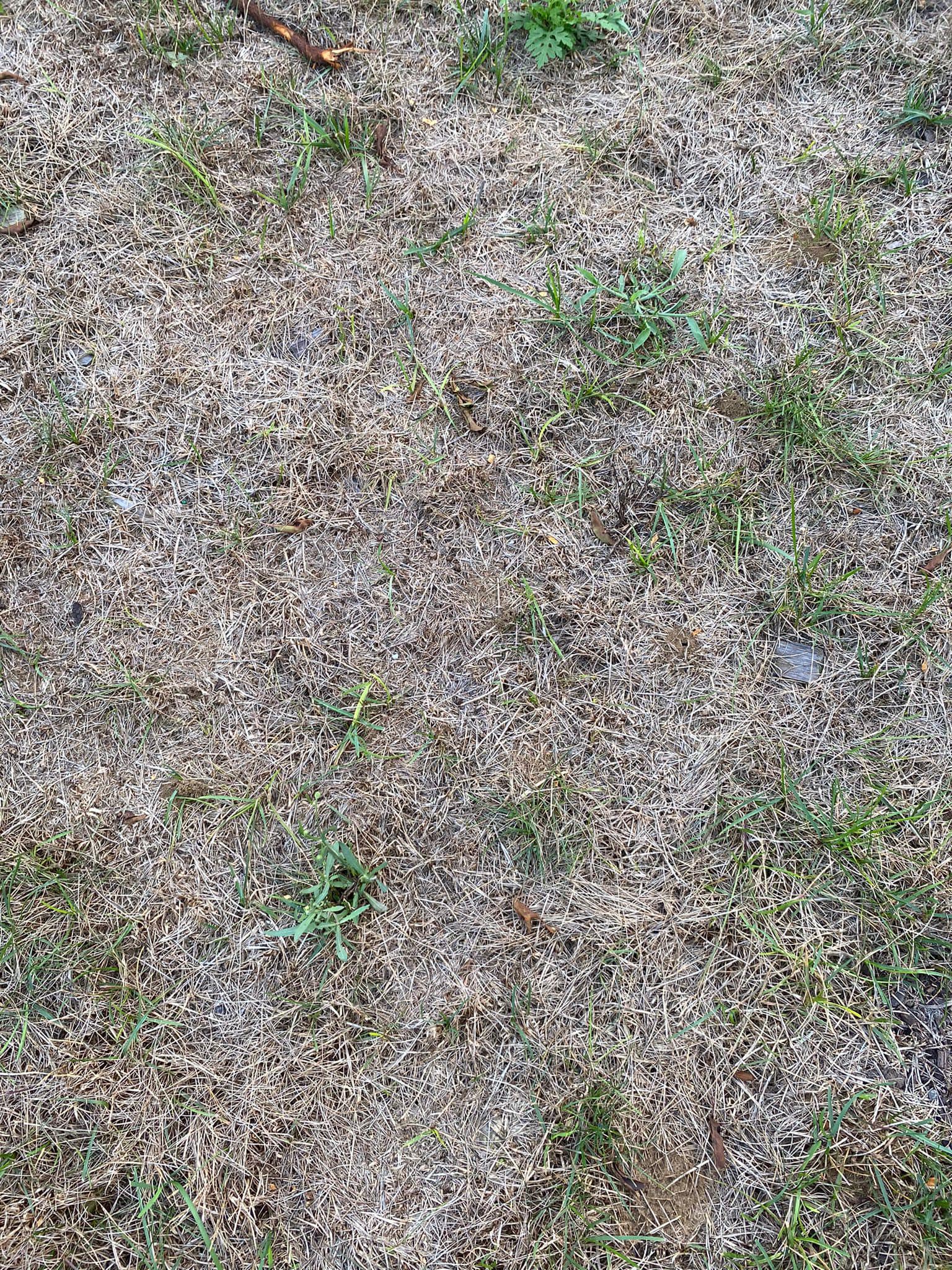
Compaction. Every single one of the ten properties had soil compaction significant enough to be limiting the lawn’s performance.
Not borderline compaction. Not mild compaction that might or might not be a factor. Compaction that was visible in the root depth I was finding — consistently one to two inches on most properties when it should have been four to six. Compaction that I could feel when I pressed into the soil even in areas that had received rain the week before. Compaction that explained, on its own, most of the symptoms the homeowners had been trying to fix by other means.
Ten out of ten. I want to be clear about that because when I say “every single property” I mean it literally. The townhouse in Lively with a small front lawn. The large corner lot in Hanmer that had been maintained by the same family for fifteen years. The newer property in Chelmsford where the homeowner had just moved in and was starting fresh. The rental property in Val Caron that had been managed by a lawn service for three seasons. All of them compacted. All of them with shallow roots as a direct consequence.
In Greater Sudbury this shouldn’t surprise anyone who thinks about it. We have clay-influenced soil across much of the region — soil that compacts more readily than sandy or loamy soil under any kind of weight or traffic. We have a freeze-thaw cycle that stresses soil structure every spring and fall. And most residential properties in the region have never been aerated — or haven’t been aerated in long enough that it amounts to the same thing. The conditions for compaction are present everywhere here. Without consistent aeration to counteract it, it builds.
The consequence of compaction is shallow roots. Shallow roots mean the lawn can only access water and nutrients in the top inch or two of soil. When that thin zone dries out — which it does reliably every July in Sudbury — the lawn has nothing left to draw from. The homeowner waters, the water evaporates from the surface before the shallow roots can use it, and the lawn browns. Fertilizer applied to a compacted lawn largely stays near the surface rather than moving into the root zone. Weed seeds germinate in the gaps left by stressed, shallow-rooted turf.
Every symptom those ten homeowners described to me — thinness, browning in summer, fertilizer that didn’t seem to work, weeds that kept coming back — traced directly to compaction and the shallow root system it produces.
Ten properties, ten different homeowners — here’s what was different about each one

The compaction was universal. Everything else varied. Here’s a quick read on each property and what else I found beyond the common issue:
Property 1 — Garson, standard city lot, maintained by homeowner for 8 years. Compaction significant throughout. Thatch layer at about three quarters of an inch — manageable but worth addressing. Cutting height was good, around three inches. No drainage issues. This lawn was one aeration and overseed away from looking excellent. The homeowner had been fertilizing consistently for years and those inputs would start showing real results once the compaction was resolved.
Property 2 — Val Caron, slightly larger lot, lawn care company doing cuts for 3 seasons. Compaction moderate to heavy depending on section. The area near the driveway where a vehicle occasionally parked on the edge of the lawn was the worst — visibly harder than anywhere else on the property. Thatch over an inch in two sections. Cutting height set too low by the service — around two inches. Three issues to address: aeration, spot dethatching, and cutting height adjustment.
Property 3 — Hanmer, large corner lot, same family for 15 years. The most compacted soil I found across all ten properties. The family had two large dogs and the traffic patterns were visible — defined paths where the dogs ran were essentially hardpan. Root depth in those sections was barely an inch. The rest of the lawn was better but still compacted. This property needed double-pass aeration on the heavy sections and a full single pass everywhere else, followed by overseeding to fill in the worn paths.
Property 4 — Lively, townhouse, small front lawn. Compaction present but less severe than most — the lawn was small enough and traffic light enough that it hadn’t built as aggressively. Thatch was the bigger issue here, sitting at an inch and a quarter. Drainage was also a concern — a low area near the front walk was consistently moist, moss was establishing at the edges. Fix the drainage, dethatch, then aerate.
Property 5 — Chelmsford, newer property, homeowner just moved in. The compaction here wasn’t from years of traffic — it was construction compaction. Builders compact soil heavily during construction and the topsoil layer on new builds in Sudbury is often minimal. The homeowner had sodded the previous fall and was confused why the sod wasn’t thriving. It wasn’t thriving because the roots couldn’t get into the compacted subgrade underneath. Aeration through the sod to break up the compaction layer, followed by topdressing with a thin layer of quality compost, was what this lawn needed.
Property 6 — Azilda, mid-size lot, homeowner doing everything by the book. This was the most frustrating property to assess because the homeowner had genuinely done everything right by standard lawn care advice — seasonal fertilizer program, consistent watering, proper cutting height. The lawn still looked mediocre. Compaction was the reason. Every input she was putting in was hitting the compacted soil layer and losing efficiency. One aeration this season and her lawn would respond to all those inputs the way they were supposed to work. She’d been doing the right things into the wrong conditions.
Property 7 — Garson, older property, lawn hadn’t been aerated in at least five years by the homeowner’s recollection. Heavy compaction, thatch at nearly two inches, significant weed coverage — about 30 percent of the surface area. This was the most work of any property I assessed. The weeds weren’t the primary problem — they were the symptom of compaction and thatch creating conditions where the turf couldn’t compete. Address the underlying issues first and the weed pressure would reduce on its own as the turf thickened.
Property 8 — Capreol, larger rural-edge lot. Compaction in the lawn areas near the house was significant. The further from the house the better the soil condition — less traffic, more natural soil structure. Good candidate for targeted aeration on the high-use areas rather than a full property treatment. Also had a section along the tree line where shade was limiting grass growth — a shade-tolerant overseeding mix would help there more than aeration.
Property 9 — Hanmer, recently purchased property. Previous owner had let the lawn go for at least two seasons based on what I was seeing. Thatch was thick, compaction was significant, and there was grub damage in one section — dead grass that pulled up easily with no root resistance. Priority sequence: address the grub damage with treatment before aeration, then aerate and overseed. Doing it in the wrong order would be wasted effort.
Property 10 — Val Caron, well-maintained on the surface. This was the most interesting assessment. The lawn looked genuinely good from the street — dense, green, recently cut at a good height. But when I got on my knees and checked, the compaction was significant and the root depth was shallow. This lawn was one bad July away from a serious decline and the homeowner wouldn’t see it coming. The surface appearance was masking the vulnerability underneath. Annual aeration was the single thing standing between this lawn staying good and having a very bad summer.
What I told every single one of them to do first

Ten properties. Ten different conditions, different histories, different secondary issues. One consistent first recommendation across all of them.
Core aeration. Done now — late May to mid-June — before the summer heat arrives.
Not because aeration fixes everything. It doesn’t. Some of those properties needed dethatching, or drainage work, or cutting height adjustments, or overseeding, or grub treatment. Those things matter and they’re all worth doing.
But aeration is the foundation. On a compacted lawn — which in Greater Sudbury means almost every lawn that hasn’t been aerated recently — nothing else works as well as it should until the compaction is addressed. Fertilizer moves more efficiently through aerated soil. Seed germinates better in aerated ground. Water reaches the root zone instead of pooling on the surface. The grass plant can push roots deeper, which means it can handle stress that would damage a shallow-rooted lawn.
The window in Sudbury is late May through mid-June. The soil is consistently warm, the grass is growing hard enough to recover quickly from the disturbance, and you’re ahead of the July heat that exposes every vulnerability a compacted lawn carries. Aeration in September is better than never, but the recovery window before dormancy is short and the results aren’t as dramatic as spring aeration followed by a full growing season of improved soil conditions.
If you’re reading this in May or June — the window is open. If you haven’t aerated this season and you can’t remember the last time you did, your lawn almost certainly has compaction. Check your root depth the way I described. If the roots aren’t getting past two inches, that’s your answer.
I’m still offering free assessments to homeowners in Greater Sudbury when my schedule allows. If you want me to come walk your property and tell you honestly what I find — no obligation, no sales pitch — give me a call or fill out the quote form and mention the assessment. I’ll tell you exactly what I’d prioritize and why.
📞 705-507-6787 | Get a free quote online
— Ryan Lingenfelter
Owner, Cutting Edge Lawn & Landscaping
Garson, Ontario · 705-507-6787
