
By Ryan Lingenfelter · Cutting Edge Lawn & Landscaping, Garson, Ontario · June 2026
Since 2020 I’ve walked, assessed, maintained, and repaired lawns across Greater Sudbury. Garson, Val Caron, Hanmer, Lively, Chelmsford, Azilda, Capreol. By now that number is well over 500 properties — enough that patterns become very clear, very fast.
Most lawns struggle for the same reasons. I’ve written about those reasons across dozens of articles on this site — thatch, compaction, wrong cutting height, watering mistakes, timing errors. The struggling lawns are easy to explain.
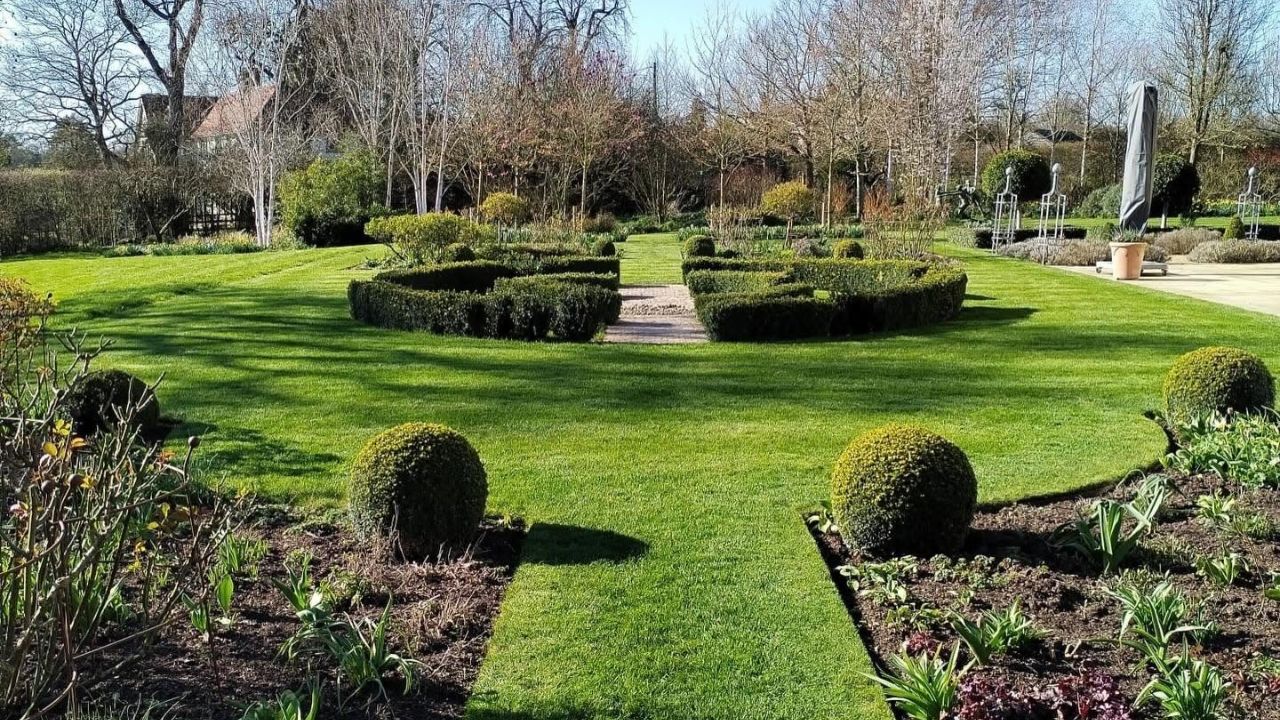
What took me longer to articulate was the pattern on the other end. The lawns that consistently look excellent — the ones that handle July heat without browning, come out of winter looking strong, stay dense enough that weeds can’t find a foothold. The ones that make neighbours ask what’s being done differently.
I’ve been paying attention to what those lawns have in common. After 500 properties, it’s five things. None of them are expensive. None of them require specialty products or professional intervention every week. All of them are consistent — done every season, done correctly, done in the right order.
Here they are.
Thing one — they aerate every single spring without exception
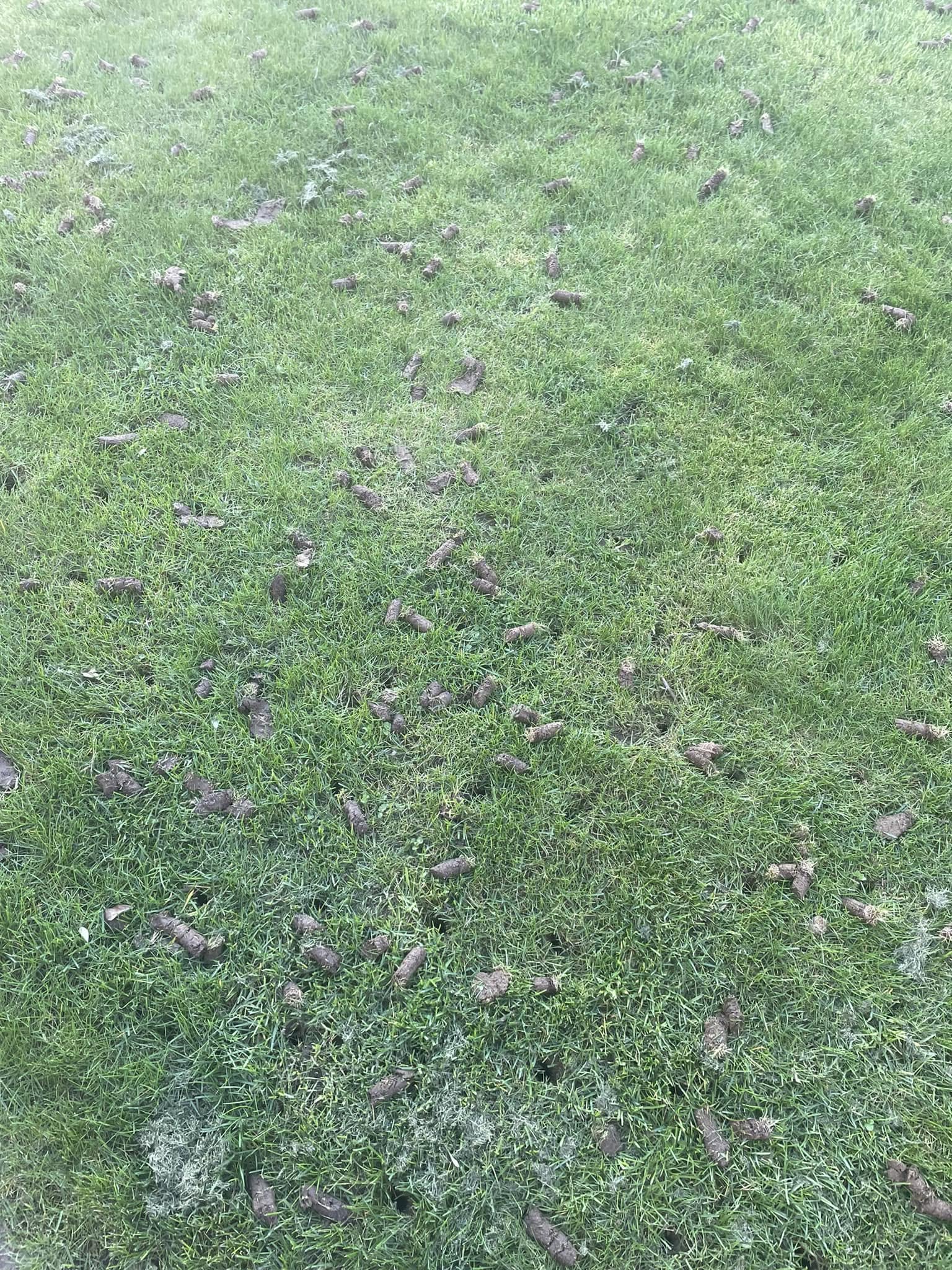
Every great Sudbury lawn I’ve seen has been aerated consistently. Not every other year. Not when the owner remembers. Every spring, in the late May to mid-June window, without fail.
This is the single most consistent differentiator I find between lawns that perform well and lawns that struggle. Two neighbours on the same street, same soil, same climate. One aerates annually. One does it every few years when the lawn looks like it needs it. Five years in, the difference between those two lawns is dramatic — and the entire explanation is the aeration history.
Greater Sudbury’s clay-influenced soil compacts every season. The freeze-thaw cycle stresses soil structure every spring and fall. Annual aeration keeps compaction from accumulating to the level where it limits root penetration, nutrient uptake, and water movement. It’s infrastructure maintenance for the lawn — the thing that keeps every other input working properly.
The lawns I’ve seen that look consistently excellent have root depths of four to six inches. The lawns that struggle have roots at one to two inches. That root depth difference is almost entirely explained by aeration history. Deep roots mean the lawn can access the moisture stored in the lower soil profile during July dry stretches. Deep roots mean the lawn recovers faster from stress. Deep roots mean the fertilizer the homeowner applies actually reaches the root zone instead of staying near the surface.
If there is one thing from this list to prioritise above all others, this is it. The timing, the reasoning, and the specific window for Greater Sudbury are in the article on the best time to aerate a Sudbury lawn. Late May to mid-June. Every year. Non-negotiable on the best lawns I’ve seen.
Thing two — they never cut below three inches

Of the lawns that consistently look excellent across Greater Sudbury, I have never found one being maintained at below three inches. Not one. The correlation is that consistent.
Three inches of blade length does several things simultaneously that produce the results you’re looking at on the best Sudbury lawns. It shades the soil surface, keeping the root zone cooler and slowing moisture evaporation in summer heat. It supports a deeper root system because root depth is proportional to blade length — the plant maintains roots to a depth that mirrors the leaf mass above ground. It allows the grass plant to accumulate enough energy reserves to handle stress periods, disease pressure, and the physical stress of being cut without going into shock. And it makes the lawn thick and dense enough to crowd out weed seedlings before they establish.
Every symptom I see on struggling Sudbury lawns — pale colour, summer browning, thin turf, weed pressure — is either caused or amplified by cutting too short. And every time I raise cutting height on a property from two inches to three, the improvement is visible within four to six weeks without any other change.
The homeowners with the best lawns in Greater Sudbury are consistent about this in a way that goes beyond just setting the mower deck and forgetting about it. They check the deck setting at the start of each season. They don’t let helpers or service companies cut shorter. They don’t drop the height in late season because they want one clean short cut before winter. They hold three inches through the full growing season and drop only slightly — to two and a half — for the final cut of the year. That’s it. That’s the whole commitment. I demonstrated what wrong cutting height does cumulatively in the article on the Sudbury homeowner whose lawn problem was a 10-second fix — the fix was moving the deck lever to three inches, and the transformation over six weeks was dramatic.
Thing three — they water deeply and infrequently

The best lawns in Greater Sudbury are not watered every day. They’re watered once or twice a week — deeply, long enough to get moisture four to five inches into the soil — and then left alone until the next permitted watering day.
This matters more in Sudbury than the generic lawn care advice suggests, for two reasons specific to our region. First, the odd-even watering bylaw that runs from June 1 through September 30 limits how frequently you can water regardless of what the lawn needs — and the best lawns are ones that have been managed to handle that restriction rather than ones that are constantly fighting it. Second, the clay-influenced soil in most of Greater Sudbury actually responds better to deep infrequent watering than to daily light watering, because deep water movement through clay requires sustained pressure over time rather than quick surface applications.
The homeowners with the best lawns I’ve seen have the same watering discipline as their aeration discipline. One long session on their permitted bylaw days. They check whether the water is reaching depth — push a screwdriver in after watering, it should slide four to five inches with light pressure. They adjust the session length if it’s not reaching depth. And they don’t panic during dry spells between permitted watering days because their lawns have the root depth to handle it.
The lawns that struggle with summer heat are almost always the ones being watered for twenty minutes every morning — keeping the surface moist, never reaching root depth, training the roots to stay shallow, and producing a lawn that falls apart the moment the watering stops for three days. I traced exactly how this plays out over a full season in the article on the Lively homeowner whose lawn looked worse every September — daily light watering was the primary driver of a lawn that declined all season despite consistent effort. The complete watering approach under the bylaw schedule is covered in the article on Sudbury lawn care news mid-2026.
Thing four — they deal with problems early, not late

The homeowners with the best lawns in Greater Sudbury are not the ones who never have problems. They’re the ones who catch problems early and deal with them before they compound.
A soft corner that stays wet after rain — caught in spring and addressed with a minor grade correction, it costs a few hours of work. Left for two years, it’s a drainage failure that needs excavation. A thatch layer at half an inch — addressed with annual aeration, it never becomes a problem. Left for four seasons, it’s at an inch and a half and needs power dethatching before aeration can be effective. A bare patch from grub damage in October — treated that fall and overseeded the following May, it’s gone by June. Left until it spreads, it’s a sodding project.
The pattern I see on consistently excellent lawns is early intervention. These homeowners walk their lawns. They notice when something changes — a new soft area, a section that seems slower to green up in spring, edges that are spreading where they were sharp last fall. They call me or deal with it themselves before it reaches the point where the fix is significantly more expensive than if they’d caught it earlier.
This is related to the diagnostic read I described in the article on what I notice in the first 60 seconds on any Sudbury property — the colour check, the pattern of where problems are concentrated, the edge quality. The homeowners with great lawns do an informal version of that read every time they walk the property. They’re not doing a professional assessment. They’re just paying attention. And because they’re paying attention, problems get caught at the soft-corner stage rather than the drainage-failure stage.
If you want to build this habit, walk your lawn once a month during the growing season with the intention of noticing anything that’s different from last month. Bring a screwdriver — press it into the soil in a few spots to check for compaction or unexpected softness. Part the grass with your fingers in a couple of sections to check the thatch depth. Look at the colour variation — is there a section that’s a different shade than the rest? Is there a new soft area that wasn’t there last month? These checks take five minutes. Over a season, they catch almost every problem that would otherwise become expensive.
Thing five — they’re consistent year after year, not reactive season to season
The fifth thing — and the one that ties all the others together — is consistency. The best lawns in Greater Sudbury are not the result of one excellent season of treatment. They’re the result of the same correct inputs applied in the same correct order, every season, for multiple years.
Aeration every May. Three-inch cutting height every season. Deep weekly watering every summer. Problems addressed in the same season they appear. Fertilizer in late May after aeration and in late August before dormancy. Overseeding every two to three years to maintain density before thinning becomes visible.
None of those inputs is complicated. None of them is expensive relative to the cost of the reactive work that builds up when they’re skipped. The homeowners with the best lawns have simply been doing the right things for long enough that the compounding effect is visible. The soil is better than it was five years ago because of annual aeration and consistent organic matter return. The root system is deeper than it was five years ago because of correct cutting height and deep watering. The weed pressure is lower than it was five years ago because the turf density from consistent management has closed the gaps that weeds need to establish.
This is the long-game version of lawn care that I described in the article on the Val Caron homeowner who asked what I’d do to his lawn over twenty years — the framing that produces the best lawns isn’t “what does my lawn need this season” but “what am I building toward.” The answer is the same five things, done consistently, compounding over time.
The complete seasonal framework for maintaining a Sudbury lawn correctly — incorporating all five of these principles into a practical calendar — is in the article on the complete 2026 Sudbury lawn care homeowner reference. That article is the one I’d start with if you want to understand how the full year fits together before you focus on any individual element.
If you want an honest assessment of where your lawn currently sits relative to these five things — what’s in place, what’s missing, and what the realistic path looks like to get it there — give me a call. I’ll walk the property, tell you what I see, and give you a straight answer on what it would take to get your lawn into that category.
📞 705-507-6787 | Get a free quote online
— Ryan Lingenfelter
Owner, Cutting Edge Lawn & Landscaping
Garson, Ontario · 705-507-6787
