
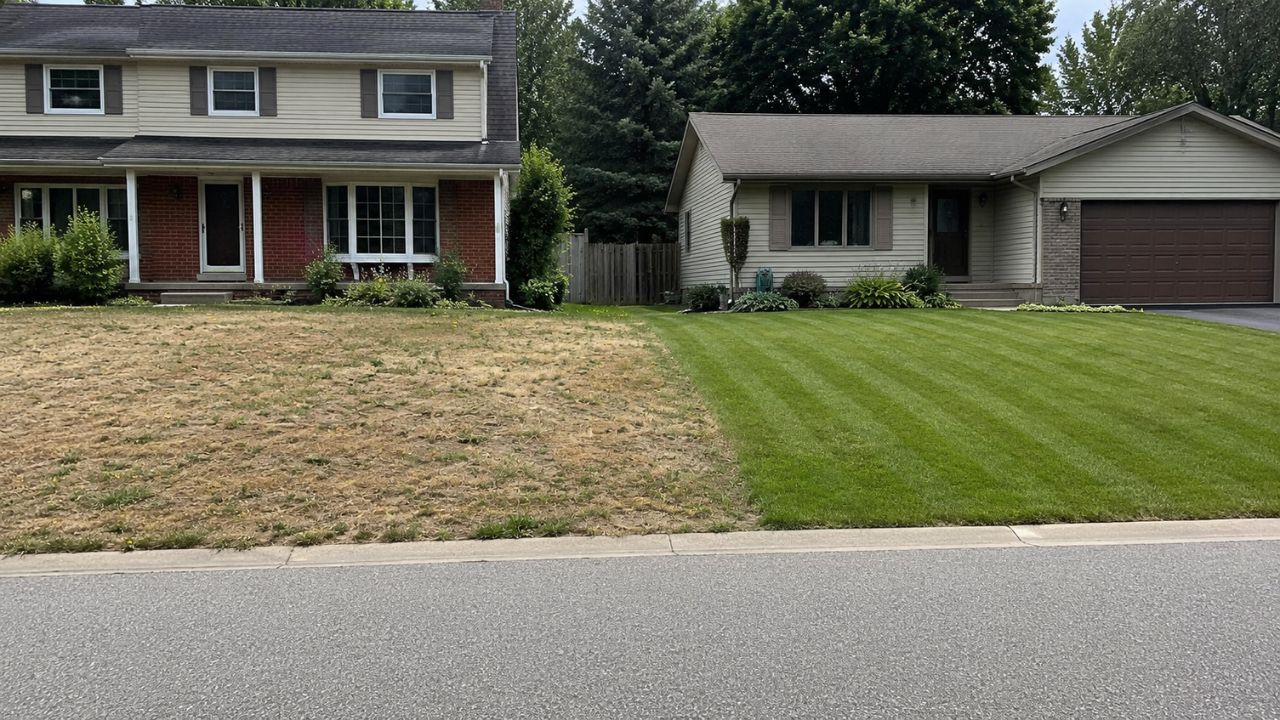
Some of the most instructive conversations I have happen when I’m working on two properties on the same street.
Not always back to back — sometimes it’s a Monday job and a Thursday job on the same block. But when I’m walking both properties and looking at both lawns, the differences are impossible to ignore. Same neighbourhood. Same soil. Same Sudbury winters. Two lawns that look like they’re in completely different conditions.
I’m Ryan Lingenfelter, owner of Cutting Edge Lawn & Landscaping in Garson, Ontario. Since 2020, I’ve maintained properties all across Greater Sudbury — Garson, Val Caron, Hanmer, Lively, Chelmsford, Azilda, Capreol. I’ve worked on streets where every other property looks dramatically different from its neighbour. And after hundreds of assessments, I know exactly what creates those gaps.
Here’s what I actually see when I work next door to a struggling lawn — and what the better-looking property is doing differently.
The Street in Val Caron That Made Me Start Taking Notes
A few summers ago I was maintaining two properties about four houses apart on the same street in Val Caron. I’d been on both properties for about a season and a half at that point.
Property A — the one I’d had longer — was looking genuinely good. Thick coverage, consistent colour, handling the July dry stretch without much struggle. Property B, which I’d picked up the following spring, was thin in places, browning out in the open sections during hot weeks, and had weed pressure that kept coming back despite spot treatment.
From the street, looking at them side by side, you’d assume the properties had completely different soil, different drainage, different microclimates. They didn’t. Same clay-heavy soil. Same road, same sun exposure, same rainfall. Four houses apart.
The difference was entirely maintenance history. Property A had been aerated annually for at least three years before I started. Property B hadn’t been aerated in the homeowner’s memory — and the previous owners hadn’t mentioned it either.
That was the whole gap. Three years of annual core aeration versus no aeration. Same soil, same street, dramatically different lawns.
What Three Years of Aeration Actually Does to a Sudbury Lawn
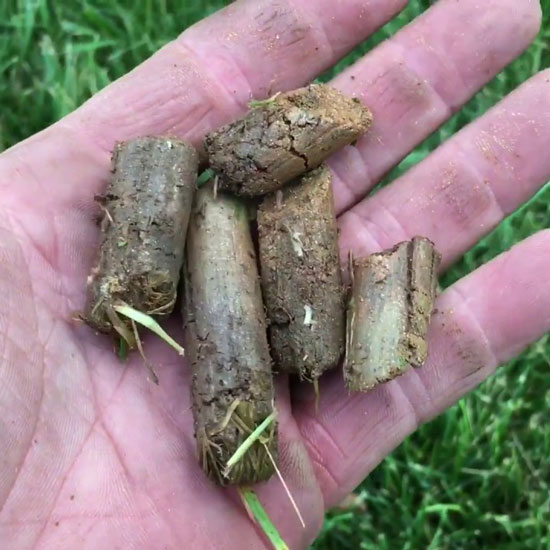
I want to be specific about this because the mechanism is worth understanding.
The first year of aeration on a compacted Sudbury lawn produces modest visible results. The soil opens up, water starts penetrating better, roots push slightly deeper. The lawn looks a bit better by August than it did the previous year. Nothing dramatic.
The second year is when it starts to show. The roots that pushed deeper the first year are now the foundation for deeper growth the second year. The soil structure has started to improve — not just in the plug holes but in the surrounding areas as well, as roots break up the clay slightly and organic matter starts working its way down. Water retention improves. The lawn handles a dry stretch in July noticeably better than it did two years ago.
By the third year, the cumulative effect is visible from the street. The lawn is denser. The colour holds longer into summer. The root system has enough depth that the lawn can pull moisture from below the surface during dry periods instead of relying entirely on rainfall and watering. Weeds have less opportunity — thick turf at three inches doesn’t give weed seeds the exposed soil and sunlight they need to germinate.
That’s what I was seeing in Val Caron. Three years of consistent aeration versus zero. Same starting point, completely different outcomes.
The full breakdown on what aeration does and when to do it in Sudbury is in the aeration timing guide here. The short version: late May, every year, on any Sudbury property with clay soil — which is most of them.
The Garson Properties Where the Difference Was Mowing Height

A different situation on a street in Garson — two properties I assessed the same week, different homeowners, neither of them my regular maintenance customers.
Property A had a lawn that looked noticeably better than average for its street. Green, fairly dense, holding up reasonably well mid-summer. Property B, directly next door, was thin and showing stress patches across the open sections.
I walked both. The soil compaction on both properties was similar — fairly typical for Garson, clay-heavy, moderately compacted from the winter. Neither had been aerated recently. Not a significant drainage difference. The sun exposure was nearly identical.
I asked both homeowners about their mowing setup. Property A: “I leave it at the highest setting on my mower.” Property B: “I like it short — I set it pretty low.”
That was it. Mowing height. Property A was cutting at roughly three and a half inches. Property B was cutting at somewhere around two inches.
The difference in root depth between those two lawns — same soil, same street, same age — was entirely a function of blade height over multiple seasons. Property A’s grass had been allowed to maintain enough blade surface to feed deep roots. Property B’s grass had been forced into shallow root development every cut for years.
By the time we hit a dry week in July, Property A had roots that could pull from below the dry surface layer. Property B had roots that stopped at two inches — exactly where the dry layer started.
This is what I wrote about in the mowing height article here — it’s the single most common cause of struggling Sudbury lawns, and it’s completely invisible until heat stress reveals it. The fix costs nothing: raise the deck to three inches and leave it there. The results compound over every season you maintain it correctly.
The Hanmer Street Where One Homeowner Had Figured It All Out
The most striking comparison I’ve seen was on a street in Hanmer where I was quoting a property and noticed the lawn two doors down looked exceptional. Not just good — genuinely exceptional for the area. Dense, deep green, clean edges, clearly the best-looking lawn on the street.
I knocked on the door. The homeowner was a retired guy who’d been in the house for eighteen years. I asked him what he did for the lawn.
His answer was the clearest summary of everything that matters for a Sudbury lawn that I’ve heard from a homeowner:
“I aerate every May. I water it long on Tuesdays and Saturdays. I keep the mower at the highest setting. I clean up in spring and fall. That’s it.”
No products. No special seed. No treatments. No complicated schedule. Four habits, done consistently for eighteen years.
The lawns on either side of his were average to below average. Same street. Same soil. Eighteen years of the right four habits versus whatever the neighbours had been doing.
His Tuesday and Saturday watering is exactly the deep twice-weekly approach I recommend to every homeowner I work with. The full rationale is in the Sudbury watering guide here — the short version is that deep infrequent watering trains roots to go down, which builds genuine drought resistance. Daily light watering keeps roots shallow and creates dependency.
What the Struggling Side Always Has in Common
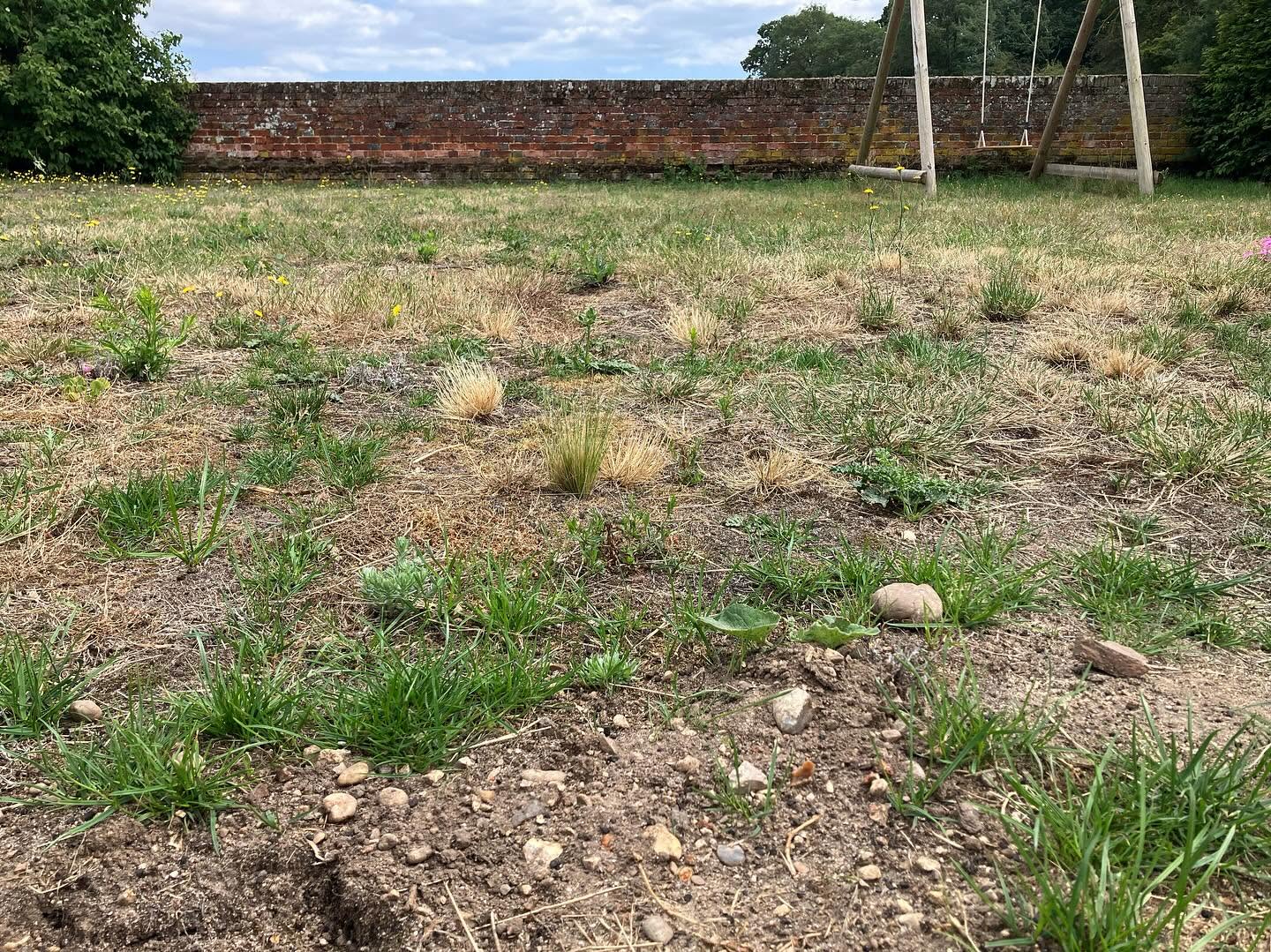
After years of working on neighbouring properties and seeing these gaps, the struggling side almost always has at least one of the same issues. Usually more than one.
No aeration history. This shows up on the struggling side more consistently than anything else. Sudbury winters compact soil every year. Without annual aeration, the compaction builds. By year three or four without aeration, the soil structure has degraded to the point where maintenance doesn’t produce what it should — fertilizer sits on the surface, water runs off, roots can’t go deep. The lawn looks increasingly tired each season for no obvious reason.
Mowing too short. The second most consistent factor. Short mowing forces shallow roots. Shallow roots fail under July stress. The lawn that goes brown while the neighbour’s stays green almost always has a mowing height problem underneath.
Light daily watering instead of deep twice-weekly. Common on properties where someone is home during the day and sets a timer for a short morning run every day. It feels like thorough attention but it produces shallow roots and doesn’t give the soil time to dry slightly between waterings — which is actually beneficial for root depth development.
Skipped spring cleanup. Properties where the debris layer from winter isn’t fully cleared have a harder time greening up in spring. The thatch and debris block light and trap moisture against the grass surface, creating conditions for fungal issues and slowing the lawn’s recovery. A proper spring cleanup gives the lawn a clean start every season.
Fix any one of those four things and the lawn improves. Fix all four and the improvement compounds over time into exactly the kind of difference I see between neighbouring properties on Sudbury streets every summer.
Why the Gap Gets Bigger Every Year Instead of Staying the Same
Here’s something worth understanding about lawn care: the gap between a well-maintained lawn and a neglected one doesn’t stay the same size. It grows every year.
The lawn that gets aerated annually builds better soil structure each spring. The roots go deeper each season. The drought resistance improves. The weed pressure drops as the turf gets thicker. By year five of correct maintenance, the lawn is genuinely resilient — it handles whatever Sudbury’s summer throws at it without struggling.
The lawn that never gets aerated has progressively tighter soil each year. The compaction compounds. The root system gets progressively shallower. Weeds fill in where the grass thins out. By year five without aeration, the lawn is increasingly difficult to recover without significant intervention — possibly including partial or full replacement on the worst sections.
Two identical lawns at year zero. Five years of different maintenance. The gap between them at year five is larger than most homeowners would believe if they saw it side by side.
That’s what I see on Sudbury streets. That’s what the retired homeowner in Hanmer had built over eighteen years — not a special lawn, just eighteen years of the right four habits done consistently.
How to Start Closing the Gap on Your Own Lawn

If your neighbour’s lawn looks noticeably better than yours and you’re trying to figure out where the difference comes from, the answer is almost always in this list:
First — book core aeration for late May if you haven’t done it yet this season. This is the single highest-return change you can make on a Sudbury lawn. If you’ve been skipping it for multiple years, the soil compaction has been building and this is where you start fixing it.
Second — raise your mowing deck to three inches and commit to leaving it there. Not for a few weeks. For the rest of the season, every season. The root depth that builds from consistent correct mowing height is what makes the lawn resilient.
Third — switch your watering to deep twice weekly. Tuesday and Saturday, or whatever two days work for your schedule. Long slow sessions. Early morning. Stop the daily short run.
Fourth — do a proper spring cleanup every May. Clear the debris, clean the edges, give the lawn a real start to the season.
Those four things, done consistently, will produce a visibly different lawn within one season. Not the eighteen-year lawn in Hanmer. But noticeably better — and trending in the right direction.
If you want someone to walk your property and tell you honestly where the gap is coming from on your specific lawn, that’s something I do at no charge across Greater Sudbury. Call me at 705-507-6787 or fill out the free quote form here.
— Ryan
Frequently Asked Questions
Why does my neighbour’s lawn look better than mine in Sudbury if we have the same soil?
The most common reasons are mowing height, aeration history, and watering approach. Lawns cut at three inches with annual spring aeration and deep twice-weekly watering develop significantly deeper root systems over time than lawns where these basics aren’t being done correctly. The gap between two identical lawns compounds every year — small differences in maintenance produce large differences in lawn health over three to five seasons.
How long does it take to close the gap between my lawn and my neighbour’s?
One season of correct maintenance produces visible improvement on most Sudbury lawns. Two seasons produces significant improvement. Three or more seasons of consistent correct maintenance — aeration every spring, correct mowing height, deep twice-weekly watering, proper cleanup — approaches the kind of lawn quality that takes years to build. You can’t replicate five years of correct maintenance in one season, but you can produce meaningful improvement quickly and build from there.
Is annual core aeration really necessary in Sudbury every year?
Yes — for most Sudbury properties, every spring. Sudbury winters compact clay-heavy Canadian Shield soil significantly every year. Without annual aeration, the compaction builds season over season and progressively degrades root depth, water absorption, and the effectiveness of every other thing you do for the lawn. Properties that aerate annually develop noticeably better soil structure and turf quality over time compared to identical properties that don’t.
What is the single most impactful change I can make to improve my Sudbury lawn?
If you’re only going to change one thing, book core aeration for late May. If you’ve already done that this year, raise your mowing height to three inches and commit to it all season. Both changes are high-impact and produce compound benefits that build over multiple seasons — unlike products or treatments that produce temporary improvement without addressing the underlying factors.
Why do some Sudbury lawns stay green in July while others go brown?
Root depth is the primary factor. Lawns with deep roots — built through correct mowing height, annual aeration, and deep infrequent watering — can pull moisture from below the dry surface layer during July heat and drought. Lawns with shallow roots can’t reach that moisture and brown out quickly when the surface dries. The difference is usually years of maintenance history, not soil type or sun exposure.
Ryan Lingenfelter is the owner of Cutting Edge Lawn & Landscaping in Garson, Ontario. Since 2020, his crew has provided full lawn care services across Greater Sudbury — Garson, Val Caron, Hanmer, Lively, Chelmsford, Azilda, and Capreol. Cutting Edge is licensed, insured, BBB A+ rated, and ThreeBest Rated for lawn care services in Sudbury.
📞 Phone: 705-507-6787
📍 Service Area: Greater Sudbury, Ontario
🔗 Free Quote: cuttingedgelawn.ca/quote
Helpful Lawn Care Services in Sudbury
- Core Aeration for Healthy Lawns
- Grass Cutting Services in Sudbury
- Property Cleanup Services
- Sod Installation in Sudbury
Continue Reading
- My Neighbour’s Lawn Looks Better — Here’s What They’re Doing Different
- Spring or Fall — When Should You Actually Aerate Your Sudbury Lawn?
- I Had a Bad Sudbury Lawn for 3 Years — Here’s What Finally Fixed It
