

I want to be specific in this article because I think vague lawn advice is part of the problem. When I say “the most expensive lawn mistake I see Sudbury homeowners make in October,” I mean one specific thing — not a category of mistakes, not a general direction people go wrong. One specific action that I see repeatedly, every fall, that costs people significantly more in the following spring than it would have cost to simply not do it.
It’s not skipping the fall cleanup. I’ve written about that separately — skipping fall cleanup is its own expensive problem, but it’s a sin of omission. You didn’t do something and the lawn paid for it.
This one is a sin of commission. You did something, you spent money doing it, and the result was not just zero benefit but active harm that then required additional money to fix in spring.
Here it is: seeding a Sudbury lawn in mid-to-late October.
Let me explain exactly why this is the mistake it is, because the reasoning isn’t obvious — and the people who do it usually have good intentions and a real problem they’re trying to solve.
The Mistake — and Why It Surprises People When I Name It
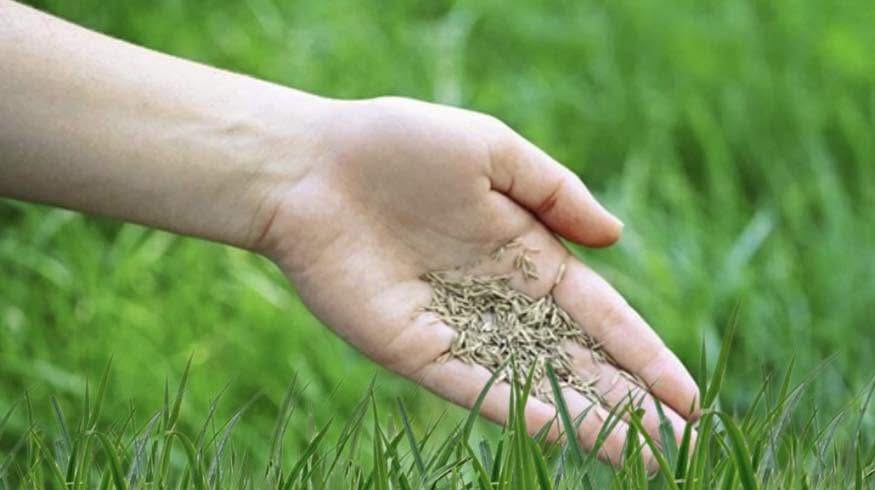
When I tell homeowners that late October seeding is the most expensive mistake I see in fall, most of them have one of two reactions.
The first is surprise — “isn’t fall supposed to be a good time to seed?” And yes, it is. Early fall seeding — late August through mid-September — is genuinely one of the best times to overseed a Sudbury lawn. Soil temperatures are still warm from summer, the air is cooling down, and new grass has several weeks to establish roots before the ground freezes. Early fall seeding works well and I recommend it regularly.
The second reaction is recognition — “that’s exactly what I did last year.” Usually followed by an explanation that makes complete sense: they saw bare patches in October, they wanted to fix them before winter, they went to the hardware store, bought seed, put it down, and figured they’d done the right thing.
The problem isn’t the intention. The problem is the timing, and specifically what Sudbury’s climate does to seed put down after mid-October.
Why This Mistake Keeps Happening
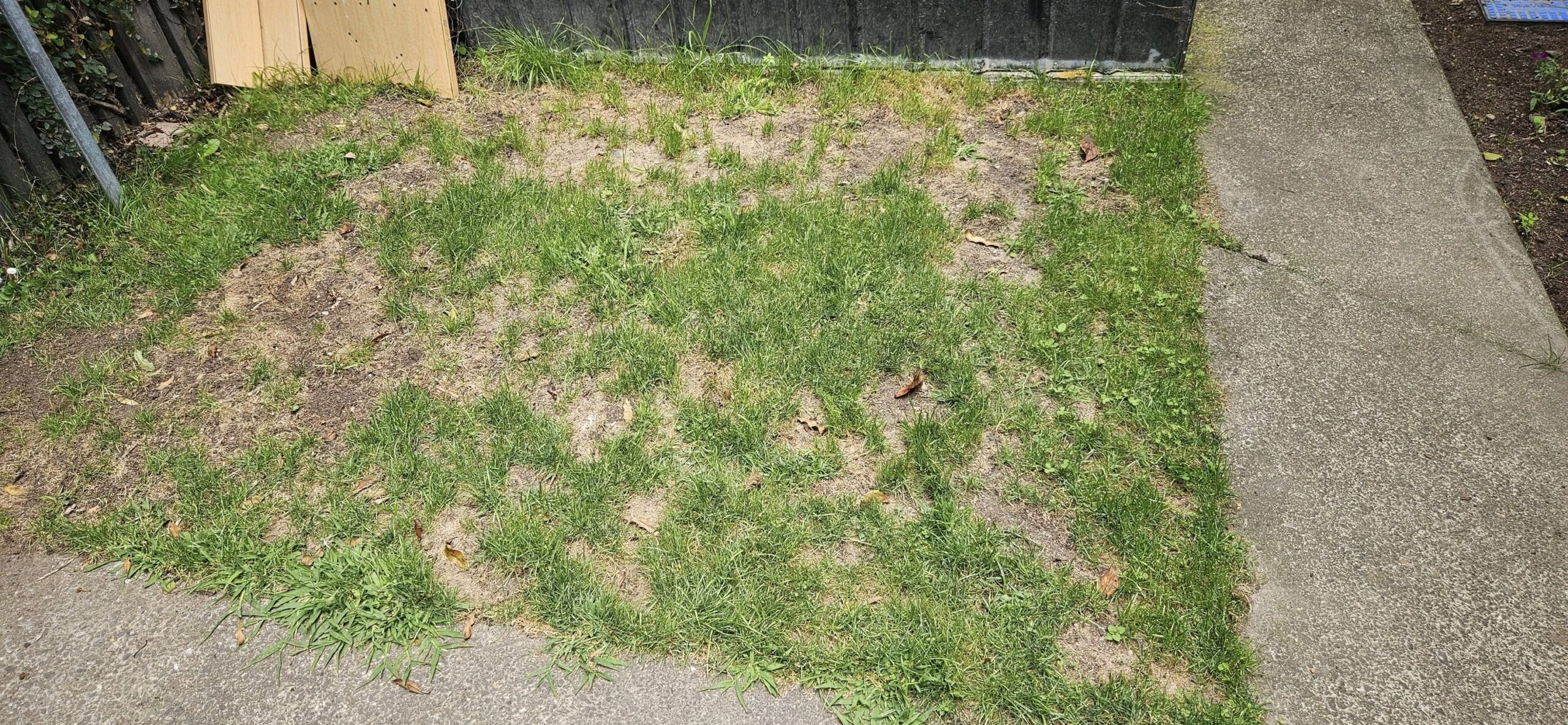
Before I get into the mechanics of why late seeding fails in Sudbury, I want to explain why it keeps happening — because I think it’s worth understanding the logic that leads people there.
By October, most homeowners have done their summer mowing, maybe done some fertilizing, and are generally winding down from active lawn care. Then something prompts them to actually look at the lawn — a neighbour comments on a bare patch, or the leaves come off and they can suddenly see the state of things more clearly, or they’re doing fall cleanup and notice sections that didn’t fill in from the previous spring.
And the bare patches are real. October is genuinely when a lot of damage from summer becomes fully visible — sections thinned by heat stress, areas that didn’t recover from winter damage earlier in the year, spots where foot traffic or grubs did cumulative damage. The instinct to address those patches before they go into another winter is completely understandable.
Seed is also cheap and widely available. Hardware stores stock it through October. Nothing on the bag says “don’t use this after mid-September in Sudbury.” General online advice about fall seeding doesn’t distinguish between early fall and late fall, or between Sudbury’s climate and Ontario’s more southerly regions. So the homeowner buys seed, puts it down, figures they’ve done something proactive, and waits for spring.
What they find in spring is one of the scenarios I’ll describe next.
What Actually Happens to Late-Season Seed in Sudbury
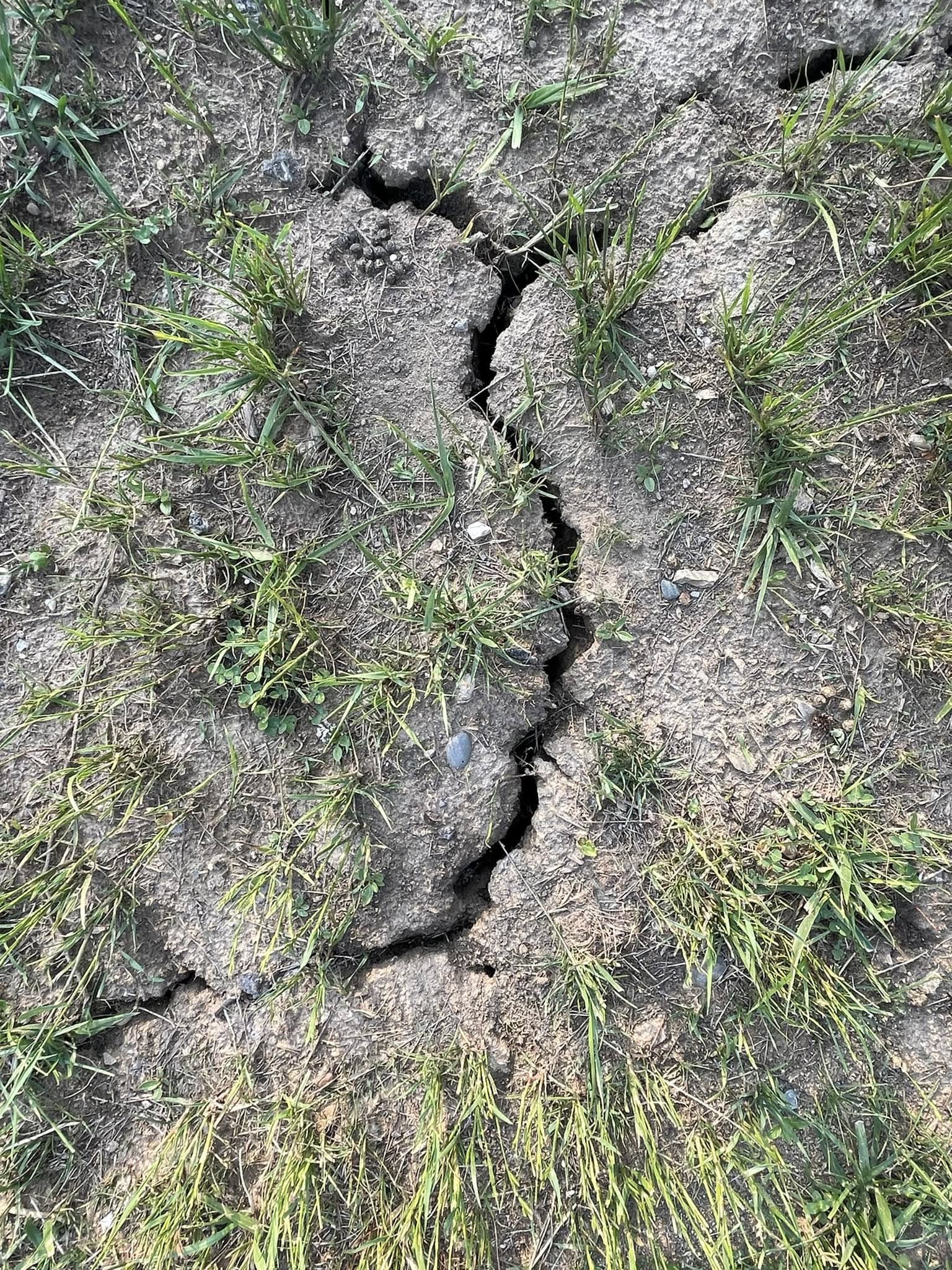
There are three things that can happen to seed put down in mid-to-late October in Sudbury, and none of them are good. Which one happens depends on the specific timing and weather conditions of that particular fall.
Scenario One: The Seed Doesn’t Germinate At All
Grass seed requires soil temperatures above roughly 8 to 10 degrees Celsius to germinate. In Greater Sudbury, soil temperatures at that depth typically drop below that threshold by mid-October in most years, sometimes earlier depending on the fall. Seed put down after that point just sits there — dormant, not germinating, vulnerable to being washed away by rain or snowmelt, eaten by birds, or displaced by the freeze-thaw cycles in late fall and early spring.
By May, the seed is simply gone. The bare patches are exactly as bare as they were in October, except now the homeowner has spent money on seed and the window for early fall seeding — when it would have worked — is another ten months away.
Scenario Two: The Seed Partially Germinates and Then Gets Winter-Killed
This is the more damaging version. If the seed goes down in early-to-mid-October in a year with a warm fall, it might actually germinate — you’ll see the thin green fuzz of new grass starting to appear. The homeowner thinks it worked.
What happens next is the expensive part. Newly germinated grass in October has almost no cold hardiness. It’s been above ground for days or a week, it has essentially no root development, and it has not had time to accumulate the carbohydrate reserves that established grass builds up through the fall to survive winter. When the temperature drops and the ground freezes, that new grass dies. Almost universally. It simply doesn’t have the root system or the energy reserves to survive a Sudbury winter at that age.
In spring, those sections have a thin layer of dead seedling material — pale, dried out, looking almost like it germinated and then gave up — sitting on top of the same bare soil that was there in October. The bare patches are still bare, plus now there’s dead material on them that needs to be cleared before anything else can be done.
Scenario Three: The Seed Germinates, Struggles, and Creates a Problem Patch
In the best-case late-seeding scenario — mild October, late freeze, seed goes down at just the right moment — a small percentage of the germinated grass might actually survive. But the grass that makes it through is weak, shallow-rooted, and doesn’t match the density or quality of properly established grass. What you get in spring is a patch that has some thin, poor-quality grass in it — too alive to reseed cleanly, not alive enough to blend into the surrounding lawn.
That in-between state is actually harder to deal with in spring than a clean bare patch. A bare patch can be prepped and reseeded directly. A patch with thin, struggling grass requires judgment about how much to disturb it, whether to overseed into it or strip it and start fresh, and even then often produces uneven results for a full season before it blends in.
The Real Cost — It’s Not Just the Seed
The direct cost of the seed itself isn’t what makes this the most expensive mistake. A bag of seed is twenty or thirty dollars. The expensive part is what has to happen in spring to address the result.
If the seed failed completely, you’re looking at the same bare patches in May that you had in October, plus the soil in those patches has now gone through a full winter in a disturbed state — more likely to have weed seeds established, harder to prep for spring seeding because of freeze-thaw disruption. The spring repair is more involved than it would have been if the patches had simply been left alone in October and addressed properly in the spring window.
If the seed partially germinated and died, you’re dealing with dead seedling material to clear, potentially damaged soil structure from the freeze-thaw effects on freshly disturbed ground, and again a repair that’s more complex than the original patch would have been.
And if the scenario happened on a property that already needed aeration — which most Sudbury properties do in spring — the combination of failed late seeding, bare patches, and compacted soil from winter can push the repair into the territory where basic overseeding isn’t enough and more significant intervention is needed.
I’ve done spring assessments where the homeowner spent $80 on seed in October, the seed failed, and the spring repair — aeration, proper overseeding across the expanded bare areas, addressing the weed pressure that moved in over winter — ran several times that cost. Not because the original bare patches were that serious, but because the failed seeding attempt made them worse and created additional problems on top of the original issue.
What to Do Instead — The Right Sequence for October

Here’s the honest answer for someone who’s standing in their yard in October, looking at bare patches, and wondering what to do.
If It’s Early October
Check the soil temperature before deciding. If the soil at 2 to 3 inch depth is still above 10 degrees Celsius — which it sometimes is in early October in Sudbury, especially after a warm September — there’s a narrow window where seeding can still work. Use a quality seed with a high percentage of perennial ryegrass, which germinates fastest. Get it down immediately, keep the area consistently moist, and hope the weather cooperates for the next two to three weeks. It’s a gamble, but it’s a defensible one in early October with warm soil.
If the soil is already below 10 degrees, that window is closed. Don’t seed.
If It’s Mid-to-Late October
Leave the bare patches alone. I know that’s unsatisfying advice, but it’s the right one. The patches will still be there in spring. They haven’t gotten worse by winter, except for whatever normal winter effects happen — which is less damage than a failed seeding attempt would leave behind. Mark their location, note their size, and address them properly in May with the spring recovery sequence I’ve written about in detail in my guide to fixing a Sudbury lawn after winter.
What you can and should do with bare patches in late October is protect them. If the soil is exposed, a light covering of straw or erosion mat keeps the soil from washing away in rain, reduces freeze-thaw disruption of the surface, and keeps weed seeds from settling in as effectively as bare soil would allow. This is a low-cost, zero-risk way to stabilize the problem until spring — not a fix, but a protection measure that makes the spring repair easier.
What October Actually Is Good For
October in Sudbury is the right time for everything I’ve covered in the fall prep guide — fall fertilizer with a winterizer formula, the final mow at the right height, leaf removal, and cleanup. Those things genuinely benefit the lawn and the timing is right. Seeding is the one thing October is not good for in Sudbury, and unfortunately it’s often the thing people reach for when they see a problem and want to do something about it.
The better thing to do with a bare patch in October is to stop it from getting worse through winter, and wait for the window in May when addressing it will actually work. That patience pays off every single time compared to the alternative.
If You Did This Last October
If you’re reading this and recognizing what happened on your property last fall — don’t worry too much about it. You’re not alone, and the situation is fixable. The spring recovery approach handles failed late seeding the same way it handles other types of bare patch damage: assess honestly what’s there, prep the soil properly, apply seed in the right window, and give it the season to establish.
For the full step-by-step, the winter recovery guide covers exactly that sequence. And if the bare areas are large enough that you’re wondering whether seeding or sod makes more sense, the full service breakdown walks through everything we can help with and what each service actually involves.
If you want a fresh set of eyes on the property before deciding what to do — I’m happy to come out, walk it, and give you a straight read on what you’re dealing with. No charge for the assessment.
Call or text: 705-507-6787
Or fill out the free quote form on the site.
We cover Garson, Val Caron, Hanmer, Lively, Chelmsford, Azilda, Capreol, and surrounding areas.
— Ryan Lingenfelter
Cutting Edge Lawn & Landscaping
Garson, Ontario
705-507-6787
