
By Ryan Lingenfelter · Cutting Edge Lawn & Landscaping, Garson, Ontario · June 2026
When homeowners in Greater Sudbury are getting quotes for lawn care, the conversation almost always comes down to price per visit. One company quotes $80. Another quotes $130. Another quotes $200 for a visit that includes additional services. The obvious choice looks like the $80 one.
I want to show you why that choice is sometimes the most expensive one you can make — not because cheap lawn care is always bad, but because what’s included in the price, and what gets skipped, has downstream consequences that show up in your lawn’s condition and in your wallet over the course of a full season.
This isn’t a pitch for expensive lawn care. It’s a framework for evaluating what you’re actually buying when you compare quotes — and for recognising when the lower number is genuinely the better value and when it’s creating costs that don’t show up in the per-visit price.
What an $80 lawn visit actually includes — and what it doesn’t
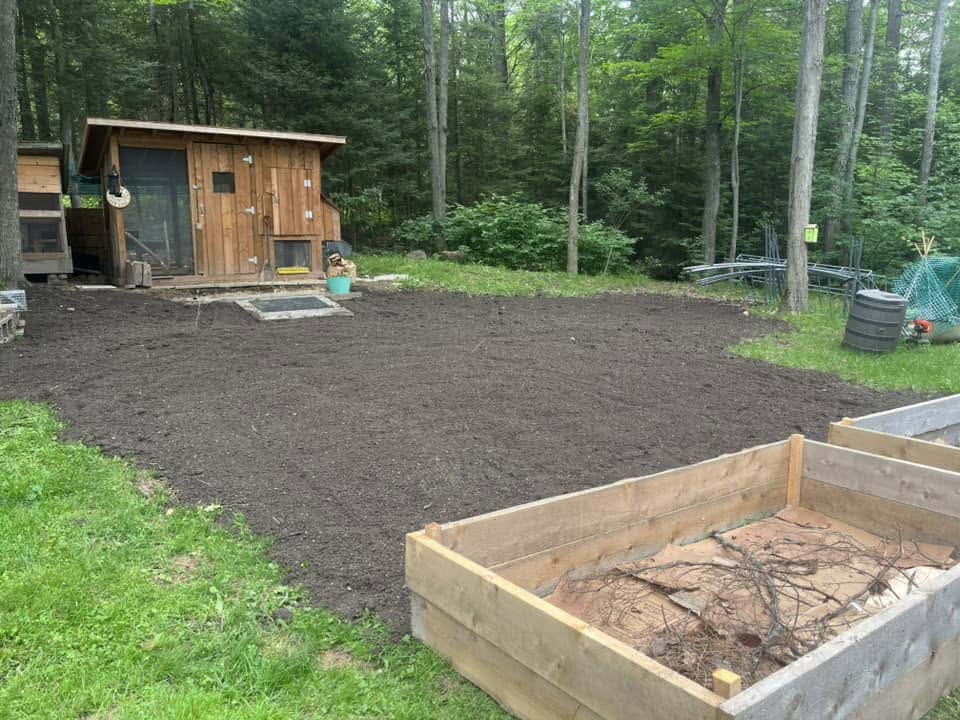
An $80 lawn visit in Greater Sudbury in 2026 is, in most cases, a mowing visit. The operator arrives, cuts the grass at whatever height they’re set at, does minimal or no edging, and leaves. On a small to medium residential lot — 1,500 to 2,000 square feet — the visit takes fifteen to twenty minutes.
At that price point, here’s what is almost certainly not included:
Proper edging along the driveway, walkways, and fence line with an actual edger rather than just a string trimmer run along the edge. String trimming produces a softened line that gradually deteriorates. Mechanical edging produces a defined line that holds. The difference in how the property looks after a year of each approach is visible from the street — and the appearance difference is also a maintenance quality signal, as I described in the article on the 5 things I notice in the first 30 seconds at any Sudbury property.
A property assessment. Nobody at the $80 price point is getting on their knees and checking the thatch depth or pulling a root sample. The visit is a production visit, not an assessment visit. If something is developing on your lawn — thatch building toward the threshold, a new soft section that indicates a drainage change, an early grub infestation — it won’t be caught because nobody is looking for it. It will be driven over and cut around until it becomes a visible problem, at which point it costs more to address than it would have in its early stage.
Any flexibility in response to what the lawn actually needs that week. A fixed-price production visit has a fixed scope. If the grass grew nine inches in a wet week and should be brought down in two step cuts to avoid shock rather than one aggressive cut, a production visit does one cut. The efficiency of the visit is the operator’s priority, not the health of your grass. I covered what a single severe cut does to an overgrown Sudbury lawn in the article on the 6-week experiment I ran on my own property — the step-down sequence matters, and a production model doesn’t accommodate it.
Any proactive communication. An $80 visit doesn’t come with a phone call saying your thatch is getting close to the threshold and you should think about aeration this spring. It comes with a lawn that was cut. You’re not paying for advice — you’re paying for a service delivery.
What a $200 lawn visit includes — and why the difference compounds over a season
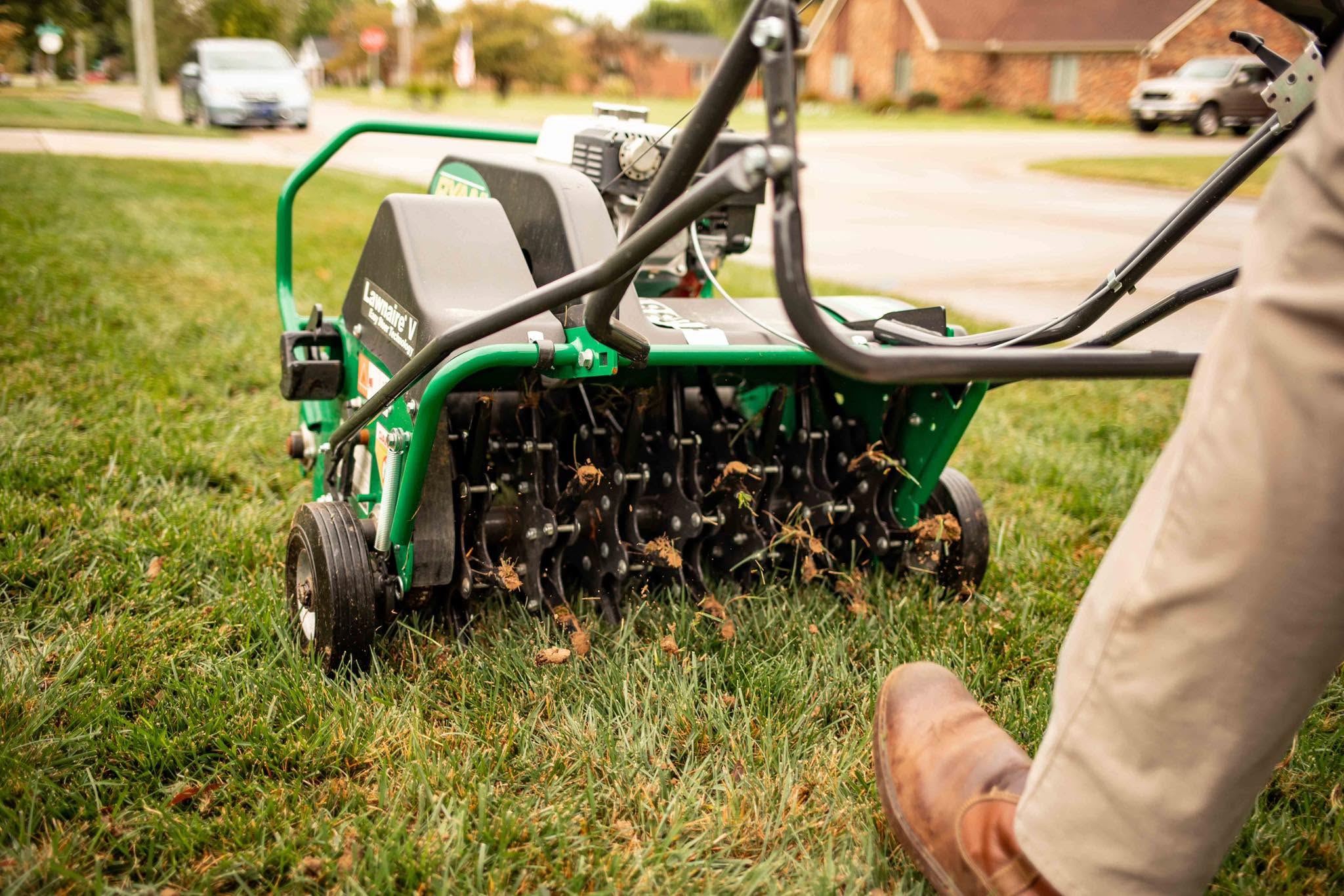
A $200 visit covers a different scope. Not always — it depends on the company and the specific service — but a properly structured visit at this price point on a standard Greater Sudbury residential property typically includes the cut, proper mechanical edging on all hard surfaces, cleanup of clippings from driveways and walkways, and either an assessment component or inclusion of a service like aeration, dethatching, or overseeding that the $80 visit doesn’t touch.
The compounding effect of what’s included in that higher price works in several ways.
Proper edging at every visit means the lawn maintains its visual standard without requiring periodic corrective edge work. A homeowner paying $80 per visit with string trim edging will often find themselves needing a mechanical re-edge every few weeks to maintain the appearance they want — at additional cost, or at the cost of their own time. That $80 visit isn’t really $80 per visit if you add the periodic re-edge requirement.
Active assessment catches problems before they become expensive. The value of someone who looks at your lawn rather than just cutting it is quantified in what they catch early. A thatch layer at half an inch, identified in April and managed with the spring aeration, costs the price of an aeration. The same thatch layer at two inches, identified in August when the lawn has been declining all summer, costs dethatching plus aeration plus overseeding plus the lost season while the lawn recovers. The early catch is worth significantly more than the price differential between a production visit and an assessment-included visit.
I documented this exact cost differential in the article on the Sudbury customer who called me crying about her lawn — a property where the accumulation of thatch that wasn’t being monitored produced a late-season crisis that required power dethatching, full aeration, overseeding, and corrective watering over three weeks. That recovery cost significantly more than a season of assessment-included service would have cost. The crisis was entirely preventable. It wasn’t prevented because nobody was looking.
The right cutting height at every visit maintains the lawn’s structural health through summer. A production visit cuts at whatever the operator’s default setting is. A properly structured visit cuts at the height that’s right for the property’s specific conditions that week — higher during heat stress, consistent at three inches through the growing season, stepped down correctly at the end of the year. Cutting height is the single most impactful variable in Sudbury lawn health through summer, as I covered in the article on the 5 things every great Sudbury lawn has in common. The difference between a production cut at the wrong height and a managed cut at the right height, over twenty visits in a season, produces lawns that look dramatically different by October.
The math — what a full season actually costs under each model
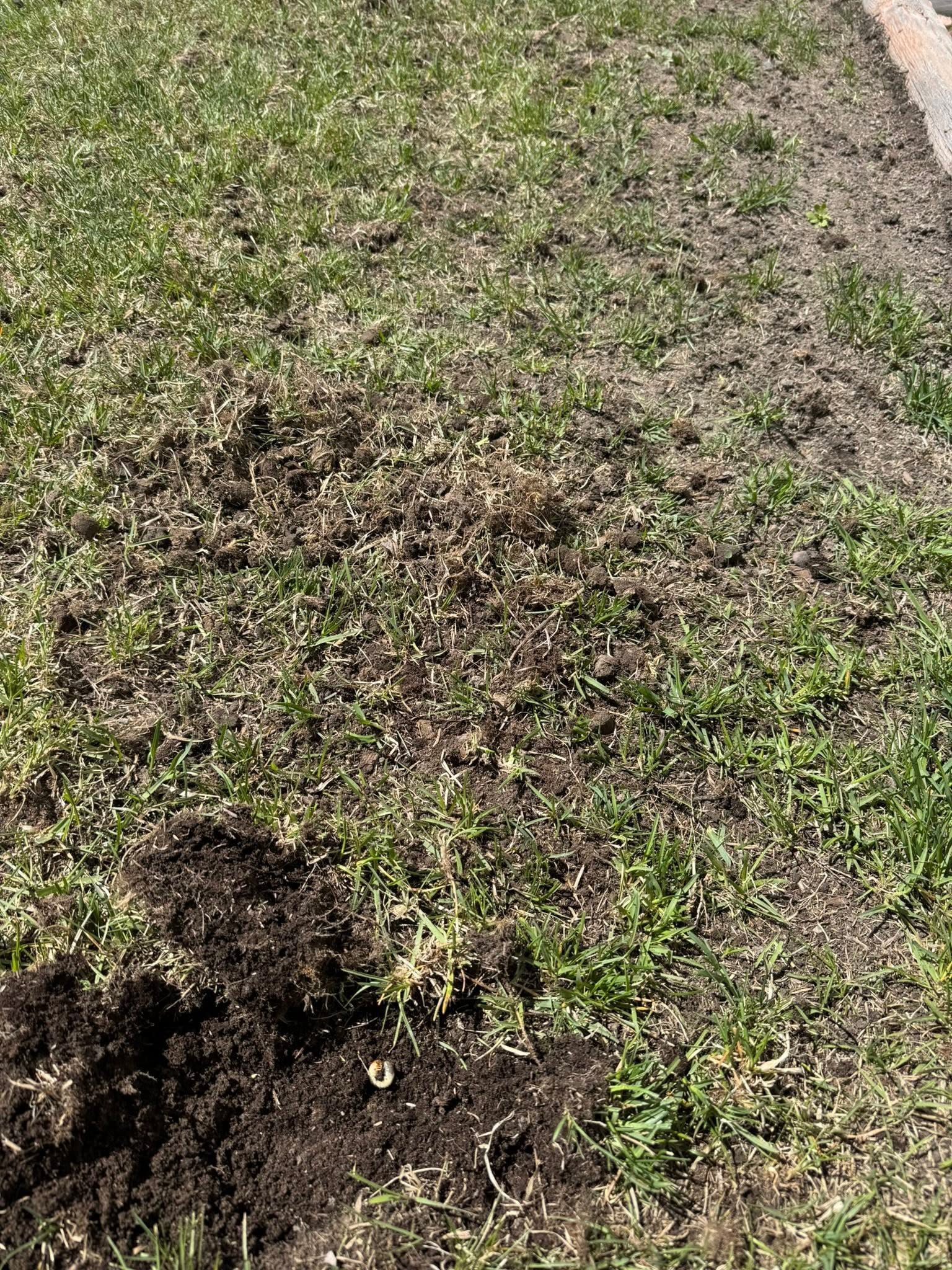
Let me put specific numbers to this rather than keeping it abstract. Here’s a comparison of what a full season of lawn care actually costs under each model on a typical 2,000 square foot Greater Sudbury residential property — including the costs that don’t show up in the per-visit quote.
The $80 per visit model — full season accounting:
20 visits at $80 = $1,600 for cutting through the season.
Spring aeration — not included in the visit, needs to be booked separately. At current Sudbury pricing, approximately $150 to $175 for a standard lot. Assuming the homeowner books it: add $160. If they don’t book it because it wasn’t proactively recommended and they didn’t know to ask: they skip it, and the compaction accumulates through another season.
Overseeding — not included. Approximately $100 to $150 if booked separately. Again, if not recommended: skipped.
Mid-season corrective edge work — needed every four to six weeks when string trim edging is the standard. If the homeowner hires it: two or three re-edge visits at $50 to $75 each, adding $100 to $225. If they do it themselves: their time, their equipment cost.
End of season recovery work — if the production model has been cutting at the wrong height or missing assessment signals, some recovery work is often needed. Modest recovery — overseeding a thin section, spot treating weeds that moved into stressed areas — adds $100 to $200 to the year’s total.
Full season cost under the $80 model: $1,600 base, plus $160 to $560 in add-ons and corrections = $1,760 to $2,160 for a season that still produced a mediocre lawn.
The $200 per visit model — full season accounting:
A properly structured higher-price service on this size property typically includes cutting, mechanical edging, cleanup, assessment at every visit, and spring aeration and overseeding included in the season package rather than billed separately. At $200 per visit with, say, 12 visits rather than 20 (because the visit includes services that maintain the lawn between cuts, reducing the frequency required), that’s $2,400 for the season.
Add-ons needed: significantly fewer, because the assessment component catches problems early and the included services address the conditions that create problems in the $80 model. End of season recovery work: minimal, because the lawn has been managed rather than just maintained. Corrective edge work: zero, because the mechanical edging at every visit maintains the standard.
Full season cost under the $200 model: approximately $2,400, producing a lawn in significantly better condition by October than the $80 model produced.
The difference in total season cost is $240 to $640, depending on how many add-ons and corrections the $80 model requires. For that difference, the $200 model typically produces a lawn that is measurably healthier — better root depth, managed thatch, consistent height, no deferred problems accumulating into next year’s recovery costs. The per-visit price difference looks large. The full-season cost difference is much smaller than it appears, and the outcome difference is larger than the cost difference.
The full 2026 pricing context for lawn care services in Greater Sudbury is in the article on Sudbury lawn care news and pricing 2026 — which gives you the range for individual services so you can evaluate whether the bundled pricing of a higher-cost visit actually represents value relative to booking services separately.
When the cheaper option genuinely is cheaper — and when it isn’t
I’m not arguing that every homeowner should pay more for lawn care. There are situations where the $80 visit is genuinely the right choice, and being honest about that matters more to me than a blanket argument for premium service.
The $80 model is genuinely the better choice when:
The property is small — under 1,000 square feet of turf — and the homeowner is capable of handling assessment and supplemental services themselves. If you know how to check your thatch, you know when to book aeration, and you’re willing to do the edging yourself, a production cut at a low price is efficient and appropriate. You’re buying the physical labour of cutting. You have the knowledge to manage everything else.
The homeowner has a well-established lawn in genuinely good condition — aerated annually, thatch managed, correct cutting height already maintained — and needs reliable maintenance rather than active management. A production visit on a healthy lawn keeps it maintained. There’s less value-add from assessment when the lawn has no developing problems to catch.
Budget is the binding constraint and the homeowner accepts the trade-off consciously. Sometimes $80 is what the budget allows. That’s a legitimate choice. The important thing is making it with clear eyes about what’s being traded — accepting that the assessment and edge quality won’t be there, and planning to monitor for problems yourself rather than relying on the service to flag them.
The $80 model becomes more expensive than the $200 model when:
The lawn has existing or developing issues — thatch building, compaction, drainage problems, grub history — that need to be caught and managed rather than driven over. On a lawn with developing problems, a production visit is maintenance that delays the inevitable rather than management that prevents it. The deferred problems accumulate. When they surface, the correction cost exceeds the season savings from the lower per-visit price.
The homeowner doesn’t have the knowledge or time to supplement the production visit with their own assessment and add-on booking. If the lower price is the full investment — no self-assessment, no separately booked aeration, no independent monitoring — the production visit model on a Sudbury lawn with standard clay soil conditions almost always requires corrective work within two to three seasons that costs more than the season savings would have funded.
The previous lawn care relationship has already accumulated deferred problems. If you’re switching from a production-model service after two or three seasons, there’s often a first-year restoration cost — correcting what the production model didn’t catch — before the ongoing maintenance cost applies. That restoration cost belongs in the true accounting of what the production model cost you. I described what three seasons of production-model service without assessment can accumulate in the article on what I found under a Sudbury lawn maintained for ten years — that property had decades of production-model service and the soil underneath told the complete story of what it had cost.
The honest version of this conversation is the one I have on every quote visit in Greater Sudbury. I tell homeowners what the service includes, why each component is in there, and what would happen to the lawn if that component were removed. Sometimes the honest answer is that a lower-cost service is appropriate for their situation. More often the honest answer is that the lower cost per visit isn’t the lower cost per season — and knowing the difference before you sign anything is worth the fifteen minutes of the conversation.
If you want that conversation about your specific property — what it actually needs, what that should cost, and how to evaluate the quotes you’re getting — give me a call. No pressure, no obligation. Just a straight answer.
📞 705-507-6787 | Get a free quote online
— Ryan Lingenfelter
Owner, Cutting Edge Lawn & Landscaping
Garson, Ontario · 705-507-6787
