
By Ryan Lingenfelter · Cutting Edge Lawn & Landscaping, Garson, Ontario · June 2026
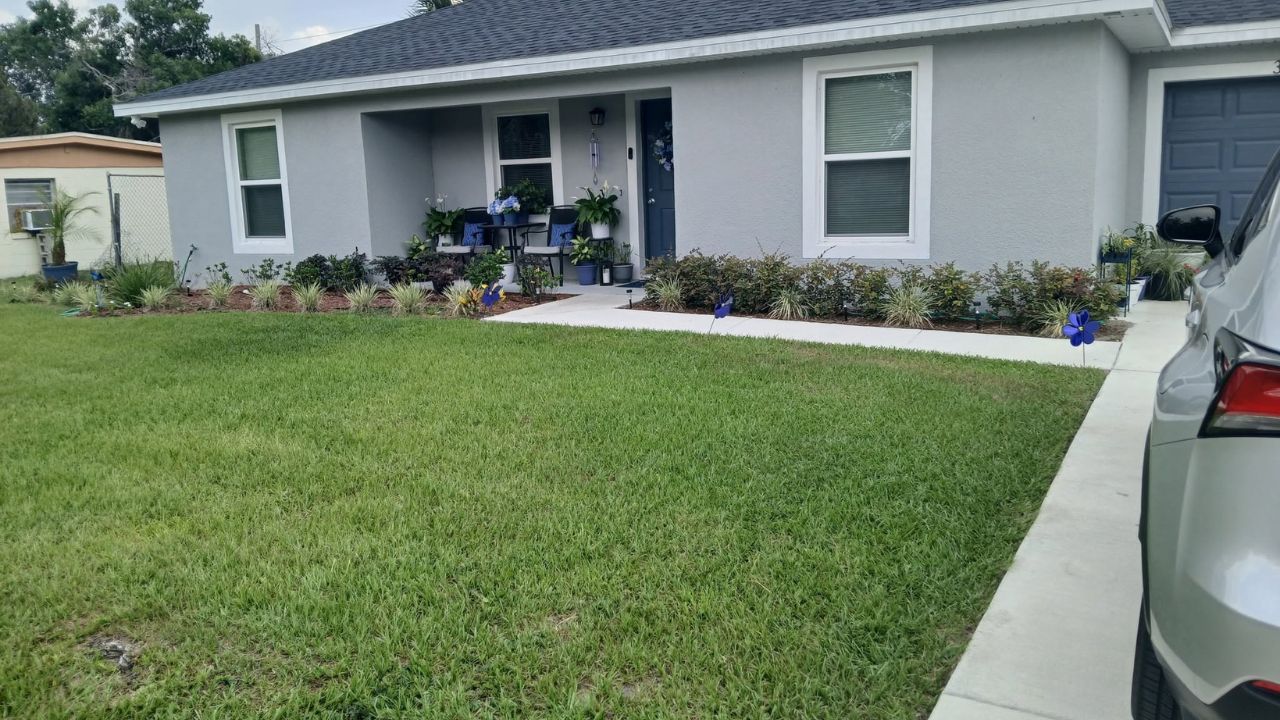
I’ve written before about what I notice in the first sixty seconds on a Sudbury property. This article is different — it’s about the thirty seconds before that. The read I do before I get out of the truck. Before I’ve walked the perimeter, before I’ve pushed a screwdriver into the soil, before I’ve checked the thatch or pulled a root sample.
Thirty seconds standing at the edge of a driveway, looking at a lawn, tells me more than most homeowners realise is visible from that distance. After hundreds of properties across Greater Sudbury, the pattern recognition is fast enough that I’m already forming a diagnosis before my boots hit the grass.
Here are the five specific things I look at — in the order I look at them — and what each one tells me about what’s going on with the lawn.
Thing one — the colour, and what the specific shade tells me
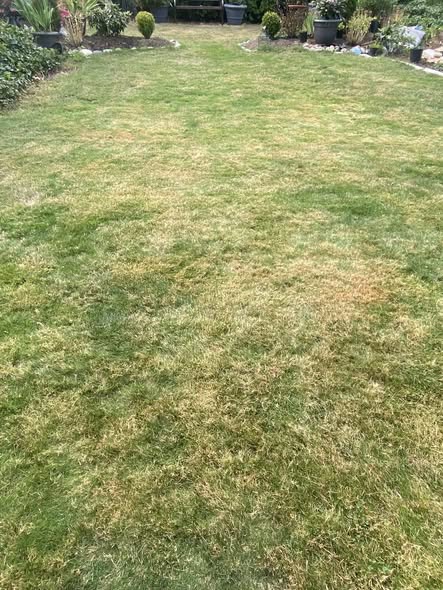
Colour is the first read, and it’s more specific than just “green” or “not green.” Different problems produce different colour signatures, and recognising those signatures from thirty feet tells me which category of problem I’m likely walking into.
Pale yellow-green, uniform across the lawn. This is the most common colour I see on struggling properties across Greater Sudbury. Uniform paleness — not patchy, not concentrated in one section, but a general dull wash over the whole surface — almost always means one of two things: the cutting height is too low, or the soil is so compacted that the grass can’t access nutrients efficiently. These two problems appear together so consistently that when I see uniform pale colour I’m already thinking about both.
What the pale colour is telling me: the grass blade doesn’t have enough surface area to produce strong chlorophyll. At two inches, the plant is spending almost all its energy regrowing the blade rather than producing colour and pushing roots deeper. The result is a lawn that looks anaemic because it effectively is — chronically stressed by being cut too short to function properly. I’ve documented exactly what this produces over a full Sudbury summer in the article on what I found under a Sudbury lawn maintained for ten years — the cutting height had been wrong for a decade and the colour confirmed it from the street before I’d touched anything.
Blue-grey tint, visible especially in afternoon. This is an acute signal. Grass turns blue-grey when it’s losing more water than it can take in — the plant is closing its stomata to conserve moisture. This colour in mid-afternoon means the lawn is heading toward stress within twelve to twenty-four hours. It’s not a crisis if you catch it early, but it tells me the root system is shallow and the soil moisture situation is critical.
Dark green but uneven — some sections rich, some dull. Patchy colour variation tells me the lawn has been treated inconsistently. Some areas got what they needed — aeration, fertilizer at the right time, adequate moisture. Other sections didn’t. This is often a story of a property that’s been spot-treated over years rather than managed as a system. Each dark section tells me something worked there. Each dull section tells me something was missing.
Consistent deep mid-green, even density. Healthy lawn. I still walk it — there are things that aren’t visible from the driveway — but I’m coming in expecting a different kind of conversation than I have when the colour is off.
Thing two — where the stress is concentrated, not just that it exists
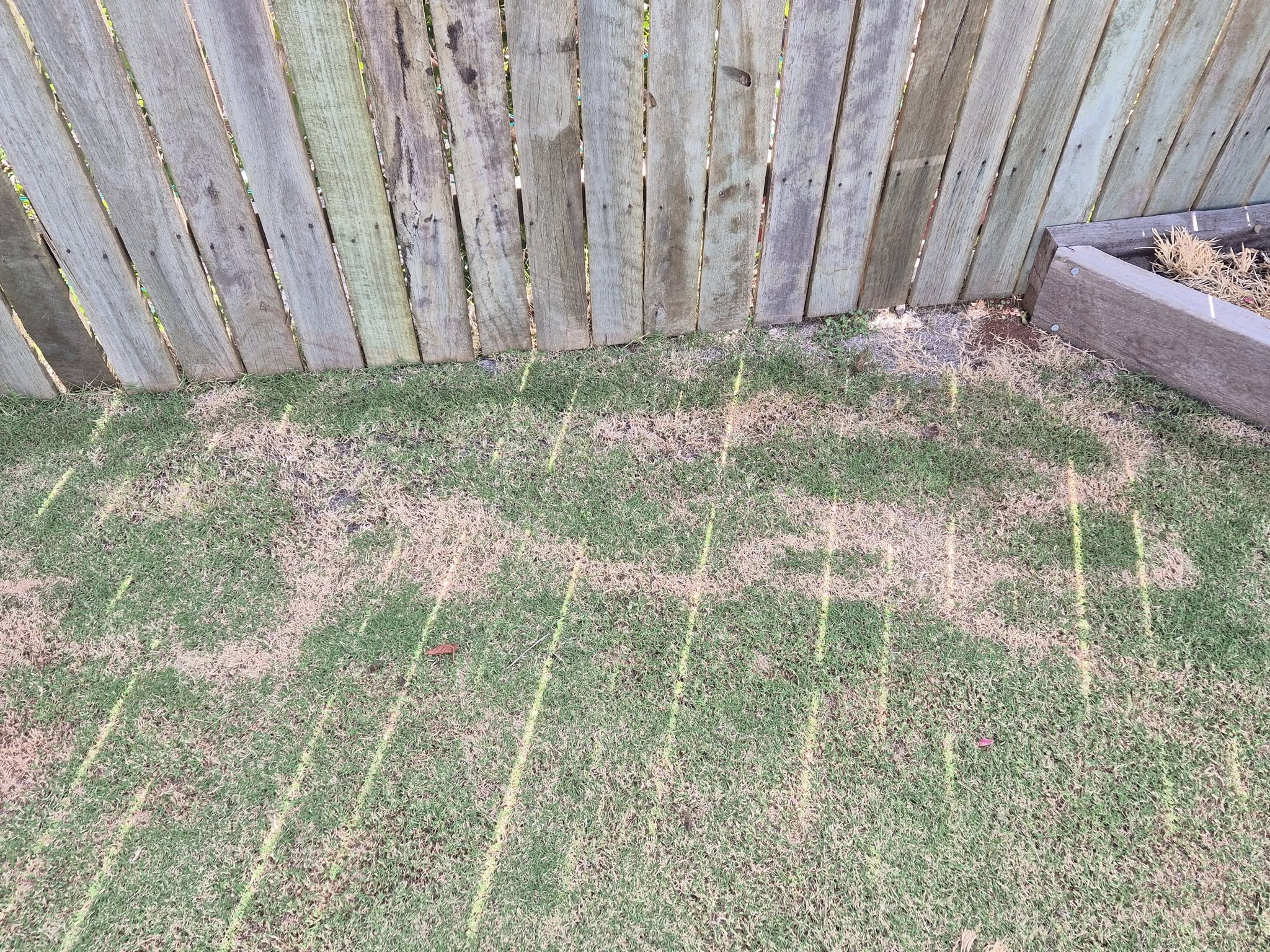
The geography of a lawn’s problems is as diagnostic as the problems themselves. I’m not just looking at what colour the lawn is — I’m looking at which sections are showing it and what that pattern implies about the cause.
Stress concentrated in the sunny south or west-facing section. A defined strip of browning or pale colour on the side that gets the most afternoon sun while the shaded sections look better — this almost always means shallow roots. The sunniest sections dry out fastest, and a root system at one to two inches has no moisture reserve to handle the afternoon heat differential. The shaded sections look better not because they’re healthier but because they haven’t hit their stress threshold yet under the same shallow-root limitation. Both sides have the same problem. One side is just more forgiving of it.
Stress concentrated in obvious traffic paths. The route from the back door to the fence. The strip alongside the driveway where people walk to their cars. Where the dog runs. These are compaction patterns — repeated traffic loads compacting soil along specific corridors while the rest of the lawn remains relatively open. The fix is targeted aeration in those areas, sometimes double-pass, which I covered in the article on the 10 free assessments I did across Greater Sudbury — one property had a large dog whose traffic paths were the most compacted soil I found across all ten properties.
Stress in a single corner or low area that’s a different colour from everything else. Darker green in a specific spot that’s also slightly lower than the surrounding grade — moss at the edges, a different texture when you look closely. This is a drainage signal. Water is collecting in that area and staying there longer than grass roots can tolerate. The lawn isn’t failing in that corner because of maintenance. It’s failing because of water. Surface treatments won’t fix it. I went into this extensively in the article on the Sudbury property where I found drainage problems underground — a case where the corner failure had been misdiagnosed as a soil problem for years.
Stress scattered randomly with no pattern. Thin or discoloured patches with no geographic logic — not in the sun, not in traffic paths, not in a low area. Random distribution points toward thatch as the primary cause. Thick thatch creates inconsistent water penetration across the lawn surface — some areas get moisture through to the roots, others don’t, and the pattern is driven by where the thatch is thickest rather than any surface feature. I found this on the majority of the 52 properties I assessed this spring, as I described in the article on what I found on 52 Sudbury lawns this spring.
Thing three — the edge quality along the driveway and fence line
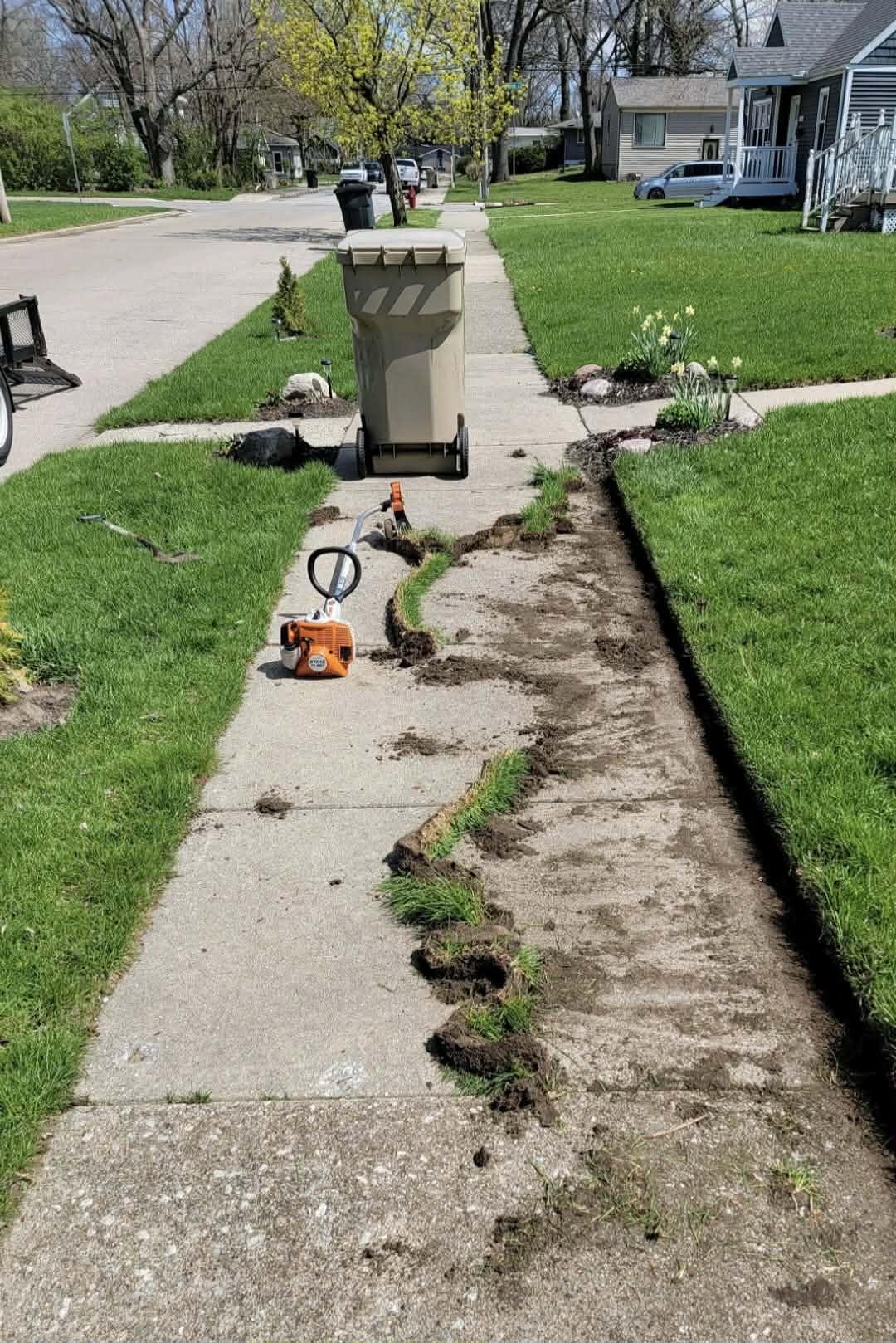
Edges are a proxy for overall maintenance discipline, and I’ve learned to read them quickly because they correlate with what I find below the surface more consistently than almost any other surface indicator.
Sharp, defined edges where the lawn meets the driveway — a clean line maintained with an actual edger rather than just a string trimmer — tell me the person or company maintaining this property is paying attention to detail. When detail work is being done properly, other things usually are too. The cutting height is more likely to be correct. The schedule is more likely to be consistent. The interventions — aeration, overseeding, cleanup — are more likely to have happened when they should have.
Ragged, spreading edges — the grass has crept two or three inches over the driveway surface, the line between lawn and hard surface is soft and irregular — tell me the detail work has been skipped. And when detail work is skipped, I start looking harder at everything else. Is the thatch managed? Has aeration happened recently? Is the cutting height consistent? Usually the answer to at least one of those is no.
This isn’t a judgment about the homeowner. Edge maintenance is genuinely time-consuming and requires either the right equipment or a service provider who includes it properly. Most people don’t own a dedicated edger. Most lawn service operators cut with a mower and trim the edges with a string trimmer — which produces a softened line that gradually deteriorates between visits rather than a sharp edge that holds. The edge quality tells me what kind of service the property has been receiving, which tells me what I’m likely to find underneath.
I described the outsized visual impact of proper edging in the wedding preparation article — the Val Caron backyard we prepared for an outdoor wedding — where deep edging on day one produced a transformation in the property’s appearance before we’d made a single cut. Edges matter more than most people realise, both as a maintenance signal and as a visual impact driver.
Thing four — the surface texture when I walk across it
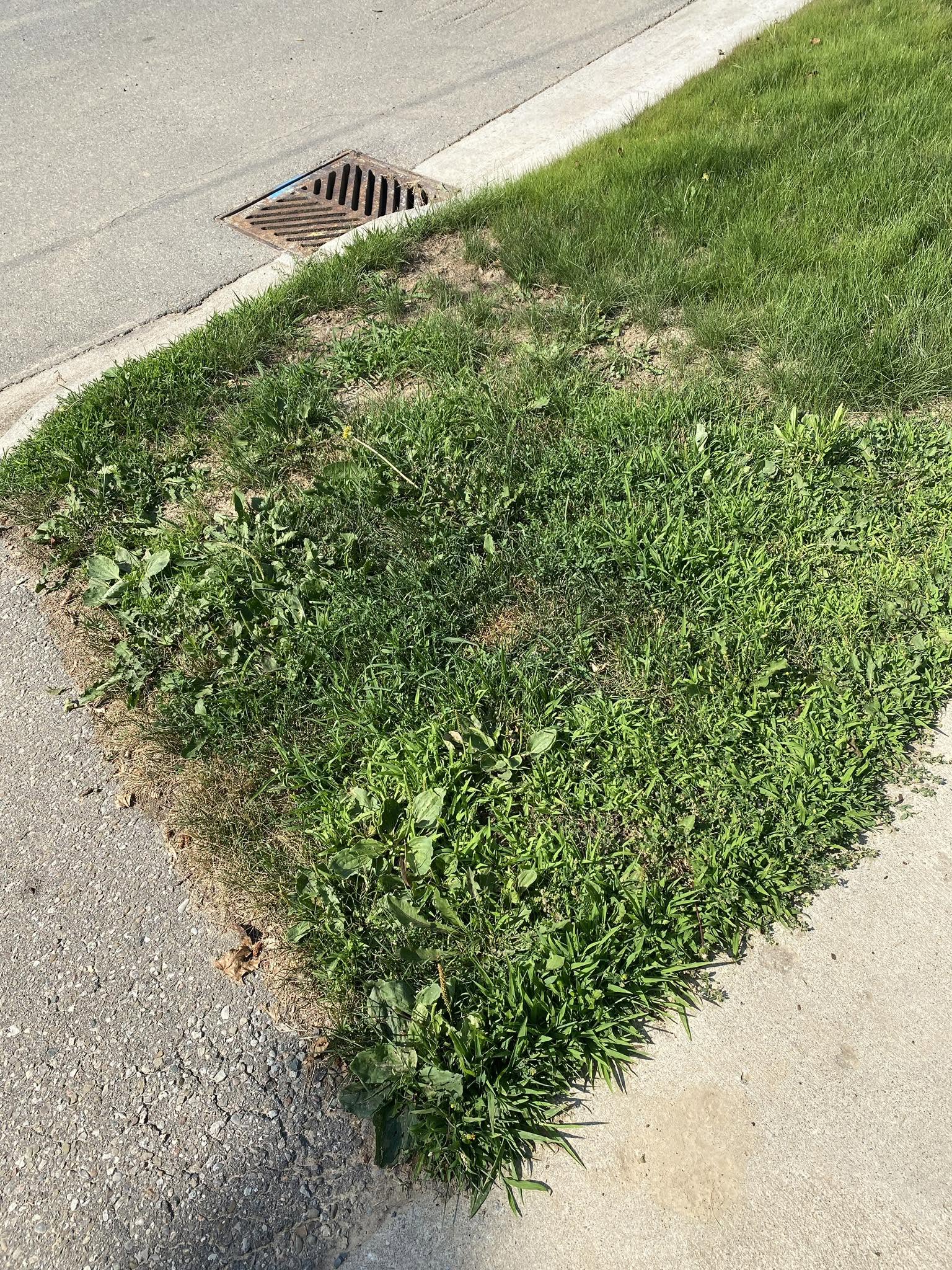
This one happens in the first few steps onto the property. I’m not doing the formal heel press test yet — that comes later in the assessment. I’m just registering what the surface feels like underfoot as I walk across it.
A lawn that feels firm but slightly yielding underfoot — like a dense carpet with some give — is in good shape. The soil has structure. There’s organic matter. The surface is supporting a living system.
A lawn that feels hard — like walking on packed dirt with grass on top — has significant compaction. I can feel it through my boots before I’ve pressed anything intentionally into the soil. On Greater Sudbury’s clay-influenced soil, this hardness often develops faster than homeowners expect — compaction accumulates every season without aeration, and by year three or four without intervention, the surface is noticeably harder than it should be. This hardness is the physical feeling of what I described as compaction in the article on what Sudbury soil actually looks like and why it matters — the geology and clay content of this region make compaction more aggressive than in most of southern Ontario.
A lawn that has give in specific areas — soft or slightly spongy underfoot in particular spots rather than across the whole surface — tells me drainage rather than compaction. A section that gives too easily on a dry day has retained moisture it shouldn’t have. That moisture is staying there because of a drainage pattern, a grade issue, or something underground. I check it specifically in the more detailed assessment that follows the thirty-second read.
The surface feel also tells me something about the thatch. A very springy, bouncy feel underfoot — like walking on a sponge — is the physical sensation of thick thatch. The organic layer compresses under foot pressure and springs back. It feels satisfying underfoot but it’s the feeling of a problem, not of health. Thatch at an inch and a half feels noticeably springier than a well-managed lawn with thatch under half an inch. After enough properties, you can feel the difference before you’ve looked at it closely.
Thing five — what the overall impression says about the history of the property
The fifth thing isn’t a single specific indicator. It’s the gestalt — the overall impression that comes from looking at the first four things together and asking what story they tell about how this lawn has been managed.
Uniform pale colour plus ragged edges plus hard surface feel plus random stress distribution: a lawn that has been mowed consistently but never received any agronomic care — no aeration, probably cut too short, no thatch management, no soil improvement. The lawn has been kept short but not maintained. It looks like a lawn has been there but performs like a lawn that’s never been properly established.
Good colour plus sharp edges plus firm-but-yielding surface plus stress concentrated only in traffic paths: a lawn that has been receiving good maintenance overall but with specific high-use areas that need targeted aeration. The history has been right. The execution has been mostly right. One specific intervention — double-pass aeration in the traffic paths — would address the one thing that hasn’t been keeping up.
Patchy colour with no pattern plus soft feel in one corner plus reasonable edges: good surface maintenance but a drainage problem that has been partially compensating for and partially ignoring. The edge work tells me someone cares about the property. The drainage problem tells me it’s been there long enough to be accepted as normal. The fix starts underground, not on the surface.
Each of these thirty-second reads sends me into the property with a different hypothesis and a different first question to answer when I get on my knees and start the actual assessment. The thirty-second read doesn’t replace the hands-on work. It just means I’m not starting from zero when I do it.
If you want to develop this kind of read on your own property — knowing what to look for and what it means — the article on what I tell Sudbury customers before any lawn work starts walks through the homeowner version of this diagnostic in more detail. And if you want me to do the full assessment in person — thirty seconds from the driveway plus the five minutes on my knees plus the conversation about what it all means — give me a call. No charge, no obligation.
📞 705-507-6787 | Get a free quote online
— Ryan Lingenfelter
Owner, Cutting Edge Lawn & Landscaping
Garson, Ontario · 705-507-6787
