
I had a homeowner in Garson do the math out loud with me once, standing in his driveway after I’d quoted him aeration for his property. “So you’re telling me eighty bucks now saves me what, exactly?”
I told him the honest number, based on what I actually see across Greater Sudbury every season: skip it for a few years running, and you’re typically looking at $600 to $1,000 in repair work down the line to fix what that neglect actually costs — overseeding a lawn that’s gone thin and patchy, sometimes partial sod where bare patches won’t recover on their own, and the labour that comes with either.
I’m Ryan Lingenfelter, owner of Cutting Edge Lawn & Landscaping in Garson, Ontario. Since 2020, I’ve maintained properties across Greater Sudbury — Garson, Val Caron, Hanmer, Lively, Chelmsford, Azilda, Capreol — and the math around aeration is one of the clearest, most repeatable patterns I see in this business. One $80 decision in spring, made or skipped, determines an enormous amount of what a lawn costs a homeowner over the following years.
What That $80 Actually Buys
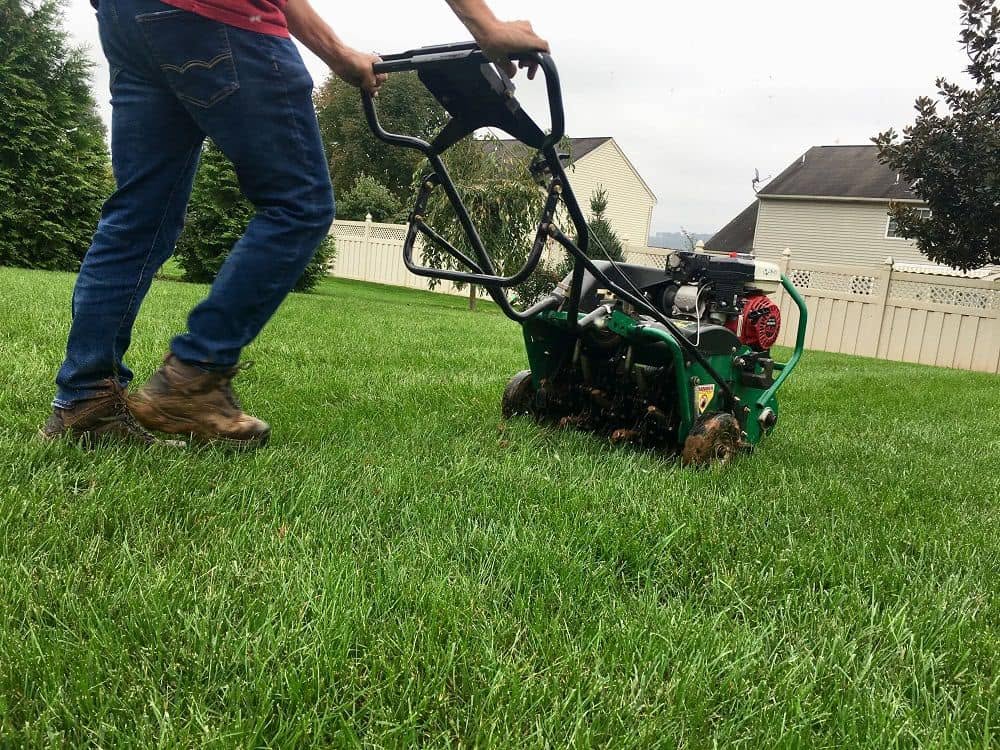
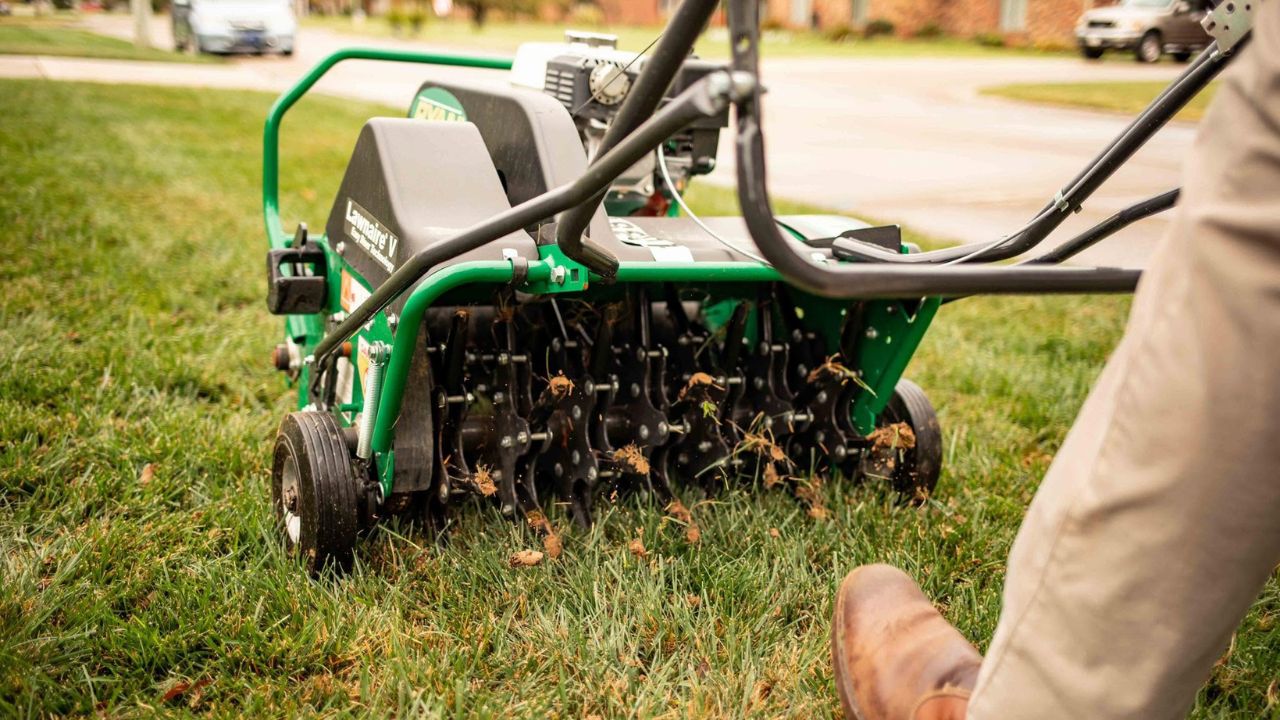
Core aeration on a standard residential lawn in Greater Sudbury runs somewhere around $80 depending on the size of the property and what condition the soil is in. For that, a machine pulls thousands of small plugs of soil out of the lawn, opening up channels that let air, water, and root growth actually penetrate ground that’s been compressed by years of foot traffic, mowing equipment, and our specific freeze-thaw winters.
I’ve gone into the mechanics of exactly why Sudbury’s clay-heavy soil compacts the way it does in the soil science article here — but the short version that matters here is this: our soil compacts faster and harder than soil in most of southern Ontario, which means the gap between an aerated lawn and a neglected one widens faster here too.
One aeration pass doesn’t fix everything overnight, but it’s the single highest-leverage thing a homeowner can do for the price. There’s no $80 service in lawn care that does more structural good for the soil underneath the grass than this one does.
What Skipping It Actually Costs — Year by Year
Here’s where the math actually plays out, based on the pattern I’ve watched repeat across hundreds of Greater Sudbury properties.
Year one without aeration: the lawn usually looks fine. Compaction is gradual, not immediate, so skipping a single season rarely produces a visible problem right away. This is exactly why so many homeowners skip it without consequence the first time and assume it’s not actually necessary.
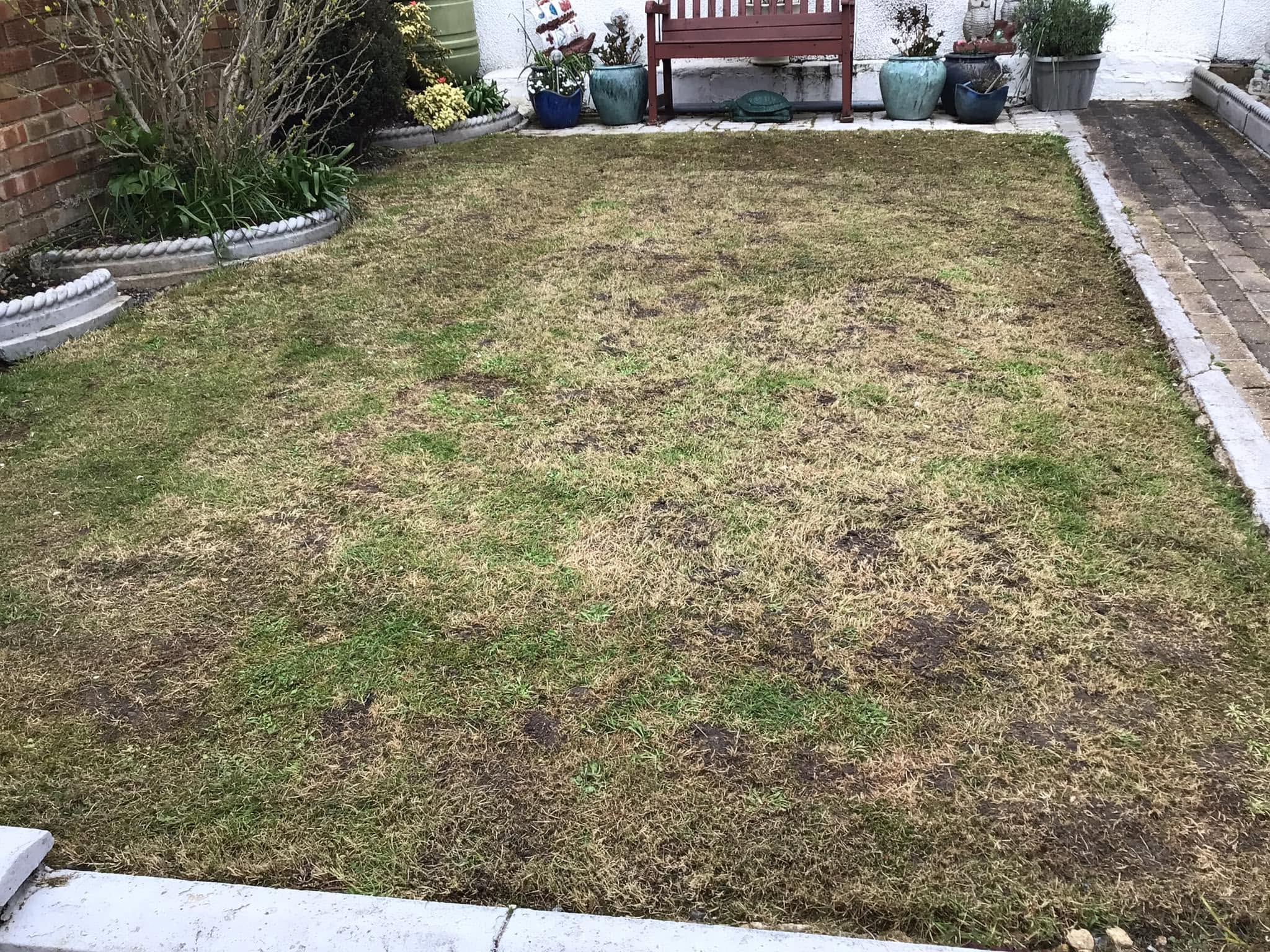
Year two: the grass starts thinning in higher-traffic areas — along well-used paths, near play equipment, anywhere foot traffic concentrates. Root systems can’t push down through increasingly compacted soil, so they stay shallow, and shallow roots struggle more with Sudbury’s dry stretches in July.
Year three: this is usually when a homeowner calls me, often describing a lawn that’s “just not doing well” without being able to pinpoint why. By this point we’re typically looking at thin coverage across larger sections, visible compaction when I do a simple screwdriver test, and grass that’s noticeably more stressed than the neighbour’s lawn that’s been aerated annually.
At that stage, the fix usually isn’t a single $80 aeration pass anymore. It typically takes aeration plus overseeding to rebuild the thinned areas, and on properties where compaction has gone untreated for several years, sometimes partial sod where bare patches have gone past the point where seed alone will reliably fill them back in — the same kind of restoration work I’ve detailed in pieces like the bare patches article here. By the time a homeowner is looking at that combination of services, the total bill is regularly running $600 to $1,000 depending on how much of the property needs work.
The $80 decision in year one was never really an $80-versus-nothing decision. It was an $80-now-versus-several-hundred-later decision, just spread out enough in time that the connection isn’t obvious until you’ve watched it happen on enough properties to see the pattern clearly.
Why This Compounds Faster on Sudbury Lawns Specifically
This isn’t a generic lawn care talking point — it’s specifically more true here than in a lot of other climates, and it’s worth explaining why.
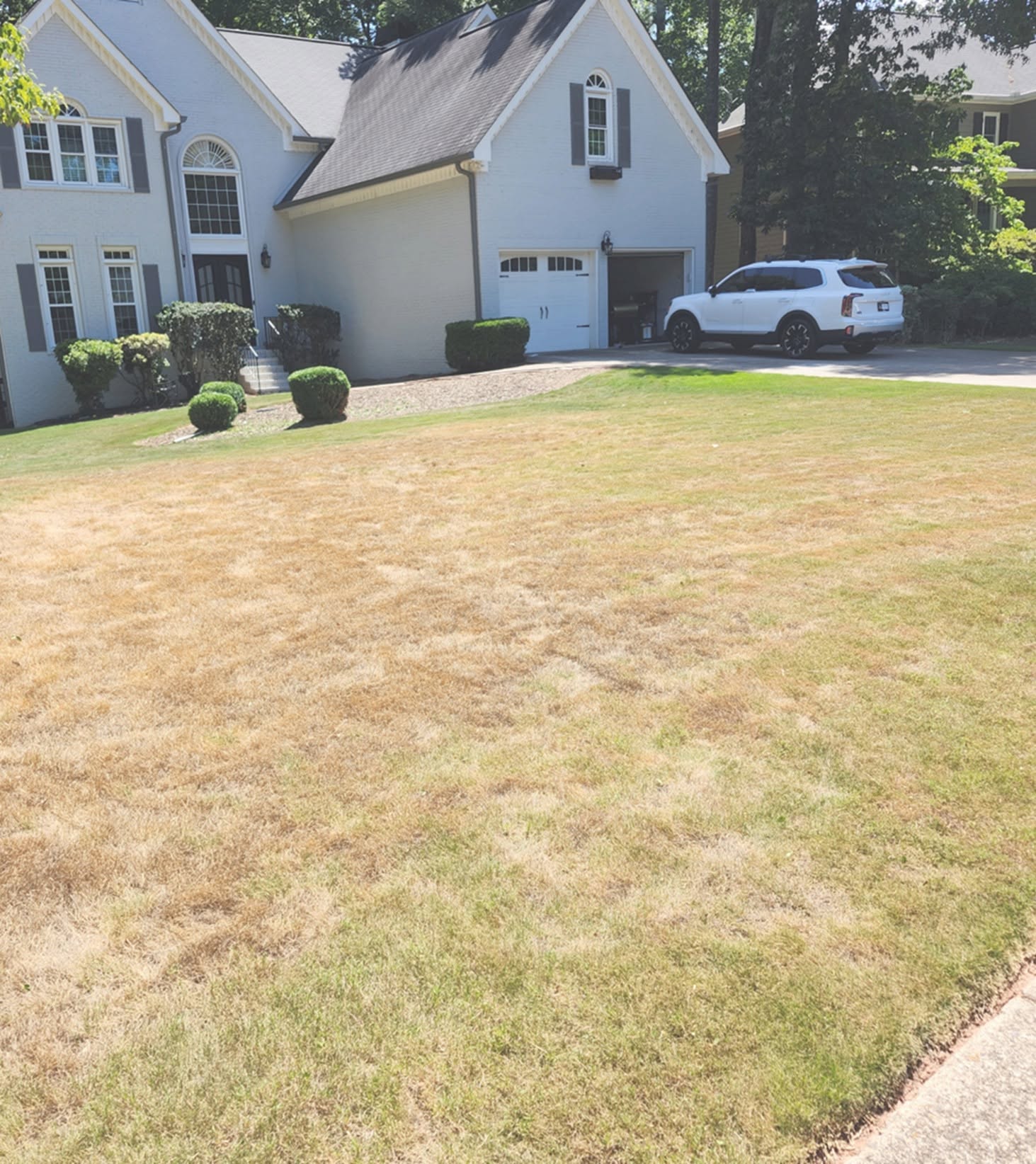
Sudbury’s clay base, combined with our freeze-thaw cycle through winter, compacts soil more aggressively than the sandier or loamier soils common in parts of southern Ontario. A lawn that might tolerate two or three skipped years elsewhere often shows compaction symptoms within one or two seasons here, simply because the underlying soil structure is working against root depth from the start.
On top of that, our growing season is shorter, which means a lawn with compromised roots has less time each year to recover from stress before winter arrives again. A shallow-rooted lawn going into a Sudbury winter is more vulnerable than the same lawn would be heading into a milder, longer-season climate, which is part of why I push annual aeration specifically rather than the every-other-year recommendation you’ll sometimes see in generic lawn care advice written for a different climate entirely.
I’ll also say this directly, because it matters to the math: a homeowner who’s already paying for fertilization or weed treatment without aerating is, in a real sense, applying product to soil that can’t fully use it. I’ve seen plenty of cases — the kind I describe in the fertilization cost article here — where a homeowner spends on fertilizer for a couple of seasons with disappointing results, and the actual limiting factor turns out to be compacted soil the fertilizer was never going to fix on its own.
How to Tell If This Is Already Happening on Your Lawn

You don’t need to wait for a professional assessment to get a rough read on this yourself. A simple screwdriver test — pushing a standard flathead screwdriver into the soil with moderate pressure — tells you a lot. If it goes in several inches without much resistance, your soil is in reasonably good shape. If it stops after an inch or so, you’re likely looking at meaningful compaction already, even if the grass on top still looks okay.
Other signs worth checking: water pooling on the surface after rain instead of soaking in, grass that browns out faster than your neighbour’s during a dry stretch, and visibly thinner coverage in areas that get regular foot traffic — paths to a shed, around a trampoline, along a fence line you walk regularly.
If any of that sounds familiar, the math above is exactly why I’d encourage doing something about it this season rather than next. The gap between an $80 fix now and a several-hundred-dollar fix in two or three years is the entire point of this article.
📞 705-507-6787
🔗 Get a Free Quote
📍 Serving Greater Sudbury — Garson, Val Caron, Hanmer, Lively, Chelmsford, Azilda, Capreol
— Ryan
Frequently Asked Questions
How much does core aeration cost in Greater Sudbury?
Core aeration on a standard residential lawn in Greater Sudbury typically runs around $80, depending on the size of the property and current soil condition. It’s one of the most affordable lawn care services relative to the structural benefit it provides, since it directly addresses soil compaction that limits root depth and water absorption.
What does skipping annual aeration actually cost over time in Sudbury?
Based on the pattern seen across hundreds of Greater Sudbury properties, a lawn left unaerated for two to three years typically requires aeration combined with overseeding to rebuild thinned areas, and in more neglected cases, partial sod where bare patches have gone past the point of reliable seed recovery. Combined, this kind of restoration work commonly runs $600 to $1,000 — substantially more than the cumulative cost of annual $80 aeration over the same period.
Why does soil compaction happen faster in Sudbury than other parts of Ontario?
Sudbury’s clay-heavy soil base, combined with our seasonal freeze-thaw cycle through winter, compacts more aggressively than the sandier or loamier soils common in parts of southern Ontario. This means compaction symptoms — thinning grass, water pooling, increased drought stress — often show up within one to two seasons of skipped aeration here, compared to a longer tolerance window in milder climates.
How do I know if my lawn needs aeration right now?
A simple screwdriver test gives a quick read: push a standard flathead screwdriver into the soil with moderate pressure. If it goes in several inches easily, your soil is in reasonable shape. If it stops after about an inch, meaningful compaction is likely already present, even if the grass above still looks okay. Other signs include water pooling after rain instead of soaking in, and grass that browns out faster than neighbouring lawns during dry stretches.
Does fertilizing my lawn matter less if I haven’t aerated it?
Yes, to a meaningful degree. Compacted soil limits how well roots can access water and nutrients, which means fertilizer applied to compacted ground often produces disappointing results regardless of product quality or timing. Many homeowners who feel their fertilization program “isn’t working” are actually dealing with an underlying compaction issue that aeration would address first.
Ryan Lingenfelter is the owner of Cutting Edge Lawn & Landscaping in Garson, Ontario. Since 2020, his crew has provided full lawn care services across Greater Sudbury — Garson, Val Caron, Hanmer, Lively, Chelmsford, Azilda, and Capreol. Cutting Edge is licensed, insured, BBB A+ rated, and ThreeBest Rated for lawn care services in Sudbury.
📞 Phone: 705-507-6787
📍 Service Area: Greater Sudbury, Ontario
🔗 Free Quote: cuttingedgelawn.ca/quote
Helpful Lawn Care Services in Sudbury
- Core Aeration for Healthy Lawns
- Grass Cutting Services in Sudbury
- Sod Installation in Sudbury
- Property Cleanup Services
Continue Reading
- Lawn Fertilization Cost in Sudbury — Real Prices and Local Tips
- The Lively Property That Looked Worse After We Started Than Before
- What Sudbury Soil Actually Looks Like Under a Microscope
