
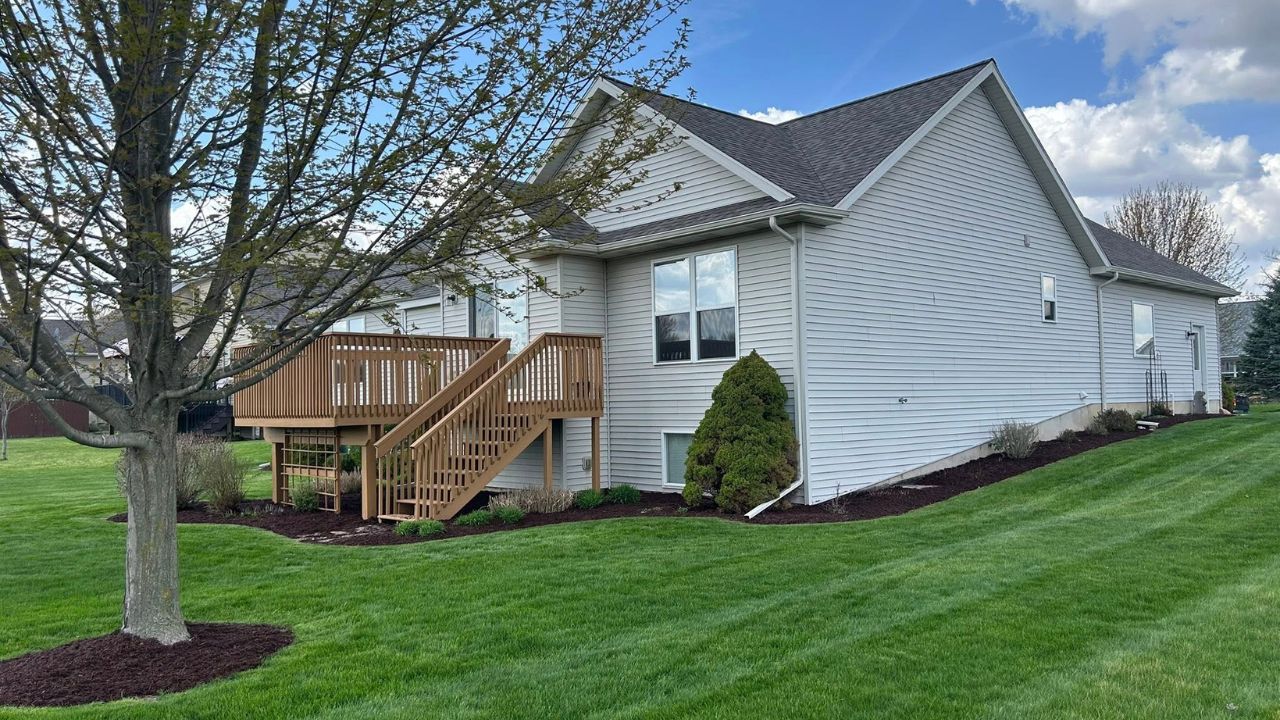
Three days into the job, my phone rang. It was the homeowner in Lively, and I could hear the concern in her voice before she even finished the sentence.
“It looks worse than before you guys even started. Is this normal?”
I told her yes — and that if I’d known she’d be standing in her yard looking at it that closely on day three, I would have warned her ahead of time exactly what to expect, instead of letting her find out by looking out the kitchen window.
I’m Ryan Lingenfelter, owner of Cutting Edge Lawn & Landscaping in Garson, Ontario. Since 2020, I’ve worked on properties across Greater Sudbury — Garson, Val Caron, Hanmer, Lively, Chelmsford, Azilda, Capreol — and this particular Lively property is a good example of something that surprises homeowners more often than I expect: real lawn improvement frequently goes through a phase where it looks worse than the problem you started with, before it looks better than either.
What This Lawn Looked Like Before We Touched It
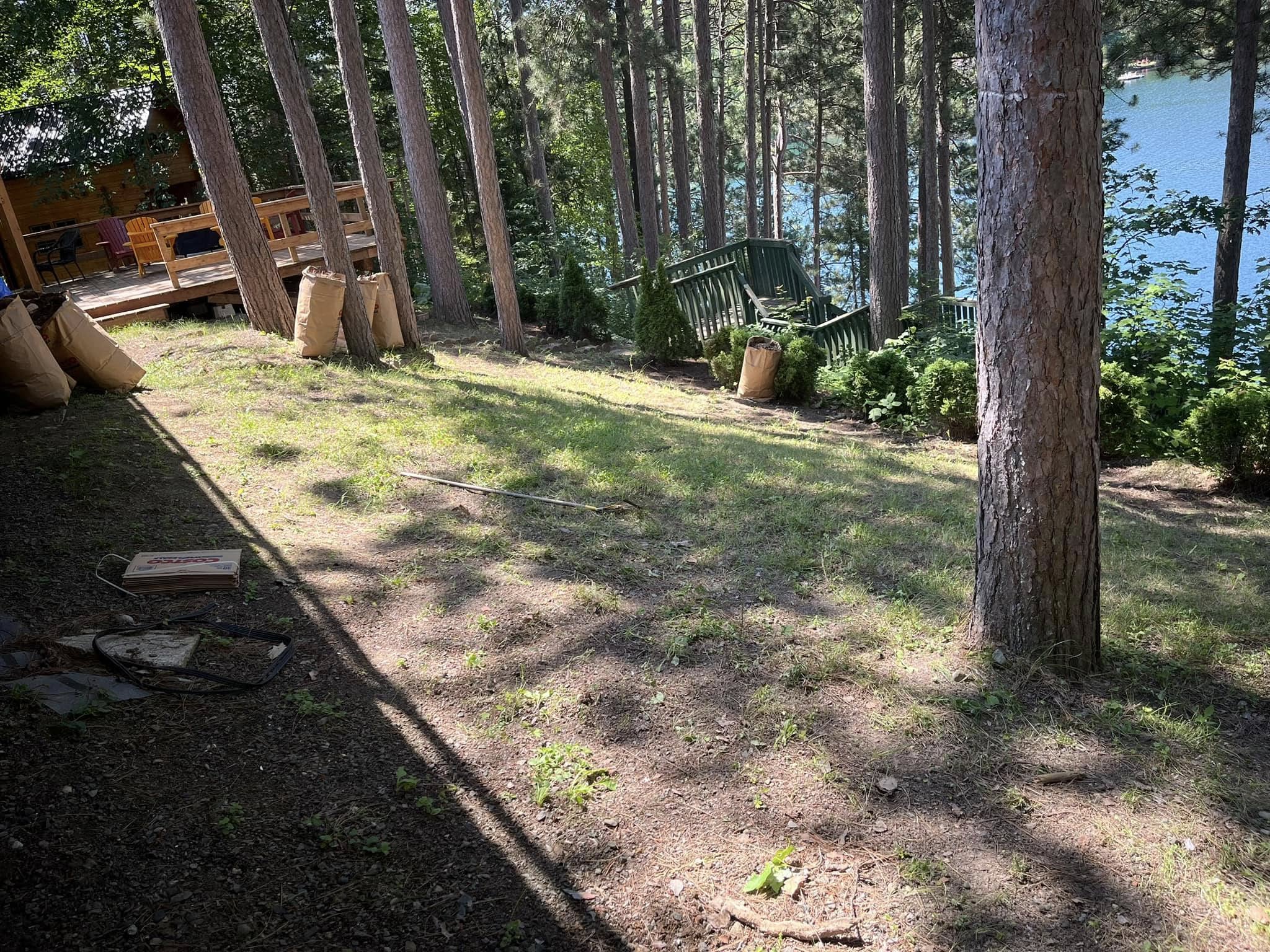
The lawn wasn’t a disaster when we started. It was thin, patchy in a few areas, and had that washed-out colour that tells me right away the soil is compacted and the mowing height has probably been too low for a while. Standard Lively property, standard Sudbury clay underneath it. The kind of lawn I walk almost every week across this city.
It wasn’t pretty, but it also wasn’t the kind of lawn that makes a homeowner think “this needs immediate intervention.” It was the kind of moderate, gradually-declining lawn that most people live with for years without doing anything, exactly the pattern I’ve described in the first 60 seconds article here — fine enough from a distance, with the real story only visible once you’re standing in it.
She’d called us because she wanted it actually fixed, not because it had crossed some visible threshold of bad. Which made what happened over the next week genuinely surprising to her, because the lawn was about to look worse before it looked better — and nobody had walked her through that timeline ahead of time.
Day One — Aeration Tears Up the Surface on Purpose
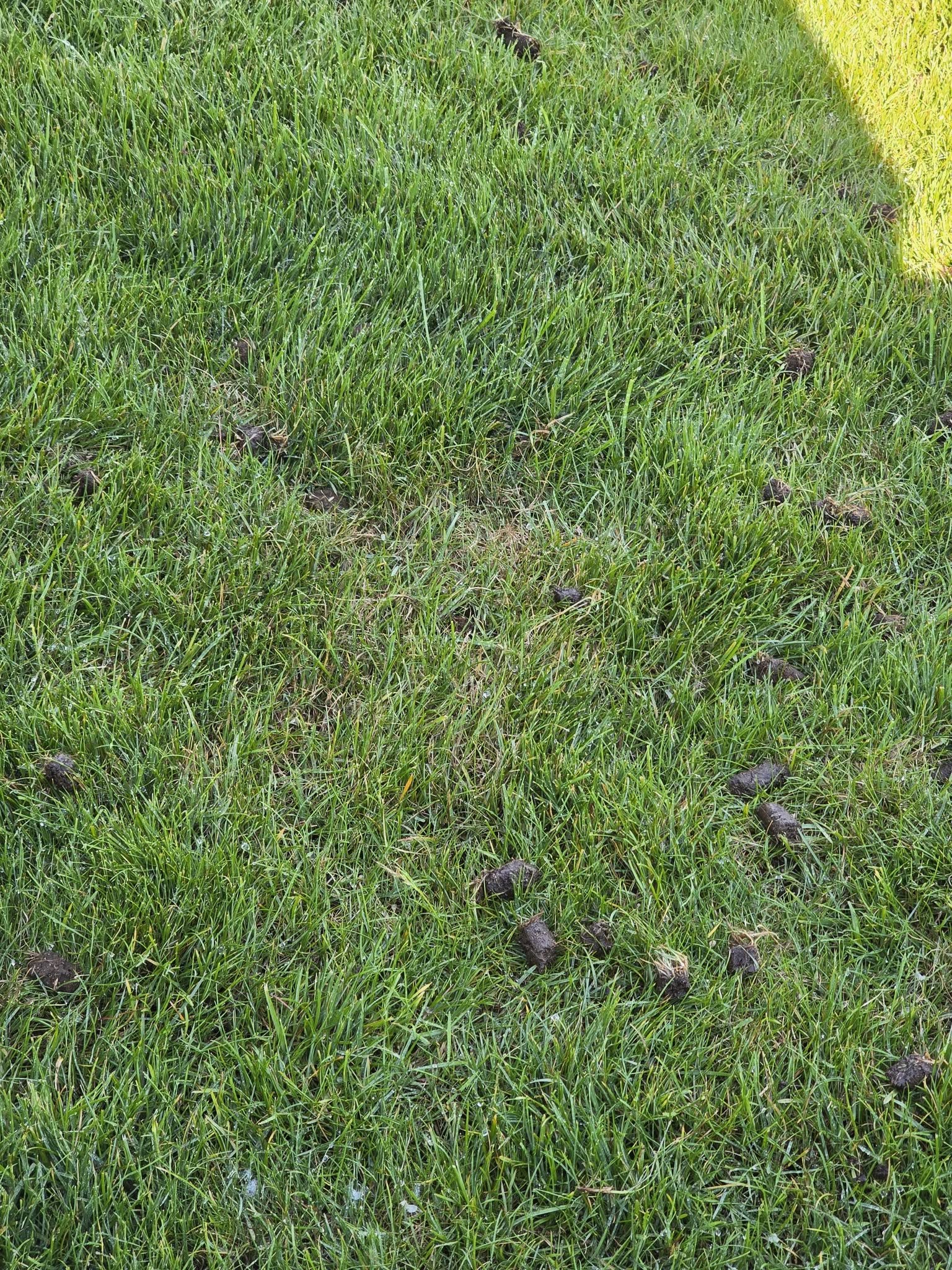
The first thing we did was core aeration across the full property. This is the step that, more than any other, makes a lawn look like something went wrong rather than something that’s about to get better.
A core aerator pulls plugs of soil out of the ground and leaves them sitting on the surface — small cylindrical clumps of dirt scattered across the lawn, exactly where moments earlier there had been a relatively tidy-looking surface. Visually, it reads as a mess. The lawn goes from “thin but at least uniform” to “covered in dirt clumps” in the span of about twenty minutes.
I explain to every homeowner before we aerate that this is the entire point — those holes are what let air, water, and root growth actually penetrate soil that’s been compacted for years, the same compaction I’ve gone into detail about in the Sudbury soil science article here. The plugs themselves break down naturally within a couple of weeks and work their way back into the lawn as organic material. But on day one, before any of that happens, what a homeowner sees out their window is dirt scattered across grass that used to look at least somewhat tidy.
This Lively property had been overdue for aeration for what felt like several seasons based on how hard the soil tested, so the plug coverage was dense — which made the visual impact of day one more dramatic than it would have been on a lawn that had been aerated more recently.
Days Two and Three — Overseeding Looks Like Nothing, Then Looks Like Dirt
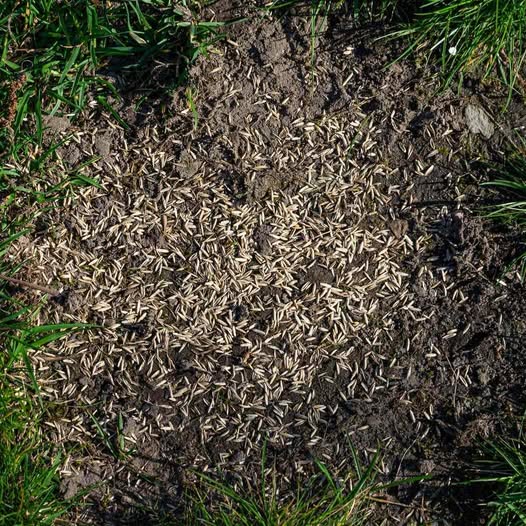
After aeration, we overseeded the thinnest sections of the lawn — putting fresh seed down specifically in the areas where existing grass density was lowest. This is where the visual story got worse before it got better, in a different way than the aeration mess.
The thin areas, which had at least some existing grass coverage before we started, now had topdressing and seed scattered over them. From a few feet away, those sections looked patchier and more exposed than they had before we touched anything — partly because raking and prepping the surface for seed disturbs whatever thin grass cover was already there, and partly because seed and topdressing material simply look like more dirt on the surface until germination starts.
This is the phase that catches most homeowners off guard the hardest, because it’s the one that looks the most like active damage rather than active improvement. The existing grass has been disturbed, the new grass hasn’t shown up yet, and what’s left in between is a window — usually seven to fourteen days depending on weather and watering — where the lawn genuinely looks worse than the version with old, thin, but at least established grass that existed before any work started.
This is exactly the window the Lively homeowner called me during. Day three, standing at her window, looking at a yard covered in dirt clumps from the aeration and bare patches of seed and topdressing where her thin grass used to be. From where she was standing, it looked like we’d made things actively worse, and I understand completely why that’s what it looked like.
What I Told Her — And What Actually Happened Two Weeks Later
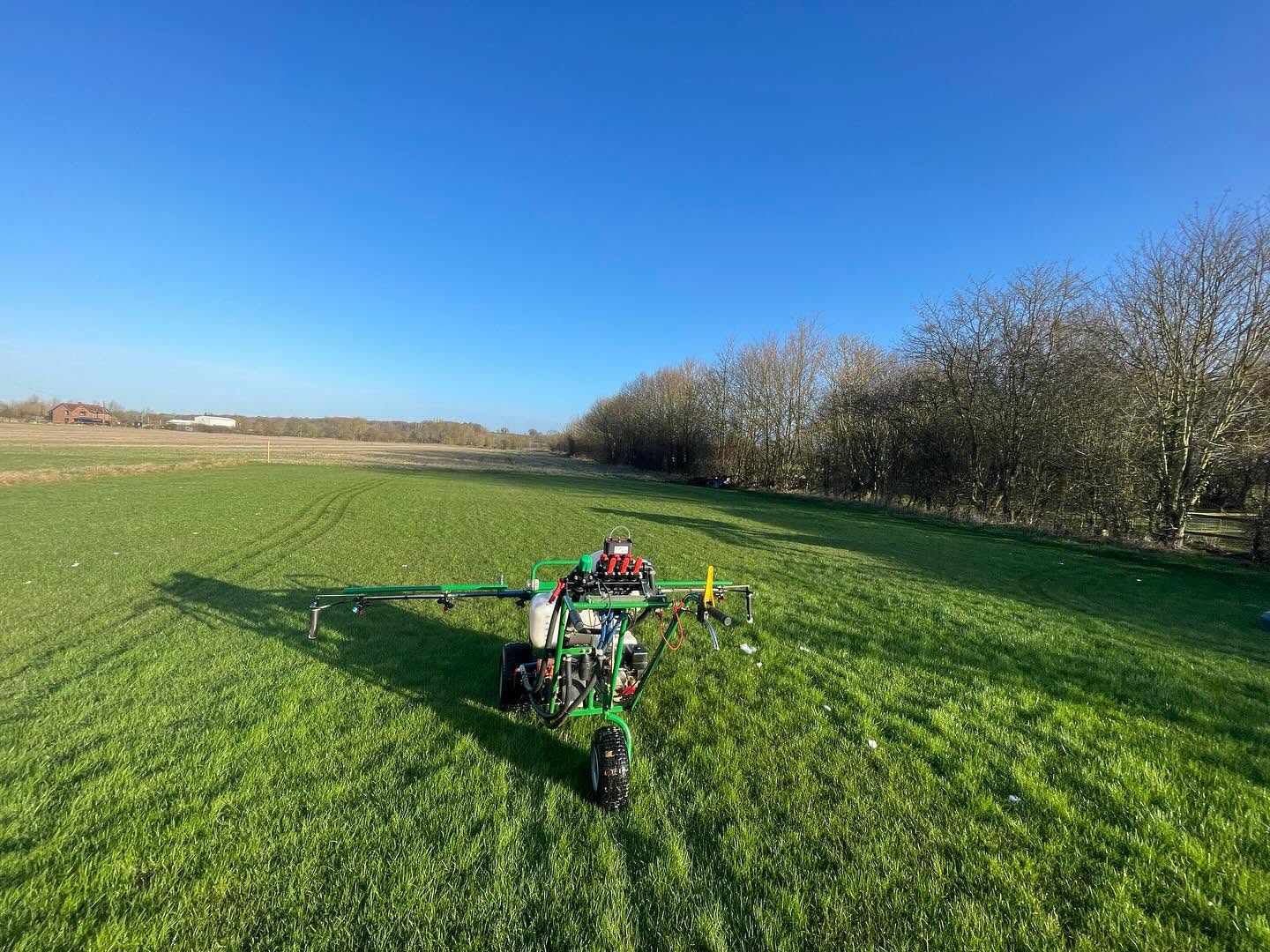
On that phone call, I walked her through exactly what I’ve described above — that the aeration plugs would break down within roughly two weeks, that the seeded areas needed consistent watering and a bit of patience before germination became visible, and that what she was looking at out her window was the middle of the process, not the result.
I also told her honestly that I should have explained this before we started rather than letting her discover it on day three, mildly panicked. That’s on me — when I’m walking a homeowner through a quote, I now make a point of describing this exact dip, because it’s predictable and it happens on basically every aeration-and-overseed job I do across Sudbury, not just this one.
Within about ten days, the aeration plugs had broken down enough that they were no longer visually obvious — the grass had grown up around and through them. The seeded sections showed the first visible green fuzz of new growth around day twelve, and by the two-week mark the lawn had gone from “looks like a disaster” to noticeably denser and greener than it had been even before we started, with the new seedlings beginning to fill in the thin areas that had been bothering her in the first place.
She texted me a photo around that point, unprompted, just to say it finally looked the way she’d hoped. The lawn that had genuinely worried her on day three was now visibly on its way to being healthier than it had been in years.
Why This Pattern Shows Up on Almost Every Real Repair Job
The reason this dip happens isn’t specific to this Lively property — it’s how aeration and overseeding actually work, anywhere, including across the dozens of similar restoration jobs I’ve done elsewhere in Greater Sudbury. You’re physically disturbing the existing soil and turf surface to create the conditions new growth needs. There’s no version of that process that skips the part where it looks rough for a week or two.
What separates a job that’s actually working from one that’s genuinely going wrong is the timeline and the trajectory. A lawn that looks worse for ten to fourteen days and then visibly improves is following the expected pattern. A lawn that still looks the same or worse after three or four weeks, with no green seedling growth showing in the seeded areas, is a different situation — usually pointing to a watering inconsistency, seed that didn’t get enough soil contact, or in rarer cases an underlying issue like grub activity that wasn’t caught during the original assessment.
If you’re in the middle of a lawn renovation right now and it’s looking worse than you expected, the honest first question to ask is how many days it’s been. Inside the first two weeks of aeration and overseeding, this is completely normal and expected. Beyond that window without visible new growth, it’s worth a follow-up conversation with whoever did the work.
📞 705-507-6787
🔗 Get a Free Quote
📍 Serving Greater Sudbury — Garson, Val Caron, Hanmer, Lively, Chelmsford, Azilda, Capreol
— Ryan
Frequently Asked Questions
Why does my lawn look worse after aeration in Sudbury?
Core aeration pulls plugs of soil out and leaves them on the surface, which temporarily makes a lawn look messy or disturbed rather than improved. This is expected — the plugs break down naturally within about two weeks and the open soil structure they create is what lets roots, water, and air actually reach deeper into compacted Sudbury clay. The rough appearance is temporary and is part of how the process works, not a sign anything went wrong.
How long does it take for an overseeded lawn to look better in Greater Sudbury?
New grass seed typically shows the first visible green growth within ten to fourteen days under consistent watering, with the seeded areas starting to blend in and thicken noticeably by the two to three week mark. The period right after seeding — when old thin grass has been disturbed and new grass hasn’t sprouted yet — is often when a lawn looks its worst during the whole process, before recovering and surpassing its original condition.
Is it normal for a lawn renovation to look worse before it looks better?
Yes, this is a very common and expected pattern with core aeration and overseeding specifically. Both processes involve disturbing the existing soil and grass surface to create the conditions new growth needs, which produces a temporary rough or patchy appearance. As long as visible new growth and improvement shows up within roughly two to three weeks, the lawn is following a normal trajectory rather than experiencing an actual problem.
What should I do if my lawn still looks bad weeks after aeration and overseeding?
If two to three weeks have passed with no visible green growth in the seeded areas and the aeration plugs haven’t broken down or blended into the lawn, it’s worth a follow-up with whoever did the work. Common causes at that point include inconsistent watering during the germination window, seed that didn’t make good soil contact, or in some cases an underlying issue like grub damage that wasn’t part of the original diagnosis. A normal recovery timeline shouldn’t extend much beyond three weeks without visible progress.
Does Cutting Edge Lawn explain what to expect before starting a lawn renovation in Sudbury?
Yes — we walk every homeowner through the expected timeline before starting aeration or overseeding work, including the temporary rough appearance that’s a normal part of the process. If you’re considering a lawn renovation in Greater Sudbury and want to know exactly what to expect at each stage, call 705-507-6787 or fill out the free quote form and we’ll walk you through it before anything starts.
Ryan Lingenfelter is the owner of Cutting Edge Lawn & Landscaping in Garson, Ontario. Since 2020, his crew has provided full lawn care services across Greater Sudbury — Garson, Val Caron, Hanmer, Lively, Chelmsford, Azilda, and Capreol. Cutting Edge is licensed, insured, BBB A+ rated, and ThreeBest Rated for lawn care services in Sudbury.
📞 Phone: 705-507-6787
📍 Service Area: Greater Sudbury, Ontario
🔗 Free Quote: cuttingedgelawn.ca/quote
Helpful Lawn Care Services in Sudbury
- Core Aeration for Healthy Lawns
- Grass Cutting Services in Sudbury
- Sod Installation in Sudbury
- Property Cleanup Services
Continue Reading
- A Greater Sudbury Homeowner Said the Lawn Was Fine — I Asked Him to Walk It With Me
- I’ve Never Given the Same Lawn Care Plan to Two Properties in Sudbury
- What Sudbury Soil Actually Looks Like Under a Microscope
