
By Ryan Lingenfelter — Owner, Cutting Edge Lawn & Landscaping · Garson, Ontario · Serving Greater Sudbury since 2020
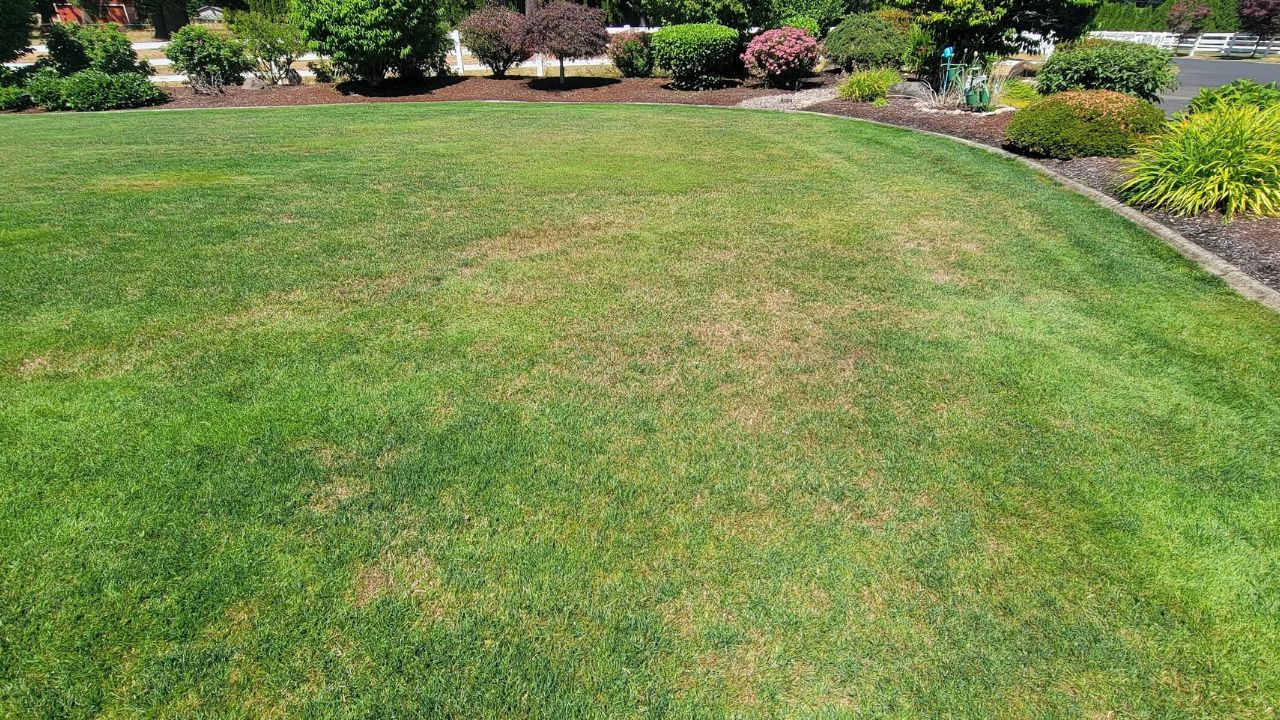
Every year around the third week of July I start getting calls. The lawn is going brown. The grass looks pale and stressed. A neighbour’s lawn looks fine but theirs doesn’t. What’s happening?
And every year, the answer is mostly the same — not because of what’s happening in July, but because of what didn’t happen in May and June. July just makes it visible.
I want to write about this specifically because the pattern is so consistent and the fix is so much simpler than most homeowners expect. If your Sudbury lawn struggles every July, here’s what’s actually going on — and what needs to happen differently this season and next.
Why July Is the Hardest Month for Sudbury Lawns
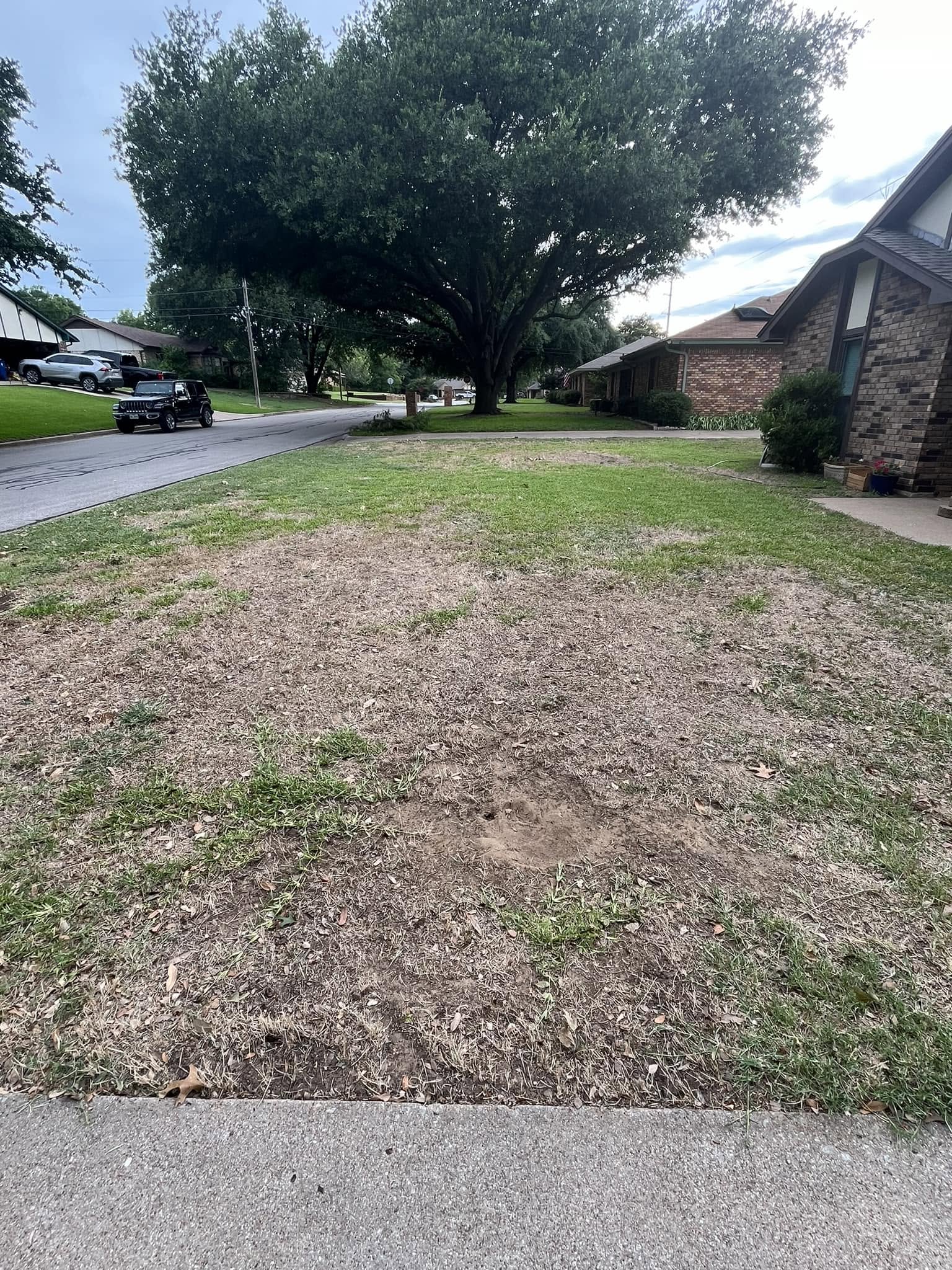
July in Sudbury hits lawns hard for a specific combination of reasons that don’t apply the same way in milder climates.
The heat arrives fast. Sudbury’s spring can be cool and wet well into June, and then July arrives with a fairly abrupt temperature shift. Grass that’s been growing in cool, moist conditions suddenly faces heat stress and reduced rainfall in a compressed window. That transition is harder on shallow-rooted lawns than on deep-rooted ones — and most Sudbury lawns, for reasons I’ll explain, have shallower roots than they should by the time July arrives.
Our soil doesn’t buffer the way southern Ontario soil does. Sudbury’s shallow Canadian Shield topsoil holds less moisture than deep southern Ontario soil. A week without rain in July depletes soil moisture faster here than it would with more topsoil depth. Grass roots that have been trained by shallow watering to stay near the surface — where the moisture is most of the time — suddenly find themselves in dry conditions they can’t cope with.
The compaction from winter hasn’t been addressed. If spring aeration didn’t happen, the soil going into July is in the worst structural condition of the year — winter freeze-thaw cycles have compacted it, thatch has built up, and water is running off rather than soaking in. July rain, when it does come, doesn’t penetrate. It sheets off. The grass suffers not just from less rain but from an inability to use the rain it gets.
All of these factors are real. But they’re mostly manageable if the right things happened in May and June. When they didn’t, July exposes it.
The Things Most Sudbury Homeowners Skip — And What They Cost in July
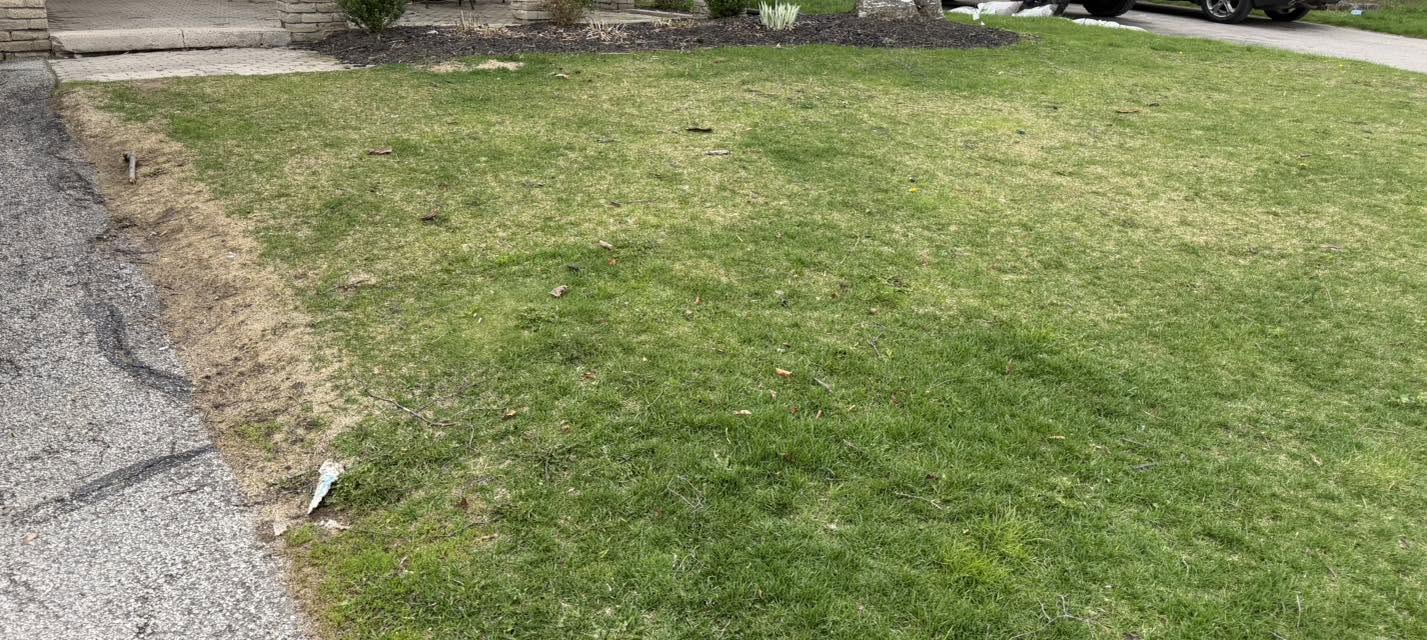
Here are the specific things I see missing on the Sudbury properties that struggle every July — not as a comprehensive list of everything lawn care involves, but the specific gaps that produce summer stress.
Spring aeration was skipped. This is the most common and most impactful miss. Without core aeration in late May, the soil going into summer is compacted and sealed. Water doesn’t penetrate properly. Roots can’t go deep. And when July heat arrives, the lawn has no buffer — shallow roots in sealed soil with no moisture reserve. The compounding cost of skipping aeration is most visible in July, even though the damage was done in spring.
Watering routine was wrong from the start. The most common watering mistake in Sudbury is daily light watering — ten or fifteen minutes every evening. This keeps the surface moist but trains roots to stay near the surface where the moisture is. By July, when the surface dries out between waterings, those shallow roots are the first to fail. The right approach — deep watering twice a week, long enough to push moisture four to five inches down — builds root depth through May and June that protects the lawn in July. Most homeowners who struggle every summer have been watering daily and wondering why it doesn’t help.
Cut height was too low going into summer. The first cut of the season too short, the “tidy” cut that takes it down to two inches. I’ve written before about what happens when a well-intentioned routine gets the details wrong — cut height is one of those details. Grass cut short going into summer has less leaf area to shade its own soil, less photosynthetic capacity to maintain itself under stress, and shallower roots because short-cut grass doesn’t need to root as deeply. By July, the difference between a lawn maintained at three inches and one maintained at two inches is clearly visible in how it handles heat.
The mowing schedule slipped in June. June is peak growth month in Sudbury. Letting the lawn get ahead of the schedule in June — missing a week, then cutting off too much to catch up — stresses the grass at exactly the wrong time. Going into July with a lawn that’s been inconsistently cut, with sections that got scalped when the schedule slipped, is going into July with a weakened lawn. I learned this the hard way in my own worst season — schedule consistency in June matters more than most people realise.
What Your Lawn Actually Needs in July Right Now
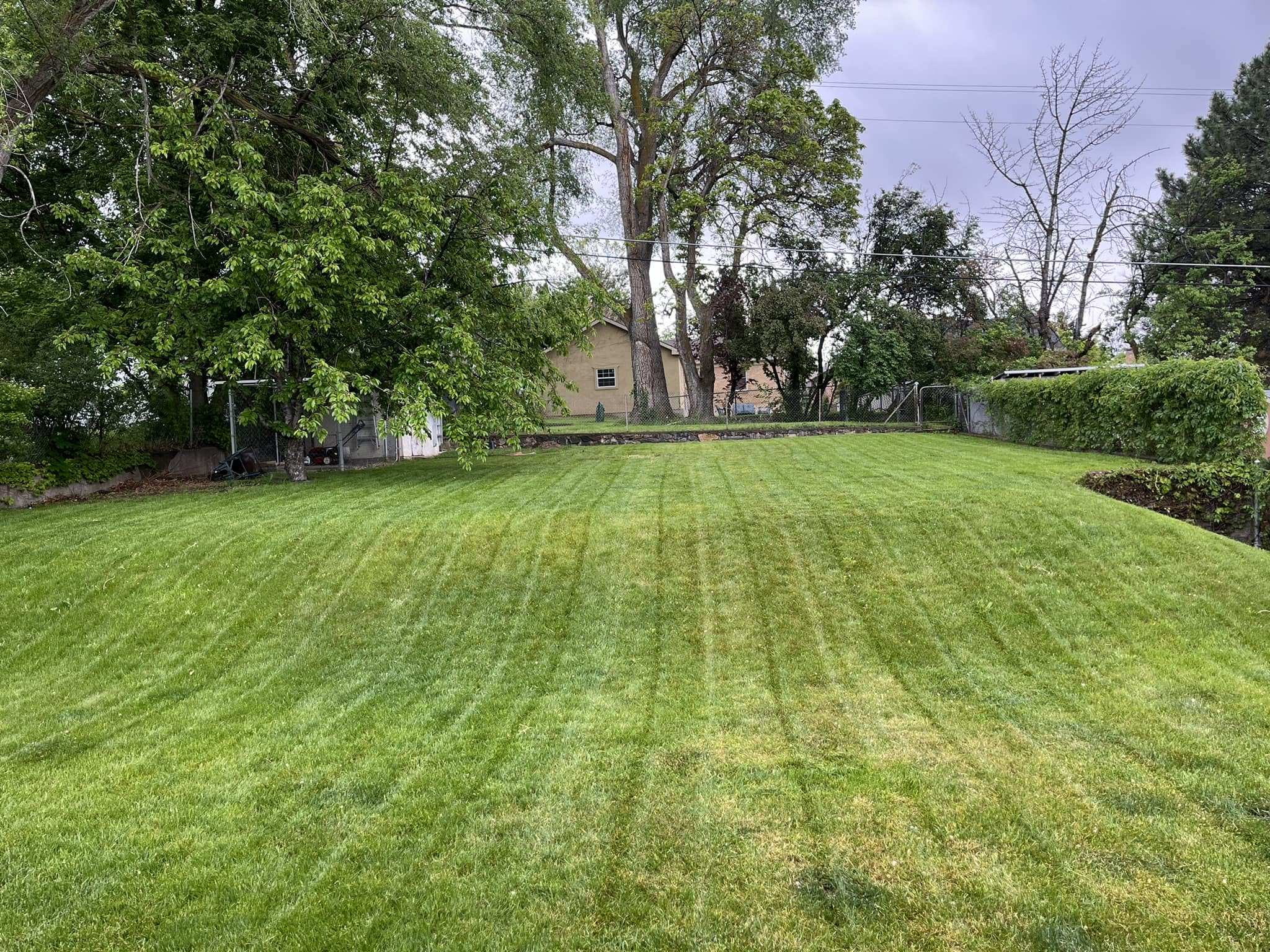
If you’re reading this in July and your lawn is showing stress, here’s the honest answer about what to do — not to fix July, but to get through it and set up properly for August and fall.
Raise the cut height now. If you’ve been cutting at two inches, raise it to three and a half immediately. Don’t go lower than three at any point through August. Taller grass shades the soil, reduces evaporation, and reduces the heat stress on the crown. This is the single most impactful change you can make right now that costs nothing and takes thirty seconds to implement. Correct grass cutting height in July changes what the lawn can handle.
Stop watering lightly every day. Switch to twice a week, long enough each time that you’re pushing water down four to five inches. A screwdriver pushed into the soil after watering tells you if you’re getting there — it should go in easily to that depth. If it doesn’t, water longer. The goal is rooting depth, not surface moisture. Surface moisture evaporates. Root depth is what carries the lawn through a dry week in July.
Skip a mow if the grass has stopped growing. During a dry July stretch, grass goes semi-dormant and stops growing or grows very slowly. Cutting dormant or near-dormant grass doesn’t help it — it removes leaf area the plant is using to survive and adds stress. If the lawn hasn’t grown meaningfully since the last cut, skip the cut. Resume when growth resumes after rain or cooler temperatures.
Don’t fertilize now. Fertilizing heat-stressed grass in July pushes growth the plant doesn’t have resources to support. Hold any fertilization until September when conditions are better for uptake and the grass can actually benefit from it.
Let brown sections go dormant if they need to. Some Sudbury lawns go brown in July. That’s not always failure — it can be dormancy, which is the grass’s natural response to heat stress. Dormant grass is alive. It’ll green up when temperatures drop and rain returns in late summer. The mistake is panicking and overwatering to try to force it green — heavy watering on dormant grass in July can do more harm than controlled dormancy.
What to Do Differently Starting in May Next Year
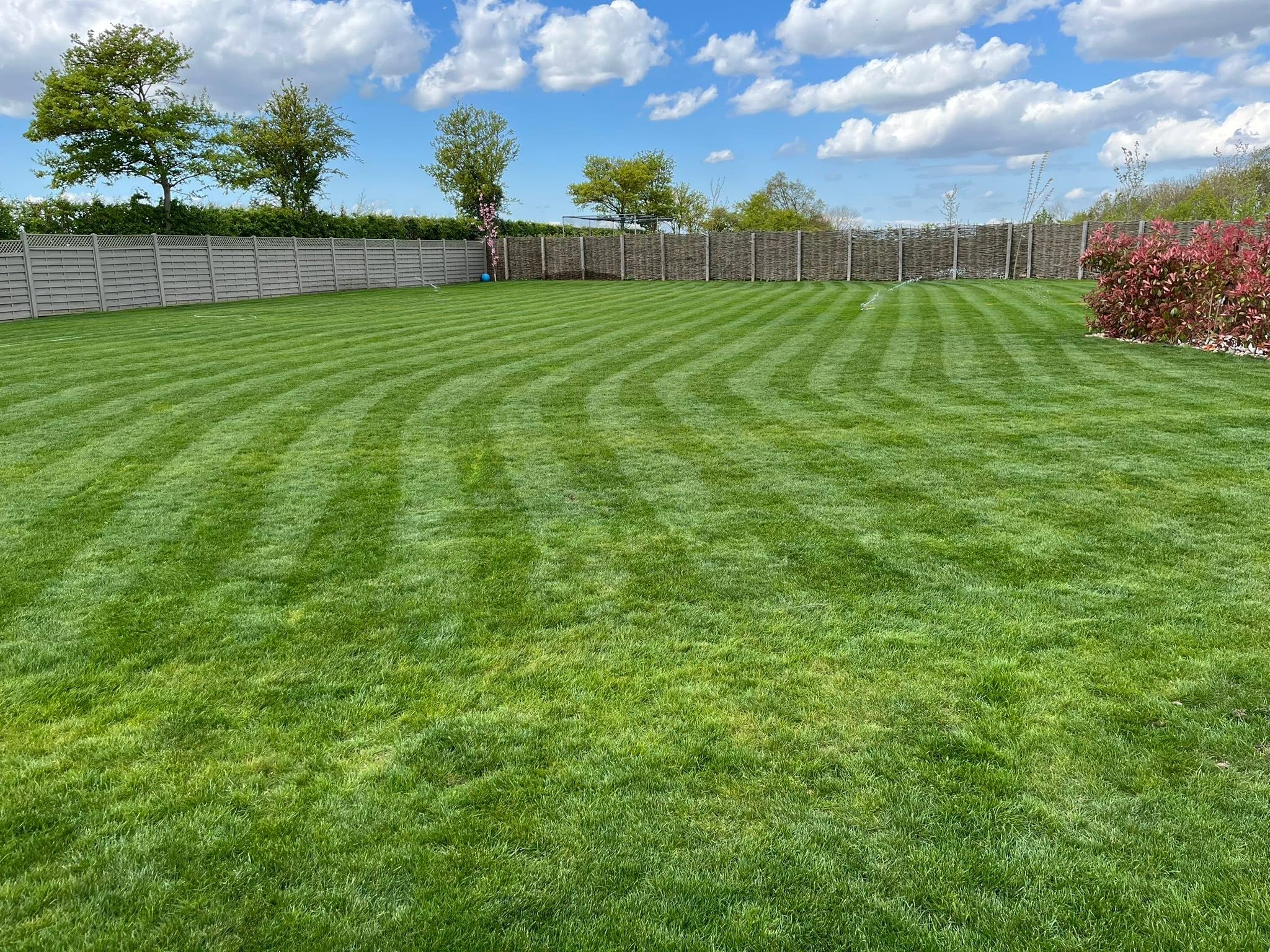
The lawns in Greater Sudbury that look good in July don’t look good because of anything done in July. They look good because of what was done in May. This is the fundamental thing I try to communicate to homeowners who are frustrated by how their lawn performs in summer.
Aerate in late May, once the ground has firmed up after snowmelt. Establish deep watering habits from the first week of June rather than waiting until the lawn shows stress. Keep the mowing schedule consistent through June and maintain the right height from the first cut of the season. These three things — aeration, deep watering early, right cut height — produce a lawn going into July that has deep roots, open soil, and the structural resilience to handle what Sudbury summers bring.
The lawns on any street in Sudbury that hold their colour through July while the neighbours’ go pale are almost always the ones where those three things happened in May and June. I’ve watched this pattern play out consistently enough that the best looking lawn on any Sudbury street almost always has the simplest story behind it — not elaborate programs or expensive products, just the basics done correctly in the right order.
If you want help setting your Sudbury property up properly for next season — or if you want to talk through what’s happening with your lawn right now — reach out. I’m happy to come take a look and give you an honest read on what would actually make a difference for your specific property.
— Ryan Lingenfelter
Cutting Edge Lawn & Landscaping, Garson, Ontario
📞 705-507-6787
Serving all of Greater Sudbury — Garson, Hanmer, Val Caron, Lively, Chelmsford, Azilda, Capreol, and Sudbury proper. We offer grass cutting, core aeration, property cleanup, sod installation, and full lawn maintenance. Free quotes, no pressure.
Get a Free Quote |
Call 705-507-6787
