
I got a call last August from a homeowner in Lively. She’d found the site, read a few articles, and wanted to ask me one direct question before booking anything.
“I just want to know — honestly — is my lawn worth saving? Or should I just accept that it’s going to look like this forever?”
That question, asked that directly, is one I take seriously. Because there are two wrong answers. One is saying yes reflexively to get the booking. The other is saying no to seem appropriately cautious when the lawn might actually be more salvageable than it looks. Both of those answers serve the person giving them, not the person asking.
Here’s what I actually found when I got there, what I told her, and what happened after.
The Call and the Property
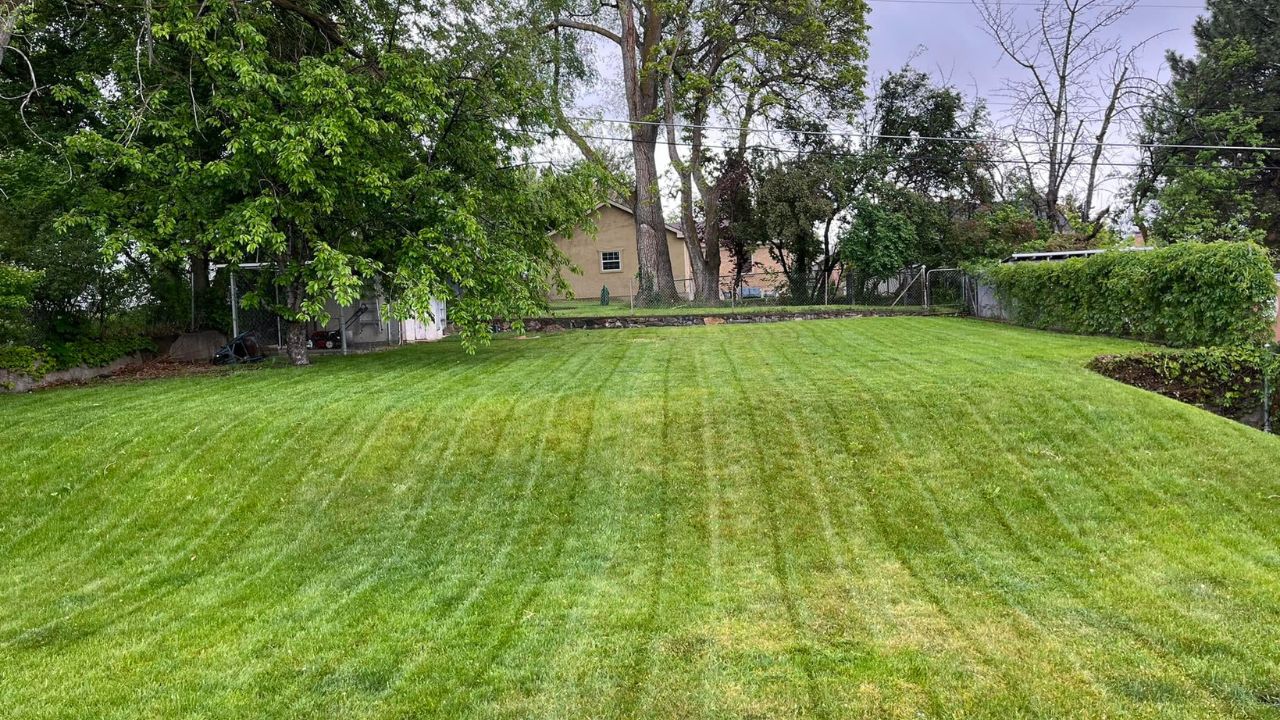
Her name was Christine. She’d been in the house for four years. The previous owners had done minimal maintenance and she’d tried to keep up with it herself — mowing, occasional fertilizing, a bag of seed every spring that never seemed to do much. By last August, she’d reached the point where she was embarrassed when people came over and the backyard was visible from the deck.
Over the phone, before I’d seen anything, she described it this way: large dead sections in the back, thin patchy grass in the front that went brown fast in dry weather, a section along the fence that had never grown grass in the four years she’d been there, and what she called “a weird soft spot” near the back corner that she’d been avoiding walking on because it felt unstable underfoot.
That last detail — the soft spot that felt unstable — was the one I paid attention to most before I got there. Everything else she described sounded like a lawn that had been neglected and was expressing it in the usual ways. But an unstable soft spot in a specific location, present long enough that she’d learned to walk around it, suggested something more structural. Either a drainage issue collecting water in a specific spot, or — given what I’d seen on other Lively properties — potentially something else entirely underneath.
I told her I’d come out the following morning and that I couldn’t answer her question properly until I’d walked it. She said she understood, but she asked me again before we hung up: “Just tell me — have you seen lawns worse than what I described come back?”
I told her yes. Which was true.
What I Actually Found When I Walked It
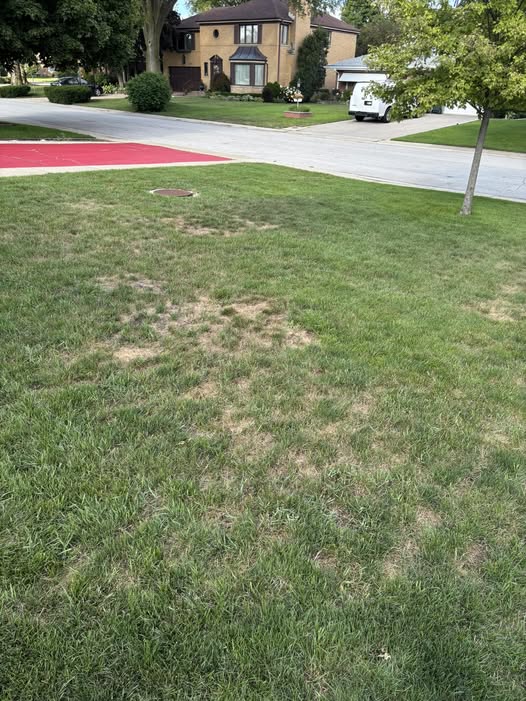
The front lawn was thin and patchy but structurally better than she’d made it sound. The grass that was there was alive — dormant-looking from the August dry stretch, but alive. The tug test confirmed it: resistance, firm crowns, grass that was stressed but not dead. The thinness was from compaction and a lack of consistent care, not from anything that had permanently damaged the lawn. Front lawn: salvageable, no question.
The back was more complicated. The large dead sections she’d described were real — about 40 percent of the back lawn visibly gone, the grass pulling up easily with minimal root system attached. I noted the pattern of where the dead sections were. They weren’t random. They clustered in one half of the backyard, with the healthy(ish) grass concentrated near the house and the damage getting progressively worse toward the back fence.
The section along the fence that had never grown grass in four years was interesting. The soil there was noticeably different — harder, denser, almost claylike compared to the rest of the yard. I probed it. About 5 inches down, the probe hit resistance that didn’t feel like rock — it felt like compacted fill material. Something had been put in that area, at some point, that had never been properly prepared for growing grass. It wasn’t going to respond to seeding or sodding until the soil itself was addressed.
And then the soft spot.
I walked to the back corner. She was right — it was noticeably soft underfoot, in a roughly circular area about 4 feet across. I pressed down with my foot and felt the surface compress more than it should. I pulled back a section of the dead grass in that area.
Grubs. Not the worst infestation I’d seen, but significant — eight to ten per square foot in the soft spot, dropping to four or five per square foot in the surrounding area. The grub population had been feeding on the roots in that corner, which explained both the soft unstable feeling and why the damage was clustered toward the back of the property rather than distributed evenly.
So: front lawn stressed but alive, back lawn with grub damage in a specific zone, fence line with soil composition problems that predated her ownership, and the rest of the back lawn with compaction and neglect damage that looked worse than it was because of the August dry conditions.
I took about twenty minutes walking the property before I went back to talk to her.
My Honest Answer — and Why It Wasn’t What She Expected
She was waiting on the deck. I could tell she’d been preparing herself for bad news.
I told her: most of this lawn can be saved. Not all of it, and not quickly, but most of it.
The front lawn didn’t need anything dramatic — aeration, overseeding in early September, consistent watering for three weeks after seeding, and a fall fertilizer. One season of doing the right things in the right order and the front would look significantly better. Two seasons and it would look like what she wanted it to look like.
The back lawn needed to be broken into sections. The grub area — the soft corner — needed nematode treatment before anything else. I explained what I’d found and why treating the grubs was not optional if any repair was going to hold. She asked how long that would take. I told her the nematode treatment happens in late July or August, which meant we were right in the window — we could do it within two weeks. The grub-damaged sod in that corner would need to come out and be replaced after treatment, but that was straightforward once the population was addressed.
The fence line section was a different problem. The dense fill material I’d found at 5 inches meant that seeding or sodding directly into that area would produce the same result it had for four years — minimal growth, persistent struggles. That section needed the fill excavated, proper topsoil brought in, and then either seeding or sod over prepared ground. More involved, but fixable.
The rest of the back lawn — the compacted, neglected sections that weren’t in the grub zone and weren’t along the fence — needed what the front needed: aeration, overseeding in the early September window, water, and time.
I told her the full scope of what I’d just described would take two seasons to fully complete and show results. The nematode treatment and fall aeration and overseeding this year. Sod on the grub corner and fence line excavation and resoil next spring, after the treatment had done its work over winter. By the following fall — 14 months from when we were standing there — she’d have a lawn that looked like what she wanted.
She was quiet for a moment. Then she said: “Everyone else I talked to just quoted me sod for the whole back.”
I told her I understood why. A full sod job is a clean solution and it looks decisive. But sod over an active grub population fails. Sod over dense fill material without soil prep fails. Sod over compaction without addressing the compaction produces a lawn that looks good for one season and then declines. I’d seen exactly that pattern play out — I’d even written about a property where the same section failed twice before anyone figured out why. Full sod replacement without diagnosing what’s actually causing the damage is an expensive way to get the same result.
She asked how much the approach I was describing would cost compared to full sod replacement. When I walked her through the numbers, the two-season approach was significantly less — partly because we were only sodding the sections that genuinely needed it rather than the whole back, and partly because we were doing the aeration and overseeding work ourselves rather than replacing viable lawn that could recover with proper treatment.
“So you’re telling me I’ve been embarrassed about a lawn that doesn’t need to be torn out and started over?”
I told her: most of it, yes.
What the Lawn Looks Like Now
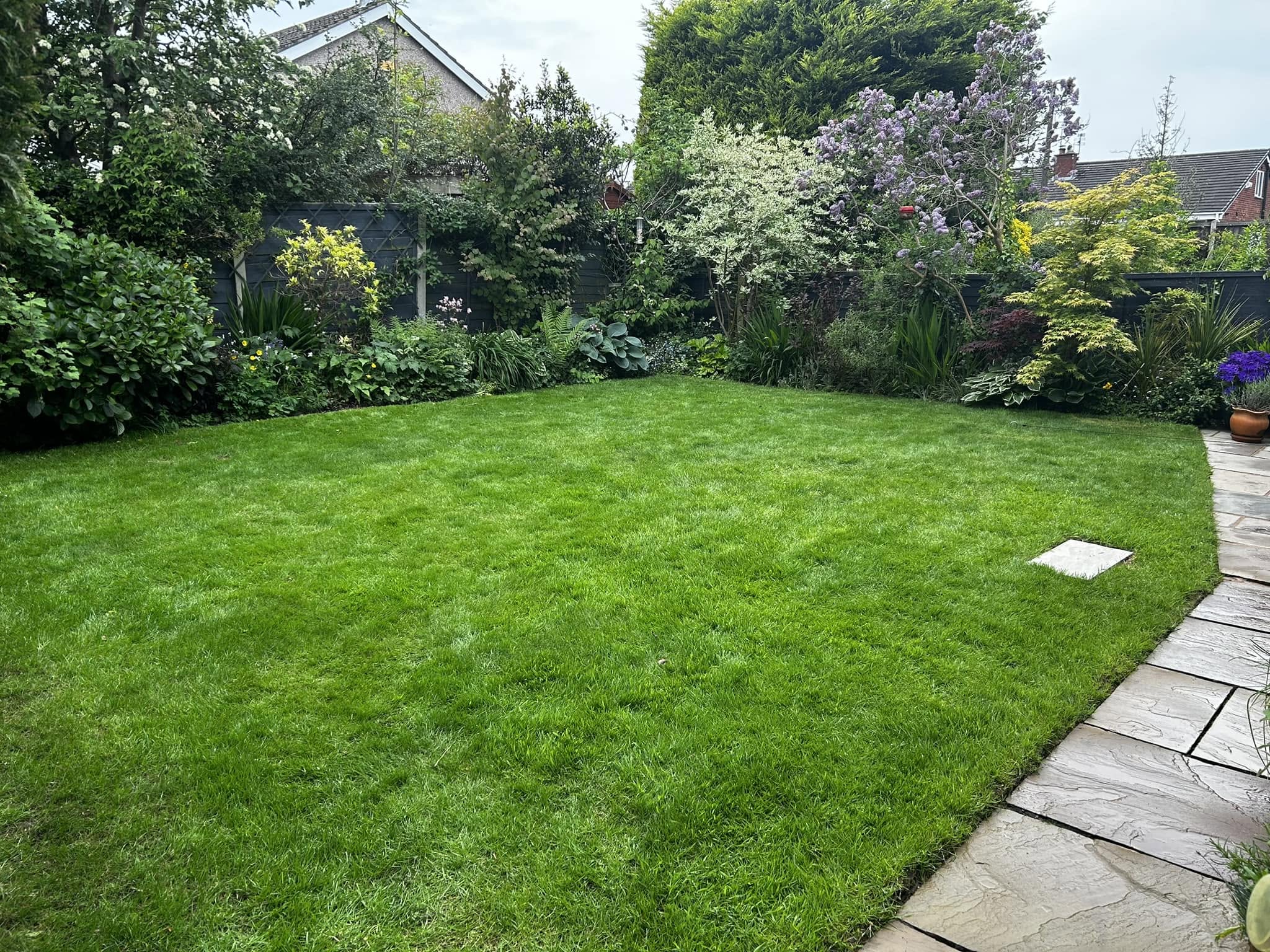
We did the nematode treatment in mid-August last year. Fall aeration and overseeding on the front and the non-grub sections of the back in the first week of September — right in the window I’ve written about for fall lawn work timing in Sudbury. Fall fertilizer application in late September. Leaf removal in October — Christine had skipped fall cleanup the previous two years, which I told her had been contributing to the snow mould she’d been seeing every spring, referencing exactly what I’d described in the piece about what skipping fall cleanup does to a Sudbury lawn.
She did the watering. Every day for three weeks after overseeding, then every other day for two weeks after that. She texted me in late September to say the seeded areas were coming in and asking if what she was seeing was normal. It was.
This spring — May 2026 — I went back for the second phase. The grub corner got cleared, the nematode treatment from last August had done its job, and we brought in topsoil and laid sod on that section and the fence line after excavating the fill material and replacing it. Spring aeration across the whole lawn. Overseeding the few spots that hadn’t filled in fully from fall.
I was there last week. The front lawn is thick and uniform — she said a neighbour had asked what she’d done to it. The back is green across 90 percent of the area, with the newly sodded corner and fence line section coming in and about two more weeks from being indistinguishable from the surrounding lawn. The soft spot is gone because the grub population is gone.
She sent me a message the day I was last there: “I can’t believe this is the same yard.”
It is the same yard. That’s the point. The lawn she was embarrassed by and ready to write off wasn’t beyond saving — it just needed someone to look at what was actually wrong with it rather than quoting a solution before the diagnosis was done.
The Lesson I Take From Properties Like Christine’s
The question she asked — “is my lawn worth saving?” — is one more homeowners should ask, and more honestly than they sometimes do. The version I hear more often is “I want to fix my lawn” stated as a given, followed by a request for a quote on the fix the homeowner has already decided they need. That’s not a bad thing, but it does sometimes mean that people invest in the wrong fix because they did their own diagnosis before anyone walked the property.
Christine’s instinct to ask the question first — before deciding what she wanted done — is exactly the right approach. The answer might have been “no, this lawn isn’t worth saving” if the damage had been different. It wasn’t. But without walking it honestly and looking at each section for what it actually was, neither of us would have known that.
If you have a lawn in Sudbury that you’re not sure about — whether it’s worth the investment, whether you’ve been quoted the right solution, whether what you’re seeing every spring is fixable or just the nature of the property — that question is exactly the right one to ask before spending money on anything.
I’m happy to come walk it with you and give you a straight answer. What I’ve described doing for Christine is the same thing I do on every assessment — diagnose before prescribing, and be honest about what I find even when the honest answer is more complicated than a simple yes or no.
There’s a longer piece on why I approach every new customer this way in the hardest conversation I have with new Sudbury customers. And if you’ve been trying to find the right company and aren’t sure what to look for, the piece on what “lawn care near me” actually gets you covers exactly the questions worth asking before you book anyone.
For everything we offer across the full season, the complete service breakdown is the right place to start.
Call or text: 705-507-6787
Or fill out the free quote form on the site.
We cover Garson, Val Caron, Hanmer, Lively, Chelmsford, Azilda, Capreol, and surrounding areas.
— Ryan Lingenfelter
Cutting Edge Lawn & Landscaping
Garson, Ontario
705-507-6787
